旅游业

Search documents
凯撒旅业主要股东金谷信托拟减持不超3%股份
Zhi Tong Cai Jing· 2025-12-24 14:05
凯撒旅业(000796)(000796.SZ)发布公告,持股5%以上股东中国金谷国际信托有限责任公司(以下简 称"金谷信托")计划在本公告之日起的15个交易日后的3个月内(即2026年1月20日至2026年4月19日),通 过集中竞价方式减持公司股份不超过16,037,889股,即不超过公司总股本的1%,通过大宗交易方式减持 公司股份不超过32,075,778股,即不超过公司总股本的2%。 ...

凯撒旅业(000796.SZ)主要股东金谷信托拟减持不超3%股份
智通财经网· 2025-12-24 14:02
智通财经APP讯,凯撒旅业(000796.SZ)发布公告,持股5%以上股东中国金谷国际信托有限责任公司(以 下简称"金谷信托")计划在本公告之日起的15个交易日后的3个月内(即2026年1月20日至2026年4月19 日),通过集中竞价方式减持公司股份不超过16,037,889股,即不超过公司总股本的1%,通过大宗交易 方式减持公司股份不超过32,075,778股,即不超过公司总股本的2%。 ...
12省份旅游总收入破万亿
第一财经· 2025-12-24 11:36
2025.12. 24 本文字数:2793,阅读时长大约4分钟 作者 | 第一财经 李秀中 文旅产业已经成为拉动地方经济增长的重要引擎。截至2024年底,已经有12个省份旅游总收入(旅 游总花费)突破万亿元,成为"万亿旅游强省"。另外,湖北、安徽也宣布今年旅游总收入将突破万 亿。 近日,四川省文旅厅厅长陈光浩在"决胜'十四五'续写新篇章"系列主题新闻发布会上介绍,文旅产业 是四川"建圈强链"15个重点产业链之一,国内游客总人次、总花费从2022年的6.36亿、7059亿元 分别增加到2024年的11.19亿、1.76万亿元,领跑全国。 9月17日,河南省省文旅厅副厅长周耀霞在河南省高质量完成"十四五"规划系列主题新闻发布会上 介绍,"十四五"期间,河南文旅品牌影响力日益提升,河南文旅出圈出彩,进入全国第一方阵。 2024年河南省接待游客首次超10亿人次、旅游收入首次超万亿元。 不只湖南和河南,2024年还有广西、山东、江西等多个省份旅游总收入实现了"集体"跨越万亿。 今年3月,2025年广西全区文化和旅游工作会议发布数据,2024年,全区共接待国内外游客9.62亿 人次,同比增长13.3%;实现旅游总收入(花 ...


亨泰(00197.HK)附属拟97.2万港元收购盈凯国际旅遊
Jin Rong Jie· 2025-12-24 09:52
Group 1 - The company, Hengtai (00197.HK), announced that its wholly-owned subsidiary, Shining Impact Limited, plans to acquire all issued share capital of Yingkai International Travel Limited from Tang Jianyan for HKD 972,000 [1] - Yingkai International Travel Limited primarily engages in providing comprehensive travel arrangements for Chinese tour groups visiting Hong Kong, including accommodation coordination, meal arrangements, sightseeing tours, and shopping experiences [1]
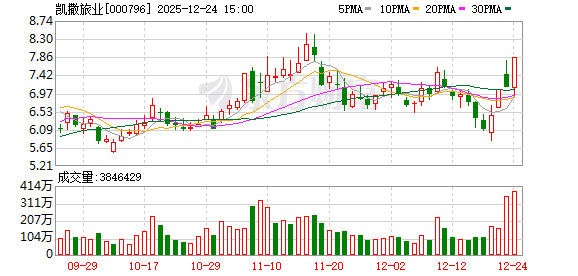
凯撒旅业涨停,机构净买入3753.15万元,深股通净卖出4429.73万元
Zheng Quan Shi Bao Wang· 2025-12-24 09:45
证券时报·数据宝统计显示,上榜的前五大买卖营业部合计成交5.49亿元,其中,买入成交额为2.87亿 元,卖出成交额为2.61亿元,合计净买入2644.16万元。 凯撒旅业今日涨停,全天换手率28.90%,成交额28.96亿元,振幅13.29%。龙虎榜数据显示,机构净买 入3753.15万元,深股通净卖出4429.73万元,营业部席位合计净买入3320.74万元。 深交所公开信息显示,当日该股因日涨幅偏离值达8.96%上榜,机构专用席位净买入3753.15万元,深股 通净卖出4429.73万元。 具体来看,今日上榜的营业部中,共有2家机构专用席位现身,即买一、买三、卖二,合计买入金额 1.11亿元,卖出金额7302.90万元,合计净买入3753.15万元,深股通为第二大买入营业部及第一大卖出 营业部,买入金额为4865.36万元,卖出金额为9295.09万元,合计净卖出4429.73万元。 近半年该股累计上榜龙虎榜6次,上榜次日股价平均跌2.00%,上榜后5日平均涨2.55%。 资金流向方面,今日该股主力资金净流入4.33亿元,其中,特大单净流入4.17亿元,大单资金净流入 1558.12万元。近5日主力资金净 ...
旅游业崛起:迢迢前路海天阔——内蒙古高质量推动旅游业发展扫描
Nei Meng Gu Ri Bao· 2025-12-24 09:09
Core Insights - Inner Mongolia is transforming its natural resources, such as grasslands and deserts, into tourism assets, showcasing its unique cultural and ecological offerings [1][13] - The region is experiencing significant growth in tourism, with various events and activities attracting millions of visitors and generating substantial revenue [2][5][12] Tourism Development - The "2025-2026 Inner Mongolia Ice and Snow Tourism Season" was launched in the city of Genhe, emphasizing the region's cold resources as a tourism draw [1] - During the recent National Day and Mid-Autumn Festival, Alxa League received 855,900 visitors, generating a tourism revenue of 470.8 million yuan [2] - The Ejin Banner's poplar forest tourism area attracted numerous visitors, highlighting the cultural significance of the area [2][5] Event Impact - The 35th Grassland Nadam Fair in Xilin Gol League attracted over 200,000 attendees, with a 17% increase in visitors compared to the previous year, generating 1.08 billion yuan in tourism revenue [5] - Hohhot is exploring new tourism models by integrating industrial tourism with cultural experiences, enhancing the overall tourism landscape [7][9] Economic Contribution - Hohhot's industrial tourism initiatives, such as the Mengniu Industrial Tourism Zone, are drawing visitors and boosting local businesses [9] - Baotou's tourism revenue reached 18.378 billion yuan in 2024, marking a 42.64% increase year-on-year, with 2.59 million visitors during the recent holiday period [9] Future Prospects - Inner Mongolia aims to receive 273 million domestic tourists and achieve a total tourism revenue of 414 billion yuan by 2024, reflecting a significant increase from 2020 [13] - The region is focusing on enhancing the quality of tourism services and developing large-scale, internationally recognized tourist attractions to address existing challenges [14][15]

报告称情绪价值影响中国游客消费决策
Zhong Guo Xin Wen Wang· 2025-12-24 08:40
Core Insights - The report highlights that emotional value is becoming a key factor influencing consumer decision-making in the Chinese tourism market [1][2] - The core driving force of contemporary tourism consumption has shifted from functional satisfaction to emotional and spiritual fulfillment [1] Group 1: Market Trends - In the first half of 2025, the number of domestic trips taken by Chinese residents is projected to reach 3.285 billion, representing a year-on-year increase of 20.6% [1] - Domestic tourism spending is expected to reach 3.15 trillion yuan, reflecting a year-on-year growth of 15.2% [1] - The rise of emotional value in tourism indicates a shift towards experiences that provide identity recognition and unique emotional experiences [1] Group 2: Consumer Behavior - Tourists are increasingly willing to pay for experiences that offer lifestyle engagement, emotional satisfaction, and storytelling rather than just sightseeing [1] - The report identifies various tourism trends such as wellness tourism, slow cruising, cultural nostalgia, and family travel, which are gaining traction in an aging society [2] Group 3: Supply Innovation - The report suggests that tourism product developers should transition from resource-oriented thinking to user-oriented thinking, focusing on creating experiences rather than just attractions [1][2] - It emphasizes the importance of integrating tourism with cultural, sports, and wellness sectors, as well as leveraging new technologies like AI and big data to reshape production, service, and consumption methods [2]
嬉冰雪、赏民俗、品美食 “冰雪+”释放独特吸引力 点燃冬日消费热情
Yang Shi Wang· 2025-12-24 08:25
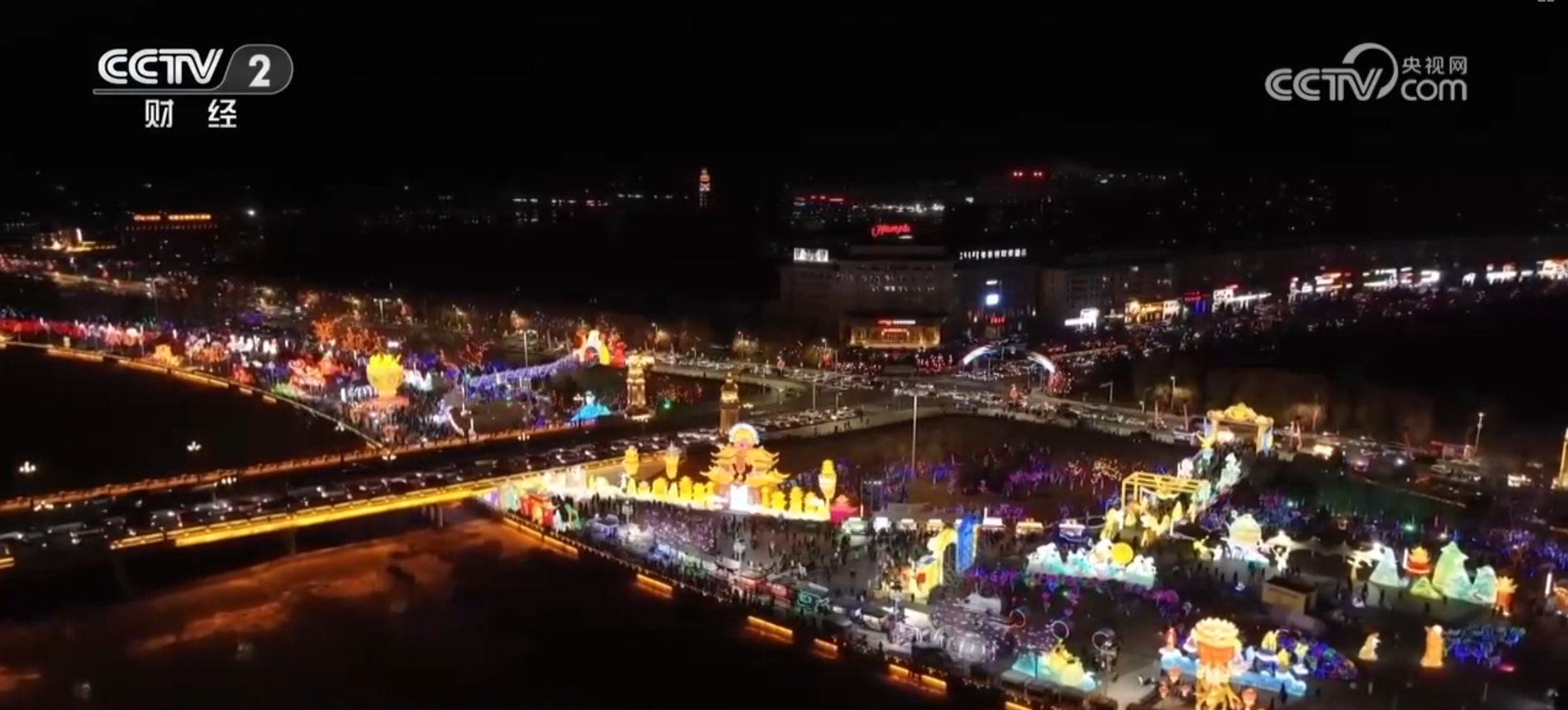
Group 1 - Inner Mongolia is leveraging its ice and snow resources to launch various winter tourism projects, integrating ice and snow art, folklore, and culinary culture to attract visitors [2] - The "Ice Snow Blossom" theme park in Manzhouli City features ice sculptures shaped like musical instruments and offers various ice-based attractions, along with traditional Mongolian food and games [3] - A themed lantern festival on the Gui Liu River in the Xingan League showcases horse-shaped light displays, food stalls, and interactive projects, enhancing the winter experience for tourists [5] Group 2 - A new passenger train, K7041, themed around Northeast folklore, has commenced operations from Harbin to Mohe, marking the first of its kind after the start of winter [8] - The K7041 train has upgraded its interactive experience, featuring customized sleeping compartments and dining cars that reflect Northeast cultural elements, transforming the train into a mobile exhibition of local customs [11] - The train promotes a new travel model focused on full interaction, allowing passengers to engage in traditional activities and enjoy regional delicacies, enhancing the overall travel experience [13] Group 3 - The railway department aims to integrate high-quality ice and snow resources in Heilongjiang Province, transitioning ice and snow tourism from a sightseeing model to an immersive experience, thereby promoting high-quality development of the ice and snow economy [15] - The 40th Longqing Gorge Ice Lantern Festival is set to begin in mid-January 2026, featuring a vast display of lanterns and an international ice sculpture competition, combining traditional and modern experiences for visitors [19]
(年终特稿)汇人气、聚财气、显魅力,香港“盛事经济”动能澎湃
Zhong Guo Xin Wen Wang· 2025-12-24 06:53
Core Insights - Hong Kong's "event economy" is thriving, significantly boosting tourism and local businesses, particularly in the restaurant sector, with a reported 30% increase in revenue since the opening of the Kai Tak Sports Park in March 2023 [1][2] - Major upcoming events, including concerts by prominent artists and the 15th National Games, are expected to further enhance Hong Kong's appeal as a diverse event hub [1][2] Group 1: Economic Impact - The Kai Tak Sports Park has hosted over 90 local and international events, selling 1.25 million tickets and generating over $191 million in total revenue, leading the Asian market in these metrics [2] - Hong Kong recorded approximately 45 million visitor arrivals in the first 11 months of the year, a 12% year-on-year increase, surpassing the total visitor count for 2024 [2] Group 2: Government Initiatives - The Hong Kong government has emphasized the synergy between culture, sports, and tourism in its policy reports, aiming to attract more significant events to stimulate retail and hotel sectors [2] - The concept of "events + tourism" is highlighted as a strategic focus for 2025, aiming to enhance the overall tourism atmosphere in Hong Kong [2] Group 3: Infrastructure and Services - The success of the "event economy" is attributed to both hard infrastructure, such as improved transportation networks, and soft advantages, including international talent and professional services [2] - The 15th National Games is seen as a catalyst for promoting the Greater Bay Area as a unique tourism brand, showcasing the appeal of a multi-destination travel model [5] Group 4: Cultural and Creative Development - The industry is adapting by creating deep-dive cultural and ecological tourism products and focusing on local creative IP development to invigorate the "event economy" [7] - Unique IPs, such as the giant inflatable sculptures in Victoria Harbour, have attracted significant public interest and engagement, contributing to the tourism revival [7]

秘鲁获评“美洲最佳美食国家”
Xin Lang Cai Jing· 2025-12-24 06:29
TasteAtlas的评价体系结合用户评分、厨师与专业评审的意见,并收录各国代表性菜肴在全球范围的接 受度。榜单揭示,秘鲁摘得"美洲最佳美食国家"称号,不仅在于其菜品的多样性与丰富的味觉层次,也 反映出秘鲁美食长期以来的文化融合与创新能力。 秘鲁美食的核心优势体现在多个层面,有沿海、安第斯与亚马逊三大区域食材的结合,还有中餐、日本 料理与非洲料理融合形成的独特风味。与此同时,秘鲁料理兼具传统特色与现代诠释,在高级料理与街 头美食两个领域都表现亮眼。 (来源:上观新闻) 国际美食平台TasteAtlas近日公布最新年度排名,秘鲁在区域评比中领先墨西哥、阿根廷与巴西等传统 美食强国,被评为"美洲最佳美食国家"。 旅游业界表示,此项荣誉进一步提升秘鲁作为美食目的地的国际吸引力,对提振旅游业也具有积极影 响。 特约撰稿:南美秘鲁之声 原标题:《秘鲁获评"美洲最佳美食国家" | 新民侨梁》 栏目编辑:梅璎迪 文字编辑:梅璎迪 来源:作者:南美秘鲁之声 多道秘鲁经典料理也在榜单中获得高分,如 ceviche(酸橘汁腌鱼)、lomo saltado(搭配稻米的辣椒炒 牛肉)、ají de gallina(香辣奶油炖鸡)、a ...