自动驾驶

Search documents
特朗普将发表全国讲话 或面试美联储主席候选人沃勒
Zhi Tong Cai Jing· 2025-12-17 14:45
Market Movements - US stock index futures are all up, with Dow futures rising by 0.23%, S&P 500 futures up by 0.34%, and Nasdaq futures increasing by 0.44% [1] - As of the latest update, the WTI crude oil price increased by 1.74% to $56.09 per barrel, while Brent crude rose by 1.63% to $59.88 per barrel [3][4] Economic and Political News - President Trump is scheduled to deliver a speech on Wednesday evening, focusing on his achievements and future priorities as he approaches the end of his first year back in the White House [5] - Trump is also interviewing Federal Reserve Board member Christopher Waller for the position of Fed Chair, indicating a swift process in selecting candidates [5] - Goldman Sachs suggests that the Federal Reserve may be more willing to cut interest rates next year than previously expected, influenced by recent labor market data [7] Company-Specific Developments - Amazon is in talks to invest $10 billion in OpenAI, which could enhance its competitive position against Nvidia in the AI chip market [8] - Warner Bros. plans to reject a hostile takeover bid from Paramount due to concerns over financing arrangements, favoring its existing agreement with Netflix [9] - Nvidia is collaborating with SK Hynix to develop AI-focused solid-state drives (SSDs) aimed at significantly improving performance metrics [10] - Waymo, a subsidiary of Alphabet, is seeking to raise over $15 billion at a valuation nearing $100 billion, indicating strong investor interest in autonomous vehicle technology [11] - GlaxoSmithKline's new asthma drug has received FDA approval, which could position it as a significant product in the market [12]





美股前瞻 | 交易员押注周四CPI“无关紧要”,美股波动预期骤降 特朗普将周三面试美联储理事沃勒
智通财经网· 2025-12-17 14:19
Market Movements - US stock index futures are all up, with Dow futures rising by 0.23%, S&P 500 futures up by 0.34%, and Nasdaq futures increasing by 0.44% [1] - European indices show mixed results, with Germany's DAX down by 0.01%, UK's FTSE 100 up by 1.63%, France's CAC40 down by 0.15%, and the Euro Stoxx 50 up by 0.12% [1] Oil Prices - WTI crude oil has increased by 1.74%, reaching $56.09 per barrel, while Brent crude oil is up by 1.63%, priced at $59.88 per barrel [2] Market News - President Trump is expected to interview Federal Reserve Governor Christopher Waller for the position of Fed Chair, with the process moving quickly [3] - Traders are showing less concern regarding the upcoming CPI report, with expectations of only a 0.7% volatility in the S&P 500 index, significantly lower than the 1% average volatility seen in previous months [3] Oil Market Dynamics - Oil prices have rebounded from four-year lows due to geopolitical tensions in Venezuela, with the country’s oil production recovering but still below historical levels [4] - Goldman Sachs indicates that the Federal Reserve may be more inclined to cut rates next year, influenced by labor market data [4] AI Financing Insights - Concerns regarding AI financing are deemed exaggerated, with Goldman Sachs estimating that $700 billion to $1 trillion will be needed for future expenditures, primarily funded by operational cash flow [5] - Amazon is reportedly in talks to invest $10 billion in OpenAI, which could enhance its competitive position against Nvidia in the AI chip market [5] Corporate Developments - Warner Bros. plans to reject a hostile takeover bid from Paramount due to concerns over financing arrangements [6][7] - Nvidia is collaborating with SK Hynix to develop AI solid-state drives, aiming for production by 2027, with performance improvements expected to be significant [7] - Waymo, a subsidiary of Alphabet, is seeking to raise over $15 billion at a valuation nearing $100 billion [8] - GlaxoSmithKline has received FDA approval for a new asthma drug, which could become a significant product with a dosing frequency of only twice a year [9]
驭势科技创始人、董事长兼CEO吴甘沙:争做全球最靠谱的自动驾驶 先做100分“高考生”
Sou Hu Cai Jing· 2025-12-17 13:25
察势者明,趋势者智,驭势者独步天下。封闭场景、商用车、全栈技术平台——吴甘沙这位前英特尔中国研究院院长正带领团队走一条"少有人走的路"。 上证报中国证券网讯(记者 于祥明)察势者明,趋势者智,驭势者独步天下。封闭场景、商用车、全栈技术平台——吴甘沙这位前英特尔中国研究院院长 正带领团队走一条"少有人走的路"。 "我们选择第二种。"他坦言,自动驾驶商业化有一条残酷的规则:99分等于0分。"你可以做99分的演示,但真正要在商业场景中实现规模化落地,必须是 100分。因为安全问题一旦发生,就是系统性风险。" "做自动驾驶就像解题。一种是做奥数题,最难,但不保证能拿100分;另一种是参加全科高考,争取最重要的几科先拿满分。"接受上海证券报记者独家专 访时,驭势科技创始人、董事长兼CEO吴甘沙先给记者作了这样一个比喻,解释公司为何选择从机场、厂区等封闭场景切入自动驾驶赛道。 成立于2016年的驭势科技,已悄然成为全球领先的无人驾驶解决方案提供商之一,服务香港国际机场、乌鲁木齐天山国际机场等全球20多个机场,并逐步将 业务拓展至物流、环卫等多个商用场景。 从"封闭场景"驶入 在自动驾驶行业普遍追逐城市开放道路、Robot ...

见证历史,史上首位
Ge Long Hui· 2025-12-17 10:13
Group 1: Market Overview - The market has been reignited by technology stocks, with the Shanghai Composite Index rising by 1.19%, the Shenzhen Component Index by 2.4%, and the ChiNext Index by 3.39% [1] - There is a coexistence of weak index performance and strong structural excitement in the market, indicating a complex investment environment as the year-end approaches [1][6] Group 2: Tesla and SpaceX Developments - Tesla's stock price has rebounded significantly after a 36% drop in the first quarter, reaching a new closing high of $489.88, up 3.1% recently [3] - Elon Musk's wealth has surged, making him the first person in history to surpass $600 billion, currently at $684.2 billion, with projections for SpaceX to reach a valuation of $1.5 trillion upon its IPO [2][3] - The potential for Tesla's full self-driving technology to be commercialized could push its valuation towards $2 trillion, solidifying its position as a global tech leader [2] Group 3: Autonomous Driving Developments - The Chinese Ministry of Industry and Information Technology has issued the first batch of L3 autonomous driving licenses, marking a shift from "technical validation" to "commercial pilot" for autonomous driving in China [5][9] - Companies like Changan and BAIC Blue Valley have received L3-level licenses, indicating a significant advancement in the domestic autonomous driving sector [5][9] - Tesla's progress in Robotaxi technology is influencing the domestic industry, pushing for faster iterations and advancements in autonomous driving technology [9][10] Group 4: Investment Opportunities - The current market environment is characterized by a focus on sectors with "from 0 to 1" technological breakthroughs, particularly in L3 autonomous driving and commercial aerospace [6][8] - Companies like Zhejiang Shibao and BAIC Blue Valley are becoming focal points for investment due to their roles in the L3 project and potential for industry restructuring [10] - The commercial aerospace sector is also gaining attention, with a shift in focus from broad launch capabilities to more specific components that ensure performance and reliability [10]
Waymo洽谈新一轮融资 估值超1000亿美元
Xin Lang Cai Jing· 2025-12-17 09:33
Group 1 - Waymo plans to raise funds with a valuation of at least $100 billion, with the financing amount expected to be in the tens of billions, potentially exceeding $10 billion [2][5] - The previous funding round in October last year raised $5.6 billion at a valuation of $45 billion, indicating a potential doubling of valuation in the upcoming round [3][6] - Waymo has completed 14 million ride-hailing orders this year and aims to achieve 1 million autonomous ride-hailing services per week by the end of 2026 [3][6] Group 2 - The new funding round will support Waymo's expansion efforts across the U.S. and globally [3][6] - Despite starting to charge passengers for autonomous ride-hailing services, the business is currently estimated to be operating at a significant loss [3][6] - Competitors like Tesla and Amazon's Zoox are also intensifying their efforts to deploy autonomous vehicles in major U.S. cities [3][6]
Robotaxi全球一哥,最新估值超7000亿
3 6 Ke· 2025-12-17 08:37
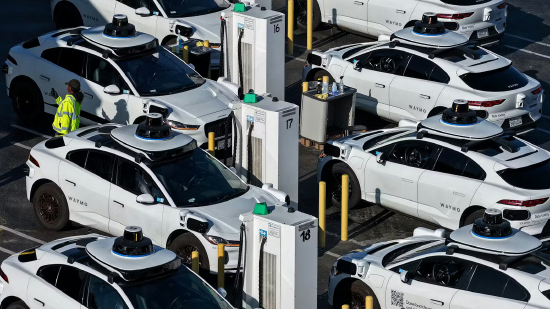
火爆,实在火爆。 反映的是Robotaxi整个赛道的火爆,利好的也是全球所有Robotaxi玩家。 Waymo最新估值,都冲上1000亿美元了。 时隔17个月,Waymo被曝再次融资,估值超千亿美元,融资规模超百亿美元,与历史融资总额持平,一举刷新自动驾驶赛道融资和估值纪录。 首个1000亿美元Robotaxi超级独角兽就此诞生,这是第一个,但是不是唯一一个嘛…… Robotaxi赛道确实热辣滚烫,也确实竞争激烈,强如Waymo,50亿美元也不过花了一年半不到。 这也印证了此前从业者的猜想,Waymo的成本确实高,中国玩家在这方面有极大优势。 一个问题随之出现: Robotaxi全球逐鹿,不过才拉开序幕。站在同一起跑线上,具备成本优势的中国Robotaxi玩家,是不是也该被重估了? Waymo估值冲上1000亿美元 据多家媒体报道,因为Robotaxi竞争激烈,Waymo正在以超1000亿美元估值开展新一轮融资,母公司谷歌将领投。1000亿美元,也就人民币7049亿元吧。 这一轮融资规模也同步暴涨,不过目前存在100亿美元(约合人民币704亿元)和150亿美元(约合人民币1056亿元)两种说法,至少将是上一轮 ...
小马智行(02026)王皓俊:财务指标不全反映技术价值,2023年或成商业化验证年
智通财经网· 2025-12-17 07:23
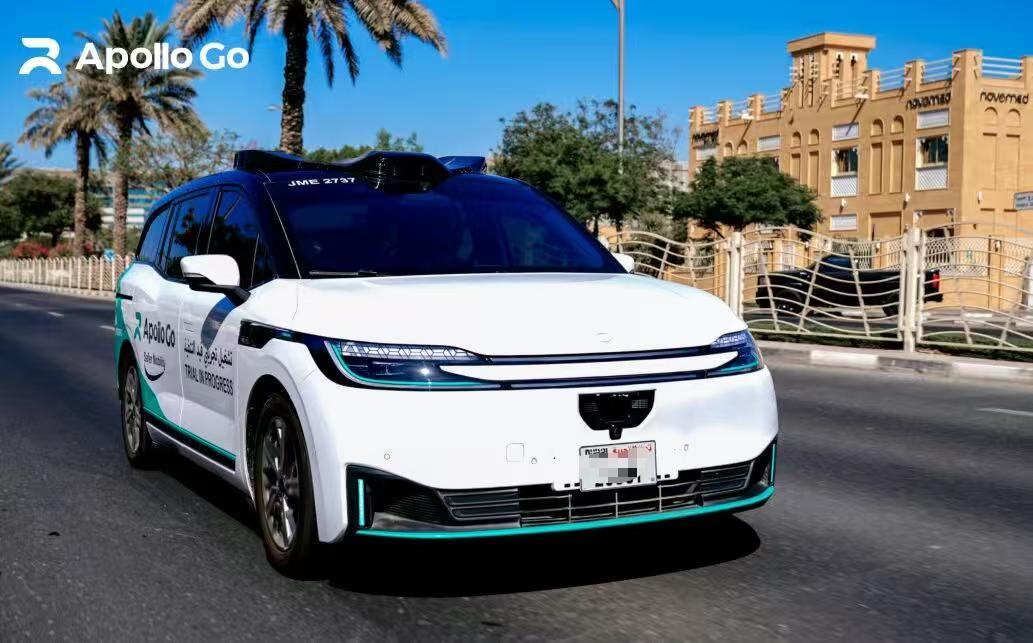
Core Insights - The announcement of the first batch of conditional L3 autonomous vehicle permits by the Ministry of Industry and Information Technology marks a clearer path for autonomous driving commercialization, particularly in the Robotaxi sector, which is entering a competitive phase [1] Group 1: Company Developments - Xiaoma Zhixing has achieved single-vehicle profitability with its seventh-generation Robotaxi, aiming for breakeven by 2030 [1][2] - The company plans to operate fully autonomous Robotaxi services in major cities like Beijing, Shanghai, Guangzhou, and Shenzhen, covering over 2000 square kilometers [2] - Xiaoma Zhixing's Robotaxi fleet has grown from over 680 vehicles to more than 961, with a target of exceeding 1000 vehicles by the end of 2025 and expanding to over 3000 by the end of 2026 [2] Group 2: Financial Performance - In Q3 2025, Xiaoma Zhixing reported total revenue of $25.4 million (approximately 181 million RMB), a 72% increase from $14.8 million in Q3 2024, driven by strong demand for autonomous driving services and technology licensing [3] - The gross margin improved to 18.4% in Q3 2025, up from 9.2% in the same period in 2024, attributed to a higher contribution from high-margin autonomous driving services [3] - Revenue from autonomous driving services grew by 89.5% year-on-year, with passenger fare income surging over 200% [3] Group 3: Autonomous Trucking Initiatives - Xiaoma Zhixing's autonomous truck business has accelerated, with a fleet of approximately 200 trucks and a cargo transport volume exceeding 10 billion ton-kilometers [3][4] - The company has partnered with SANY Heavy Truck and Dongfeng Liuzhou Motor to develop a fourth-generation autonomous truck family, with plans for mass production of two models based on advanced electric platforms by 2026 [4] - The current scale of 200 autonomous trucks is strategically significant for meeting data needs for technology iteration, with plans for commercial scaling after 2-3 years of technology validation [4]
文远知行上涨2.01%,报8.61美元/股,总市值29.46亿美元
Jin Rong Jie· 2025-12-17 06:14
Core Insights - WeRide (文远知行) is a leading autonomous driving technology company, established in 2017, with operations in 30 cities across 7 countries, and has been operational for over 1,600 days [1][2] - The company reported a total revenue of 200 million RMB for the fiscal year ending June 30, 2025, representing a year-on-year growth of 32.81%, while the net profit attributable to shareholders was -792 million RMB, showing a 10.23% increase year-on-year [1] - WeRide has developed a product matrix that includes Robotaxi, Robobus, Robovan, Robosweeper, and Advanced Driving Solutions, positioning itself as a leader in the commercialization of autonomous driving [2] Financial Performance - As of December 17, WeRide's stock price increased by 2.01% to $8.61 per share, with a total market capitalization of $2.946 billion [1] - The company’s revenue growth of 32.81% indicates strong market demand and operational efficiency [1] Strategic Partnerships - WeRide has established strategic partnerships with several top global manufacturers and suppliers, including the Renault-Nissan-Mitsubishi Alliance, Yutong Group, GAC Group, and Bosch, enhancing its technological and operational capabilities [2] Industry Recognition - In 2023, WeRide was ranked eighth on Fortune's list of companies changing the world, making it the only Chinese company to enter the top ten [2]

【今晚播出】一场“无人”的马拉松 | 两说
Di Yi Cai Jing Zi Xun· 2025-12-17 05:55
Core Insights - Pony.ai has recently gone public on the Hong Kong Stock Exchange after its listing on NASDAQ in 2024, becoming one of the first autonomous driving technology companies to achieve a dual listing in both US and Hong Kong markets [1] - The company is currently providing fully autonomous taxi services in major Chinese cities including Beijing, Shanghai, Guangzhou, and Shenzhen [1] Industry Discussion - The program discusses the safety of autonomous driving and public acceptance of this technology [1] - It explores how startups in the autonomous driving sector can strategically position themselves within the business ecosystem, especially as China enters the "14th Five-Year Plan" [1] - The conversation also addresses the uncertainties faced by Chinese entrepreneurs in the autonomous driving field and the intrinsic qualities needed to navigate these challenges [1]
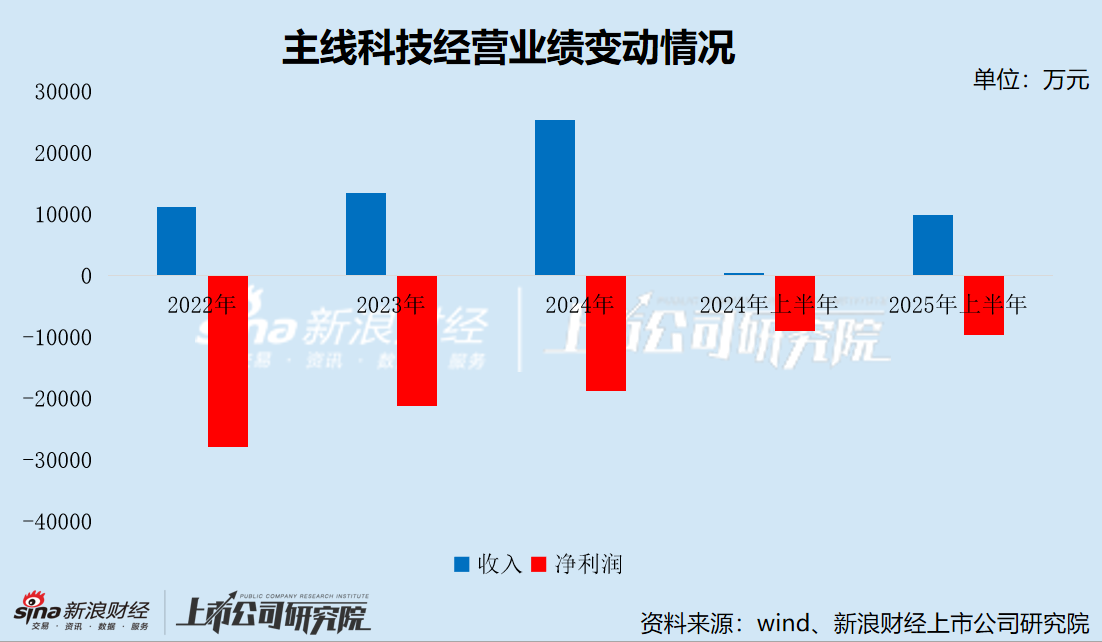
主线科技港股IPO:研发外包比重高、持续裁撤研发团队、削减研发开支 已资不抵债亟需上市融资“输血”
Xin Lang Cai Jing· 2025-12-17 04:36
Core Viewpoint - Mainline Technology has submitted an IPO application to the Hong Kong Stock Exchange, facing significant financial challenges including high debt levels and ongoing losses since its establishment in 2017 [1][2][10]. Financial Performance - Since its inception, Mainline Technology has completed 8 rounds of financing, raising over 900 million yuan, but has accumulated over 1 billion yuan in redeemable liabilities, leading to an asset-liability ratio of 580.2% as of June 30 this year [1][9][22]. - The company reported a cumulative net loss of 774 million yuan, with adjusted net losses exceeding 500 million yuan, indicating a lack of operational cash flow and "blood-making" ability [1][5][19]. - Revenue for 2022, 2023, and 2024 is projected to be 112 million yuan, 134 million yuan, and 254 million yuan respectively, with a compound annual growth rate of 50.38% [4][19]. - Despite revenue growth, the company has recorded net losses of 278 million yuan, 213 million yuan, and 187 million yuan for the same years, with total losses exceeding revenue by 35.44% [5][19]. Debt and Cash Flow - As of June 30, the company had cash and cash equivalents of only 67.7 million yuan, a decrease of 51.72% from the end of 2022, while bank loans surged to 119 million yuan, a 138.43% increase [8][22]. - The redeemable liabilities reached 1.063 billion yuan, representing 4.7 times the total assets, indicating a severe financial risk [9][22]. - Operating cash flow has consistently been negative, with cumulative outflows of 469 million yuan [20]. R&D and Competitive Landscape - Mainline Technology has been reducing its R&D team and expenditures, with R&D expenses decreasing from 147 million yuan in 2022 to 115 million yuan in 2024, and the R&D expense ratio dropping significantly [13][25]. - The company has outsourced a portion of its R&D activities, with outsourcing accounting for 35.5% and 44.0% of total R&D expenditures in 2024 and the first half of 2025 respectively [16][26]. - The competitive landscape includes other autonomous driving solution providers, with significant competition from companies like Pony.ai and TuSimple, as well as traditional automotive manufacturers entering the autonomous driving market [11][23].