风电

Search documents
离岸距离最远海上风电项目实现全容量并网
Xin Hua Ri Bao· 2025-12-17 21:48
本报讯 (记者 华钰) 12月15日,我国离岸距离最远海上风电项目——三峡江苏大丰800兆瓦海上风电 项目实现全容量并网。项目预计年均发电量可满足140万户家庭日常用电需求,相当于节约标准煤约86 万吨,减少二氧化碳排放约237万吨。 项目由三峡集团投资建设,是江苏省首批海上风电平价上网示范项目之一,位于盐城市大丰区东北海 域,由四个场址组成,共安装98台风机,总装机容量800兆瓦。项目H8-1号场址中心点离岸距离80千 米,最远点离岸距离85.5千米,刷新我国海上风电项目离岸距离的纪录。 "我们克服了离岸距离远、施工窗口期短、海上作业难度大等多重挑战,从全面开工到全容量并网历时 不足10个月,为后续深远海风电项目开发提供了可复制、可推广的技术路径与工程经验。"三峡集团江 苏分公司盐城公司负责人刘宇说。 项目建成国内首个搭载气象雷达的海上升压站,可通过海洋气象精细化监测系统为风机优化调度、设备 安全运维提供实时支撑。项目投运的一台13.6兆瓦风电机组,刷新江苏海域海上风机单机容量纪录。该 机组叶轮直径达252米,机组每转一圈可发出清洁电能约29千瓦时,每年可输出清洁电能超4650万千瓦 时。 ...

2026年风光储投资策略
2025-12-17 15:50
Summary of Key Points from Conference Call Records Industry Overview - **Wind Power Sector**: Positive investment outlook with an increase in sales cycles for onshore wind turbines and benefits from policy windows for offshore wind. A performance inflection point was noted in Q3 2025, with stable onshore installations expected in 2026 and offshore capacity potentially reaching 12GW. Emerging markets are showing rapid growth [1][18]. - **Energy Storage Market**: Strong domestic and international demand, with a projected growth rate of 40%-50% for 2026. The number of domestic tenders from January to October increased by over 150%, indicating a near doubling of the market next year. International demand is rising in the US, Europe, Middle East, India, and North Africa [1][5][8]. - **Photovoltaic Sector**: Strong supply-side performance with a robust spot market and effective supply control. Demand is increasing both domestically and internationally, with a potential supply-demand balance expected by 2027. Leading companies are likely to benefit first [1][3][19]. Core Insights and Arguments - **Investment Strategy for 2025**: Focus on energy storage and wind power sectors due to high industry fundamentals and strong order data. Leading companies are showing high profitability and relatively low valuations, making them attractive investment opportunities [2]. - **Onshore Wind Pricing**: Onshore wind prices are stabilizing, leading to profit recovery. Prices are expected to rise by 5%-10% in 2025, supported by a decrease in upstream supply chain costs [4][21]. - **Energy Storage Demand Drivers**: The growth in energy storage demand is primarily driven by the need for stability in renewable energy integration and government policies supporting storage systems [6][8]. - **Micro-Level Behavior Impact**: Increased production schedules among companies indicate a trend similar to past photovoltaic industry behaviors, suggesting a robust demand growth in the next 1-2 years [7]. Additional Important Insights - **Key Players in Energy Storage**: The entire energy storage value chain, including integration, PCS (Power Conversion Systems), thermal control systems, and auxiliary materials, shows significant development potential. Companies like Sungrow, Haibo, and Canadian Solar are highlighted as key players [9][10]. - **Market Performance of Key Companies**: Recent market adjustments for Sungrow and Haibo were attributed to overall market weakness, but their performance remains strong with no significant downward revisions in annual targets [11]. - **Risks for Canadian Solar**: After shareholder approval, trade and policy risks in the US market have significantly decreased, positioning Canadian Solar favorably for future growth [12]. - **Challenges in Exporting PCS**: Exporting PCS faces long certification cycles, particularly in North America, necessitating third-party sourcing for international operations [13]. - **Temperature Control Segment**: The temperature control segment is experiencing strong demand, with market leaders like Yingwei and Tongfei holding significant market shares. Anticipated price increases and new product iterations are expected to bolster this segment [14]. - **Global Energy Storage Demand**: Strong growth is expected in both domestic and international markets, with significant benefits for leading operators and suppliers across the energy storage value chain [15]. - **Residential Energy Storage Outlook**: The residential energy storage sector is recovering from inventory reduction phases, with growth expected in traditional markets and emerging regions like Indonesia [16][17]. - **Wind Power Supply Chain**: The wind power supply chain is characterized by improved profitability due to stable pricing and reduced costs in upstream supply chains [21][23]. - **Export Opportunities in Wind Power**: The export of wind turbines is expected to increase significantly, with higher margins compared to domestic sales, marking a key growth area for manufacturers [24]. - **Gearbox Sector Potential**: The gearbox sector is projected to grow due to its significant cost share in wind turbines and stable pricing, with companies like Delijia and Weili Transmission expected to perform well [25]. - **Investment Opportunities in Offshore Wind**: The offshore wind tower and cable sectors are poised for growth, with leading companies benefiting from high domestic demand and international expansion [26][27].
电新行业2026年度投资策略:新成长和高质量发展
Guolian Minsheng Securities· 2025-12-17 15:34
Group 1 - The report indicates that the electric power equipment and new energy industry narrative is based on the dual themes of "new power system construction + digital infrastructure construction" under the ongoing "dual carbon" strategy and rapid development of the digital economy [3][12][25] - The electric new energy sector has shown significant performance, with an overall increase of approximately 38.4% year-to-date, outperforming the CSI 300 index, which increased by 15.7% [16][18] - The report categorizes investment opportunities into two main lines: "new growth" and "high-quality development," analyzing various segments of the electric new energy industry [3][25] Group 2 - In the "new growth" category, key areas include AIDC, solid-state batteries, and humanoid robots, driven by global energy transition, technological advancements, and increasing demand [3][25][13] - The "high-quality development" category highlights storage, wind power, and photovoltaic sectors, with improvements in economic viability and market conditions leading to increased demand and profitability [4][26][13] - The report emphasizes the importance of solid-state batteries, which offer high energy density and safety, and are expected to see accelerated industrialization supported by favorable policies [30][32][41] Group 3 - The report provides earnings forecasts and valuations for key companies in the electric new energy sector, indicating a positive outlook for companies like CATL, Xiamen Tungsten, and others, with recommended ratings [5][27][28] - The analysis includes specific EPS and PE ratios for various companies, suggesting strong growth potential in the coming years [5][27][28] - The report also discusses the competitive landscape and technological advancements in the solid-state battery market, highlighting the importance of material innovations and safety improvements [30][41][45]


天顺风能:全球海洋经济刚刚起步,未来市场空间巨大
Zheng Quan Ri Bao Wang· 2025-12-17 14:12
Group 1 - The core viewpoint is that the global marine economy is just beginning, indicating significant future market potential [1] - The company highlights that shoreline resources are limited, which may impact future growth opportunities [1] - Investors are encouraged to focus on the future potential of the marine economy [1]

中国首个智能化无人风电场在宁夏投运
Zhong Guo Xin Wen Wang· 2025-12-17 14:10
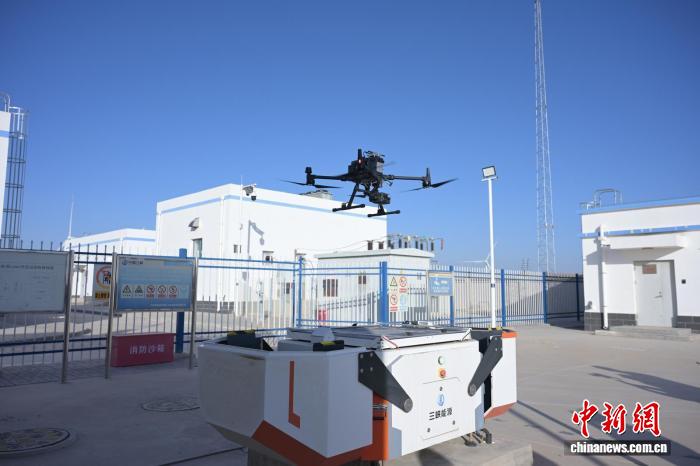
Core Insights - The first intelligent unmanned wind farm in China has commenced operations in Ningxia Wuzhong City, featuring a total installed capacity of 70 megawatts [1][3] - The wind farm, known as the Sanxia Energy Ningxia Tongli Third Wind Farm, is capable of generating approximately 130 million kilowatt-hours of green electricity annually, equivalent to the annual electricity consumption of 100,000 households [3] Group 1: Technological Advancements - The operational model of the wind farm has fundamentally changed, relying on over 300 intelligent devices instead of manual inspections, with 5,000 inspection points managed by these devices [3] - Drones autonomously take off from their nests to scan wind turbine blades and transmission towers, while quadruped robots conduct "health checks" on transformers and other equipment [3] - The efficiency of inspections has significantly improved, with drones completing inspections in 40 minutes compared to 2 hours for manual inspections, achieving an accuracy rate exceeding 98% [3] Group 2: Industry Impact - The project reflects Wuzhong City's efforts to promote high-quality development in the renewable energy sector, with significant advancements in power structure transformation and energy storage capabilities [4] - Since the 14th Five-Year Plan, the region has built 66 substations of 110 kV and above, and 23 electrochemical energy storage stations, with a total storage capacity of 2.693 million kilowatts, accounting for 43% of the entire autonomous region [4] - The operationalization of this wind farm marks a critical step towards the intelligent and unmanned operation of wind energy in China, providing a replicable model for quality improvement and safety assurance in the renewable energy sector [4]


稳居第一!烟台清洁能源为何领跑齐鲁
Qi Lu Wan Bao· 2025-12-17 11:12
Core Viewpoint - Yantai is striving to become a model city for green, low-carbon, and high-quality development, showcasing significant achievements in the economic and livelihood sectors by 2025, particularly in clean energy production [1] Group 1: Clean Energy Development - Yantai has the highest installed capacity of clean energy in Shandong Province, with offshore wind power capacity reaching 2.21 million kilowatts and generating over 16.4 billion kilowatt-hours [4][5] - The city has made significant strides in offshore wind power, starting from a "zero breakthrough" with the first offshore wind farm in Shandong in September 2021, leading to continuous project developments [2][4] - Yantai has achieved "eight firsts" in the clean energy sector, including the first nuclear power and offshore wind power in Shandong, and the largest salt-alkali flat photovoltaic project in the country [5] Group 2: Industrial Ecosystem - Yantai is not only focusing on power generation but is also developing a comprehensive industrial chain that includes research, manufacturing, transportation, installation, and operation, solidifying its leading position [7] - The establishment of the "China Offshore Wind Power International Mother Port" in Penglai has attracted major industry players, enhancing the local manufacturing capabilities for wind power components [7][9] Group 3: Energy Infrastructure - Yantai has transformed from being at the end of the Shandong power grid to becoming a key green energy base, facilitating the transmission of clean energy [10][11] - The construction of a 1000 kV ultra-high voltage transmission project is underway, which will enhance the capacity to deliver clean energy and support the city's ambitious green energy goals [11][13] Group 4: Policy Support and Future Goals - The Shandong provincial government has introduced policies to support Yantai's development as a green, low-carbon city, including the implementation of significant nuclear and offshore wind projects [14] - Yantai aims to increase its clean energy installed capacity to around 20 million kilowatts by 2027, with a target of over 65% of total installed capacity coming from clean energy sources [14][15]

邀请函!发起搭建“零碳园区建设联合体”
中国能源报· 2025-12-17 10:03
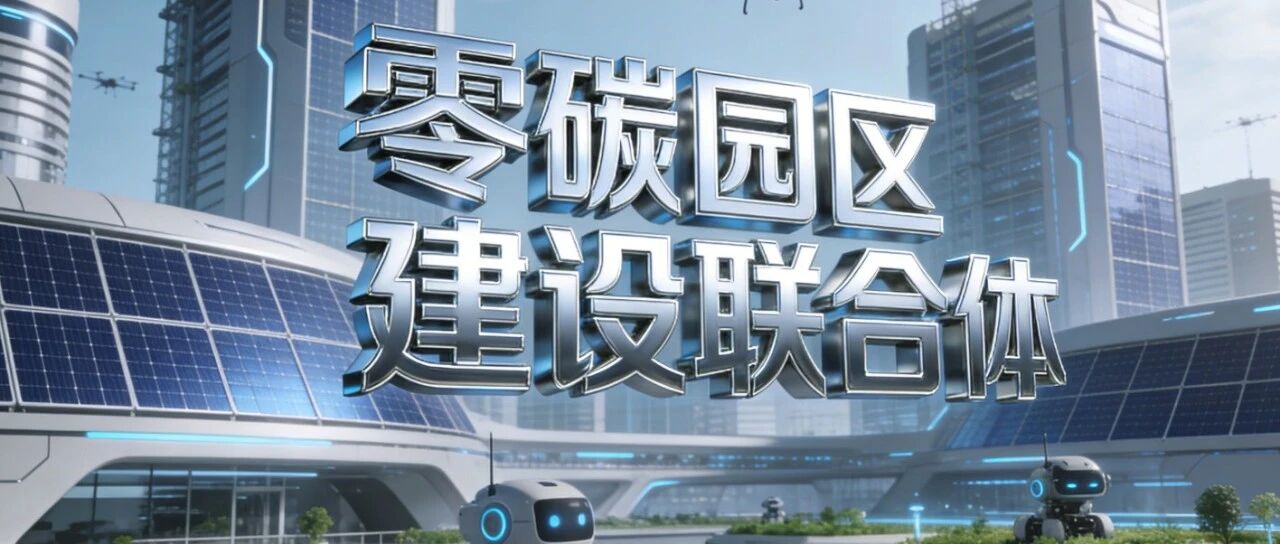
Core Viewpoint - The article discusses the establishment of a "Zero Carbon Park Construction Alliance" aimed at promoting the development of zero carbon parks through collaboration among various stakeholders, including government, industry, academia, and research institutions [2]. Group 1: Alliance Work Focus - The alliance will focus on four core areas: research, service, cooperation, and communication [7]. - A high-end expert think tank will be formed to provide professional guidance and intellectual support for the alliance's initiatives [7]. - A standard system framework will be developed to create guidelines and evaluation systems for zero carbon park construction, addressing existing gaps in industry standards [7]. - A resource integration platform will be established to connect zero carbon technologies, financial capital, professional services, and high-end talent, offering comprehensive services to parks [7]. - Pilot demonstration projects will be initiated in representative parks to create replicable models for zero carbon park construction [7]. - Regular industry exchanges and brand promotion activities will be organized to enhance the influence of the alliance and its member units [7]. Group 2: Recruitment Scope - The recruitment scope includes key stakeholders in the zero carbon transformation value chain, such as government departments, energy companies, consulting and construction firms, major energy-consuming enterprises, certification agencies, and financial institutions [8]. Group 3: Application Process - Interested units are invited to fill out a participation form to join the alliance and submit it to the designated email address [9][11]. Group 4: Contact Information - Contact details for the China Energy News and the China Development Zone Association are provided for further inquiries regarding the alliance [13].
电投能源:2025年公司按计划正推进霍林河循环经济示范工程续建(第六期)20万千瓦时风电等项目
Zheng Quan Ri Bao Wang· 2025-12-17 08:49
Core Viewpoint - The company is progressing with multiple renewable energy projects as planned for 2025, focusing on wind power and integrated energy solutions [1] Group 1: Project Details - The company plans to continue the construction of the Hohhot Circular Economy Demonstration Project Phase VI, which includes a 200,000 kW wind power project [1] - The Tongliao Circular Economy Demonstration Project Phase VII will feature a 450,000 kW wind power project [1] - The company will initiate the first batch of 550,000 kW projects for both the Keshiketeng Banner desertification control and wind-solar integration project and the Zalute Banner desertification control and wind-solar integration project [1] - The company is also set to implement the first phase of the rural energy revolution pilot project in Kulun Banner, which will involve a 55,000 kW capacity [1]

电网ETF(561380)涨超1.7%,行业景气度与海外需求成焦点
Mei Ri Jing Ji Xin Wen· 2025-12-17 07:14
Group 1 - The rapid development of AI globally is expected to lead to a surge in electricity consumption, maintaining high demand for electrical equipment, particularly transformers and gas turbines in overseas markets [1] - Developed markets such as Europe and the US exhibit characteristics of high demand, high profitability, and high barriers to entry, benefiting companies with quality channel resources, advanced technology, and proactive capacity layout [1] - The wind power industry is anticipated to continue significant growth during the "14th Five-Year Plan" period, with ongoing progress in domestic offshore wind projects and a robust reserve of uninstalled projects [1] Group 2 - The electric grid ETF (561380) tracks the Hang Seng A-share Electric Grid Equipment Index (HSCAUPG), which selects listed companies involved in the manufacturing of transmission, transformation, and control equipment from the Chinese A-share market [1] - The index constituents reflect the development trends of China's electric grid construction and intelligent upgrades, showcasing significant representativeness [1]
湘财证券曹旭特:稳中提质,聚焦高质量发展主线
券商中国· 2025-12-17 06:49
Core Viewpoint - The Central Economic Work Conference has outlined the direction for economic work in 2026, emphasizing the importance of fundamental support and long-term development trends, with several sectors expected to continuously release high-quality development momentum [1] Group 1: Technological Innovation - Technological innovation is entering a new stage of deep application, with a robust support system developing in hard technology fields such as advanced manufacturing [2] - The construction of three major international technology innovation centers (Beijing-Tianjin-Hebei, Yangtze River Delta, Guangdong-Hong Kong-Macau Greater Bay Area) is fostering a collaborative environment for talent, technology, and industry [2] - The deepening expansion of "Artificial Intelligence +" will drive AI technology's penetration into various sectors, including manufacturing, healthcare, transportation, and services, enhancing the collaborative upgrade of the industrial chain [2] Group 2: Modern Industrial System - The industrial system in China is evolving towards consolidating strengths and enhancing overall competitiveness, involving the transformation of traditional industries through digital and green technologies [3] - The continuous optimization of the industrial ecosystem will highlight the advantages of industry leaders and companies with genuine technological innovation capabilities [3] Group 3: Domestic Demand Market Potential - Domestic demand, particularly consumption, plays a fundamental role in China's economic growth, with rising household income and innovative consumption scenarios creating numerous opportunities [4] - Diverse and quality consumption sectors such as the silver economy, ice and snow economy, leisure tourism, and service consumption are expected to benefit continuously [4] - Actions aimed at reducing logistics costs and promoting urban renewal will not only constitute effective investments but also enhance economic efficiency, creating opportunities in modern logistics, smart cities, and green buildings [4] Group 4: Efficiency and High-Level Opening Up - The continuous release of institutional dividends is crucial for high-quality development, with the deepening of the national unified market construction expected to eliminate regional barriers and enhance factor allocation efficiency [5] - The expansion of free trade zones, the construction of Hainan Free Trade Port, and the development of the Belt and Road Initiative will open broader market spaces for internationally competitive Chinese high-end manufacturing, cross-border e-commerce, and financial services [5] Group 5: Green Transformation - The green transformation under the "dual carbon" goals is viewed as a high-certainty long-term development track, with the construction of a new energy system and the development of a national carbon market driving growth in wind power, photovoltaics, energy storage, and carbon monitoring services [6] - Energy-saving and carbon-reduction renovations, along with comprehensive solid waste management, will create sustained demand in the environmental technology and circular economy sectors [6] - New development models in real estate and the construction of "good houses" may present new opportunities in green buildings, smart homes, and urban operation services [6] Conclusion - With the Central Economic Work Conference convened, the coordinated efforts of various policies and the deepening of reform and opening up are expected to solidify and enhance the positive trend of economic recovery, with the capital market serving as a vital platform for resource allocation and a window to observe economic structural changes [7]