稀土

Search documents
关于稀土,有重要新发现
Zheng Quan Shi Bao· 2025-11-07 15:46
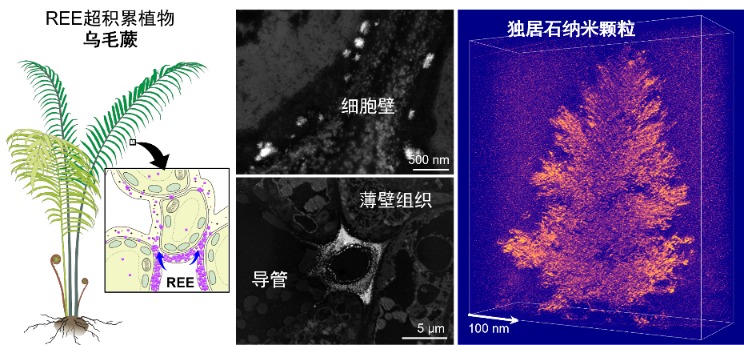
Core Insights - Researchers have discovered a significant accumulation of rare earth elements in a fern species called "U毛蕨" and observed the self-assembly of these elements into a mineral known as "lanthanite" within plant tissues, marking the first instance of biogenic mineralization of rare earth elements in natural plants [1][2][4] - This discovery offers a new pathway for sustainable utilization of rare earth resources, which are critical in key sectors such as artificial intelligence, renewable energy, and national defense, while traditional mining methods pose ecological risks [1][4] Group 1 - The study published on November 5 in the journal "Environmental Science & Technology" highlights the potential of U毛蕨 as a "rare earth vacuum cleaner" that efficiently absorbs and concentrates rare earth elements from the environment [1][4] - The process of rare earth element accumulation in U毛蕨 involves the precipitation of these elements in nanoparticle form, which then crystallize into lanthanite, serving as a protective mechanism for the plant [2][4] Group 2 - The biogenic lanthanite formed by U毛蕨 is free from radioactive elements like uranium and thorium, which are commonly found in natural lanthanite, presenting a cleaner alternative for rare earth extraction [4] - The findings suggest that cultivating U毛蕨 and similar hyperaccumulator plants could facilitate soil remediation and recovery of valuable rare earth elements, promoting a green recycling model that combines environmental restoration with resource recovery [4]

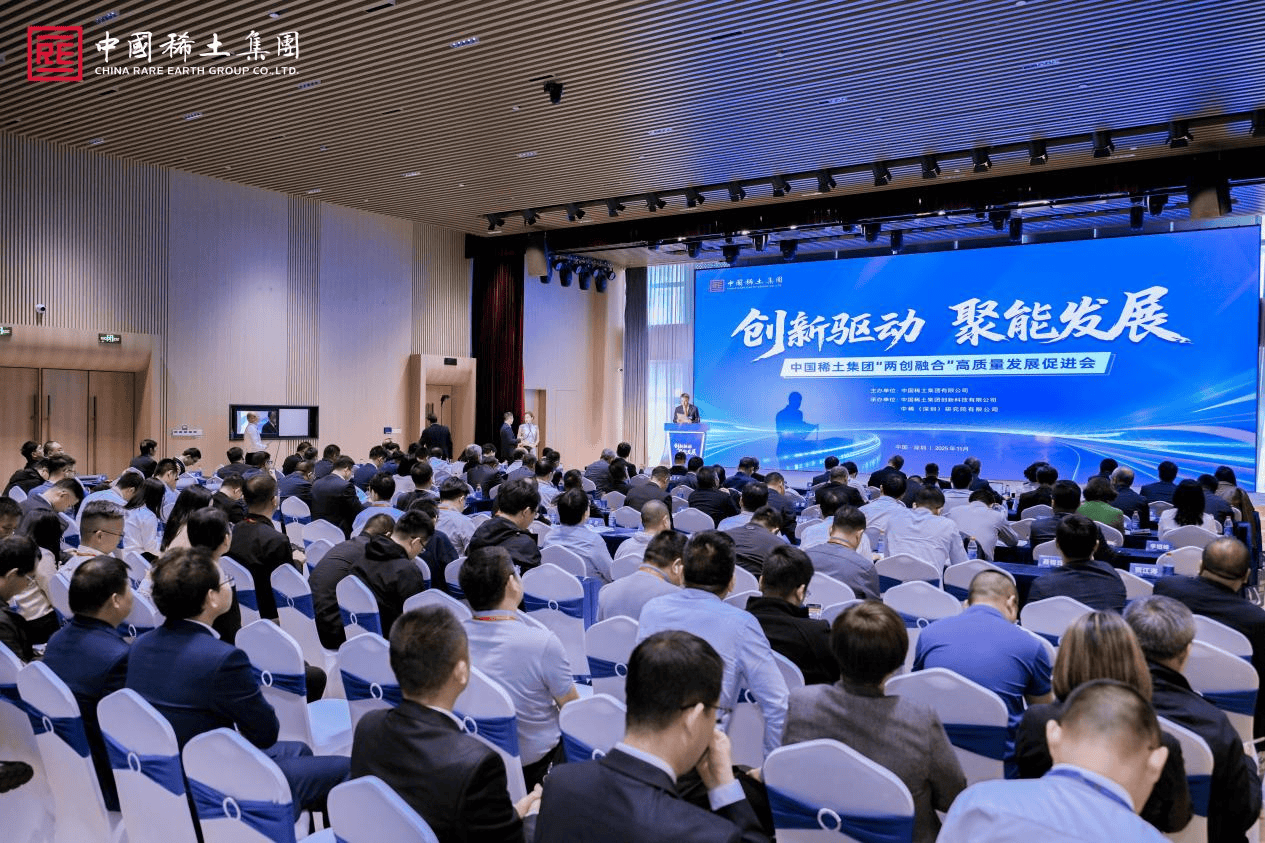
创新驱动 聚能发展|中国稀土集团“两创融合”高质量发展促进会在深圳成功举行
Sou Hu Cai Jing· 2025-11-07 15:45
Core Insights - The China Rare Earth Group held a significant conference in Shenzhen to promote high-quality development in the rare earth industry, aligning with national strategies and focusing on technological and industrial innovation [1][5][7] Group 1: Conference Overview - The conference marked an important event as the "14th Five-Year Plan" concludes and the "15th Five-Year Plan" begins, emphasizing the integration of innovation in technology and industry [1] - Key attendees included experts, government officials, and leaders from the China Rare Earth Group, highlighting the collaborative nature of the event [3] Group 2: Strategic Goals - The China Rare Earth Group aims to enhance research and development investments, establish national-level R&D platforms, and participate in the formulation of national and industry standards [5] - The focus is on gathering collective insights to analyze global trends in rare earth technology and industry, fostering a platform for technological and industrial connectivity [5][7] Group 3: Industry Development - The rare earth industry in China has established a complete industrial chain, with future efforts directed towards high-quality development, technological breakthroughs, and integration into the global innovation network [7] - The conference included the launch of several strategic collaborations, innovation projects, and the unveiling of high-level innovation platforms, aimed at building a robust ecosystem for rare earth technology innovation [11][25] Group 4: Educational and Collaborative Initiatives - The China Rare Earth Society plans to act as a bridge to promote the integration of production, education, and research, fostering a healthy industry ecosystem through various initiatives [9] - The event featured discussions on applications in sectors such as permanent magnet motors, rare earth ceramics, and new energy vehicles, contributing to the strategic enhancement of emerging industries [25]

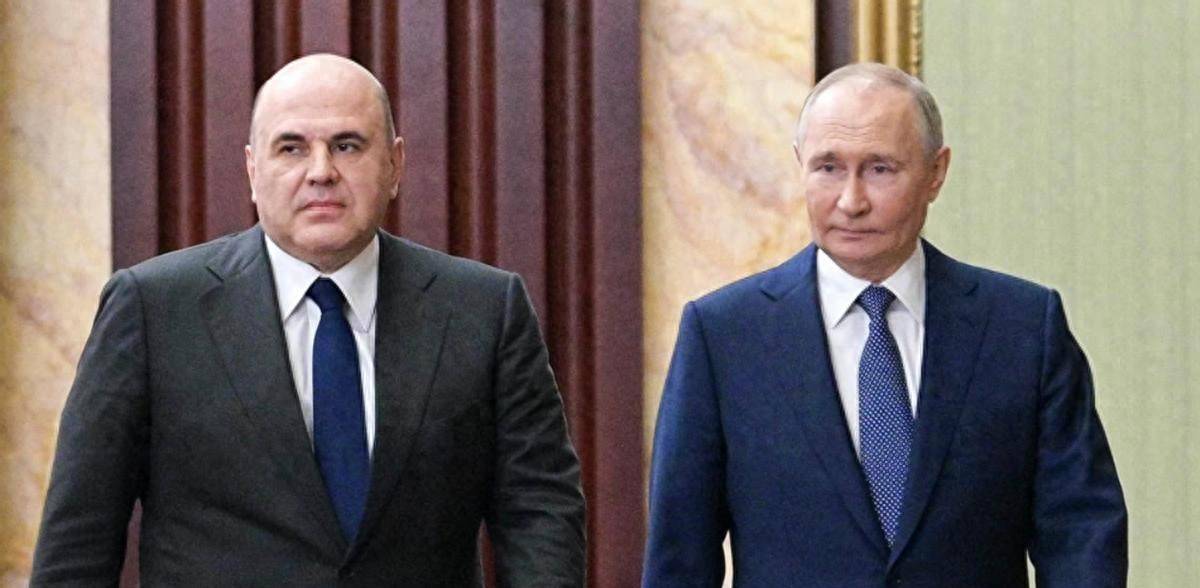
普京下死命令!米舒斯京访华后推进稀土自主,要自主又离不开中国
Sou Hu Cai Jing· 2025-11-07 15:45
Core Insights - Russia is accelerating the development of its domestic rare earth industry to reduce dependence on external sources, following a directive from President Putin [1][3] - A detailed development plan for the rare earth sector is expected by December 1, with Prime Minister Mishustin appointed as the project leader [3] - The Russian government aims to stabilize its military-industrial complex as the primary goal of developing the rare earth industry, with future considerations for sectors like semiconductors and electric vehicles [5] Industry Developments - The Russian Defense Minister has announced plans for a high-tech industrial park in Siberia, with an investment of 700 billion rubles focused on rare earth and rare metal industries [3] - Russia's known rare earth reserves are substantial, estimated at 28.5 million tons, along with over 650 million tons of other critical rare metals [5] - Despite having significant resources, Russia currently faces challenges in resource extraction, with only about 50 tons mined annually, leading to heavy reliance on imports [6] Challenges and Strategic Partnerships - The establishment of a complete rare earth supply chain requires new mining and processing facilities, which are hindered by harsh environmental conditions and the ongoing Ukraine conflict [9] - The Russian government acknowledges a technological gap in rare earth extraction and processing, making collaboration with China a viable option for acquiring necessary technology [9][11] - The success of Russia's rare earth ambitions will depend on its ability to create attractive conditions for investment and effectively integrate its resource advantages with Chinese capital and technology [11]
关于稀土,有重要新发现
证券时报· 2025-11-07 15:43
Core Viewpoint - The discovery of rare earth elements in the plant species "Osmunda japonica" and their self-assembly into a mineral called "lanthanite" presents a new sustainable approach for rare earth resource utilization, potentially reducing ecological damage from traditional mining methods [1][5]. Group 1: Research Findings - Researchers found that rare earth elements are absorbed by Osmunda japonica and crystallize into lanthanite nanoparticles within the plant's vascular bundles and epidermal tissues [2][4]. - This process acts as a self-protection mechanism for the plant, effectively "packaging" toxic rare earth ions into a mineral structure, thereby detoxifying them [2][4]. Group 2: Implications for Sustainable Utilization - The formation of "biological lanthanite" in Osmunda japonica is pure and non-radioactive, offering a promising green extraction method compared to traditional mining, which often involves radioactive elements [4]. - The findings suggest that cultivating hyperaccumulator plants like Osmunda japonica could facilitate soil remediation and recovery of valuable rare earth elements, achieving a "repair and recovery" green cycle [5].
关于稀土,有重要发现
21世纪经济报道· 2025-11-07 14:26
Core Viewpoint - The discovery of rare earth elements in the plant "Osmunda japonica" and their self-assembly into a mineral called "lanthanite" presents a new sustainable pathway for rare earth resource utilization, addressing ecological concerns associated with traditional mining methods [1][2][4]. Group 1: Research Findings - Researchers found that rare earth elements absorbed by Osmunda japonica precipitate as nanoparticles and crystallize into lanthanite, which acts as a protective mechanism for the plant, effectively sequestering potentially harmful rare earth ions [2][4]. - The lanthanite formed by Osmunda japonica is pure and non-radioactive, unlike naturally occurring lanthanite that often contains radioactive elements, thus offering a promising green extraction potential [4]. Group 2: Implications for Sustainable Utilization - The study opens new avenues for research on hyperaccumulator plants and suggests that cultivating Osmunda japonica could facilitate the recovery of valuable rare earth elements while simultaneously remediating contaminated soils and restoring ecosystems affected by rare earth mining [4]. - This approach embodies a "repair and recover" green circular model, allowing for the dual benefit of environmental restoration and resource recovery [4].

金融期货周报-20251107
Jian Xin Qi Huo· 2025-11-07 13:30
Report Information - Report Title: Financial Futures Weekly Report [1] - Date: November 7, 2025 [2] - Researcher: He Zhuoqiao, Huang Wenxin, Nie Jiayi [3] Industry Investment Rating - Not provided in the report. Core Viewpoints - For the stock index, in the long - term, the upward trend remains unchanged due to the easing external environment and new policy expectations from the 15th Five - Year Plan. In the short - term, the index may oscillate around the key pressure level of 4000 points on the Shanghai Composite Index. A dumbbell strategy with balanced allocation of CSI 300 and CSI 500 is recommended [13]. - For treasury bonds, the negative factors in the bond market have basically been released, and November is a stage of accumulating positive factors. Although there are some uncertain disturbances, the overall bond market environment has improved. It is recommended to seize allocation opportunities when there is market over - adjustment [87]. - For shipping indexes, although the actual demand may not support large price increases, the freight rate is likely to form an upward trend, and the bottom may have been reached. It is recommended to maintain the idea of buying on dips for the December contract [108]. Summary by Section Stock Index Market Review - The A - share market has shown a pattern of "short - term correction followed by strong performance, and rebound after a sharp decline due to external shocks" since the beginning of the year. From November 3 - 7, the A - share market rose with reduced volume. The Wind All - A index rose 0.62%, and large - cap blue - chip stocks performed better. Futures were weaker than the spot index [7][8]. - Looking ahead, concerns about liquidity in the US market and high expectations for Sino - US tariff negotiations have led to a weakening market after the positive news was released. Domestically, the economic fundamentals in September faced more pressure, and the export data in October showed a downward trend. Although the margin trading balance provided support, the participation of retail investors was not high. The overall A - share trading volume returned to 2 trillion yuan, and its sustainable growth needs attention [12][13]. 成交持仓分析 - Stock index trading volume decreased. The average daily trading volumes of IF, IH, IC, and IM decreased by 1.13, 0.71, 0.79, and 0.46 million lots respectively compared with last week. The positions showed a differentiated trend. IF and IM positions increased, while IH and IC positions decreased [14]. 基差、跨期价差及跨品种价差分析 - The basis showed a differentiated trend. The basis of CSI 300 and CSI 500 widened, while that of SSE 50 changed from premium to discount, and the basis of CSI 1000 narrowed. The annualized basis rate of each index decreased. The spread between the next - month and current - month contracts of IF, IC, and IM widened, while that of IH narrowed. The spread between the current - quarter and current - month contracts of all varieties widened. Large - cap blue - chip stocks performed relatively better [16][26][32]. Industry Sector Overview - In the CSI 300, the energy, industrial, and financial sectors led the gains, while the pharmaceutical, optional consumer, and information sectors led the losses. In the CSI 500, the energy, public utilities, and industrial sectors led the gains, while the real estate, pharmaceutical, and information sectors led the losses. Among the first - level industries, the power equipment, coal, and petroleum and petrochemical sectors led the gains, while the beauty care, computer, and pharmaceutical biology sectors led the losses [33][35]. Valuation Comparison - As of November 7, the rolling price - to - earnings ratios of CSI 300, SSE 50, CSI 500, and CSI 1000 were 14.3295, 11.9766, 33.464, and 47.8124 times respectively, and they were at the 88.07%, 91.32%, 79.72%, and 77.08% percentile levels in the past decade [38]. Treasury Bonds This Week's Market Review - **Treasury Bond Futures Market**: The central bank's bond - buying was slightly lower than expected, and the warming of the A - share market suppressed the bond market. The performance of long - term futures was slightly stronger than that of spot bonds, while the opposite was true for short - term bonds. There is a certain positive arbitrage space for each variety's main contract, and there is a large reverse arbitrage space for non - CTD bonds of 30 - year, 10 - year, and 2 - year main contracts. The basis of the 10 - year main contract is slightly high and has the motivation to converge. The spread between the current - quarter and next - quarter contracts is expected to continue to narrow during the position - shifting process. A flattening strategy is recommended [42][44][51]. - **Bond Spot Market**: Most of the spot yields of treasury bonds increased this week, with a larger increase at the short end. The yield of US Treasury bonds first decreased and then increased [65]. - **Funding Situation**: At the beginning of the month, there was a net withdrawal of funds. The central bank conducted an equal - amount renewal of the 3 - month outright reverse repurchase due this month. The overall funding situation was stable, and there was no liquidity stratification between banks and non - banks [70]. - **Interest Rate Derivatives**: The yields of interest rate swap varieties increased slightly this week, and the liquidity expectation was stable [85]. Market Analysis - The bond market stabilized and strengthened in October. Currently, the economic fundamentals still face pressure, and the market's expectation of monetary easing may rise again. The restart of treasury bond trading has brought direct buying demand to the bond market, and the impact of wide - credit expectations on the bond market should be limited. Although there are some uncertain disturbances, the bond market environment has improved [87]. Next Week's Open - Market Maturities and Important Economic Calendar - There are a total of 783 billion yuan of reverse repurchases due next week, and important economic data such as China's October social financing data and national economic activity data will be released [95]. Shipping Index Market Review - The reduction of quotes hit the sentiment of long - positions. This week, the SCFIS index turned down again. On the spot side, shipping companies reduced the price increase, which hit the sentiment of long - positions and led to a sharp decline in EC futures [96]. Container Shipping Market Situation - **Spot Market**: The freight rates of ocean routes continued to rebound, with the rates of European and American routes rising. Shipping companies continued to raise the quotes for November and December, but the increase was lower than before. Considering the general demand and the decline of the SCFIS index, it is uncertain whether the price increase can be fully implemented [102][103]. - **Supply - Demand Fundamentals**: On the supply side, the container shipping capacity in Europe in November remained at a relatively high level in the off - season, and the potential and actual shipping capacities are expected to continue to grow. The geopolitical conflict in the Middle East continues to deteriorate, and the probability of the Red Sea resuming navigation within the year is low. On the demand side, the macro - demand in the eurozone continues to recover weakly, and the demand at the end - of - year peak season may be lower than expected, so the support for container shipping prices is limited [106][107]. Market Outlook - Although the actual demand may not support a large price increase, the freight rate is likely to form an upward trend, and the bottom may have been reached. It is recommended to maintain the idea of buying on dips for the December contract [108].
关于稀土,中国有重要发现
财联社· 2025-11-07 13:13
Core Viewpoint - Researchers in China have discovered a significant accumulation of rare earth elements in a fern species called "Wumaojue," marking the first observation of these elements self-assembling into a mineral known as "lanthanite" within plant tissues. This finding presents a new pathway for the sustainable utilization of rare earth resources [1]. Group 1 - The discovery of rare earth elements in a natural plant represents a novel biological mineralization phenomenon [1] - The research results were published online on November 5 in the international academic journal "Environmental Science and Technology" [1] - This finding could have implications for future sustainable practices in rare earth resource management [1]
三大股指期货齐跌 AI泡沫担忧升温之际小摩、花旗齐呼逢低买入
Zhi Tong Cai Jing· 2025-11-07 12:16
Market Overview - U.S. stock index futures are all down ahead of the market opening, with Dow futures down 0.09%, S&P 500 futures down 0.16%, and Nasdaq futures down 0.27% [1] - European indices also show declines, with Germany's DAX down 1.06%, UK's FTSE 100 down 0.85%, France's CAC40 down 0.62%, and the Euro Stoxx 50 down 0.91% [2][3] - WTI crude oil is up 0.98% at $60.01 per barrel, while Brent crude is up 0.90% at $63.95 per barrel [4] Investment Insights - JPMorgan sees market pullbacks as buying opportunities, maintaining a bullish outlook on U.S. stocks, expecting the S&P 500 to break the 7000-point mark in the short term, indicating a potential 3% increase from current levels [5] - Citigroup emphasizes that the fundamentals supporting the long-term bull market in stocks remain intact despite short-term market weakness, suggesting significant buying opportunities during pullbacks [6] - Nomura asserts that the AI narrative is entering a "second act" and is not in a bubble phase, indicating potential for further growth in AI stocks [7] Company News - Tesla's shareholders approved Elon Musk's $1 trillion compensation plan, with over 75% support, paving the way for Musk to potentially become the world's first trillionaire [8] - TSMC plans to raise prices for advanced process chips by 8%-10%, affecting major clients like Apple, particularly for processes at 5nm and below [9] - SanDisk reported a significant increase in operating profit by 878% in Q1, driven by strong demand from data center operations, with projected revenues for the next quarter exceeding analyst expectations [10] - MP Materials reported a Q3 revenue decline of 15% year-over-year, reflecting a strategic shift towards becoming a major U.S. rare earth supplier, with a projected start of commercial magnet sales by year-end [11] - Honda's Q2 profit fell short of expectations, down 25% year-over-year, leading to a 21% cut in its annual profit forecast due to import tariffs and one-time costs related to electric vehicles [11]



商务部、海关总署:暂停稀土等多项出口管制公告的实施
Shang Wu Bu Wang Zhan· 2025-11-07 11:01
商务部 海关总署 商务部、海关总署公告2025年第70号 公布暂停实施商务部、海关总署公告2025年第55号、56号、57号、58 号及商务部公告2025年第61号、62号的决定 经批准,自即日起至2026年11月10日,商务部、海关总署公告2025年第55号、56号、57号、58号,及商务 部公告2025年第61号、62号暂停实施。 2025年11月7日 编辑:饶治美 责编:王光建 审核:杨四海 ...

事关稀土、超硬材料、锂电池等出口管制,两部门发布重磅公告
财联社· 2025-11-07 10:40
Group 1 - The Ministry of Commerce and the General Administration of Customs have announced the suspension of certain export controls from now until November 10, 2026 [1] - The announcements include export controls on superhard materials, certain rare earth equipment and raw materials, lithium batteries, artificial graphite anode materials, and some medium and heavy rare earths [1] - Additional announcements focus on export controls for overseas rare earth items and related technologies [5]