低空经济

Search documents
上海生物医药产业规模将破万亿元,请看《浪尖周报》第45期
Xin Lang Cai Jing· 2025-10-19 08:25
Core Insights - The "Wave Peak Plan" has been launched by the research institute of Zhituo Finance to promote industrial collaboration and technological innovation in the Yangtze River Delta region [1] Group 1: Industry Highlights - Shanghai's biopharmaceutical industry is expected to exceed 1 trillion yuan in scale by the end of the year [2] - Nanjing's Pukou High-tech Zone is developing a full industrial chain for the low-altitude economy [2] - Hangzhou is legislating on embodied intelligent robots [2] - Hefei has made breakthroughs in key technologies for nuclear fusion with the "Kuafu" large scientific device [2] - Suzhou's integrated circuit industry scale has surpassed 120 billion yuan [2] - Ningbo is constructing Zhejiang Province's first 10 billion yuan-level port project at Zhoushan Port [2] - Wuxi's Danone factory's third phase has been capped, doubling the production capacity for special medical foods [2] - Nantong is expanding its high-end textile cluster into the Middle Eastern market [2] - Changzhou is creating a "technology-scenario-ecosystem" integrated digital transportation system [2]
前沿技术竞相亮相竞逐低空新蓝海
Jing Ji Guan Cha Wang· 2025-10-18 15:14
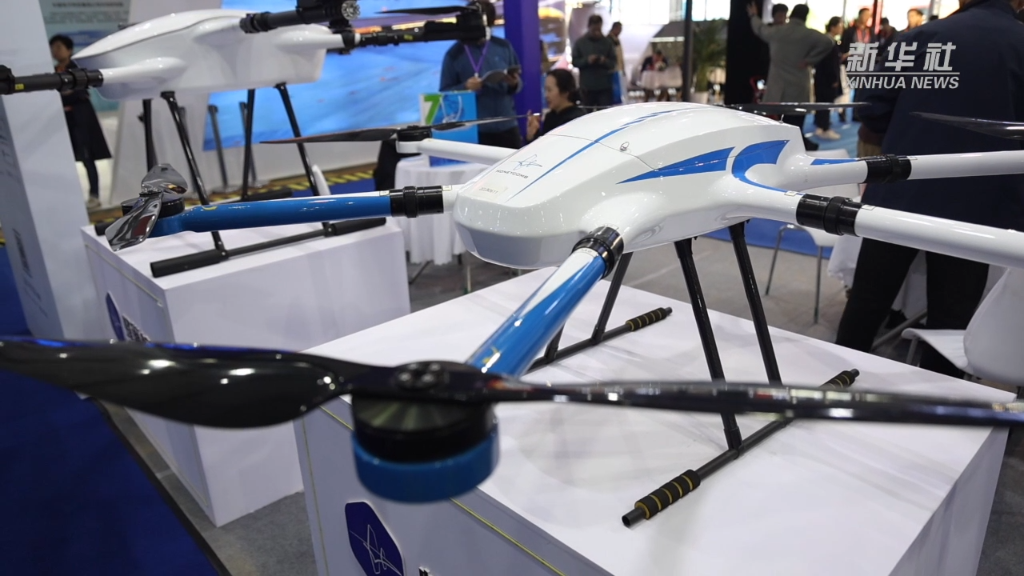
Core Insights - The second China (Xi'an) International Low Altitude Economic Development Conference was held from October 10 to 12, focusing on the theme "New Opportunities in Low Altitude Economy, New Engine for Economic Growth" [2] - The conference showcased cutting-edge technologies and products in the low altitude intelligent manufacturing sector, including drones, eVTOLs, flying cars, general aviation, light aircraft, airships, low altitude communication and navigation, and regulatory technologies [2] - The low altitude economy is projected to grow significantly, with China's Civil Aviation Administration forecasting a market size of 1.5 trillion yuan by 2025 and over 3.5 trillion yuan by 2035 [2] Industry Development - Shaanxi province is experiencing steady development in the low altitude economy, with a rapidly advancing industrial chain and over 400 companies in the drone industry cluster [2] - Xi'an is primarily focused on research and manufacturing within the drone industry, showcasing distinct regional distribution characteristics [2] - The "Action Plan for Cultivating and Expanding a Trillion-Level Aviation Manufacturing and Low Altitude Industry Innovation Cluster" will be issued in 2024, aiming to build a significant aviation manufacturing and low altitude industry cluster [2] Regional Concentration - Xi'an has formed several low altitude economic industrial clusters centered around key areas such as Xi'an High-tech Zone, Xi'an Aerospace Base, and Xi'an Yanliang Aviation Base [3] - The Yanliang Aviation Base integrates aircraft research, design, production, strength testing, flight certification, and aviation education, creating a complete and specialized aviation industry chain [3] Collaborations and Partnerships - The conference featured four major cooperation agreements covering international joint research, comprehensive service base construction, regional regulatory center co-construction, and international strategic cooperation [3] - Notable collaborations include a joint research initiative between Italy's Piedmont Aerospace Cluster Digisky and Shaanxi Feihang Technology Co., Ltd. on key aerospace technologies, and a partnership between Beijing Zhiyun Technology Co., Ltd. and Tongchuan Low Altitude Economic Development Co., Ltd. to build a comprehensive low altitude flight service base in Tongchuan [3]


围场携数字产业矩阵亮相2025中国国际数字经济博览会
Xin Hua Cai Jing· 2025-10-18 13:42
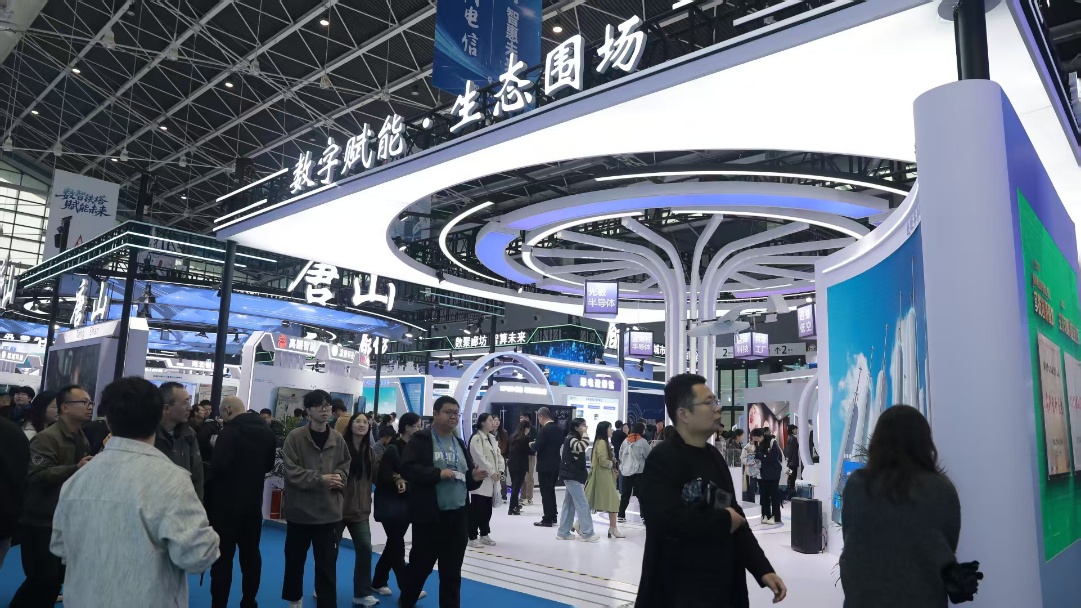
Core Viewpoint - The 2025 China International Digital Economy Expo highlights the integration of digital technology and ecological development in Weichang, showcasing its unique approach to transforming local industries through digital empowerment [1][6]. Group 1: Digital Empowerment in Key Industries - Weichang focuses on four core industries: semiconductor new materials, traditional Chinese medicine digitization, full-chain data services for potatoes, and low-altitude economy [1][3]. - Hebei Toshi Crystal Armor Technology Co., Ltd. demonstrates an innovative path with "diamond semiconductor and green electricity," utilizing local green energy resources to optimize production processes for high-precision materials [3]. - Chengde Daze Agricultural Technology Co., Ltd. has developed a "shared cloud platform for traditional Chinese medicine," breaking down data barriers among stakeholders to create an intelligent operation system based on demand data [3]. - The Weichang Potato Research Institute's "Smart Potato Industry" initiative digitizes over 300 germplasm resources and implements standardized management using climate and soil data, optimizing processing and sales through data tracking [3]. Group 2: Low-altitude Economy Development - Hebei Xunjie Low-altitude Economy Co., Ltd. leverages Weichang's geographical advantages to create a closed-loop low-altitude economy ecosystem, focusing on general aviation operations, drone manufacturing, and integrated data services [4]. Group 3: Exhibition Impact and Future Prospects - The expo serves as a platform for showcasing Weichang's digital economy achievements and facilitates connections with the Beijing-Tianjin-Hebei region, enhancing the brand's recognition and industrial influence [6]. - Weichang's development strategy emphasizes the dual drive of ecology and digital technology, aiming to integrate digital infrastructure with ecological protection and rural revitalization [8].
数读“十四五”·产业新答卷 新型储能5年增30倍!这些“未来产业”引擎轰鸣
Ren Min Wang· 2025-10-18 03:23
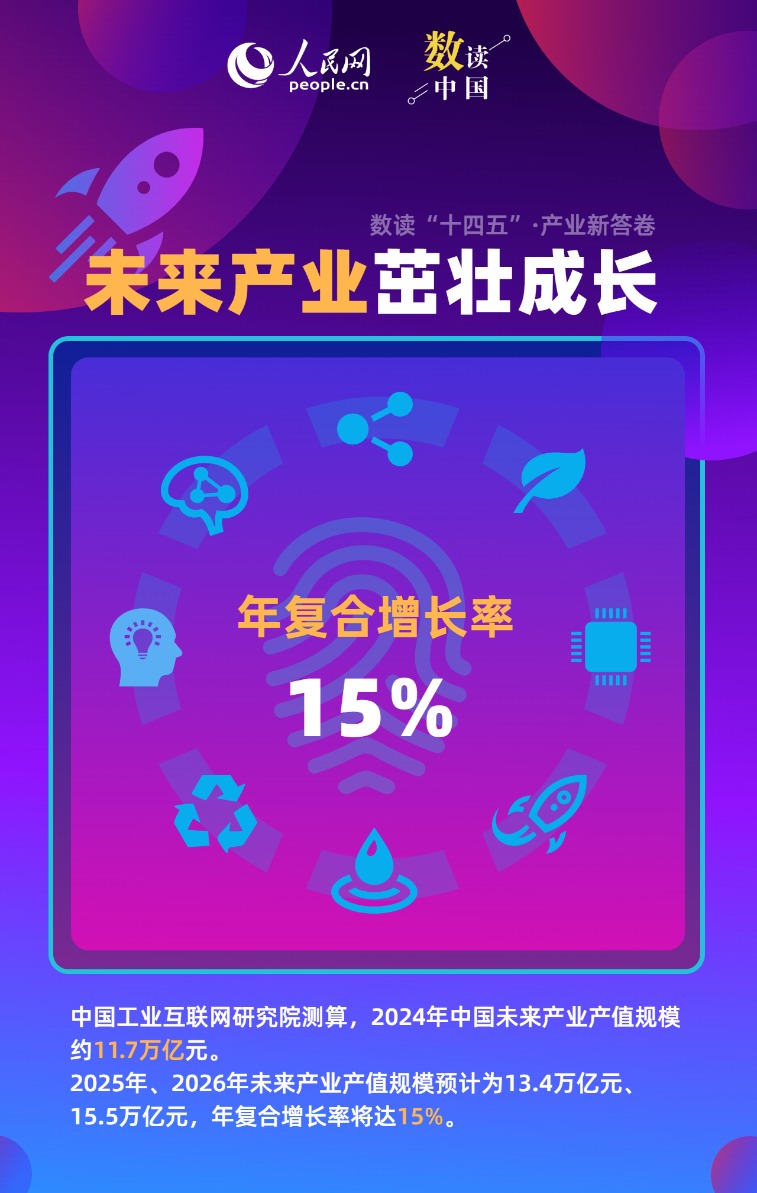
Core Insights - The "14th Five-Year Plan" marks a significant transformation in China's industrial landscape, with a focus on upgrading traditional industries and promoting emerging sectors [1] Group 1: Artificial Intelligence - By 2024, China's artificial intelligence industry is expected to exceed 700 billion yuan, maintaining a compound annual growth rate of 15% [3][6] - As of mid-2025, the total number of large model registrations in China reached 439, covering over 30 industries including healthcare, agriculture, education, smart manufacturing, and fintech [7] Group 2: Quantum Computing - China has established a leading position in quantum computing research, with superconducting and optical quantum computers achieving quantum superiority [10] - Sixteen key cities, including Hefei, Shanghai, Beijing, and Guangzhou, have developed quantum metropolitan networks [10] Group 3: Commercial Space - The number of commercial space enterprises in China has surpassed 500, with the market size expected to exceed 2.5 trillion yuan by 2025 [12] - The satellite internet sector is approaching a commercialization inflection point, with an anticipated market size of 45 billion yuan by 2025 [12] Group 4: Brain-Computer Interface - The brain-computer interface market in China is projected to reach 3.2 billion yuan by 2024, with expectations to grow to 6.14 billion yuan by 2028 [14] Group 5: Robotics - By the end of 2024, there will be approximately 451,700 smart robotics enterprises in China, with a registered capital totaling 6,444.557 billion yuan, reflecting a growth of 206.73% since the end of 2020 [17] Group 6: Biomanufacturing - China's biomanufacturing industry is nearing a total scale of 1 trillion yuan, with fermentation capacity accounting for over 70% of the global total [21] Group 7: Low-altitude Economy - The low-altitude economy market in China is projected to reach 1.5 trillion yuan by 2025, with expectations to grow to 3.5 trillion yuan by 2035 [24] Group 8: New Energy Storage - By mid-2025, China's new energy storage capacity is expected to reach approximately 95 million kilowatts, marking a nearly 30-fold increase over five years and accounting for over 40% of the global total [27] - In 2024, China's hydrogen production and consumption scale is anticipated to exceed 36 million tons, leading the world [27]
龙江国企多点突破培育新质生产力
Sou Hu Cai Jing· 2025-10-17 23:59
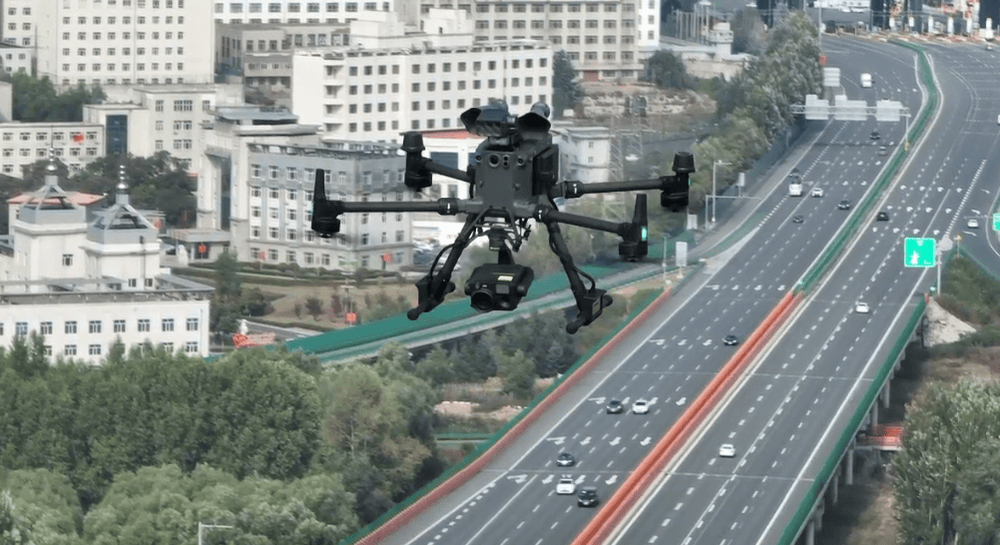
Core Viewpoint - Heilongjiang's state-owned enterprises are actively engaging in technological innovation to upgrade traditional industries, develop emerging sectors, and achieve breakthroughs in key technologies, thereby fostering new productive forces for high-quality economic development in the region [1]. Group 1: Traditional Industry Upgrades - Hengfeng Paper Industry has successfully developed a series of coffee filter paper products that meet international leading standards, addressing common industry pain points such as slow filtration and inadequate cleanliness [2][4]. - The new coffee filter paper features superior thickness and breathability, enhancing oil interception and flavor release, thus transforming domestic products from merely meeting needs to setting industry standards [4][11]. Group 2: Low-altitude Economy Development - The JiaoTuo Group is spearheading the low-altitude economy by establishing a comprehensive industrial layout focused on logistics, emergency rescue, traffic management, and tourism integration, supported by a low-altitude flight service center [5][8]. - During the Winter Asian Games, JiaoTuo Group's innovations in low-altitude economy were tested, including drone systems for highway inspections and emergency rescue, showcasing practical applications in logistics and enhancing visitor experiences [5][8]. Group 3: Water Resource Monitoring Innovations - The Dahu Company, under the Heilongjiang Water Investment Group, has developed a vehicle-mounted X-band rain monitoring radar that operates autonomously and significantly reduces operational costs while enhancing monitoring capabilities [9][10]. - This radar system integrates big data and machine learning technologies to provide real-time rainfall forecasts, improving prediction accuracy by over 30% compared to traditional methods, thus bolstering flood prevention efforts [10][11]. Group 4: Overall Economic Contributions - In the first half of the year, Heilongjiang's state-owned enterprises invested in 27 new strategic industry projects, totaling 1.949 billion yuan, which accounted for 36.15% of total investments, generating revenues of 11.01 billion yuan [11]. - The provincial government has set clear goals for technological innovation across various sectors, with significant increases in R&D investments, highlighting the commitment to fostering new productive forces [11].

湖南株洲打造制造名城 产业链群扩量提级
Zhong Guo Xin Wen Wang· 2025-10-17 21:08
Core Insights - Hunan Zhuzhou aims to become a national hub for advanced manufacturing and technological innovation, improving its rankings in both advanced manufacturing and innovation capability among Chinese cities [1][2] Economic Growth - The GDP of Zhuzhou is projected to grow from 301.2 billion yuan in 2020 to 390.24 billion yuan in 2024, with an average annual growth rate of 5.8%, and is expected to exceed 400 billion yuan this year [2] - Per capita GDP increased from 77,000 yuan in 2020 to 101,000 yuan, reflecting an average annual growth of 6.2% [2] - The industrial added value accounts for nearly 40% of GDP, with industrial profits growing at an average annual rate of 13.7% over the past four years, leading in Hunan province [2] Industrial Development - Zhuzhou has developed three national advanced manufacturing clusters: rail transit equipment, small and medium-sized aircraft engines, and ultra-high voltage power transmission equipment, along with three national characteristic industry clusters [2] - The "new three types" industries, including Beidou, new energy equipment, and low-altitude economy, are rapidly developing, with the Beidou industry cluster reaching a scale of 11.3 billion yuan, growing by 34.4% [2] - The scale of the electric power new energy and equipment manufacturing industry has surpassed 100 billion yuan, with three industrial clusters exceeding this threshold [2] Innovation and Enterprises - The number of high-tech enterprises in Zhuzhou increased from 726 in 2020 to 1,274 in 2024, ranking second in Hunan province [3] - The number of "Four Up" enterprises rose from 3,970 in 2020 to 5,763 [3] - Zhuzhou has accumulated 20 national manufacturing single champions and 90 national specialized and innovative "little giant" enterprises, ranking first and second among non-provincial capital cities in central and western China, respectively [3] Trade and Logistics - Zhuzhou's capacity for foreign trade has improved, with the construction of the China-Africa Economic and Trade Zhuzhou Port and the China-Africa Barter Trade Center accelerating [3] - The ranking of the bonded logistics center (Type B) has risen to 27th in the nation by 2024 [3] - Since the launch of the Xiang-Yue non-railway sea intermodal transport, over 1,800 trains and 150,000 TEUs have been dispatched, covering 80 countries and 170 ports globally, with trade growth with Africa leading in Hunan province [3]
新质生产力引领空天经济加速腾飞
Zhong Guo Jing Ying Bao· 2025-10-17 18:37
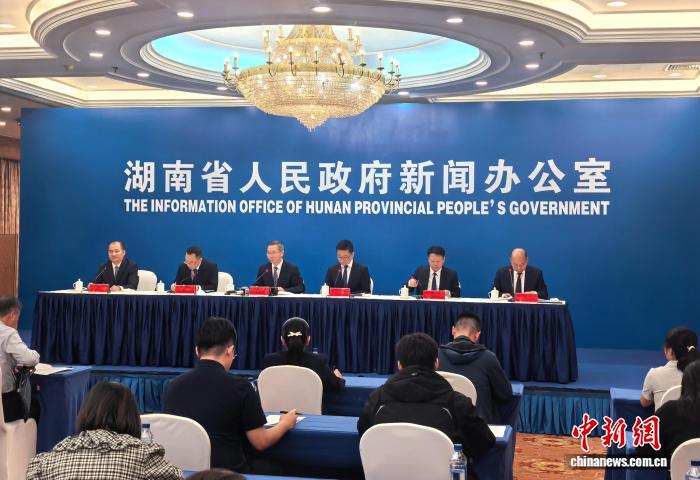
Core Insights - The aerospace economy is becoming a crucial direction for industrial transformation and upgrading in various regions of China, with policies being implemented to support commercial aerospace and low-altitude economy development [2][3][4] - The market size of China's commercial aerospace industry is expected to exceed 2.5 trillion yuan by 2025, indicating a significant growth opportunity [2] - Local governments are focusing on leveraging core technological breakthroughs to create competitive advantages and meet real market demands [2][4] Policy and Development Goals - Shandong Province aims to achieve an annual production capacity of 100 launch vehicles and 150 commercial satellites by 2027, with a commercial aerospace industry scale reaching 50 billion yuan [3] - Shanghai has set a target for its commercial aerospace industry to reach approximately 100 billion yuan by 2027 [4] - Suzhou has implemented regulations to promote low-altitude economy, aiming to establish a national low-altitude economic demonstration zone by 2026 [4] Commercialization and Technological Advancements - The successful launch of the "Inertia One" rocket and the development of a 2-ton eVTOL for intercity cargo transport highlight the rapid commercialization of aerospace technologies [3][5] - The launch of the sixth orbital plane of the Geely constellation marks a significant step in the commercialization of satellite communication technology [5][6] Investment and Economic Impact - Local governments are adopting innovative investment attraction models, such as "investment-driven attraction," to draw in leading companies in the aerospace sector [6] - Significant investments have been made, including a 2 billion yuan investment for the global headquarters of the Geely constellation and nearly 2.5 billion yuan financing for Beijing Tianbing Technology [6] Industry Challenges and Considerations - There is a need for caution against redundant construction and blind investment in the aerospace economy to ensure sustainable development [6] - Local development should align with regional resource endowments and foundational advantages to avoid unsuccessful replication of success stories [6]
湖南跨境贸易综合服务平台上线 天心经开区“政策+项目”双轮驱动产业升级
Sou Hu Cai Jing· 2025-10-17 11:53
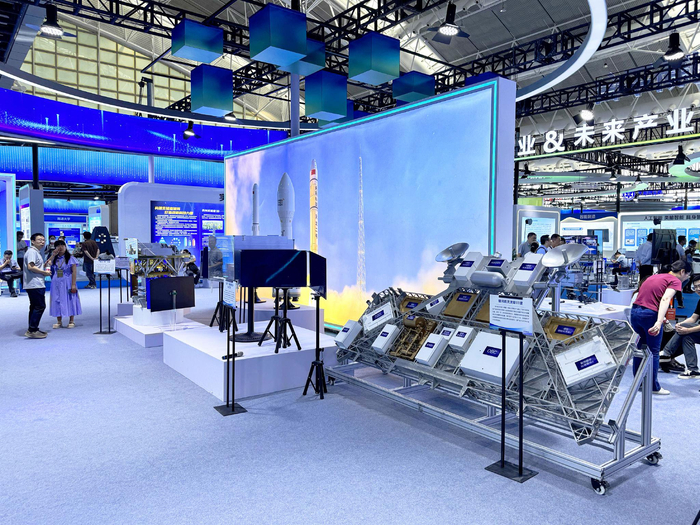
Core Insights - The launch of the Hunan Cross-Border Trade Comprehensive Service Platform marks a significant advancement in cross-border trade, utilizing self-controlled blockchain technology to enhance efficiency and reduce operational costs for businesses [1][3][5] Group 1: Platform Overview - The Hunan Cross-Border Trade Comprehensive Service Platform is the first provincial-level platform in China based on self-controlled blockchain technology, recognized as a pilot project by 17 national ministries [3][5] - The platform integrates data from customs, taxation, foreign exchange, and other departments, creating an ecosystem that supports the entire cross-border trade process [5] Group 2: Financial Transactions - The platform has successfully completed its first transaction involving the conversion of Chinese Renminbi to Nigerian Naira, indicating a breakthrough in cross-border settlement between China and Africa [5] - Future plans include collaboration with the Central Bank of Ghana and the People's Bank of China to develop a direct settlement platform [5] Group 3: Policy Support - The Tianxin Economic Development Zone announced supportive policies aimed at fostering innovation and development in key industries, including digital and low-altitude economies [6] - The policies include financial incentives for major projects, with rewards up to 1 million for significant foreign investment projects and 500,000 for leading enterprises [6] Group 4: Project Signings - The signing event included projects across digital economy, low-altitude economy, and cross-border trade, enhancing the region's industrial foundation [7][9] - Notable projects include the establishment of a quantum fusion application research institute and a comprehensive low-altitude digital center, which will support various applications including smart city solutions [9] Group 5: Strategic Importance - The South Integrated City Area is identified as a strategic hub for promoting regional integration and economic development, with a focus on building a global research and development center [10] - The Tianxin Economic Development Zone aims to strengthen its position as a key area for reform and opening up in inland China, contributing to deeper cooperation in China-Africa trade [10]
2025京津冀低空经济协同发展研讨会在天津举办
Zhong Guo Xin Wen Wang· 2025-10-17 11:13
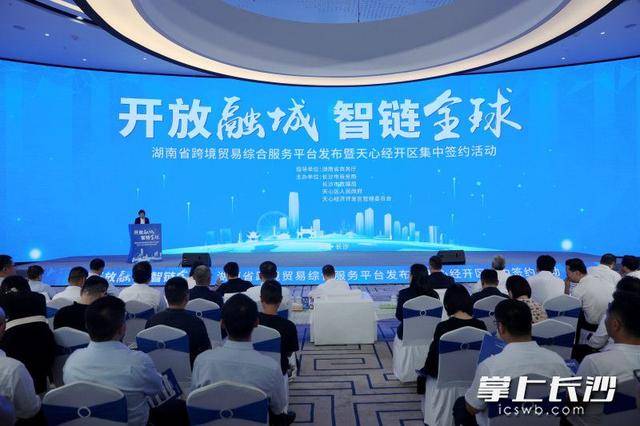
Core Viewpoint - The "2025 Beijing-Tianjin-Hebei Low Altitude Economy Collaborative Development Seminar" was successfully held during the 7th Tianjin Airshow, aiming to create an open, efficient, and win-win dialogue platform for discussing the direction and pathways of low altitude economic collaboration in the region [1][2]. Group 1 - The seminar's theme was "Integrating Low Altitude to Build a New Engine for Regional Development," featuring keynote speeches, specialized presentations, and salon dialogues [2]. - Participants included local government departments, industry experts, scholars from universities, and representatives from enterprises, sharing achievements and experiences in low altitude economic innovation, industrial collaboration, ecological construction, and mechanism improvement [2]. - Discussions emphasized the importance of technological innovation and talent cultivation for sustainable industrial development, providing theoretical support and practical references for the collaborative development of the low altitude economy in the Beijing-Tianjin-Hebei region [2]. Group 2 - The salon dialogue focused on the theme of "Co-building and Sharing the Low Altitude Economic Ecosystem in Beijing-Tianjin-Hebei," exploring various dimensions such as financial capital, industrial development, low altitude market expansion, application scenarios, and technological innovation [2]. - The seminar aimed to establish a deep integration bridge for capital, technology, market, and application scenarios to promote the development of the regional low altitude economy [2].
从“飞起来”到“用起来” 低空经济万亿蓝海加速落地
Xin Hua Wang· 2025-10-17 09:38
Core Insights - The article highlights the growing interest and development of the low-altitude economy, particularly in the context of innovative tourism and transportation models that integrate low-altitude services with various sectors [1] - The low-altitude economy is evolving from traditional aviation services to a more diversified approach, incorporating applications such as agriculture, logistics, and emergency services, thereby reconstructing the industrial value chain [1] - The establishment of a provincial-level low-altitude flight service platform in Tianjin is emphasized as a key development in managing and regulating flight activities, airspace, facilities, and safety within the region [1] Industry Developments - The low-altitude economy is transitioning from single-point breakthroughs to multi-faceted development, with applications expanding into areas like "low-altitude + tourism," "low-altitude + transportation," and "low-altitude + marine" [1] - The focus on building low-altitude infrastructure and regulatory frameworks is seen as crucial for the sustainable growth of the low-altitude economy [1] - The integration of communication, navigation, monitoring, and service into a smart networked low-altitude industry regulatory and service model is identified as a foundational element for long-term development [1] Market Potential - The low-altitude economy is viewed as a trillion-yuan market, attracting numerous industry players who are optimistic about its long-term growth potential [1]