
外卖

Search documents
美团、滴滴巴西外卖战,未上线先打官司
Xin Lang Cai Jing· 2025-08-30 03:34
Core Viewpoint - Meituan is facing significant challenges in both domestic and international markets, particularly in Brazil, where it is competing against Didi's 99Food in a rapidly growing e-commerce environment [1][4][14] Group 1: Domestic Market Challenges - In Q2 2025, Meituan reported a nearly 90% drop in adjusted net profit, earning 12.1 billion yuan less than the same period last year, attributed to irrational competition [1] - Meituan's market share in the domestic food delivery sector fell from 74% at the beginning of the year to 65% by August [1] - The company increased its sales and marketing expenses by 7.7 billion yuan compared to the previous year due to the fierce competition [1] Group 2: International Expansion and Competition - Meituan is entering the Brazilian market with its new brand Keeta, planning to invest $1 billion over the next five years [4] - The Brazilian market is seen as a fertile ground for food delivery services due to its high urbanization rate (87.6%) and a projected market size of $12 billion [1][5] - Didi's 99Food previously exited Brazil due to iFood's dominance but has re-entered the market, intensifying competition [2][4] Group 3: Legal Disputes - Meituan's Keeta has initiated legal actions against 99Food for trademark infringement and unfair competition practices [3] - The lawsuits include accusations of 99Food's high-priced advertising tactics and exclusive agreements with merchants [3] Group 4: Market Potential and Infrastructure - Brazil's Q-commerce market is projected to reach approximately $1.05 billion by 2024, with a compound annual growth rate of about 11.45% [5] - The CEP (courier, express, and parcel) market in Brazil is expected to grow from $5.93 billion in 2025 to $7.77 billion by 2030, with a CAGR of 5.56% [5] - Brazil's internet penetration rate is high, with over 90% smartphone ownership, indicating a strong potential for on-demand delivery services [5][6] Group 5: Competitive Strategies - Didi's 99Food has proposed a "fair alternative" plan, including waiving commissions for restaurants for a year and guaranteeing daily income for delivery riders [8] - Meituan's Keeta plans to offer lower rates than iFood and provide incentives for timely deliveries [8] - Both companies are engaging in aggressive spending to capture market share in a highly competitive environment dominated by iFood, which holds over 80% of the market [8][12]



城市发展与AI战略顶层设计出炉,“外卖大战”影响初显丨一周热点回顾
Di Yi Cai Jing· 2025-08-30 03:24
Group 1: Urban Development Policies - The central government has released guidelines for promoting high-quality urban development, aiming for significant progress by 2030 and basic completion by 2035 [1][2] - Key measures include enhancing urban competitiveness, fostering new development drivers, and improving urban living quality through better infrastructure and public services [1][2] Group 2: Artificial Intelligence Initiatives - The State Council has issued a roadmap for the "Artificial Intelligence+" initiative, focusing on six key actions, including technology, industry development, and global cooperation [3][4] - By 2030, the goal is for AI applications to exceed 90% penetration, establishing AI as a crucial growth driver for the economy [3][4] Group 3: Carbon Market Development - A new policy has been introduced to accelerate the construction of a national carbon market, with plans to cover major industrial sectors by 2027 [5][6] - The market will transition from intensity control to total control, combining free and paid allocation methods for carbon emissions [5][6] Group 4: Real Estate Market Adjustments - Shanghai has announced adjustments to its real estate policies, including lifting purchase limits for certain residents outside the city’s outer ring [7] - The changes aim to stimulate the housing market and improve buyer sentiment, following similar moves in other major cities [7] Group 5: Industrial Profit Trends - Industrial profits for large enterprises fell by 1.5% year-on-year in July, but the decline rate has narrowed for two consecutive months, indicating a potential recovery [8][9] - Notably, profits for medium and small enterprises improved, suggesting the effectiveness of policies aimed at supporting these businesses [8][9] Group 6: Stock Market Developments - Cambrian Technology's stock surged by 15.73%, surpassing Kweichow Moutai to become the new stock king in A-shares, with a total increase of 133.86% since late July [10][11] - The company reported significant revenue growth of 4347.82% year-on-year, indicating a strong performance despite potential risks related to stock price volatility [10][11] Group 7: Food Delivery Industry Financials - Major players in the food delivery sector, including Meituan and JD, reported significant profit declines due to intense competition, with Meituan's net profit down 89% [12][13] - Alibaba's financial results also showed a decrease in operating profit, attributed to increased investments in user experience and technology [13]

阿里美团京东财报齐了,外卖大战谁胜一筹?Q3最惨烈
Sou Hu Cai Jing· 2025-08-30 01:28
Core Insights - The article discusses the financial performance of Alibaba, Meituan, and JD.com, focusing on their competition in the food delivery sector and the impact of their investments on profitability and market share [1][2]. Alibaba - Alibaba's revenue for the quarter ending June 30, 2025, was RMB 247.65 billion (approximately USD 34.57 billion), representing a 2% year-on-year increase [4][5]. - The adjusted EBITDA decreased by 11% to RMB 45.74 billion (USD 6.38 billion), primarily due to investments in "Taobao Flash Sale" and user acquisition [4][5][6]. - Net profit fell to RMB 33.51 billion, a decline of 18% year-on-year, while adjusted EBITA dropped 14% to RMB 38.84 billion (USD 5.42 billion) [5][6]. - The "Taobao Flash Sale" service launched in April 2025 contributed to a 12% increase in instant retail revenue, reaching RMB 14.78 billion (USD 2.06 billion) [8][10]. - Sales and marketing expenses surged by RMB 204 billion, accounting for 21.5% of revenue, up from 13.4% in the previous year [9][13]. - Free cash flow decreased significantly, resulting in a net outflow of RMB 188.15 billion (USD 26.26 billion) [13][14]. Meituan - Meituan reported a revenue of RMB 91.84 billion for the second quarter, an 11.7% year-on-year increase, but experienced a dramatic decline in operating profit and net profit [16][18]. - The core local commerce segment generated RMB 65.35 billion, a 7.7% increase, but operating profit dropped 75.6% to RMB 3.72 billion [17][18]. - Sales and marketing expenses rose by 51.8% to RMB 225 billion, driven by increased competition in the food delivery market [19][21]. - Meituan's app reached over 500 million monthly active users, with peak daily orders for instant retail hitting 1.5 billion [20][21]. - Cash and cash equivalents totaled RMB 1,711 billion, sufficient to cover approximately 7.6 quarters of marketing expenses [22]. JD.com - JD.com achieved a revenue of RMB 356.7 billion, a 22.4% year-on-year increase, but net profit fell by 49% due to rising costs in the food delivery sector [23][24]. - New business revenue surged by 198.8% to RMB 138.52 billion, but incurred significant losses of RMB 147.77 billion due to high operating costs [23][24]. - Marketing expenses increased by 127.6% to RMB 270 billion, primarily for promoting new business initiatives [24][25]. - JD.com reported a peak daily order volume of 25 million for its food delivery service, expanding its market presence [26][27]. - The company held cash and cash equivalents totaling RMB 2,234 billion, enough to sustain operations for approximately 8 quarters at current marketing spending levels [27][28]. Competitive Analysis - In terms of net profit decline, Alibaba experienced the least drop, while Meituan faced the most significant decline [29][30]. - Meituan's delivery revenue exceeded that of its competitors, indicating a strong market position despite financial challenges [30]. - The article suggests that Alibaba is aggressively investing in its instant retail strategy, while Meituan is focusing on defensive measures and exploring new revenue streams [31][32][33]. - JD.com is positioned to leverage its unique business model and high-value product offerings to differentiate itself in the competitive landscape [35][36].



高额补贴大战下 三大外卖平台“很受伤”
Zheng Quan Shi Bao· 2025-08-29 19:08
Core Viewpoint - The fierce subsidy war among major platforms like JD.com, Meituan, and Alibaba in the second quarter has led to significant profit declines, revealing the adverse effects of irrational competition despite prior warnings from regulatory authorities [1] Performance Decline - JD.com reported a revenue of 356.7 billion yuan in Q2 2025, a year-on-year increase of 22.4%, but its net profit fell by 50.8% to 6.2 billion yuan, with an operating profit margin dropping to -0.2% from 3.6% in Q2 2024, attributed to increased strategic investments in new businesses like food delivery [2] - Meituan's revenue grew by 11.7% to 91.8 billion yuan in Q2 2025, but its adjusted net profit plummeted by 89% to 1.49 billion yuan, with operating profit down 75.6% to 3.7 billion yuan and a significant decline in operating profit margin by 19.4 percentage points to 5.7% due to intense competition [2] - Alibaba's revenue for Q2 2025 was 247.65 billion yuan, a 2% year-on-year increase, with a non-GAAP net profit of 33.51 billion yuan, down 18% from 40.69 billion yuan in Q2 2024, with limited impact from its food delivery initiatives due to the timing of its subsidy launch [3] Rising Costs - JD.com's marketing expenses surged by 127.6% to 27 billion yuan in Q2 2025, accounting for 7.6% of revenue, up from 4.1% in Q2 2024, primarily due to increased spending on new business promotions [4] - Meituan's sales and marketing expenses rose by 51.8% to 22.5 billion yuan, with the expense ratio increasing by 6.5 percentage points to 24.5%, driven by business development and competitive adjustments in food delivery and real-time retail [4] - Alibaba's sales and marketing expenses also increased, with an 8 percentage point rise in expense ratio, reflecting investments in enhancing user experience and acquisition for its new initiatives [4] Stock Price Decline - The stock prices of the three platforms have been adversely affected, with JD.com down approximately 25%, Meituan down about 34%, and Alibaba down around 8% since April, while the Hang Seng Tech Index has risen over 5% in the same period [6] - Market analysts predict intensified competition in Q3, with Meituan announcing a peak daily order volume exceeding 150 million, but expect a 6% year-on-year decline in instant delivery revenue due to subsidies and strategic adjustments, with losses potentially exceeding 15 billion yuan [6]
半年净赚423亿元,阿里业绩暴涨,公司高管:不会单独看外卖盈利情况!吴泳铭:过去一年在AI上投了1000亿元
Mei Ri Jing Ji Xin Wen· 2025-08-29 16:56
Core Insights - Alibaba Group reported its first-quarter financial results for fiscal year 2026, showing a revenue of RMB 247.65 billion, a year-on-year increase of 2%. Excluding disposed businesses, the revenue growth would be 10%. Net profit surged by 76% to RMB 42.38 billion [1] - The "instant retail" business of Alibaba's China e-commerce group generated RMB 14.78 billion in revenue, up 12% from RMB 13.20 billion in the same period last year, primarily driven by increased order volume from "Taobao Flash Purchase" [1] - Alibaba's adjusted EBITA decreased by 14% to RMB 38.84 billion, attributed to investments in Taobao Flash Purchase and user experience, partially offset by double-digit revenue growth in the e-commerce group [1] Financial Performance - Revenue for the first quarter of fiscal year 2026 was RMB 247.65 billion, with a 2% year-on-year growth. Adjusted for disposed businesses, the growth rate would be 10% [1] - Net profit reached RMB 42.38 billion, reflecting a significant increase of 76% year-on-year [1] - The adjusted EBITA for the quarter was RMB 38.84 billion, down 14% compared to the previous year [1] Business Strategy - Alibaba's CEO emphasized the importance of AI and cloud technology as key strategic opportunities for the company, with a capital expenditure of RMB 38.6 billion in AI and cloud for the quarter [3] - The company aims to create a comprehensive consumption platform that meets the needs of 1 billion consumers, focusing on integrating instant retail and e-commerce [4] - Alibaba plans to maintain a startup mentality over the next three years, continuously investing in core businesses to enhance competitive advantages [4] Market Competition - Alibaba's executives acknowledged the competitive landscape in the instant retail sector, noting that they are working to improve efficiency and increase the proportion of high-value orders [5] - The company expects Taobao Flash Purchase to generate an additional RMB 1 trillion in transactions over the next three years [5] - Competitors like Meituan are also facing challenges, with their core local business segment experiencing a 75.6% decline in operating profit year-on-year due to intense competition [6]

阿里巴巴-SW财报电话会:未来几个季度阿里云业务增速会持续向上
Zhi Tong Cai Jing· 2025-08-29 15:28
日前,阿里巴巴-SW(09988)公布2026财年Q1财报。阿里巴巴在随后的财报电话会中表示,关于增速预 期看,现在看到客户、阿里云客户在使用ai产品,在他们企业内部开发ai产品,看到明确趋势,从趋势 看需求旺盛,企业因为ai模型能力强进而开发新应用,同时,传统功能被ai替代,看到趋势发展下,客 户需求旺盛,看到训练与推理需求增长,近几个季度,推理需求增长之外,看到训练有新的行业观察, 除了行业行业基础大模型迭代模型,也看很多新机会,例如车厂、教育企业、多媒体应用公司,他们专 有数据训练专属模型,对ai使用量有推进。结合推理需求,未来几个季度,阿里云业务增速会持续向 上。 关于ai的资本开支,3年投资3800亿元,由于供应链波动,每个季度会有波动,根据全球芯片变化,公 司也会外部合作储备,备用计划,面对不同行业变化,会按照预期的情况去完成。 Q&A Q:关于即时零售,闪购投资加大,在中国即时零售增长机会有什么愿景?投资计划如何?是否 带来价值?有什么协同效应?如何考虑投资对GMVCMR影响如何? A:闪购业务上线4M,在用户、商单超预期,外卖到家超过行业,日均订单峰值1.2亿单,买家3亿元, 商品供给,大量新 ...
2025年Q2移动互联网行业数据研究报告
Sou Hu Cai Jing· 2025-08-29 15:08
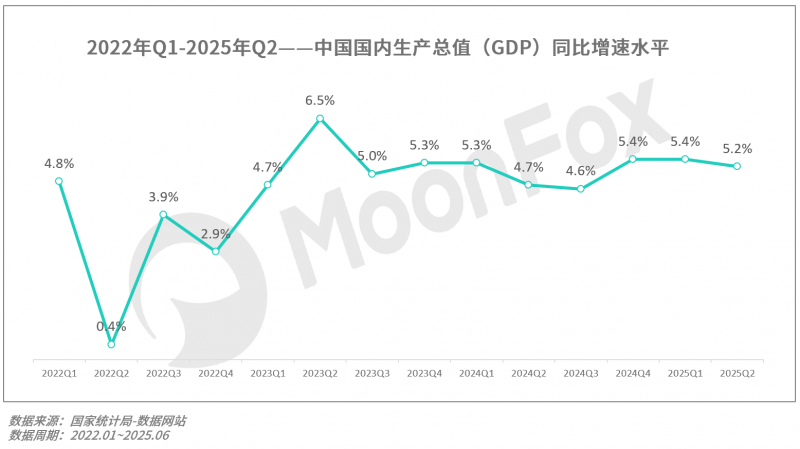
Macro Insights - The Chinese mobile internet industry continued its growth in Q2 2025, supported by a stable macroeconomic environment and ongoing policy support, with GDP growth of 5.2% year-on-year and 1.1% quarter-on-quarter [1][4] - The retail sales of consumer goods reached 24.55 trillion yuan, growing by 5.0%, with online retail sales amounting to 7.43 trillion yuan, a year-on-year increase of 8.5% [4][49] - The investment in high-tech industries showed remarkable growth, with information services, aircraft manufacturing, and computer equipment manufacturing increasing by 37.4%, 26.3%, and 21.5% respectively [4] Policy Changes - The central government emphasized stabilizing employment, businesses, and market expectations, implementing a series of policies to boost domestic demand and support economic recovery [9][11] - Key policies included the introduction of the "Private Economy Promotion Law" and measures to enhance consumer confidence and spending [10][11] Investment and Financing - The total social financing scale increased to 22.83 trillion yuan in the first half of 2025, with a notable rise in loans to the real economy [13][15] - The IPO market showed signs of recovery, with over 359 IPO applications in Q2, reflecting a significant increase compared to previous quarters [16] Mobile Traffic Overview - As of June 2025, the number of internet users in China reached 1.123 billion, with an internet penetration rate of 79.7% [18] - The average daily usage time of mobile devices approached 6 hours, indicating a growing reliance on mobile technology [18] Segment Market Insights E-commerce - The 6.18 shopping festival became a normalized event, with online retail sales exceeding 3.81 trillion yuan in Q2 2025 [49][51] - The "old-for-new" policy significantly boosted sales in the 3C digital product category, with sales surpassing 750 billion yuan [49][50] Food Delivery - The food delivery market saw intensified competition, with JD.com entering the space and implementing aggressive subsidy strategies [54][55] - JD's food delivery service achieved over 1 million daily orders within 40 days of launch, indicating rapid market penetration [55] Gaming - The gaming market maintained growth, with mobile games generating 1.253 trillion yuan in revenue in the first half of 2025, a year-on-year increase of 16.55% [64] - New game releases in Q2 included several successful titles, with some achieving over 1 billion yuan in revenue in their first month [66][67] Short Dramas - The short drama market continued to grow, with various platforms actively investing in new content and leveraging AI technology for production [72]
“不会单独看外卖盈利情况”,淘宝闪购首次交卷 关于即时零售,阿里摊牌了
Mei Ri Jing Ji Xin Wen· 2025-08-29 15:03
Core Insights - Alibaba Group reported its first quarterly results for fiscal year 2026, showing a revenue of RMB 247.65 billion, a 2% year-on-year increase, and a net profit of RMB 42.38 billion, up 76% [1] - The "instant retail" segment, driven by "Taobao Flash Purchase," generated RMB 14.78 billion in revenue, a 12% increase from the same period last year [1] - The company emphasized its strategic focus on AI and cloud technology as key growth drivers, with a capital expenditure of RMB 38.6 billion in the AI and cloud sector for the quarter [3][4] Financial Performance - Total revenue for Alibaba was RMB 247.65 billion, with a 10% year-on-year growth when excluding disposed businesses [1] - Adjusted EBITA decreased by 14% to RMB 38.84 billion, primarily due to investments in user experience and technology [1] - The monthly active consumers on Taobao App increased by 25% in the first three weeks of August, reaching 300 million [2] Strategic Initiatives - CEO Wu Yongming highlighted the integration of AI and cloud as a significant opportunity for the next decade, with over RMB 100 billion invested in AI infrastructure and product development over the past four quarters [3] - The company aims to create a one-stop consumption platform to meet the needs of 1 billion consumers, focusing on the integration of near-field and far-field consumption [4] - Alibaba plans to increase the proportion of "high-value" orders and believes that Taobao Flash Purchase will generate RMB 1 trillion in additional transactions over the next three years [5][6] Competitive Landscape - The competition in the instant retail market is intensifying, with Alibaba, Meituan, and JD all actively participating [6] - Meituan reported a 7.7% year-on-year revenue increase in its core local business segment, but faced a 75.6% decline in operating profit due to irrational competition [7] - Alibaba's management noted that while instant retail is not yet profitable, it is expected to enhance overall traffic and shopping frequency on the Taobao platform, leading to future revenue growth [7]
蒋凡首次详解淘宝闪购战略
第一财经· 2025-08-29 15:02
Core Viewpoint - Alibaba's second-quarter earnings report indicates a strong growth in its Taobao Flash Sales segment, with significant increases in user engagement and order volume, despite ongoing investments impacting operating profits [3][4]. Group 1: Financial Performance - Alibaba reported revenue of 247.65 billion yuan in Q2, a year-on-year increase of 2% [3]. - Operating profit was 34.988 billion yuan, down 3% year-on-year, while adjusted EBITA decreased by 14% due to increased investments in Taobao Flash Sales and user experience [3]. - Sales and marketing expenses reached 53.178 billion yuan, rising from 13.3% to 21.3% of total revenue compared to the same period last year [5]. Group 2: User Engagement and Growth - Taobao Flash Sales achieved a peak daily order volume of 120 million since July, with monthly active users reaching 300 million, a 300% increase compared to four months prior [3]. - The average number of active delivery riders has grown to 2 million, tripling since April [3]. Group 3: Strategic Initiatives - The company aims to optimize unit economics (UE) by increasing the proportion of high-value orders and improving local fulfillment efficiency [4]. - Alibaba has invested heavily in logistics capacity, expecting a significant reduction in logistics costs in the future [5]. - The company anticipates that Flash Sales and instant retail will generate an additional 1 trillion yuan in transaction volume over the next three years [5]. Group 4: Market Position and Competitive Strategy - Alibaba emphasizes that the profitability of the Flash Sales segment should be viewed in the context of its overall contribution to e-commerce, including increased advertising revenue and user engagement [5]. - The company plans to expand its reach in both long-distance and near-distance delivery models, transitioning Tmall Supermarket to a near-field flash sales model [5].

阿里财报电话会:淘宝闪购创造超百万直接就业,多平台参与有利外卖行业
Jing Ji Guan Cha Wang· 2025-08-29 14:59
"外卖行业从一家独大到多平台参与,让商家和消费者都有了更多的选择权,长期对行业一定是有利 的。"蒋凡说。 蒋凡还表示,将持续探索远近场结合的创新商业模式,同时,还将引入百万家品牌线下门店入驻淘宝闪 购,给品牌商家带来新的生意增长、给消费者带来全新的购物体验。 8月29日晚,在2026财年Q1财报分析师电话会上,阿里巴巴中国电商事业群CEO蒋凡透露,淘宝闪购已 创造了超过百万的直接就业,平台真金白银投入,推动行业变革的同时,也促进消费和经济。 在电话会上,蒋凡透露,淘宝闪购日订单峰值达到1.2亿单,8月的周日均订单量达到8000万单。闪购的 日均活跃骑手已经超过200万的规模,对比四月增长3倍。这也意味着,淘宝闪购造了超过百万个新的就 业。 自今年4月30日正式上线以来,淘宝闪购迅速增长,并带动整个市场日订单总量从5月的日订单1亿左 右,上升到现在的2亿以上。今年7月初,淘宝闪购宣布投入500亿平台消费券,给消费者优惠、支持商 家生意增长。根据北京大学光华管理学院测算,淘宝闪购每1元的消费券,带动了消费者6.76元的额外 消费。 ...