茶饮

Search documents
古茗:上半年母公司拥有人应占利润同比增长121.5%
Di Yi Cai Jing· 2025-08-26 09:49
Core Insights - The company reported a revenue of 5.663 billion yuan for the first half of 2025, representing a year-on-year growth of 41.2% [2] - The profit attributable to the parent company was 1.625 billion yuan, showing a significant year-on-year increase of 121.5% [2] Financial Performance - Revenue for the first half of 2025: 5.663 billion yuan [2] - Year-on-year revenue growth: 41.2% [2] - Profit attributable to the parent company: 1.625 billion yuan [2] - Year-on-year profit growth: 121.5% [2]

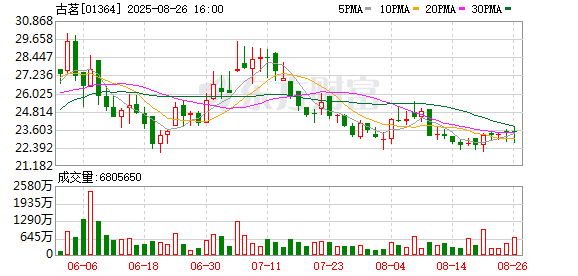
古茗控股:上半年母公司拥有人应占利润为16.25亿元,同比增长121.5%
Mei Ri Jing Ji Xin Wen· 2025-08-26 09:47
每经AI快讯,8月26日,古茗控股公告称,上半年母公司拥有人应占利润为16.25亿元,同比增长 121.5%。 ...
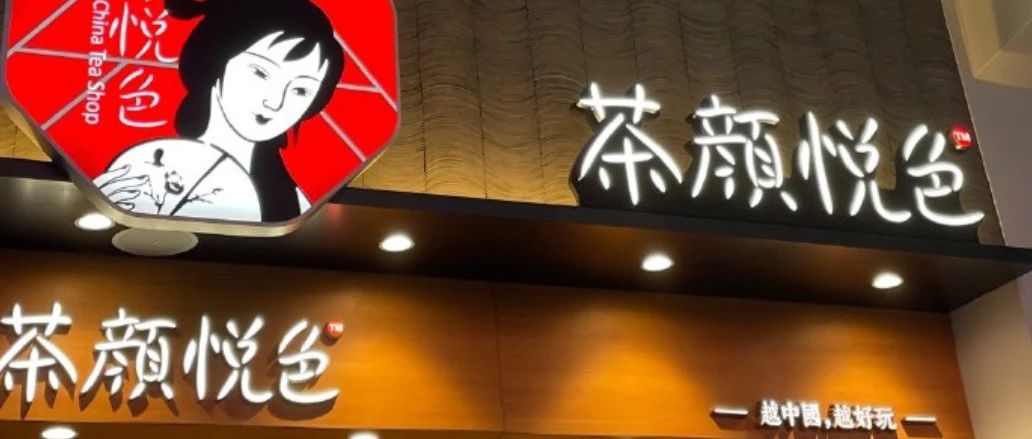
国风神话破灭,网红奶茶鼻祖茶颜悦色为何频频翻车?
凤凰网财经· 2025-08-26 05:58
Core Viewpoint - The article discusses the decline of the popular tea brand Cha Yan Yue Se, highlighting its recent plagiarism controversies and the impact on its brand image and customer loyalty [4][6][16]. Group 1: Rise and Fall of Cha Yan Yue Se - Cha Yan Yue Se gained immense popularity after its first store opened in Changsha in 2013, becoming a new attraction with its unique branding and product offerings [5][31]. - At its peak, customers would travel long distances and wait for hours to purchase its products, leading to a secondary market where prices soared to 200 yuan for a single drink [5][6]. - The brand's recent collaboration with the Shanghai Rainbow Chamber Choir faced accusations of plagiarism, resulting in a rapid decline in its reputation [2][8][13]. Group 2: Plagiarism Controversies - The plagiarism allegations began on August 23, when multiple original creators accused Cha Yan Yue Se of copying their designs for a new product [7][8]. - The company publicly apologized on August 24, acknowledging unauthorized use of original works and promising to rectify the situation [13][14]. - This incident marks the second public apology for plagiarism within 50 days, following a previous issue related to a snack packaging design [17][21]. Group 3: Brand Image and Market Position - The brand's image as a "national style original" has been tarnished, leading to a loss of core customers [16][37]. - Cha Yan Yue Se has faced multiple controversies over the years, including accusations of sexism and poor employee treatment, which have contributed to its declining reputation [22][25]. - The competitive landscape has intensified, with rivals offering lower-priced products and more convenient purchasing options, further eroding Cha Yan Yue Se's market position [33][34]. Group 4: Business Strategy and Future Outlook - Despite expanding its store count to nearly 1,000, the brand struggles to keep pace with competitors like Bawang Chaji and Mixue Bingcheng, which have significantly more locations [31][32]. - The company is attempting to diversify its product offerings beyond tea, including snacks and lifestyle products, but faces challenges in innovation and customer engagement [36][37]. - Future plans for an IPO remain uncertain, with no clear timeline provided by the company [36].
8.26犀牛财经早报:ETF规模达5.07万亿元再创新高 车企高管称新能源汽车行业利润率5%
Xi Niu Cai Jing· 2025-08-26 02:17
Group 1: ETF Market in China - The scale of China's ETF market has reached a historical high of 5.07 trillion yuan, marking the entry into the 5 trillion yuan era [1] - The number of ETFs in the market is currently 1,271, with 101 ETFs exceeding 10 billion yuan in scale and 6 exceeding 100 billion yuan [1] - The equity ETF market has seen a year-to-date growth of over 24%, with a total scale of 41,170.94 billion yuan as of August 25, 2023 [1] Group 2: Public Fundraising Trends - Several fund companies are engaging in "second launches" for high-performing funds, which allows for more efficient fundraising and quicker market entry [2] - As of August 25, 2023, 127 public fund institutions have initiated self-purchases of their equity funds, with stock and mixed funds making up nearly half of these purchases [2] Group 3: A-Share Company Performance - By August 25, 2023, 1,688 A-share companies reported a total revenue of 9.5 trillion yuan for the first half of the year, with a slight year-on-year decrease of 0.1% [3] - The net profit attributable to shareholders reached 615.198 billion yuan, showing a year-on-year increase of 3.98% [3] - In the second quarter, these companies achieved a revenue of 4.87 trillion yuan, reflecting a quarter-on-quarter growth of 6.72% [3] Group 4: Lithium Industry Insights - The lithium price recovery is expected to improve the supply-demand relationship in the lithium mining industry, despite some companies reporting losses due to previous price drops [4] - The price of carbonate lithium has recently surged above 80,000 yuan per ton, which may positively impact miner profits and supply responses [4] Group 5: Automotive Industry Challenges - The COO of Lantu Automotive indicated that the electric vehicle industry is facing intense competition, with profit margins around 5% [5] - The need for stable cash flow and reasonable profit margins for supply chain companies is emphasized to ensure high-quality development in the automotive sector [5] Group 6: Company Announcements - Dongfeng Motor Group has acquired a 55% stake in Dongfeng Motor Co., with no change in the actual controller [7] - Beijing Junzheng is planning to issue H-shares and list on the Hong Kong Stock Exchange [8] - Hunan Gold's subsidiary has temporarily suspended operations due to a fatal accident, which may impact production and operations [9] - Yangfan New Materials announced that its controlling shareholder is under investigation, but control of the company remains unchanged [10] - Dazhu Laser reported a net profit of 488 million yuan for the first half of the year, a decline of 60.15% year-on-year [11] - Jianghuai Automobile reported a net loss of 773 million yuan for the first half of 2023 [12]
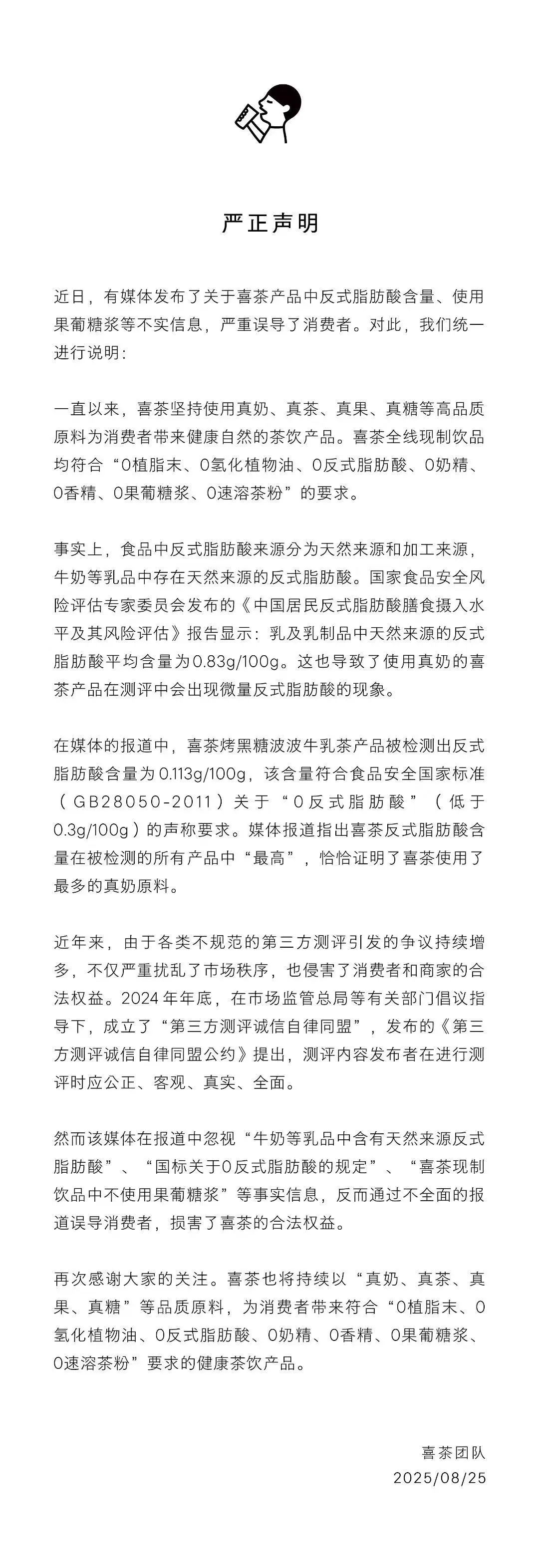
测评曝“多品牌奶茶含反式脂肪酸”?喜茶首发声:不实
3 6 Ke· 2025-08-26 00:42
Core Viewpoint - The recent controversy surrounding "trans fatty acids in milk tea" has sparked significant public concern, particularly affecting brands like Heytea and Nayuki, which have responded by labeling the claims as misinformation [1][3][4]. Group 1: Incident Overview - A media evaluation reported the presence of trans fatty acids in products from several popular tea brands, including Heytea, Nayuki, and others, leading to widespread consumer panic [1][6]. - Heytea's product, the Baked Brown Sugar Bubble Milk Tea, was found to contain 0.113g of trans fatty acids per 100g, which complies with national food safety standards [4][6]. Group 2: Understanding Trans Fatty Acids - Trans fatty acids can be categorized into natural and processed sources, with natural trans fatty acids found in dairy products averaging 0.83g per 100g, while processed sources are linked to health risks [8][10]. - The public's misunderstanding of trans fatty acids has contributed to the panic, as many consumers are unaware that natural sources, such as milk, contain these acids [10][12]. Group 3: Industry Response and Trends - The incident serves as a reminder for the tea industry to enhance communication regarding health and product transparency, as consumer trust is paramount [13][17]. - The industry has been evolving towards healthier options, moving from low-cost ingredients to using fresh milk and natural sugars, reflecting a growing consumer demand for health-conscious products [15][17].
解密美团龙珠押中蜜雪冰城、宇树科技背后的方法论
3 6 Ke· 2025-08-26 00:15
2019年初,美团龙珠合伙人朱拥华带着一本《成吉思汗》踏上了去郑州的高铁。他要去见蜜雪冰城创始人——这是他迂回许久才约到的一次会面,也让美 团龙珠成为今年一起"现象级IPO"背后的关键投资方之一。 今年3月3日,蜜雪冰城在港交所上市,开盘市值突破1000亿港元。截至8月22日收盘,蜜雪冰城市值近1800亿港元。 今年无疑是美团龙珠的收获大年——年初宇树科技爆火出圈,人形机器人赛道的热度和估值飙升;随后,古茗和蜜雪冰城接连在港上市,在茶饮消费赛道 掀起了一波热潮。这些话题背后,都有美团龙珠早期下注的身影。 大众往往是通过成功的明星项目看到背后的投资机构,而投资机构在水下发掘"金子"的时间,要往回拨好几个刻度。龙珠在消费和科技领域的投资成果, 都源自三年前、五年前,甚至更早期的布局。 2024年,龙珠投资了宇树科技,彼时距离后者的机器人在春晚爆红,还有半年。而蜜雪冰城在IPO前唯一一次开放融资,是2020年,龙珠是首个确认的领 投方,也是第一大机构股东。古茗则更早,在2019年便确认龙珠重注领投,后者持股约8%。 7月,宇树科技正式启动IPO,如果宇树完成上市,龙珠将收获科技赛道投资的第一个IPO,也将成为第一波 ...


看见·活力河南丨郑州中式茶饮品牌续写丝路新故事 荆芥茶饮香飘东南亚
He Nan Ri Bao· 2025-08-25 23:30
湖南游客高朋朋与闺蜜组团来郑州,首站就来到花园路上的"眷茶甄选"。"我们出发前做了攻略,一定 要尝尝'最河南'的奶茶。"她说。 除了荆芥柠檬茶、十香菜青李等现制茶饮,该品牌还新研发了荆芥果汁风味软糖、胡辣汤味薯条、谷香 小麦冰淇淋等零售产品,推出竹编工艺冰箱贴、版画细骨扇等唐代文化周边。 "用故乡土地上长出的东西,做出好喝的茶。让大家喝茶时能想到故乡,想到故乡时能记起这口甜。"品 牌负责人周欣欣介绍,希望年轻人在充满汉唐文化的主题店里喝荆芥柠檬茶时,能联想到千年前丝绸之 路上的香料贸易。 惠海丰表示,未来两年"眷茶臻选"将重点布局马来西亚、泰国等东南亚市场,"我们希望让世界知道, 河南不仅有厚重的历史,更有能走进日常生活的文化表达"。(记者 齐亚琼) 责任编辑: 路娇 荆芥是河南人共同的味觉记忆,如今它"出海"了。8月21日,来自郑州的中式茶饮品牌"眷茶臻选"海外 首店在马来西亚试营业,一杯融合河南荆芥的柠檬茶香飘马来西亚。这株曾沿古丝绸之路传入中原的植 物,以一杯茶的形式续写丝路新的文化故事。 今年以来,"眷茶臻选"创始人惠海丰将目光投向东南亚市场,从搭建海外供应链、门店选址,到考察荆 芥种植基地,终于让这 ...
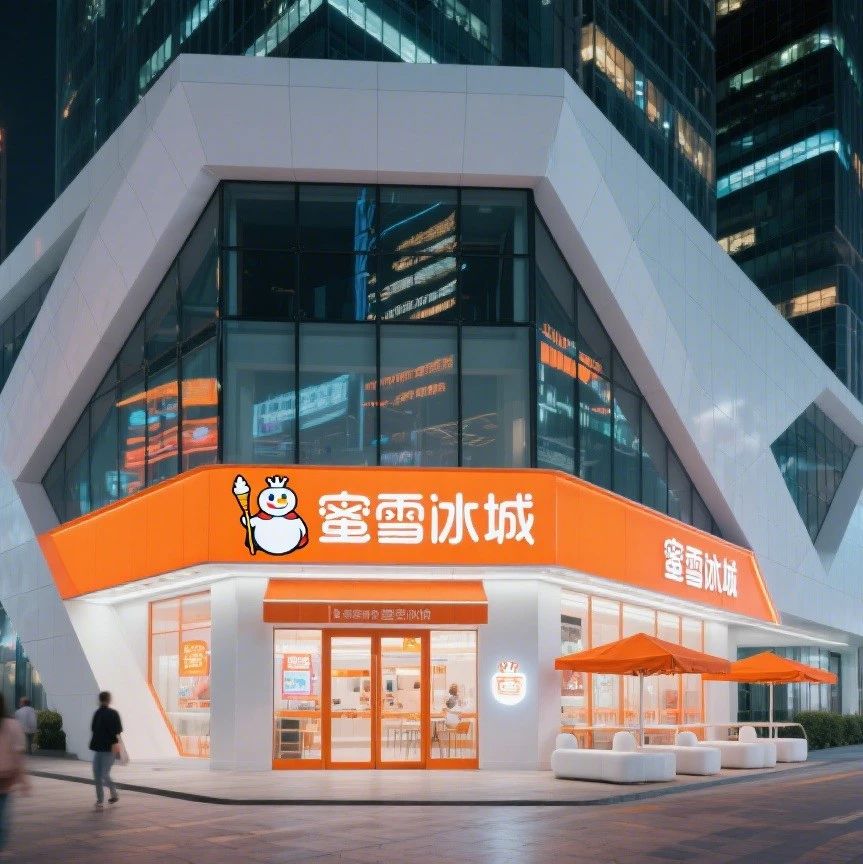
蜜雪冰城加速托举第二增长曲线
财富FORTUNE· 2025-08-25 13:05
Core Viewpoint - The article discusses the expansion strategy of Mixue Ice City and its coffee brand, Lucky Coffee, focusing on their growth in both domestic and international markets, particularly in Southeast Asia [2][5][6]. Group 1: Expansion Plans - Lucky Coffee is preparing to open five stores in Malaysia, marking its first international expansion [2]. - The brand aims to reach over 10,000 stores by the end of this year, with current store numbers exceeding 7,000 [5]. - Mixue Ice City plans to have over 46,000 global stores by early 2025, with nearly 5,000 located outside mainland China, primarily in Southeast Asia [2][5]. Group 2: Market Position and Competition - As of the end of 2023, Lucky Coffee has become the fourth largest fresh coffee brand in China with nearly 3,000 stores [4]. - The coffee market in China has been highly competitive, and Lucky Coffee has faced challenges, including store closures and stagnation in growth [4]. - Lucky Coffee will compete with other Chinese brands like Luckin Coffee and Kudi in Southeast Asia, with Kudi having a rapid expansion plan aiming for 50,000 stores globally by the end of 2025 [8]. Group 3: Supply Chain and Operational Efficiency - Mixue Ice City has established a robust supply chain system that supports both its brand and Lucky Coffee, allowing for cost-effective operations [6]. - The company operates 27 self-managed warehouses in China and 7 in Southeast Asia, totaling approximately 69,000 square meters [6]. - The recent IPO on the Hong Kong Stock Exchange is expected to enhance Mixue Ice City's global expansion and supply chain capabilities [6]. Group 4: Financial Performance and Market Challenges - Following a downgrade by UBS, Mixue Ice City's stock price has declined from nearly 620 HKD to below 500 HKD due to high valuations and challenges in overseas markets [7]. - The company aims to utilize 66% of the proceeds from its global offering to upgrade its supply chain [6].
茶颜悦色再陷“抄袭门”争议:新消费品牌文创战略遭拷问
Mei Ri Jing Ji Xin Wen· 2025-08-25 10:37
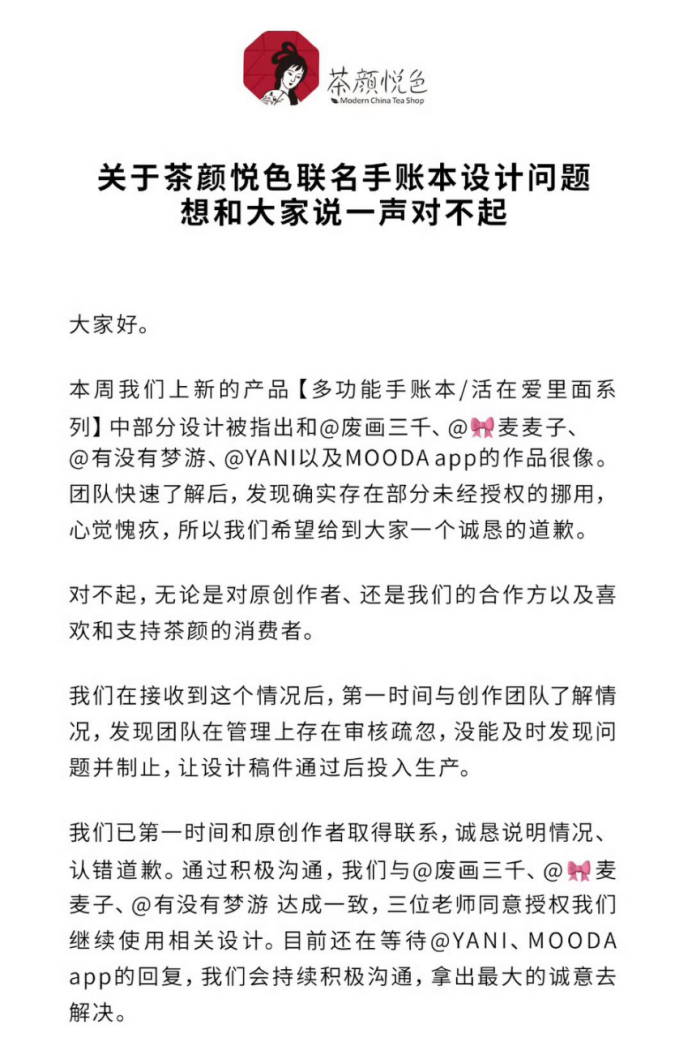
Core Viewpoint - The collaboration between Cha Yan Yue Se and Shanghai Rainbow Chamber Choir for the "Live in Love" series notebook faced backlash due to allegations of plagiarism, leading to a rapid sell-out followed by product withdrawal and public apology from the company [1][2][3] Summary by Sections Product Launch and Initial Success - The "Live in Love" series notebook was launched on August 22 and quickly sold out at a member price of 19.9 yuan, with prices on second-hand platforms soaring to several times the original price [1] - The product was designed to embody "cultural warmth" but faced immediate criticism for alleged design plagiarism [1] Allegations of Plagiarism - Multiple bloggers accused Cha Yan Yue Se of copying their designs, with specific claims made by users on social media platforms [2] - The company acknowledged the issue on August 24, admitting to unauthorized use of certain designs and announcing plans for an internal investigation [2][3] Company Response - Cha Yan Yue Se issued a public apology, stating that there was a management oversight in the design approval process [3] - The company has since reached out to original creators for authorization to use their designs and is forming a special team for internal review [3] Previous Incidents - This incident is not the first for Cha Yan Yue Se; a previous packaging design was also criticized for resembling a music album cover, leading to another product withdrawal in July [5] Market Context and Challenges - The rapid development of cultural and creative products is seen as a strategy for new consumer brands to diversify and increase user engagement, especially under growth pressure [6][7] - Cha Yan Yue Se has been expanding its product lines, including snacks and cultural products, to differentiate itself in a competitive market [6] Risks of Fast-Paced Development - The pressure to quickly launch new products can lead to insufficient compliance checks, increasing the risk of copyright infringement [7][8] - The design industry often sees high levels of borrowing and inspiration, but excessive similarity can lead to legal issues [8][9] Long-term Implications - Frequent plagiarism allegations can damage a brand's reputation and consumer trust, undermining its cultural positioning [9] - Respect for originality and intellectual property is becoming a critical competitive advantage in the evolving new tea beverage market [9]
蜜雪冰城的低价挡箭牌,扛得住东方明珠“扫射”,扛不住食品安全危机
创业邦· 2025-08-25 10:11
Core Viewpoint - The article discusses the marketing success and public perception of the brand Mixue Ice City, highlighting its ability to leverage social media trends and consumer engagement while facing ongoing food safety issues [5][10][21]. Group 1: Marketing and Brand Image - Mixue Ice City has successfully integrated its brand image with the "Snow King" IP, which has become a cultural symbol beyond just beverages, emphasizing the importance of brand influence [12][14]. - The brand's social media strategy focuses on making the Snow King character relatable and engaging, resulting in high interaction rates on platforms like Xiaohongshu, where posts related to the Snow King receive significantly more engagement than those related to the brand itself [14][15]. - Mixue Ice City capitalizes on trending topics and user-generated content, such as the "first cup of milk tea in autumn" campaign, which led to a significant sales boost for new products [17][19]. Group 2: Food Safety Concerns - Despite its marketing success, Mixue Ice City faces serious food safety challenges, with a high volume of complaints reported on platforms like Black Cat Complaints, indicating operational difficulties and safety pressures that exceed those of competitors [22][27]. - The brand has experienced multiple food safety incidents in 2023, yet its conservative response strategy has not significantly damaged its overall public image, as many consumers continue to support the brand [21][23]. - The perception of Mixue Ice City as a low-cost option has led to a degree of consumer leniency regarding its food safety issues, but this tolerance may be waning as more incidents occur [26][39]. Group 3: Business Strategy and Expansion - As of December 31, 2024, Mixue Ice City has expanded to 46,479 stores globally, surpassing Starbucks, but faces challenges in maintaining quality control across its vast franchise network [29][35]. - The company has announced a strategic slowdown in new store openings to focus on improving existing store operations and ensuring standardized practices to mitigate food safety risks [35][37]. - The brand's identity is closely tied to its low-price strategy, which has been a double-edged sword; while it attracts a large customer base, it also limits the brand's ability to innovate and upgrade its product offerings [38][39].