住宅地产

Search documents
卖不出去的写字楼要改成住宅区了?
Hu Xiu· 2025-08-21 09:57
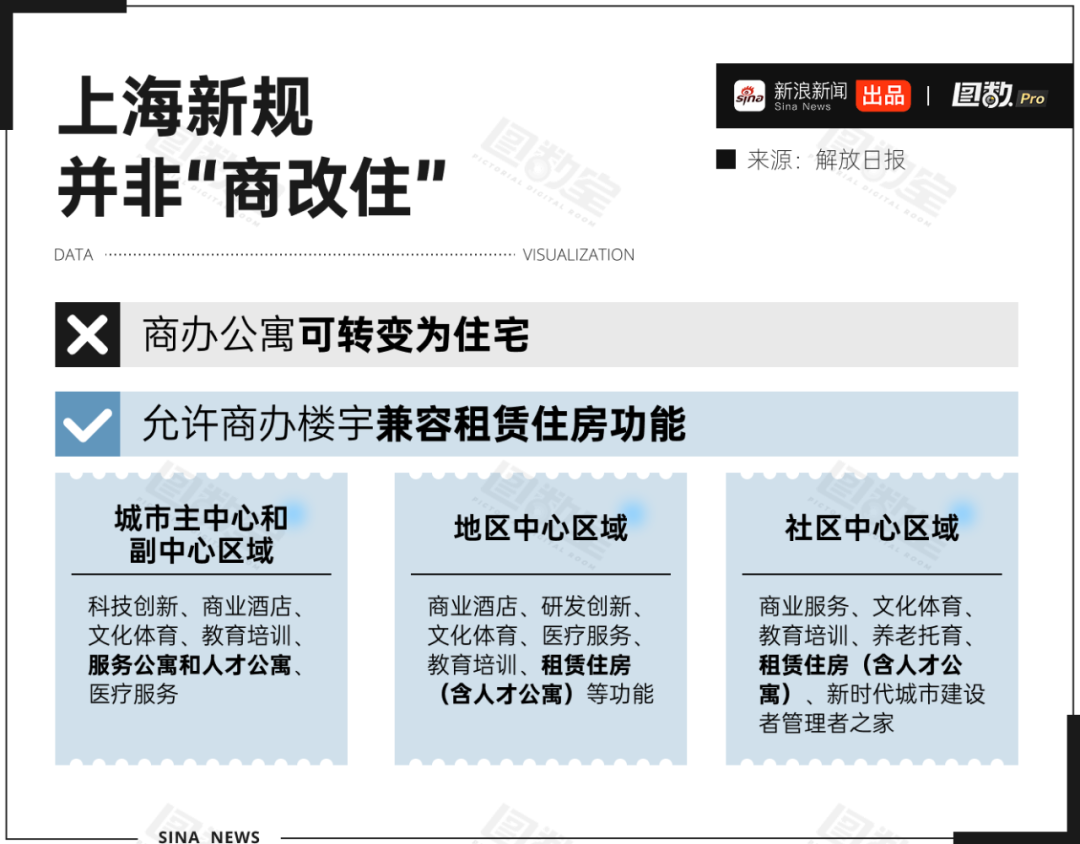
Core Viewpoint - Shanghai has adjusted its "commercial to residential" ban for the first time in eight years, encouraging the transformation of commercial buildings to include rental housing and other functions to address high vacancy rates and commuting issues in major cities [1][4][19]. Group 1: Policy Changes - The new policy allows for the expansion of functions in commercial buildings, including rental housing, elder care, cultural sports, and technological innovation [4][8]. - The government clarified that the policy does not fully open up "commercial to residential" but allows for certain conditions under which commercial buildings can be converted to rental housing [5][7]. - This marks a significant shift from previous strict regulations that prohibited such conversions, indicating a potential new phase in urban development [18][39]. Group 2: Market Context - Major cities like Beijing, Shanghai, Guangzhou, and Shenzhen are experiencing high vacancy rates in Grade A office buildings, with rates approaching or exceeding 20%, indicating a supply-demand imbalance [2][20][21]. - The high vacancy rates have led to a decline in commercial property sales, with sales dropping from 1.3 trillion yuan in 2018 to 320.8 billion yuan in 2024 [16]. - The policy aims to alleviate the pressure of high inventory in the commercial market and provide new solutions for urban governance [38][49]. Group 3: Societal Implications - The "commercial to residential" policy is seen as a potential solution to the commuting challenges faced by workers, with nearly half of workers in major cities commuting over 5 kilometers [23][24]. - By utilizing idle commercial spaces for residential purposes, the policy aims to improve the living experience for workers and achieve a better work-life balance [26][49]. - The transformation of commercial properties into residential spaces is expected to enhance urban livability and vitality [51].

房贷没有租金高,租房不如买房?
Sou Hu Cai Jing· 2025-08-20 20:05
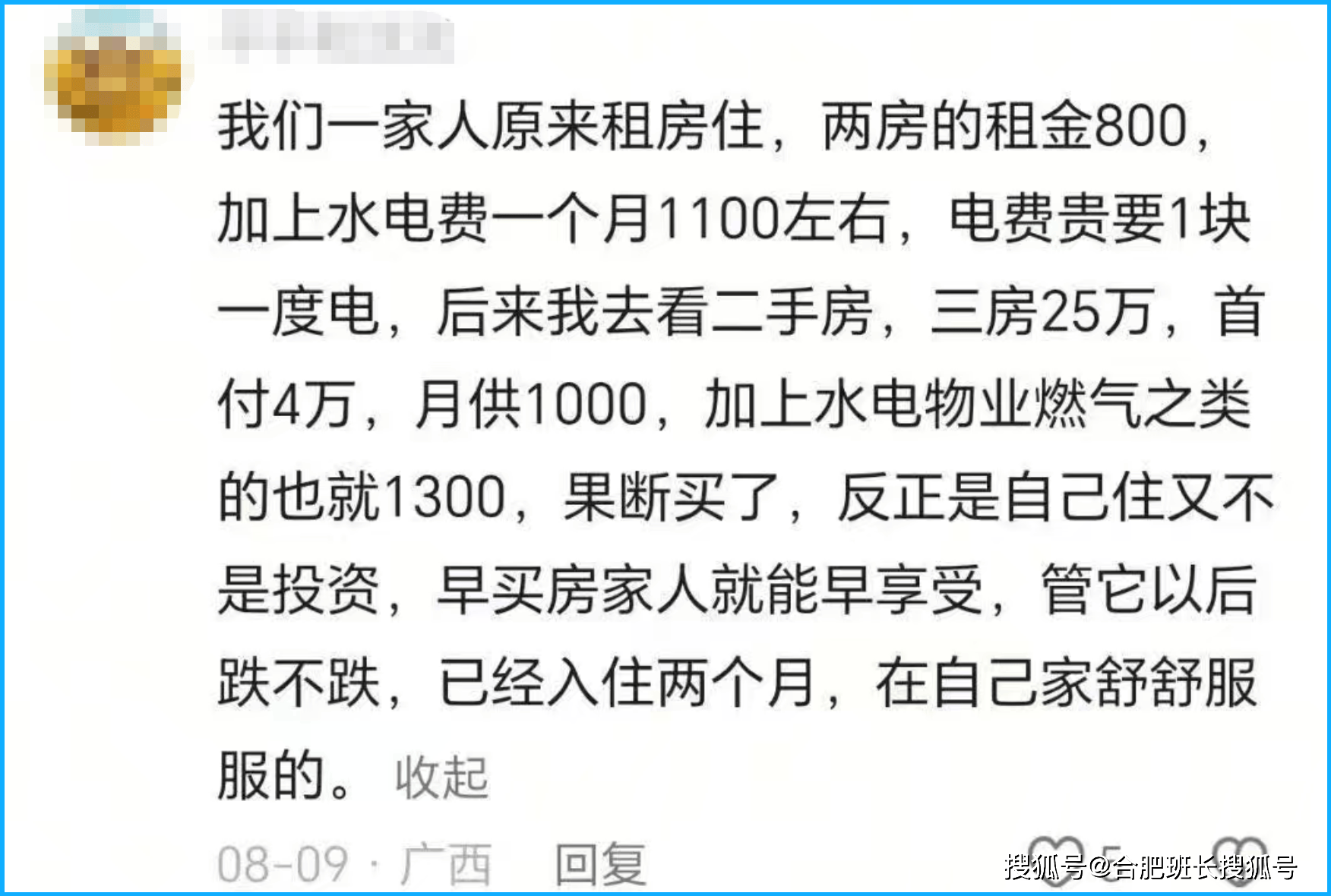
Core Viewpoint - The article discusses the financial implications of renting versus buying a home, highlighting a personal anecdote where a family transitioned from renting to owning a home, resulting in a slight increase in monthly expenses but a significant improvement in living conditions [1][3]. Summary by Sections Renting vs. Buying - A family previously paid approximately 1100 yuan per month for rent and utilities, and after purchasing a home with a 40,000 yuan down payment, their total monthly expenses increased to around 1300 yuan, allowing them to move from a two-bedroom to a three-bedroom home [1][3]. Market Analysis in Hefei - In Hefei, renting a three-bedroom apartment costs about 2000 yuan per month. With a mortgage rate of 3.0%, a loan of 480,000 yuan results in a monthly payment of approximately 2024 yuan, corresponding to a total property price of about 564,700 yuan, requiring a down payment of around 84,700 yuan [5][9]. Housing Market Concerns - The article raises concerns about potential declines in housing prices and the types of properties available within budget constraints. It notes that while owning a home provides a sense of security, the risk of depreciation remains a factor to consider [7][9]. Property Options - The analysis indicates that for a budget of 564,700 yuan, the available properties are primarily older homes or those in less desirable areas, which may not offer the same living quality as higher-rent options [8][9]. Rent vs. Buy Considerations - The decision to rent or buy should consider the rental yield and housing price trends. A higher rent-to-price ratio makes buying more attractive, while stable or slightly declining prices can also favor purchasing [15].
2025年有一种痛苦叫买了“连廊中间户”!入住3年,太后悔了,有些话不吐不快
Sou Hu Cai Jing· 2025-08-19 05:28
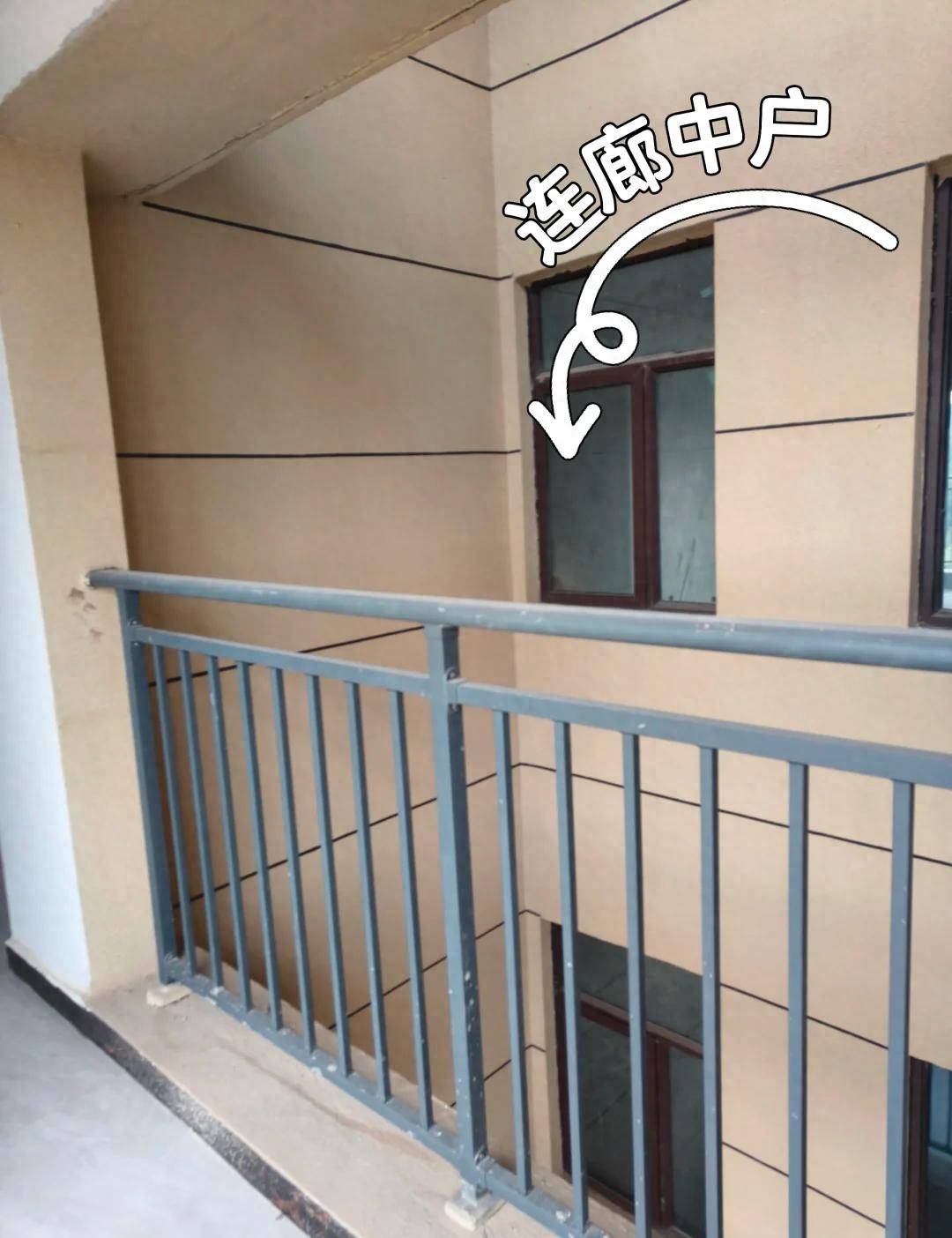
Group 1 - The core viewpoint of the article highlights the shift in homebuyers' priorities, with comfort in living conditions becoming the primary focus, leading to regrets among those who purchased middle corridor units [1] Group 2 - Middle corridor units are generally priced lower than corner units, offering better cost-performance ratios, allowing buyers to save money for renovations or furniture [4] - The layout of middle corridor units tends to be more rectangular, maximizing space utilization and facilitating easier decoration [6] - Middle corridor units are quieter due to being surrounded by other units, providing a more peaceful living environment [8] Group 3 - Regrets about moving into middle corridor units stem from safety concerns, particularly the risks associated with high corridors and inadequate protective barriers [10] - North-facing windows in middle corridor units often result in poor lighting due to obstruction from the corridor structure, affecting both light and ventilation [14] - Privacy issues arise as neighbors can easily see into kitchens and bathrooms, leading to discomfort for residents [18] - Common areas like corridors can become cluttered with personal items, creating safety hazards and reducing accessibility [24]
学区房突然又热了,个别小区开始涨价
Sou Hu Cai Jing· 2025-08-19 03:06
Core Viewpoint - The traditional off-season for school district housing in Hangzhou has seen an unexpected surge in transactions, with some properties even experiencing price increases, indicating a strong demand despite the typical seasonal slowdown [1][9][12]. Group 1: Market Trends - Recent statistics show that certain top school district properties have entered a new peak in transactions, surpassing the traditional peak months of March and April [1]. - The average transaction price for properties in the Jiangnan Experimental School district has increased significantly, with some units seeing price hikes of around 40,000 yuan compared to last year [13][16]. - The demand for smaller units priced between 1 million to 2 million yuan has become the main driver of transactions, contrasting with the previous preference for newer, higher-priced properties [12]. Group 2: Specific Property Performance - The Wenlan Experimental School district has seen a notable rebound in transaction volume, with 61 units sold in July, nearly matching the peak of 64 units sold in March [9][11]. - The average transaction price for the Dongfang Jun property in the Jiangnan Experimental School district has risen to 48,690 yuan/m², up from previous months' averages of around 44,000 to 45,000 yuan/m² [13][16]. - Properties like the Jinxin Yuyuan and Huzhu New Village have also shown price increases, with Huzhu New Village's average price rising by approximately 5% in recent months [16]. Group 3: Future Outlook - Despite the recent price increases in some areas, the overall market trend remains stable to downward, with many properties still having room for negotiation [17]. - The surge in demand is expected to taper off as the summer progresses, with transaction volumes in popular districts like Jinxin Yuyuan and Dongfang Jun dropping to 1-2 units in August [12].

不管楼层有多高,这6个楼层是最吉利楼层,并非迷信,而是共识
Sou Hu Cai Jing· 2025-08-18 09:58
Core Insights - The article emphasizes the importance of selecting the right floor in residential buildings, highlighting that it is based on comfort and future property value rather than superstitions. The "lucky" floors are those that achieve a balance in lighting, ventilation, noise, and convenience, making them desirable in the real estate market [1]. Summary by Sections Recommended "Lucky" Floors - **18th Floor**: Often considered a premium level in high-rise buildings, it offers better views, privacy, and sunlight while avoiding dizziness associated with higher floors. It represents a comfortable lifestyle choice [2]. - **13th Floor**: Despite cultural biases against the number 13, this floor offers similar living conditions to adjacent floors but at a more affordable price, making it a potential investment opportunity [3]. - **11th Floor**: Known for its value, the 11th floor provides a good balance of price and benefits, such as reduced noise and excellent lighting, making it a solid choice for both living and future resale [5]. - **9th Floor**: This floor serves as an entry point to better views without the drawbacks of higher floors, making it a cost-effective option for those seeking a balance of sunlight and scenery [6]. - **6th Floor**: Often seen as a turning point for living experience, the 6th floor offers improved lighting and ventilation while avoiding excessive wind, making it a desirable choice [7]. - **4th Floor**: Despite negative associations with the number 4, this floor provides a practical height that avoids humidity and pests, making it a popular choice in older buildings [9]. Additional Tips for Floor Selection - **Avoid Equipment Floors**: It is advisable to steer clear of floors adjacent to equipment levels due to potential noise and electromagnetic interference [10]. - **Consider Orientation**: The choice of floor should also depend on the building's orientation; higher floors are preferable for east-facing units to capture morning sunlight, while mid to lower floors are better for west-facing units to avoid afternoon heat [12]. Conclusion - Selecting a floor is a comprehensive decision that requires consideration of various factors such as lighting, ventilation, noise, and personal needs. The so-called "lucky" floors are those that ensure comfort and peace of mind for residents [13].
上海超高层住宅全景:感受不一样的风景
Sou Hu Cai Jing· 2025-08-16 08:52
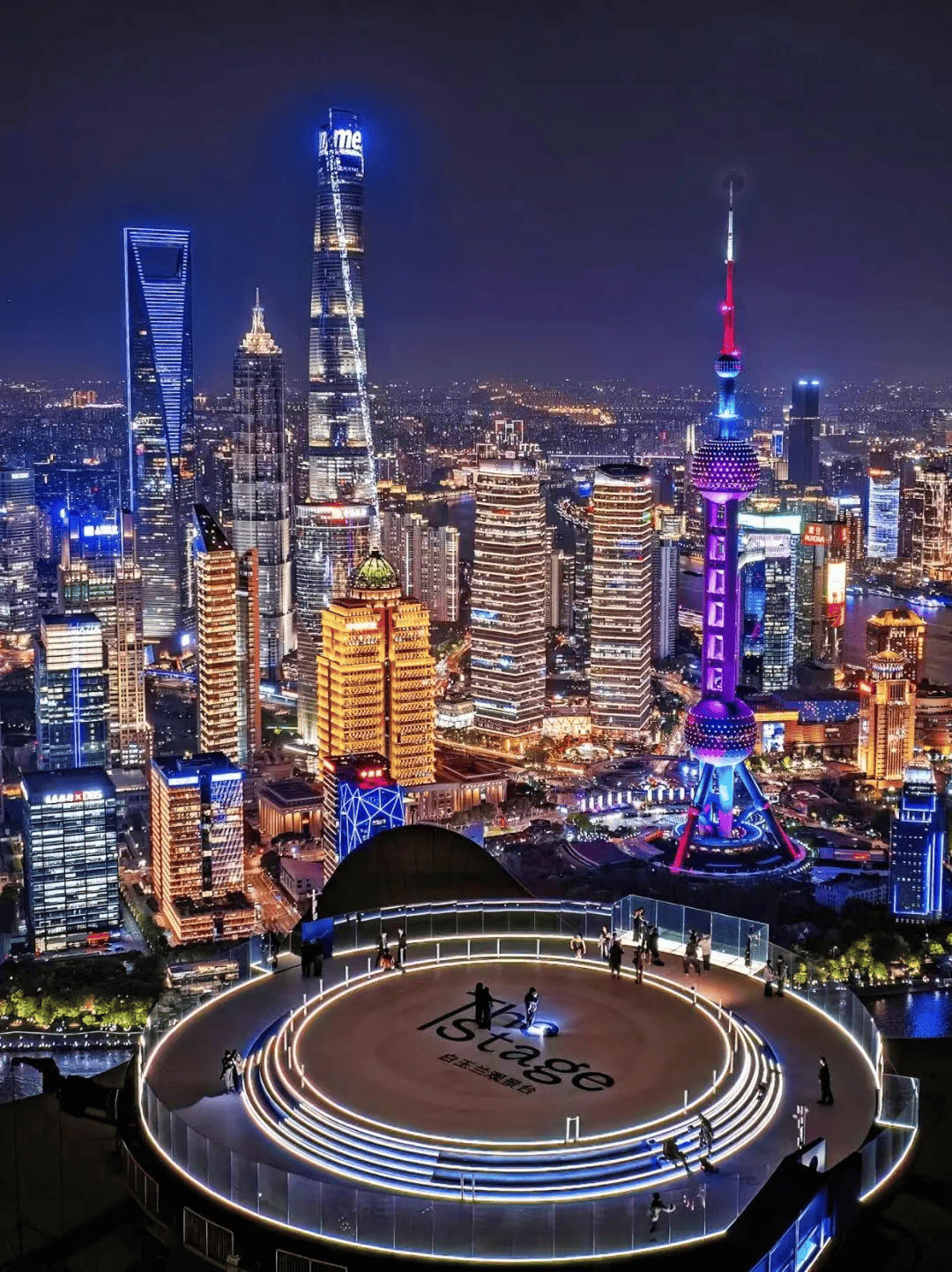
Core Insights - The article discusses the rising demand and supply of super high-rise residential properties in Shanghai, particularly in prime locations with exceptional views, which are becoming status symbols for the wealthy [1][5][25] Group 1: Market Overview - Since 2021, the supply of super high-rise residential projects (over 100 meters) has been limited, with half located in Huangpu District, and others along the Huangpu River and key scenic areas [3][4] - In 2024, Shanghai is expected to see a surge in super high-rise residential projects, with notable developments like Cuihu Tiandi and Zhonghai Shunchang Jiuli [5][8] Group 2: Product Characteristics - The majority of new super high-rise units are not large, with only 26.8% being over 300 square meters; instead, 150-300 square meter units make up nearly two-thirds of the offerings [6][8] - High-end projects like Cuihu Tiandi and Zhonghai Shunchang Jiuli are positioned with larger unit sizes starting from 437 square meters, reflecting a strong brand and product influence [8][11] Group 3: Sales Performance - Recent launches have seen high demand, with projects like Zhonghai Shunchang Jiuli achieving a 100% registration rate, indicating strong market interest [13][14] - The article highlights a stark contrast in sales performance among different projects, with some achieving high sales while others struggle due to mismatched pricing and product offerings [14][15] Group 4: Changing Consumer Preferences - The demand for super high-rise properties is evolving from a focus solely on location to a more multifaceted value proposition, integrating product innovation and service quality [15][17] - The competitive landscape is shifting, with super high-rise properties facing challenges from villa-style residences that offer more usable space and unique cultural value [19][21] Group 5: Future Outlook - The article suggests that the market for super high-rise luxury homes in Shanghai is entering a new phase, where product differentiation and understanding of local consumer needs will be crucial for success [23][25]
7月各线城市商品住宅销售价格环比下降,同比降幅整体有所收窄
Qi Lu Wan Bao· 2025-08-15 06:42
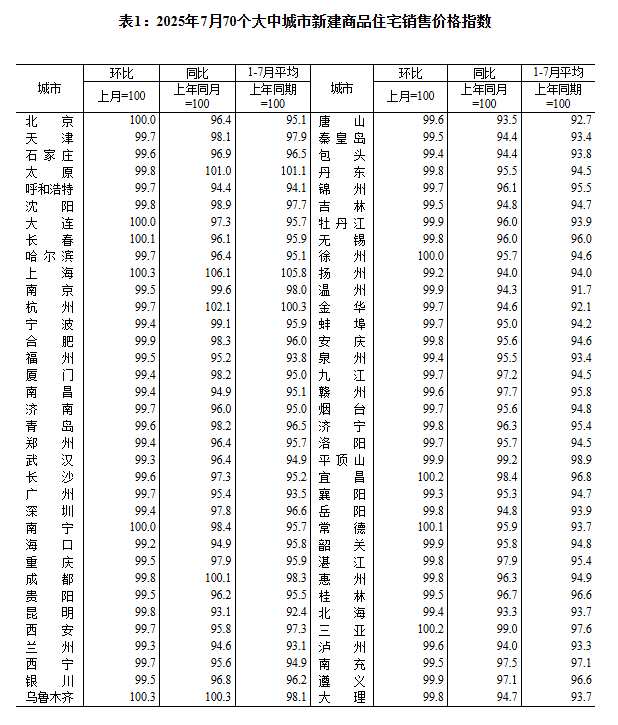
Core Viewpoint - In July 2025, the sales prices of commercial residential properties in major cities showed a month-on-month decline, but the year-on-year decline narrowed overall [1]. Group 1: Month-on-Month Price Changes - In July, the sales prices of new commercial residential properties in first-tier cities decreased by 0.2%, with the decline narrowing by 0.1 percentage points compared to the previous month [2]. - Second-tier cities saw a month-on-month decline of 0.4%, with the decline expanding by 0.2 percentage points [2]. - Third-tier cities experienced a month-on-month decline of 0.3%, with the decline remaining the same as the previous month [2]. - The sales prices of second-hand residential properties in first-tier cities decreased by 1.0%, with the decline expanding by 0.3 percentage points [2]. - Second and third-tier cities' second-hand residential prices both decreased by 0.5%, with the decline narrowing by 0.1 percentage points [2]. Group 2: Year-on-Year Price Changes - In July, the year-on-year sales prices of new commercial residential properties in first-tier cities decreased by 1.1%, with the decline narrowing by 0.3 percentage points compared to the previous month [3]. - Shanghai saw an increase of 6.1%, while Beijing, Guangzhou, and Shenzhen experienced declines of 3.6%, 4.6%, and 2.2% respectively [3]. - Second-tier cities' new commercial residential prices decreased by 2.8%, and third-tier cities saw a decline of 4.2%, with both declines narrowing by 0.2 and 0.4 percentage points respectively [3]. - The year-on-year sales prices of second-hand residential properties in first-tier cities decreased by 3.4%, with the decline expanding by 0.4 percentage points [3]. - Second and third-tier cities' second-hand residential prices decreased by 5.6% and 6.4% respectively, with declines narrowing by 0.2 and 0.3 percentage points [3].
7月各线城市商品住宅销售价格环比下降 同比降幅整体收窄
Yang Shi Xin Wen Ke Hu Duan· 2025-08-15 02:02
各线城市商品住宅销售价格同比降幅整体有所收窄 7月份,一线城市新建商品住宅销售价格同比下降1.1%,降幅比上月收窄0.3个百分点。其中,上海上涨 6.1%,北京、广州和深圳分别下降3.6%、4.6%和2.2%。二、三线城市新建商品住宅销售价格同比分别 下降2.8%和4.2%,降幅分别收窄0.2个和0.4个百分点。70个大中城市中,新建商品住宅销售价格同比上 涨城市有5个,比上月增加2个。 7月份,一线城市二手住宅销售价格同比下降3.4%,降幅比上月扩大0.4个百分点。其中,北京、上海、 广州和深圳分别下降2.9%、2.2%、6.0%和2.5%。二、三线城市二手住宅销售价格同比分别下降5.6%和 6.4%,降幅分别收窄0.2个和0.3个百分点。 今天,国家统计局公布数据,2025年7月份,70个大中城市中,各线城市商品住宅销售价格环比下降, 同比降幅整体有所收窄。 各线城市商品住宅销售价格环比下降 7月份,一线城市新建商品住宅销售价格环比下降0.2%,降幅比上月收窄0.1个百分点。其中,北京持 平,上海上涨0.3%,广州和深圳分别下降0.3%和0.6%。二线城市新建商品住宅销售价格环比下降 0.4%,降幅扩大0 ...
国家统计局:7月各线城市商品住宅销售价格环比下降 同比降幅整体有所收窄
Guo Jia Tong Ji Ju· 2025-08-15 01:57
Core Viewpoint - The data released by the National Bureau of Statistics indicates a decline in the sales prices of commercial residential properties in 70 large and medium-sized cities in July 2025, with a narrowing of the year-on-year decline overall [1]. Group 1: Price Changes in First-Tier Cities - In July 2025, the sales price of newly built commercial residential properties in first-tier cities decreased by 0.2% month-on-month, a reduction of 0.1 percentage points compared to the previous month [1]. - The year-on-year decline for newly built commercial residential properties in first-tier cities was 1.1%, with a narrowing of 0.3 percentage points from the previous month [1]. - The sales price of second-hand residential properties in first-tier cities fell by 1.0% month-on-month, with an increase in the decline of 0.3 percentage points compared to the previous month [1]. - The year-on-year decline for second-hand residential properties in first-tier cities was 3.4%, with an increase in the decline of 0.4 percentage points from the previous month [1]. Group 2: Price Index Data for Various Cities - The price index for newly built commercial residential properties in Beijing was 100.0 month-on-month and 95.1 year-on-year [2]. - In Shanghai, the price index for newly built commercial residential properties was 99.3 month-on-month and 97.5 year-on-year [2]. - The price index for second-hand residential properties in Beijing was 98.9 month-on-month and 97.1 year-on-year [4]. - In Guangzhou, the price index for second-hand residential properties was 99.0 month-on-month and 90.8 year-on-year [4]. Group 3: Price Changes by Property Size - For newly built commercial residential properties, the price index for properties 90m² and below in Beijing was 99.8 month-on-month and 96.7 year-on-year [5]. - The price index for properties between 90-144m² in Shanghai was 99.8 month-on-month and 98.3 year-on-year [5]. - For properties larger than 144m² in Beijing, the price index was 100.2 month-on-month and 96.5 year-on-year [5].
豪宅的户型创新有了新的趋势
3 6 Ke· 2025-08-13 02:23
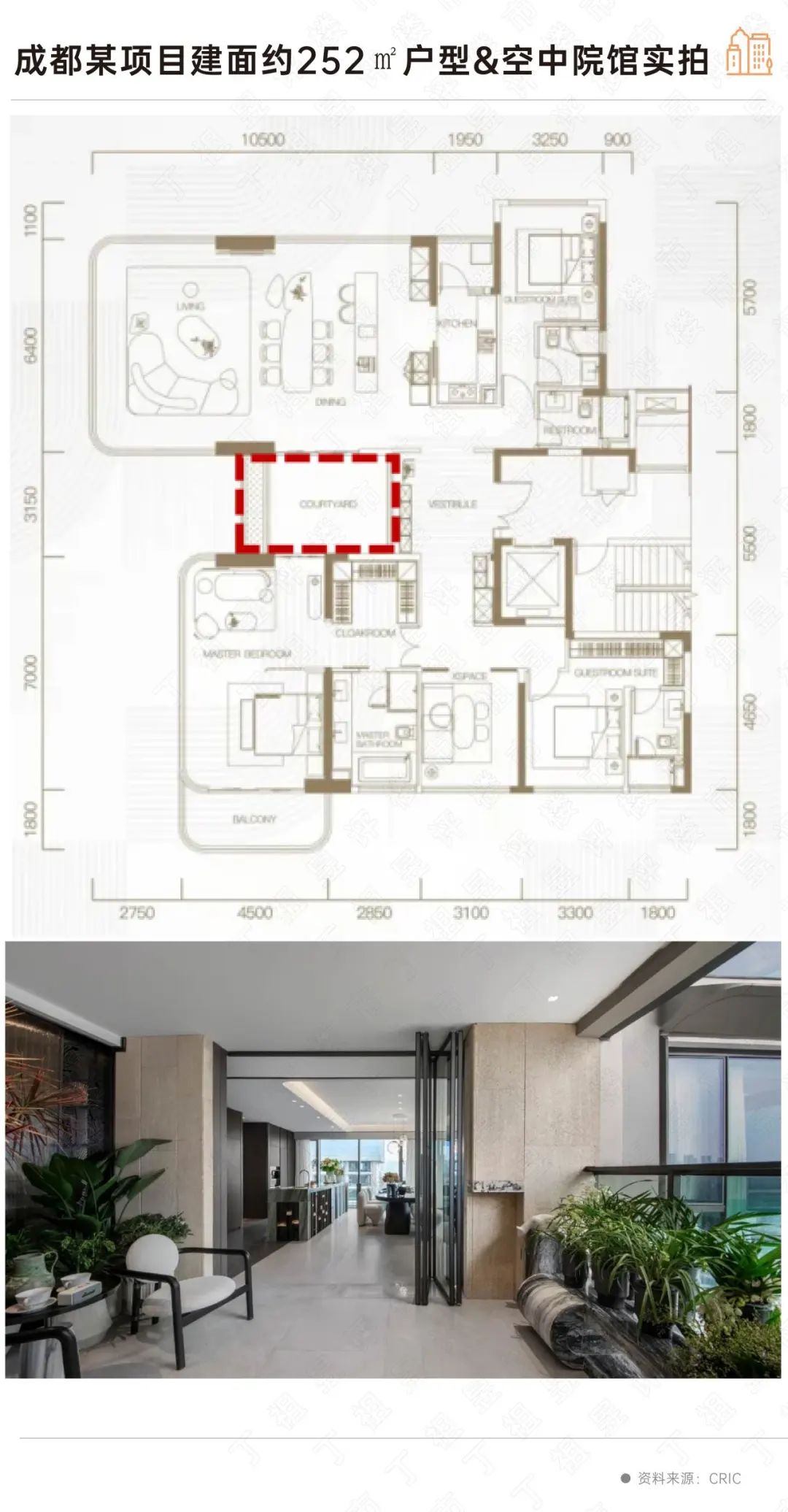
Group 1 - The core viewpoint of the article highlights the resilience of Chengdu's real estate market during a downturn, with new residential sales reaching 7.69 million square meters in the first seven months of 2025, marking a 4% year-on-year increase, leading among 30 key cities [1] - High-end residential sales, specifically properties priced over 10 million yuan, saw a significant increase with 790 units sold, representing a 52% year-on-year growth [1] - The design innovation of high-end residences in Chengdu, particularly the "Sky Courtyard," integrates traditional courtyard culture with high-rise architecture, enhancing the living experience through spatial reconfiguration [1][2] Group 2 - The "Sky Courtyard" design elevates the priority of space, transforming traditional balconies from peripheral areas to central family zones, thereby enhancing emotional value through spatial narrative [2][3] - A specific example includes a 252 square meter unit featuring a "Sky Courtyard" at the entrance, utilizing a circular flow design to create a visual impact and connect key functional areas [3] - The design also emphasizes a dual role of the "Sky Courtyard" as both a hub and a social space, enhancing functionality and space efficiency by serving as a transitional area between active and quiet zones [8] Group 3 - The "Sky Courtyard" also showcases innovative forms, such as the 240 square meter unit that incorporates a "double courtyard" system, promoting ecological and social interactions through vertical greenery and panoramic views [12] - The recent introduction of new regulations for "good housing" in central and key cities has stimulated the market and compelled real estate companies to upgrade quality, driving a comprehensive enhancement of residential products [16] - The focus of high-end residential product innovation has shifted from mere expansion of area to deep exploration of spatial functionality and scene extension, indicating a trend towards experiential reconstruction in high-end housing [16]