
农产品种植

Search documents
国家名厨炒热粤味珍品,连州菜心飘香深圳福田
Nan Fang Nong Cun Bao· 2026-01-17 03:03
Core Viewpoint - The event "Tianfu Fengtu · Zizai Qingyuan" promotes the unique Qingyuan vegetable, Lianzhou Cai Xin, in Shenzhen, aiming to enhance its presence in the Guangdong-Hong Kong-Macao Greater Bay Area [5][11][12]. Group 1: Event Overview - The promotional event took place in Shenzhen's Futian District, featuring renowned chefs demonstrating cooking techniques and sharing insights about Lianzhou Cai Xin [6][7][12]. - The event included live cooking, tasting sessions, and discussions, aiming to connect local restaurants with high-quality agricultural products [12][50]. Group 2: Market Potential - Shenzhen's restaurant market is large, with over 17 million residents and a market size exceeding 100 billion yuan, leading to a growing demand for quality ingredients [28][30]. - Lianzhou Cai Xin is positioned as a key product in the agricultural strategy of Qingyuan, which aims to expand its modern agricultural industry [41][46]. Group 3: Product Characteristics - Lianzhou Cai Xin is known for its natural sweetness, crispness, and nutritional value, with soluble sugar content significantly higher than that of ordinary vegetables [35][36]. - The vegetable is recognized as a geographical indication product, thriving in the high-altitude regions of northern Guangdong [35][41]. Group 4: Industry Collaboration - The Shenzhen Restaurant Industry Association is actively promoting the integration of agricultural products with the restaurant sector, facilitating direct supply from farmers to restaurants [49][50]. - The association aims to support the establishment of Lianzhou Cai Xin experience stores in Shenzhen, enhancing consumer awareness and acceptance [62][64]. Group 5: Future Plans - Plans are in place to expand the network of Lianzhou Cai Xin experience stores across the Greater Bay Area, with nearly 40 restaurants already participating [78][80]. - The Qingyuan government is leveraging community promotion channels in Shenzhen to deepen the brand's market influence through interactive promotions and tastings [96][98].


从“大粮仓”到“大厨房”
Xin Lang Cai Jing· 2026-01-16 17:04
Core Viewpoint - Heilongjiang Province aims to enhance its agricultural capabilities, achieving a total grain production of 1640.1 billion jin by 2025, marking 16 consecutive years of being the top grain producer in China, while transitioning from traditional to modern agriculture [3][4]. Agricultural Transformation - The province is focusing on a full-chain transformation in agriculture, emphasizing both production and sales, ensuring not only the quantity but also the quality of grain [4]. - Specific initiatives include the development of unique agricultural brands such as "Fengzheng Rich Selenium Rice" and the integration of aquaculture with rice farming [4]. - Heilongjiang is also enhancing its agricultural processing capabilities, with over 2200 large-scale agricultural processing enterprises established by September 2025 [5]. Technological and Ecological Advancements - The agricultural technology contribution rate is projected to reach 70.8% in 2024, with a mechanization rate exceeding 99% [5]. - The province is recognized as a leading area for green organic food certification, reinforcing its status as a "green granary" [5][6]. Talent and Cultural Development - The province is implementing policies to attract and retain talent in rural areas, including training programs and incentives for returning graduates and veterans [8]. - Cultural initiatives are being integrated into rural development, enhancing community identity and economic value through local heritage and tourism [9]. Ecological and Organizational Support - Heilongjiang is prioritizing ecological protection, with significant afforestation efforts and a focus on sustainable agricultural practices [10]. - The province is enhancing organizational structures to support rural revitalization, with innovative governance models being implemented to boost local economies [11][12].
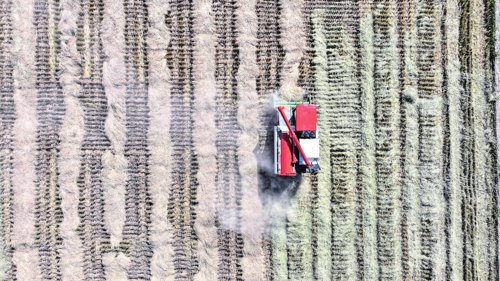
乡村振兴 法治先行 天水市2026年立法计划出台
Xin Lang Cai Jing· 2026-01-16 09:52
Core Viewpoint - The legislative plan for 2026 in Tianshui City aims to enhance the development of local agricultural industries, specifically focusing on the Huaniu apple and Gangu chili, by introducing legal frameworks to support high-quality growth [1][2]. Group 1: Legislative Framework - The 2026 legislative plan includes the drafting of two local regulations: the "Tianshui City Huaniu Apple Industry Development Promotion Regulations" and the "Tianshui City Gangu Chili Protection and Development Regulations" [1]. - The plan emphasizes scientific, democratic, and lawful legislation principles, with extensive public consultation and multiple rounds of evaluation before approval by the municipal government [1]. Group 2: Huaniu Apple Industry - The Huaniu apple has established a large-scale and industrialized development model, with increasing brand value and market influence [1]. - The regulations for the Huaniu apple will focus on key areas such as geographical indication protection, production standards, brand maintenance, and market supervision to create a comprehensive legal support system [1]. Group 3: Gangu Chili Industry - Gangu chili is recognized as a significant member of the "Belt and Road" geographical indication brand promotion list and is essential for local cuisine, particularly in Tianshui's spicy dishes [2]. - The "Tianshui City Gangu Chili Protection and Development Regulations" will address critical aspects such as variety cultivation, standardized planting, and quality safety traceability to support the industry's upgrade and revitalization [2].
玉米类市场周报:现货市场偏强支撑,玉米期价继续收涨-20260116
Rui Da Qi Huo· 2026-01-16 09:20
瑞达期货研究院 「2026.01.16」 玉米类市场周报 现货市场偏强支撑 玉米期价继续收涨 研究员:许方莉 期货从业资格号F3073708 期货投资咨询从业证书号 Z0017638 取 更 多 资 讯 联系电话:0595-86778969 关 注 我 们 获 业 务 咨 询 添 加 客 服 目录 1、周度要点小结 2、期现市场 3、产业情况 4、期权市场分析 「 周度要点小结」 总结及策略建议 3 Ø 玉米: Ø 行情回顾:本周玉米期货震荡收涨。主力2603合约收盘价为2281元/吨,较上周+18元/吨。 Ø 行情展望:USDA月度供需报告显示,2025/26年度美玉米单产从之前的186蒲式耳/英亩上调至 186.5蒲式耳/英亩,产量预估上调至170.21亿蒲式耳,高于分析师预估区间的上沿,报告整体偏 空。也使得美玉米价格大幅回落。国内方面,东北产区基层售粮进度同比偏快,传统售粮窗口期 缩短,但未出现规模性上量,调节性储备玉米尚未落地,中储粮销售等投放持续加码,对市场供 应有所补充,用粮企业利润不佳,持续提价收粮动力不足,仅区域性行情偏强运行。华北黄淮产 区基层种植户惜售心理尚未松动,深加工企业厂门到货量整 ...
农产品专场-2026年年度策略会议-恒中有变-观复顺时
2026-01-16 02:53
Summary of Key Points from Conference Call Records Industry Overview: Soybean and Plant Oil Market Soybean Industry Insights - Global soybean yield has potential for growth, with Brazil's planting area reaching a historical high. The main drivers of demand are crushing needs from China, the US, and Brazil, while Argentina's demand is declining. China's imports are increasing, Brazil's exports are rising, and US exports are decreasing. The high yield and low-cost competitive landscape in South America will continue to suppress global soybean prices, which are expected to remain in a low range [1][2][23] - In Q1 2026, South America may experience La Niña effects, leading to a higher probability of reduced production in Argentina, but Brazil's increased production may provide a buffer. The US is transitioning between neutral and El Niño phases, with varying impacts on soybean yields [3] - The cost of US soybeans is higher than that of Brazil, with 2026 costs expected to fluctuate between 1,076 and 1,171 cents per bushel, while Brazil's median cost is around 842 cents per bushel, giving it a competitive advantage [4] Plant Oil Market Dynamics - The global vegetable oil market is experiencing a tight supply-demand balance, with total production increasing but demand growing faster, leading to stable or slightly reduced ending stocks year-on-year. The supply-demand structure for soybean oil is particularly tight, while sunflower oil is in a more strained position [5][6] - Malaysia's palm oil production is expected to improve due to favorable factors such as increased fertilizer imports and labor availability, with palm oil production in 2026 anticipated to exceed expectations [8] - Indonesia's palm oil planting area continues to expand, with government actions to increase state-owned plantation ratios and improve market pricing power. The introduction of pollination technology aims to address aging tree issues [11][13] Future Trends and Risks - The global biodiesel demand is expected to shift focus to the US in 2026, with significant growth anticipated, while Indonesia's growth rate is slowing. The US EPA's proposal to adjust renewable diesel fuel equivalency values may marginally increase biodiesel demand [16][17] - The soybean market is expected to remain under pressure due to high production and low costs in South America, with prices likely to fluctuate at lower levels. The potential for a rebound will depend on weather and macroeconomic factors [23][24] - The palm oil market outlook indicates cautious optimism, with Indonesia's government policies potentially stabilizing demand, but risks remain regarding supply chain disruptions and aging tree issues in Malaysia [25][26] China and Global Trade Implications - China's soybean imports are projected to increase significantly in the 2025/26 period, while India's total vegetable oil imports are expected to decline. The dynamics between China and India regarding vegetable oil trade will be crucial to monitor [15][28] - The relationship between China and Canada regarding canola trade is uncertain, with potential for increased imports if trade tensions ease. The ongoing geopolitical landscape will influence trade flows and pricing [40][41] Conclusion - The soybean and plant oil markets are characterized by a complex interplay of supply, demand, and geopolitical factors. The competitive landscape is shifting, with South America maintaining a strong position due to low costs and high yields. Future price movements will be influenced by weather conditions, trade policies, and domestic demand trends in key markets like China and India.


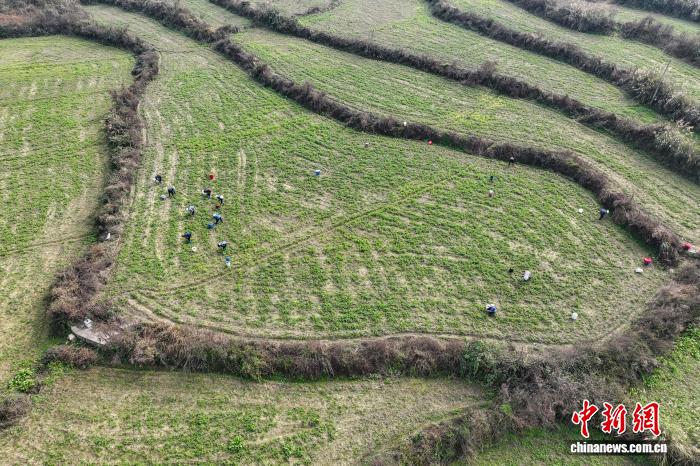
(走进中国乡村)贵州豌豆尖“掐”出千万元产值
Zhong Guo Xin Wen Wang· 2026-01-16 01:17
Core Insights - The article highlights the successful development of the pea shoots industry in Baytanhhe Town, Guizhou Province, which has become a significant source of income for local farmers and contributes to rural revitalization [1][3]. Industry Overview - Baytanhhe Town is known as the "Hometown of Pea Shoots" with a long history of cultivation, covering over 8,000 acres and generating an annual output value exceeding 48 million yuan [3]. - The growth cycle of pea shoots is short, allowing for harvesting just 20 days after planting, with a harvesting period from October to March of the following year [3]. Economic Impact - The pea shoots industry has created a complete industrial chain that includes planting, harvesting, processing, packaging, and sales, significantly benefiting local farmers [3][4]. - The average yield per acre is 1,000 kilograms, and during peak harvesting, nearly 10,000 kilograms of fresh pea shoots are transported daily to major markets such as Beijing, Shanghai, Guangdong, and Hong Kong [3]. Employment and Income Generation - The industry has provided stable employment for over 80 local villagers through high-standard sorting and processing operations [4][6]. - In the Park Village, each household cultivates an average of 1.5 acres of pea shoots, generating an income of approximately 6,500 yuan per acre, leading to an expected per capita disposable income of over 21,000 yuan by 2025 [6].
深度关注 | 助力“千万工程”全面开花
Zhong Yang Ji Wei Guo Jia Jian Wei Wang Zhan· 2026-01-16 00:24
Core Viewpoint - The article emphasizes the importance of implementing the "Thousand Villages Demonstration and Ten Thousand Villages Renovation" project to promote rural revitalization in China, highlighting its successful experience and the need for effective supervision to ensure policy execution and resource management [3][5][15]. Group 1: Implementation of the "Thousand Villages" Project - The "Thousand Villages" project, initiated by Xi Jinping, has evolved over 20 years, focusing on rural environment improvement and leading to significant changes in rural areas across China [5][6]. - The project aims to enhance rural governance, promote local industries, and improve living conditions, thereby benefiting millions of farmers [5][11]. - The experience from the "Thousand Villages" project is being utilized to guide the implementation of rural revitalization strategies nationwide [4][15]. Group 2: Role of Supervision in Rural Revitalization - Local disciplinary inspection and supervision agencies are focusing on key areas such as project implementation, policy enforcement, and fund management to ensure effective execution of rural revitalization initiatives [3][10]. - In various regions, supervision has led to the identification and resolution of issues related to infrastructure and service delivery, enhancing the overall effectiveness of rural development projects [8][9]. - The establishment of monitoring systems and the promotion of community involvement are crucial for sustaining improvements in rural governance and living standards [12][13]. Group 3: Agricultural Modernization and Economic Development - The article highlights the significant increase in grain production, with annual output projected to rise from 13,657 billion jin in 2021 to 14,297.5 billion jin by 2025, reflecting the focus on agricultural modernization [5]. - The development of local specialty industries is emphasized as a foundation for rural revitalization, with examples of successful agricultural projects leading to increased farmer incomes [7][10]. - The integration of digital technologies and innovative practices in rural areas is seen as essential for achieving sustainable economic growth and improving the quality of life for rural residents [6][11].
2025年俄罗斯燕麦出口收入创新高
Shang Wu Bu Wang Zhan· 2026-01-15 16:54
Core Insights - The article highlights that Russia's oat export value is projected to reach a record high of $62 million in 2025, up from $59.3 million in 2024 [1] Export Data - In 2025, the largest importer of Russian oats will be China, with an import value of $56 million [1] - Mongolia is expected to be the second-largest importer, with imports reaching $4 million [1] - The United Arab Emirates will rank third, with imports exceeding $600,000 [1] Production Statistics - Russia's oat production is forecasted to be 3.8 million tons in 2025, representing a year-on-year increase of 25.8% [1] - The yield per hectare is projected to be 22.7 quintals in 2025, compared to 19 quintals per hectare in 2024 [1]
豆棕油及豆粕市场年度展望
Guo Tou Qi Huo· 2026-01-15 12:00
豆棕油及豆粕市场年度展望 国投期货研究院 吴小明 投资咨询号Z0015853 202601 全球大豆供需状况 PART 1 全球油料供需格局同比微松 | 7种油籽供需 | | 2020/20 | 2021/20 | 2022/20 | 2023/20 | 2024/20 | 2025/20 | | | | | --- | --- | --- | --- | --- | --- | --- | --- | --- | --- | --- | | 平衡表 | | 21 | 22 | 23 | 24 | 25 | 26 | 同比 | | 同比% | | 期初库存 | 万吨 | 11305 | 11566 | 11557 | 12298 | 13607 | 14169 | 562 | 4 . | 1% | | 产量 | 万吨 | 60926 | 61069 | 63730 | 65737 | 68434 | 69315 | 881 | 1 . | 3% | | 进口 | 万吨 | 19101 | 17768 | 19805 | 20466 | 20679 | 21173 | 495 | 2 . | 4% | | 压榨 ...
“有地无名”“有名无标”致导航不准、物流不畅,特色物产缺乏鲜明标识——规范乡村地名,便出行、通快递、树品牌
Ren Min Ri Bao· 2026-01-15 07:56
Core Viewpoint - The "Rural Famous Action" initiated by the Ministry of Civil Affairs aims to address the issues of unclear navigation and address identification in rural areas, enhancing logistics and promoting local products by standardizing and digitalizing place names across the country by the end of 2025 [1][5]. Group 1: Navigation Improvement - The initiative has led to the naming of 927,000 rural place names and the installation of over 32 million place name signs and door plaques, significantly improving navigation and address clarity for residents and visitors [1][3]. - Villagers can now use precise addresses for navigation, such as "Wanghuai Road, Chewang Village," which enhances their ability to locate homes and businesses easily [1][2]. - The establishment of a national place name information database allows for the integration of local place names into major navigation platforms, facilitating easier travel and emergency response [3][6]. Group 2: Logistics Enhancement - The standardization of place names has resolved the "last mile" delivery challenges faced by logistics companies, allowing for accurate delivery to rural households [5][6]. - In Haikou, the average daily package volume at postal service stations has increased significantly due to improved address clarity, with logistics now able to deliver directly to homes [7]. - The integration of place names into logistics systems has resulted in a 100% delivery rate in Meilan District, with the value of regional brands exceeding 1.6 billion yuan [6]. Group 3: Brand Development and E-commerce - The initiative has enabled local products to be marketed effectively by associating them with their geographical names, enhancing their visibility and sales potential [8][10]. - In Dalian, the sales of local specialties like apples have increased by 37% year-on-year, driven by the integration of place names into e-commerce platforms and live streaming sales [10][11]. - The development of rural tourism routes linked to local agricultural products has created new economic opportunities, with online sales now accounting for half of total production [11].