合成生物

Search documents
李开复,在成都投了一家“0卡糖”
投中网· 2025-10-14 06:29
Core Viewpoint - The article highlights the investment in Sichuan Yingjiaohesheng Technology Co., Ltd., a major producer of steviol glycosides, emphasizing its innovative approach using synthetic biology and its significant market potential in the sugar substitute industry [5][8]. Group 1: Company Overview - Yingjiaohesheng was established in 2015 and focuses on producing natural products using synthetic biology technology, with applications in pharmaceuticals, health supplements, and food and beverages [8]. - The company is recognized as one of the largest suppliers of steviol glycosides in China and has successfully entered the U.S. market since 2019, becoming part of the global supply chains of several international food and beverage companies [8][10]. - Yingjiaohesheng's product line includes coenzyme Q10, new steviol glycosides, β-nicotinamide mononucleotide (NMN), and vanillin, covering multiple sectors [8]. Group 2: Market and Technology - Steviol glycosides are a key component in many "zero-calorie" food and beverage products, with a caloric value only 1/300 that of sucrose, making them a popular sugar substitute [6][8]. - The company’s unique technology route—synthetic biology—offers significant cost advantages over traditional extraction methods, which have low yield and high waste [10]. - Synthetic biology allows for the production of steviol glycosides at a scale that can surpass traditional methods, with one fermentation tank yielding the equivalent of thousands of acres of stevia plants [10]. Group 3: Industry Context and Policy Support - The synthetic biology sector in China has seen increased investment and policy support, with total annual investments ranging from 50 to 100 billion RMB from 2018 to 2020, and a significant surge in 2021 [14][15]. - Chengdu, where Yingjiaohesheng is located, has strategically positioned itself as a hub for the biopharmaceutical industry, with a total scale of 350 billion RMB in the health industry as of 2023 [19][20]. - The city has implemented policies to foster the development of synthetic biology, aiming to create a robust ecosystem that integrates innovation, capital, and industry [21][22].


科技金融助力 新质生产力发展的北京样本
Jin Rong Shi Bao· 2025-10-14 01:09
Group 1 - Blue Arrow Aerospace successfully launched the upgraded Zhuque-2 rocket, achieving the "one rocket, six satellites" feat in the liquid oxygen-methane rocket sector [1] - The company faced challenges in securing long-term funding due to unstable commercial revenue, which hindered loan applications [1] - A breakthrough occurred at the "Zhongguancun Technology and Finance Summit," where Minsheng Bank's Beijing branch developed a new evaluation model to meet Blue Arrow Aerospace's financial needs [1] Group 2 - The financing challenges faced by light-asset technology companies, such as Micro Yuan Synthetic Biology, stem from their reliance on laboratory strains and technology patents, which are not recognized as traditional collateral by banks [2][3] - The average daily establishment of over 300 technology companies in Beijing highlights the growing demand for innovative financing solutions in sectors like artificial intelligence and biomedicine [2] - Industrial and Commercial Bank of China (ICBC) Beijing branch introduced the "Technology 'Two Heavy' Loan," which focuses on providing credit based on government subsidies rather than traditional financial metrics [2] Group 3 - The "Zhongguancun Technology and Finance Summit" serves as a collaborative platform involving multiple government and financial institutions to support technology enterprises [4][5] - The platform employs a "multi-to-one" model, allowing several financial institutions to connect with a single enterprise, enhancing efficiency in financing [5] - Policies incentivizing banks to support technology enterprises have been established, including rewards for banks that successfully integrate equity and debt financing [5] Group 4 - Citic Bank leveraged group resources to provide comprehensive services to companies like Puqi Medicine, demonstrating a collaborative approach to financing [6] - ICBC Beijing branch successfully facilitated pure equity investments for technology companies, breaking barriers for bank participation in equity financing [6] Group 5 - The "Zhongguancun Technology and Finance Summit" has hosted 11 events, connecting over 80 enterprises with financing opportunities, achieving a success rate exceeding 70% [7] - As of July 2025, the loan balance for technology enterprises in Beijing surpassed 1.9 trillion yuan, with a year-on-year growth of 30.5% for small and medium-sized technology enterprises [7] - The trend of private equity funds increasingly supporting hard technology enterprises is evident, with a focus on early-stage investments [7] Group 6 - Blue Arrow Aerospace continues to expand its financing story, with Minsheng Bank providing comprehensive services across the commercial aerospace industry chain [8] - The integration of technology and finance is creating a clear path for growth, as evidenced by the ongoing support for innovative enterprises through the "Zhongguancun Technology and Finance Summit" [8]

李开复,在成都投了一家 “0卡糖” 合成生物企业
合成生物学与绿色生物制造· 2025-10-13 14:38
Core Viewpoint - The article highlights the investment in Sichuan Yingjia Hesheng Technology Co., Ltd., a major producer of steviol glycosides, emphasizing its role in the synthetic biology sector and its potential for growth in various markets, particularly in the U.S. and Southeast Asia [2][5]. Company Overview - Yingjia Hesheng, established in 2015, focuses on using synthetic biology to manufacture natural products, with applications in pharmaceuticals, health care, and food and beverage industries [4]. - It is the largest supplier of steviol glycosides in China and one of only three companies globally to receive GRAS certification for its rare steviol glycoside, Rebaudioside I [3][5]. Market Position - Since 2019, Yingjia Hesheng has successfully entered the U.S. market and is part of the supply chains of several international food and beverage companies, with increasing sales in the UK and Southeast Asia [5]. - The company is also planning to expand into emerging markets such as Japan and South Korea [5]. Product Line - In addition to steviol glycosides, Yingjia Hesheng's product portfolio includes Coenzyme Q10, new types of steviol glycosides, β-Nicotinamide Mononucleotide (NMN), and vanillin, covering multiple sectors including pharmaceuticals and health supplements [5]. Industry Development - Chengdu is positioning itself as a significant hub for synthetic biology and biomanufacturing, with over 300 biopharmaceutical projects introduced by the end of 2024, and a total industry scale exceeding 350 billion yuan [9][10]. - The local government has implemented policies to support the development of synthetic biology, recognizing its potential to replace traditional chemical processes and enhance the local economy [10][11].

李开复,在成都投了一家“ 0 卡糖”
Sou Hu Cai Jing· 2025-10-13 13:51
Core Viewpoint - Chengdu has proactively laid out the synthetic biology sector, with Yingjia Hesheng being a prominent player in the stevia glycosides market, utilizing synthetic biology technology for production [1][4][8]. Company Overview - Yingjia Hesheng Technology Co., Ltd. is a leading supplier of stevia glycosides in China, established in 2015, focusing on synthetic biology to manufacture natural products for various industries including pharmaceuticals and food [2][4][6]. - The company has developed a rare stevia glycoside, Rebaudioside I (Rebl), which has received GRAS (Generally Recognized As Safe) certification from the FDA, making it the only Chinese company among three globally to achieve this [6][7]. Market Position - China is the largest producer of stevia glycosides, and Yingjia Hesheng is one of the top suppliers, successfully entering the U.S. market since 2019 and expanding sales in regions like the UK and Southeast Asia [4][7]. - The company’s product line includes coenzyme Q10, new stevia glycosides, NMN, and vanillin, with a focus on health-conscious consumers [7]. Technology and Production - Yingjia Hesheng employs synthetic biology for stevia glycoside production, which offers significant cost advantages over traditional extraction methods that require large-scale cultivation of stevia plants [9]. - The synthetic biology approach allows for higher yields and lower waste, with one fermentation tank producing as much stevia glycoside as thousands of acres of stevia plants [9]. Industry Development - The synthetic biology sector in China has seen increased investment and policy support, with a notable surge in financing in 2021, indicating a growing interest and potential in this field [12][13]. - Chengdu's government has prioritized the development of synthetic biology, integrating it into broader economic plans and providing a conducive environment for companies like Yingjia Hesheng [17][18]. Future Prospects - Yingjia Hesheng aims to increase its annual output value from 200 million yuan to 1 billion yuan within three years, supported by the establishment of a new production facility by 2025 [9]. - The collaboration between synthetic biology and traditional pharmaceutical industries presents vast opportunities for innovation and cost reduction in drug production [18].
这家合成生物“明星”市值蒸发过半,净利润下滑,现要去港股!
IPO日报· 2025-09-30 13:18
Core Viewpoint - Anhui Huaheng Biotechnology Co., Ltd. (Huaheng Bio) is facing a "revenue growth without profit" dilemma, with its market value having dropped by 57% from its peak [2][7]. Company Overview - Established in 2005, Huaheng Bio focuses on synthetic biology technology, primarily engaged in the research, production, and sales of amino acids, vitamins, and bio-based new material monomers, applicable in personal care, functional foods, and nutrition [5]. - The company was listed on the New Third Board in August 2014 and delisted in February 2018. It subsequently went public on the Shanghai Stock Exchange's Sci-Tech Innovation Board in April 2021, raising 625 million yuan at an initial price of 23.16 yuan per share [6]. Financial Performance - Revenue has shown consistent growth, reaching 14.19 billion yuan in 2022, 19.38 billion yuan in 2023, and 21.78 billion yuan in 2024, with a compound annual growth rate of 31.67% over the first three years [9]. - The company reported a net profit of 4.49 billion yuan in 2023, but this plummeted by 57.8% to 1.9 billion yuan in 2024, with a further decline of 23.26% to 1.15 billion yuan in the first half of 2025 [10]. Cost and Profitability Issues - The decline in net profit is attributed to rising costs, with sales costs increasing by 41.7% in 2024 compared to 2023, alongside heightened competition and increased operational expenses [10]. - The gross profit margin has decreased from 38.7% to 24.8% during the reporting period, with a further drop to 23.5% in the first half of 2025 [11]. Market Position - Amino acid products are the primary revenue source, accounting for 69.3% to 82.2% of total revenue during the reporting period [12]. - Huaheng Bio holds the leading global market share in the L-alanine and L-valine segments, despite being approximately one-third the size of its competitor, Kasei Bio, which reported revenues of 29.58 billion yuan in 2024 [12].


AI加速生物活性原料创新,「未名拾光」获数千万元B+轮融资 | 36氪首发
3 6 Ke· 2025-09-29 00:25
Core Insights - "Weiming Shiguang" recently secured several tens of millions of RMB in B+ round financing, led by Huatai Jinse and Haibang Investment, aimed at enhancing AI technology platform development, expanding diverse applications of biomaterials, and accelerating global business layout [1] - The company has developed a closed-loop synthetic biology technology platform focusing on innovative biomaterials, utilizing AI to empower the platform comprehensively [1][3] - The company has established a business model that meets the needs of the beauty, medical device, and food industries, combining self-developed innovative raw material pipelines with a CRDMO model to collaborate with downstream brand manufacturers [1][6] Investment and Financing - The recent financing follows nearly 100 million RMB investment from L'Oréal and Nai's Group in May, indicating strong investor confidence and interest in the company's growth potential [1] - The funds will primarily be used for AI technology platform enhancement and global business expansion [1] Technology and Innovation - The company has established two types of cell factories—microbial and plant-based—to produce peptides and proteins, including collagen and fibronectin [2] - Utilizing plant callus technology, the company has induced callus from over 80 plant species, with three extracts approved as new cosmetic raw materials, representing 75% of the total approved by the regulatory authority [2] - AI has significantly improved research and development efficiency, reportedly increasing it by at least five times, with plans to allocate 50% of R&D spending towards AI development [4] Product Development and Market Strategy - The company employs a "reverse development" approach, focusing on the needs of downstream brand clients to provide raw material development services [6] - The emphasis is on developing differentiated "high-end" raw materials, particularly rare plant extracts that offer unique market value [6] - The company aims to expand its active ingredient business from beauty products to food and daily chemicals, with plans for international expansion [8] Collaboration and Client Network - The company has established a wide market channel and client network, collaborating with major brands like L'Oréal, Procter & Gamble, and Shanghai Jahwa for joint development [7] - The introduction of a novel "in vivo transdermal absorption Raman spectroscopy detection" technology has attracted numerous beauty and personal care brands, enhancing client relationships and laying the groundwork for CRDMO services [7]
AI加速生物活性原料创新,「未名拾光」获数千万元B+轮融资 | 早起看早期
36氪· 2025-09-29 00:17
Core Viewpoint - The company "未名拾光" has recently secured a B+ round financing of several tens of millions of RMB, following a previous investment of nearly 100 million RMB from L'Oréal and Naive Group, aimed at enhancing its AI technology platform and expanding its global business footprint [3][4]. Group 1: Financing and Investment - "未名拾光" has received significant investments from both L'Oréal and Naive Group, totaling nearly 100 million RMB earlier this year, and has now attracted additional funding from industrial funds [4]. - The latest financing round will primarily focus on deepening AI technology platform development and expanding the application scenarios of biological materials [3]. Group 2: Technology and Product Development - The company has established a closed-loop system for the innovation of biological materials, integrating design, screening, efficacy evaluation, and large-scale production, empowered by AI [4]. - "未名拾光" is developing two main categories of biological raw materials: plant callus tissues and bioactive proteins, including recombinant collagen and peptides [4]. - The company has created a dual-cell factory system utilizing both microbial and plant cell factories to produce various products, including rare plant active molecules [6]. Group 3: AI Integration - The team recognized the value of AI early in the development of their synthetic biology technology platform, utilizing tools like AlphaFold and RFDiffusion to enhance research efficiency [7]. - AI has significantly improved research efficiency, reportedly increasing it by at least five times, with plans to allocate 50% of R&D spending towards AI development [8]. Group 4: Business Model and Market Strategy - "未名拾光" employs a CRDMO model (CRO + CDMO) to collaborate with downstream brand partners for the development of new biological raw materials and provide contract manufacturing services [4][10]. - The company has successfully validated its model in the plant metabolite category, expanding its client base to include numerous well-known domestic and international brands [11]. Group 5: Future Directions - The company plans to expand its business in bioactive raw materials from the beauty sector to food and daily chemical applications, while also seeking international market opportunities [13].
42.1亿元!合成生物等4大项目签约南宁高新区,覆盖智能制造、生物医药等关键领域
合成生物学与绿色生物制造· 2025-09-24 06:04
Core Viewpoint - The article highlights the recent signing of four major projects in Nanning High-tech Zone, with a total investment of 4.21 billion yuan, focusing on smart manufacturing, biomedicine, and circular economy, which injects new momentum into the cooperation between China and ASEAN [2][3]. Group 1: Project Overview - Four major projects signed include: 1. Guangxi Sihua Pharmaceutical Intelligent Manufacturing Base with an investment of 1.28 billion yuan, expected to achieve an annual output value of 6.5 billion yuan [2]. 2. Weilong Delicious Production Base with an investment of 1 billion yuan, focusing on high-end leisure food [2]. 3. Synthetic Biology Base led by Nanning Hanhe Bio, with an investment of 430 million yuan, aiming for an annual production of 3,400 tons of high-value products [2]. 4. Circular Economy Project by Northeast Asia Railway Group with an investment of 1.5 billion yuan, targeting the production of 200,000 tons of soda ash and 260,000 tons of ammonium sulfate [2]. Group 2: Support and Infrastructure - Nanning High-tech Zone has provided comprehensive support for project construction, allocating 87.93 million yuan to ensure key elements such as land, energy, and funding are in place [3]. - A dedicated service mechanism for major industrial projects will be implemented to facilitate the entire process from signing to operation, ensuring timely project execution [3]. Group 3: Synthetic Biology Development - The signing of two synthetic biology bases marks a significant step in the development of the synthetic biology industry in Nanning High-tech Zone, aiming to attract more enterprises and talent to create an industrial cluster effect [5]. - Hanhe Bio plans to establish a full-chain system from basic research to industrialization, focusing on various product matrices in plant nutrition, animal nutrition, human health, and environmental microbiology [5].
英伟达拟向英特尔投资50亿美元,2027年全国储能装机预计1.8亿千瓦以上:化工新材料产业周报-20250922
Guohai Securities· 2025-09-22 06:34
Investment Rating - The report maintains a "Recommended" rating for the new materials industry [1]. Core Insights - The new materials sector is identified as a crucial direction for the future development of the chemical industry, currently experiencing rapid downstream demand growth. With policy support and technological breakthroughs, domestic new materials are expected to accelerate their long-term growth. The report emphasizes that "one generation of materials supports one generation of industry," highlighting the foundational role of the new materials industry in supporting other sectors [1][3]. Summary by Relevant Sections 1. Electronic Information Sector - Focus areas include semiconductor materials, display materials, and 5G materials [4]. - Recent developments include NVIDIA's announcement of a $5 billion investment in Intel, aimed at co-developing customized data center and PC products to enhance operational efficiency across various applications [5][32]. 2. Aerospace Sector - Key materials of interest are PI films, precision ceramics, and carbon fibers [6]. 3. New Energy Sector - Focus on photovoltaic, lithium-ion batteries, proton exchange membranes, and hydrogen storage materials [8]. - The National Development and Reform Commission and the National Energy Administration have issued an action plan for new energy storage, projecting that by 2027, the installed capacity of new energy storage will exceed 180 million kilowatts, driving direct project investments of approximately 250 billion yuan [9]. 4. Biotechnology Sector - Key areas include synthetic biology and scientific services [10]. - The Hefei High-tech Zone has launched a development plan for the synthetic biology industry, aiming to create a leading national cluster in this field [11]. 5. Energy Conservation and Environmental Protection Sector - Focus on adsorption resins, membrane materials, and biodegradable plastics [12]. - The Fujian provincial government has issued an action plan to accelerate the green transformation of the economy, targeting a scale of 300 billion yuan for the energy conservation and environmental protection industry by 2030 [13]. 6. Key Companies and Profit Forecasts - The report lists several key companies with their stock prices and earnings per share (EPS) forecasts for 2024 to 2026, indicating a positive outlook for many companies in the new materials sector [14].


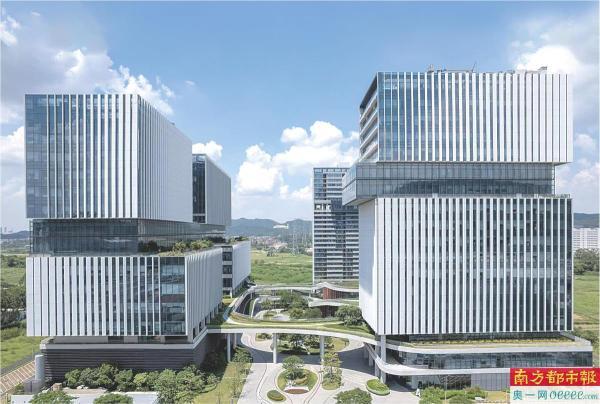
光明以先锋姿态,探寻科学与产业深度融合新范式
Nan Fang Du Shi Bao· 2025-09-18 23:15
Core Viewpoint - The article highlights the rapid development of the Guangming Science City in Shenzhen, emphasizing its role as a hub for scientific innovation and collaboration within the Greater Bay Area, aiming to integrate science and industry for future advancements [4][14]. Group 1: Scientific Innovation and Research - Guangming Science City is positioned as a key area for national strategic scientific development, focusing on major technological innovations and deep integration of science and industry [4][8]. - The Shenzhen Bay Laboratory, part of Guangming Science City, has established nearly 100 research teams in the life sciences, aiming to advance biomedical research and applications [6][10]. - The laboratory's research team, led by Zhou Yaoqi, focuses on teaching computers to understand the "design language" of biological macromolecules, particularly RNA, to develop new medical tools and accelerate drug discovery [6][10]. Group 2: Infrastructure and Talent Development - Guangming Science City hosts 23 major technological innovation platforms, including 8 major scientific infrastructures and 11 interdisciplinary research platforms, which are crucial for attracting domestic and international scientific talent [7][10]. - The city has established a collaborative ecosystem that includes research institutions, universities, and innovative enterprises, fostering a conducive environment for high-risk, high-reward original research [8][11]. Group 3: Industry Integration and Economic Impact - The city has attracted over 130 companies in the synthetic biology sector, with a total valuation exceeding 40 billion yuan, positioning Guangming as a core area for synthetic biology development in Shenzhen [10][11]. - Guangming Science City is actively exploring new paradigms for deep integration of science and industry, aligning with national strategies to enhance productivity and innovation [8][14]. Group 4: Collaborative Initiatives and Regional Development - Guangming Science City collaborates with other scientific hubs like Songshan Lake Science City and the He Tao Cooperation Zone to strengthen regional innovation and resource sharing [14][15]. - The establishment of the Guangming Science City He Tao Innovation Center aims to enhance cooperation among research institutions, technology enterprises, and investment organizations, promoting resource exchange and innovation [16].