保险

Search documents
超六成险企车均保费低于2000元
Jin Rong Shi Bao· 2026-02-25 02:46
Core Insights - The report reveals significant data on auto insurance premiums as part of the solvency reports for the fourth quarter of 2025, with 58 non-listed insurance companies disclosing their average premiums [1][3] - The average premium ranges from 841.99 yuan to 13,438.68 yuan, with over 60% of companies reporting premiums below 2,000 yuan [1][2] Group 1: Premium Rankings - Jiulong Insurance leads with the highest average premium of 13,438.68 yuan, focusing on specialized vehicle insurance for high-value vehicles [1] - The second to fifth positions are held by foreign or joint venture companies, with average premiums of 5,900 yuan (Aihui Risheng Tonghe), 5,700 yuan (Modern Insurance), 4,239 yuan (Nippon Insurance), and 4,125.33 yuan (JD Allianz) [1] - The sixth to tenth positions feature companies with premiums ranging from 3,200 yuan to 4,100 yuan, including BYD Insurance at 4,054.53 yuan and others like Guotai Insurance and Tokio Marine [2] Group 2: Market Trends - The distribution of average premiums shows a "spindle-shaped" characteristic, indicating a more stable structure compared to previous years, with 31 companies in the 1,000 to 2,000 yuan range [3] - The number of companies with premiums below 1,000 yuan decreased from 8 in 2024 to 5 in 2025, suggesting a tightening at both ends of the premium spectrum [3] - The industry consensus is shifting towards optimizing business structures and improving underwriting quality, moving away from strategies solely based on low pricing or high-end clientele [3] Group 3: Future Pricing Trends - Experts predict that auto insurance pricing will become increasingly differentiated and refined, influenced by the rise of electric vehicles and smart driving technologies [4] - Risk pricing models will focus more on vehicle data and driving behavior, leading to further premium differentiation based on risk levels [4] - The insurance industry is exploring a comprehensive vehicle grading system to link insurance rates with vehicle classifications, with pilot programs expected to start focusing on new energy vehicles [4]
2025年第四季度偿付能力“体检”结果出炉 5家险企未达标
Jin Rong Shi Bao· 2026-02-25 02:46
Core Viewpoint - The solvency of insurance companies is crucial for their ability to fulfill compensation and payment responsibilities, and recent reports indicate that while most companies are solvent, five have failed to meet regulatory standards [1][2]. Group 1: Solvency Reports - A total of 57 life insurance companies and 77 property insurance companies have disclosed their solvency reports for Q4 2025, with the majority showing sufficient solvency and manageable risks [1]. - Five insurance companies have been identified as failing to meet solvency standards, specifically due to issues with core solvency adequacy ratios and risk ratings [2]. Group 2: Companies Failing to Meet Standards - The companies that did not meet solvency standards include Qianhai Property Insurance, Asia-Pacific Property Insurance, Anhua Agricultural Insurance, and Huahui Life, all rated as C class due to risk rating failures [2]. - Changsheng Life is the only company that failed due to a comprehensive solvency adequacy ratio falling below the required 100%, reported at 79.7% [2]. Group 3: Reasons for Non-Compliance - Common reasons cited for the failure to meet solvency standards include deficiencies in corporate governance, poor operational conditions, and changes in key personnel [2]. - Huahui Life specifically noted that its risk rating was downgraded due to incomplete governance rectification efforts, while Changsheng Life attributed its solvency decline to prolonged low interest rates necessitating increased solvency reserves [2]. Group 4: Improvement Plans - The five companies have outlined plans to improve their solvency status through a combination of capital management and operational adjustments [3][4]. - Qianhai Property Insurance plans to enhance capital management, reduce operational costs, and improve risk management through various measures [3]. - Anhua Agricultural Insurance aims to strengthen risk management and adjust investment strategies to align asset allocation with risk profiles [3]. - Changsheng Life is focusing on long-term bond investments to improve solvency ratios and is accelerating capital replenishment efforts [4]. - Huahui Life is implementing a four-pronged approach to address risk management and compliance issues [4]. Group 5: Companies on the Edge - Additionally, some companies are on the regulatory "warning line," such as Beida Fangzheng Life, which has a comprehensive solvency adequacy ratio of 114.78%, just above the critical threshold [5][6]. - The management of Beida Fangzheng Life has acknowledged risks related to market fluctuations and is committed to improving asset-liability matching and overall business quality [6]. Group 6: Industry Outlook - The insurance industry faces significant challenges in ensuring that companies not meeting solvency standards can effectively implement internal reforms and capital adjustments to overcome these hurdles in the upcoming year [6].
回归保障本源 向“新寿险”转型
Jin Rong Shi Bao· 2026-02-25 02:46
Group 1 - The core function of insurance is to provide compensation for losses and manage risks, with a focus on life insurance evolving to cover the entire life cycle, including personal pensions and long-term care insurance as key areas [1] - The insurance industry is encouraged to transition towards "new life insurance" by innovating products and services, integrating insurance with health services and wealth management, while emphasizing the importance of resource selection and service integration [1] - The insurance sector must align its core functions with societal needs and economic development, moving away from insular industry perspectives to better reflect public expectations and demands [1] Group 2 - Current challenges in the insurance industry include uneven coverage, particularly for new economy workers and emerging sectors, as well as a lack of depth in product design [2] - Recommendations for enhancing insurance functions include expanding coverage for underserved areas, optimizing product offerings focused on chronic disease management, upgrading service systems, and fostering collaborative ecosystems for inclusive insurance development [2] - The development of the insurance industry is seen as crucial for high-quality economic growth and addressing aging population challenges, with insurance uniquely positioned to serve both social security and economic stability [2] Group 3 - As a Sino-French joint financial institution, the company has achieved significant growth, with a projected net profit increase of 46% in 2024 and 160% in 2025, alongside a 20% increase in revenue for two consecutive years [3] - The company aims to enhance its brand value and has updated its brand slogan to reflect its mission as a stabilizing force in the economy and society [3]
中国信保 助力八城外贸破万亿元
Jin Rong Shi Bao· 2026-02-25 02:46
Core Insights - The article highlights the significant role of China Export & Credit Insurance Corporation (Sinosure) in supporting the foreign trade growth of eight cities in China, with a total foreign trade scale exceeding 1 trillion RMB by 2025 [1][4] Group 1: Sinosure's Initiatives in Different Cities - In Shenzhen, Sinosure optimized the "Quick Claim" mechanism under the "Big Unified Insurance" policy, allowing for faster compensation for small and micro enterprises, supporting over 30,000 foreign trade companies with an export scale exceeding 110 billion USD [1] - In Shanghai, Sinosure launched products like "Assured Order Insurance" and "Exhibition Quick Check," providing a credit limit of 110 billion RMB to over 30,000 small and micro foreign trade enterprises [1] - In Beijing, Sinosure established a comprehensive service platform for the Belt and Road Initiative and introduced innovative insurance models to support equipment exports and overseas expansion [2] - In Suzhou, Sinosure conducted credit investigations for 15,000 overseas buyers, assisting local manufacturers in entering emerging markets and handling 153 overseas recovery cases [2] - In Dongguan, Sinosure served over 10,000 enterprises, with a short-term export credit insurance coverage exceeding 35 billion USD [2] - In Ningbo, Sinosure introduced innovative insurance products to address risks in cross-border e-commerce, supporting over 9,800 foreign trade enterprises with exports exceeding 46 billion USD [3] - In Guangzhou, Sinosure implemented tailored services for new enterprises and supported service trade with an insurance amount of 2.2 billion USD [3] - In Jinhua, Sinosure focused on small and micro enterprises, achieving a 102.2% year-on-year increase in cross-border e-commerce insurance coverage [3] Group 2: Future Outlook - Sinosure aims to continue enhancing its policy-oriented financial services, optimizing product offerings, and deepening digital transformation to support high-quality foreign trade development and contribute to building a strong trading nation [4]
险资2025年成绩单: 规模增速创四年新高 权益配置实现突破
Jin Rong Shi Bao· 2026-02-25 02:46
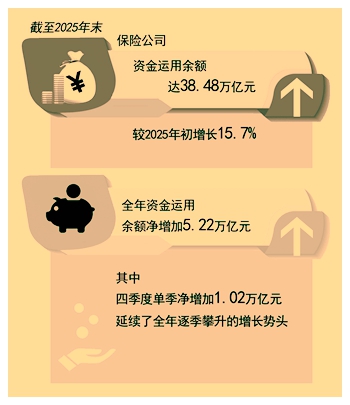
Core Viewpoint - The allocation trends of insurance funds reflect the industry's transformation and are crucial for the high-quality development of the real economy and the stability of the capital market [1] Group 1: Fund Allocation Growth - By the end of 2025, the balance of insurance funds reached 38.48 trillion yuan, a growth of 15.7% compared to the beginning of the year, with a net increase of 5.22 trillion yuan throughout the year [4][5] - The growth rate of insurance fund allocation in 2025 is the highest since 2021, indicating strong capital aggregation capabilities within the industry [4][6] - The life insurance sector accounted for 90.08% of the total fund allocation, with a balance of 34.66 trillion yuan, while the property insurance sector accounted for 6.27% with 2.42 trillion yuan [4][5] Group 2: Investment Performance - The increase in insurance fund allocation is supported by a stable cash flow from premium income, which reached 6.12 trillion yuan in 2025, a year-on-year growth of 7.4% [4][5] - The equity market recovery contributed to the appreciation of assets held by insurance funds, with major indices like the Shanghai Composite Index and the Hang Seng Index rising by 18.4% and 27.77% respectively [5][6] Group 3: Asset Allocation Structure - The asset allocation structure has been optimized, with a clear pattern of stable bond holdings, increased equity investments, and reduced non-standard assets [6][8] - By the end of 2025, the bond allocation reached 18.70 trillion yuan, with a net increase of 2.78 trillion yuan, while the combined balance of stocks and funds reached 5.7 trillion yuan, a significant increase of 1.6 trillion yuan [7][8] - The proportion of stocks and funds in the total allocation rose to 15.4%, with stock assets alone accounting for 10.1%, marking a continuous improvement over six consecutive quarters [7][8] Group 4: Regulatory Environment - Regulatory policies have been adjusted to promote long-term investments by insurance funds, including increasing the upper limit for equity asset allocation from 30% to 35% [8] - The regulatory framework encourages insurance funds to participate in various investment channels, including the Sci-Tech Innovation Board and private equity funds, aligning with national strategic directions [8][9] Group 5: Outlook for 2026 - The insurance fund allocation is expected to continue growing at a double-digit rate in 2026, driven by strong premium growth and favorable capital market conditions [9] - The focus on high-quality asset allocation will likely lead to an increased proportion of equity investments, particularly in high-dividend and stable performance sectors [9][10]

京粤先行:探索健康险高质量发展新路径
Jin Rong Shi Bao· 2026-02-25 02:46
Core Viewpoint - The recent initiatives by Beijing and Guangdong aim to promote high-quality development of commercial health insurance, enhancing the multi-tiered medical security system and better meeting the diverse protection needs of the public [1][6]. Group 1: Policy Initiatives - Beijing's healthcare authorities, along with nine other departments, released 18 specific measures to support the high-quality development of commercial health insurance, focusing on product innovation, service enhancement, and settlement optimization [1]. - Guangdong's regulatory body also issued guidelines for the high-quality development of health insurance, outlining short, medium, and long-term goals for the sector [1]. Group 2: Market Growth and Demand - The commercial health insurance sector has seen an average annual compound growth rate exceeding 20% over the past decade, with over 11,000 medical insurance products currently available [2]. - By the end of 2025, Guangdong's commercial health insurance is expected to cover 889 million people, with cumulative claims reaching 43 billion yuan, providing risk protection amounting to 640 trillion yuan [2]. Group 3: Role of Health Insurance - Health insurance plays a crucial role in reinforcing the social security network, connecting with the healthcare industry and impacting national economic stability [2]. - The insurance sector has provided significant support in four key areas: enhancing policy-based business, optimizing urban customized commercial medical insurance, meeting diverse needs in the Greater Bay Area, and funding industry development with over 30 billion yuan invested in health-related sectors [3][4]. Group 4: Future Trends and Policies - The demand for health insurance is expected to continue expanding due to economic growth, rising disposable incomes, demographic changes, and the emergence of innovative medical treatments [4]. - Key policy documents set for release in 2025 will focus on establishing a long-term care insurance system, promoting high-quality health insurance development, and expanding the list of innovative drugs covered by commercial health insurance [5]. Group 5: Innovation and Collaboration - The core strategies for high-quality development include innovation and collaboration, with Beijing encouraging the development of specialized insurance products and Guangdong promoting integration between insurance and healthcare industries [6][7]. - Specific initiatives include the establishment of a "medical insurance + commercial insurance" settlement center in Beijing and the creation of a model for the Greater Bay Area to enhance cross-border medical insurance [7].
保险护航温暖年
Jin Rong Shi Bao· 2026-02-25 02:35
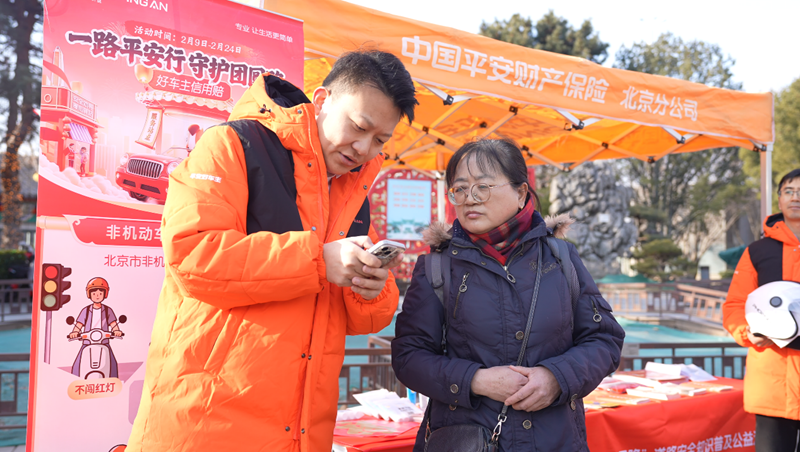
Core Viewpoint - The insurance industry plays a crucial role during the Spring Festival, providing essential services and support to ensure safety and peace of mind for travelers returning home [1][4][14]. Group 1: Insurance Services and Initiatives - During the Spring Festival, insurance companies have transformed their services from traditional claims handling to comprehensive support that includes technology integration, cross-industry collaboration, and human-centered care [4]. - In Jiangsu, a collaborative effort among various insurance companies established service points at 56 key locations on highways, allowing drivers to report incidents and receive assistance regardless of their insurance provider [4]. - Over the holiday period, the insurance industry in Jiangsu had over a thousand personnel on duty, providing seamless claims services to reduce wait times for travelers [4]. Group 2: Community Engagement and Safety Measures - The Ping An Insurance launched the "Ten Thousand Families Safe Journey" initiative, focusing on risk reduction during the Spring Festival by utilizing historical claims data and collaborating with traffic police [7]. - Insurance companies are offering free vehicle safety checks and essential supplies at service points, addressing common concerns such as range anxiety for electric vehicle owners [5][7]. - In various regions, insurance firms are integrating financial literacy and fraud prevention education into community events, enhancing public awareness of financial risks during the festive season [11][13]. Group 3: Continuous Support and Accessibility - Insurance companies are ensuring 24/7 customer service availability through various online platforms, providing immediate assistance and support to clients during the holiday [18]. - Emergency response teams are actively engaged in providing on-site assistance for accidents, demonstrating a commitment to customer safety and support [10][17]. - The industry is leveraging technology to enhance service delivery, ensuring that clients can access services and support without interruption during the festive period [18].
分会场热议“科技与金融创新赋能产业融合”:科技金融产业 深度耦合协同发力
Guang Zhou Ri Bao· 2026-02-25 02:34
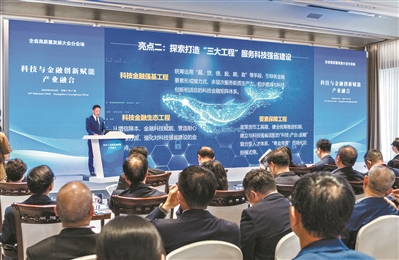
Core Viewpoint - The Guangdong High-Quality Development Conference emphasizes the integration of technology and finance to drive industrial innovation and high-quality development in the region [1]. Group 1: Technology Innovation - Guangdong has three unique strategic advantages for developing the artificial intelligence and robotics industry: leading industrial support capabilities, a complete manufacturing system, and a strong response speed in the supply chain [2][3]. - The Chinese Academy of Sciences has established significant technological infrastructure in Guangdong, which is expected to drive breakthroughs in new materials, brain-like intelligence, and bio-manufacturing during the 14th Five-Year Plan [1]. Group 2: Financial Innovation - The Bank of China plans to support the transformation of traditional industries and invest over 1.5 trillion yuan in manufacturing loans during the 14th Five-Year Plan, focusing on high-end, intelligent, and green upgrades [3]. - China Ping An aims to support the technology industry chain through technology insurance, acting as a stabilizer for the industry [4]. - CITIC Securities will focus on mergers and acquisitions in strategic emerging industries and assist Guangdong enterprises in international expansion, leveraging its extensive client resources [4]. Group 3: Industrial Development - Guangdong has achieved significant advancements in its modern industrial system, supporting ten strategic industrial clusters, each exceeding one trillion yuan in scale [5]. - The province ranks first in the number of high-tech enterprises and has a robust technology finance development momentum, with technology loans exceeding 6 trillion yuan, reflecting a year-on-year growth of 13.84% [5][6].
收评:三大指数高开高走沪指涨0.87% 资源股集体爆发
Jing Ji Wang· 2026-02-25 02:30
Core Viewpoint - The Chinese stock market showed positive performance with significant gains in various sectors, particularly in oil, while some sectors like media faced declines [1]. Market Performance - The Shanghai Composite Index closed at 4117.41 points, up by 0.87%, with a trading volume of 938.61 billion [1]. - The Shenzhen Component Index closed at 14291.57 points, up by 1.36%, with a trading volume of 1263.45 billion [1]. - The ChiNext Index closed at 3308.27 points, up by 0.99%, with a trading volume of 593.35 billion [1]. Sector Performance - The oil sector experienced significant gains, contributing to the overall market rise [1]. - Other sectors that performed well include coal, non-ferrous metals, building materials, electricity, chemicals, and chemical fibers [1]. - Conversely, the media sector saw a substantial decline, while tourism, insurance, and banking sectors also faced downturns [1].
河南湖北监管接连重拳 中国人寿两地分公司深陷违规泥潭
Jing Ji Guan Cha Wang· 2026-02-25 02:20
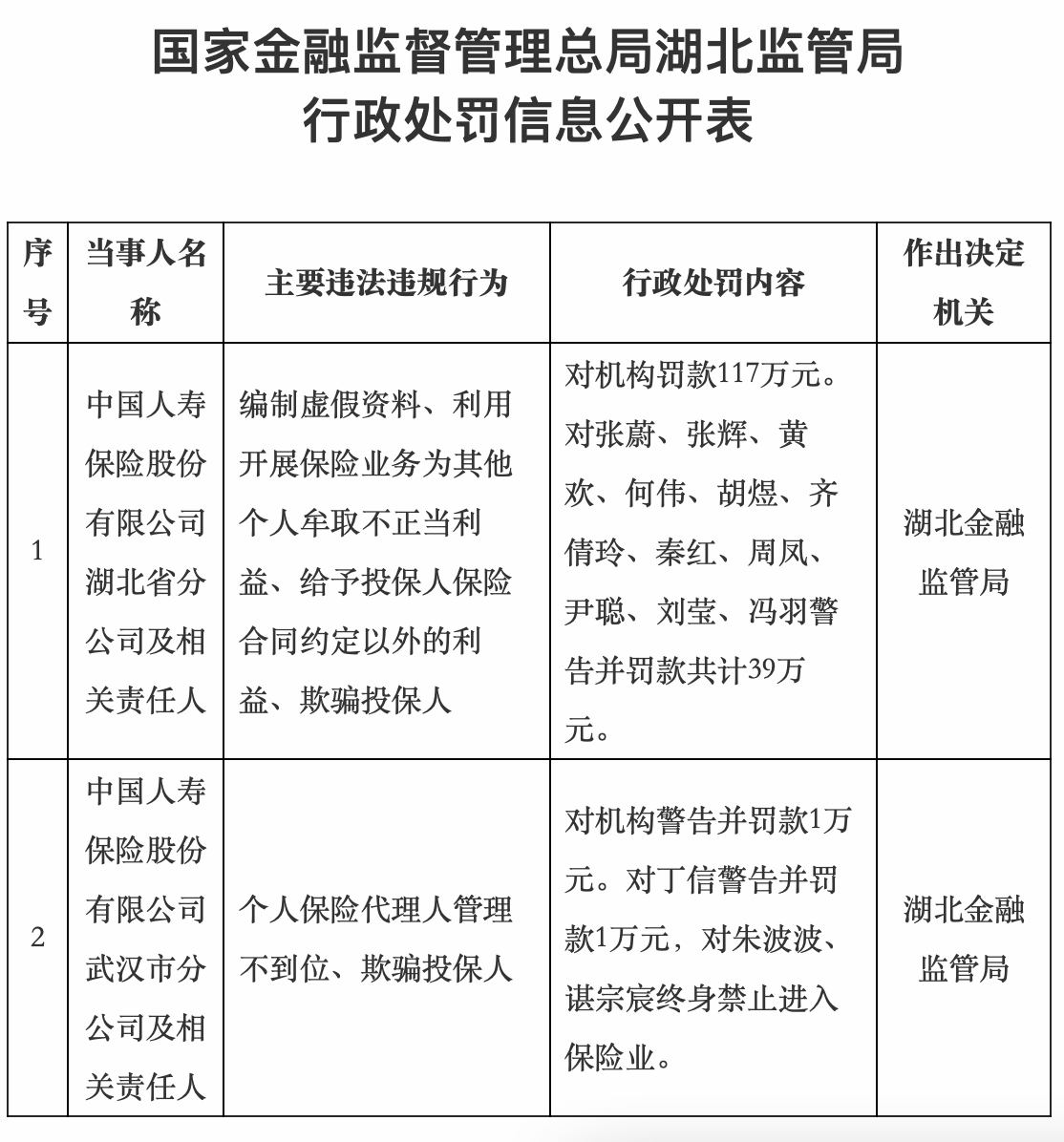
Core Viewpoint - China Life Insurance, a leading life insurance company, has faced regulatory penalties exceeding 2 million yuan for multiple violations, highlighting compliance shortcomings despite strong financial performance in 2025 [1][6]. Regulatory Penalties - On January 30, the Luoyang Regulatory Bureau imposed a fine of 900,000 yuan on China Life's Luoyang branch for fabricating intermediary business and deceiving policyholders [2]. - On February 14, the Hubei Regulatory Bureau fined the Hubei branch 1.17 million yuan for preparing false documents and other deceptive practices, with 11 responsible individuals penalized [1][2]. Violations and Compliance Issues - The violations included fabricating false materials, using insurance business for personal gain, and providing benefits outside of contractual agreements, indicating serious compliance issues within the company [4][5]. - The penalties affected not only provincial and municipal branches but also extended to branch managers and frontline agents, revealing systemic issues in management and oversight [4][6]. Financial Performance - Despite the compliance issues, China Life reported a net profit of 167.8 billion yuan for the first three quarters of 2025, a 60.5% year-on-year increase, with total premium income reaching 669.6 billion yuan, up 10.1% [5]. - The company emphasized its strategy of deepening asset-liability linkage and increasing equity investments as key drivers of its financial growth [5]. Industry Regulatory Environment - The recent penalties reflect a shift towards more stringent and regularized oversight in the insurance industry, with the regulatory authority intensifying efforts to address market irregularities and protect consumer rights [6]. - The fines, while relatively small compared to the company's size, underscore significant governance and internal control weaknesses that could undermine the company's long-term reputation and consumer trust [6].