
电池

Search documents
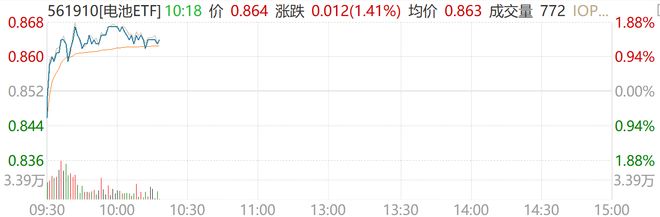
固态电池迎来0-1产业趋势,储能需求刚性提升,电池ETF(561910)盘中上涨1.41%
Jin Rong Jie· 2026-01-15 02:53
Core Viewpoint - The battery sector is experiencing fluctuations, with solid-state battery and energy storage technologies gaining attention due to their potential growth and investment opportunities [1][3][4]. Group 1: Market Performance - On January 15, major indices declined, while the lithium battery sector showed signs of recovery, particularly in solid-state battery stocks [1]. - The Battery ETF (561910) has a solid-state battery content of 45% and energy storage content of 56%, showing an increase of 1.41% [1][7]. - Key stocks such as Zhongwei New Materials surged over 9%, while others like Xiamen Tungsten and Peking University Materials rose over 4% [1]. Group 2: Industry Trends - The demand for energy storage is being driven by the construction of self-built power plants by data centers in the U.S., with EIA data indicating a projected 23% increase in average wholesale electricity prices by 2025 [3]. - The solid-state battery industry is advancing, with a focus on overcoming technological challenges and achieving mass production by 2026 [4]. - NASA's recent report highlights the development of high-performance solid-state batteries for use in space missions by 2028, indicating significant advancements in this technology [3]. Group 3: Investment Insights - Tianfeng Securities emphasizes the importance of solid-state battery technology, predicting that 2026 will see a focus on production line construction and supply chain establishment [4]. - The projected demand for power and energy storage batteries is expected to reach 1,872 GWh and 2,236 GWh in 2025 and 2026, respectively, marking year-on-year increases of 45% and 25% [5]. - The solid-state battery competition is primarily concentrated in China, Japan, South Korea, and the U.S., with small-scale production expected to begin in these regions within the next two years [4].

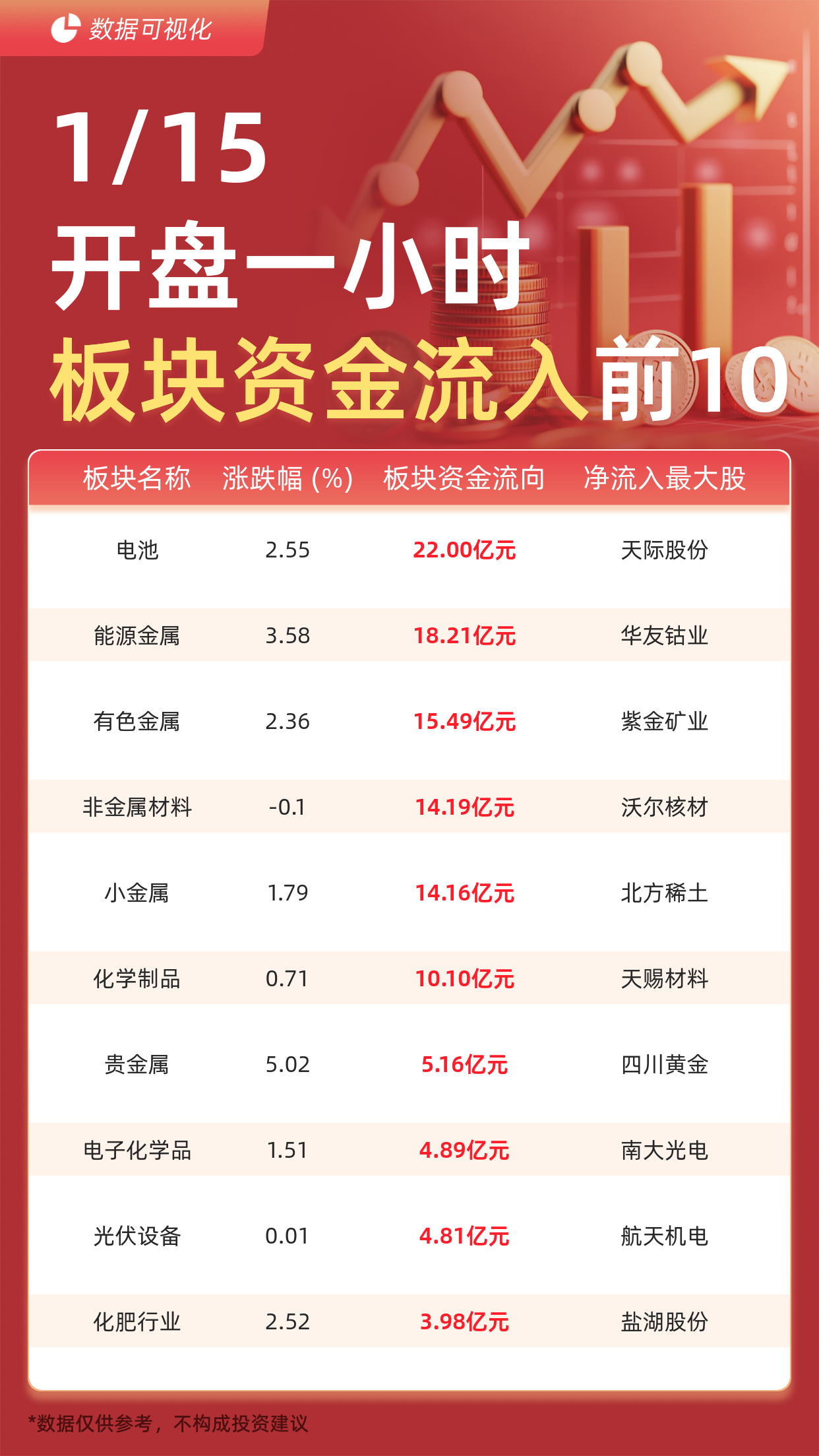
主力板块资金流入前10:电池流入22.00亿元、能源金属流入18.21亿元
Jin Rong Jie· 2026-01-15 02:47
Core Viewpoint - The main market experienced a net outflow of 454.03 billion yuan in principal funds as of January 15, with significant inflows observed in specific sectors such as batteries and energy metals [1] Group 1: Sector Performance - The battery sector saw a net inflow of 22.00 billion yuan, with a price increase of 2.55%, led by Tianji Co. [2] - The energy metals sector recorded a net inflow of 18.21 billion yuan, with a price increase of 3.58%, driven by Huayou Cobalt [2] - The non-metal materials sector experienced a slight decline of 0.1% despite a net inflow of 14.19 billion yuan, with Wore Nuclear Materials as the leading company [2] - The small metals sector had a net inflow of 14.16 billion yuan and a price increase of 1.79%, led by Northern Rare Earth [2] Group 2: Additional Sector Insights - The chemical products sector saw a net inflow of 10.10 billion yuan, with a price increase of 0.71%, led by Tianci Materials [2] - The precious metals sector had a net inflow of 5.16 billion yuan, with a price increase of 5.02%, led by Sichuan Gold [3] - The electronic chemicals sector recorded a net inflow of 4.89 billion yuan, with a price increase of 1.51%, led by Nanda Optoelectronics [3] - The photovoltaic equipment sector had a minimal price change of 0.01% with a net inflow of 4.81 billion yuan, led by Aerospace Machinery [3] - The fertilizer industry saw a net inflow of 3.98 billion yuan, with a price increase of 2.52%, led by Salt Lake Co. [3]
2026年4月1日起取消光伏等产品出口退税,企业抢单赶工
Sou Hu Cai Jing· 2026-01-15 02:17
Core Viewpoint - The Ministry of Finance and the State Taxation Administration announced the cancellation of VAT export tax rebates for photovoltaic products starting April 1, 2026, which is expected to reshape the competitive landscape of the industry [1][3]. Industry Impact - The policy adjustment is seen as a key measure to transform the competitive dynamics within the industry. The China Photovoltaic Industry Association noted that some companies have been using export tax rebates to enhance their bargaining power in overseas markets, effectively subsidizing foreign markets and increasing the risk of trade friction [3]. - The cancellation of export tax rebates is anticipated to help restore rational pricing in overseas markets [3]. Market Response - The impact of the policy has already been observed in the first quarter, with a company executive indicating that overseas buyers are placing orders in advance to avoid increased costs after April, leading to a "mini peak season" during a traditionally slow demand period [3]. - Companies are ramping up production and working overtime to meet the surge in overseas orders before the April 1 deadline [3]. Battery Products Adjustment - The export tax rebate policy for battery products will also undergo a phased adjustment, with the rebate rate decreasing from 9% to 6% from April 1 to December 31, 2026, and a complete cancellation of the rebate starting January 1, 2027 [3].
A股三大股指盘初集体翻红,创业板指涨0.5%,能源金属、电池板块涨幅居前
Ge Long Hui· 2026-01-15 02:14
格隆汇1月15日|A股三大股指盘初集体翻红,创业板指涨0.5%,能源金属、电池板块涨幅居前。 ...

电池板块震荡走高,领湃科技涨超15%
Xin Lang Cai Jing· 2026-01-15 02:10
Group 1 - The battery sector experienced a significant rise, with leading companies such as Lipa Technology increasing by over 16% [1] - Other companies in the sector, including Liwang Co., Keheng Co., Tianhong Lithium Battery, and Zhongwei New Materials, saw their stock prices rise by more than 10% [1]

汇聚全球产业链,CIBF2026助推动力储能电池行业转向“价值竞争”
Zhong Guo Jin Rong Xin Xi Wang· 2026-01-15 01:55
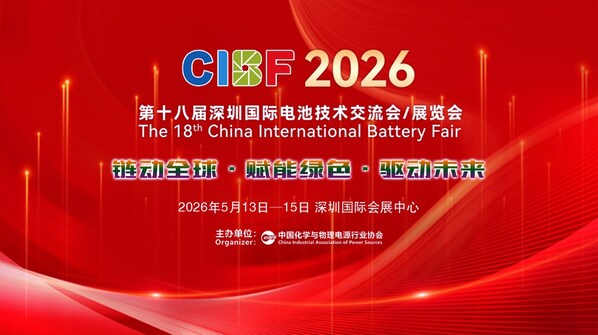
Core Viewpoint - The 18th Shenzhen International Battery Technology Exchange Conference/Exhibition (CIBF2026) will be held from May 13 to 15, 2026, focusing on global collaboration and high-quality development in the battery industry [1][3]. Industry Overview - CIBF2026 is expected to attract over 3,000 exhibitors and cover an exhibition area of 280,000 square meters, featuring leading companies such as CATL, BYD, and others [3]. - The event aims to shift the industry focus from scale competition to value competition, promoting high-quality development [1][3]. Forum and Activities - High-level forums will be held during the event, including discussions on advanced battery technologies and next-generation battery technologies for electric aviation, attracting over 2,000 industry experts and representatives [5]. - The forums will facilitate sharing of successful experiences and guide resources towards high-value areas, addressing the issue of low-price competition [5]. Technological Innovations - CIBF2026 will showcase cutting-edge technologies such as solid-state batteries, sodium-ion batteries, and lithium-metal batteries, along with key materials and automated production equipment [7]. - The exhibition will present a comprehensive view of the entire industry chain, from material research to recycling, accelerating the transition of technologies from laboratory to large-scale industrialization [7]. Global Market and Compliance - The event aims to create a collaborative ecosystem across the entire industry chain, serving as a connector for international cooperation, with an expected attendance of over 350,000 professional visitors from more than 50 countries [9][10]. - Special international exhibition areas will address compliance challenges posed by new regulations in the EU and the US, facilitating the entry of Chinese brands into international markets [10]. Industry Growth and Challenges - In the first 11 months of 2025, China's power and other battery production and sales reached 1,468.8 GWh and 1,412.5 GWh, respectively, with year-on-year growth exceeding 50% [10]. - The battery export volume reached 260.3 GWh, a 44.2% increase, while the export of Chinese brand new energy vehicles grew by 139%, indicating strong global demand for Chinese new energy products [11]. Strategic Importance - CIBF2026 is viewed as a barometer and accelerator for the global new energy industry, exploring the vast market potential brought by national strategies for large-scale development of new energy storage [11]. - The event is expected to enhance industry concentration and resource utilization efficiency in the short term, while promoting a healthy and sustainable new industry pattern in the long term [11].





固态电池近况更新与投资方向梳理
2026-01-15 01:06
Summary of Solid-State Battery Industry Conference Call Industry Overview - The solid-state battery sector is expected to show growth momentum after 2026, driven by major manufacturers' tenders and automotive road tests, with clearer technical solutions and cost reduction paths, supported by policies from the Ministry of Industry and Information Technology [1][3] - The commercialization of hybrid solid-liquid batteries is progressing positively, with companies like Delong and Hongqi collaborating, and Jinlongyu planning to establish a 2GWh production line targeting clients in drones and energy storage [1][4] - Pure solid-state batteries are currently focused on road testing and detection, with an emphasis on the demand expansion and value enhancement of materials such as lithium sulfide and lithium metal anodes [1][4] Key Developments - The solid-state battery sector has transitioned from speculative trading to policy-driven growth since Q2 2025, forming a more certain market space [3] - Significant developments include the Ministry of Industry and Information Technology emphasizing breakthroughs in solid-state battery technology in its 14th Five-Year Plan, and advancements in electrolyte technology reducing costs by over 95% [3] - Major automotive manufacturers are advancing high-energy products testing, and lithium sulfide production capacity is ramping up, clarifying technical and cost pathways [3] Commercialization Progress - The commercialization of hybrid solid-state batteries is expected to become clearer in 2026, with companies like Delong and Jinlongyu making significant strides [4] - The lithium sulfide supply chain has seen multiple companies establish production lines exceeding 100 tons, entering cost reduction phases [4] Electrolyte Development - The electrolyte segment has seen several companies establish production lines exceeding 100 tons, with traditional lithium battery leaders also exploring this area [5] - This segment is viewed as having significant potential for investment, given its value-doubling materials and alignment with long-term solid-state battery development [5] Anode-Free Solutions - Anode-free solutions are gaining attention, with companies like Zhongyin Technology and Hailiang collaborating with major clients to reserve production capacity [6] - The low-cost solutions being developed by the team from the University of Science and Technology of China may present investment opportunities [7] Material Segments to Watch - Other material segments worth monitoring include cathode materials, aluminum-plastic films, and nickel-iron current collectors, which are expected to gain traction during the new technology iteration cycle [8] - Companies like Shanghai Xiba and Xiamen Tungsten New Energy are well-positioned in the lithium sulfide sector, and those with strong client relationships, such as Guoci Dangsheng, are also recommended for investment [8] Industry Expansion Forecast - The lithium battery industry's expansion forecast for 2026 is significantly higher than previous estimates, with actual production expected to exceed 1,000GWh, up from earlier predictions of around 700GWh for 2025 [9] Equipment Company Performance - Lithium battery equipment companies are currently experiencing full order books, with many increasing their workforce to meet demand [10] - Some companies are raising prepayment and shipping ratios, with some orders reaching 70% to 80% prepayment, indicating high industry prosperity [10][11] Impact on Traditional Lithium Equipment Companies - The development of solid-state batteries presents valuation enhancement opportunities for traditional lithium equipment companies, which are involved in the construction of solid-state pilot lines [12] - Key segments include complete lines, dry processes, and isostatic pressing, with companies like Xian Dao Intelligent and Naco showing strong performance [12][13] Future Outlook for Equipment Companies - By 2026, it is expected that most lithium equipment companies will see increases in both order volume and net profit, with solid-state technology advancements likely to further enhance valuations [14]

纳科诺尔(920522):清研纳科干法电极设备已成功交付太空电源相关院所,固态电池实验室赋能技术创新:纳科诺尔(920522.BJ)
Hua Yuan Zheng Quan· 2026-01-15 00:47
Investment Rating - The investment rating for the company is "Accumulate" (maintained) [5] Core Views - The company has successfully delivered dry electrode equipment for space power-related institutions, enabling technological innovation in solid-state battery laboratories [5] - The company is positioned as a leader in dry electrode technology and equipment, with significant experience and has provided equipment to numerous domestic and international battery and vehicle manufacturers [5] - The establishment of a regional headquarters in Hainan aims to enhance global strategic layout and the solid-state battery laboratory is expected to accelerate technological innovation [5] Financial Performance - The company's projected net profit for 2025-2027 is estimated at 99 million, 159 million, and 230 million yuan respectively, with corresponding P/E ratios of 115, 72, and 50 times [5][7] - Revenue for 2025 is expected to be 946 million yuan, with a year-on-year growth rate of -10.16%, followed by a recovery with 28.90% growth in 2026 and 27.02% in 2027 [7] - The company anticipates maintaining its leading position in the domestic lithium battery production equipment market while actively seeking expansion into multiple fields [5]
蜂巢能源,固态电池与材料路线曝光
DT新材料· 2026-01-14 16:04
Core Viewpoint - Honeycomb Energy has unveiled its complete technical roadmap and mass production plan for semi-solid-state batteries, showcasing advancements in solid electrolyte preparation and high-entropy cathode materials during its sixth Battery Day event [1]. Manufacturing Process - Honeycomb Energy has pioneered the "solid electrolyte transfer technology," which consists of electrolyte membrane transfer and gradient hot-pressing processes. This technology allows solid electrolyte coatings to cover electrode sheets and is compatible with existing liquid battery production lines, thus controlling manufacturing costs and lowering mass production thresholds [2]. - The semi-solid-state architecture has improved the self-heating temperature (T1) of the battery cells by 8°C and the thermal runaway initiation temperature (T2) by 5°C, increasing the safety buffer time by 10%. This technology reduces the probability of thermal runaway by 25% and stabilizes the thermal runaway process even under extreme conditions, leading to a 20% reduction in overall system protection costs [2]. Material Improvements - The introduction of solid coatings effectively cuts off micro-short circuit paths between the anode and cathode, significantly resisting foreign object punctures and microscopic defects in the separator. Market statistics indicate that this improvement has reduced the pressure difference defect rate by 18.5%, mitigating range degradation issues caused by pressure differences [3]. - Honeycomb Energy has made progress in "multi-element synergistic high-entropy cathode materials," enhancing thermal stability by increasing the DSC exothermic peak by 5°C through low-cost fast ion conductor in-situ coating technology. Additionally, high-entropy doping technology with multiple high-valent transition metal elements has improved high-temperature cycle life by 20% [4]. - In the anode material sector, Honeycomb Energy has introduced "interface-controlled anode composite" technology. The three-dimensional silicon-carbon precursor carbon doping technology has improved electronic conductivity by 20% and reduced material expansion by 20%. Surface modification technology for graphite has significantly increased the lithium-ion diffusion coefficient by 50%, further reducing material expansion by 5% [5]. - The company has developed "ultra-high lithium flux electrolyte technology," which employs weak coordination/small molecule composite solvents, resulting in an 18% reduction in electrolyte viscosity and a 15% improvement in cell charging capability. Additionally, a dynamic self-adaptive passivation film has successfully increased cell cycle life by 15% and reduced gas generation by 40% [6]. Product Development and Mass Production - Honeycomb Energy has planned three generations of semi-solid-state batteries: - The first generation, a high-nickel semi-solid-state battery, has completed development and achieved small-scale production with an energy density of 270 Wh/kg, already used in a European passenger car brand [7]. - The second generation, also a high-nickel semi-solid-state battery, has an energy density of 342 Wh/kg and is aimed at the low-altitude aircraft sector, having completed installation test flights [7]. - The medium-nickel semi-solid-state battery, targeting the mid-to-high-end passenger car market, has an energy density of 245 Wh/kg and is scheduled for mass production in October 2026 [7]. - Additionally, Honeycomb Energy has introduced the Longscale Armor 3.0 technology, which achieves thermal-electric separation based on square battery shapes, compatible with CTC (Cell to Chassis) and CTB (Cell to Body) integration designs. The integrated semi-solid-state technology is planned for initial customer platform deployment and mass production delivery in the first quarter of 2027 [8].
宁德时代:凝聚态、固态等高能量密度电池技术推进航空领域应用
Xin Lang Cai Jing· 2026-01-14 14:39
Core Viewpoint - The company, Ningde Times, claims that its technologies in condensed matter and solid-state batteries are at the leading level in the industry, and it is actively promoting the new energy transition across multiple industries, including aviation, to support global energy transformation and carbon neutrality goals [1] Group 1 - The company is focusing on high energy density battery technologies, specifically condensed matter and solid-state batteries, which are considered industry-leading [1] - The company is engaged in advancing the new energy transition in various sectors, including aviation [1] - The initiatives are aimed at contributing to global energy transformation and achieving carbon neutrality objectives [1]