交通运输

Search documents
江苏新增11名大国工匠
Xin Hua Ri Bao· 2025-09-28 21:32
Core Points - The third National Craftsman Innovation Exchange Conference and Forum recently concluded, where 200 high-skilled talents were officially awarded the title of "National Craftsman" after over a year of training [1] - Among the newly recognized craftsmen, 11 are from Jiangsu province, representing various industries including equipment manufacturing, transportation, metallurgy, electricity, and textiles [2] Group 1 - Jiangsu province now has a total of 16 National Craftsmen and 682 provincial craftsmen [2] - The newly recognized craftsmen are top technical talents in their respective fields, contributing significantly to industrial upgrades and high-quality development in Jiangsu [2] - Notable individuals include He Guanghua from State Grid Jiangsu Electric Power Company, Qiao Sen from Changzhou Public Transport Group, and Du Huajun from Jiangsu Daming Industrial Technology Group [2]
周末突发大消息!持股还是持币?十大券商最新研判
Zhong Guo Ji Jin Bao· 2025-09-28 14:24
大家好,下周只有两个交易日,然后就开启国庆和中秋长假了,我们简单关注一下周末的大消息,以及 看看券商分析师们的最新研判。 周末大事多 央行:下阶段建议加强货币政策调控,提高前瞻性、针对性、有效性 中国人民银行货币政策委员会召开2025年第三季度例会。会议研究了下阶段货币政策主要思路,建议加 强货币政策调控,提高前瞻性、针对性、有效性。会议指出,用好证券、基金、保险公司互换便利和股 票回购增持再贷款,探索常态化的制度安排,维护资本市场稳定。 国务院国资委召开国有企业经济运行座谈会聚焦稳电价、稳煤价、防止"内卷式"恶性竞争等听取意见建 议 国务院国资委主任张玉卓9月25日主持召开部分国有企业经济运行座谈会,了解企业经济运行情况、面 临的困难挑战,聚焦稳电价、稳煤价、防止"内卷式"恶性竞争等,听取企业意见建议,进一步研究夯实 企业高质量发展基础的政策举措。张玉卓强调,要着力优化投资结构,聚焦产业链强基补短、基础设施 建设、能源资源保障等重点领域,做好项目对接和要素支撑,聚焦数字化绿色化升级和本质安全提升, 加快推进设备更新改造,持续加强投向管控,动态优化投资布局,以高质量投资引领高价值增长。要带 头坚决抵制"内卷式 ...
周末突发大消息!持股还是持币?十大券商最新研判
中国基金报· 2025-09-28 14:17
Core Viewpoint - The article discusses recent significant developments in China's economic and financial landscape, highlighting the importance of monetary policy adjustments, industrial growth strategies, and market sentiment ahead of the National Day holiday. Monetary Policy and Economic Stability - The People's Bank of China suggests enhancing monetary policy regulation to improve foresight, targeting, and effectiveness, while maintaining capital market stability through various financial instruments [4] - The State-owned Assets Supervision and Administration Commission focuses on stabilizing electricity and coal prices, preventing unhealthy competition, and optimizing investment structures to support high-quality development [5] Industrial Performance and Growth Strategies - In the first eight months of 2025, profits of large-scale industrial enterprises in China increased by 0.9% year-on-year, with state-owned enterprises experiencing a 1.7% decline in profits [6] - The Ministry of Industry and Information Technology outlines a growth plan for the non-ferrous metals industry, targeting an average annual growth of around 5% from 2025 to 2026 [7] - The petrochemical industry is also projected to achieve an average annual growth of over 5% during the same period, with a focus on enhancing technological capabilities and sustainable practices [11][12] Market Sentiment and Investment Strategies - Major brokerages provide insights into market trends, with a consensus that holding stocks during the holiday period may be advantageous due to historical patterns of post-holiday market performance [17][21] - The focus on structural growth in sectors such as semiconductors, new energy, and innovative pharmaceuticals is emphasized as key investment opportunities [18][20] - The article notes that the upcoming APEC meeting and the Fourth Plenary Session of the 20th Central Committee are critical events that could influence market dynamics [15][17] Sector-Specific Insights - The automotive industry in Jiangsu province is adjusting its vehicle replacement subsidy policy, which may impact consumer behavior and market dynamics [8] - The transportation sector is set to see widespread application of artificial intelligence by 2027, indicating a shift towards smarter logistics and infrastructure [9] - The development of a national integrated computing network is expected to bolster the digital economy and support innovation in various sectors [10] Conclusion - The article highlights a complex interplay of monetary policy, industrial growth strategies, and market sentiment as China approaches the National Day holiday, with various sectors poised for potential growth and investment opportunities [2][3]


利好密集来袭!“中国版英伟达”过会
Zheng Quan Shi Bao· 2025-09-28 11:14
Monetary Policy and Market Stability - The People's Bank of China (PBOC) held its 110th Monetary Policy Committee meeting, emphasizing the need for proactive and targeted monetary policy to stabilize the capital market and enhance liquidity [1][2] - The meeting highlighted the importance of guiding large banks to support the real economy and ensuring that small and medium-sized banks focus on their core responsibilities [2] Economic Data Improvement - In August, profits of large industrial enterprises increased by 20.4% year-on-year, reversing a previous decline of 1.5% in July, indicating a positive trend in the industrial sector [3] - Cumulative profits from January to August showed a slight increase of 0.9% year-on-year, reflecting the effectiveness of macroeconomic policies and a unified national market [3] Policy Support for Key Industries - Multiple government departments issued support policies for various sectors, including non-ferrous metals, artificial intelligence in transportation, and the digital economy, aiming to enhance investment precision and effectiveness [4][5] - The Ministry of Industry and Information Technology and other agencies released plans to stabilize growth in the petrochemical industry, focusing on high-end supply and key product breakthroughs [5] Bond Market Developments - The PBOC, along with the China Securities Regulatory Commission and the State Administration of Foreign Exchange, announced support for foreign institutional investors to engage in bond repurchase transactions, enhancing liquidity management in the bond market [6] - This initiative is seen as a significant step towards the high-level opening of China's bond market, increasing the attractiveness of RMB-denominated bonds [6] IPO and Market Activity - The Shanghai Stock Exchange approved the IPO application of Moore Threads, which aims to become the first domestic GPU company listed, reflecting improved efficiency in the review process for technology companies [7] - Zhongji Xuchuang announced a share reduction plan by its major shareholder and declared a cash dividend, indicating ongoing corporate actions in the market [8] Upcoming Market Events - The National Bureau of Statistics is set to release the PMI report, with market attention on whether the index can return to the expansion zone after recording 49.4 in August [11] - The U.S. government faces a potential shutdown, which could impact global markets, alongside the upcoming non-farm payroll report critical for assessing future interest rate paths [11]


长江大宗2025年10月金股推荐
Changjiang Securities· 2025-09-28 10:12
Group 1: Metal Sector - Zijin Mining's net profit forecast for 2025 is 475 million CNY, with a PE ratio of 15.46[12] - Luoyang Molybdenum's net profit forecast for 2025 is 168.65 million CNY, with a PE ratio of 17.35[12] - The copper production of Zijin Mining is expected to increase by 7% to 115,000 tons in 2025[20] Group 2: Chemical Sector - Wanhua Chemical's net profit forecast for 2025 is 141.75 million CNY, with a PE ratio of 0.00[12] - Longbai Group's net profit forecast for 2025 is 23.01 million CNY, with a PE ratio of 19.75[12] - The MDI market is expected to improve as supply and demand conditions stabilize[48] Group 3: Transportation Sector - China Merchants Highway's net profit forecast for 2025 is 55.01 million CNY, with a PE ratio of 12.10[12] - Haitong Development's net profit forecast for 2025 is 4.43 million CNY, with a PE ratio of 18.87[12] Group 4: Construction Sector - Sichuan Road and Bridge's net profit forecast for 2025 is 82.86 million CNY, with a PE ratio of 8.79[12] - Honglu Steel Structure's net profit forecast for 2025 is 7.96 million CNY, with a PE ratio of 15.35[12]




2025年1-8月份全国固定资产投资增长0.5%
Guo Jia Tong Ji Ju· 2025-09-28 08:09
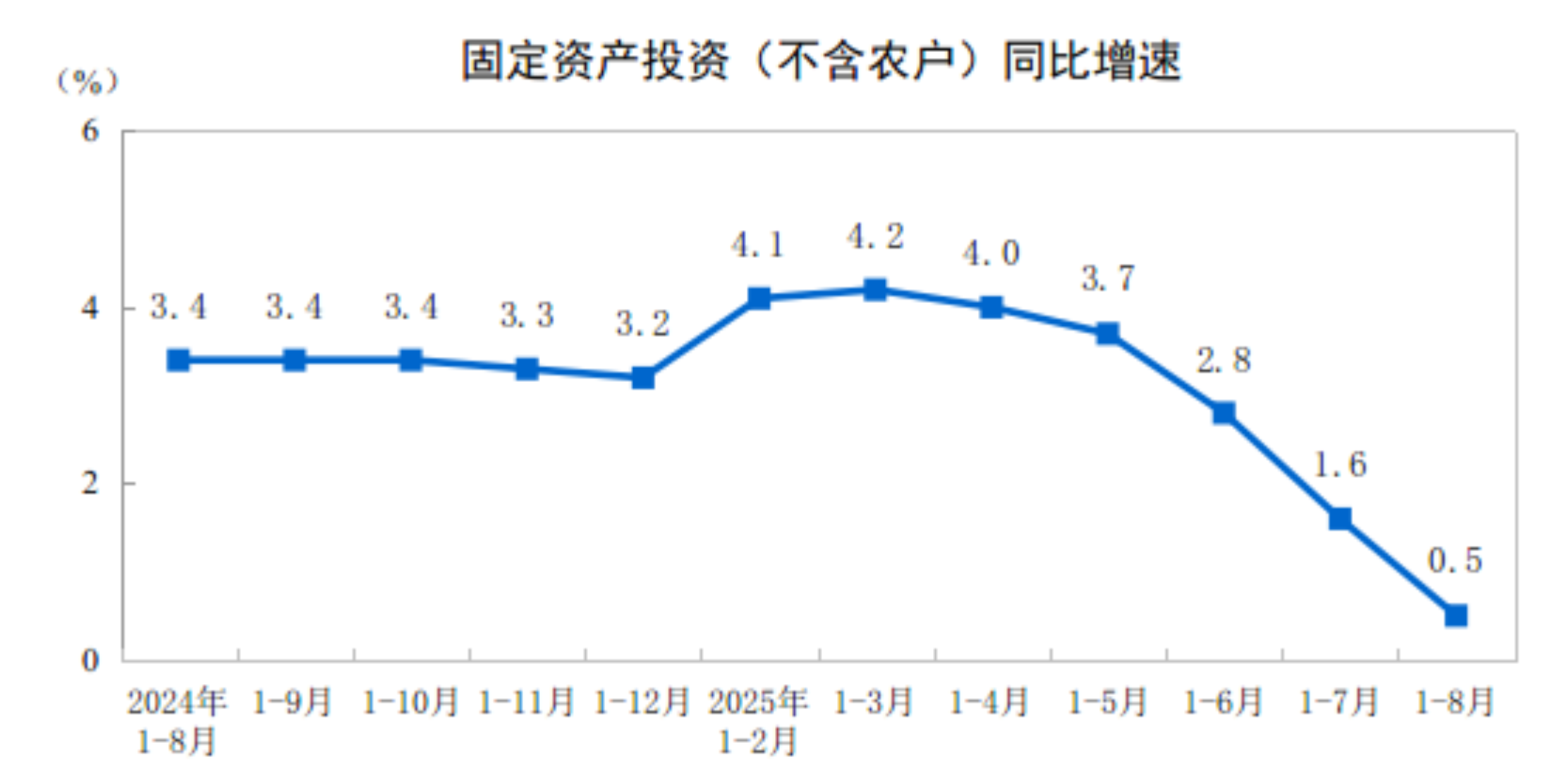
Core Insights - National fixed asset investment (excluding rural households) reached 32.6111 trillion yuan from January to August 2025, showing a year-on-year growth of 0.5% on a comparable basis [1] - Private fixed asset investment experienced a year-on-year decline of 2.3% [1] Investment by Industry - Investment in the primary industry totaled 646.1 billion yuan, with a year-on-year increase of 5.5% [3] - Investment in the secondary industry reached 11.8246 trillion yuan, growing by 7.6% [3] - Investment in the tertiary industry was 20.1404 trillion yuan, reflecting a decline of 3.4% [3] - Within the secondary industry, industrial investment grew by 7.7%, with mining investment up by 3.0%, manufacturing investment up by 5.1%, and investment in electricity, heat, gas, and water production and supply up by 18.8% [3] - In the tertiary industry, infrastructure investment (excluding electricity, heat, gas, and water production and supply) increased by 2.0%, with water transport investment up by 15.9%, water conservancy management investment up by 7.4%, and railway transport investment up by 4.5% [3] Investment by Region - Eastern region investment declined by 3.5% year-on-year, while the central region saw a growth of 2.5%, the western region grew by 2.3%, and the northeastern region experienced a decline of 6.0% [3] Investment by Registration Type - Domestic enterprises' fixed asset investment grew by 0.5%, while investment from Hong Kong, Macau, and Taiwan enterprises increased by 2.3%. In contrast, foreign enterprises' fixed asset investment fell by 15.4% [4]
重大利好!七部门部署,超级赛道
Jing Ji Wang· 2025-09-28 07:21
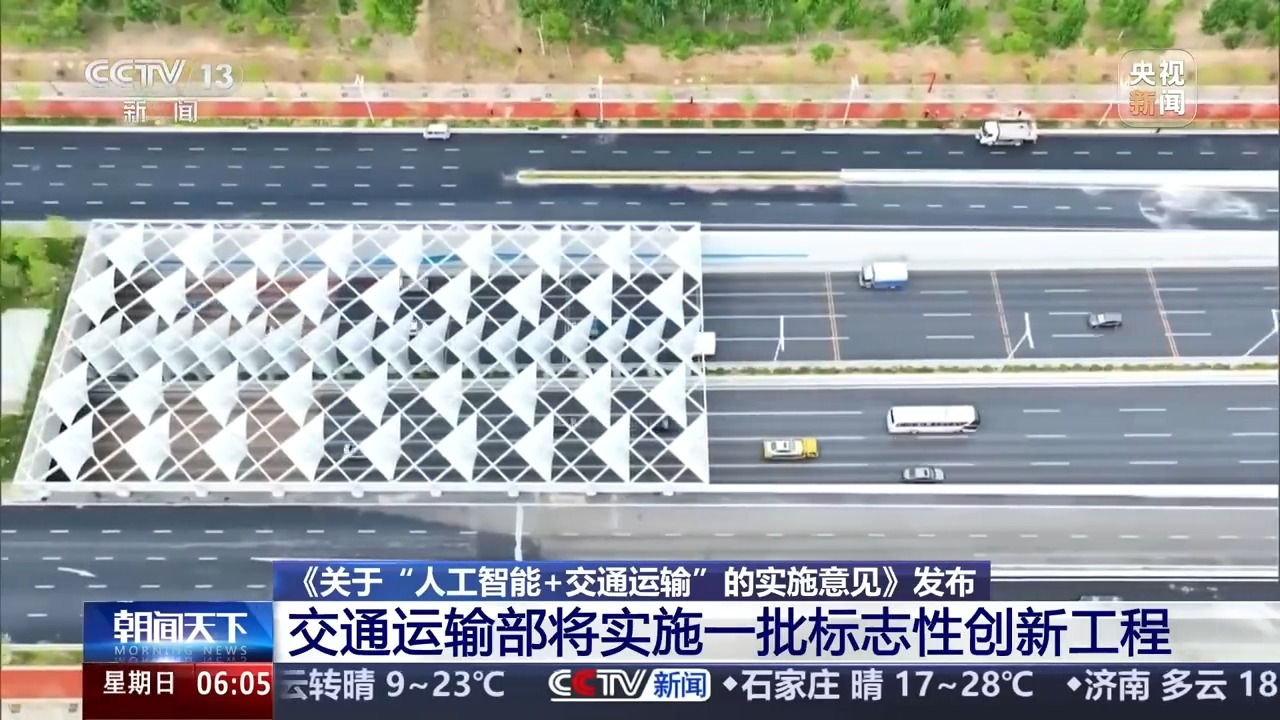
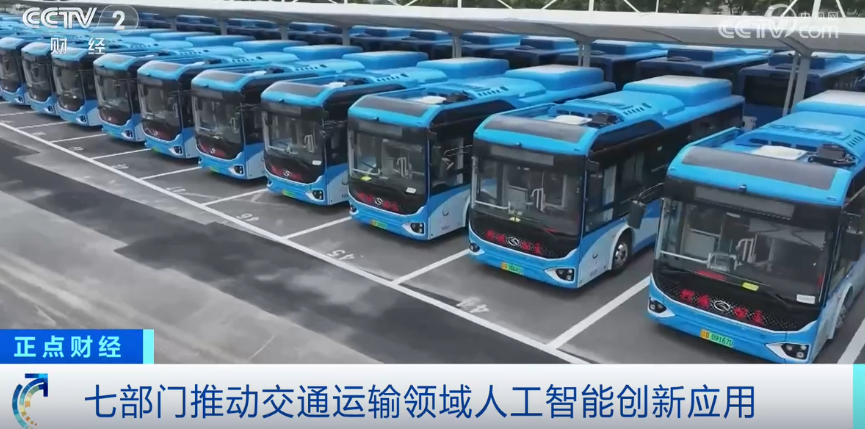
Core Viewpoint - The joint implementation opinion by seven departments aims to promote the large-scale innovative application of artificial intelligence in the transportation sector through the establishment of a comprehensive transportation model and 16 specific tasks [1] Group 1: Goals and Objectives - The overall goal of the "Artificial Intelligence + Transportation" initiative is to achieve widespread application of AI in typical scenarios of the transportation industry by 2027, with the deployment of a comprehensive transportation model system and the establishment of several landmark innovative projects [3] - By 2030, the initiative aims for deep integration of AI into the transportation sector, with a fully advanced intelligent comprehensive transportation network and self-controlled key core technologies, positioning the overall level among the world's leaders [3] Group 2: Key Technology Development - The opinion emphasizes the need for application technology breakthroughs, accelerating innovation in smart products, and enhancing the research and application of new technologies and equipment, including the construction of a comprehensive transportation model [5] Group 3: Focus Areas - The initiative targets seven key areas, including the promotion of combined auxiliary driving demonstrations, development of intelligent railway equipment and systems, upgrading port intelligence and smart shipping, creating smart civil aviation, enhancing postal and express delivery intelligent facilities, building intelligent maintenance systems for transportation infrastructure, and advancing digitalization in intermodal transport and smart logistics [7] - Additionally, the opinion outlines the construction of a multimodal and multi-scenario transportation big data resource system, along with a unified transportation data transmission network that integrates land, air, and cloud, providing a high-speed, reliable, and secure support system for AI applications [7]
交通运输部:预计超23亿人次
Yang Shi Xin Wen· 2025-09-28 04:04
Group 1 - The total cross-regional population flow during the Mid-Autumn and National Day holidays is expected to reach 2.36 billion people, averaging about 295 million people per day, which is a 3.2% increase compared to the same period last year [1] - Self-driving remains the primary mode of transportation, with an estimated 1.87 billion self-driving trips, accounting for nearly 80% of total travel volume [1] - Peak travel times are anticipated, with highway traffic expected to reach 70 million vehicles, including 14 million new energy vehicles [1] Group 2 - There will be a significant increase in medium to long-distance travel due to the "long holiday effect," particularly in key urban agglomerations such as Beijing-Tianjin-Hebei, Yangtze River Delta, and Guangdong-Hong Kong-Macao Greater Bay Area [2] - Domestic and international tourism is expected to be strong, with family and parent-child travel demand increasing, particularly in cities like Guangzhou, Chengdu, and Shanghai [2] - The average daily truck flow during the holiday is projected to be around 5.5 to 5.8 million, which is a decrease of 28% to 32% compared to regular days [2]
七部门推动人工智能在交通领域创新应用
Zhong Guo Xin Wen Wang· 2025-09-28 02:35
Core Viewpoint - The implementation opinion on "Artificial Intelligence + Transportation" aims to accelerate the large-scale innovative application of AI in the transportation sector, with specific goals set for 2027 and 2030 [1][2]. Group 1: Overall Goals - By 2027, AI will be widely applied in typical scenarios within the transportation industry, with a comprehensive transportation model system deployed and a number of intelligent applications established [1]. - By 2030, AI will be deeply integrated into the transportation sector, with a fully advanced intelligent transportation network and key core technologies being self-controlled, achieving a leading position globally [1]. Group 2: Key Tasks - **Enhancing Key Technology Supply**: Focus on application technology breakthroughs, accelerating smart product innovation, and building a comprehensive transportation model to improve the overall intelligence level of the transportation system [1][2]. - **Accelerating Innovative Scene Empowerment**: Leverage the rich application scenarios in the industry to deploy seven key tasks across various fields, creating replicable and promotable application cases to enhance the breadth of AI applications [2]. - **Strengthening Core Element Assurance**: Optimize computing power supply, accelerate the construction of high-quality data sets, and promote ubiquitous network infrastructure to support AI applications with a reliable data transmission network [2]. - **Optimizing Industrial Development Ecosystem**: Enhance the incubation capacity of the industrial ecosystem, improve AI governance mechanisms, and accelerate talent aggregation to foster an innovative environment for AI technology [2]. Group 3: Supporting Measures - Establish a coordinated development mechanism for AI in transportation, enhance the openness of application scenarios, strengthen network and data security compliance management, and improve ethical review rules and mechanisms [2].
“人工智能+交通运输” 未来交通图景将有哪些新可能?
Yang Shi Xin Wen· 2025-09-28 02:14
Core Viewpoint - The Ministry of Transport and six other departments have jointly issued implementation opinions to promote the large-scale innovative application of artificial intelligence in the transportation sector [1] Group 1: Implementation of AI in Transportation - The Ministry of Transport will implement a series of landmark innovative projects under the "AI + Transportation" initiative, identifying over 860 typical application scenarios within the vast transportation infrastructure [2][9] - Future projects will adopt a "technology + engineering" model, focusing on intelligent disaster management for major road disasters and high-speed maglev systems [4] Group 2: Current State of Transportation Infrastructure - China's comprehensive three-dimensional transportation network has exceeded 6 million kilometers, with over 190,000 kilometers of expressways and more than 48,000 kilometers of operational high-speed railways, ranking first globally [5] - China holds six of the top ten global ports in terms of container throughput [5] Group 3: Technological Advancements and Innovations - The Ministry will accelerate the innovation and research of technological equipment to provide a technical foundation for building an intelligent comprehensive transportation network [7] - Recent advancements include intelligent driving for freight trucks, autonomous navigation for inland cargo ships, and intelligent disaster management systems for transportation facilities [9] Group 4: Growth of AI Industry - The AI industry in China has achieved chain development, with continuous innovation and breakthroughs in technology, leading to sustained growth in the industry scale [10] - The diverse transportation scenarios, rich data, and broad market provide a solid foundation for the implementation of the "AI + Transportation" initiative [10] Group 5: Automation and Efficiency - China's automated terminal construction scale, operational efficiency, and technology level are among the world's leading, with rapid promotion of applications such as autonomous vehicles, intelligent shipping, and smart logistics [12] - The integration of AI technology with transportation will restructure transportation organization methods, optimize resource allocation efficiency, and innovate service supply models [14]