
外卖

Search documents
大众点评入场,树立外卖界「品质堂食商家」标准?
雷峰网· 2025-08-27 11:36
Core Viewpoint - Meituan has launched a "Quality Takeaway" channel on Dazhong Dianping, providing significant traffic support and large discount coupons to enhance user experience and attract consumers [1][17]. Group 1: Market Trends - The demand for takeaway services has surged, with orders increasing from 100 million at the beginning of the year to 200 million, indicating both potential market bubbles and genuine demand [3]. - Global takeaway market size reached $495.6 billion in 2023, with a compound annual growth rate of 14.5% from 2020 to 2023, and expected to exceed 11% growth in 2024 [4]. - In China, the takeaway penetration rate is projected to reach 28% by 2024, with room for growth despite a slowdown in the growth rate [4]. Group 2: Dazhong Dianping's Role - Dazhong Dianping has established itself as a reference for "Quality Takeaway" due to its extensive collection of high-rated dining establishments and user-generated content [6][10]. - The platform's "Must-Eat List" and "Black Pearl" rankings have gained credibility in the restaurant industry, enhancing consumer trust [6][11]. - Dazhong Dianping's user base primarily consists of urban professionals, aligning well with the target audience for quality takeaway services [6][12]. Group 3: Quality Assurance Mechanisms - The "Quality Takeaway" channel features only high-rated merchants, ensuring a higher standard of quality through stringent selection criteria [10][11]. - Dazhong Dianping employs a transparent rating system based on real user experiences, which is crucial for maintaining the integrity of its quality claims [10][11]. - The platform has mechanisms to detect and prevent fake reviews, ensuring that the ratings reflect genuine consumer experiences [11][12]. Group 4: Strategic Implications - The integration of Dazhong Dianping and Meituan's delivery network enhances the efficiency of the "Quality Takeaway" service, leveraging a large pool of delivery personnel [7][17]. - The focus on quality and substantial discounts is expected to attract more consumers, making the selection process easier and more appealing [17][19]. - Dazhong Dianping's established ranking system and user data provide a competitive edge over other platforms, reinforcing its position in the market [11][12].


业绩大幅不及预期!美团Q2经调整净利同比骤降89%至14.9亿元,营销开支大增51.8%
美股IPO· 2025-08-27 10:59
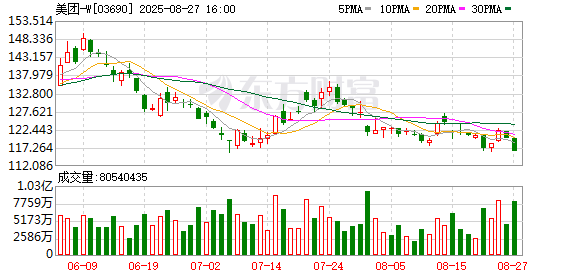
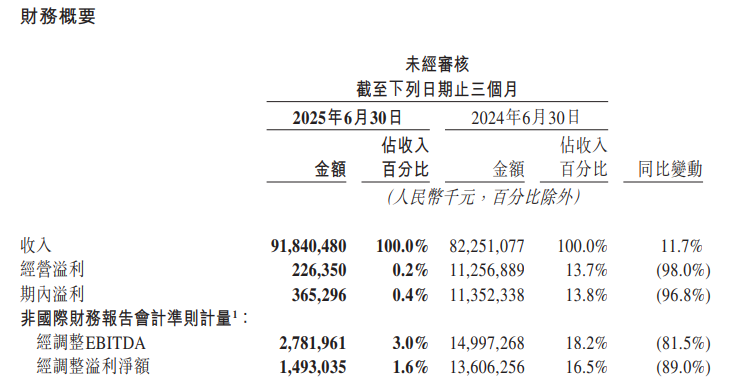
美团Q2实现营收918亿元,同比增长11.7%,但低于市场预期。在激烈的外卖和即时零售价格战中,美团的盈利部分被吞噬,经营利润暴跌98%至2.3亿 元,经营利润率从13.7%骤降至0.2%,调整后净利润也同比骤降89%至14.9亿元,远低于市场预期的98.5亿元。从业务结构看,核心本地商业收入653 亿元,同比增长7.7%,但经营利润率从25.1%跌至5.7%。 由于外卖行业竞争激烈,美团Q2营收同比增长11.7%但不及预期,经营利润暴跌98%。 8月27日周三,美团发布2025年第二季度及半年业绩报告。具体来看: 第二季度营收918.4亿元人民币,同比增长11.7%,预估936.9亿元人民币。 第二季度经营利润暴跌98%至2.3亿元,预估80亿元人民币,经营利润率从13.7%跌至0.2%。 第二季度经调整EBITDA同比下降81.5%至28亿元。 第二季度调整后净利润14.9亿元人民币,低于预估98.5亿元人民币。 第二季度调整后息税折旧及摊销前利润27.8亿元人民币,预估122.2亿元人民币。 第二季度销售成本占收入比重从58.8%飙升至66.9%。 第二季度销售及营销开支占收入比重从18.0%上升至24 ...

外卖大战谁是赢家?
Di Yi Cai Jing· 2025-08-27 10:09
Core Viewpoint - The intense competition in the food delivery sector has significantly impacted the financial performance of major players like Meituan and JD.com, leading to a decline in net profits despite revenue growth [2][3]. Financial Performance - Meituan reported a revenue of 918.4 billion yuan for Q2, a year-on-year increase of 11.7%, but its adjusted net profit fell by 89% to 14.9 billion yuan [2]. - Meituan's core local commerce segment saw a revenue increase of 7.7% to 653 billion yuan, but operating profit dropped from 152 billion yuan in Q2 2024 to 37 billion yuan in Q2 2025, with an operating margin decrease from 25.1% to 5.7% [3]. - JD.com reported a net profit of 62 billion yuan for Q2, down 50.8% year-on-year, with a significant operating loss of 9 billion yuan compared to a profit of 105 billion yuan in the same period last year [6][7]. Competitive Landscape - The food delivery war, characterized as "irrational competition," began in April with JD.com's "100 billion subsidy" announcement and peaked in July with aggressive marketing strategies from Meituan and others [8]. - Meituan's CEO described the competition as "disorderly," while JD.com's CEO noted that excessive competition has disrupted the pricing system and is unsustainable [8][9]. Strategic Adjustments - Meituan is focusing on enhancing user engagement and expanding its market presence, with over 5 million monthly active users and a peak of 1.5 billion daily orders in July for its instant retail service [5]. - JD.com is investing heavily in new business strategies, leading to increased marketing expenses, which rose by 127.6% to 270 billion yuan in Q2 2025 [7]. - Both companies are adapting their strategies post-competition, with Meituan launching initiatives to boost in-store traffic and JD.com introducing a new self-operated delivery brand [9][10]. Market Trends - The competition among major platforms is evolving, with each adopting differentiated strategies: Taobao (Ele.me), Meituan, and JD.com are focusing on their unique strengths to capture market share [10].


美团:第二季度营收918.4亿元同比增长11.7% 调整后净利润降至14.9亿元
Cai Jing Wang· 2025-08-27 09:58
Group 1 - The core viewpoint of the article is that Meituan's second-quarter performance showed mixed results, with revenue growth but a significant decline in net profit due to intense competition in the food delivery sector [1] - In Q2, Meituan reported revenue of 91.84 billion RMB, representing a year-on-year increase of 11.7%, but falling short of the expected 93.69 billion RMB [1] - The adjusted net profit for Q2 was 1.49 billion RMB, a substantial year-on-year decrease of 89%, compared to the forecast of 9.85 billion RMB [1] Group 2 - The core local commerce segment of Meituan saw a revenue increase of 7.7% year-on-year, reaching 65.3 billion RMB in Q2 2025 [1] - Operating profit for the core local commerce segment dropped significantly by 75.6% year-on-year to 3.7 billion RMB, with the operating profit margin declining by 19.4 percentage points to 5.7% [1] - The new business segment experienced an expanded operating loss of 1.9 billion RMB year-on-year, attributed to overseas expansion efforts [1]

美团二季度净利润下降89% 外卖大战谁是赢家
Di Yi Cai Jing· 2025-08-27 09:45
Core Viewpoint - The recent food delivery war has significantly impacted the financial performance of major platforms like Meituan and JD, leading to a decline in net profits due to irrational competition and increased marketing expenditures [2][3][6]. Financial Performance - Meituan reported a revenue of 91.84 billion yuan for Q2, a year-on-year increase of 11.7%, but adjusted net profit fell by 89% to 1.49 billion yuan [2]. - JD's net profit for Q2 was 6.2 billion yuan, down 50.8% year-on-year, with a significant operating loss of 900 million yuan compared to a profit of 10.5 billion yuan in the same period last year [6]. Competition Dynamics - Meituan described the competition as "irrational," with its core local business revenue growing by 7.7% to 65.3 billion yuan, but operating profit plummeting from 15.2 billion yuan to 3.7 billion yuan, resulting in a profit margin drop from 25.1% to 5.7% [3]. - Both Meituan and JD have increased their marketing expenditures significantly, with Meituan's rising by 51.8% to 22.5 billion yuan and JD's by 127.6% to 27 billion yuan, primarily due to aggressive competition strategies [3][6]. User Engagement and Market Position - Meituan's app monthly active users surpassed 500 million, with user transaction frequency reaching a historical high [4]. - The company expanded its instant delivery business and established over 50,000 lightning warehouses nationwide, enhancing its market position despite fierce competition [3]. Strategic Adjustments - Meituan is focusing on user retention through marketing activities and membership programs, while also adjusting its business strategies in response to the competitive landscape [4][5]. - JD is investing in new business strategies, including a self-operated delivery brand "Qixian Xiaochu," aiming to open 10,000 stores in three years [8]. Industry Trends - The food delivery war has reached a turning point, with platforms like Meituan and JD acknowledging the unsustainable nature of current competition practices [7][8]. - Analysts suggest that the competition among major platforms is evolving, with each adopting differentiated strategies to enhance their market positions [9].
美团二季度净利润下降89%,外卖大战谁是赢家
Di Yi Cai Jing· 2025-08-27 09:40
Core Viewpoint - The intense competition in the food delivery sector, initiated by JD's "100 billion subsidy" announcement in April, has significantly impacted the financial performance of major players like Meituan and JD, leading to a decline in net profits for both companies in the second quarter of 2025 [1][2][9] Financial Performance - Meituan reported a revenue of 91.84 billion yuan in Q2, a year-on-year increase of 11.7%, but its adjusted net profit fell by 89% to 1.49 billion yuan due to competitive pressures [1] - JD's net profit for Q2 was 6.2 billion yuan, down 50.8% year-on-year, with a significant operating loss of 900 million yuan compared to a profit of 10.5 billion yuan in the same period last year [7][8] Competition Dynamics - Meituan characterized the competition as "irrational," with its core local business revenue growing by 7.7% to 65.3 billion yuan, but operating profit plummeting from 15.2 billion yuan to 3.7 billion yuan, resulting in a profit margin drop from 25.1% to 5.7% [2][6] - Both companies have increased marketing expenditures significantly, with Meituan's rising by 51.8% to 22.5 billion yuan and JD's increasing by 127.6% to 27 billion yuan, primarily due to competitive strategies [2][7] Strategic Adjustments - Meituan is focusing on enhancing user engagement and expanding its instant delivery business, achieving over 500 million monthly active users and a peak order volume of 150 million in July [6][10] - JD is shifting its strategy to improve platform systems and user experience while emphasizing long-term growth through new business initiatives, despite short-term profit fluctuations [8][9] Market Trends - The competition has led to a "false prosperity" in the market, with businesses struggling to return to normal pricing after the subsidy wars, affecting consumer behavior and order volumes [10] - Platforms are now adjusting their strategies post-competition, with Meituan launching initiatives to boost in-store traffic and JD introducing a new self-operated delivery brand [10][11] Future Outlook - Analysts suggest that the competition among major platforms will continue to evolve, with each company pursuing differentiated strategies to capture market share and enhance service offerings [11]

美团:Q2营收918.4亿元,同比增11.7%,经调整净利润14.93亿元
Ge Long Hui· 2025-08-27 09:01
Group 1 - The core viewpoint of the article highlights Meituan's Q2 2025 revenue of 91.84 billion RMB, representing a year-on-year growth of 11.7%, but falling short of the forecasted 93.69 billion RMB [1] - Meituan's core local commerce segment revenue increased by 7.7% year-on-year to 65.3 billion RMB, but the operating profit for this segment significantly declined by 75.6% to 3.7 billion RMB due to irrational competition [1] - The operating profit margin for Meituan's core local commerce segment decreased by 19.4 percentage points to 5.7% in Q2 2025, indicating a challenging competitive environment in the food delivery industry [1] Group 2 - The new business segment of Meituan experienced an expanded operating loss of 1.9 billion RMB year-on-year, attributed to overseas expansion efforts [1]
美团:二季度收入918亿元 同比增长11.7%
Jing Ji Guan Cha Wang· 2025-08-27 08:53
经济观察网美团8月27日在港交所发布业绩公告。公告显示,2025年第二季度,美团收入由2024年同期 的人民币823亿元增长11.7%至人民币918亿元。由于外卖行业竞争激烈,二季度核心本地商业分部的经 营溢利同比大幅下降至人民币37亿元。同时,由于海外扩张,新业务分部的经营亏损同比扩大至人民币 19亿元。该期间公司经调整EBITDA及经调整溢利净额分别下降至人民币28亿元及人民币15亿元。 ...
美团-W(03690)发布中期业绩,收入同比增长14.7%至1783.98亿元 即时配送业务在第二季度仍巩固了市场地位
智通财经网· 2025-08-27 08:48
Core Viewpoint - Meituan-W (03690) reported a revenue of RMB 178.4 billion for the six months ending June 30, 2025, representing a year-on-year increase of 14.7%, but adjusted net profit decreased by 41% [1] Financial Performance - For Q2 2025, the company achieved revenue of RMB 91.84 billion, up 11.7% year-on-year, while adjusted net profit fell by 89% to RMB 1.493 billion [1] - The operating profit of the core local business segment significantly declined to RMB 3.7 billion due to intense competition in the food delivery sector [1] - The new business segment reported an operating loss of RMB 1.9 billion, widening year-on-year [1] - As of June 30, 2025, the company held cash and cash equivalents of RMB 101.7 billion and short-term investments of RMB 69.4 billion [1] Business Segments - The instant delivery business saw strong growth in order volume and transaction value, solidifying market position despite increasing competition [3] - The restaurant delivery segment expanded its customer base and increased transaction frequency among core users, while maintaining a focus on high-value consumption scenarios [2] - The hotel and travel business maintained robust growth, leveraging new service retail opportunities and digital transformation for merchants [4] Technological Advancements - The company has assisted over 1 million independent artisans in digital archiving to enhance sales and consumer connections [5] - AI tools have been introduced to improve operational efficiency for merchants, including AI customer service representatives and AI scheduling assistants [5]
美团-W发布中期业绩,收入同比增长14.7%至1783.98亿元 即时配送业务在第二季度仍巩固了市场地位
Zhi Tong Cai Jing· 2025-08-27 08:47
Core Insights - Meituan-W (03690) reported a revenue of RMB 178.398 billion for the six months ending June 30, 2025, representing a year-on-year increase of 14.7% [1] - Adjusted net profit decreased by 41% to RMB 12.442 billion, while profit attributable to equity holders fell by 37.67% to RMB 10.422 billion, with basic earnings per share at RMB 1.72 [1] - In Q2 2025, revenue reached RMB 91.84 billion, up 11.7% year-on-year, but adjusted net profit plummeted by 89% to RMB 1.493 billion [1] Revenue and Profitability - The company's core local business segment saw a significant decline in operating profit to RMB 3.7 billion due to intense competition in the food delivery sector [1] - The new business segment reported an expanded operating loss of RMB 1.9 billion, contributing to a decrease in adjusted EBITDA and adjusted net profit to RMB 2.8 billion and RMB 1.5 billion, respectively [1] - Operating cash inflow for Q2 was RMB 4.8 billion, with cash and cash equivalents and short-term investments totaling RMB 101.7 billion and RMB 69.4 billion, respectively, as of June 30, 2025 [1] Business Segments Performance - The instant delivery business maintained market position with a 7.7% year-on-year revenue growth to RMB 65.3 billion, despite a 75.6% drop in operating profit to RMB 3.7 billion [2] - The company focused on enhancing user experience and expanding service offerings, including partnerships with restaurants for supply-side innovations and the promotion of high-value consumption scenarios [2] - The "Meituan Flash Purchase" business experienced strong growth in order volume and transaction value, with over 50,000 flash warehouses established nationwide [3] Digital Transformation and AI Integration - The company is actively promoting digital transformation among merchants, providing integrated solutions for store management, marketing, and customer acquisition [4] - Over 1 million independent artisans have been assisted in digital archiving to enhance sales and consumer connections [5] - AI tools have been introduced to improve operational efficiency, including AI customer service representatives and AI scheduling assistants [5]