
汽车

Search documents
中国开始真反内卷了?这背后是一场产业革命级重构!
Sou Hu Cai Jing· 2026-02-25 11:52
Core Viewpoint - The manufacturing industry is facing intense price wars, leading to thinner profit margins and inadequate R&D investment, which in turn affects product quality. Despite impressive international surplus figures, increasing anti-dumping measures and tariffs from Europe and the U.S. pose significant challenges for domestic industries [2]. Group 1: Price Competition and Regulatory Actions - The Central Financial Committee's meeting on July 1, 2025, emphasized the need to regulate low-price competition and promote quality improvement while facilitating the exit of outdated production capacity [4]. - Major companies in the photovoltaic glass industry agreed to collectively reduce production by 30%, lowering supply to approximately 45 GW [5]. - The automotive industry introduced compliance guidelines for pricing, while the Ministry of Agriculture held discussions on capacity regulation in the pig farming sector [7]. Group 2: Capacity Reduction and Market Regulation - The governance of overcapacity is being effectively addressed, with companies in the photovoltaic glass sector reducing output through various methods, and the steel and cement industries adopting staggered production practices [12]. - Regulatory bodies are actively checking local financial subsidies, correcting violations, and ensuring that resources are concentrated in more efficient sectors [12][14]. - The exit of outdated capacity is being managed with precision, supported by industry associations providing cost reference data and regulatory enforcement against below-cost sales [14]. Group 3: Development of New Productive Forces - The shift from low-end price competition to high-quality development is being prioritized, with resources redirected towards key sectors such as chip manufacturing and quantum computing [16]. - Increased R&D investment and enhanced collaboration between academia and industry are accelerating the transformation of technological achievements [16]. - The manufacturing sector is experiencing marginal improvements in investment, with traditional industries undergoing digital transformation and emerging industries expanding [16]. Group 4: Economic and Market Implications - The combined efforts to combat internal competition and build a unified market are alleviating supply-demand mismatches, leading to moderate price increases and improved corporate profits [18]. - Structural policies are being precisely targeted at key areas, with macroeconomic policies maintaining a stable expansion, which is expected to enhance A-share corporate profit growth [19]. - The overall process aims to transition from a reliance on scale and low prices to a market-driven resource allocation, fostering a healthier industry ecosystem [21].

捷豹路虎中国人事变阵:潘庆升任全球采购董事 CFO Tim Howard接棒中国区CEO
Zhong Guo Jing Ying Bao· 2026-02-25 11:51
在业内人士看来,此举是捷豹路虎进一步升级组织架构,赋能中国乃至全球业务高质量发展的关键信 号。 (编辑:张家振 审核:童海华校对:翟军) 中经记者 石英婧 上海报道 《中国经营报》记者获悉,捷豹路虎中国日前进行人事调整。捷豹路虎中国原总裁及首席执行官潘庆升 任捷豹路虎全球采购董事,并继续兼任中国总裁一职。现任捷豹路虎中国首席财务官(CFO)Tim Howard(韩少帅)接任捷豹路虎中国首席执行官。 另据了解,捷豹路虎中国首席商务官(CCO)吴辰及其团队将向 Tim Howard(韩少帅)汇报。 ...
特斯拉 Cybercab 正式下线,自动驾驶商业化有望进入实车落地阶段
Changjiang Securities· 2026-02-25 11:49
Investment Rating - The industry investment rating is "Positive" and maintained [6] Core Insights - On February 18, 2026, Tesla confirmed the first Cybercab designed for autonomous taxi services has officially rolled off the production line at its Texas Gigafactory, marking a significant step from concept validation to actual vehicle deployment [2][4] - The launch of Cybercab is expected to initiate large-scale deployment of Tesla's Robotaxi business, which will significantly influence the overall development of the Robotaxi industry [9] - The cost structure for the Cybercab is favorable, with an estimated price of under $30,000 (approximately 207,000 RMB) and a projected fare of $0.20 per mile (approximately 0.89 RMB per kilometer) [9] Summary by Sections Event Description - Tesla's Cybercab has officially launched, transitioning its autonomous driving commercialization strategy from testing to real-world application [4] Market Commentary - The Cybercab's launch is anticipated to accelerate the commercialization of Robotaxi services, with Tesla's leadership expected to drive industry growth [9] - Regulatory compliance remains a critical factor for the Cybercab's widespread adoption, as current U.S. federal vehicle safety standards require vehicles to retain manual controls [9] - In China, the Robotaxi business is also expected to begin with pilot programs before broader implementation, with Tesla's progress serving as a reference [9] Investment Opportunities - Investors are encouraged to focus on: 1. Robotaxi operators 2. Suppliers of autonomous driving hardware 3. Companies involved in integrated vehicle-road-cloud infrastructure development [9]

招聘歧视美国公民?特斯拉被起诉
Xin Lang Cai Jing· 2026-02-25 11:46
Core Viewpoint - Tesla is facing allegations of discrimination against U.S. citizens in its hiring practices, favoring foreign workers with visas to reduce labor costs [2][3]. Group 1: Legal Proceedings - A U.S. District Court judge has decided to advance the discrimination lawsuit against Tesla, although he expressed skepticism about the strength of the plaintiff's evidence [2]. - The plaintiff, Scott Taub, claims that Tesla's hiring practices disadvantage U.S. citizens and prioritize foreign workers with work visas, violating federal civil rights laws [2][3]. - The judge has instructed Tesla to respond to a specific allegation regarding a recruiter stating that a certain engineering position was "limited to H-1B visa holders" [2]. Group 2: Evidence and Claims - The judge dismissed claims from a second plaintiff, Sofia Brander, regarding Tesla's preference for foreign employees in HR roles, citing a lack of credible evidence [3]. - The lawsuit highlights Tesla's reliance on H-1B visa holders, with over 6,000 layoffs in the U.S. in 2024, most of whom are believed to be U.S. citizens, while approximately 1,355 new hires were visa holders [3][4]. - The judge noted that the evidence provided by Taub is still limited, as the data from 2024 does not directly prove that Tesla prioritizes hiring visa holders over U.S. citizens [3].
年味拉满!中国品牌刷屏泰国街头
Guo Ji Jin Rong Bao· 2026-02-25 11:43
Core Viewpoint - Thailand has become a top destination for Chinese tourists during the Spring Festival, showcasing not only its welcoming atmosphere but also the integration of Chinese brands into local culture and commerce [1][2]. Group 1: Tourism and Cultural Integration - The Spring Festival celebrations in Chiang Mai included traditional decorations and activities, making it a festive experience for both locals and tourists [1]. - Chinese brands such as Ora, BYD, and Nezha have established a presence in Thailand, indicating a successful integration into the local market beyond just catering to Chinese consumers [2]. Group 2: Beverage and Food Industry Expansion - The hot climate and favorable economic conditions in Thailand have facilitated the expansion of new tea beverage brands, with several stores like Mixue and Nayuki opening in key locations [3][4]. - Nayuki has adapted its product offerings to local tastes, with a focus on combining beverages with baked goods, which has been well-received by local consumers [5]. - Haidilao has successfully attracted both Chinese and Korean tourists, offering a unique dining experience that incorporates local flavors while maintaining its core offerings [6][8]. Group 3: Retail and Brand Localization - Retail brands like Miniso and Pop Mart are rapidly expanding in Thailand, becoming recognizable symbols for both local youth and Chinese tourists [8][9]. - Pop Mart has tailored its products to include local cultural elements, enhancing its appeal in the Southeast Asian market [8].
汽车与零部件行业周报:1月汽车销量234.6万辆,四家国产机器人企业首次集体登上春晚舞台-20260225
Shanghai Securities· 2026-02-25 11:41
Investment Rating - The industry investment rating is "Hold" for the automotive sector [2] Core Insights - NIO achieved its first quarterly profit in 11 years, with the automotive trade-in sales exceeding 50 billion yuan in 2026 [3] - Tesla's third-generation robot is set to debut, with preliminary statistics indicating over 11.5 million vehicles for trade-in in 2025 [3] - In January, automotive sales reached 2.346 million units, with a year-on-year decrease of 3.2% [5] Market Review - The automotive sector saw a growth of 1.56%, with commercial vehicles performing the best at +3.59% [3] - The top five companies in terms of stock performance were Jingduan Technology (+28.98%), Changyuan Donggu (+28.81%), and others, while the bottom five included Dae Oriental (-10.26%) and others [4] Monthly Production and Sales - In January, automotive production and sales were 2.45 million and 2.346 million units respectively, with year-on-year changes of +0.01% and -3.2% [5] - Exports reached 681,000 units, showing a year-on-year increase of 44.9% [5] Investment Recommendations - Focus on companies related to vehicle intelligence and those with potential overseas sales, such as BAIC Blue Valley for complete vehicles [6] - Recommended parts suppliers include Bertley, Silver Wheel, Longsheng Technology, and others [6] - Small and medium market cap companies to watch include Baihehua and Kejie Intelligent [6]
60亿省级财政加持 2026四川“两新”政策优化升级
Zhong Guo Fa Zhan Wang· 2026-02-25 11:34
Core Viewpoint - The Sichuan Provincial Development and Reform Commission has introduced a large-scale equipment update and consumer goods replacement policy for 2026, aiming to enhance consumption and investment efficiency while addressing supply-demand bottlenecks [3][4]. Group 1: Policy Overview - The policy is an upgrade from the 2025 implementation, optimizing support scope, subsidy standards, and implementation mechanisms [3][4]. - A total of 6 billion yuan will be allocated by the provincial finance to support the policy, focusing on enhancing consumption and investment [3][5]. Group 2: Achievements from 2025 - In 2025, equipment investment grew by 11.5%, while industrial and technological transformation investments increased by 7.3% and 8.4% respectively [3]. - The consumer goods replacement initiative led to approximately 13.5 million applications, driving consumption by over 167 billion yuan and benefiting over 11 million consumers [3][4]. Group 3: Key Features of the 2026 Policy - The policy emphasizes a more focused support scope, flexible subsidy standards, and convenient implementation mechanisms [4]. - New areas for equipment updates include eight directions related to livelihood, safety, and consumer infrastructure, while subsidies will target high-impact categories like automobiles and home appliances [4][5]. Group 4: Financial Support and Implementation - The provincial finance will allocate no less than 2 billion yuan annually for industrial equipment updates and technological transformations, with support for specific projects increased to 10% of equipment investment [5][6]. - The consumer goods replacement program has streamlined categories and increased subsidy amounts, with a focus on enhancing convenience for consumers [6][7]. Group 5: Automotive Replacement Policy - The automotive replacement policy features a "proportion + limit" subsidy model, with higher subsidies for new energy vehicles compared to fuel vehicles [7]. - The implementation will be managed at the municipal level, with measures in place to reduce administrative burdens and enhance regulatory oversight [7].
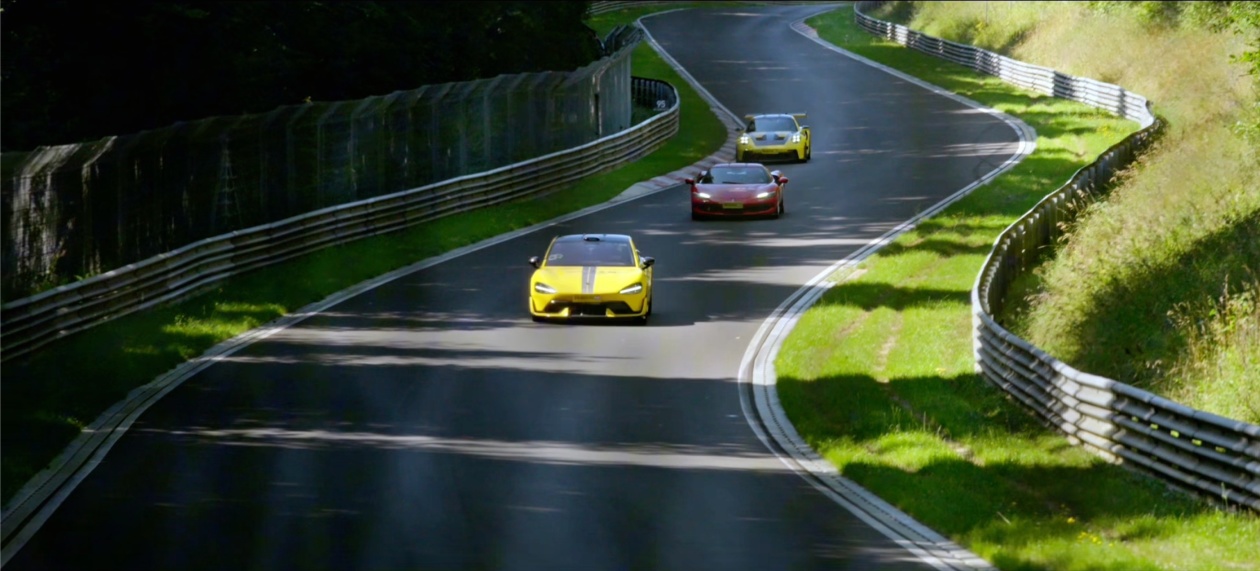
懂车帝《懂车性能场》上线 玩车2026赛道计划公布
Huan Qiu Wang· 2026-02-25 11:30
Core Insights - The program "Understanding Car Performance Field," created by Dongche Empire, officially launched on February 24, showcasing renowned racers and automotive brands on the Nürburgring Nordschleife, highlighting the strong performance of Chinese brands [1][3] - Dongche Empire announced a 2026 global track plan aimed at fostering a car culture among enthusiasts at various levels, promoting a structured growth system for automotive enthusiasts [1][4] Group 1 - The program collaborates with the Nürburgring, utilizing official timing and data to demonstrate the technological advancements of Chinese electric vehicles in power output, extreme handling, and vehicle stability [3] - The Nürburgring track spans 20.83 kilometers with 177 turns and a vertical drop of 300 meters, providing a challenging environment that tests automotive engineering capabilities [3] - The participating vehicles maintain original factory configurations, facing extreme challenges that exceed those of modified vehicles optimized for lap times [3] Group 2 - The 2026 plan includes a "Direct to Nürburgring" section, featuring club competitions and point-based races to select outstanding members for the Nürburgring track [4] - A simulator competition will be the initial entry point for the public, allowing ordinary users to experience the thrill of racing [4] - Dongche Empire aims to enhance driving skills through professional guidance and practical training, facilitating a pathway from amateur enthusiasts to international racing [4] Group 3 - In recent years, several Chinese automotive brands have made significant strides at the Nürburgring, showcasing their capabilities in power, performance, and stability [4] - The 2026 strategy aims to engage "100,000 people on the track, and 1 million in the mountains," promoting automotive culture and the popularization of motorsports in China [4]
提前两个月落地! Cybercab首台量产车下线
Mei Ri Jing Ji Xin Wen· 2026-02-25 11:17
Core Viewpoint - Tesla's first autonomous taxi, Cybercab, has officially entered mass production two months ahead of schedule, marking a significant step in its autonomous driving strategy [1] Group 1: Product Launch and Features - The first Cybercab model was produced at Tesla's Texas Gigafactory and is designed for fully autonomous driving, lacking a steering wheel and pedals [1] - The vehicle is priced around $25,000, and consumers will have the option to purchase it [1] - The design of Cybercab features a symmetrical body that supports bidirectional driving, eliminating traditional front and rear [5] Group 2: Technological Advancements - The mass production of Cybercab validates Tesla's transition from Level 2 (L2) driver assistance to Level 4 (L4) autonomous driving technology [2] - Tesla's Full Self-Driving (FSD) vehicles have demonstrated significantly better safety performance compared to human drivers, with major collision intervals averaging about 5.3 million miles [2] Group 3: Industry Perspectives - There are differing opinions within the industry regarding Tesla's Robotaxi development path, with some experts suggesting that existing models may only serve as L2 vehicles and that true L4 capabilities require new designs [3] - It is anticipated that Tesla's Robotaxi development may follow a gradual approach similar to other companies, potentially delaying full deployment until 2027 [3] Group 4: Regulatory Challenges - Despite the early production of Cybercab, regulatory approval for its operation remains uncertain, as current U.S. regulations require vehicles to retain manual control features [4] - Cybercab must resolve its "vehicle legality" issue and obtain commercial operation permits from regulatory bodies [4] Group 5: Financial Performance - Tesla's financial performance in 2025 showed a decline, with revenue at $94.83 billion, a decrease of approximately 3%, and net profit down by about 46% to $3.79 billion [6] - Vehicle deliveries also fell by 8.55% year-over-year, totaling 1.6361 million units [6] - The company has shifted its focus from electric vehicles to artificial intelligence and robotics, with a significant portion of its future value expected to come from its robot, Optimus [6] Group 6: Market Reactions - The market response to Tesla's transformation has been cautious, with stock prices declining by about 19.8% from their December 2025 peak [7] - Analysts from Morgan Stanley and Wells Fargo have downgraded Tesla's ratings, citing concerns over the slower-than-expected commercialization of Robotaxi and robotics [7]
调研称全球超40%的汽车行业高管担心失业
Di Yi Cai Jing· 2026-02-25 11:16
Group 1 - Over 40% of executives in the automotive industry are concerned about job security, significantly higher than the average of 28% across other industries [1] - The automotive industry has been identified as the most disrupted sector for two consecutive years, with a disruption index score of 74, indicating challenges such as weak growth, intense competition, and high costs [1] - More than half of the surveyed executives expect to increase hiring this year, while 25% plan to slow down hiring and 20% anticipate layoffs [1] Group 2 - In 2024, over 50 automotive companies announced personnel changes, affecting more than 180 executive positions, including significant shifts in leadership at major firms like SAIC Motor [2] - The pace of executive adjustments is expected to accelerate, with 327 executive positions changed in just two months at the end of 2025, reflecting the urgency for companies to strategize for future market competition [2] - Nearly 59% of executives admit their companies are lagging in technological advancements, and 81% anticipate pushing for vertical integration in supply chains [3]