
饮料

Search documents
广东人“童年神饮”卖不动,养乐多连关两家厂
3 6 Ke· 2025-10-22 09:19
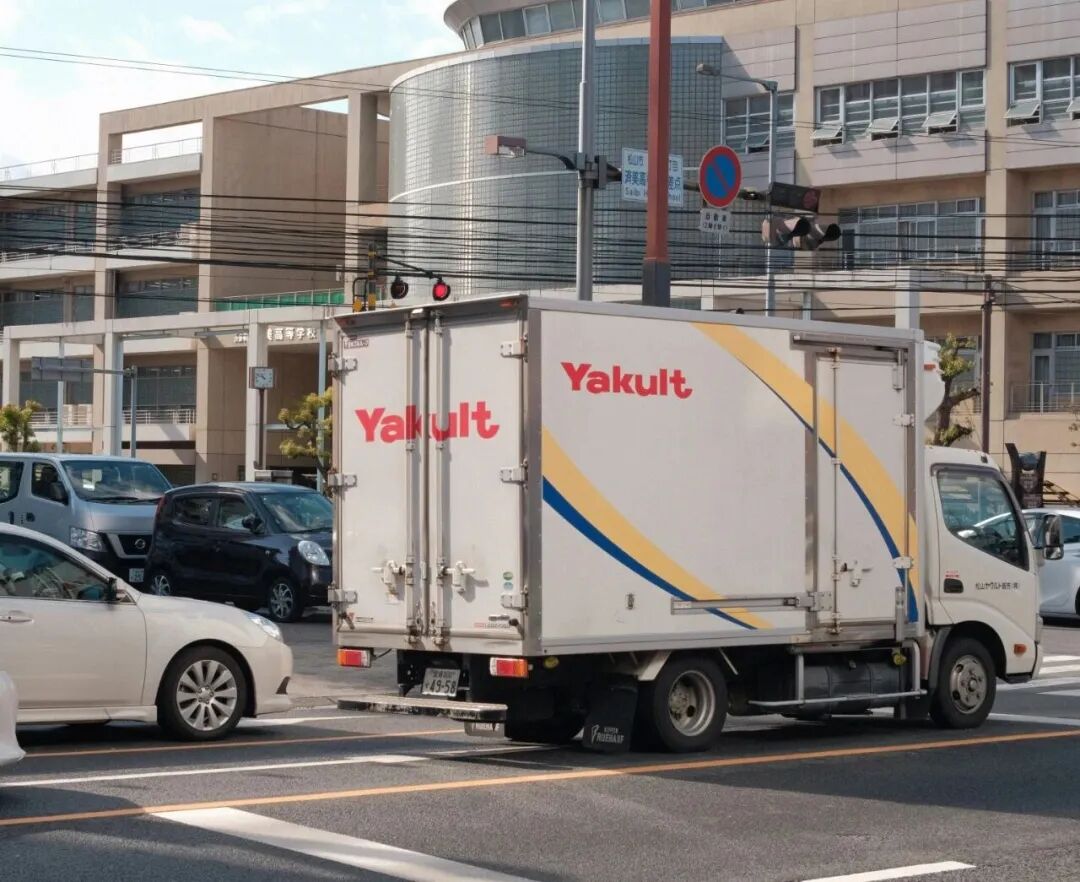
Core Viewpoint - The Japanese probiotic drink brand Yakult is undergoing a restructuring in China, which includes the closure of its Guangzhou No. 1 factory to enhance competitiveness and achieve sustainable growth in the market [1][2]. Company Summary - Yakult's parent company announced on October 20 that it will close the Guangzhou No. 1 factory, with production being transferred to the Guangzhou No. 2 factory and the Foshan factory. The closure is scheduled for November 30 [1]. - Guangzhou Yili Dairy Co., established in 2001, has a registered capital of approximately 396 million yuan and operates three factories in total [1]. - The Guangzhou No. 1 factory, which began operations in June 2002, has a total area of 9,457.91 square meters [1]. Industry Summary - Yakult's sales in China have been declining sharply, with daily average sales dropping from 625.7 million bottles in 2022 to 443.9 million bottles in 2024 [6]. - The decline in sales is attributed to a decrease in consumer trust in the benefits of probiotics and the emergence of alternative products such as low-temperature yogurt and plum juice [6][8]. - Despite being the market leader in the probiotic drink category, Yakult's market share has been decreasing alongside competitors like Mengniu and Wahaha [8]. - In response to market changes, Yakult has introduced low-sugar products and new flavors since 2023, and recent adjustments have shown some improvement, with daily average sales increasing by 3.9% in early 2025 compared to the previous year [8].

研报掘金丨国盛证券:首予东鹏饮料“买入”评级,行业空间广阔,增长势能强劲
Ge Long Hui· 2025-10-22 09:13
Core Viewpoint - Dongpeng Beverage is positioned as a leader in the energy drink sector, with a strong growth trajectory supported by cost-effective products that meet consumer demand and an expanding range of target demographics and scenarios [1] Industry Summary - Functional beverages are the fastest-growing sub-sector within the beverage industry, with significant potential for expansion as consumer demographics and usage scenarios continue to broaden [1] - The industry space is vast, and Dongpeng is expected to leverage its product cost-effectiveness and digital advantages to reinforce its leading position [1] Company Summary - Dongpeng Beverage is actively expanding its product line beyond its flagship Dongpeng Special Drink, with strong momentum in new offerings such as Dongpeng Water and Guozhi Tea [1] - The company's recent listing on the Hong Kong stock exchange is anticipated to facilitate its expansion into overseas markets, potentially creating new avenues for market growth [1] - As a leading beverage company in the A-share market, Dongpeng is well-positioned for robust growth, prompting an initial "buy" rating from analysts [1]

可口可乐2025年三季度财报亮眼,创新与责任并举
Di Yi Cai Jing· 2025-10-22 08:36
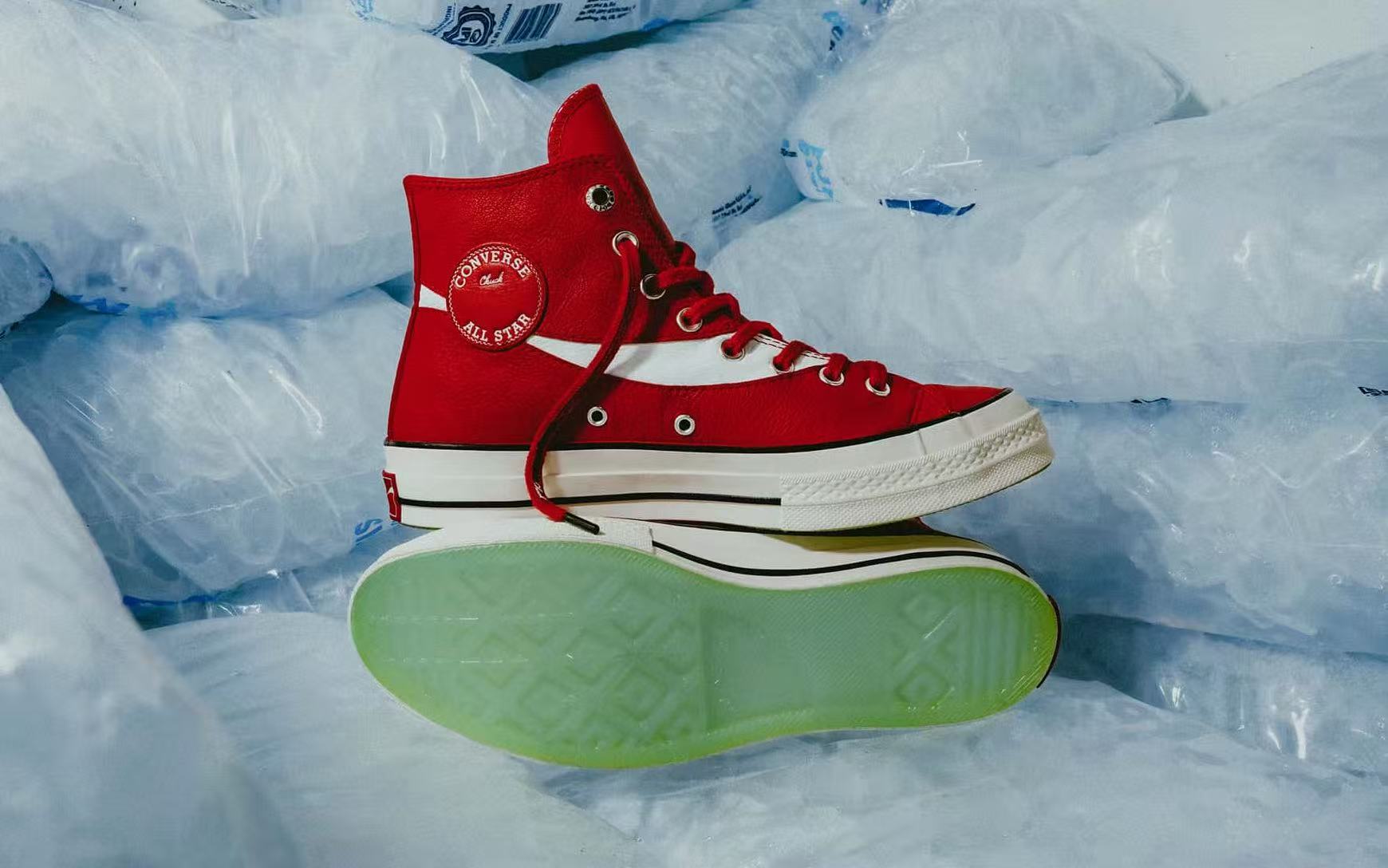
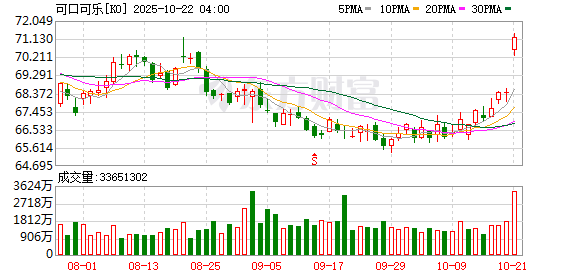
Financial Performance - Coca-Cola reported a 5% increase in Q3 revenue to $12.455 billion, exceeding market expectations of $12.41 billion [1] - Organic revenue grew by 6%, with net income rising to $3.683 billion, a 29% year-over-year increase [1] - Earnings per share (non-GAAP) reached $0.82, up 6% and above the market forecast of $0.78 [1] Sales and Market Performance - Global unit case volume saw a 1% increase, with flagship Coca-Cola brand volume also growing by 1%, driven by strong performance in Europe, the Middle East, Africa, and Asia-Pacific [1] - Sugar-free Coca-Cola volume surged by 14%, while overall sales in bottled water, sports drinks, coffee, and tea increased by 3% [1] Strategic Initiatives - Coca-Cola China is enhancing emotional connections with consumers through product innovation and interactive experiences, including a collaboration with Converse to launch limited edition shoes [2] - The company is addressing consumer demand for diverse flavors and social experiences by expanding product availability in snack stores and launching themed stores during holidays [4] Supply Chain and Local Investment - Coca-Cola China is committed to local investments and optimizing production capacity to meet the rapidly growing consumer demand, with several key projects making progress [6] - New production facilities have been launched, including a digital production line in Shaanxi and a green factory in Zhengzhou, reflecting the company's long-term commitment to the Chinese market [6] Corporate Social Responsibility - Coca-Cola has actively fulfilled its social responsibilities by launching an emergency response initiative to deliver drinking water during natural disasters, distributing over 28 million bottles to more than 3.26 million people [10] - The company's efforts in financial stability, technological innovation, brand collaboration, and social responsibility are reinforcing its leadership position in the global beverage industry [10]

可口可乐公司第三季度营收增长5%至约124亿美元,拟出售非洲最大装瓶商控股权
Mei Ri Jing Ji Xin Wen· 2025-10-22 07:02
Core Insights - Coca-Cola reported a 5% year-over-year revenue increase to $12.455 billion for Q3 2025, with a net profit of $3.683 billion, reflecting a 29% growth [2] - Global unit case volume increased by 1%, with zero-sugar Coca-Cola sales rising by 14%, and bottled water and sports drinks both up by 3% [2] - The company announced the sale of 75% of its stake in Coca-Cola Beverages Africa (CCBA) to Coca-Cola HBC, with plans to sell the remaining 25% within six years [2][3] Financial Performance - Q3 revenue reached $12.455 billion, a 5% increase compared to the previous year [2] - Net profit for the quarter was $3.683 billion, marking a 29% year-over-year increase [2] - Global unit case volume grew by 1% in Q3 [2] Sales Performance - Zero-sugar Coca-Cola saw a 14% increase in global sales [2] - Bottled water and sports drinks both experienced a 3% increase in sales [2] - Regional performance varied, with Europe, the Middle East, and Africa up by 4%, while North America and Latin America remained stable, and Asia-Pacific saw a 1% decline [2] Strategic Moves - The sale of CCBA represents a significant step in Coca-Cola's strategy to consolidate its bottling operations in Africa [3] - The company has also restructured its bottling operations in India by selling 40% of its stake to Jubilant Bhartia Group [3] - Coca-Cola's management emphasized the importance of finding suitable partners for bottling operations to enhance profitability and overall business growth [3] Market Developments - In China, Coca-Cola's bottlers, COFCO Coca-Cola and Swire Coca-Cola, have made progress with new supply chain developments [3] - New production facilities have been launched, including a new plant in Shaanxi and another in Zhengzhou [3] - The construction of a smart green production base in the Greater Bay Area has also been completed [3]
2025年品牌战略的实操要点有哪些?
Sou Hu Cai Jing· 2025-10-22 06:52
Core Insights - Brand strategy has evolved from a marketing function to a core element of corporate top-level design in the rapidly changing global business environment of 2025 [1] - The quality of brand strategy formulation and implementation directly influences a company's survival and growth potential in the era of rising consumer sovereignty [1] Group 1: Strategic Diagnosis and Monitoring - Establishing a multi-dimensional monitoring mechanism is essential for brand strategy formulation, allowing companies to track industry structure changes, competitive landscape shifts, technological trends, and consumer value orientation [3] - A brand strategy health dashboard should be constructed to monitor key indicators of brand assets in real-time, providing precise data support for strategic adjustments [3] - Brand strategies must possess foresight and adaptability to respond to the rapidly changing market environment [3] Group 2: Differentiation and Resource Allocation - Planning and selecting a differentiation path is a core aspect of brand strategy, requiring alignment between a company's core capabilities and market opportunities [3] - Companies should define their value propositions, identify target customer groups, and establish a complete brand architecture system to create differentiated advantages [3] - Optimizing strategic resource allocation and leveraging effects is crucial for the implementation of brand strategies, necessitating a focus on resource efficiency across R&D, production, channels, and communication [3] Group 3: Implementation and Performance Management - Planning the implementation path and execution control determines the ultimate effectiveness of brand strategies, requiring the breakdown of long-term strategies into phased goals [5] - A cross-departmental collaboration mechanism should be established, along with a scientific performance evaluation system to incorporate strategic execution outcomes into departmental assessments [5] - Successful brand strategies depend on rigorous execution control in the current era where execution capability is paramount [5] Group 4: Digital Transformation and Competitive Advantage - In the digital wave of 2025, the formulation and implementation of brand strategies have become a rigorous management science [7] - Companies that integrate systems thinking, data-driven approaches, and continuous innovation will build sustainable competitive advantages and gain proactive development in intense market competition [7]
可口可乐公司:第三季度净利润同比增长29%
Zhong Zheng Wang· 2025-10-22 06:32
Core Insights - Coca-Cola Company reported a 5% year-on-year revenue growth to $12.455 billion for Q3 2025, with a net profit of $3.683 billion, reflecting a 29% increase compared to the previous year [1] Group 1: Financial Performance - Revenue for Q3 2025 reached $12.455 billion, marking a 5% increase year-on-year [1] - Net profit for the same period was $3.683 billion, showing a significant 29% growth compared to the previous year [1] Group 2: Strategic Initiatives - The CEO emphasized the company's adaptability in response to ongoing challenges, highlighting strategic adjustments and long-term growth investments [1] - Coca-Cola China is enhancing its supply chain to better meet the rapidly growing consumer demand in the Chinese market [1] - Over the past three years, Coca-Cola China has invested in upgrading five production bases, focusing on factory construction, capacity expansion, and smart transformation [1]
河南鲜萃饮品有限公司成立 注册资本500万人民币
Sou Hu Cai Jing· 2025-10-22 04:24
天眼查App显示,近日,河南鲜萃饮品有限公司成立,法定代表人为李凯,注册资本500万人民币,经 营范围为许可项目:饮料生产;食品销售;食品互联网销售(依法须经批准的项目,经相关部门批准后 方可开展经营活动,具体经营项目以相关部门批准文件或许可证件为准)一般项目:互联网销售(除销 售需要许可的商品);个人互联网直播服务(除依法须经批准的项目外,凭营业执照依法自主开展经营 活动)。 ...
可口可乐公司:2025年Q3营收增长5%,净利润增长29%
Cai Jing Wang· 2025-10-22 04:06
Core Insights - Coca-Cola Company reported Q3 2025 earnings with a revenue increase of 5% to $12.455 billion, exceeding market expectations of $12.41 billion [1] - Organic revenue grew by 6%, and net income rose by 29% to $3.683 billion [1] - Earnings per share (non-GAAP) increased by 6% to $0.82 [1] Revenue and Sales Performance - Global unit case volume increased by 1% [1] - Carbonated beverage sales, particularly the flagship Coca-Cola brand, grew by 1%, driven mainly by markets in Europe, the Middle East, Africa, and Asia-Pacific [1] - Sales of Diet Coca-Cola increased by 14% globally [1] - Bottled water, sports drinks, coffee, and tea saw a global sales increase of 3%, with bottled water and sports drinks both growing by 3%, and coffee and tea growing by 2% [1] Strategic Outlook - CEO James Quincey emphasized the company's flexibility in adjusting strategies and investing in long-term growth despite challenges in the overall environment [1] - The company reiterated its 2025 performance guidance, expecting a comparable currency-neutral earnings per share (non-GAAP) growth of approximately 8%, up from a previous estimate of 7%-9% [1] - The company also maintained its forecast for 2025 organic revenue growth of 5% to 6% and an earnings per share (non-GAAP) growth of about 3%, revised from a previous estimate of 2%-3% [1]
每日投资策略-20251022
Zhao Yin Guo Ji· 2025-10-22 04:01
Global Market Overview - The Hang Seng Index closed at 26,028, up 0.65% for the day and 29.75% year-to-date [1] - The Shanghai Composite Index rose by 1.36% to 3,916, with a year-to-date increase of 16.84% [1] - The Shenzhen Component Index increased by 1.76% to 2,463, showing a year-to-date rise of 25.83% [1] - The US markets showed mixed results, with the Dow Jones up 0.47% and the S&P 500 unchanged, while the Nasdaq fell by 0.16% [1] Sector Performance - The Hang Seng Financial Index rose by 1.06% to 45,270, with a year-to-date increase of 28.84% [2] - The Hang Seng Industrial and Commercial Index increased by 0.52% to 14,826, reflecting a year-to-date rise of 31.79% [2] - The Hang Seng Real Estate Index slightly decreased by 0.05% to 18,358, with a year-to-date increase of 23.10% [2] Capital Flows and Stock Performance - Southbound capital recorded a net inflow of HKD 1.17 billion, with notable net purchases in Pop Mart, Xiaomi, and Hua Hong Semiconductor [3] - Pop Mart's Q3 revenue is expected to grow by 245%-250% year-on-year, with overseas revenue increasing by 365%-370% [3] - A-shares in hardware equipment, semiconductors, and industrial trade showed strong gains, while coal, telecommunications, and household goods lagged [3] Economic and Policy Developments - The Chinese Commerce Minister held talks with EU officials to address semiconductor issues, emphasizing the importance of maintaining global supply chain stability [3] - Japan's new Prime Minister, Kishida, may influence the Bank of Japan to delay interest rate hikes, with market expectations for an October rate increase dropping to 25% [3] US Market Insights - US stock performance was mixed, with consumer discretionary, industrials, and healthcare sectors leading gains, while utilities, communication services, and materials declined [3] - Strong Q3 earnings reports have boosted investor sentiment, with 86% of companies exceeding earnings expectations [3] - Notable stock movements included significant gains for Coca-Cola and 3M, while Netflix faced a decline due to lower-than-expected earnings [3] Commodity and Currency Trends - US Treasury yields fell, while the dollar index continued to rise [3] - Gold and silver prices dropped amid reduced geopolitical tensions, although speculative long positions in these metals have increased [3] - Oil prices rebounded as the White House announced plans to purchase 1 million barrels for the Strategic Petroleum Reserve [3]
PIPER SANDLER上调可口可乐目标价至81美元
Ge Long Hui A P P· 2025-10-22 03:40
Core Viewpoint - Piper Sandler has raised the target price for Coca-Cola from $80 to $81 [1] Group 1 - The adjustment in target price reflects a positive outlook on Coca-Cola's performance [1]