
低空经济

Search documents
用制度创新抢占“天空之城”,济南开启“飞”常时刻!
Feng Huang Wang Cai Jing· 2026-02-09 00:14
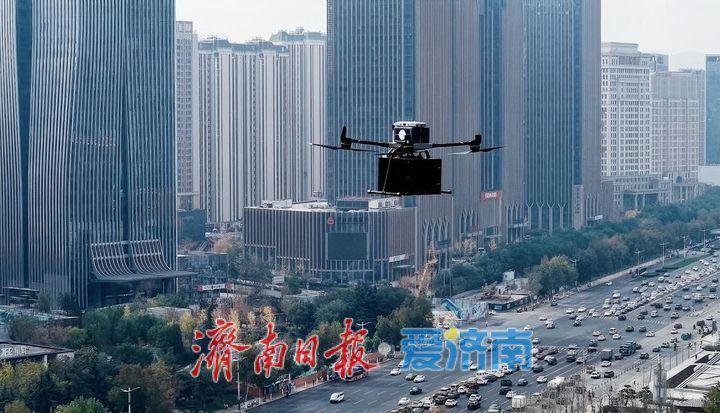
3月1日起,《济南市低空经济发展促进办法》就要正式实施了。它就像是济南递给未来的一份"飞行计 划表",意味着这座城市在低空经济这条新赛道上,正式迈出了制度化的关键一步。 那么问题来了:低空经济起步多年,济南为何偏偏选在今年春天按下了制度的"启动键"?这背后,其实 是一道精准的计算题。 时机,刚刚好 如果时间倒回五年,谈起无人机物流、空中交通,多少还带着点"科幻色彩"。但今天,一切都不一样 了。 最直观的是,技术成熟了,科幻已成现实。无人机续航从几十分钟延伸到数小时,通信导航精度达到厘 米级,电池成本降到了商业化临界点——低空飞行终于从"能飞"变成了"实用又划算"。 政策东风来了。从国家层面"低空经济"首次写入政府工作报告,到《无人驾驶航空器飞行管理暂行条 例》等法规陆续出台,政策信号明确而密集。济南此时跟进,恰是顺势而为。 硬件上,布局起降场、充电站、维修点;软件上,搭建通信、导航、气象服务网络。最聪明的是提出 了"共建共享"——鼓励医院、学校、交通枢纽这些现有场地开放共享,增设起降功能。这招既节省了土 地,又提高了设施利用率,可以说很接地气。 然后解决"怎么兴"的问题。产业不是凭空长出来的。《办法》从规划、 ...

低空经济迈入万亿赛道规模化元年 小鹏汇天携7000台订单加速商业化落地
Chang Jiang Shang Bao· 2026-02-08 23:41
Group 1: Industry Overview - The low-altitude economy is expected to achieve a significant breakthrough in 2025, with a market size projected to reach 1.5 trillion yuan, driven by policy incentives, technological advancements, and practical applications [1][2][3] - The number of newly registered companies in the low-altitude economy is anticipated to increase by 162.36% year-on-year, with over 25,000 new registrations expected in 2025, marking a peak in the past five years [2][3] - The Chinese government has identified the low-altitude economy as a strategic emerging industry, essential for economic growth and the cultivation of new productive forces [2][3] Group 2: Policy and Regulatory Framework - A guideline for the construction of a low-altitude economy standard system was jointly released by ten government departments, indicating that the industry has entered an accelerated phase of industrialization [3] - The guideline sets a goal for the establishment of a basic standard system by 2027, with over 300 standards expected to be developed by 2030 to support the safe and healthy development of the low-altitude economy [3] Group 3: Company Spotlight - Xiaopeng Huitian - Xiaopeng Huitian has become a benchmark in the low-altitude economy by achieving mass production of flying cars and initiating its IPO process in Hong Kong, positioning itself as a key player in the market [4][5] - The company has received over 7,000 intention orders for its flying cars and plans to start global deliveries in the second half of 2026, with a production capacity of 10,000 units per year at its Guangzhou factory [6] - Xiaopeng Huitian's core product, the "land aircraft carrier," is designed for ease of use, with a price not exceeding 2 million yuan and a range of over 1,000 kilometers, making it a significant player in the eVTOL market [5][6] Group 4: Market Challenges and Opportunities - Xiaopeng Huitian faces challenges related to regulatory compliance and the commercial viability of its products, particularly in obtaining aviation certification and navigating safety standards [7] - The company’s strategy to enter the flying car market is seen as a necessary response to increasing competition in the traditional automotive sector, where electric vehicle penetration is expected to exceed 50% by 2025 [6][7] - The eVTOL market presents a trillion-yuan opportunity, but Xiaopeng Huitian must overcome hurdles related to regulatory frameworks and market acceptance to succeed [6][7]
新兴产业周报20260208-20260208
Western Securities· 2026-02-08 13:29
Investment Rating - The report recommends an "Overweight" rating for new consumption, solid-state batteries, and innovative drugs, indicating a potential increase in value exceeding the market benchmark by more than 10% over the next 6-12 months [5][21]. Core Insights - The report highlights that adjustments in the market present good buying opportunities, particularly in the sectors of new consumption, solid-state batteries, and innovative drugs, with a focus on recent catalysts in AI applications [5]. - The overall trend in emerging industries is characterized by a strong fundamental outlook but a weak technical position, suggesting potential for growth despite current market pressures [16][17]. Summary by Relevant Categories New Consumption - The sector is rated "Overweight" with a strong technical outlook, indicating a low position that is expected to recover [5]. - Recent government initiatives, such as the "2026 'Happy Shopping Spring' Special Activity Plan," are expected to support growth in this sector [5]. Solid-State Batteries - Rated "Overweight," this sector shows a strong technical outlook with expectations for a low position to rebound [5]. - Companies like Xinwangda are advancing in the production of semi-solid-state batteries, with mass production anticipated by 2027 [5]. Innovative Drugs - The sector is also rated "Overweight," with a strong technical outlook and a low position that is still in the recovery phase [5]. - Recent developments include the completion of Phase III clinical trials for innovative drugs, indicating progress in the sector [5]. AI Applications and Computing Infrastructure - The report notes a neutral rating for AI applications and computing infrastructure, with moderate growth expectations and recent advancements in national supercomputing capabilities [5][10]. - The launch of the national supercomputing internet core node is expected to provide significant AI computing resources [10]. Commercial Aerospace - Rated as "Neutral," the commercial aerospace sector is experiencing high levels of activity but is under adjustment pressure [5]. - Recent developments include SpaceX's application to launch a large number of satellites, which could redefine AI resource competition [10]. Humanoid Robots - The sector is rated "Neutral+" with a strong technical outlook, as Tesla announces plans for mass production of its humanoid robot by 2026 [5][10]. Gaming - The gaming sector is rated "Neutral+" with a strong technical outlook, but recent developments have led to a downward adjustment in expectations [5][10]. - The release of Google's Genie 3 has caused volatility in the market, but it is viewed as a tool for development rather than a disruptive technology [10].
星舰即将进入规模化发射阶段,有望引领商业航天再上新高度
ZHONGTAI SECURITIES· 2026-02-08 07:25
Investment Rating - The report maintains an "Overweight" rating for the industry [5] Core Insights - The commercial aerospace sector is expected to enter a phase of rapid growth, driven by the upcoming large-scale launch of the Starship, which will significantly enhance the efficiency of satellite deployment and related services [9][17] - The domestic large aircraft industry is seeing an increase in delivery speed and localization rates, with optimistic prospects for overseas market expansion [18][19] Summary by Sections Policy Insights - The "14th Five-Year Plan" emphasizes the development of strategic emerging industries, including aerospace, with increased policy support expected [10][32] - The establishment of a dedicated regulatory body for commercial aerospace aims to enhance safety and promote industry growth [10][32] - Local governments are actively promoting commercial aerospace initiatives, with over 20 provinces outlining plans in their government reports [11][34] Technical Developments - Recent successful launches of new rocket models, such as the Zhuque-3 and Long March 12, demonstrate advancements in China's launch capabilities [12][37] - The successful testing of reusable spacecraft and multi-satellite deployment systems indicates significant progress in technology that supports commercial space missions [12][38] Financing Trends - The introduction of new listing standards for commercial rocket companies on the Sci-Tech Innovation Board is expected to facilitate financing and enhance industrial capabilities [14][39] - Blue Arrow Aerospace's IPO has been accepted, indicating a shift towards capitalizing the commercial aerospace sector [14][40] Demand Dynamics - The concept of "space computing" is transitioning into a commercial reality, driving growth in the commercial aerospace sector [15][41] - The upcoming Beijing International Commercial Aerospace Exhibition is anticipated to generate significant procurement demand, showcasing advancements across the industry [15][41] International Competition - The global competition for space resources is intensifying, with significant satellite deployment plans from both China and the U.S. [16][42] - The SpaceX Starship is expected to achieve a launch frequency of over once per hour within four years, supporting large-scale deep space missions [16][42]
再造万亿级产业增量
Xin Lang Cai Jing· 2026-02-08 07:08
昨天,上海市人民政府新闻办公室举行市政府主题记者会。市政府副秘书长、市发展改革委主任顾军, 市经济信息化委主任汤文侃,市商务委主任申卫华,市科委主任骆大进,市人力资源社会保障局局长杨 佳瑛和市民政局副局长娄国剑出席记者会,并回答中外记者提问。 经济:今年GDP增长预期目标为5%左右 2025年上海GDP增速跑赢全国,顾军表示,今年是"十五五"开局之年,全市生产总值增长预期目标为 5%左右,将着力以国家战略为牵引,全面深化改革开放;着力促消费扩投资稳外需,积极扩大有效需 求;着力培育壮大新质生产力,引领产业转型升级;着力深化改革创新,促进服务业优质高效发展;着 力以民心工程、民生实事为抓手,保障和改善民生。 产业发展方面,汤文侃表示,"十五五"期间上海将瞄准智能终端、商业航天、低空经济等新赛道,再造 万亿级产业新增量;因地制宜打造25个千亿级细分赛道;在工业企业百元营收成本比全国低3.6元的基 础上,优化产业营商环境,让各类优秀企业在上海成就更大事业。 "五个中心":提升城市能级 取得更大突破 "五个中心"建设是上海"十五五"期间的重中之重。"今年我们将在提升城市能级和核心竞争力上取得更 大突破。"顾军表示,将 ...
“十五五”期间瞄准智能终端、商业航天、低空经济等新赛道 上海将再造万亿级产业新增量
Jie Fang Ri Bao· 2026-02-08 03:26
Economic Development and Growth Targets - Shanghai's GDP is projected to reach 5.67 trillion yuan by 2025, with a growth rate of 5.4% compared to the previous year, achieving annual and "14th Five-Year" economic growth targets [2] - The GDP growth target for 2023 is set at around 5%, focusing on expanding effective demand and promoting consumption and investment [2] Foreign Investment and Trade - By the end of last year, Shanghai had recognized 1,076 regional headquarters of multinational companies and 636 foreign R&D centers, with over 6,300 new foreign enterprises expected to be established by 2025, marking a 6.8% year-on-year increase [3] - The foreign trade import and export scale is anticipated to exceed 4.5 trillion yuan by 2025, with a 19.8% growth in contracted foreign investment [3] Industrial Development and Innovation - Shanghai's industrial output value surpassed 4 trillion yuan last year, with plans to target new sectors such as smart terminals and commercial aerospace during the "15th Five-Year" period [4] - The city aims to increase R&D expenditure to about 4.5% of GDP by 2025, with a focus on enhancing basic research investment from 7.9% to around 12% [4] Employment and Skills Development - Shanghai plans to create over 600,000 new jobs by 2026, with a focus on supporting youth employment and addressing the impact of AI on job markets through "AI + employment" initiatives [6] - The city will host the 48th World Skills Competition to promote new skills and enhance vocational training aligned with industry needs [6] Elderly Care and Community Services - Shanghai has established 122 smart elderly care facilities, aiming to enhance technology-driven services and community care [7] - The city has introduced guidelines for building senior-friendly shopping environments, which have been well-received by the elderly community [7]
履职尽责献良策 同心奋进新征程
Xin Lang Cai Jing· 2026-02-08 00:58
Group 1: Artificial Intelligence in Community Governance - Nanning is actively implementing innovative practices in community governance empowered by artificial intelligence technology [1] - Recommendations include strengthening top-level design and system integration, establishing a unified smart governance platform, and focusing on differentiated strategies for various community types [1] - Emphasis on expanding smart services for elderly care and childcare, along with enhancing AI skills training for community workers [1] Group 2: High-Quality Development of County Economy - The county economy is identified as a crucial support for regional development, with a focus on industrial upgrading to enhance internal momentum [2] - Recommendations include promoting industrial clusters, developing emerging industries like AI and new energy materials, and integrating cultural tourism with local resources [2] - Encouragement for collaboration within the Nanning metropolitan area to enhance supply chains and public services [2] Group 3: Low Altitude Economy Development - Nanning's low altitude economy is experiencing positive growth, with a call for a unified "one network for all flights" platform to enhance urban governance [3] - Suggestions include integrating drone resources, enhancing AI technology collaboration, and establishing a data-sharing mechanism [3] - Focus on optimizing funding structures and creating a sustainable financing model for low altitude resources [3] Group 4: Embodied Intelligence Industry Ecosystem - Nanning has advantages in developing an embodied intelligence industry, with a focus on building a collaborative ecosystem targeting ASEAN [4] - Recommendations include creating a public testing and training hub and fostering cross-border industrial chains [4] - Emphasis on integrating embodied intelligence with local industries and attracting high-end talent [4] Group 5: Biomass Energy Manufacturing Industry - Nanning has significant advantages in developing a biomass energy industry, including biodiesel and aviation fuel [6] - Recommendations focus on creating a three-chain integrated system (raw material, manufacturing, logistics) and enhancing technological innovation [6] - Encouragement for establishing a "biomanufacturing innovation consortium" to support industry development [6] Group 6: High-Quality Development of Key Metals Industry - The demand for non-ferrous and key metals is rising due to the growth of new industries like electric vehicles and photovoltaics [7] - Recommendations include focusing on high-end development and creating a core area for research and industrialization of new materials [7] - Emphasis on talent cultivation and the integration of AI in the key metals sector [7] Group 7: Technology Finance Development - Nanning has made progress in technology finance, which is crucial for supporting innovation [8] - Recommendations include enhancing policy services, optimizing fund effectiveness, and innovating credit products [8] - Focus on building a professional intermediary service market and a data-sharing platform for technology finance [8] Group 8: Youth Consumption Activation - Youth are identified as a key driver of consumption and urban economic vitality [9] - Recommendations include creating differentiated consumption scenarios and supporting the development of esports and cultural tourism [9] - Emphasis on financial support for youth-oriented consumption and integrating AI into consumer experiences [9] Group 9: Investment Attraction Strategy Innovation - Nanning aims to enhance investment attraction by focusing on key industries and innovative strategies [10] - Recommendations include a combination of targeted policies, multi-department collaboration, and AI-driven investment matching [11] - Emphasis on creating a supportive environment for attracting businesses through quality services [11] Group 10: Inland Port Construction - The construction of the Pinglu Canal presents a historic opportunity for Nanning [12] - Recommendations include advancing port and terminal construction and developing supportive policies for water transport [12] - Focus on attracting related industries to the port area to enhance economic development [12] Group 11: Cultural and Tourism Development - Nanning is making strides in integrating AI with cultural and tourism sectors [13] - Recommendations include developing AI-based personalized travel planning and enhancing the digital transformation of the tourism industry [13] - Emphasis on collaboration with local universities to foster innovation in cultural tourism [13] Group 12: Flower Industry Cluster Development - Nanning has the potential to develop a billion-dollar flower industry cluster [14] - Recommendations include promoting collaborative models and utilizing smart agricultural technologies [14] - Focus on creating a comprehensive marketing system for the flower industry to support rural revitalization [14]
拉萨达孜开辟出“新赛道”!
Xin Lang Cai Jing· 2026-02-07 13:34
Core Insights - The low-altitude economy in Dazi District is a strategic choice aimed at addressing transportation and ecological monitoring challenges in the region, leveraging its unique geographical conditions [2][4] - Dazi District has established the Tibet Low-altitude Economy Industrial Park, positioning itself as a pioneer in this sector, with a focus on high-quality development and job creation through a unique model of "Party leadership + industry empowerment + employment promotion" [2][5] Policy Framework - The low-altitude economy has been integrated into the national "14th Five-Year Plan," with Tibet quickly developing a "1+N" policy system to support this industry, including general aviation development plans and special funding [5] - Dazi District aims to become a leading area for low-altitude economy in Tibet, capitalizing on policy advantages and development potential [5] Company Development Model - Dongyi Technology Co., Ltd. has innovatively constructed a development model that combines "Party leadership + industry empowerment + employment promotion," placing party members in key roles to foster a collaborative environment [7] - The company has successfully completed adaptive testing for high-altitude drones within three months, aided by government support and expert guidance [7] Technological Implementation - The use of drones has significantly improved efficiency in ecological monitoring, reducing the time required for inspections from a full day to just two hours [7][9] - Dongyi Technology has established 1,700 planned flight routes, with 790 currently in operation, and aims to create 70 job positions, having already achieved stable employment for 15 individuals [11] Industry Ecosystem - The Tibet Low-altitude Economy Industrial Park has attracted 29 upstream and downstream enterprises, creating a comprehensive industrial ecosystem that includes technology research, equipment display, manufacturing, and support services [11][13] - Companies are optimistic about the development of the low-altitude economy in the region, citing strong government support and the collaborative environment fostered by Dongyi Technology [13] Future Outlook - Dongyi Technology plans to continue leading with Party guidance, linking industries, and supporting collaboration to transform the low-altitude economy from "single-point breakthroughs" to "cluster development," contributing to sustainable economic growth in Tibet [13]

上海力争“十五五”时期工业机器人应用密度达600台每万人
Jing Ji Guan Cha Wang· 2026-02-07 06:54
经济观察网据人民财讯消息,上海市人民政府主题记者会2月7日举行。上海市经济信息化委主任汤文侃 表示,"十五五"时期上海将累计建成500家先进智能工厂,工业机器人应用密度达600台每万人,创建 200家市级以上绿色制造企业。瞄准智能终端、商业航天、低空经济等新赛道,再造万亿级产业新增 量。 ...

上海市经信委:瞄准智能终端、商业航天、低空经济等新赛道,再造万亿级产业新增量
Mei Ri Jing Ji Xin Wen· 2026-02-07 05:13
每经AI快讯,2月7日上午,上海市人民政府举行记者会,市经信委主任汤文侃出席并回答记者提问。 汤文侃表示,"十五五"将累计建成500家先进智能工厂,工业 机器人应用密度达600台每万人,创建200 家市级以上绿色制造企业。做大产业经济总量,全力打造新一代电子信息、智能网联新能源汽车、高端 装备等6大新兴支柱产业,瞄准智能终端、商业航天、低空经济等新赛道,再造万亿级产业新增量。 (上观新闻) ...