具身智能

Search documents
合肥“十五五”规划建议:推进氢能、氨能等技术迭代应用,布局小型堆等先进核能技术
Zheng Quan Shi Bao Wang· 2026-01-08 01:31
Core Viewpoint - The Hefei Municipal Committee emphasizes the development of future industries with a focus on "quantum intelligence" and aims to drive innovation in sectors with technological advantages and development foundations [1] Group 1: Quantum Technology Industry - The plan includes promoting breakthroughs and applications in quantum communication, quantum computing, and quantum precision measurement [1] - There is a focus on accelerating the research and industrialization of key materials, devices, and equipment [1] - The initiative aims to expand "quantum+" demonstration projects in government, finance, energy, and meteorology sectors [1] Group 2: Nuclear Fusion and Hydrogen Energy Industry - The development of compact fusion energy experimental devices is highlighted as a key infrastructure project [1] - The plan aims to accelerate the development of superconducting materials, equipment, and smart sensors [1] - There is an emphasis on advancing the application of hydrogen and ammonia energy technologies and laying out advanced nuclear energy technologies like small reactors [1] Group 3: Biomanufacturing Industry - The focus is on biobased chemicals and materials, new food products, bio-agriculture, and non-food biomass raw materials [1] - The initiative aims to expand large-scale applications in these areas [1] Group 4: Embodied Intelligence Industry - The plan promotes the integrated development of intelligent decision-making systems, high-precision control systems, and innovative structural design [1] - It aims to construct a full-chain innovation ecosystem encompassing precision processing, data training, evaluation, and competitive testing [1] Group 5: Emerging Technologies - The strategy includes tracking and laying out plans in niche areas such as brain-computer interfaces, sixth-generation mobile communication, and deep space and deep sea exploration [1] - The goal is to promote more technological research and industrialization to achieve "parallel running" and "leading" positions in these fields [1]
加速具身智能量产落地,灵生科技完成亿元融资
机器人大讲堂· 2026-01-07 09:06
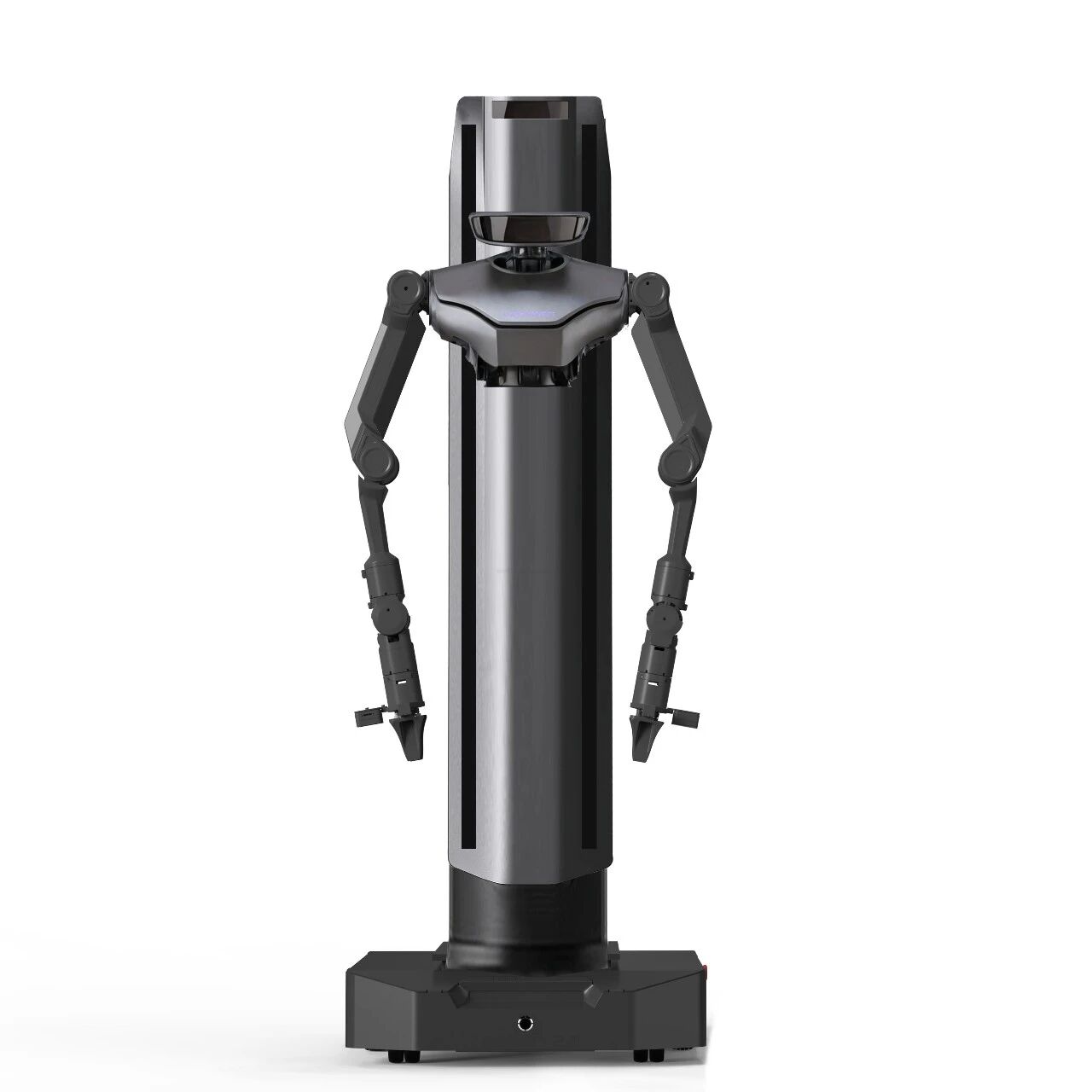
近日,北京灵生科技有限公司(简称 "灵生科技")宣布成功完成Pre-A & PreA+两轮亿元融资,上市公司领 投、产业集团和财务机构跟投。所募资金将主要用于其核心产品L系列人形机器人的规模化量产交付、真实场 景数采治理平台(LDP)、具身世界模型(LWM)的持续迭代以及产业生态的加速拓展。 灵生科技成立于 2023年2月,由清华系团队创立,是一家专注于具身智能机器人研发的创新企业。公司致力 于打造人形及具身智能机器人的通用大脑平台,通过完全自研的真实场景数采治理平台LDP和具身世界模型 LWM,提升机器人的智能水平与操作泛化能力,目前已应用于智能制造、无人零售、医疗康养等多个领域, 并与多家国内外头部厂商及央企达成订单合作。 在产品方面, 灵生科技推出了 L系列人形机器人,其具备26个自由度并搭载6自由度机械臂,基础操作精度 达到0.05毫米,结合具身世界模型后更可提升至±0.03毫米,能胜任3C制造、物流仓储、分拣搬运等高精度 工业场景。 同时,公司构建了云-边-端一体化类脑系统"Ling Cybrain/Ling Brain",作为机器人的"中枢神 经",该系统支持基础动作泛化、任务自动化编排、世界模型 ...

新赛道升级 塑造发展新优势
Jing Ji Ri Bao· 2026-01-06 22:35
Core Insights - The "15th Five-Year Plan" emphasizes the cultivation and expansion of emerging and future industries, aiming to create new pillar industries and strategically position future industries for growth [1] Group 1: Emerging Industries - During the "14th Five-Year Plan," China's emerging industries accelerated development, forming significant scale effects with several trillion-yuan market opportunities emerging by 2025 [2] - The commercial aerospace industry is on the verge of explosion, with advancements such as the successful launch of the Zhuque-3 rocket and accelerated deployment of satellite internet constellations [2] - The low-altitude economy is entering a commercial phase, marked by the issuance of operational certificates for manned civil unmanned aerial vehicles and the promotion of typical application scenarios by the Ministry of Transport [2] - New materials are crucial for breakthroughs in aerospace performance, with innovations in high-strength stainless steel and carbon fiber composites being utilized in key projects [2] Group 2: Energy Transition - China's energy transition has accelerated, establishing the world's largest power infrastructure and renewable energy systems, with plans to increase the share of renewable energy significantly by 2026 [3] - The "15th Five-Year Plan" aims to enhance emerging pillar industries, focusing on innovation in sectors like renewable energy, new materials, aerospace, and low-altitude economy [3] Group 3: Future Industries - Rapid advancements in future industries such as artificial intelligence, quantum information, and biomanufacturing have been noted, with significant breakthroughs achieved during the "14th Five-Year Plan" [4] - The development of 6G technology is prioritized, with expectations for commercial applications to begin around 2030, indicating a deep integration with AI [4][5] - Future industries are characterized by their potential to create new demands and economic forms, with quantum technology and nuclear fusion energy expected to play pivotal roles [6] Group 4: Market Opportunities and Challenges - Emerging industries are entering a rapid growth phase, with key scenarios being validated and replicable business models established, while future industries are still in the exploratory phase [7] - The uncertainty in future industries stems from both technological and commercial aspects, requiring significant R&D investment and policy support [8] - The collaboration between emerging and future industries is essential for driving new economic engines, with a focus on innovation and long-term value creation [9]
华西证券王方群:2026年重点关注商业航天、人工智能与具身智能
Shang Hai Zheng Quan Bao· 2026-01-06 17:56
Group 1: Key Focus Areas for 2026 - The commercial aerospace sector is experiencing a cost restructuring, shifting from one-time manufacturing to a reusable cost model, with Chinese companies making significant technological breakthroughs and cost reductions [1] - Artificial intelligence (AI) is highlighted as a crucial focus for 2026, with significant advancements in AI agents and a growing number of applications in China, driven by the launch of the DeepSeek model [2] - Embodied intelligence, particularly humanoid robots, is identified as a key area of interest, leveraging China's complete manufacturing system to gain a unique advantage in humanoid robot production [2] Group 2: Investment Opportunities - The innovation in pharmaceuticals, new consumption trends, and non-ferrous metals are also seen as areas of investment opportunity, with a particular emphasis on precious metals like gold and silver due to increased attractiveness amid geopolitical risks and monetary easing expectations [3] - The long-term outlook for gold remains positive due to concerns over global debt and currency, suggesting potential for price increases [3]

新赛道活力迸发 塑造经济发展新优势
Zheng Quan Ri Bao· 2026-01-06 16:28
Core Insights - During the "14th Five-Year Plan" period, China has made significant strides towards high-level technological self-reliance, with emerging and future industries showing robust vitality and growth potential [1][3] Emerging Industry Development - The emerging industries in China have rapidly developed and formed scale effects, with multiple trillion-yuan markets accelerating formation [2] - By 2025, China's commercial aerospace industry is on the brink of explosion, with significant advancements in reusable launch vehicles and satellite internet applications [2] - The low-altitude economy is also gaining traction, with the issuance of operational certificates for manned civil unmanned aerial vehicles marking the entry into commercial use [2] New Energy Industry - China has established the world's largest power infrastructure and renewable energy system, creating the most complete new energy industry chain globally [3] - The "15th Five-Year Plan" emphasizes the development of emerging pillar industries, including new energy, new materials, aerospace, and low-altitude economy [3] Future Industry Breakthroughs - Significant progress has been made in future industries such as artificial intelligence, quantum information, and biomanufacturing, with key breakthroughs achieved [4] - The integration of 6G and AI is becoming a consensus in the industry, with clear development directions emerging [4] - The biomanufacturing industry has expanded steadily, reaching a total scale of 1.1 trillion yuan, becoming a new economic growth point [4] Dual-Engine Development - Emerging and future industries, while both part of the "long slope, thick snow" track, have different development stages, leading to varying market opportunity release rhythms [6] - Emerging industries are entering a rapid growth phase, with vertical segments expected to explode in the next 3 to 4 years, while future industries will focus on technology and application exploration in the early stages of the "15th Five-Year Plan" [6] Investment and Market Dynamics - The future industries face challenges related to technological and commercial uncertainties, with unclear business models and long investment return cycles [7] - The "15th Five-Year Plan" period is seen as a critical window for future industries, with policy support and technological breakthroughs expected to drive development [7] - Investors are advised to focus on companies' core technology reserves and their progress in validating business value through application scenarios [8]
简智机器人正式开源具身智能行业最大规模无本体数据集
Xin Lang Cai Jing· 2026-01-06 12:16
1月5日,简智机器人正式开源具身智能行业最大规模无本体数据集"10Kh RealOmni-Open DataSet",覆 盖10大场景任务、超过30项技能,总计将包含超过10,000小时、百万条以上高质量数据。目前,首批开 源数据集已在百度百舸AI计算平台同步上线,支持一键启动分布式具身模型训练,将为更多具身智能 企业及开发者提供标准化的数据及AI基础设施,助力具身智能机器人多场景泛化落地。 ...

10亿,复旦科创旗下投资基金完成备案
FOFWEEKLY· 2026-01-06 10:05
Group 1 - The core viewpoint of the article is the successful launch of the Fudan Innovation Investment Fund, which has completed its private fund product filing and is now operational [1] - The total scale of the Fudan Innovation Investment Fund is 1 billion yuan, co-founded by Fudan Innovation Mother Fund, Shanghai Future Industry Fund, and Jing'an Capital, with additional investors including Zhejiang Longsheng Group and Anhui Jinbiandan Equity Investment [1] - The fund will focus on strategic emerging industries such as life health, artificial intelligence, integrated circuits, new energy, and new materials, as well as future industries like quantum technology, biomanufacturing, hydrogen energy, nuclear fusion energy, brain-computer interfaces, embodied intelligence, and sixth-generation mobile communication [1]
光影绘就“十五五”新图景,上海静安市北高新500架无人机点亮园区夜空
Zhong Guo Jin Rong Xin Xi Wang· 2026-01-06 09:54
转自:新华财经 1月5日晚,上海静安市北高新园区500架无人机以夜空为幕、光影作笔,呈现了一场名为"天马行空・智链新元"的无人机编队秀。这场融合前沿科技、产业 符号与人文关怀的视觉表演,生动勾勒出科技、人文与生活在此交融共生的发展图景。 "去年没抢到好位置,今年特意提前半小时来!看着每天工作的园区以这样震撼的方式亮相,太自豪了!"在数通链谷一家区块链企业工作的杨先生激动地 说,夜空中的哈希桥、共识大道等元素,让日常通勤的场景成了光影焦点。"此次表演将低空经济技术与视觉艺术融合,展示市北高新特色产业,希望科技 美学成为连接产业与生活的桥梁。"园区相关负责人表示。 此次表演巧妙地将园区地标融入画卷。无人机的光影掠过"合约桥",桥下便是潺潺流水的城市地标健身步道。观众们在"赛博烟花"的璀璨中,同步感受着四 季皆景的生态之美。哈希桥、共识大道……这些承载着区块链技术内核的命名地标,在光影点化下,成为市民可亲近、可驻足的浪漫景致。 科技为笔,绘就高质量发展新气象 作为上海"创新驱动、转型发展"的示范窗口,近年来,市北高新以"数通链谷""视听静界"为支点,撬动面向未来的高质量发展新动能。此次无人机表演是两 大产业品牌科技 ...


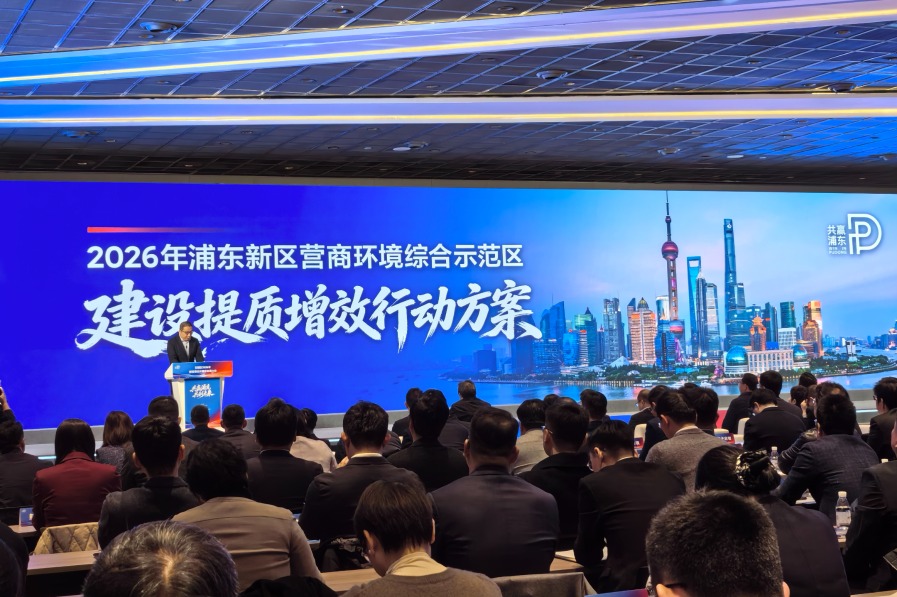
“十五五”开局破局!浦东发布52条硬核举措 700亿元项目签约激活引领区新动能
Guo Ji Jin Rong Bao· 2026-01-05 16:09
Core Insights - The Shanghai Pudong New Area held a conference to promote investment and improve the business environment, unveiling the "2026 Action Plan for Enhancing the Comprehensive Business Environment" [1] Group 1: Business Environment Initiatives - The action plan includes five key areas: government services, market competition, industrial ecology, legal protection, and social governance, with a total of 52 specific measures [2] - In government services, initiatives include enhancing service levels for enterprises and launching actions to support companies going global [2] - The market competition area focuses on high-level intellectual property protection and creating a fair market environment [2] Group 2: Industrial Development - Pudong aims to develop ten major industrial clusters, targeting a scale of 500 billion yuan for integrated circuits, biomedicine, and smart connected vehicles, and 200 billion yuan for artificial intelligence and smart terminals [3] - Each industrial cluster will focus on core areas to enhance quality and efficiency, such as design leadership in integrated circuits and global outreach in biomedicine [3] Group 3: Investment and Policy Support - A new policy package was introduced to shift from "blood transfusion" support to "blood production" ecological cultivation, including a 100 billion yuan industry guidance fund [4] - The Pudong New Area is home to 25% of Shanghai's foreign-funded enterprises and nearly 50% of regional headquarters of multinational companies, positioning it as a strategic hub for global resources [4] Group 4: Future Goals - Pudong aims to enhance its global resource allocation and innovation capabilities, supporting both large enterprises and small businesses [6] - The conference marks the beginning of a focused effort on investment attraction and environmental improvement, aligning with the goals of the "14th Five-Year Plan" [6]
700亿元重点项目集中签约,上海浦东十大硬核产业集群目标出炉
Xin Lang Cai Jing· 2026-01-05 12:32
Core Insights - The Shanghai Pudong New Area Investment and Development Conference 2026 was inaugurated at Zhangjiang Science City, where 50 key projects were signed with a total investment exceeding 70 billion yuan [3][4] - The "2026 Action Plan for Improving the Business Environment in Pudong New Area" was released, featuring five major areas: government services, market competition, industrial ecology, legal protection, and social governance, with 52 specific measures under ten special actions [3][4] Government Services - The Action Plan aims to enhance service levels for enterprises, launching initiatives such as "Efficiently Completing One Task" and "Empowering Enterprises to Go Global" [4] Market Competition - Three special actions will be implemented to ensure a fair market environment, focusing on high-level intellectual property protection, digital risk prevention, and creating a clear online space [4] Industrial Ecology - The plan includes four special actions to support youth entrepreneurship, provide service guarantees for industrial space, facilitate financing for small and medium-sized enterprises, and optimize the industrial ecosystem [4] Legal Protection - The plan emphasizes accelerating key legislative processes and upgrading the core service area of the Shanghai International Legal Service Center [4] Social and Cultural Aspects - The initiative will expand the "Business Environment Experience Officer" and "Media Observer" teams, supporting the development of "One Street, One Product" and "One Town, One Product" to create a livable and business-friendly environment [4] Industrial Clusters - The "14th Five-Year Plan" for Pudong's ten major industrial clusters was announced, targeting significant growth in sectors such as integrated circuits, biomedicine, intelligent connected vehicles, and software services, with specific financial goals for each cluster [7] - The plan aims for integrated circuits and biomedicine to reach a scale of 500 billion yuan, artificial intelligence and smart terminals to reach 200 billion yuan, and civil aviation, marine engineering, and new energy clusters to achieve 100 billion yuan [7] - Each industrial cluster will focus on core areas to enhance quality and efficiency, with dedicated teams to ensure effective project implementation and support for innovation [7]