
制造

Search documents
国际实业:9月24日召开董事会会议
Mei Ri Jing Ji Xin Wen· 2025-09-24 13:21
Group 1 - The company International Industry (SZ 000159) held a temporary board meeting on September 24, 2025, to discuss the proposal for the fourth temporary shareholders' meeting of 2025 [1] - For the first half of 2025, the revenue composition of International Industry was as follows: wholesale of oil and chemical products accounted for 67.59%, manufacturing accounted for 30.35%, other industries accounted for 1.78%, and warehousing services accounted for 0.28% [1] - As of the report date, the market capitalization of International Industry was 2.7 billion yuan [1]

中国企业在东盟投资调研报告:超八成中资制造企业计划在未来三年内增加投资
Zheng Quan Shi Bao Wang· 2025-09-23 06:16
Group 1 - The report highlights that ASEAN countries like Indonesia, Malaysia, Thailand, and Vietnam are becoming popular investment destinations for Chinese enterprises due to rapid economic growth, broad market prospects, and low land and labor costs [1][2] - The main investment objectives for Chinese companies include market expansion, cost reduction, and supply chain diversification, with over 60% of surveyed companies reporting profitability and 80% expressing satisfaction with their investments [1][2] - The survey conducted by PwC involved 30 Chinese enterprises operating in ASEAN, with two-thirds from the manufacturing sector, and revealed that Indonesia, Malaysia, and Thailand are the top three investment destinations, with 67%, 47%, and 40% of respondents operating in these countries respectively [1] Group 2 - Over 70% of Chinese manufacturing enterprises believe that the business environment in their respective ASEAN countries has improved compared to two years ago, with Malaysia, Thailand, and Vietnam showing significant positive trends [2] - More than 80% of Chinese manufacturing enterprises plan to increase their investments in ASEAN over the next three years, indicating sustained high confidence in investing in the region [2] - PwC notes that the continuous improvement of the business environment in ASEAN countries significantly enhances their attractiveness to foreign investors, with various tax incentives available for manufacturing, R&D activities, and regional headquarters establishment [2]
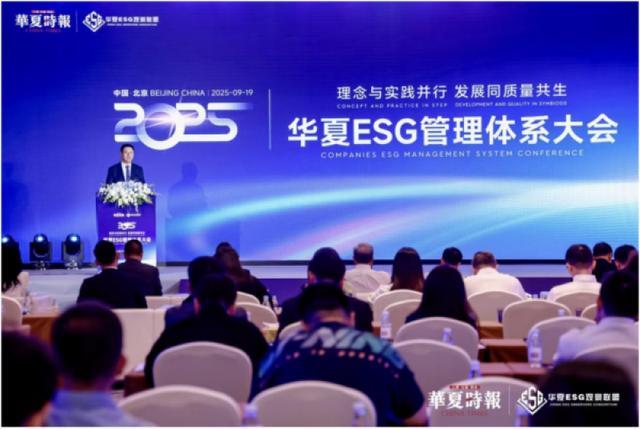
共议核心竞争力,2025华夏ESG管理体系大会在京召开
Hua Xia Shi Bao· 2025-09-23 01:55
Core Insights - The 2025 Huaxia ESG Management System Conference emphasizes the importance of ESG as a key metric for assessing non-financial performance and long-term value of enterprises in the context of expanding global sustainable investment and improving regulatory policies [2][4] Group 1: Conference Overview - The conference, themed "Coexistence of Ideas and Practices, Symbiosis of Development and Quality," aims to help enterprises prepare for the mandatory disclosure requirements set for 2026, addressing issues like "greenwashing" and providing reusable methodologies for integrating ESG into corporate DNA [2] - The event gathered representatives from government, enterprises, academic institutions, and international organizations, with over 80 companies from various sectors including finance, new energy, automotive, manufacturing, and fast-moving consumer goods in attendance [2] Group 2: Key Speeches and Insights - Chen Cungen, President of the China Social Work Federation, highlighted that ESG aligns closely with China's new development philosophy and is crucial for achieving carbon neutrality goals and enhancing corporate governance and international competitiveness [2] - Feng Huijun, President of Huaxia Times, stated that ESG is no longer optional but essential for long-term corporate value and sustainable economic development, emphasizing the need for companies to demonstrate social responsibility [4] - Wu Xiaoqiu, Dean of the National Financial Research Institute at Renmin University, discussed recent reforms in the A-share market aimed at protecting investor interests, suggesting that these reforms have laid a solid foundation for long-term market improvement [6][7] - He Keng, Vice Chairman of the Financial and Economic Committee of the National People's Congress, pointed out the need for improved legislation in the ESG field to ensure the effective implementation of ESG principles [7] - Liu Xuexin, Dean of the Business School at Capital University of Economics and Business, noted that the retreat of U.S. ESG policies presents a strategic opportunity for China to enhance its international influence in ESG [9] - Leng Bing, a board member of the International Sustainability Standards Board (ISSB), reported that 37 countries and regions have adopted ISSB standards, covering 60% of global GDP, and emphasized the importance of sustainable information disclosure for investment decisions [11] - Luo Nan, head of PRI China, addressed challenges in sustainable investment practices, including insufficient incentives and an imperfect capital market, and presented ten sustainable investment financial tools [13] - Xin Bin, Vice President of SGS, discussed the varying quality of sustainable information disclosure and the need for collaboration among enterprises, verification agencies, and regulatory bodies to enhance credibility [15] - Jin Weiping, Director of the Macroeconomic Research Department at Tsinghua University, highlighted China's early adoption of the "Artificial Intelligence +" strategy and the need to accelerate the integration of AI with the economy [16] Group 3: Discussions and Reports - The conference featured roundtable discussions on challenges in ESG compliance for Chinese enterprises, pathways for ESG-driven corporate value reconstruction, and effective strategies for enhancing brand value through ESG [17] - The "2025 Corporate ESG Practice Observation Report," including exemplary ESG practices for 2025, was also released during the conference [17]

中国(山东)—比利时经贸合作恳谈会在根特举办
Qi Lu Wan Bao· 2025-09-23 01:52
Core Points - The China (Shandong) - Belgium Economic and Trade Cooperation Seminar was held on September 22 in Ghent to deepen economic and trade exchanges between Shandong Province and Belgium [1] - The seminar was organized by the Shandong Provincial Government's Economic and Trade Representative Office in Europe and the Flanders China Chamber of Commerce, focusing on key industries such as biomedicine, green energy, and intelligent manufacturing [1] - Representatives from Belgian companies, including Bekaert Group and Esk Group, shared their investment experiences and achievements in Shandong [1] - The Weihai city representative promoted the local business environment and industrial cooperation directions [1] - The Flanders Chamber of Commerce plans to organize a delegation of medical, digital technology, and agricultural enterprises to visit Shandong by the end of the year [1] - The seminar enhanced mutual understanding and trust between Shandong and various sectors in Belgium, expanding new opportunities for practical cooperation in key areas [1] - Approximately 40 representatives from institutions and enterprises, including the West Flanders Provincial Government, Bekaert Group, Flanders China Chamber of Commerce, and China Council for the Promotion of International Trade EU Representative Office, attended the event [1]
西部利得基金张昌平:中国高速成长企业的“摘星人”
Zhong Guo Zheng Quan Bao· 2025-09-22 04:27
Core Insights - The article discusses the investment philosophy of Zhang Changping, focusing on identifying high-quality companies in China that are poised for growth [1][2][4]. Group 1: Investment Framework - Zhang Changping's research framework is based on "three capabilities + three trends," which include core competitiveness, ability to generate free cash flow, and governance capabilities [2][3]. - The core competitiveness of a company can stem from product strength, technological advantages, brand recognition, cost efficiency, and supply chain management [2]. - Companies must demonstrate the ability to convert core competitiveness into sustainable growth, which can be achieved through either expansion in a growing industry or market share acquisition in a stagnant industry [2][3]. Group 2: Governance and Market Trends - Governance is crucial for assessing a company's resilience against risks, focusing on management capabilities, decision-making quality, and ownership structure [3]. - Companies should align with industry trends, societal developments, and their own operational cycles to ensure long-term viability [3][4]. - Zhang Changping emphasizes the importance of identifying companies in early growth stages that have the potential to become "hidden champions" or "small giants" as China transitions to high-quality economic development [4]. Group 3: Investment Strategy - A balanced investment strategy is employed to mitigate risks associated with high volatility in high-growth companies, allowing for a diversified approach across various industries [4][5]. - Zhang Changping's investment expertise has expanded from real estate to technology, manufacturing, consumer goods, and pharmaceuticals, showcasing a broad capability in identifying investment opportunities [4][5]. - The introduction of "post-investment management" in 2024 aims to enhance investment activity and adapt to market changes through defined turnover rates and risk management practices [5][6]. Group 4: Value Creation - The core focus remains on "value creation," with a commitment to identifying high-growth "stars of tomorrow" that align with macroeconomic cycles and micro-level business dynamics [6][7]. - The balance between structured investment principles and disciplined execution is highlighted as essential for navigating market complexities and capturing growth potential [7].
时代集团控股(01023)发盈警 预计年度股东应占亏损约1.7亿至1.9亿港元
智通财经网· 2025-09-19 12:10
Core Viewpoint - The company anticipates a significant loss for the fiscal year ending June 30, 2025, with expected losses between approximately HKD 170 million and HKD 190 million, contrasting with a profit of about HKD 102 million for the same period in 2024 [1] Group 1: Financial Performance - The manufacturing segment is expected to see a decrease in revenue compared to approximately HKD 1.066 billion in 2024, with anticipated pre-tax losses for the fiscal year ending June 30, 2025, compared to a pre-tax profit of about HKD 110 million in 2024 [1] - The retail segment is projected to increase revenue compared to approximately HKD 528 million in 2024, but is expected to incur pre-tax losses due to a one-time significant loss of about HKD 83.568 million from the termination of the Cole Haan business [2] - The property investment segment is expected to see a decrease in revenue compared to approximately HKD 12.399 million in 2024, with anticipated pre-tax losses increasing compared to a pre-tax loss of about HKD 3.359 million in 2024, primarily due to a significant non-cash fair value reduction of between HKD 105 million and HKD 115 million [2] Group 2: Business Operations - The anticipated losses are attributed to a non-cash fair value revaluation decrease related to investment properties and significant one-time losses from the termination of the Cole Haan business [1][2] - The company maintains its dividend policy despite the expected losses for the fiscal year ending June 30, 2025 [3]
央企资产总额超90万亿元 现代新国企加速成长
2 1 Shi Ji Jing Ji Bao Dao· 2025-09-17 23:20
Core Insights - The central enterprises in China have shown significant growth during the "14th Five-Year Plan," with total assets increasing from less than 70 trillion yuan to over 90 trillion yuan, and total profits rising from 1.9 trillion yuan to 2.6 trillion yuan, achieving average annual growth rates of 7.3% and 8.3% respectively [1][3][5] - Central enterprises have played a crucial role in technological innovation, with R&D expenditures exceeding 1 trillion yuan for three consecutive years, and the establishment of 97 original technology sources and 23 innovation alliances [1][6] - The reform and restructuring of state-owned enterprises (SOEs) are set to conclude in 2025, with significant strategic mergers and the establishment of new central enterprises aimed at enhancing operational efficiency and resource allocation [1][9] Financial Performance - The operating income profit margin of central enterprises improved from 6.2% to 6.7%, and labor productivity increased from 594,000 yuan to 817,000 yuan per employee per year [3][4] - From 2021 to 2024, central enterprises are expected to complete a total fixed asset investment of 19 trillion yuan, with an average annual growth rate of 6.3% [3][4] Contribution to Economy - Central enterprises are responsible for approximately 80% of crude oil, 70% of natural gas, and 60% of electricity supply in China, playing an irreplaceable role in energy security and logistics [4][5] - They have contributed over 10 trillion yuan in taxes and transferred 1.2 trillion yuan of state-owned equity to social security funds during the "14th Five-Year Plan" [4][5] Technological Innovation - Central enterprises have significantly enhanced their innovation capabilities, with R&D intensity rising from 2.6% to 2.8%, and investments in strategic emerging industries growing at an annual rate exceeding 20% [6][8] - The "AI+" initiative has led to the establishment of over 800 application scenarios, promoting the intelligent transformation of traditional industries [7][8] Structural Reforms - The restructuring of central enterprises has focused on optimizing resource allocation and enhancing core competitiveness, with 10 enterprises undergoing strategic mergers and 9 new central enterprises being established [9][10] - The concentration of state-owned capital in key industries and public services has increased, with over 70% of revenue from central enterprises coming from sectors critical to national security and public welfare [9][10]
专访张人禾:1.5℃温控下,气候变化重塑行业格局|首席气候官
2 1 Shi Ji Jing Ji Bao Dao· 2025-09-17 11:15
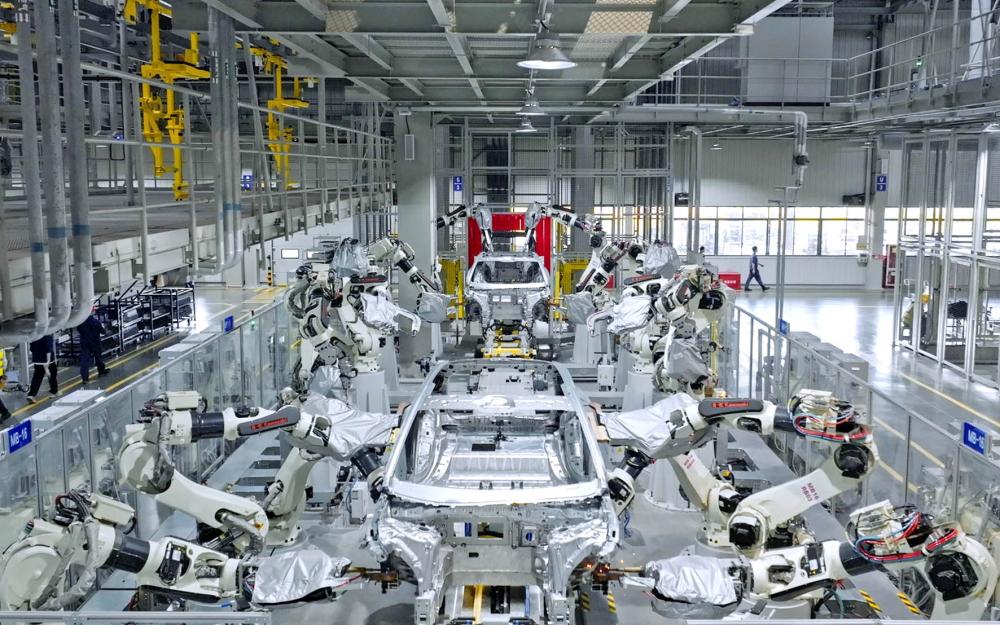
Core Insights - Extreme weather is becoming a new economic variable, with 2024 projected to be the first year to exceed the 1.5℃ target set by the Paris Agreement [1][6] - Human activities are directly linked to the significant rise in carbon dioxide concentrations and climate warming over the past century [4][5] - The energy sector is the most affected by climate change, with fossil fuel combustion accounting for over 80% of total carbon emissions [8][9] Group 1: Climate Change and Economic Impact - The global average temperature is expected to reach new highs, with 2025 potentially seeing further increases [1] - The urgency for enhanced emission reduction measures is emphasized to meet temperature control and carbon neutrality goals [6] - Climate change is influencing various industries, particularly energy, transportation, retail, and manufacturing [8][9] Group 2: Industry-Specific Impacts - The energy sector is transitioning towards clean energy as a response to climate change [8] - The transportation industry is also under pressure due to its reliance on fossil fuels, necessitating urgent transformation [9] - Retail and manufacturing sectors are adapting to changing demands driven by extreme weather, such as increased air conditioning needs during heatwaves [9] Group 3: Technological Developments - Monitoring technologies are crucial for accurately assessing carbon levels in the atmosphere and oceans [10] - Forecasting technologies need to improve to predict not only weather but also carbon changes and extreme weather events [10] - Enhanced forecasting is vital for the clean energy sector, impacting solar and wind energy utilization [10]
央企资产总额超90万亿元,现代新国企加速成长
2 1 Shi Ji Jing Ji Bao Dao· 2025-09-17 11:01
Core Insights - The central enterprises in China have shown significant growth during the "14th Five-Year Plan," with total assets increasing from less than 70 trillion yuan to over 90 trillion yuan, and total profits rising from 1.9 trillion yuan to 2.6 trillion yuan, achieving average annual growth rates of 7.3% and 8.3% respectively [1][2] - The focus on technological innovation has been pivotal, with R&D expenditures exceeding 1 trillion yuan for three consecutive years, and the establishment of 97 original technology sources and 23 innovation alliances [1][5] - The reform and restructuring of state-owned enterprises (SOEs) are set to conclude in 2025, with strategic mergers and the establishment of new central enterprises aimed at enhancing operational efficiency and resource allocation [1][8] Financial Performance - Central enterprises have improved their operational efficiency, with the operating income profit margin increasing from 6.2% to 6.7%, and labor productivity rising from 594,000 yuan to 817,000 yuan per employee annually [2] - Cumulatively, central enterprises have completed fixed asset investments totaling 19 trillion yuan from 2021 to 2024, with an average annual growth rate of 6.3% [2] Economic Contribution - Central enterprises play a crucial role in the economy, supplying approximately 80% of crude oil, 70% of natural gas, and 60% of electricity, thereby ensuring energy security and food supply [3] - They have contributed over 10 trillion yuan in taxes and transferred 1.2 trillion yuan in state-owned equity to social security funds during the "14th Five-Year Plan" [3] Technological Innovation - The innovation capabilities of central enterprises have significantly advanced, with R&D intensity increasing from 2.6% to 2.8%, and a focus on strategic emerging industries leading to an annual investment growth rate exceeding 20% [5][6] - The "AI+" initiative has been implemented across over 800 application scenarios, promoting the intelligent transformation of traditional industries and fostering the rapid development of general and industry-specific models [7] Structural Reforms - The restructuring of central enterprises is characterized by a focus on enhancing core functions and competitiveness, with 10 enterprises undergoing strategic mergers and 9 new central enterprises established [8][9] - The optimization of state-owned capital is evident, with over 70% of revenue from central enterprises coming from sectors critical to national security and public welfare [9]
高质量完成“十四五”规划丨砥砺奋进!“十四五”时期国资央企高质量发展迈出坚实步伐
Xin Hua Wang· 2025-09-17 09:26
Core Viewpoint - The central enterprises in China have made significant progress in high-quality development during the "14th Five-Year Plan" period, overcoming challenges and achieving historic accomplishments in reform and development [1]. Group 1: Operational Performance - The total assets of central enterprises increased from 68.8 trillion yuan at the end of the "13th Five-Year Plan" to 91 trillion yuan by the end of 2024, with an average annual growth rate of 7.3% [2]. - The value added and total profits generated by central enterprises during the "14th Five-Year Plan" are expected to grow by over 40% and 50%, respectively, compared to the "13th Five-Year Plan" [2]. - Key performance indicators such as labor productivity and return on net assets have shown continuous improvement [2]. Group 2: New Quality Productive Forces - Central enterprises have significantly increased their investment in strategic emerging industries, totaling 8.6 trillion yuan since the beginning of the "14th Five-Year Plan," a substantial increase compared to the "13th Five-Year Plan" [3]. - By 2024, the revenue from strategic emerging industries for central enterprises is projected to exceed 11 trillion yuan, with an 8 percentage point increase in revenue contribution over the past two years [3]. - Central enterprises have contributed over 10 trillion yuan in taxes and fees, accounting for approximately 80% of crude oil, 70% of natural gas, and 60% of electricity supply in the country [3]. Group 3: Technological Innovation - Central enterprises have prioritized technological innovation, with R&D expenditure growing at an annual rate of about 6.5%, exceeding 1 trillion yuan for three consecutive years [4]. - A total of 474 national-level R&D platforms and 8 national technology innovation centers have been established [4]. - Central enterprises have laid out 97 original technology sources in fields such as quantum computing and biotechnology, collaborating with over 800 universities and research institutions [4]. Group 4: Reform and Governance - The "14th Five-Year Plan" period has seen deepening reforms in state-owned enterprises, focusing on enhancing core functions and competitiveness [6]. - Six groups of 10 enterprises have been restructured through market-oriented methods, and new central enterprises have been established [6]. - The modern enterprise system with Chinese characteristics has been further improved, with institutionalized governance and enhanced board and management practices [6].