
生物科技

Search documents
华熙生物澄清总部搬迁传闻:消息不实
Xin Lang Cai Jing· 2025-09-19 08:45
近期,有市场消息称华熙生物拟将总部从北京迁往杭州。从华熙生物处获悉,上述传闻属于不实信息, 但华熙生物确实正在调整品牌的运营地。部分品牌运营中心未来会集中在华东地区,与华东原有的运营 团队进行合并。 ...

ETF市场日报 | 红利板块韧性凸显!多只“高弹性”ETF下周一集体上市
Sou Hu Cai Jing· 2025-09-19 07:42
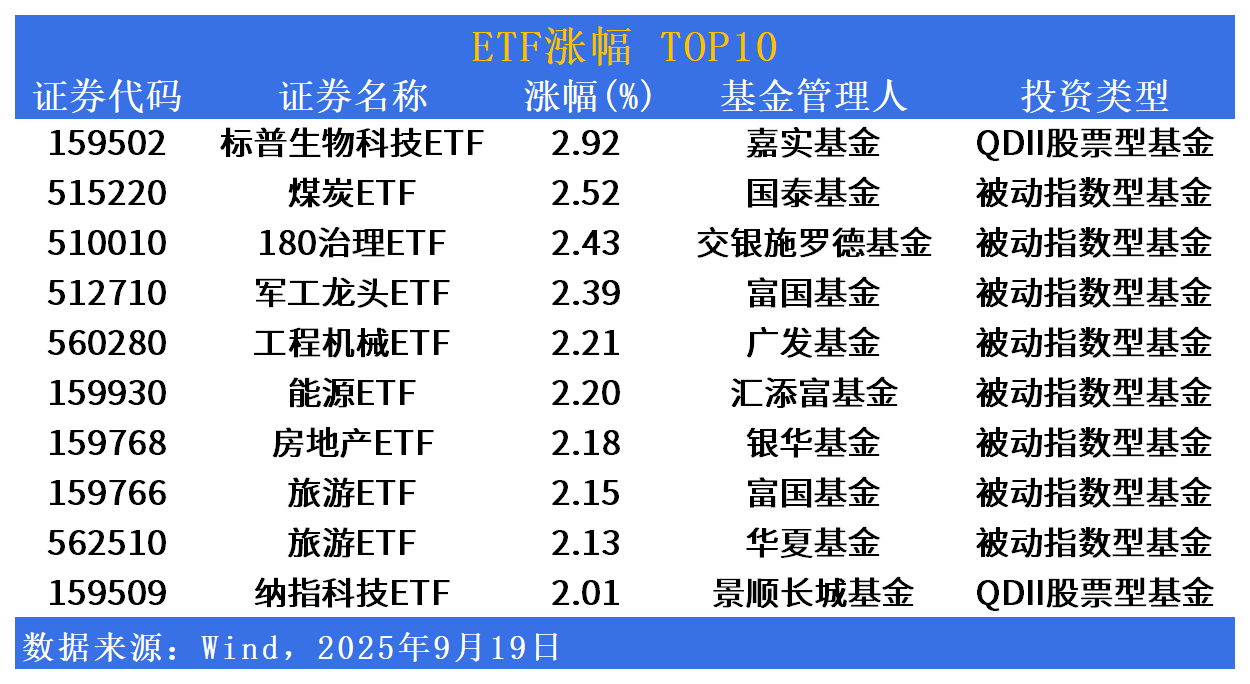
Group 1: ETF Performance - The S&P Biotechnology ETF (159502) leads with a gain of 2.92% [1] - Other top-performing ETFs include Coal ETF (515220) at 2.52%, 180 Governance ETF (510010) at 2.43%, and Military Industry ETF (512710) at 2.39% [2] Group 2: Dividend Strategy - High dividend strategies remain significantly valuable for long-term investment, with traditional high-dividend sectors like banks, coal, and utilities showing attractive valuations [2][3] - The essence of dividend strategies is to invest in mature companies with strong profitability and stable cash flows, providing consistent cash returns to investors [2] Group 3: Institutional Investment - Insurance funds and other long-term institutional investors are increasingly allocating to high-dividend assets to counter challenges from long-term interest rate declines, with significant capital expected to flow into dividend sectors by 2025 [3] Group 4: Robotics Sector - The robotics industry is experiencing a pullback, with notable interest following Elon Musk's $10 billion investment in Tesla, indicating a shift towards AI and robotics [4] Group 5: ETF Trading Activity - The Short-term Bond ETF (511360) had the highest trading volume at 32.8 billion yuan, followed by other ETFs like Silver Day Profit ETF (511880) and Benchmark National Debt ETF (511100) [5] Group 6: New ETF Launches - Upcoming launches include the Hang Seng Biotechnology ETF and the Shanghai Stock Exchange 580 ETF, which track biotechnology and small-cap indices respectively [6][8] Group 7: Sector Focus of New ETFs - The new ETFs focus on high-growth sectors such as AI software, innovative pharmaceuticals, and new energy technologies, catering to different investor risk profiles [9]

降息后如何配置?港股科技板块迎“估值与资金面”双重驱动
Sou Hu Cai Jing· 2025-09-19 01:24
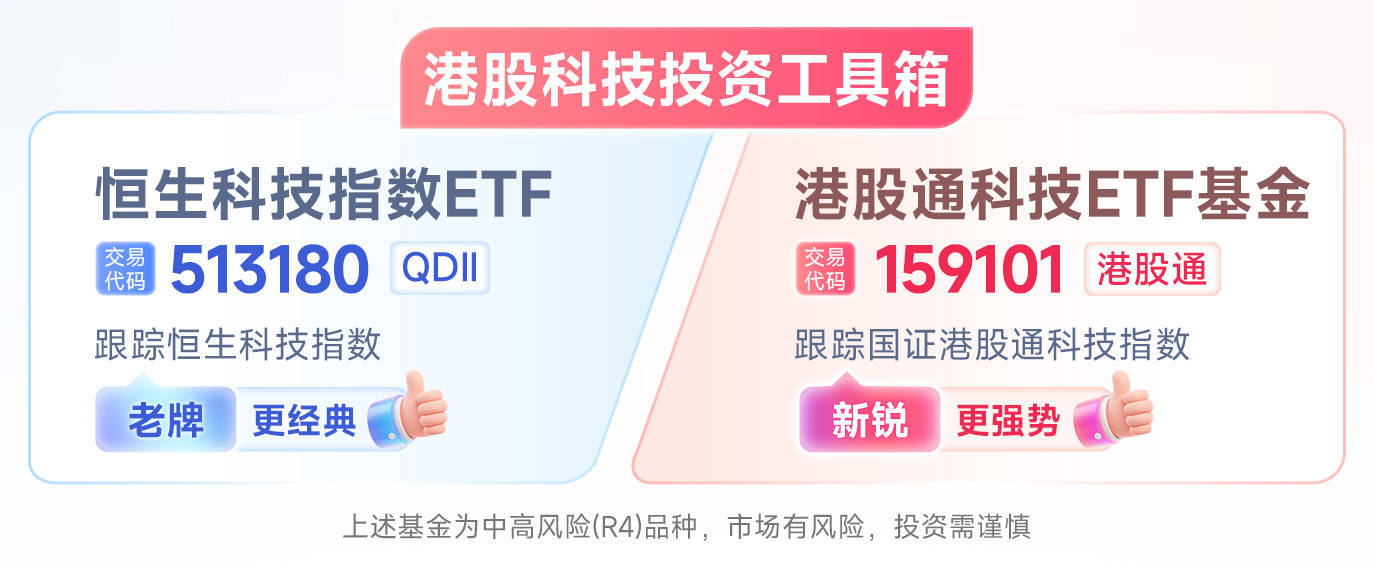
美联储降息落地,美元走弱或将推动资金回流新兴市场,港股作为外资占比较高的离岸市场,有望迎来增量资金加持,而科技板块作为流动性敏感型资产, 通常率先受益于宽松预期。 此外,降息可能刺激全球风险偏好上升,提振科技成长板块的市场情绪。科技型企业弹性和成长属性强,在宽松环境中往往能展现出更强的上涨潜力。 每日经济新闻 聚焦互联网龙头——恒生互联网ETF(513330) 利率环境转向宽松有助于降低港股科技企业的融资成本,尤其是生物科技、互联网等研发投入较高的行业,其估值折现率压力减轻,长期盈利预期有望修 复。 【港股科技相关ETF】 覆盖科技全产业链——港股通科技ETF基金(159101) ...
深圳市亚辉龙生物科技股份有限公司 关于召开2025年半年度业绩说明会的公告
Zhong Guo Zheng Quan Bao - Zhong Zheng Wang· 2025-09-19 00:26
Core Viewpoint - The company is organizing an investor briefing to discuss its 2025 half-year performance and financial indicators, allowing for interactive communication with investors [2][3]. Group 1: Meeting Details - The investor briefing is scheduled for September 29, 2025, from 15:00 to 16:00 [4]. - The meeting will take place at the Shanghai Stock Exchange Roadshow Center and will be conducted in an online interactive format [4][5]. - Participants will include the company's chairman, financial director, board secretary, and an independent director, with potential adjustments based on special circumstances [4]. Group 2: Investor Participation - Investors can participate in the briefing by logging into the Shanghai Stock Exchange Roadshow Center on the scheduled date [5]. - To enhance communication efficiency, the company is inviting investors to submit questions in advance from September 22 to September 26, 2025 [5]. - Questions can be submitted through the Roadshow Center's website or via the company's investor relations email [5][6]. Group 3: Contact Information - The contact department for inquiries is the Board Secretary Office, reachable at the provided phone number [6]. - Additional information regarding the briefing can be accessed through the Shanghai Stock Exchange Roadshow Center after the event [7].

重庆津舟生物科技有限公司成立 注册资本100万人民币
Sou Hu Cai Jing· 2025-09-18 21:55
Core Insights - Chongqing Jinzou Biotechnology Co., Ltd. has recently been established with a registered capital of 1 million RMB, indicating a focus on the biotechnology sector [1] - The company is involved in various licensed activities including the production of cosmetics, sanitary products, and disposable medical supplies, which suggests a diverse operational scope within the health and beauty industry [1] Business Scope - Licensed Projects: The company is authorized to engage in the production of cosmetics, sanitary products, and disposable medical supplies, as well as life beauty services and inspection services [1] - General Projects: The company can also conduct wholesale of cosmetics, sales of sanitary products, personal hygiene products, and internet sales (excluding items requiring licenses) [1] - Additional Activities: The company is involved in the manufacturing of daily chemical special equipment, sales of daily chemical products, and various technical services including development, consulting, and technology transfer [1]
深圳市亚辉龙生物科技股份有限公司关于召开2025年半年度业绩说明会的公告
Shang Hai Zheng Quan Bao· 2025-09-18 19:46
Core Viewpoint - The company, Shenzhen YHLO Biotech Co., Ltd., is set to hold a half-year performance briefing on September 29, 2025, to discuss its operational results and financial status for the first half of 2025, inviting investor questions in advance [2][3][4]. Group 1: Meeting Details - The performance briefing will take place on September 29, 2025, from 15:00 to 16:00 [4]. - The meeting will be held at the Shanghai Stock Exchange Roadshow Center and conducted in an interactive online format [4][5]. - Participants will include the company's Chairman, CFO, Secretary of the Board, and an independent director, with potential adjustments based on special circumstances [4]. Group 2: Investor Participation - Investors can participate in the briefing by logging into the Shanghai Stock Exchange Roadshow Center on the scheduled date [5]. - To enhance communication efficiency, the company is collecting questions from investors from September 22 to September 26, 2025, allowing them to submit inquiries via the Roadshow Center or the company's investor relations email [5][6]. - After the briefing, investors can access the meeting's details and main content through the Roadshow Center [6].
国际资本加仓中国资产 科技与创新药成重点领域
Zheng Quan Ri Bao· 2025-09-18 16:21
Group 1 - Shanghai Weimeng Enterprise Development Co., Ltd. received a subscription of 200 million USD from Wujing Capital, which will be primarily used for AI investment and international expansion [1] - The funds will be allocated to the integration and application of AI in SaaS, upgrading AI technology infrastructure to enhance computing power and storage capacity, and actively promoting overseas business development [1] - This investment reflects a trend of international capital institutions increasing their acquisition of Chinese assets, with notable investments from Singapore sovereign wealth fund and major banks in August [1] Group 2 - In the second half of this year, international capital's willingness to allocate to Chinese assets has significantly increased, with foreign investors injecting 44.8 billion USD into emerging market stocks and bonds in August, the highest in nearly a year [2] - Approximately 39 billion USD of this investment flowed into the Chinese market, with technology and innovative pharmaceuticals being key areas of foreign interest [2] - Foreign ownership in Hong Kong's information technology companies increased by 20% and in biotechnology by 29% as of September 18 [2] Group 3 - The investment value of Hong Kong stocks, particularly in the technology sector, remains attractive due to the continuous marginal improvement in China's economic fundamentals and the strengthening global interest rate cut expectations [3] - There is strong growth demand in related industries such as optical modules, optical communications, and liquid cooling, driven by optimistic performance guidance from overseas cloud service providers [3] - The development trend of China's chip industry is also promising, with both upstream and downstream sectors maintaining high performance growth expectations [3]
外国投资者重返中国资本市场
Guo Ji Jin Rong Bao· 2025-09-18 15:25
Group 1 - The article highlights a renewed interest from international investors in the Chinese stock market, driven by advancements in artificial intelligence, semiconductors, and biotechnology, alongside a more accommodative monetary policy and a temporary easing of the US-China trade tensions [1][2] - The Shanghai Composite Index reached a ten-year high, and the Hong Kong stock market hit a four-year high, reflecting improved market sentiment due to these factors [2] - Investment firms, such as Polar Capital, are increasing their allocations to Chinese assets, with plans to raise their exposure from 20% to over 30% in emerging market portfolios by the end of 2024 [2][9] Group 2 - A significant increase in inquiries about Chinese funds has been noted, with about 30 clients consulting investment firms this year, contrasting sharply with the limited interest in 2023 [3] - HSBC's research indicates that the proportion of Chinese assets in global emerging market funds is expected to rise from 22.5% in August 2024 to 28% by August 2025, marking China as a significant growth area in emerging market allocations [4] - Goldman Sachs reported a substantial influx of funds into the Chinese A-share market, indicating the fastest growth in years for hedge fund investments [5][7] Group 3 - The current foreign ownership of Chinese onshore stocks is only 3% of the total market capitalization, the lowest among major global markets, suggesting a potential influx of $200 billion if this ratio returns to its peak of 5% [9] - If institutional ownership in Chinese stocks increases from 14% to 50%, it could attract approximately $4.5 trillion in new investments, and up to $6 trillion if it reaches the developed market average of 59% [9] - Schroders and other investment firms express optimism about the Chinese A-share market, citing stable economic data and reasonable stock valuations as key factors for investment [10]

复星医药在深圳投资成立生物科技新公司
Zheng Quan Shi Bao Wang· 2025-09-18 06:05
Group 1 - Recently, Fosun Kerry (Shenzhen) Biotechnology Co., Ltd. was established with a registered capital of 100 million yuan [1] - The legal representative of the new company is Chen Xingrong [1] - The business scope includes medical research and experimental development, cell technology research and application, human stem cell technology development and application, and human genetic diagnosis and treatment technology development [1] Group 2 - The company is wholly owned by Fosun Kerry (Shanghai) Biotechnology Co., Ltd., which is a subsidiary of Fosun Pharma [1]
恒瑞医药孙飘扬布局生物科技,新公司瑞利源成立
Qi Cha Cha· 2025-09-18 06:03
(原标题:恒瑞医药孙飘扬布局生物科技,新公司瑞利源成立) 企查查APP显示,近日,上海瑞利源生物科技有限公司成立,法定代表人为胡宏成,注册资本为1000万 元,经营范围包含:人体基因诊断与治疗技术开发;人体干细胞技术开发和应用;第三类医疗器械经 营;电子产品销售等。企查查股权穿透显示,该公司由恒瑞源正(上海)生物科技有限公司全资持股, 恒瑞医药(600276)孙飘扬担任后者董事长职务。 ...
