
水泥

Search documents
中国“反内卷”正重塑市场
Zhong Guo Xin Wen Wang· 2025-10-16 00:56
Core Viewpoint - The newly revised Anti-Unfair Competition Law in China aims to address "involution" competition, which has led to unhealthy market practices and is expected to reshape industry dynamics [1][5][7] Group 1: Policy Implementation - The revised Anti-Unfair Competition Law officially took effect on October 15, marking a significant step in regulating "involution" competition [1] - Since the beginning of the year, China has introduced multiple policies targeting "involution" [2] - The 20th Central Financial Committee emphasized the need to rectify low-price and disorderly competition, particularly in industries like solar energy and automotive [3] Group 2: Industry Impact - The "involution" competition has disrupted market order, leading to reduced product quality and stifled innovation, ultimately affecting industry growth [3][4] - The new law includes provisions for data rights protection and prohibits platforms from forcing merchants to sell below cost, aiming to restore fair competition [5] - As a result of ongoing "anti-involution" measures, industrial profits showed a significant recovery, with a 20.4% increase in August compared to a 1.5% decline in July [6] Group 3: Future Outlook - The "anti-involution" measures are expected to lead to a more stable market environment, with industries like automotive moving towards reduced price wars and more balanced promotions [6] - The restructuring of competition in the photovoltaic sector is anticipated, with significant reductions in capital expenditures and production among leading companies [6] - The enforcement of the new law requires collaboration among administrative, judicial, and industry organizations to create a comprehensive governance system [7]
多地继续推涨水泥价格 水泥盈利弹性逐步释放(附概念股)
Zhi Tong Cai Jing· 2025-10-16 00:25
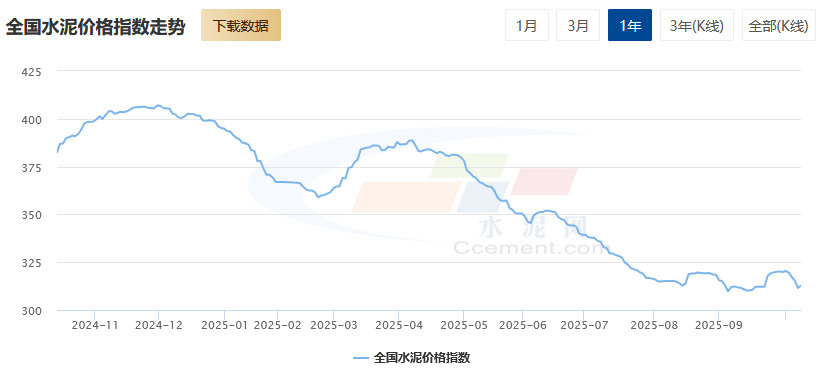
Group 1 - The core viewpoint is that the cement industry is facing significant operational pressure due to low prices, despite a mild recovery in market demand and ongoing production adjustments by companies [1][2] - To improve profitability, cement companies are actively raising prices, with some leading firms in Zhejiang planning to increase prices by 30 yuan/ton starting October 15 [2] - The national average cement price in September was 338 yuan/ton, showing a slight month-on-month increase, while the gross profit per ton for cement companies was 58 yuan, indicating a positive trend in the industry [2][3] Group 2 - In the first half of 2025, the cement sector achieved revenues of 118.1 billion yuan, a year-on-year decrease of 7.7%, but net profit increased significantly by 1487% to 5.2 billion yuan [3] - The cement industry's fundamentals may have reached a turning point, with supply-side production restrictions and demand-side infrastructure support expected to lead to gradual improvements in the second half of the year [3] - Related Hong Kong-listed companies in the cement and building materials sector include China National Building Material, Conch Cement, Huaxin Cement, China Resources Cement Technology, and Western Cement [4]
朱少醒、杨锐文等知名基金经理调仓布局“反内卷”方向
Shang Hai Zheng Quan Bao· 2025-10-16 00:16
Group 1 - Public funds are increasingly optimistic about "anti-involution" concept stocks, with notable investments in companies like Huaxin Cement and Qibin Group [1][2] - Huaxin Cement's major shareholders include notable fund managers, with Fu Guo Tian Hui Select Growth Fund significantly increasing its holdings from 500,000 shares to 9 million shares, reflecting a market value increase from 5.92 million to 167 million yuan [1] - Huaxin Cement's stock price has surged over 80% year-to-date as of October 15, indicating strong market performance [1] Group 2 - Qibin Group has seen substantial institutional interest, with Invesco Great Wall New Energy Industry Fund increasing its holdings by 5.57 million shares, while GF Advanced Manufacturing Fund entered the top ten shareholders [2] - China Life Insurance's products have increased their stake in CIMC Group by 223,000 shares, reflecting a growing interest in companies benefiting from the "anti-involution" policy [2] - The "anti-involution" policy is expected to reshape the industry ecosystem, with significant implications for sectors like new energy, cement, and glass [2] Group 3 - JinkoSolar, a leading company in the photovoltaic sector, is undergoing industry chain integration to balance supply and demand for silicon materials, aiming to stabilize prices [3]


港股概念追踪|多地继续推涨水泥价格 水泥盈利弹性逐步释放(附概念股)
智通财经网· 2025-10-16 00:14
Group 1 - The core viewpoint is that the cement industry is facing significant operational pressure due to low prices and fluctuating demand, prompting companies to raise prices to improve profitability [1][2]. - The Ministry of Industry and Information Technology, along with other departments, has issued a plan to stabilize growth in the building materials industry, which includes strict control over cement and glass production capacity [1]. - In Zhejiang, there has been a slight recovery in market demand, but prices remain low, leading to increased operational pressure for companies [1]. Group 2 - In September, the national average cement price was 338 yuan/ton, with a month-on-month increase of 2 yuan/ton, and the gross profit per ton for cement companies was 58 yuan, up by 3 yuan [2]. - The cement sector reported revenues of 118.1 billion yuan in the first half of 2025, a year-on-year decrease of 7.7%, but net profit increased significantly by 1487% to 5.2 billion yuan [2]. - Analysts believe that the cement industry's fundamentals may have reached a turning point, with expectations of gradual improvement in the second half of the year due to supply-side restrictions and demand support from infrastructure projects [2]. Group 3 - Related Hong Kong-listed companies in the cement and building materials sector include China National Building Material, Conch Cement, Huaxin Cement, China Resources Cement Technology, and Western Cement [3].
西部水泥(2233.HK):水泥出海翘楚 非洲布局广泛
Ge Long Hui· 2025-10-15 19:43
Group 1 - The company is a leader in overseas cement production, primarily in sub-Saharan Africa, and is recognized as a pioneer among Chinese cement enterprises venturing abroad [1] - The company has initiated an "overweight" rating with projected net profits for 2025-2027 at 1.143 billion, 1.422 billion, and 2.015 billion yuan respectively, with EPS of 0.21, 0.26, and 0.37 yuan [1] - The company has a strong overseas strategy, having established operations in Mozambique, the Democratic Republic of the Congo, Ethiopia, and Uzbekistan by the end of 2024 [2] Group 2 - The domestic cement demand has been declining since 2022, leading to a significant drop in production and prices, making overseas expansion a necessity for the company [2] - The company has sold its Xinjiang assets for 1.65 billion yuan to alleviate debt pressure and support its overseas expansion projects [2] - The company’s overseas gross profit per ton is significantly higher at 288 yuan/ton compared to 42 yuan/ton domestically, indicating a strong focus on high-margin international operations [2]
知名基金经理调仓布局“反内卷”方向
Shang Hai Zheng Quan Bao· 2025-10-15 18:33
Group 1 - Public funds are increasingly optimistic about "anti-involution" concept stocks, with notable investments in companies like Huaxin Cement and Qibin Group [1][2] - Huaxin Cement's major shareholders include notable fund managers, with Fu Guo Tian Hui Select Growth Fund significantly increasing its holdings from 500,000 shares to 9 million shares, reflecting a market value increase from 5.92 million to 167 million yuan [1] - Huaxin Cement's stock price has surged over 80% year-to-date as of October 15 [1] Group 2 - Qibin Group's major shareholders include fund managers from Invesco and GF Fund, with significant increases in their holdings, indicating strong institutional interest [2] - The "anti-involution" policy is benefiting industries such as cement and glass, with a government directive prohibiting new production capacity in these sectors [2] - Recent institutional research indicates a focus on "anti-involution" companies across various sectors, including steel, coal, chemicals, and photovoltaics, with 31 companies being investigated [2] Group 3 - JinkoSolar, a leading company in the photovoltaic sector, is undergoing industry chain integration to balance supply and demand by eliminating outdated production capacity [3]
最高上调60元/吨!多地继续推涨水泥价格
Xin Lang Cai Jing· 2025-10-15 16:54
Core Viewpoint - The cement industry is facing significant operational pressure due to low prices and weak market demand, prompting companies to increase cement prices to improve profitability [1][7]. Regional Summaries Zhejiang - Market demand in Zhejiang is slowly recovering, with some leading companies announcing a price increase of 30 yuan/ton for various types of cement starting October 15 [3]. - Previous price increases have returned to pre-increase levels, maintaining low price operations [3]. Jiangsu - After the high-temperature weather subsided, construction progress improved, leading to a positive trend in terminal demand [5]. - Some leading companies in Jiangsu announced a price increase of approximately 30 yuan/ton for all types of cement starting October 15, while others are still observing the market [5]. Guangxi - The market demand in Guangxi has shown slight recovery, and some companies have alleviated inventory pressure due to staggered production [6]. - Leading companies in Guangxi announced a price increase of 30 yuan/ton starting October 13, with expectations for other companies to follow suit [6]. Hunan - In Hunan, traditional peak season demand and continued staggered production have led to increased price increase intentions among companies [8]. - Mainstream companies in the Changsha-Zhuzhou-Xiangtan area announced a price increase of 30 yuan/ton starting October 11, with surrounding areas following suit [8]. Henan - In Henan, cement prices have been fluctuating frequently, with leading companies announcing a price increase of 30 yuan/ton on October 12 [9]. Shaanxi - In Shaanxi, multiple companies announced a price increase of 60 yuan/ton on October 11 due to rising raw material costs [11]. - Despite the optimism regarding the price increase, the overall construction market demand remains insufficient, and the actual implementation of the price increase is yet to be observed [11].

材料:供需和价格展望 - 向光而行、问道周期
2025-10-15 14:57
Summary of Key Points from Conference Call Records Industry Overview - **Copper Industry**: Global copper supply is expected to decrease by nearly 500,000 tons due to the suspension of the Efemçukuru Kakuva project and production cuts from Freeport, exacerbating market tightness [1][3][4]. Domestic demand is weak overall, but sectors like electricity, home appliances, and automobiles account for 70% of demand, with expectations for recovery in the electricity sector in Q4 [1][3]. - **Gold Market**: Gold prices have surged by 50% this year, driven by a weaker dollar, inflationary pressures, and geopolitical risks. Central banks continue to increase their gold holdings, although the pace is expected to slow in the first half of 2025 [5][6][7]. - **Infrastructure Investment**: Infrastructure investment has seen a cumulative year-on-year growth of 5.4% from January to August 2025, with expectations for a boost in Q4 due to the construction peak and major project launches [8][9][10]. - **Cement Industry**: The cement industry is experiencing production contraction and weak demand, with a year-on-year decline of 6.21% in production since August 2025. However, an increase in infrastructure demand may support cement usage in Q4 [11][12][13]. Key Insights and Arguments - **Copper Price Outlook**: The outlook for copper prices remains positive due to supply constraints and better-than-expected demand. The anticipated price range for copper by 2026 is between $12,000 and $14,000 [3][4]. - **Gold Market Dynamics**: The increase in gold prices is attributed to macroeconomic factors and a growing preference for gold as a safe-haven asset. Central banks have significantly increased their gold purchases since 2022, with China accounting for about 20% of global increases [5][6]. - **Infrastructure Investment Trends**: The fourth quarter is expected to see a recovery in infrastructure investment, supported by significant project funding and the issuance of special bonds [8][10]. - **Cement Price Trends**: The cement industry is implementing anti-involution policies to stabilize growth, which may lead to a price increase in Q4 due to improved demand from infrastructure projects [12][13]. Additional Important Points - **Steel Industry Challenges**: The steel industry faces environmental cost pressures and total carbon emissions control, which may lead to the exit of high-cost steel mills and promote industry consolidation [2][15][16]. - **Iron Ore Supply and Price Trends**: Iron ore supply is expected to increase in Q4, with significant growth in imports noted in September. However, if demand for iron and steel declines, raw material prices may face downward pressure [23][27]. - **Black Metal Market Outlook**: The black metal market is influenced by both supportive policies and weak demand from real estate and manufacturing sectors, leading to a cautious outlook for Q4 [20][21][24]. - **Cement Industry Future Expectations**: The cement industry is expected to face weak overall demand in 2026, with infrastructure projects providing some support. Companies with strong supply capabilities in regions like Xinjiang and Tibet are seen as having investment value [13]. This summary encapsulates the critical insights and trends across various industries, highlighting potential investment opportunities and risks.
非洲水泥专家交流
2025-10-15 14:57
Summary of the African Cement Industry Conference Call Industry Overview - The African cement market is highly competitive, featuring local large private enterprises, restructured state-owned enterprises, established multinational companies, and emerging investors, with overall profitability greater than in domestic markets [1][3] - Chinese companies are actively entering the African cement market, with Huaxin Cement and Western Cement making swift decisions and gaining advantages, while Conch Group and China National Building Material are slower in their investment progress [1][4] Key Insights and Arguments - Over the next 5-10 years, African cement prices and profitability are expected to compress due to the weakening trade price advantage of local companies, declining raw material and logistics costs, and lower amortization costs for large production lines from Chinese enterprises [1][5] - Dangote Cement, as a leading local private enterprise, demonstrates superior management and profitability compared to Chinese companies and established multinationals, with its pricing system and customer resource management being key advantages [1][5] - The Nigerian cement market is dominated by Dangote, with a competitive landscape and slightly declining prices; Ethiopia shows strong demand but faces overcapacity risks; Tanzania serves as an important export base in East Africa with stable prices; Mozambique benefits from mineral resources and is experiencing rapid growth [1][6] Market Dynamics - The overall supply-demand situation in the African cement market has seen rapid growth in capacity, output, and demand over the past decade, with significant regional differences in development levels [3] - Local companies maintain high prices through trade margins and government regulations, but these prices are expected to decline as capacity increases [5] - The actual capacity utilization rate in Africa is approximately 50%, attributed to insufficient power supply, raw material mismatches, logistics issues, and lower management levels [1][26] Competitive Landscape - In Nigeria, the cement market is led by five major companies, including Dangote, Huaxin, BOA, IBEITO, and Nigeria United Company, with an expected production capacity of 56.5 million tons in 2024 [7] - The average ex-factory price of cement in Nigeria is projected to be around $50 in the first half of 2025, with Dangote's prices for 50 kg bags at approximately 10,000 Naira ($6.06) [7][8] - Ethiopia's largest cement producer, Sinoma, has a total capacity of 6.3 million tons, but actual sales are only between 8-8.5 million tons, indicating underutilization [9] Future Outlook - The future price trends in the African cement market are expected to stabilize or even rise as production and sales balance improves, despite current low prices [22] - Long-term demand growth is anticipated in East, West, and Central Africa due to large population bases and government-led economic development [23][24] - Chinese enterprises face challenges in North Africa due to higher management and customization service requirements, which are not their strengths [25] Additional Insights - The investment costs for cement plants in Africa are significantly higher than in domestic markets, often ranging from 100% to 200% more, primarily due to high land and construction costs [34] - Dangote's operational efficiency and cost control are exemplary, making it a benchmark for other companies in the region [32] - The uneven distribution of limestone and coal resources across Africa impacts cost structures and investment decisions [29][30]
中新网评:中国“反内卷”正重塑市场
Zhong Guo Xin Wen Wang· 2025-10-15 14:02
Core Viewpoint - The newly revised Anti-Unfair Competition Law in China aims to address "involution" competition, which has led to unhealthy market practices and is expected to reshape industry dynamics [1][5][7] Group 1: Policy and Regulatory Actions - The Chinese government has been actively implementing "anti-involution" policies throughout the year to combat low-price and disorderly competition [2] - The Central Economic Committee emphasized the need to rectify chaotic competition in various sectors, including solar energy and automotive industries, and has engaged with relevant stakeholders to promote rational competition [3] - The revised Anti-Unfair Competition Law introduces provisions to protect data rights and prohibits platforms from forcing merchants to sell below cost, aiming to restore fair competition [5] Group 2: Industry Impact and Economic Indicators - The implementation of anti-involution measures has shown positive effects, with industrial profits in August rising by 20.4%, a significant recovery from a 1.5% decline in July [6] - The solar industry is expected to see a restructuring of competition by mid-2025, with major lithium mines halting operations and significant reductions in capital expenditures among leading solar glass companies [6] - The automotive market is transitioning towards a more stable environment, with reduced price cuts and promotions as a result of the anti-involution wave [6] Group 3: Long-term Strategy and Collaboration - The fight against "involution" competition is described as both a challenging and ongoing battle, requiring collaboration among government agencies, judicial bodies, industry organizations, and enterprises to establish a comprehensive governance system [7]