美妆

Search documents
业绩增速放缓,珀莱雅海外市场寻增
Bei Jing Shang Bao· 2025-08-27 11:49
Core Viewpoint - The domestic beauty brand Proya has reported revenue and net profit growth for the first half of 2025, but the growth rate is slowing compared to previous years, indicating potential challenges ahead [2][3]. Financial Performance - Proya achieved revenue of 5.362 billion yuan, a year-on-year increase of 7.21%, and a net profit of 799 million yuan, up 13.8% [2]. - In comparison, the revenue and net profit growth rates for the first half of 2024 were 37.9% and 40.48%, respectively, while in 2023, they were 38.12% and 68.21% [2]. Brand Performance - The main brand, Proya, which is the largest revenue source, experienced a decline in revenue for the first time, reporting 3.979 billion yuan, a slight decrease of 0.08% year-on-year [2]. - In the same period of 2024, the single brand revenue growth rate was 37.67% [2]. Sales Strategy and Expenses - As overall performance slows and the main brand stagnates, there are indications that Proya's previous strategy of "traffic for sales" is becoming ineffective [3]. - Sales expenses have been increasing, with 2.786 billion yuan in 2022 (43.63% of revenue), 3.972 billion yuan in 2023 (44.61%), and 5.161 billion yuan in 2024 (47.88%) [3]. International Expansion - In response to slowing growth, Proya is focusing on international markets and announced plans to list in Hong Kong to enhance its overseas financing capabilities [3]. - The company aims to accelerate its international strategy and improve competitiveness through this move [3]. Management Changes and Strategic Initiatives - Following the appointment of a new general manager with international beauty industry experience, Proya has initiated significant management changes [4]. - The establishment of a European innovation center in Paris signals Proya's commitment to international market expansion [4]. - Proya has set a "Double Ten" strategy to rank among the top ten global cosmetics companies within the next decade and plans to pursue overseas acquisitions, particularly in baby care, fragrance, and men's skincare [4].


加入会员前,消费者在想什么?
3 6 Ke· 2025-08-27 11:28
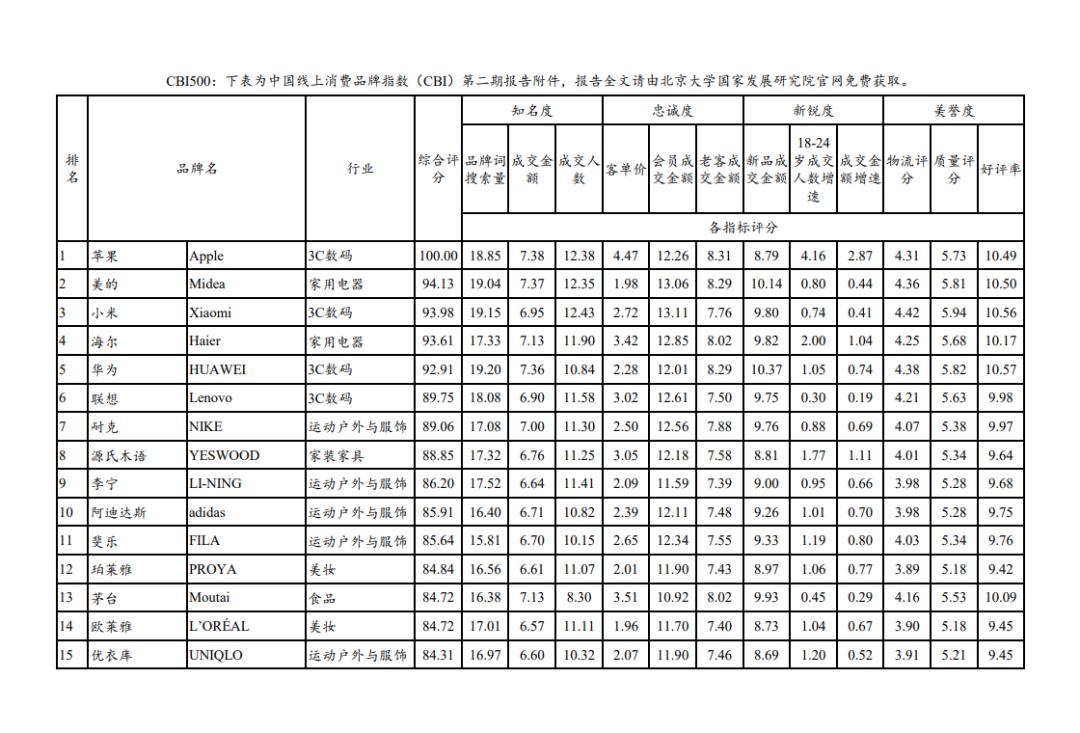
Core Insights - The fashion industry is characterized by intense competition, with fast fashion brands focusing on rapid product turnover, domestic brands emphasizing design and cost-effectiveness, and high-end brands promoting a lifestyle approach [1][2] - The high return rates in the industry highlight the importance of member systems for brands to retain core customers, making membership a standard feature across the sector [2][3] Membership System Importance - The effectiveness of a brand's membership system can determine whether it serves as a short-term promotional tool or a long-term growth engine [3] - The "Global Brand China Online 500 Strong List" released by Peking University indicates that member transaction amounts are crucial for understanding consumer behavior and brand loyalty [3][4] Consumer Behavior and Quality - Quality is identified as the core factor influencing consumers to join and remain in a brand's membership program, with strong correlations between quality ratings and member transaction amounts [10][12] - High-quality products lead to increased consumer satisfaction, which in turn enhances member loyalty and repeat purchases [14][15] Impact of Promotions - Major promotional events like the 618 shopping festival have evolved from mere sales events to opportunities for brands to solidify their membership assets [6][8] - The correlation between member transaction amounts and overall sales during promotional periods underscores the significance of a well-developed membership system [6][8] Brand Case Studies - The brand "Jiaxia" has successfully implemented a tiered membership system that encourages repeat purchases through a structured growth mechanism, enhancing user engagement and loyalty [23][24] - Nike's membership system focuses on providing comprehensive experiences around sports, fostering a sense of community and personal growth among members, which strengthens emotional ties to the brand [25][26] Conclusion - Membership systems are becoming essential growth engines for brands, particularly during major promotional events, as they help convert one-time buyers into long-term customers [27][28]


9退30进!美妆IPO风向变了
Sou Hu Cai Jing· 2025-08-27 10:24
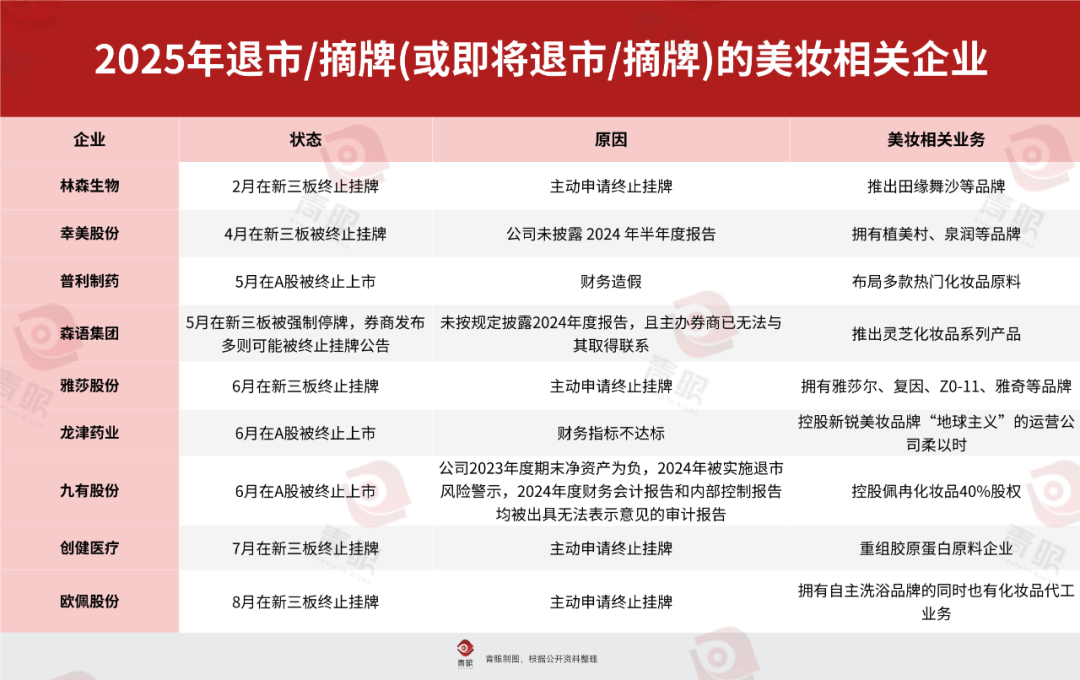
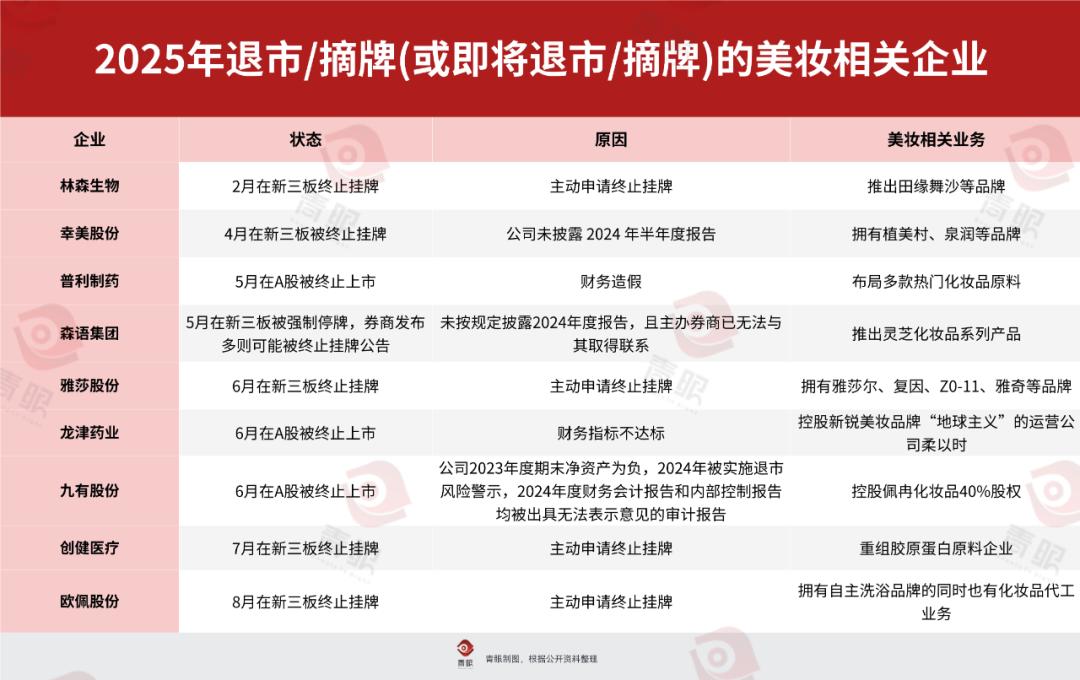
Core Viewpoint - The Chinese beauty industry is experiencing a significant capital wave, with a simultaneous rise in IPO enthusiasm and an increasing trend of delistings, indicating a "ice and fire" scenario in the capital market [1][10][15] Group 1: IPO Activity - As of August 26, 2023, Proya Cosmetics Co., Ltd. announced plans to issue H-shares and list on the Hong Kong Stock Exchange, marking the fourth beauty-related company to initiate an "A+H" dual listing this year [1] - Three beauty-related companies have successfully gone public this year, while at least 30 others are competing for capital market entry, covering various segments such as brands, raw materials, and operations [10][13] Group 2: Delisting Trends - Since 2025, at least nine beauty-related companies have faced delisting or termination risks, with five companies being forcibly removed from the market due to financial misconduct or information disclosure violations [2][4][5] - Companies like Puli Pharmaceutical and Jiu You Co. were forced to delist due to financial fraud, with Puli falsely inflating revenue by 1.029 billion yuan and profits by 669 million yuan over two years [4] - Other companies, such as Xingmei Co. and Senyu Group, faced delisting due to failure to disclose required financial reports, highlighting the increasing regulatory scrutiny in the capital market [5] Group 3: Strategic Withdrawals - Four companies, including Lin Sen Biological and Yasha Co., voluntarily chose to delist, citing reasons such as the high cost of maintaining a public listing and the need for greater operational flexibility [6][8] - The decision to withdraw from the market is often influenced by the perception that the costs and constraints of being listed outweigh the benefits, especially when valuations are low [8][9] Group 4: Market Dynamics - The beauty industry is undergoing a transformation, moving away from rapid growth driven by marketing and traffic to a focus on sustainable development and intrinsic value [15] - The capital market is conducting a "pressure test" and "value reassessment" of the industry, favoring companies with solid product capabilities, clear brand recognition, and sustainable profitability [14][15]
珀莱雅筹划港股上市,上半年业绩增速放缓
Nan Fang Du Shi Bao· 2025-08-27 08:28
Core Viewpoint - Proya plans to issue overseas listed shares (H-shares) and list on the Hong Kong Stock Exchange to accelerate its international strategy and enhance financing capabilities, aiming to become the only domestic beauty brand listed in two locations [2]. Financial Performance - For the first half of 2025, Proya reported revenue of 5.362 billion yuan, a year-on-year increase of 7.21% [3]. - The total profit for the same period was 998 million yuan, reflecting an increase of 11.43% year-on-year [3]. - The net profit attributable to shareholders was 799 million yuan, up 13.8% compared to the previous year [3]. - The net cash flow from operating activities surged by 95.34% to approximately 1.293 billion yuan [3]. Segment Performance - In the skincare segment, revenue reached 4.199 billion yuan, showing a slight increase year-on-year [4]. - The color cosmetics segment generated 837 million yuan, with a significant growth rate of 25.79% [4]. - The hair care category saw a remarkable increase in revenue to 320 million yuan, up 131.25% year-on-year, marking it as a new growth line for the company [4]. Company Background - Proya was founded in 2003 in Hangzhou and specializes in the research, production, and sales of cosmetic products [4]. - The company owns several brands, including Proya, Caitang, Off&Relax, and others, covering various beauty sectors such as skincare, color cosmetics, and hair care [4].

研报掘金丨东方证券:维持珀莱雅“买入”评级,中报展现多品牌韧性
Ge Long Hui A P P· 2025-08-27 08:00
Core Viewpoint - The report from Dongfang Securities indicates that Proya's mid-year results met expectations, demonstrating the company's operational resilience as a multi-brand group [1] Financial Performance - In the first half of the year, Proya achieved a revenue growth of 7% and a net profit growth of 14% year-on-year, despite increasing competition in the beauty industry and a relatively large operational scale [1] - The main brand's revenue remained stable year-on-year, while the color cosmetics brand Caitang grew by 21%, the hair care brand OR experienced a significant growth of 103%, and the small brand Original Pot saw a rapid increase of 80%, collectively driving the company's steady growth [1] Cash Flow and Shareholder Returns - The quality of earnings remained strong, translating into better cash dividend returns for investors, with net cash from operating activities increasing by 95% year-on-year [1] - The mid-term inventory turnover days decreased by approximately 14 days year-on-year, indicating improved operational efficiency [1] - The company plans to distribute a dividend of 0.8 yuan per share, reflecting its commitment to shareholder returns [1] Future Outlook - Current market concerns focus on the future growth rate of the main brand; however, it is believed that with the gradual integration of the new R&D team and system, the main brand is expected to regain its growth momentum [1]

珀莱雅(603605):夯实品牌,行稳致远
Ping An Securities· 2025-08-27 05:42
Investment Rating - The investment rating for the company is "Recommended" [1][10] Core Views - The company achieved revenue of 5.362 billion yuan in the first half of 2025, representing a year-on-year increase of 7.21%, with net profit attributable to shareholders increasing by 13.8% to 799 million yuan [4] - The company is focusing on brand enhancement and market responsiveness, leveraging its R&D capabilities to optimize its core product matrix and explore overseas market opportunities [8] - The company plans to issue H shares and list on the Hong Kong Stock Exchange, aiming for a broader market presence after reaching a revenue milestone of 10 billion yuan in 2024 [8] Financial Summary - Revenue projections for 2025-2027 are 18.05 billion yuan, 21.09 billion yuan, and 24.29 billion yuan respectively, with corresponding P/E ratios of 20, 17, and 15 times [8] - The company reported a gross margin of 73.38% in the first half of 2025, an increase of 3.56 percentage points year-on-year, and a net profit margin of 15.41% [7] - The company’s total assets are projected to grow from 75.30 billion yuan in 2024 to 125.87 billion yuan by 2027 [9]
长沙昕莹美妆有限公司成立 注册资本10万人民币
Sou Hu Cai Jing· 2025-08-27 05:22
天眼查App显示,近日,长沙昕莹美妆有限公司成立,法定代表人为向芳艳,注册资本10万人民币,经 营范围为一般项目:化妆品零售;化妆品批发;珠宝首饰零售;美发饰品销售;卫生用品和一次性使用医疗 用品销售;个人卫生用品销售;服装服饰零售;鞋帽零售;箱包销售;工艺美术品及收藏品零售(象牙及其制 品除外);互联网销售(除销售需要许可的商品);日用杂品销售;日用品销售;日用百货销售;日用化学产 品销售(除依法须经批准的项目外,自主开展法律法规未禁止、未限制的经营活动)。 ...
珀莱雅2025年半年报:中期分红比例创新高 赴港上市全球化再提速
Zheng Quan Shi Bao Wang· 2025-08-27 05:13
Core Insights - The company reported a revenue of 5.362 billion yuan, a year-on-year increase of 7.21%, and a net profit of 799 million yuan, up 13.80% [2] - The operating cash flow surged by 95.34% to 1.293 billion yuan, indicating strong financial health [2] - The company announced a record interim dividend of 8 yuan per 10 shares, totaling 315 million yuan, reflecting a commitment to shareholder returns [4] Revenue and Profitability - The hair care segment saw a remarkable revenue increase of 131.25%, while the beauty and makeup category grew by 25.79%, driving overall revenue growth [3] - The main brand, Proya, generated 3.979 billion yuan, accounting for 74.27% of total revenue, maintaining its leading position in major e-commerce channels [3] - The net profit margin improved to 15.41%, and the gross margin increased by 3.56 percentage points to 73.38%, showcasing effective cost control and product optimization [3] Dividend and Capital Strategy - The proposed interim dividend represents nearly 40% of the net profit, marking the highest dividend payout ratio since the company's listing [4] - The company is preparing for an H-share listing in Hong Kong to enhance international financing, governance, and brand recognition, aiming to support global expansion [4] Multi-Brand Strategy - The company’s multi-brand strategy is yielding results, with the brand Caitang achieving 705 million yuan in revenue, a 21.11% increase [5] - The hair care brand Off&Relax reported a revenue of 279 million yuan, up 102.52%, indicating strong market performance [6] - Other brands like Yuefuti and Yuanse Bota also showed significant growth, contributing to a diversified growth path for the company [6] R&D and Digital Transformation - The company applied for 35 new patents in the first half of 2025, emphasizing its commitment to R&D [7] - Collaborations with Ant Group for smart customer service and upgrades to digital management systems are underway, enhancing data-driven decision-making [7] Future Outlook - The company plans to accelerate production capacity and the H-share listing process while focusing on high-end domestic markets and overseas expansion [8] - The H-share listing is expected to open international financing opportunities, positioning the company for greater competitiveness in the global beauty market [8]
9退30进,美妆IPO风向变了
3 6 Ke· 2025-08-27 03:15
Core Viewpoint - The Chinese beauty industry is experiencing a dual phenomenon of heightened IPO enthusiasm alongside an increasing wave of delistings, indicating a significant transformation in the capital market dynamics [1][10][15]. Group 1: IPO Activity - As of August 26, 2023, Proya Cosmetics Co., Ltd. announced plans to issue H-shares and list on the Hong Kong Stock Exchange, marking the fourth beauty-related company to initiate an "A+H" dual listing this year [1]. - This year, three beauty-related companies have successfully gone public, while at least 30 others are competing for capital market entry, covering various segments such as brands, raw materials, and agency operations [1][10]. - The Hong Kong Stock Exchange has become a preferred listing destination for beauty companies, driven by policy support and improved listing mechanisms, with 13 companies planning to list there [13][14]. Group 2: Delisting Trends - Since 2025, at least nine beauty-related companies have faced delisting or termination of listing risks, with five companies being forcibly delisted due to financial misconduct or information disclosure violations [2][4][5]. - Companies like Puli Pharmaceutical and Jiuyou Co. were delisted from A-shares due to financial fraud, while others like Xingmei Co. and Senyu Group faced delisting for failing to disclose required reports [2][4][5]. - The delisting trend reflects a tightening regulatory environment, where companies lacking sustainable operations and transparent governance face increased scrutiny and potential removal from the market [5][15]. Group 3: Strategic Adjustments - Four companies, including Linsen Biological and Yasha Co., have voluntarily chosen to delist, citing reasons such as focusing on core business management and reducing operational costs [6][7]. - The decision to voluntarily delist is often influenced by high listing costs and low valuations, prompting companies to seek greater operational flexibility [7][9]. - Among the voluntarily delisted companies, only Opei Co. maintained stable revenue and profit growth, while others experienced declines in net profit [8][9]. Group 4: Market Dynamics - The beauty industry is undergoing a significant shift from rapid growth driven by marketing and traffic to a focus on sustainable, high-quality development [15]. - The current market environment emphasizes the importance of companies with solid internal value, clear brand recognition, and sustainable profitability to attract capital [15].
艺恩数据:2025年国货美妆消费趋势洞察报告
Sou Hu Cai Jing· 2025-08-27 02:30
Core Insights - The report from Yien Data indicates that the Chinese beauty market is experiencing steady growth and has entered a stable development phase, with domestic beauty brands rapidly gaining market share, projected to reach 55.2% by 2024, an increase of 2.9% from previous figures, surpassing foreign brands [1][11][13]. Group 1: Domestic Beauty Market Analysis - The domestic beauty market's social media presence remains robust, with a volume of 39.313 million and an interaction count of 485 million from August 2024 to July 2025, reflecting a 20% increase [1][14][16]. - The primary consumer demographic consists of women born in the 1990s, with nearly 30% of consumers being male; over 90% of consumers have purchased domestic beauty products, with younger consumers showing a higher preference for domestic brands [1][20][22]. Group 2: Domestic Skincare Market Insights - In the domestic skincare market, 80% of consumers are female, with 62% aged between 18-34, primarily located in high-tier cities. The demand for facial masks and serums is notably increasing, with brands like Proya leading in social media heat [2][36]. - Key consumer demands focus on anti-aging, repair, and whitening, with specific needs such as anti-aging eye creams and acne-controlling cleansers each accounting for 33% of consumer interest [2][35]. Group 3: Domestic Makeup Market Insights - The domestic makeup market also sees a significant female consumer base at 74%, with 68% aged 18-34, concentrated in high-tier cities. There is a rising interest in base makeup products, with a shift towards more advanced categories like blush and contour [2][36]. - The industry is witnessing three major trends: multifunctional products gaining popularity, a focus on niche markets, and a consensus on combining makeup and skincare functionalities [2][36]. Group 4: Emerging Trends in Domestic Beauty - The domestic skincare market is experiencing four key trends: the expansion of the men's skincare market, increased focus on Chinese ingredients, refined consumer demands, and the rise of short drama marketing strategies [2][36][38]. - The men's skincare market is projected to exceed 10 billion yuan, with brands launching dedicated product lines to capture this growing segment [2][39].