可再生能源

Search documents
不要再情绪化看待印度了
3 6 Ke· 2025-06-12 01:55
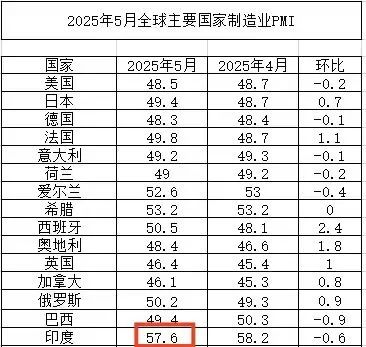
Economic Growth - India's economy grew by 7.4% in Q1 2023, marking the highest quarterly growth in a year, up from 6.2% in the previous quarter [1] - The country is positioned to benefit from supply chain shifts due to US-China trade tensions, with May's new export orders reaching a three-year high [1][3] Manufacturing Sector - India's manufacturing PMI in May was 57.6, indicating strong expansion despite a slight month-on-month decline [2] - The automotive sector is also thriving, with vehicle exports projected to reach 5.36 million in FY 2024/25, a 19.2% increase from the previous year [6] Technology Transfer and Innovation - Over the past decade, India has successfully captured technology transfers across various sectors, including smartphones and pharmaceuticals, leading to significant industrial upgrades [3][4] - The country has transitioned from merely assembling products to developing local manufacturing capabilities, as evidenced by a rise in smartphone exports from $2.1 billion in 2018 to $11 billion in 2022 [4] Government Initiatives - The Indian government has implemented policies like "Make in India" and the Production-Linked Incentive (PLI) scheme to encourage local manufacturing and technology adoption [9][10] - These initiatives have bolstered foreign investment confidence and facilitated local enterprise participation in high-tech sectors [10] Workforce and Infrastructure - India's large population provides a significant labor force and consumer market, but challenges remain in literacy and labor participation rates, which are below 50% [21][22] - Infrastructure issues, such as inadequate roads and power supply, continue to hinder manufacturing growth [21][22] Future Outlook - India's economic growth is currently concentrated in urban and IT sectors, necessitating broader structural improvements in income and consumption to sustain long-term growth [22][23] - The country is at a pivotal point in the global manufacturing landscape, with the potential to become a major economic power if it continues to reform and upgrade its technological and human resources [23]

公用事业行业:公用规模太阳能和风能领域的投资机会(英译中)
Xin Lang Cai Jing· 2025-06-11 02:35
Group 1 - The report highlights the adjusted zoning assessment method tailored to Georgia's local conditions, enabling the identification and mapping of regions with significant potential for large-scale solar photovoltaic and onshore wind projects [1] - Georgia has substantial potential for large-scale solar and wind energy development, with maximum concentrated capacities estimated at 5000 MW for both solar and wind, translating to a total development potential of approximately 87 GW for solar and 5.4 GW for wind [2] - The identified solar and wind potential is primarily located in the central, southern, southwestern, and southeastern regions of the country, aligned with transmission lines and road networks [2] Group 2 - The findings aim to encourage further investigation using high temporal and spatial resolution resource data to identify specific sites for detailed assessment [2] - Georgia can select promising locations from the identified areas to submit to the International Renewable Energy Agency (IRENA) for site assessment services, which include preliminary feasibility assessments for solar and wind project development [3] - The feasibility assessments utilize downscaled solar irradiance and wind speed time series data, input into robust generation and simplified financial models to simulate the viability of specific sites at various electricity price levels [3]

2024全模块化储能行业发展白皮书
沙利文· 2025-06-10 23:30
Investment Rating - The report does not explicitly state an investment rating for the modular energy storage industry Core Insights - The modular energy storage market is experiencing rapid growth driven by the increasing demand for renewable energy and advancements in storage technologies [48][61] - The global energy transition is significantly influenced by the rise of renewable energy sources, with solar photovoltaic (PV) being the fastest-growing segment [21][22] - The report highlights the importance of integrating energy storage systems with renewable energy sources to ensure stable energy supply and optimize energy usage [41][43] Summary by Sections Chapter 1: Global Photovoltaic Market Development Status - Renewable energy's share in global installed capacity increased from 35.0% in 2019 to 43.8% in 2023, projected to reach 63.6% by 2029 [16] - Solar PV generation grew from 660 TWh in 2019 to 1,469 TWh in 2023, with a compound annual growth rate (CAGR) of 22.2% [21] - Global renewable energy installed capacity rose from 2,554 GW in 2019 to 3,930 GW in 2023, with a CAGR of 11.4% [22] Chapter 2: Global Energy Storage Market Development Status - Energy storage systems (ESS) are categorized into mechanical, electromagnetic, electrochemical, thermal, and chemical storage [31][36] - The global energy storage system shipment volume surged from 8.9 GWh in 2019 to 149.1 GWh in 2023, with a CAGR of 102.2% [48][50] - By 2029, the annual shipment volume is expected to reach 793.0 GWh, with a CAGR of 31.1% from 2024 to 2029 [48][50] Chapter 3: Global Modular Energy Storage Market Development Status and Trends - The modular energy storage market is defined and categorized, emphasizing the advantages of modular solutions over traditional non-modular systems [6][3.1] - The report discusses the mainstream solutions in modular energy storage systems and their market scale [3.3][3.5] Chapter 4: Global Modular Energy Storage Market Competitive Landscape and Case Studies - The report identifies leading manufacturers in the modular energy storage market and provides case studies, such as that of Sige New Energy [4.1][4.2]
国家能源局组织召开全国可再生能源电力开发建设月度(5月)调度视频会
国家能源局· 2025-06-10 07:15
Core Viewpoint - The meeting highlighted the positive momentum in China's renewable energy development, with significant growth in installed capacity and generation, emphasizing the importance of policy implementation and strategic planning for future development [1][2]. Group 1: Renewable Energy Development Status - As of April 2025, China's renewable energy generation capacity exceeded 2 billion kilowatts, a year-on-year increase of 26% [1] - Wind and solar power generation capacity surpassed 1.5 billion kilowatts, with renewable energy generation accounting for 38% of total electricity generation, and wind and solar contributing 25% [1] - In May 2025, China's green certificate received unconditional recognition from RE100, marking a historic breakthrough [1] Group 2: Policy and Strategic Focus - The meeting emphasized the need to focus on four key areas in the second half of the year: completing the 14th Five-Year Plan, preparing the 15th Five-Year Plan, ensuring the implementation of existing policies, and developing new policies to support high-quality renewable energy growth [2] - There is a call for a market-oriented approach to explore new models and pathways for renewable energy development, considering the entire industry chain from generation to consumption [2]

采煤沉陷村变身绿色零碳村
Jing Ji Ri Bao· 2025-06-07 21:54
Core Viewpoint - The "China Zero Carbon Village and Town Promotion Project" aims to create representative zero-carbon village models, with 29 villages and towns selected for the first pilot phase, including Renji Village in Huai Bei City, Anhui Province, which has transformed from a coal mining area into a model of sustainable development [1][2]. Group 1: Project Implementation and Economic Impact - The floating photovoltaic power station project in Renji Village, covering 2,509 acres, was established in 2018 and generates over 1.2 million yuan annually for the village collective [3]. - The 60 MW capacity of the photovoltaic project can meet the annual electricity needs of approximately 30,000 households [3]. - The village's collective economic income reached 3.25 million yuan in 2024, a nearly 100-fold increase from 34,000 yuan in 2018 [5]. Group 2: Sustainable Practices and Resource Utilization - Renji Village employs a circular economy approach, utilizing biogas slurry as fertilizer and sending crop straw to a biomass power plant, effectively recycling resources [4]. - The village has implemented a "light and fish" model, combining aquaculture with solar energy production, enhancing both economic and environmental sustainability [2][6]. Group 3: Community Engagement and Lifestyle Changes - Over 800 households in Renji Village have installed rooftop solar panels, benefiting from rental income and reduced electricity costs [6]. - The village promotes a low-carbon lifestyle, with initiatives such as electric public transport and solar-powered streetlights, fostering a culture of sustainability among residents [6][7]. - Community discussions have shifted towards low-carbon practices, with local schools incorporating low-carbon education and initiatives to reduce waste and promote organic farming [7][8].

6月6日电,道达尔能源计划出售其在美国、西班牙的可再生能源资产。
news flash· 2025-06-06 15:58
智通财经6月6日电,道达尔能源计划出售其在美国、西班牙的可再生能源资产。 ...
江苏产研院:科改试验田孕育新动能
Zhong Guo Hua Gong Bao· 2025-06-06 02:52
Core Insights - The article emphasizes the importance of Jiangsu Province in achieving the "14th Five-Year Plan" development goals, particularly in technology and industry innovation integration [1] - Jiangsu Industrial Technology Research Institute (JITRI) is highlighted as a leading entity in this integration, showcasing significant achievements in technology innovation and industrial transformation [1][2] Group 1: Achievements of Jiangsu Industrial Technology Research Institute - JITRI has established 81 research and development platforms, leading to the incubation of over 1,400 technology companies and attracting nearly 20 billion yuan in local investments [2][3] - The institute has developed a unique "team-controlled" model for research institutions, facilitating market-oriented operations and addressing the motivation mechanisms for scientific research [3][4] - JITRI has created a global innovation network with nine overseas incubation platforms and partnerships with over 200 top universities and research institutions [4] Group 2: Policy and Legislative Support - The establishment of JITRI in December 2013 was a key decision by the Jiangsu provincial government to promote comprehensive reform in technology innovation [3] - The implementation of the "Jiangsu Provincial Industrial Technology Research Institute Development Promotion Regulations" in January 2025 marks the first local legislation specifically for industrial technology research institutes in China [3] Group 3: Future Plans and Focus Areas - JITRI plans to focus on future industries such as quantum communication, artificial intelligence, and synthetic biology by selecting high-level innovation teams and establishing specialized research institutes [7] - The institute aims to enhance its investment model for technology innovation, creating a comprehensive incubation investment chain from concept validation to commercial promotion [7]
2025碳博会今日启幕,能耗双控转向碳排放双控行至关键之年
Guo Ji Jin Rong Bao· 2025-06-05 11:05
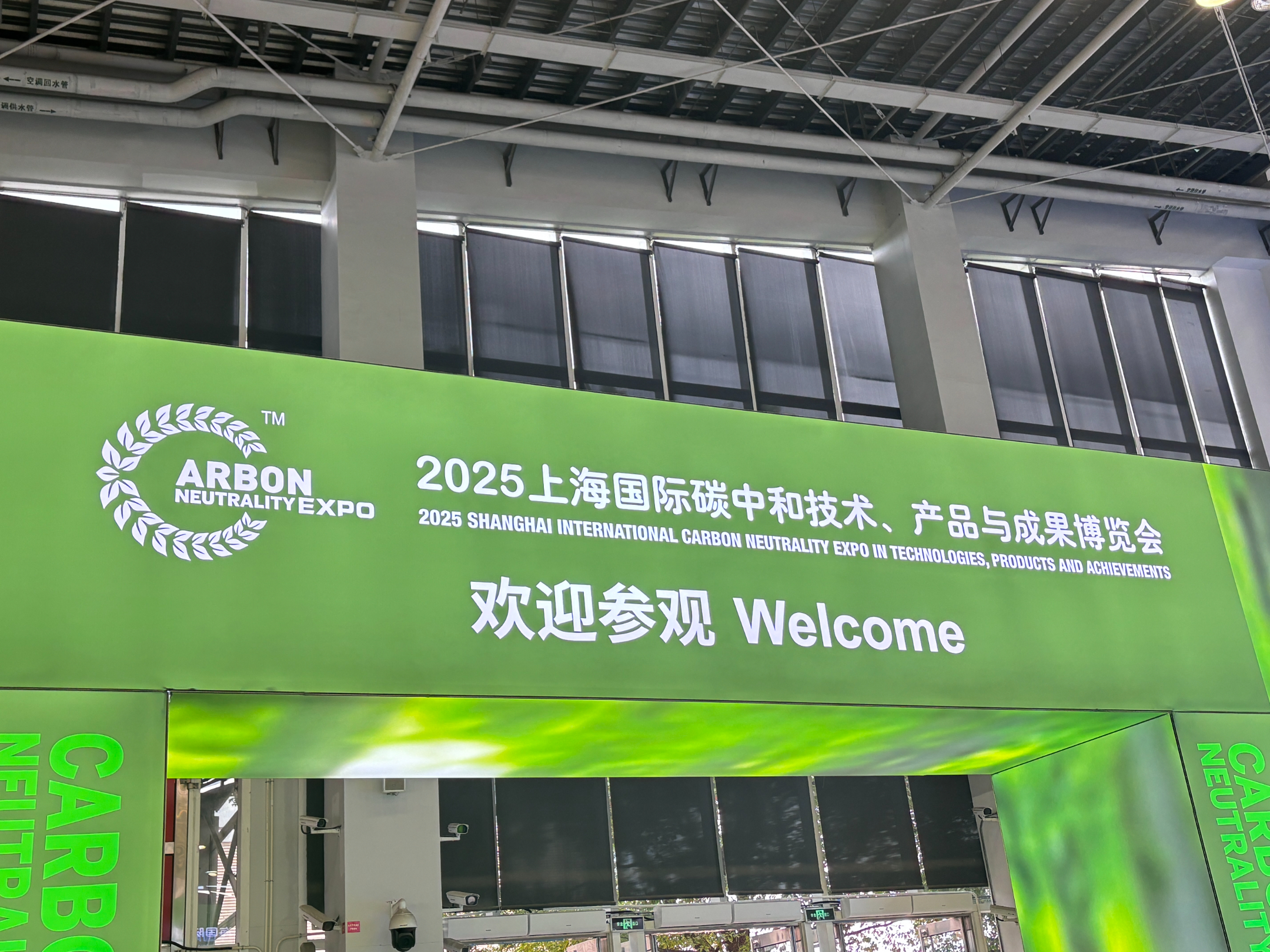
Core Viewpoint - The 2025 Shanghai International Carbon Neutral Technology, Products and Achievements Expo aims to create a platform for deep integration of government, industry, academia, and research, focusing on the theme of "carbon neutrality" [1] Group 1: Event Overview - The expo features three main components: thematic exhibitions, a series of forums, and trade connections, all centered around the theme of "walking towards carbon neutrality" [1] - The event marks the fifth year since the "dual carbon" strategy was proposed and is a critical year for transitioning from energy consumption control to carbon emission control [6] Group 2: Policy and Framework - The State Council issued a work plan to accelerate the establishment of a dual carbon control system, divided into three phases: 1. The first phase focuses on building a foundation for carbon emission statistics and monitoring from now until 2025 [6] 2. The second phase, during the 14th Five-Year Plan period, will implement a dual carbon control system nationwide, emphasizing intensity control and establishing a comprehensive evaluation system for carbon peak and neutrality [7] 3. The third phase will adjust the dual carbon control system post-carbon peak, focusing on total control while maintaining intensity control [7] Group 3: Expert Insights - Experts emphasized the importance of transitioning from energy consumption control to carbon emission control, highlighting that energy efficiency improvements contribute approximately 70% towards achieving carbon neutrality [8] - Recommendations include establishing a unified carbon emission data system and addressing challenges in carbon emission standards, such as coverage gaps and data quality issues [8]
中国东盟自贸区3.0版将如何改变你的钱袋子? 7万亿市场爆发,机会来了!
Sou Hu Cai Jing· 2025-06-05 02:52
Group 1 - The core viewpoint of the news is the successful completion of the China-ASEAN Free Trade Area (FTA) 3.0 negotiations in 2024, which symbolizes a deepening cooperation and lays a solid foundation for future joint development [1][3]. - The FTA 3.0 version includes nine new chapters focusing on digital economy, green economy, and economic and technological cooperation, reflecting the rapid advancement of regional economic integration and the unprecedented expansion of cooperation areas [5]. - China and ASEAN have been each other's largest trading partners for several consecutive years, with a trade volume approaching 7 trillion RMB in 2024, accounting for 15.9% of China's total foreign trade, highlighting the economic complementarity and the significant achievements of the FTA [5]. Group 2 - The deepening economic cooperation with ASEAN holds profound strategic significance for China, creating a large market covering over 2 billion people, which stabilizes China's exports and global trade [7]. - The young population and rising middle class in Southeast Asia present substantial market potential, providing opportunities for Chinese technology and products, such as Huawei's 5G technology and China's high-speed rail and C919 aircraft [7]. - The FTA 3.0 implementation will facilitate smoother trade, investment, and personnel exchanges, expanding cooperation space in the Southeast Asian market, which is expected to be a highlight of global economic growth over the next 20 years [7][8].