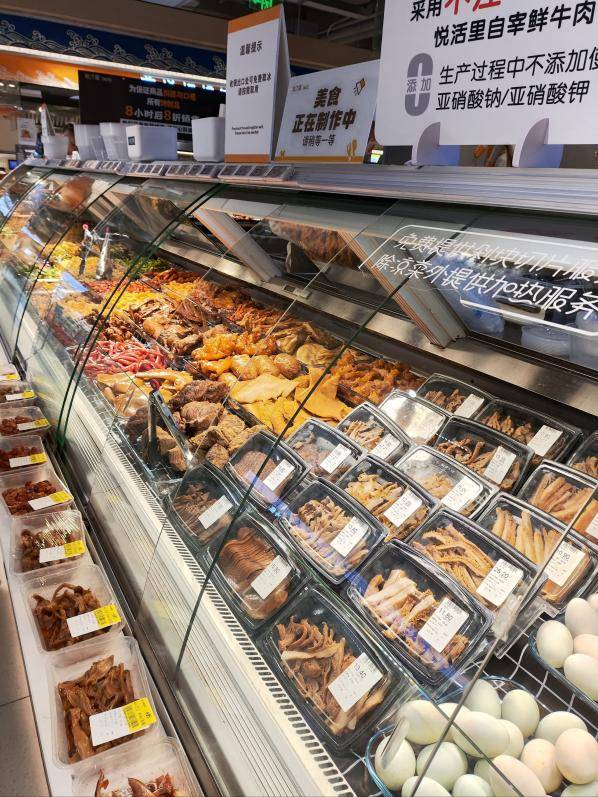
超市零售

Search documents
永辉超市(601933.SH)上半年归母净亏损2.41亿元,期内关闭227家亏损门店
智通财经网· 2025-08-20 11:53
Core Insights - Yonghui Supermarket (601933.SH) reported a significant decline in revenue and incurred net losses in the first half of 2025, with total revenue at 29.948 billion yuan, a year-on-year decrease of 20.73% [1] - The company's net loss attributable to shareholders was 241 million yuan, with a net loss of 802 million yuan after excluding non-recurring gains and losses [1] - The decline in revenue is attributed to a strategic transformation initiated in the second half of 2024, which involved closing underperforming stores and undergoing store renovations [1] Revenue Performance - The total revenue for the reporting period was 29.948 billion yuan, down 20.73% compared to the same period last year [1] - Despite a significant increase in revenue from renovated stores, it was insufficient to offset the revenue loss from store closures [1] Profitability and Losses - The total profit and net profit attributable to shareholders were negative, primarily due to a reduction in overall sales volume [1] - The company's gross margin for the reporting period was 20.80%, a decrease of 0.78% from the previous year [1] Store Closures and Costs - During the reporting period, the company closed 227 underperforming stores, incurring costs related to lease and personnel compensation, as well as expenses for clearing out inventory and asset write-offs [1] - The fair value change loss of Advantage Solutions stock held by the company amounted to 184 million yuan for the year [1]

永辉超市上半年归母净亏损2.41亿元,期内关闭227家亏损门店
Zhi Tong Cai Jing· 2025-08-20 11:52
Core Insights - Yonghui Supermarket (601933.SH) reported a significant decline in revenue for the first half of 2025, with total revenue of 29.948 billion yuan, representing a year-on-year decrease of 20.73% [1] - The company experienced a net loss attributable to shareholders of 241 million yuan, with a net loss of 802 million yuan after excluding non-recurring gains and losses [1] - Basic loss per share was reported at 0.03 yuan [1] Revenue Performance - The decline in revenue is primarily attributed to the company's strategic and operational transformation initiated in the second half of 2024, which included the closure of long-term loss-making stores and temporary suspensions of store operations for renovations [1] - Despite a significant increase in revenue from renovated stores, it was insufficient to offset the revenue loss from store closures [1] Profitability and Costs - The overall reduction in sales scale contributed to the company's total profit and net profit losses [1] - The company undertook a reform of its product supply chain, resulting in a substantial upgrade and elimination of suppliers and products, which led to a temporary decline in gross margin [1] - The comprehensive gross margin for the reporting period was 20.80%, down 0.78% compared to the same period last year [1] Store Closures and Related Costs - During the reporting period, the company closed 227 loss-making stores, incurring costs related to lease and personnel compensation, product clearance, and asset write-offs [1] - The fair value change loss of the company's holdings in Advantage Solutions stock amounted to 184 million yuan for the year [1]
“政银企”携手激活京郊农产品产业链,共筑乡村振兴新路径
Jin Rong Jie· 2025-08-20 09:16
此次战略合作是北京市进一步健全本市农产品营销服务体系,推动本地农产品与大型连锁超市"农超对 接"的实践行动。物美集团将充分发挥在供应链管理、销售网络、数字技术和市场影响力等方面的优 势,让首都市民能在物美旗下超市门店及电商平台购买到"更新鲜、更优质、更安心"的北京特色农产 品。北京市农业农村局则将从生产端持续发力,优化调整农业产业结构,实施品牌强农战略,推动更多 本地优质农产品直达首都市民餐桌。 值得关注的是,作为唯一一家参与到该项目的金融机构,民生银行北京分行以全力贯通金融活水、全力 激活消费动能、全力构筑长效平台,三个"全力"践行责任担当。据介绍,针对京郊特色农产品季节性与 供应链痛点,民生银行北京分行将研究为特色农产品提供助农贷款额度,解决产业流动资金难题。同 时,该行还将依托北京区域庞大的持卡用户基础,与物美集团联合推出京郊鲜品消费专属权益,实现拓 客与惠农双向赋能,助力物美"京郊产·本地鲜"专区成为连接城乡的活力枢纽。此外,该行还计划在物 美全市重点门店设立"普惠金融服务站",派驻专业团队提供金融咨询服务,以长效机制为乡村振兴打造 金融支持范式。 据悉,双方将在四个方面开展深入合作。一是合作拓宽本地 ...


“热搜”上的非凡“十四五”|“十四五”即将收官 民营经济发展成绩斐然
Sou Hu Cai Jing· 2025-08-20 08:43
Core Viewpoint - The article highlights the success of the private enterprise "胖东来" (Pang Donglai) as a representation of the growth and potential of China's private economy, emphasizing its commitment to quality service, employee welfare, and innovation in the context of supportive government policies for private enterprises [1][7][9]. Group 1: Development of Private Enterprises - "胖东来" has become a symbol of the thriving private sector in China, contributing significantly to local economies and demonstrating the impact of private enterprises on national economic growth [7]. - Since the beginning of the "十四五" (14th Five-Year Plan) period, the number of private enterprises has increased to over 58 million, marking a growth of over 40% compared to the end of the "十三五" (13th Five-Year Plan) period [7]. - The share of private enterprises in China's total foreign trade has risen from 46.6% in 2020 to 57.3% in the first half of this year, maintaining their position as the largest foreign trade operators for six consecutive years [7]. Group 2: Policy Support for Private Enterprises - The Chinese government has implemented various policies to optimize the business environment for private enterprises, including the "中华人民共和国民营经济促进法" (Law on Promoting the Development of the Private Economy), which provides legal protection and support for private enterprises [10][11]. - The government has released numerous policy measures to support the development of private enterprises, including 31 initiatives outlined in the "中共中央 国务院关于促进民营经济发展壮大的意见" (Opinions on Promoting the Development of the Private Economy) [10]. - Financial institutions are encouraged to enhance their support for private enterprises, addressing issues related to financing difficulties and costs, with the balance of inclusive small and micro loans reaching 35.05 trillion yuan, a year-on-year increase of 11.8% [15]. Group 3: Innovation and Technology in Private Enterprises - Private enterprises are increasingly recognized for their role in technological innovation, with over 92% of national high-tech enterprises being privately owned [9]. - The government has introduced initiatives to support technological innovation in private enterprises, including the establishment of a "National Venture Capital Guidance Fund" to encourage financial institutions to provide credit support to technology-driven companies [17]. - Private enterprises are making significant strides in key technological areas, with examples of breakthroughs in various sectors, showcasing their potential to drive economic growth through innovation [18].

ALDI奥乐齐对手Lidl新店型亮相
3 6 Ke· 2025-08-20 07:51
Group 1: Global Retail Rankings - In the NRF Top 50 Global Retailers 2025 list, Aldi ranks 4th with revenues of $155 billion and 13,877 stores, while its former protégé, Schwarz Group, ranks 3rd with revenues of $182 billion and 14,244 stores [1] - The Schwarz Group has recently opened a new store format, Lidl Home&Living, which does not sell food, attracting industry attention [1] Group 2: History and Business Model of Aldi - Aldi's history dates back to 1913 when the Albrecht family opened a small grocery store in Essen, Germany, focusing on high cost-performance products post-World War II [2] - The minimalist business model adopted by Aldi, which emphasizes a limited selection of non-perishable goods, has reduced inventory pressure and increased turnover, laying the foundation for future expansion [2] Group 3: History and Expansion of Lidl - Lidl was established later than Aldi, with its first discount store opening in 1973, focusing on a limited SKU count and a small store size to reduce costs [3][4] - Lidl's international expansion began in the 1990s, starting in France, where it adopted a strategy of local sourcing and reduced SKU counts to enhance efficiency and brand recognition [5] Group 4: Lidl's Strategy in the U.S. Market - Upon entering the U.S. market in 2017, Lidl adjusted its product strategy to include more local brands and fresh products to cater to American consumer preferences [6] - Lidl's marketing efforts in the U.S. emphasized high cost-performance and selected products, which helped quickly raise brand awareness despite initial high market investment pressures [6] Group 5: Lidl's Non-Food Store Format - Lidl has opened its first 100% non-food store in Germany, showcasing its own brand products across various categories, indicating a strategic shift towards non-food retailing [12] - The store layout includes a significant portion dedicated to DIY tools, furniture, and kitchen appliances, aiming to create a comprehensive non-food product ecosystem [12][13] Group 6: Competitive Landscape - Lidl's self-brand products occupy over 80% of its shelf space, reflecting a strategy that prioritizes high cost-performance over brand loyalty among consumers [7] - The rise of specialized non-food competitors like Action and Tedi poses a challenge to traditional supermarket models, prompting Aldi and Lidl to adapt their business strategies [13][14] Group 7: Industry Trends - The retail landscape is shifting from large supermarkets to smaller, more specialized stores, with a notable decline in large chain store numbers globally [9][10] - Younger consumers are increasingly favoring online shopping and local convenience stores, leading to a decrease in foot traffic to large supermarkets [11]
FDA发现放射性污染,沃尔玛(WMT.US)在13个州召回虾类商品
Zhi Tong Cai Jing· 2025-08-20 07:00
Core Viewpoint - Walmart has recalled certain shrimp products in 13 states due to radioactive contamination concerns, specifically from cesium-137, as reported by the FDA [1] Group 1: Recall Details - The recall involves frozen shrimp from the "Great Value" brand sold at Walmart stores across Alabama, Arkansas, Florida, Georgia, Kentucky, Louisiana, Missouri, Mississippi, Ohio, Oklahoma, Pennsylvania, Texas, and West Virginia [1] - The FDA noted that while a sample of breaded shrimp tested positive, the affected products "did not enter the U.S. distribution" and investigations are ongoing [1] Group 2: Regulatory Actions - The FDA has placed Indonesian seafood company PT. Bahari Makmur Sejati (BMS Foods) on a chemical contamination import alert list, requiring the company to halt exports to the U.S. until the issues are resolved [1]

巨头“邪修”开超市,物价一夜回20年前?
Hu Xiu· 2025-08-20 03:43
Core Viewpoint - The e-commerce sector appears to have no ceiling, as major players shift focus from traditional e-commerce to aggressive pricing strategies, leading to significant price reductions in supermarkets, reminiscent of prices from 20 years ago [1] Group 1: E-commerce Dynamics - Major companies are moving away from conventional e-commerce practices and engaging in what is termed "evil repair," indicating a shift in strategy [1] - The price war in supermarkets has just begun, suggesting a competitive landscape with no clear observers [1] Group 2: Price Reductions - Supermarket prices have drastically decreased, with examples such as eggs priced at 9.9 and beer at 1.5, highlighting the extent of the price cuts [1] - The affordability of products like durian has reached unprecedented levels, further emphasizing the aggressive pricing strategies being employed [1]
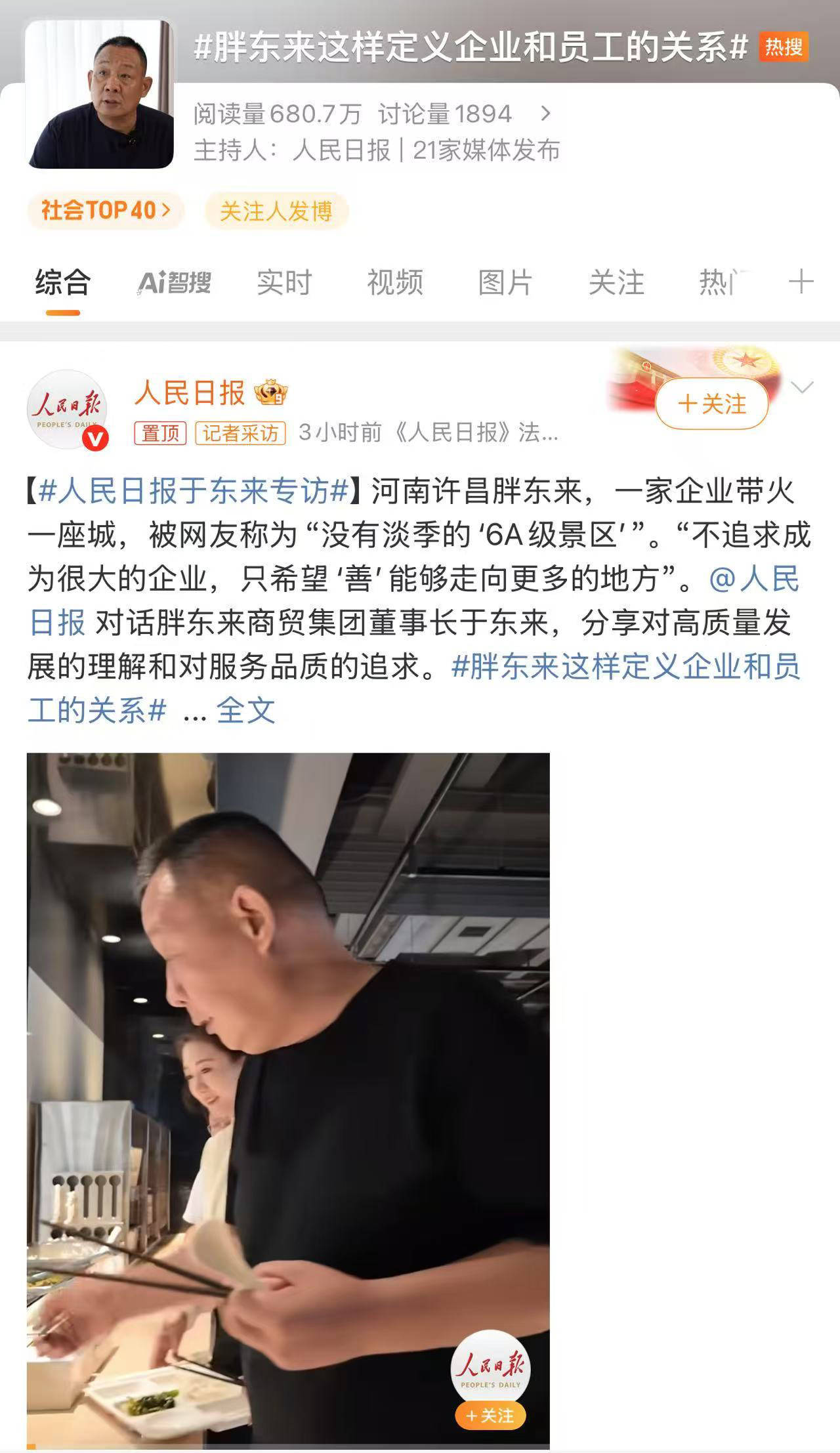
提振消费,不妨先看看胖东来怎么做
He Nan Ri Bao· 2025-08-20 03:37
Core Insights - The phenomenon of Pang Donglai, a supermarket chain rooted in Henan, highlights the importance of sincerity and quality in winning consumer trust in a rapidly changing retail landscape [1][2][3] Group 1: Business Model and Philosophy - Pang Donglai's business model emphasizes high-quality products over low prices, with the founder acknowledging that higher prices reflect better quality [2] - The supermarket chain avoids price wars and focuses on maintaining reasonable profit margins, which demonstrates respect for the products [2] - The implementation of a "no-reason return policy" and a "500 yuan complaint reward" showcases the company's commitment to building trust with customers [2] Group 2: Market Impact and Consumer Behavior - Pang Donglai has become a city icon, with its influence extending beyond commerce, as evidenced by the emotional connection it has fostered with the community [3] - Despite perceptions of a consumption downgrade, Pang Donglai's success indicates a shift in consumer priorities towards quality and experience rather than just low prices [3] - In the first half of 2025, Henan's retail sales grew by 7.2%, surpassing the national average, with contributions from quality enterprises like Pang Donglai being significant [3]
今日快评丨提振消费,不妨先看看胖东来怎么做
He Nan Ri Bao· 2025-08-19 23:35
辛巴已有四次退网言论,直播生涯伴随着多次争议和平台处罚。燕窝成分被检测为糖水、自营卫生巾品 牌陷致癌风波……信任崩盘,头部主播为平息事态不惜再次"退网"。 当直播带货头部主播们因假货风波接连翻车、实体店店主叹息揽客难时,胖东来的门店却因顾客过多不 得不限流。国内零售行业纷纷前来取经。胖东来爆改的多家超市,业绩呈现井喷。从过去学习沃尔玛、 家乐福,到现在学习胖东来,一家并非全国连锁、规模也绝非头部的商超企业,何以有如此魅力?胖东 来现象成为观察消费领域很好的样本。 胖东来的价值,在于其商业哲学,在流量易逝的时代,唯有真诚与品质,才能赢得消费者和市场持久的 信任。 胖东来并非完美,水果、熟食、文具等商品,胖东来价格比普通超市要高。针对贵的质疑,胖东来创始 人于东来有过正面回应,贵是因为质量好,在经营商品时会严格把关,做好性价比。不会"卷"价格,不 打价格战,商品的毛利率不能太低,太低了,不尊重商品。在这个陈述中,我们可以感受到企业的真 诚。第一,承认价格贵,认可网友的意见。第二,表态会以高品质的产品服务消费者,让消费者感受物 有所值。第三,不会"卷"价格,靠压低供应商报价来增加利润。 "胖东来的价值,在于其商业哲 ...
“餐超”悄然兴起,一场重塑日常消费图景的新变革。
Sou Hu Cai Jing· 2025-08-19 17:42
Group 1 - The core concept of the "restaurant-supermarket" model is a complete disruption of traditional retail logic, transforming supermarkets into integrated consumption scenarios that combine shopping, dining, socializing, and experiential elements [4][5] - This model successfully merges the efficiency of online instant retail with the immersive experience of offline spaces, creating a strong traffic loop and enabling rapid delivery services [4][5] - The "restaurant-supermarket" model has changed consumer shopping habits, making supermarkets a place for social interaction and healing rather than just a transactional space [2][4] Group 2 - The target demographic for the "restaurant-supermarket" model primarily consists of young professionals aged 25-35, who represent 53% of users at Hema, indicating a strong demand from this group [8][9] - Consumers are increasingly seeking a combination of efficiency, quality, convenience, and experience, with 26% of consumers prioritizing convenience alongside price [5][8] - The rise of the "restaurant-supermarket" model is a direct response to changing consumer demands and societal trends, such as urbanization and the increasing participation of women in the workforce [9][12] Group 3 - Successful examples of the "restaurant-supermarket" model include the transformation of Yonghui Supermarket's traditional stores into warehouse membership stores, resulting in a 136% increase in daily foot traffic and a 139% increase in sales [11] - Hema has achieved overall profitability in 2024, demonstrating that the "restaurant-supermarket" model can be commercially viable and providing a reference for future entrants [11][12] - The future of the "restaurant-supermarket" sector will likely see intense competition, with only a few dominant players surviving, necessitating a strong brand identity centered around freshness, quality, and convenience [11][12]