
电力设备

Search documents
电力设备:反内卷趋势无忧,太空光伏产业提速
Yin He Zheng Quan· 2026-01-09 07:03
Investment Rating - The report maintains a "Recommended" rating for the electric equipment industry [1] Core Insights - The report highlights that the trend of anti-involution is not a concern, and the space photovoltaic industry is accelerating [1] - The recent regulatory actions in the photovoltaic sector aim to prevent monopolistic behaviors while allowing compliance with cost-based sales and technology standards [4] - The prices in the industry continue to rise, indicating a recovery, with silicon material prices increasing by 9.83% week-on-week to 59,200 CNY/ton [4] - The commercial space sector is emerging, with plans for deploying solar energy satellites, which could lead to significant advancements in space photovoltaic technology [4] Summary by Sections Regulatory Environment - The market regulatory authority has halted self-regulatory actions related to silicon material integration in the photovoltaic industry, focusing on preventing monopolistic practices [4] - Compliance measures are being established to ensure fair competition among industry participants [4] Industry Performance - The prices of N-type silicon wafers and cells have seen increases, with N-type cell prices rising to 0.39 CNY/W and TOPCon module prices reaching 0.7 CNY/W [4] - The industry is expected to turn profitable in 2026 as terminal demand recovers [4] Technological Advancements - The report emphasizes the potential of space photovoltaic technology, which can generate energy continuously and is projected to become commercialized in the next 10-15 years [4] - The focus is on companies with technological reserves in space photovoltaics, such as Junda Co., JinkoSolar, Trina Solar, and others [4]
微电网利好政策密集发布,上市公司积极布局(名单)
Zheng Quan Shi Bao Wang· 2026-01-09 05:37
Group 1 - The core viewpoint of the news is that the microgrid sector is expected to experience steady growth due to favorable policies and increasing investments in green energy applications within industrial settings [2][4]. - The Ministry of Industry and Information Technology, along with four other departments, has released the "Guidelines for the Construction and Application of Industrial Green Microgrids (2026-2030)," which aims to promote the integration of renewable energy sources in industrial processes [2]. - The guidelines emphasize five basic principles, including efficient multi-energy utilization, high local consumption of renewable energy, and enhanced interaction with the power grid [2]. Group 2 - The global microgrid market is projected to reach approximately $22.9 billion in 2024, with a compound annual growth rate (CAGR) of about 19.2% from 2025 to 2034 [4]. - In China, the investment in power grid construction is on the rise, with a reported investment of 560.4 billion yuan from January to November 2025, marking a year-on-year increase of 5.9% [4]. - Recent data indicates that 40 listed companies have disclosed their involvement in microgrid-related businesses, primarily in the power equipment sector [5]. Group 3 - In the stock market, several microgrid-related stocks have shown positive performance, with notable increases in share prices for companies like Huizhong Technology and Sifang Co., with gains of 8.14% and 5.08%, respectively [6]. - Among the listed companies, 20 have received institutional ratings, with 10 stocks attracting significant attention from multiple rating agencies [6]. - Companies such as Teruid and Dongfang Electronics are expected to see substantial growth in net profits by 2025, with Teruid projected to achieve a growth rate of 30.4% [6][7].


数据中心电源概念午后拉升 中恒电气涨停
Mei Ri Jing Ji Xin Wen· 2026-01-09 05:07
Group 1 - The data center power supply sector experienced a significant rally, with various companies showing strong performance [1] - Zhongheng Electric (002364) reached the daily limit increase, indicating robust investor interest [1] - Other notable performers included Dongyangguang (600673), Weichai Heavy Machine (000880), KOTAI Power (300153), Keda (002518), and Yimikang (300249), all of which saw substantial gains [1]

超30亿元资金封板,002931,强势11连板!微电网利好政策密集发布,上市公司积极布局
Zheng Quan Shi Bao Wang· 2026-01-09 05:00
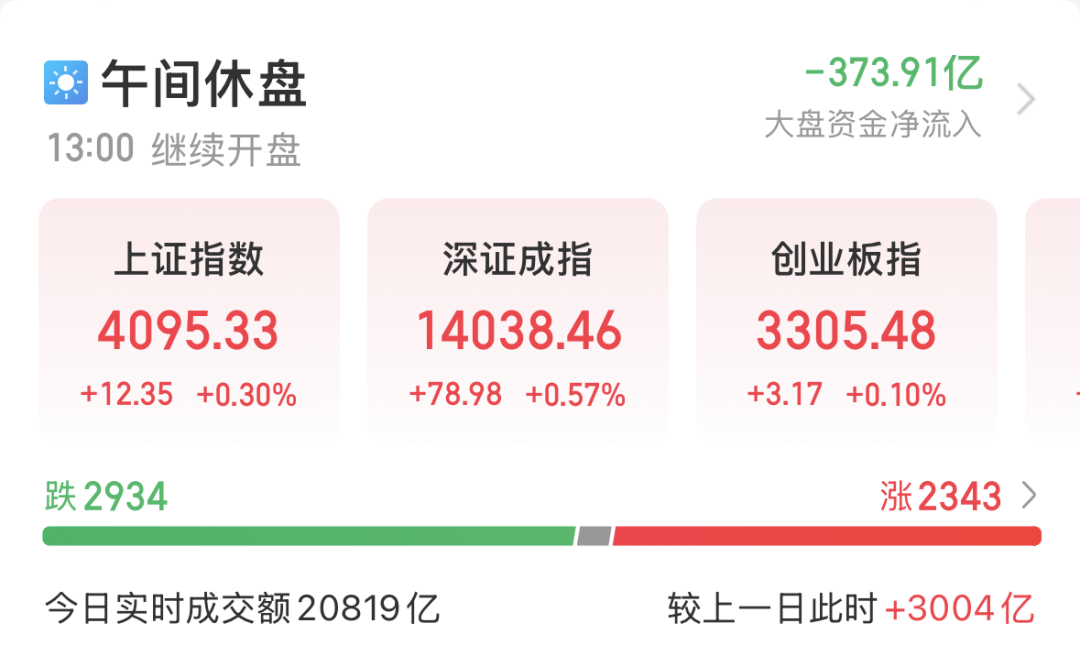
Group 1: Market Overview - The A-share market saw a collective rise in major indices, with the Shanghai Composite Index reaching a peak of 4121.7 points before closing at 4095.33 points, up by 0.3% [1] - The Shenzhen Component Index increased by 0.57%, while the ChiNext Index rose by 0.1%. The early trading volume was 20,820.96 billion yuan, an increase of approximately 3,000 billion yuan compared to the previous trading day [1] Group 2: Company Performance - Fenglong Co., Ltd. (002931) experienced a significant surge, with its stock hitting a "limit up" for 11 consecutive trading days, increasing its market capitalization from under 4 billion yuan to 11.157 billion yuan [3] - The stock saw 60.59 million buy orders, with a total investment of 30.94 billion yuan [3] Group 3: Investment Trends - Recent trading data indicates that institutional investors have been the primary participants in the stock speculation of Fenglong Co., Ltd., accounting for 51.76% of the trading volume [5] - From December 25, 2025, to January 7, 2026, individual investors contributed 793.66 million yuan, representing 48.24% of the trading volume, while institutional investors net bought 3.8611 million yuan [5] Group 4: Microgrid Policy and Market Growth - The Ministry of Industry and Information Technology and four other departments released the "Guidelines for the Construction and Application of Industrial Green Microgrids (2026-2030)", promoting the integration of renewable energy sources in industrial applications [7] - The global microgrid market is projected to reach approximately 22.9 billion USD in 2024, with a compound annual growth rate of about 19.2% from 2025 to 2034 [9] Group 5: Company Engagement in Microgrid Business - In the past six months, 40 listed companies have disclosed their involvement in microgrid-related businesses, primarily in the power equipment sector, with 19 companies participating [10] - Companies like Huihuang Technology and Sifang Co., Ltd. have made significant advancements in energy storage and smart microgrid technologies [11]


Sensex, Nifty set to open higher after four-session drop
BusinessLine· 2026-01-09 02:52
Market Overview - Stock benchmarks are expected to open slightly higher after four consecutive sessions of losses due to renewed US tariff concerns, with investors awaiting a US Supreme Court ruling on the legality of the tariffs [1][3] - Nifty and Sensex have declined by 1.7% and 1.8% respectively over the last four sessions, following US President Trump's indication of potential tariff increases on Indian goods due to India's purchase of Russian crude [2] Tariff Impact - The US has imposed tariffs of up to 50% on imports from India, which is the second-largest buyer of Russian oil, while India is working on finalizing a trade deal with the US [2] - A US Supreme Court ruling that deems the tariffs "illegal" could result in the US government needing to refund nearly $150 billion to importers [3] Investor Sentiment - Analysts expect buying interest around current market levels after the recent decline, but emphasize that resolution of trade uncertainties and strong domestic corporate earnings are essential for a sustained market uptrend [3] Foreign Investment - Foreign portfolio investors have sold approximately $900 million worth of Indian shares in January 2026, following record outflows of $19 billion in 2025 [4] Company News - Reliance Industries is considering purchasing Venezuelan oil if sales to non-US buyers are permitted [5] - Bajaj Finserve reports that Bajaj Group has acquired a 23% stake in its insurance subsidiaries from Allianz SE for 213.90 billion rupees ($2.38 billion) [5] - BHEL has secured an order worth 54 billion rupees from JV Bharat Coal Gasification & Chemicals [5] - Venus Remedies has received marketing authorization in Indonesia for its antibiotic combination Ceftazidime and Avibactam [5]

港股异动 | 东方电气(01072)涨超4% 数据中心加速布局电源方案 国内燃气轮机企业出海迎新机遇
Zhi Tong Cai Jing· 2026-01-09 02:12
消息面上,华西证券研报指出,在全球AIDC快速发展&电网建设投资持续增长的驱动下,电力设备需 求迎来景气周期。该行认为,掌握优质渠道资源、技术实力领先、积极布局相关产能的企业有望充分受 益,持续看好海外业务有望取得突破、海外业务毛利率高的出海企业,重点关注变压器&SST、燃气轮 机、AI电源、储能产业链等核心环节相关标的。 智通财经APP获悉,东方电气(01072)涨超4%,截至发稿,涨4.57%,报26.56港元,成交额7226.53万港 元。 据了解,东方电气燃气轮机业务采用"合资技术沉淀+自研产品突破"双轨推进,已形成从15MW到 500MW的完整产品矩阵。公司海外业务快速增长,2025年G50实现F级重型燃机整机出口"零的突破", 是国内燃气轮机领域的核心龙头。公司中东、中亚等新兴市场持续突破,2025年签约中东重点项目。 ...
东方电气涨超4% 数据中心加速布局电源方案 国内燃气轮机企业出海迎新机遇
Zhi Tong Cai Jing· 2026-01-09 02:12
Core Viewpoint - The stock of Dongfang Electric (600875) has risen over 4%, currently at 26.56 HKD, driven by a report from Huaxi Securities highlighting a favorable cycle in power equipment demand due to rapid global AIDC development and ongoing investment in grid construction [1] Group 1: Industry Outlook - The demand for power equipment is entering a prosperous cycle, supported by the rapid development of AIDC and sustained growth in grid construction investment [1] - Companies with strong channel resources, leading technology, and proactive capacity layout are expected to benefit significantly from this trend [1] Group 2: Company Performance - Dongfang Electric's gas turbine business employs a dual approach of "joint venture technology accumulation + self-developed product breakthroughs," resulting in a complete product matrix ranging from 15MW to 500MW [1] - The company is a core leader in the domestic gas turbine sector, with rapid growth in overseas business, aiming for a breakthrough in F-class heavy-duty gas turbine exports by 2025 [1] - Dongfang Electric is making significant inroads in emerging markets such as the Middle East and Central Asia, with key project contracts signed in the Middle East by 2025 [1]
资金风向标|8日两融余额增加158.67亿元 非银金融行业获融资净买入居首
Sou Hu Cai Jing· 2026-01-09 01:48
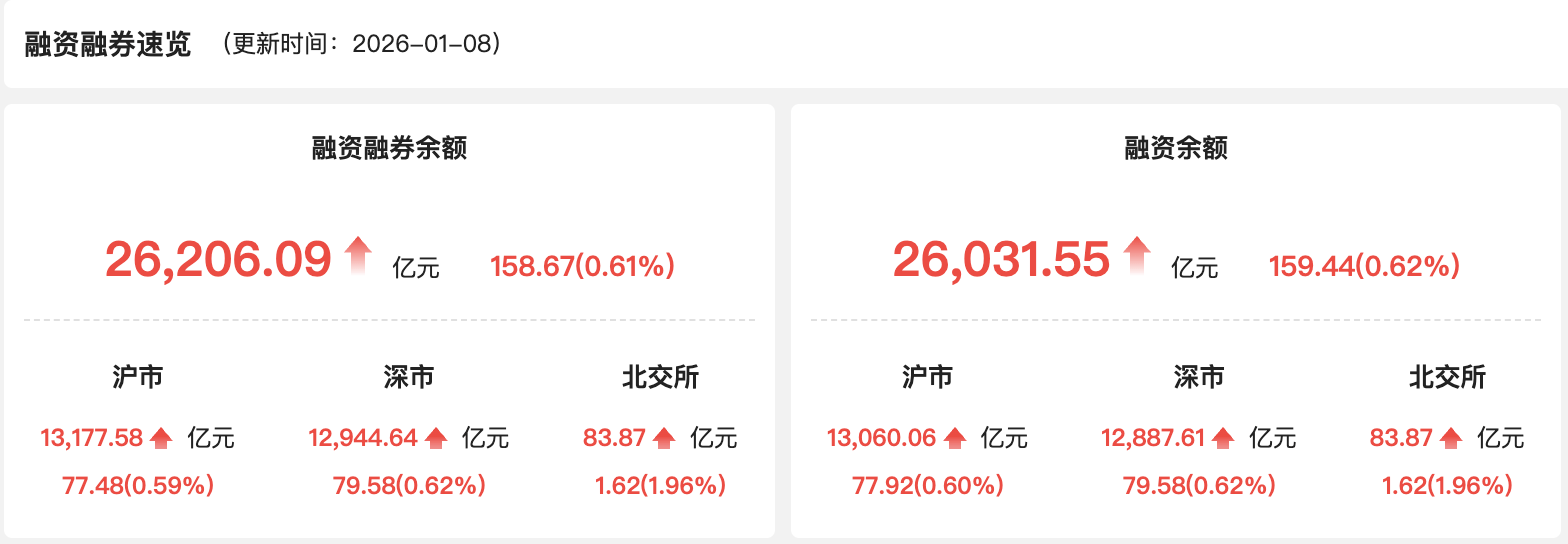
Group 1 - The total margin financing balance in A-shares reached 26,206.09 billion yuan, an increase of 158.67 billion yuan from the previous trading day, accounting for 2.57% of the A-share circulating market value [1] - The margin trading volume on that day was 3,126.04 billion yuan, a decrease of 186.28 billion yuan from the previous trading day, representing 11.05% of the total A-share trading volume [1] Group 2 - Among the 31 primary industries, 21 industries experienced net financing inflows, with the non-bank financial sector leading with a net inflow of 3.789 billion yuan [3] - Other industries with significant net financing inflows included electronics, defense and military industry, computers, electric equipment, and machinery [3] - A total of 74 individual stocks had net financing inflows exceeding 100 million yuan, with Cambrian Technology leading at 1.044 billion yuan [3][4] - Other notable stocks with high net financing inflows included China Ping An at 1.038 billion yuan, Yanshan Technology at 754.49 million yuan, and CITIC Securities at 659.88 million yuan [4]






26股获融资净买入额超2亿元 寒武纪-U居首
Zheng Quan Shi Bao Wang· 2026-01-09 01:30
Group 1 - On January 8, among the 31 primary industries tracked by Shenwan, 21 industries experienced net financing inflows, with the non-bank financial sector leading at a net inflow of 3.789 billion yuan [1] - Other industries with significant net financing inflows included electronics, defense and military, computers, power equipment, machinery, and media [1] Group 2 - A total of 1,875 individual stocks received net financing inflows on January 8, with 173 stocks having inflows exceeding 50 million yuan [1] - Among these, 26 stocks had net financing inflows over 200 million yuan, with Cambrian Technologies-U leading at a net inflow of 1.044 billion yuan [1] - Other notable stocks with high net financing inflows included China Ping An, Yanshan Technology, CITIC Securities, BlueFocus Communication Group, Luxshare Precision, Aerospace Power, Oriental Pearl, and Huatai Securities [1]
温县工商联:破难题、优服务,激活民企“强引擎”
Xin Lang Cai Jing· 2026-01-08 23:08
Group 1 - The county has established a specialized service team for the private economy, integrating various departments to enhance service quality and address challenges faced by businesses [1] - The service team has created a comprehensive management mechanism for enterprise demands, ensuring that all requests are tracked and addressed effectively [1] - Regular "point-to-point" assistance is provided to businesses, with tailored solutions for issues such as financing and labor, resulting in significant support for local enterprises [1] Group 2 - The service team has developed user-friendly policy compilations and guides, conducting over 20 policy promotion events that reached more than 200 enterprises [2] - A total of over 3 billion yuan in financing support has been secured for businesses, along with the introduction of more than 100 urgently needed talents [2] - The county has seen the recognition of several enterprises as national-level specialized and innovative "little giant" companies, indicating a robust growth in the private economy [2]