家居零售

Search documents
四川明确脑机接口医疗服务价格,置入费最高6583元/次|首席资讯日报
首席商业评论· 2026-01-09 04:51
Group 1 - Sichuan has set a maximum price of 6,583 yuan per session for brain-computer interface medical services, effective from April 30 this year, which is expected to promote industry standardization and prevent speculation [2] - WeChat has clarified that normal social behaviors will not be restricted under the new rules, ensuring users' accounts will not be penalized for typical usage patterns [3] - Aima Technology has denied rumors of a workforce reduction exceeding 50%, stating that personnel optimization is a normal adjustment for business development [4] Group 2 - Ant Group and Meituan Longzhu have invested in Shenzhen Guangzhi Shikong Technology Co., a developer of AI interactive devices, increasing its registered capital from approximately 1.6435 million yuan to about 2.1062 million yuan [5] - The film "The Legend of the Condor Heroes" has surpassed 200 million yuan in box office revenue within 9 days of its release [6][7] - IKEA announced the closure of 7 stores, including one in Shanghai, as part of its strategy to optimize business operations and focus on consumer-centric channels [8][13] Group 3 - Bawang Tea has responded to rumors of a potential IPO in Hong Kong, stating that there are currently no plans for such an initiative [9] - Lin Yunfeng, head of NetEase's DreamWorks division, has left the company, with the DreamWorks mobile game team being integrated into the Sea God division [10] - Chinese automotive brands are performing well in Ecuador, with BYD's sales expected to grow by 243.1% in 2025, and overall new car sales projected to increase by 15% [11] Group 4 - JD.com has established a "Chameleon Business Unit" to focus on the development and commercialization of core AI products [12] - JD.com is reportedly considering the issuance of dim sum bonds to raise approximately 10 billion yuan, although the company has stated there are no current plans for such an issuance [14]





宜家“关闭7家中国线下店”:并非无法经营,而是主动转型
3 6 Ke· 2026-01-09 02:49
Core Viewpoint - IKEA China announced the closure of seven offline stores starting February 2, 2026, as part of a proactive transformation strategy aimed at building resilience and future growth in response to declining customer traffic and increased competition in the home retail market [1][5]. Group 1: Store Closures and Customer Traffic - IKEA China will stop operating seven stores, including locations in Shanghai and Guangzhou, as part of its strategic adjustments [1]. - Customers have reported a significant decline in foot traffic, with one employee noting a drop of over 50% compared to peak periods since 2020 [4]. - The Guangzhou Panyu store temporarily suspended operations on January 7, 2023, due to channel layout adjustments, indicating a sudden shift in operational strategy [2]. Group 2: Sales Performance and Market Challenges - For the fiscal year 2025, IKEA's sales are projected to be €39 billion, a decrease of 1.6% from the previous year, highlighting a challenging retail environment [5]. - The Chinese furniture industry is also facing difficulties, with a reported 9.1% decline in revenue for major enterprises from January to November 2025 [5][7]. - The competitive landscape has intensified, with local brands offering lower-priced alternatives that challenge IKEA's market position [7]. Group 3: Strategic Shift to Omnichannel Retail - IKEA China is transitioning to an omnichannel retail model, maintaining 34 offline customer touchpoints and enhancing its online presence [8]. - The company plans to open over ten small-format stores in key markets like Beijing and Shenzhen within the next two years, aiming to better connect with consumers [8][9]. - IKEA is also deepening partnerships with platforms like JD.com to launch instant retail services in seven cities, catering to consumer demand for convenience [8][9].
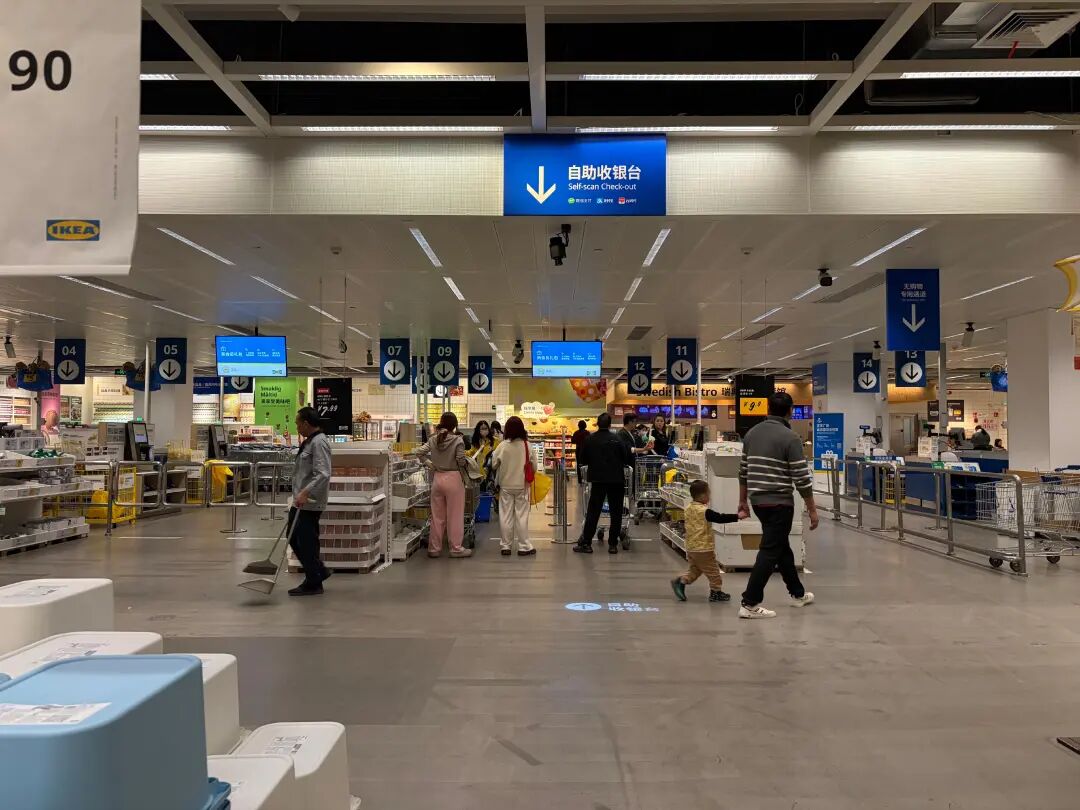
一口气关店7家,宜家跌下神坛
Feng Huang Wang· 2026-01-09 01:54
摘要: "周末逛宜家,吃1元冰淇淋"的场景,正在消失。 这是宜家进入中国27年来最大规模的门店调整。 这一决定让很多消费者感到意外,引发了广泛讨论。有消费者表示遗憾和惋惜:"以后周末少了一个遛娃的好去处",也有消费者表示理解:"现在网购这 么方便,去宜家确实比以前少了"。 "此次调整并非相关门店'无法继续经营',而是宜家以优化成本、提升效率、重新配置资源为核心所做出的主动转型",宜家中国相关负责人回应。确实, 在宣布关店的同一天,宜家表示未来两年将在北京、深圳等重点城市开设超10家小型门店。 门店"收缩"的同时,宜家的重心开始向小型门店偏移。 宜家为啥卖不动了? 两天前,宜家中国突然宣布关闭7家门店,决定自今年2月2日起停止运营包括上海宝山商场、广州番禺商场、天津中北商场在内的七家线下门店。 1998年,宜家在上海徐汇开设了中国首家门店,彼时的宜家,以其独特的北欧设计、一站式购物体验,迅速俘获了中国消费者的心。 从2021年起,宜家的扩张步伐开始放缓。2022年关闭了贵阳店,这是其进入中国24年来首次关闭省会城市门店。此次一次性关闭7家门店,宜家在华线下 触点总数将从41个减至34个,涉及哈尔滨、宁波、南通等 ...

“免费遛娃”的宜家也闭店,线下大店开不起了?
阿尔法工场研究院· 2026-01-09 00:04
Core Viewpoint - IKEA China is closing 7 stores, representing nearly a quarter of its total physical locations, indicating a significant shift in its operational strategy amidst declining revenue and changing consumer behavior [4][5][18]. Group 1: Store Closures - IKEA China announced the closure of 7 stores located in East, South, North, and Northeast China, affecting several second-tier cities previously considered potential markets [8]. - The closed stores include some of the earliest locations in China, such as the Shanghai Baoshan store opened in 2003 and the Guangzhou Panyu store opened in 2005 [8]. - The closures will lead to a reduction in physical retail presence, with the company committing to provide severance packages and support for affected employees [13][15]. Group 2: Financial Performance - IKEA's revenue in China peaked at 12.07 billion yuan in the fiscal year 2021 but began to decline in 2022, with projections for the fiscal year 2024 estimating revenue to drop to 11.15 billion yuan, a decrease of nearly 1 billion yuan year-on-year [17][18]. - The decline in revenue is attributed to multiple factors, including the rise of online shopping, competition from domestic brands, and a general trend of consumer downgrade [18][24]. Group 3: Changing Consumer Behavior - Consumer preferences have shifted significantly, with many opting for online shopping platforms like Taobao and JD.com for immediate satisfaction rather than the immersive experience offered by physical stores [23]. - Online sales for IKEA in China have surpassed 30% and continue to grow, reflecting the changing landscape of retail consumption [24]. Group 4: Market Challenges - The decline in the real estate market has also impacted IKEA's business model, making its large store format seem cumbersome and expensive [19]. - Domestic brands such as Genji Mu Yu and Lin's Home are capturing market share by offering lower prices and faster product iterations, further challenging IKEA's traditional retail approach [24].

宜家中国大调整:关闭北京、上海等地共7家门店 未来将开设超十家小型门店
Zhong Guo Jing Ying Bao· 2026-01-08 14:05
Core Viewpoint - IKEA China is adjusting its store layout by closing seven underperforming stores starting February 2, 2026, while emphasizing a shift towards smaller, community-focused stores and enhanced online services to better meet consumer needs [1][2][4]. Group 1: Store Closures and Strategy - The closure of seven stores, including locations in Shanghai, Guangzhou, and Tianjin, is part of a strategic shift rather than a retreat from the Chinese market, as IKEA will still maintain 34 physical locations and multiple digital channels [2][3]. - The closures are aimed at optimizing costs, improving efficiency, and reallocating resources to better align with consumer preferences [1][2]. - IKEA China plans to open over ten small-format stores in key markets like Beijing and Shenzhen within the next two years, marking a transition from large stores to smaller, more flexible retail formats [4][5]. Group 2: Market Trends and Consumer Behavior - The shift in strategy reflects a significant change in consumer habits, particularly among the younger generation, who prefer online browsing and immediate delivery over traditional shopping experiences [5][6]. - The average store visit frequency has dropped from 4.2 times in 2018 to an expected 1.8 times by 2025, indicating a shift towards more fragmented and immediate consumption patterns [6][7]. - The instant retail market in China is projected to reach 1 trillion yuan by 2026, highlighting the growing demand for convenience and speed in retail [6][7]. Group 3: Financial Performance - For the fiscal year 2024, IKEA China's sales are estimated at approximately 11.15 billion yuan, a decline of 7.6% from the previous year and nearly 30% lower than the peak sales of 15.77 billion yuan in fiscal year 2019 [7]. - The sales contribution of IKEA China to the Ingka Group's global retail revenue has decreased to 3.5%, underscoring the need for strategic adjustments [7][8].
宜家回应“关闭7家中国线下店”:并非无法经营,而是主动转型
经济观察报· 2026-01-08 11:45
Core Viewpoint - IKEA China is undergoing a proactive transformation to enhance long-term resilience and future growth, which includes the closure of seven offline stores starting February 2, 2026, but does not imply that these stores cannot continue operating [1][2]. Group 1: Store Adjustments and Consumer Behavior - IKEA China announced the closure of seven stores, including locations in Shanghai and Guangzhou, as part of its strategic adjustments [2]. - Consumers have reported a noticeable decline in foot traffic at IKEA stores, with one employee stating that customer numbers have decreased by over 50% compared to peak times [5]. - A shopper noted that the store's business has been average, with fewer customers on weekdays and slightly busier weekends, indicating a shift in shopping habits [4]. Group 2: Sales Performance and Market Challenges - For the fiscal year 2025, IKEA's retail sales are projected to be €39 billion, a decrease of 1.6% from the previous year, despite a 1.3% increase in store visitors and a 4.6% increase in online visitors [10]. - In China, IKEA reported a 4% growth in both online and offline visitor numbers, with online sales increasing by 2% [10]. - The overall furniture industry in China is facing challenges, with a reported 9.1% decline in revenue for major enterprises and a 22.7% drop in total profits for the first 11 months of 2025 [10]. Group 3: Competitive Landscape - The furniture market is becoming increasingly competitive, with local brands offering similar products at lower prices, making it difficult for IKEA to maintain its market position [11]. - A furniture industry insider highlighted that IKEA's prices, when including logistics and installation, are approximately 40% to 50% higher than local brands, which affects its competitiveness [11]. Group 4: Strategic Shift to Omnichannel Retail - IKEA China is transitioning to an omnichannel retail model, maintaining 34 offline customer touchpoints and enhancing its online presence through digital channels and partnerships [14][15]. - The company plans to open over ten small-format stores in key markets like Beijing and Shenzhen within the next two years, aiming to provide a more community-focused shopping experience [14]. - IKEA is also enhancing its logistics and operational efficiency through automation and digital technology, aiming to create a meaningful price-performance ratio by localizing products inspired by Chinese culture [15].

7家门店将关闭,宜家中国下一步怎么走?
Sou Hu Cai Jing· 2026-01-08 10:38
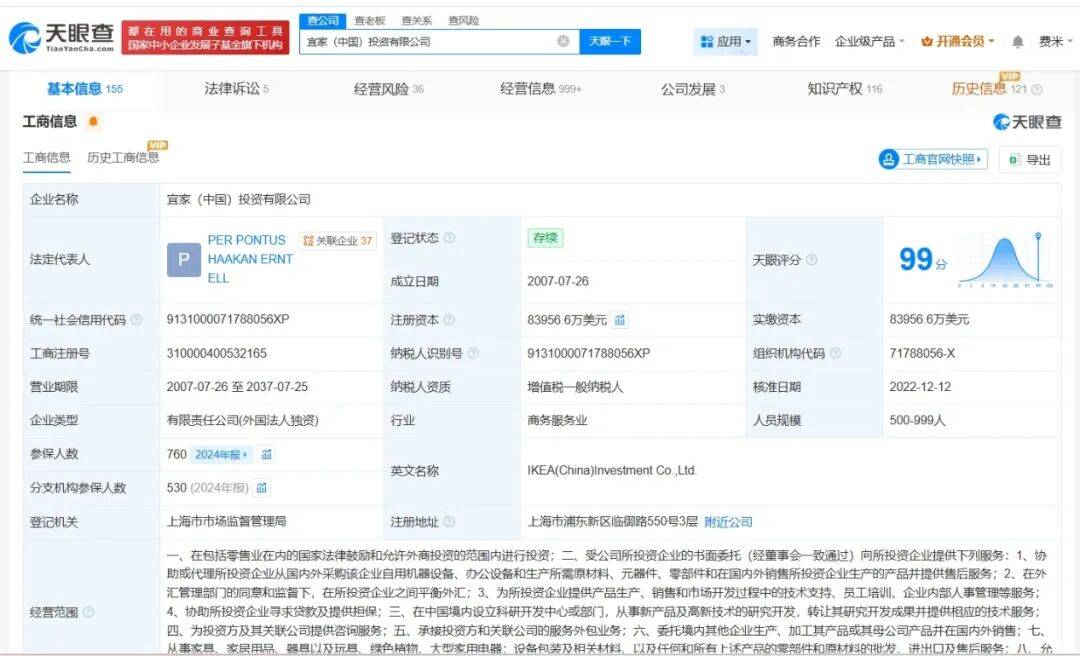
Core Insights - The company IKEA China announced the closure of seven stores in Shanghai, Guangzhou, Tianjin, Nantong, Xuzhou, Ningbo, and Harbin starting February 2, 2026, as part of its strategy to optimize channel layout and enhance business resilience [1] Company Information - IKEA (China) Investment Co., Ltd. was established on July 26, 2007, with a registered capital of approximately $840 million [1][2] - The company is wholly owned by INGKA PRO HOLDING B.V. and operates as a limited liability company with foreign investment [2] - The company has made investments in 42 enterprises, with 39 currently in operation, while three companies have been deregistered [1] Business Operations - The business scope of IKEA (China) includes investments in sectors encouraged by national laws, providing services to invested enterprises, and engaging in retail and wholesale of furniture and household goods [2]
卖1元冰淇淋的宜家,越来越少了
36氪· 2026-01-08 10:22
Core Viewpoint - IKEA China announced the closure of 7 stores, reducing the total number of stores from 38 to 31, as part of a strategic shift to optimize costs and improve efficiency in response to changing consumer behavior in the Chinese market [4][6]. Group 1: Store Closures and Strategic Shift - The stores set to close include significant locations such as IKEA Shanghai Baoshan and IKEA Guangzhou Panyu, with the closures effective from February 2, 2026 [5]. - The decision to close these stores is not due to their inability to operate but is a proactive measure to reallocate resources and enhance operational efficiency [6][7]. - This marks a continuation of IKEA's strategic adjustments in China, which have included previous store closures and a focus on optimizing its retail footprint [6][7]. Group 2: Market Challenges and Competition - IKEA faces increasing competition from local brands and changing consumer preferences, which have made it difficult to attract Chinese consumers [8][10]. - The brand's traditional Nordic minimalist design is losing appeal among younger consumers, who are now more inclined towards local styles and offerings [8]. - Local competitors, such as the clothing brand "Deer Island" and furniture brand "Lin's Wood Industry," are expanding aggressively, posing a direct challenge to IKEA's market position [10][11][12]. Group 3: Financial Performance of Ingka Group - Ingka Group, IKEA's operating entity in China, reported a decline in global revenue to €41.864 billion in the 2024 fiscal year, a decrease of 5.5% year-on-year, with net profit dropping by 46.5% [13]. - The financial struggles have led to strategic partnerships aimed at alleviating financial pressure, including a collaboration with Gaohe Capital to manage shopping centers in key cities [13]. - Despite a slight recovery in net profit for the 2025 fiscal year, overall revenue remains below previous levels, indicating ongoing financial challenges [13]. Group 4: Broader Market Trends - Other international brands, such as NITORI and MUJI, are also facing difficulties in the Chinese market, with significant store closures reported [14]. - The rapidly changing market environment and the rise of domestic brands suggest that IKEA's transformation will be a challenging endeavor in a highly competitive landscape [15].

宜家“7店连关”上热搜!销售额一年蒸发近10亿,未来将开小型门店
新浪财经· 2026-01-08 10:08
Core Viewpoint - IKEA China is closing seven stores, including its largest store in Asia, to optimize costs and improve efficiency, while planning to open over ten smaller stores in the next two years [3][6][7]. Store Closure and Strategy - The closure of seven stores represents nearly 20% of IKEA China's total 41 stores, with the aim to enhance space efficiency and focus resources on consumer-centric channels [3][10]. - The company emphasizes that the closures are part of a proactive transformation rather than an indication of inability to operate [6][7]. Sales Performance - IKEA China's sales have declined significantly, with a drop of nearly 30% from its peak sales of 15.77 billion yuan in 2019 to 11.15 billion yuan in the 2024 fiscal year [10][12]. - The sales growth rate for IKEA China fell from 17% in 2021 to 6.5% in 2023, lagging behind emerging markets like India and Southeast Asia [10]. Digital and Online Strategy - IKEA is shifting focus to online retail channels, including partnerships with platforms like JD.com to enhance delivery services and customer interaction through digital tools [8][10]. - The company plans to invest in digitalization and store experience improvements to better engage consumers [8]. Market Challenges - The home furnishing industry is facing significant challenges, with competitors like Meike Meijia and Red Star Macalline also experiencing financial difficulties [14]. - Experts suggest that the shift towards online shopping and the pressure on profit margins in the standardized home furnishing sector are contributing to IKEA's store closures [14][12].

焦虑的宜家,左手降价,右手关店
3 6 Ke· 2026-01-08 10:06
Core Viewpoint - IKEA announced the closure of 7 stores in China, marking the largest scale of store closures since entering the market in 1998, which has raised concerns about its future in the region [1][3]. Group 1: Store Closures - The closures will take effect from February 2, 2026, affecting locations in Shanghai, Guangzhou, Tianjin, Nantong, Xuzhou, Ningbo, and Harbin, which represents about 1/6 of its 41 operational stores in China [1]. - Despite the closures, IKEA denies any plans for a large-scale withdrawal from China, emphasizing that the decision is part of a strategic adjustment to focus resources for sustainable long-term development [1][3]. Group 2: Market Performance - IKEA's revenue in China has been declining, with reported figures of €24.74 billion, €22.25 billion, €21.31 billion, and €21.04 billion from the 2022 fiscal year to the 2025 fiscal year [3]. - The company has faced challenges in maintaining its market position, with previous store closures in Guizhou and Shanghai attributed to poor performance and the need for transformation in response to changing consumer behavior [3][4]. Group 3: External Environment - The decline of IKEA in China reflects broader challenges faced by foreign retail companies, as the competitive landscape has evolved significantly since its entry in 1998 [4][5]. - Improvements in the home furnishing supply chain and increased competition have eroded IKEA's price advantage, leading to a loss of price-sensitive customers [7]. - Shifts in design trends and consumer preferences, influenced by social media, have also contributed to a decline in IKEA's appeal, as newer styles gain popularity [8]. Group 4: Strategic Adjustments - Moving forward, IKEA plans to shift from expansion to a more focused approach, targeting key markets like Beijing and Shenzhen, with plans to open over 10 smaller stores in the next two years while enhancing its online presence [3]. - The company has adopted a "lower price" strategy in 2023 to remain competitive and attract consumers, indicating a shift in its traditional positioning [8].