
低空经济

Search documents
南方基金:9月18日美联储将公布利率决议结果!
Sou Hu Cai Jing· 2025-09-15 01:57
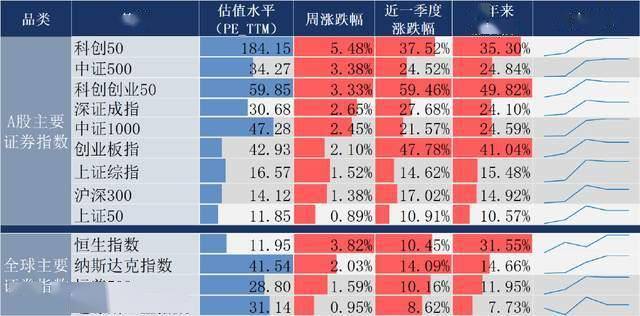
Market Overview - The overall market experienced an upward trend last week, with the Shanghai Composite Index closing at 3870.60 points, up 1.52%, and the Sci-Tech Innovation 50 Index closing at 1338.02 points, up 5.48% [1] Sector Performance - In terms of sector performance, real estate, electronics, and agriculture showed the highest gains, while banking, comprehensive finance, and pharmaceuticals faced the largest declines [2] - The valuation levels (PE TTM) and weekly performance of various indices are as follows: - Sci-Tech Innovation 50: PE 184.15, weekly increase 5.48%, quarterly increase 37.52% [2] - CSI 500: PE 34.27, weekly increase 3.38%, quarterly increase 24.52% [2] - ChiNext Index: PE 42.93, weekly increase 2.10%, quarterly increase 47.78% [2] Key Events - The Federal Reserve is set to announce its interest rate decision on September 18, with the U.S. stock market indices reaching new highs, particularly the Nasdaq [4] - The Ministry of Industry and Information Technology aims for automobile sales to reach approximately 32.3 million units in 2025, with a target of 1.55 million units for new energy vehicles, reflecting a 20% year-on-year growth [5] - The public fund market is undergoing a significant reshuffle, with top institutions like Ant Fund and China Merchants Bank maintaining their positions, and equity fund holdings showing rapid growth [5] - New policies are being introduced to support wind power, nuclear power, and marine energy projects in Fujian Province, indicating a push towards green energy [6] - OpenAI and Nvidia are planning to invest significantly in the UK data center project, highlighting the ongoing demand in the AI industry [7] - The U.S. government has launched a pilot project to promote the safe operation of electric vertical takeoff and landing (eVTOL) aircraft, with significant market interest in this sector [9] Market Outlook - The macro strategy department of a fund company suggests that the market's recent strong rebound reflects positive internal sentiment and capital support, driven by policy support, industry catalysts, and overseas liquidity [10] - Investment strategies recommend focusing on both technology and cyclical sectors, particularly innovative pharmaceuticals and AI applications, as well as cyclical resource leaders with strong pricing power [10]

万亿“蓝海”,如何乘势起飞
Xin Hua Ri Bao· 2025-09-15 01:03
Core Insights - The low-altitude economy in Jiangsu is rapidly evolving, with a current industry scale of nearly 30 billion yuan and around 1,300 companies involved, positioning it as a national leader in various aspects such as innovation and financing [1][5] - The application of low-altitude technology is expanding, exemplified by the integration of smart logistics systems that utilize drones for efficient delivery, showcasing the province's technological advancements [2][3] - Jiangsu has established a dual-driven model of manufacturing and services in the low-altitude sector, with nearly 800 upstream and downstream enterprises and a core industry scale exceeding 20 billion yuan [3][4] Industry Development - Jiangsu's low-altitude manufacturing sector is projected to encompass nearly 800 companies by 2024, covering the entire value chain from aircraft manufacturing to infrastructure [3] - The service sector is also growing, with around 400 companies generating nearly 10 billion yuan in revenue, enhancing the industry's support capabilities [3] - The province's innovation capabilities are highlighted by its ranking third nationally in patent applications and grants in the low-altitude economy, with significant technological advancements in products like the FP-98 cargo drone [3][4] Policy and Financial Support - Jiangsu has implemented policies to accelerate the high-quality development of the low-altitude economy, with local governments creating specific action plans to translate these policies into actionable strategies [4][5] - Financial backing is robust, with over 2.65 billion yuan raised in seed and Series A funding, and more than 1 billion yuan allocated for airport construction and technology research [4][5] Challenges and Opportunities - Despite the positive momentum, the low-altitude economy is still in its infancy, facing challenges such as a lack of leading enterprises and insufficient market scale to foster a complete industrial cluster [6][7] - The industry is hindered by regulatory complexities and a lack of sustainable business models, with many applications still reliant on government subsidies [7][8] - The potential for growth is significant, with predictions indicating that China's low-altitude economy market could reach 1.5 trillion yuan by 2025 and exceed 3.5 trillion yuan by 2035 [8] Future Directions - To maintain its leading position, Jiangsu should focus on enhancing its manufacturing capabilities and nurturing specialized enterprises within the low-altitude sector [9][10] - Expanding application scenarios is crucial, with opportunities in urban management, public services, and emergency response identified as key areas for development [9][10] - Establishing a supportive regulatory framework and improving low-altitude infrastructure are essential for fostering a conducive environment for industry growth [10]
博世、联合利华、江森自控都在这儿?
Jin Rong Shi Bao· 2025-09-14 23:01
Group 1 - The Shanghai Hongqiao Airport Economic Demonstration Zone is the first national-level airport economic demonstration zone in the Yangtze River Delta and covers an area of 13.89 square kilometers, housing over 4,000 enterprises, with foreign enterprises accounting for about 25% [1] - By 2024, foreign enterprises are expected to contribute 50% to the economic total of the demonstration zone [1] Group 2 - Bosch operates 65 companies in China, with 35 production bases and 26 technology centers, establishing its China headquarters in the demonstration zone [2] - Bosch employs over 56,000 people in China, making it the country with the largest workforce outside Germany, and has over 3,000 employees working in the new headquarters [2] - The demonstration zone benefits from significant transportation advantages, allowing quick access to major locations within the city [2] Group 3 - The industrial ecosystem in the zone is thriving, with the "Hongqiao Source" online new economy ecosystem park and the Hongqiao Airport Digital Economy Industrial Park [3] - The Longjing District has over 5,800 digital economy enterprises, contributing significantly to the district's economic output, with e-commerce platform transaction volumes leading the city [3] - The Hongqiao International Low-altitude Economy Industrial Park has attracted several enterprises, enhancing the region's economic landscape [3]
低空经济时代 我们离“打飞的”生活还有多远
Zhong Guo Qing Nian Bao· 2025-09-14 22:20
Core Insights - The development of low-altitude economy is becoming a reality, with applications such as logistics drones and aerial commuting vehicles being discussed at the recent forum in Guiyang [1] - The Beidou satellite navigation system is highlighted as a crucial component for enabling precise navigation and safety in low-altitude operations [2][3] - Experts emphasize the need for a new, integrated air traffic management model that combines Beidou's capabilities with low-altitude economic activities [3][4] Group 1: Beidou System and Low-Altitude Economy - The Beidou system is described as the only global satellite navigation system that integrates communication, navigation, remote sensing, and search and rescue functions, providing high precision in location tracking [2] - The system's capabilities address challenges in low-altitude airspace management, such as visibility and communication issues [2] - Experts stress that simply adding Beidou terminals to drones is insufficient; a deeper integration of the Beidou system with low-altitude economic activities is necessary for effective development [3] Group 2: Infrastructure and Technology - The development of low-altitude economy requires robust digital infrastructure, with spatial information being a key component for safe and efficient operations [6][7] - Geographic spatial intelligence is proposed as a solution to enhance low-altitude economic activities by providing accurate spatial representation and navigation support [8] - The integration of Beidou with advanced communication networks like 5G-A is suggested to ensure reliable data transmission and monitoring of low-altitude airspace [8][9] Group 3: Aircraft Types and Challenges - The low-altitude economy encompasses various types of aircraft, including unmanned aerial vehicles (UAVs) and electric vertical takeoff and landing (eVTOL) aircraft, which are expected to dominate future applications [10][11] - Challenges such as noise pollution, reliability of control systems, and safety concerns need to be addressed for the successful deployment of low-altitude aircraft [12][13] - The market potential for China's low-altitude economy is significant, with projections estimating a market size of 1.5 trillion yuan by 2025 and 3.5 trillion yuan by 2035 [13]
行业周报:开源证券:电力设备行业周报-20250914
KAIYUAN SECURITIES· 2025-09-14 14:10
Investment Rating - The industry investment rating is "Positive" (maintained) [1] Core Viewpoints - The low-altitude economy is gaining momentum with significant policy support and market developments, including the issuance of the first overseas pilot license for a manned aircraft by Xiaopeng Huaitian and a procurement agreement for 350 eVTOLs with Autocraft [17][25] - The average stock performance in the low-altitude economy sector increased by 2.3% from September 8 to September 12, with notable gains from companies like Wolong Electric Drive (+19.9%) and Changyuan Donggu (+18.4%) [4][10] Summary by Sections Industry Dynamics - On September 6, Wenchang City released a draft for the low-altitude economy industry development plan, focusing on aerospace equipment and general aviation, aiming to create a composite industry system integrating low-altitude economy, aerospace, and cultural tourism [22] - Sichuan Province announced a smart agriculture plan on September 9, targeting the establishment of 20 agricultural low-altitude demonstration sites by 2025 and 100 by 2028, with a goal of having over 15,000 agricultural drones [23] Individual Company Developments - Xiaopeng Huaitian's "Land Aircraft" received the first overseas pilot license for a Chinese enterprise, marking a breakthrough in the Middle East market for eVTOLs [25] - Ping An Property & Casualty disclosed that it has insured over 150,000 drones, providing risk coverage exceeding 90 billion yuan, and has established a new risk research institute for the low-altitude economy [26] - Chengdu Iron Tower proposed the creation of a "three-network" system for the low-altitude economy, covering eight application scenarios, leveraging its extensive site resources [27]





深圳GDP冲刺4万亿 新兴产业迭代升级
Zhong Guo Jing Ying Bao· 2025-09-14 13:56
Core Insights - Shenzhen is experiencing significant economic growth, aiming for a GDP of 4 trillion yuan, supported by over 25,000 national high-tech enterprises and a thriving innovation ecosystem [1][2] - The Guangdong-Hong Kong-Macao Greater Bay Area (GBA) is a strategic advantage for Shenzhen, enhancing its role as a core economic engine [2][3] - Shenzhen's low-altitude economy is rapidly developing, with plans to establish itself as the "first city of low-altitude economy" by 2026 [1][4] Economic Performance - Shenzhen's GDP surpassed 3.68 trillion yuan in recent years, with an average annual growth rate of 5.5% from 2020 to 2024 [2] - The city's GDP growth target for 2024 is set at 5.5%, with a reported GDP of 18,322.26 billion yuan in the first half of 2025, reflecting a 5.1% year-on-year increase [2][3] Industry Development - Shenzhen hosts 450,800 business entities, including 25,000 national high-tech firms and 11,000 specialized and innovative enterprises [3] - The city is focusing on enhancing collaboration, openness, and innovation to leverage the GBA's advantages and drive industrial transformation [3] Low-Altitude Economy - Shenzhen is home to over 1,900 companies in the low-altitude economy sector, dominating the global market with 70% of consumer drones and 50% of industrial drones [3][4] - The city has implemented a comprehensive policy framework for low-altitude economic development, including the establishment of a legal framework and infrastructure plans [4][5]
吴世春:一个企业的创始人,要在人脉和链接上多下功夫
创业家· 2025-09-14 10:07
Core Insights - The article emphasizes that entrepreneurs often face developmental bottlenecks that require elevating their understanding and approach to problem-solving [3][11][12] - It suggests that solutions to issues in sales, product, design, and aesthetics must be addressed at higher cognitive levels, advocating for a shift in perspective [4][5][6][7] - The importance of networking and learning from successful peers is highlighted as a critical strategy for overcoming challenges [13][14] Group 1 - Entrepreneurs should seek out individuals with higher levels of understanding and thinking to exchange ideas and insights [11] - It is essential for entrepreneurs to elevate their own cognitive levels to effectively tackle existing problems [12] - Networking is portrayed as a valuable asset for entrepreneurs, with connections being equated to value [13] Group 2 - The article mentions a planned offline learning event in Sichuan, where entrepreneurs can explore innovative growth strategies and collaborate with peers [14][21] - The event will feature deep engagement with industry leaders and focus on various sectors, including robotics, smart manufacturing, and satellite communications [22][34] - Participants will gain insights into capital trends and strategies for navigating industry challenges [24][38]

低空行业周报(9月第2周):周五板块有所异动,静待后续催化-20250914
Huafu Securities· 2025-09-14 06:37
Investment Rating - The industry rating is "Outperform the Market" [6] Core Viewpoints - The low-altitude economy index increased by 2.67% this week, ranking 126 out of 338, outperforming the overall market [3][13] - The report indicates that the low-altitude sector is poised for a rebound due to favorable conditions, continuous catalysts since the second half of the year, and new directions in the US-China competition [4][28] - The focus for the low-altitude industry this year is on infrastructure development and the initial deployment of drones in cargo scenarios, with a strong emphasis on military and civilian applications [29][30] Summary by Sections Market Review - The low-altitude economy index rose by 2.67%, outperforming the Shanghai Composite Index, which increased by 1.52% [3][13] - Top gainers in the A-share and Hong Kong markets included companies like Wolong Electric Drive (up 19.87%) and Changyuan Donggu (up 18.41%) [16][23] Industry Dynamics - The establishment of a leadership group by the Civil Aviation Administration of China for general aviation and low-altitude economy is expected to bring favorable policies [4][28] - Recent developments include the successful first flight of China's first dual-seat electric helicopter and the launch of an online platform for low-altitude flight services [32][35] Investment Recommendations - Recommended stocks for infrastructure include: Suzhou Planning and Lais Information [5][31] - Recommended stocks for drones include: Jifeng Technology, Yokogawa Precision, and Tengya Precision [5][31] - Suggested leading companies in capacity include: Wanfeng Aowei, Zongshen Power, and Sichuan Jiuzhou [5][31]
中国低空经济发展调查报告(2022-2025)
Sou Hu Cai Jing· 2025-09-14 02:34
Core Insights - The report outlines the rise of China's low-altitude economy from 2022 to 2025, highlighting its strategic value and the interplay between policy, technology, and market dynamics [1] - The low-altitude economy is projected to grow from 505.95 billion yuan in 2023 to 670.25 billion yuan in 2024, and is expected to exceed 850 billion yuan by 2025, with a potential to reach a trillion yuan by 2026 [1] Policy Framework - China's low-altitude economy has transitioned from industry regulation to a national strategic focus, with key policies established in 2022 and 2023, including standards for urban logistics drones and a comprehensive management system for unmanned aerial vehicles [3][4] - By 2024, low-altitude economy was recognized as a "new growth engine" in government reports, and a dedicated department was established to oversee its strategic planning [4] - The revision of the Civil Aviation Law in 2025 aims to legally support the allocation of airspace resources for low-altitude economic development [4] Regional Practices - All 31 provinces have incorporated low-altitude economy into their 2025 government work reports, with Guangdong aiming for a 300 billion yuan industry scale by 2026 [5] - Hunan has established a collaborative management mechanism for low-altitude operations, achieving a 95% monitoring coverage in airspace below 3000 meters [5] - Inner Mongolia is focusing on diverse applications of low-altitude economy, with plans to establish a research institute and develop a low-altitude economic zone [6] Institutional Innovations - The rapid development of the low-altitude economy necessitates reforms in airspace management, moving from a traditional approval model to a more flexible, categorized management approach [7] - The establishment of a dual system combining legal regulations and technological empowerment is crucial for ensuring the safe development of the low-altitude economy [7] Industry Ecosystem - The low-altitude economy encompasses a complete industrial chain, including infrastructure, aircraft manufacturing, operational services, and support systems [9] - The number of general airports in China is increasing, but still lags behind the U.S., with innovative facilities being developed in urban areas [9] - The drone manufacturing sector is led by civilian drones, with significant growth in eVTOL technology expected in the coming years [9][10] Market Dynamics - The low-altitude economy is experiencing rapid growth, with a market size of 505.95 billion yuan in 2023 and a projected increase to 859.17 billion yuan by 2025 [13] - Key growth drivers include supportive government policies, technological advancements, and rising demand for low-altitude services [13] - The market is characterized by leading companies like DJI and EHang, with significant investment flowing into the sector [14] Academic Research - Research indicates that cities with strong industrial foundations and policy support will experience faster growth in the low-altitude economy [16] - Studies highlight the need for a dynamic airspace allocation mechanism to enhance resource utilization and address the challenges of traditional management systems [17] Challenges and Recommendations - The low-altitude economy faces challenges such as insufficient market demand, uneven infrastructure development, and regulatory gaps [18][20] - Recommendations include enhancing airspace management reforms, improving infrastructure planning, and fostering technological innovation to overcome existing barriers [26][27] Future Outlook - By 2026, the low-altitude economy is expected to see accelerated technological integration and the establishment of a comprehensive industrial ecosystem, with a market size potentially exceeding one trillion yuan [25] - The development will likely follow a "three-pole leading, multi-point support" model, with distinct regional strengths in manufacturing, technology, and application [25]



全产业链生态体系正在形成
Jing Ji Ri Bao· 2025-09-14 02:04
Industry Overview - The low-altitude economy in China is gaining momentum, driven by technological advancements, policy incentives, and economic transformation [1][3] - The low-altitude economy is expected to exceed 670 billion yuan by 2024, with projections indicating it could surpass 1 trillion yuan by 2026 [4] Company Developments - Nanjing Aerospace Guoqi Intelligent Equipment Co., Ltd. has developed various unmanned aerial vehicles (UAVs) with capabilities such as a maximum load of 300 kilograms and flight duration of approximately 30 minutes [2] - The PT6A engine maintenance base established by Huaxia Yuntian Aviation Engine Maintenance Co., Ltd. in Wuhu is the first authorized overhaul facility for PT6A engines in China, aiming for an annual repair capacity of 100 engines [4] Policy and Regulatory Framework - The Chinese government has integrated the low-altitude economy into national planning since 2021, with continuous emphasis in key meetings and government reports [3] - Various ministries are working on establishing a standard system for the low-altitude economy and enhancing safety regulations [3][4] Market Dynamics - As of the end of 2024, there are over 200,000 enterprises in the low-altitude economy sector, reflecting a year-on-year growth of 10.46% [4] - The industry is characterized by a growing ecosystem that includes production, operation services, and airspace management [1][3]