咖啡

Search documents
从「喝一杯」到「喝出效能」:植享派引领咖啡行业进入咖啡功能新时代
Zhong Guo Shi Pin Wang· 2025-05-22 15:38
Core Viewpoint - The launch of the VITA coffee series by the company represents a significant innovation in the coffee industry, combining advanced technology with health benefits to redefine consumer expectations and experiences in coffee consumption [15]. Group 1: Product Innovation - The VITA series features the Exo-WT Shield Capsule Rare Saponin™ technology, which integrates targeted fermentation of red ginseng probiotics and exosome encapsulation technology, enhancing the bioavailability of saponins and addressing gastrointestinal absorption challenges [3][5]. - This innovative technology increases the bioavailability of total saponins by 137% compared to traditional methods, transforming each cup of coffee into a "health energy capsule" [3][7]. - The product aims to shift the perception of coffee from merely a stimulant to a comprehensive health-enhancing beverage, promoting systemic fatigue resistance rather than just short-term alertness [3][5]. Group 2: Health Benefits - The VITA coffee series incorporates red ginseng, which has shown a 7.7-fold increase in rare saponin Rg3 content and a 2.3-fold increase in Rd content, enhancing its health benefits [7]. - The combination of white kidney bean, EGCG, and caffeine in the VITA coffee creates a "golden triangle" that effectively inhibits starch absorption and promotes fat breakdown, allowing consumers to enjoy indulgent foods without guilt [9][11]. - Each cup contains 880 billion red ginseng rare saponin capsules, which can effectively reach the mitochondria and eliminate up to 48.6% of ROS free radicals, contributing to overall well-being and energy levels [7]. Group 3: Market Positioning - The company positions itself as a scientific meal replacement brand under the Baihong Group, emphasizing the integration of scientific health benefits with enjoyable flavors, challenging the stereotype that functional foods compromise taste [13]. - The VITA series aims to break through traditional coffee's single-function image, offering a multi-faceted drinking experience that meets diverse health needs, thus setting a new benchmark for innovation in the coffee industry [15]. - The launch is expected to drive the coffee market towards higher-end, healthier, and more functional products, moving away from homogenized competition to a focus on technology and health differentiation [15].


西洽会上“双年记”:一杯肯悦咖啡,测出重庆咖啡消费升级的温度
Sou Hu Cai Jing· 2025-05-22 14:25
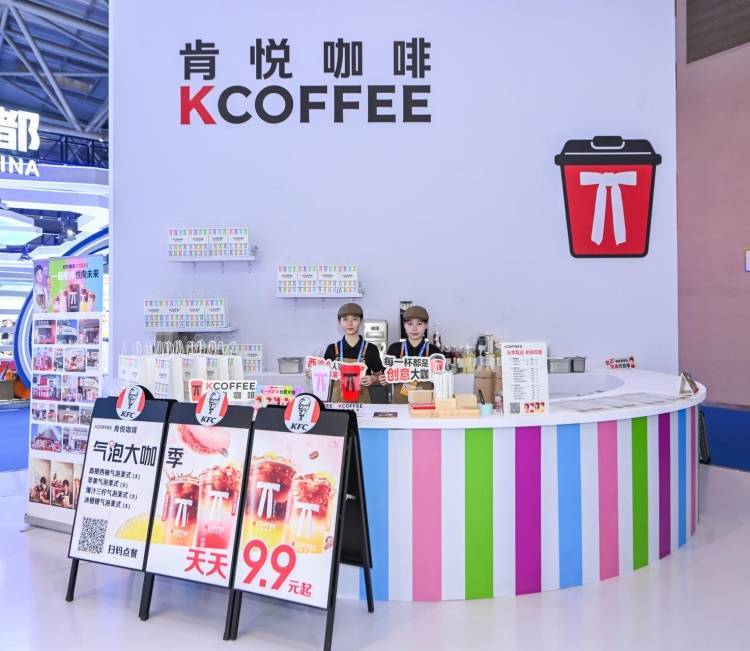
Core Insights - The "5th China Western International Investment and Trade Fair" (West Expo) has commenced in Chongqing, attracting global attention as a significant international economic and trade event [1] - Kenuo Coffee has emerged as a popular attraction at the West Expo, showcasing its growth and the evolving coffee consumption trends in Chongqing [3][5] Company Development - Kenuo Coffee, an independent brand under Yum China, debuted at the West Expo in 2024 and returned in 2025, indicating its growing popularity and market potential [5] - The number of coffee shops in Chongqing has surged from 80 in 2015 to 3,265 in 2024, positioning the city among the top ten in the country for coffee shop density [5] - Kenuo Coffee has successfully expanded its presence in Chongqing, opening multiple stores with the support of local business authorities [5][6] Market Trends - Kenuo Coffee has demonstrated a keen ability to identify consumer preferences, launching popular products such as matcha and fruit coffee, which have contributed to its market leadership [8] - The brand is rapidly expanding, with a goal of opening one store per day, reflecting its ambition to penetrate both urban and rural markets [8] - Kenuo Coffee aims to continue its growth in Chongqing by offering diverse and high-quality coffee products, thereby supporting the local coffee economy [8]
星巴克,抢不回“铁王座”
3 6 Ke· 2025-05-22 03:41
Core Viewpoint - The article discusses the competitive landscape of the coffee market in China, highlighting Starbucks' resilience and strategies to adapt to market challenges, including price wars and changing consumer preferences [1][2]. Group 1: Starbucks' Performance - In Q2 2025, Starbucks reported a 5% year-on-year increase in revenue to $739.7 million, with a consistent double-digit operating profit margin [1]. - The number of Starbucks stores in China reached 7,758, marking a 9% year-on-year growth and contributing to about one-third of global new store openings [1][3]. - This marks the first positive growth in performance for Starbucks in China after four consecutive quarters of same-store sales decline [1][3]. Group 2: Market Strategies - Starbucks is focusing on localizing its offerings by expanding into lower-tier cities, having opened 790 stores in the 2024 fiscal year, a record high [3]. - The company is enhancing its online delivery capabilities through partnerships with platforms like Meituan and JD, while also engaging in price competition on platforms like Ele.me [3]. - Starbucks has introduced a "sugar-free revolution" with its new product line "True Taste Sugar-Free," allowing customers to customize sweetness levels, reflecting a shift towards health-conscious offerings [4][5]. Group 3: Competitive Landscape - The coffee market in China is characterized by aggressive pricing strategies, with competitors like Luckin Coffee and Kudi offering significantly lower prices, challenging Starbucks' traditional pricing model [1][9]. - Luckin Coffee has optimized its supply chain, reducing inventory turnover days to 18, which is half the industry average, and achieving a self-operated store profit margin of 17.1% [10]. - The rise of local brands and the shift in consumer preferences towards value and taste have intensified competition, leading to a decline in Starbucks' market share [8][11]. Group 4: Future Opportunities - The Chinese coffee market is projected to exceed 220 billion yuan by 2025, indicating significant growth potential for Starbucks [12]. - Starbucks can enhance its supply chain efficiency and focus on quality-price balance to regain lost customers [15]. - Strengthening its membership program and leveraging its "third space" concept can help Starbucks create unique consumer experiences and foster brand loyalty [15][16].

虹桥国际咖啡文化节邀请广大旅客免费品尝——“抵达上海的第一杯咖啡”
Jie Fang Ri Bao· 2025-05-22 01:54
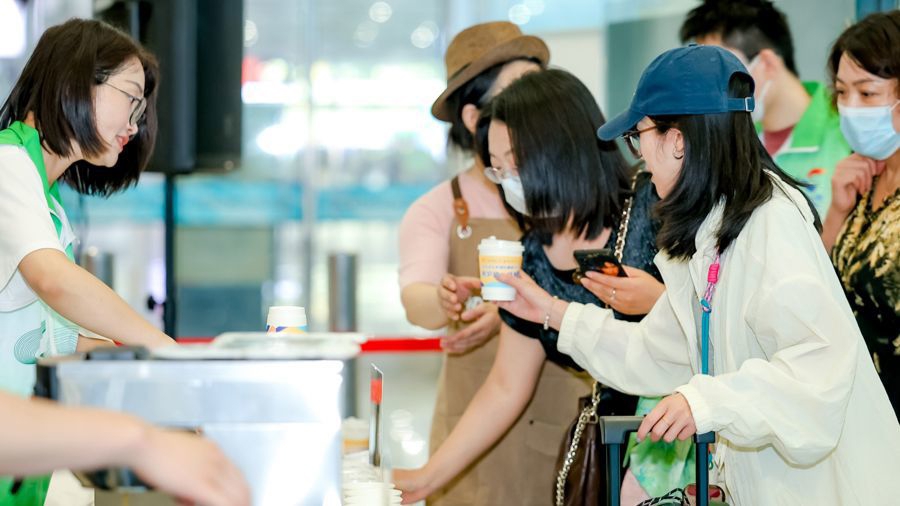
Group 1 - The event "First Cup of Coffee Upon Arrival in Shanghai" is part of the ongoing Shanghai International Coffee Culture Festival, aimed at welcoming travelers and promoting local coffee brands [2][4] - The event saw a high demand, with staff needing to urgently restock coffee supplies shortly after the event began, indicating its popularity among travelers [2] - The initiative is organized by local authorities in collaboration with various coffee brands, enhancing community engagement and promoting local businesses [2][3] Group 2 - The festival features interactive experiences, such as a "Coffee Festival Limited Blind Box" giveaway for participants who share their experiences on social media [3] - A unique performance titled "Coffee Dream - Coffee Adventure" was held, blending traditional Chinese opera with modern elements, showcasing cultural integration [3][4] - The event has successfully distributed nearly 5,500 cups of coffee to travelers, reinforcing its role as a cultural ambassador for Shanghai [5]
从三年3店到一年1000店,Manner咖啡的“平价精品”奔向何方?
Guan Cha Zhe Wang· 2025-05-21 08:20
Core Insights - The Chinese coffee market is experiencing a pivotal moment in 2024, with Manner Coffee planning to open 1,000 new stores within a year, contrasting with the slower growth of Starbucks and the aggressive pricing strategies of Luckin and Kudi [1][8] - Manner's rapid expansion is a significant shift from its previous cautious approach, where it only opened three stores in its first three years [5][6] - The expansion strategy is driven by Manner's brand positioning and consumer habits, aiming to enhance customer experience and reduce wait times [2][3] Company Strategy - Manner Coffee currently has over 2,000 stores nationwide, with approximately 73.9% located in first-tier cities, and plans to continue expanding despite market saturation [2] - The company utilizes a unique pricing strategy, offering coffee at 15-20 yuan per cup, which is about half the price of Starbucks, thus appealing to young consumers [5][6] - Manner's expansion may be capital-driven, with potential new partnership models on the horizon, although recent financing activities have been absent [3][7] Market Dynamics - The overall coffee market in China is slowing down, with first and second-tier cities nearing saturation, making it challenging for brands to find new high-quality locations [2][8] - Manner's approach differs from other brands that rely heavily on online orders, as it encourages in-store consumption through promotions like discounts for bringing reusable cups [2][3] - The competitive landscape is evolving, and Manner's ability to maintain its core competencies while scaling operations will be crucial for its long-term success [3][8]
Tims中国盈利能力大幅修复,加拿大国民咖啡又能打了?
Guan Cha Zhe Wang· 2025-05-20 03:13
Core Viewpoint - Tims China is struggling to maintain competitiveness in the rapidly growing Chinese coffee market, facing significant financial challenges and competition from both international and local brands [1][2][12] Financial Performance - In 2024, Tims China reported a revenue decline of 10.8% to 1.391 billion yuan, with a net loss of 409 million yuan, although the loss narrowed by 53% year-on-year [3][12] - The company has total assets of 1.564 billion yuan and total liabilities of 2.397 billion yuan, indicating a state of insolvency [3][4] - Tims China received a total of $65 million in financing from its parent company and shareholders to support operations [4][5] Market Position and Competition - The Chinese coffee market is projected to grow at a compound annual growth rate of 17.14%, reaching 265.4 billion yuan by 2024, with strong competition from Starbucks, Luckin Coffee, and other local brands [1][2] - Tims China has been unable to achieve the scale necessary to compete effectively, with a total of 1,022 stores as of December 31, 2024, falling short of its expansion targets [6][11] Strategic Initiatives - To improve profitability, Tims China is increasing its focus on franchise operations, having opened franchise opportunities in major cities and launched a "county-level franchise" plan [6][8] - The company is also adjusting its product offerings to include lower-cost items to attract consumers in lower-tier cities, although this strategy may compress margins [8][10] Challenges and Risks - Tims China faces challenges in differentiating its product offerings, as its "coffee + warm food" model is easily replicable by competitors [10][12] - The company has raised prices on some products, which has led to consumer dissatisfaction and potential loss of market share [9][10] - The long-term viability of Tims China is in question, with concerns about whether its parent company, RBI, will continue to provide financial support if profitability does not improve [11][12]


一杯咖啡中的沈阳活力“新”脉动
Ren Min Ri Bao· 2025-05-20 02:33
Core Insights - The coffee culture in Shenyang is rapidly growing, with the number of coffee shops reaching 2,690 as of April this year, an increase of 140 shops within the year [1] - Shenyang leads the nation in the growth rate of coffee delivery orders, indicating a strong demand for coffee among the population [1] - The coffee market is significantly driven by the influx of young talent returning to the city, supported by targeted policies aimed at attracting high-level and overseas talent [2] Group 1: Coffee Market Growth - The coffee shop count in Shenyang has increased significantly, reflecting a growing consumer interest in coffee [1] - The city has seen a notable rise in coffee delivery orders, showcasing a shift in consumer behavior towards convenience [1] - Young people are a major driving force in the coffee consumption market, with delivery personnel reporting high order volumes [2] Group 2: Talent and Tourism - Shenyang has implemented precise policies to attract talent, resulting in 171,000 university graduates choosing to stay in the city in 2024 [2] - The tourism sector is thriving, with over 200 million visitors expected in 2024 and a 51.5% increase in tourism revenue [3] - Coffee shops are becoming popular destinations for tourists, with one-third of visitors to certain coffee streets being from outside the city, contributing to significant sales figures [2] Group 3: Cultural Transformation - The transformation of industrial spaces into creative cultural hubs is a key aspect of Shenyang's evolving identity, with coffee shops playing a central role [3][6] - The integration of coffee culture with various artistic and cultural elements is enhancing the city's vibrancy and appeal [3][6] - The shift from traditional business-oriented coffee consumption to a more diverse and personalized experience reflects the city's dynamic cultural landscape [6]

内联升跨界:非遗针脚“纳出”咖啡新故事
Zhong Guo Chan Ye Jing Ji Xin Xi Wang· 2025-05-20 01:46
Core Insights - The company Neiliansheng is diversifying its business by entering the coffee market, aiming to attract younger consumers and modernize its brand image [1][2][3] Group 1: Business Strategy - Neiliansheng's entry into the coffee market is part of a broader strategy to integrate cultural elements into everyday consumer experiences, appealing to the preferences of younger consumers [1] - The coffee shop, named "Danei Gongbao," is linked to the brand's historical narrative, enhancing consumer engagement through storytelling [2] - The coffee business has shown promising profitability since its opening in 2022, with significant growth potential as operational models are optimized [2] Group 2: Brand Image and Consumer Engagement - The introduction of the coffee shop has led to an increase in online search volume for Neiliansheng's shoe products and a higher proportion of young customers in physical stores [2] - The establishment of the "Neifu Academy" reading space within the coffee shop allows customers to explore books related to traditional crafts and the brand's history, enhancing the overall consumer experience [3] - This multi-faceted approach not only attracts new customers but also revitalizes the brand, creating a modern image while preserving its cultural heritage [1][3]

茶咖日报|茶饮行业迎涨价潮:头部品牌新品价格上调1-3元
Guan Cha Zhe Wang· 2025-05-19 13:09
Group 1: Industry Trends - The takeaway beverage industry is experiencing a resurgence driven by aggressive subsidy campaigns from major delivery platforms like JD.com, Meituan, and Ele.me, leading to a significant increase in daily order volumes [1] - As of May 7, 2023, Kudi Coffee's cumulative sales on JD.com exceeded 40 million orders, while Nayuki's Tea saw a year-on-year order volume increase of over 200% on Ele.me [1] - New registrations of tea beverage companies are predominantly occurring in third-tier cities, contributing 22.42% to the total new registrations this year [1] Group 2: Market Dynamics - New tea beverage brands are now responsible for nearly 10% of China's total tea production, indicating their deep integration into the tea industry [2] - The top new tea brands, such as Heytea and Mijia Ice City, have reached significant market valuations, with four brands qualifying for the Hu Run China 500 list [2] - The tea beverage market is witnessing a price increase trend, with leading brands raising prices by 1-3 RMB for new products, reflecting a shift from price competition to value competition [4][5] Group 3: Company Performance - Cha Bai Dao's stock surged by over 18%, driven by strong sales performance during the May Day holiday, with some stores reporting sales increases of up to 3000% [3] - The company has seen a 50% increase in overall sales during the holiday period, with significant growth in both domestic and international markets [3] - Cha Bai Dao's same-store sales have shown double-digit growth since April, with a year-on-year increase of over 20% from May 1 to 14 [3] Group 4: Consumer Behavior - Despite price increases, new product sales remain strong, indicating consumer willingness to pay for quality upgrades [5] - The rising costs of raw materials, including fruits and dairy, have prompted brands to raise prices while simultaneously launching high-value new products [5] - The industry is expected to evolve towards a dual-track model of "premiumization" and "cost-effectiveness," with brands needing to innovate continuously to maintain competitiveness [5]
Z世代消费力如何重塑外资品牌?从酱香拿铁到LV直播的营销革命
Sou Hu Cai Jing· 2025-05-19 07:11
Core Insights - The rise of the "Sauce Aroma Latte" by Starbucks, which incorporates the scent of Moutai liquor, signifies a significant shift in the Chinese coffee market driven by the purchasing power of Generation Z [2] - Generation Z in China is showing a consumption growth rate of 14% annually, which is double that of individuals over 35, indicating a shift in brand loyalty towards those that understand local culture [2] - Successful foreign brands are adapting to local preferences by innovating products and marketing strategies, as evidenced by L'Oréal's localized product development and LV's engagement with consumers through live streaming [3][4] Product Innovation - L'Oréal's Asian Skin Laboratory was established to cater to the 37% higher demand for anti-aging products among Asian consumers compared to Western markets, leading to the successful launch of the "Truffle Essence" series [2] - The shift from merely repackaging Western products to developing products that resonate with local consumers marks a significant change in strategy for international beauty brands [2] Marketing and Channel Strategies - LV's live streaming debut on Xiaohongshu, utilizing popular internet slang, garnered 270 million views, demonstrating the importance of cultural integration in marketing to younger consumers [3] - Costco's initial pricing strategy in China failed to attract members, leading to a successful pivot to a "0 yuan experience membership" model, which significantly increased daily foot traffic [3] Consumer Behavior and Market Dynamics - According to Nielsen's report, by 2030, the global consumption power of Generation Z is expected to reach $12 trillion, with Chinese youth showing a preference for local elements and a willingness to pay a premium for emotional resonance [3] - The transition of consumer power from traditional methods to innovative approaches highlights the need for foreign brands to evolve, as expressed by a young consumer's desire for products "born for China" rather than just "customized for China" [4]