美妆

Search documents
美国巨头一年大亏81亿元,中国内地市场净销售额下滑6%
Mei Ri Jing Ji Xin Wen· 2025-08-21 11:02
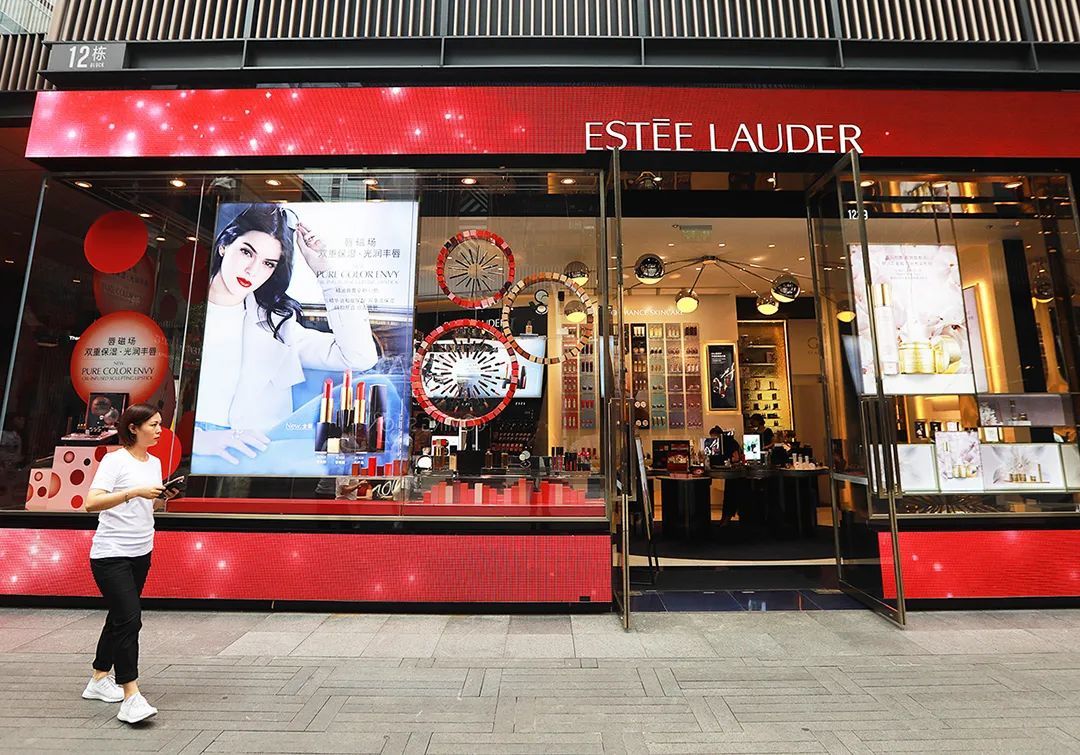
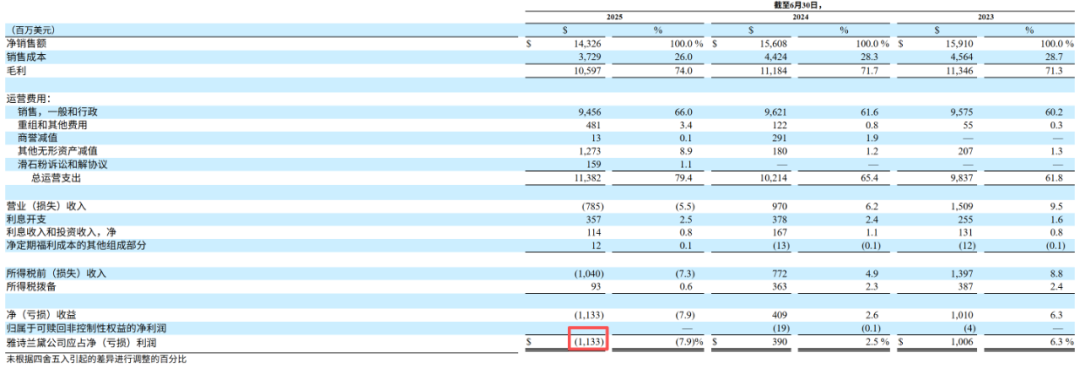
Core Viewpoint - Estée Lauder is experiencing a challenging period in its reform and adjustment phase, with a reported net sales decline of 8% for the fiscal year 2025, marking the third consecutive year of decline, while the gross margin has improved [1][4][6]. Financial Performance - For the fiscal year 2025, net sales reached $14.33 billion, down from $15.61 billion in the previous year, with a net loss of $1.13 billion [4][5]. - The gross margin increased by 2.3 percentage points to 74%, attributed to improved operational efficiency, reduced excess inventory, and better pricing strategies [6][8]. - The operating loss was $785 million, with total operating expenses rising to $11.38 billion, representing 79.4% of net sales [5][6]. Market Analysis - The decline in net sales was significantly influenced by a 28% drop in the global travel retail market, which accounted for two-thirds of the overall sales decline [11]. - The Asia-Pacific market, including China, saw a 21% decrease in net sales, while the China market specifically reported $2.74 billion in sales, down 6% [7][10]. - The European, Middle Eastern, and African markets experienced the largest decline, with a 12% drop in net sales [4][5]. Strategic Adjustments - Estée Lauder has restructured its management to emphasize the importance of the China market, which is now reported as a separate segment [7][8]. - The company plans to enhance its product innovation and aims for innovative products to account for over 25% of sales in the fiscal year 2026 [8][12]. - The focus on reducing inventory levels in the travel retail sector has led to a decrease in its sales proportion, now closer to the global average for high-end beauty markets [11][12].


在TikTok上,越南姑娘爱上中国染眉膏
Sou Hu Wang· 2025-08-21 10:56
Core Insights - TikTok Shop's new Chinese brand, ROCKSWEET, has rapidly gained popularity in Vietnam's beauty market, achieving the top position in just six months since its launch [2] - The Vietnamese market shows significant potential, with a projected GDP growth rate of 6.5% in 2024 and a 25% annual growth rate in beauty spending among the 18-35 age group [2][3] - The brand's strategy focuses on building a long-term brand identity rather than competing solely on price, which is crucial in a market where low-cost competition is prevalent [3][4] Company Strategy - The founder, Mingo, transitioned from a white-label business model to creating a branded product line, recognizing the need for storytelling in branding [3] - The brand's entry into Vietnam was marked by a strategic pivot from low-margin products like false eyelashes to a focus on eyebrow dye, which was identified as an underserved category in the market [4][6] - The marketing approach involved leveraging local influencers and content creators to build brand awareness and trust among Vietnamese consumers [8][9] Market Dynamics - The Vietnamese beauty market is characterized by a high demand for affordable and unique beauty products, with a significant portion of spending driven by younger consumers [2][4] - TikTok Shop has emerged as a vital platform for e-commerce in Southeast Asia, with a low penetration rate of 11% compared to China's 27%, indicating substantial growth opportunities for brands [3][4] - The brand's success is attributed to its ability to resonate with local consumer preferences and effectively utilize TikTok's content ecosystem for marketing [4][9] Performance Metrics - ROCKSWEET's eyebrow dye product saw a significant increase in sales, with over 10,000 units sold after a viral marketing campaign led by local influencers [9][12] - The brand's sales on TikTok Shop surged by 300% in the second quarter of 2025 compared to the first quarter, highlighting its rapid growth trajectory [14][16] - The brand's marketing strategy has resulted in 91% of its sales being driven by influencer promotions, with over 2,328 influencers participating in the campaign [13]

业绩爆雷,美国巨头一年大亏81亿元,中国内地市场净销售额下滑6%,公司股价大跌
Mei Ri Jing Ji Xin Wen· 2025-08-21 10:26
Core Viewpoint - Estée Lauder is experiencing a challenging period in its reform and adjustment phase, with a reported net sales decline of 8% for the fiscal year 2025, marking the third consecutive year of sales decline, while the gross margin has improved [1][2][4]. Financial Performance - For the fiscal year 2025, net sales reached $14.33 billion, down from $15.61 billion in 2024 and $15.91 billion in 2023 [3]. - The operating loss amounted to $785 million, with a net loss of $1.13 billion (approximately 81 billion RMB) [2][3]. - Gross margin increased by 2.3 percentage points to 74%, attributed to improved operational efficiency and inventory management [4]. Market Analysis - The decline in net sales is significantly influenced by the global travel retail market, which accounted for two-thirds of the organic sales decline, with a 28% drop in this segment [1][8]. - The Asia travel retail business has had a notable impact on overall performance, contributing to a 21% decline in net sales for the Asia-Pacific market [7][8]. Regional Insights - The net sales in the China market were $2.741 billion, reflecting a 6% decline, which constitutes nearly 20% of the company's total sales [5]. - The company is optimistic about the recovery of the China market, expecting organic sales growth in fiscal year 2026, with signs of improvement noted in the latter half of fiscal year 2025 [5][6]. Strategic Adjustments - Estée Lauder has restructured its management to emphasize the importance of the China market, establishing it as a separate reporting segment [5]. - The company plans to enhance its product innovation efforts, aiming for innovative products to account for over 25% of sales in fiscal year 2026 [6]. Future Outlook - The CEO expressed confidence in achieving organic sales growth in fiscal year 2026, following three years of decline, and aims for a robust double-digit operating profit margin in the coming years [4][10]. - The company anticipates that the global travel retail business will see a recovery in organic net sales in fiscal year 2026, particularly in the second half of the year [10].
逸仙电商(YSG.US)连续三季度延续增长:Q2营收增至10.9亿,超过业绩指引
智通财经网· 2025-08-21 10:13
Core Insights - Yatsen E-commerce (YSG.US) reported Q2 2025 revenue of 1.09 billion yuan, a 36.8% increase year-over-year, exceeding previous guidance [1] - The skincare segment grew by 78.7% to 580 million yuan, accounting for 53.5% of total revenue, marking a record high contribution [1] - The company achieved a gross profit increase of 39.5%, with a gross margin of 78.3%, and Non-GAAP net profit turned positive at 11.5 million yuan [1] Financial Performance - Q2 2025 revenue reached 1.09 billion yuan, up 36.8% from the same period last year [1] - Gross profit rose by 39.5%, with a gross margin of 78.3% [1] - Non-GAAP net profit was 11.5 million yuan, indicating sustained profitability over three consecutive quarters [1] Research and Development - R&D expenses for Q2 2025 amounted to 36.12 million yuan, representing 3.3% of total revenue, maintaining over 3% for three consecutive years [1] - The company’s Shanghai Innovation R&D Center received national CNAS certification, enhancing its competitive edge [2] - The launch of the "Yatsen Group Beauty Innovation White Paper" showcases the company's commitment to R&D and its global beauty technology advancements [2] Strategic Vision - The company aims to be a "world-class beauty innovation pioneer," focusing on a "R&D-driven" growth model to convert scientific achievements into market-leading products [2] - The CEO emphasized the importance of high-quality products and brand asset consolidation for sustained growth [2] - Q3 2025 revenue is projected to be between 780 million and 880 million yuan, reflecting a year-over-year growth of approximately 15% to 30% [2]

雅诗兰黛集团中国大陆市场2025财年实现市场份额提升
Zheng Quan Ri Bao· 2025-08-21 08:35
Group 1 - The core viewpoint of the articles highlights Estée Lauder's strong performance in fiscal year 2025, with an adjusted gross margin increase of 230 basis points to 74.0%, driven by the Profit Recovery and Growth Plan (PRGP) [2] - In the China mainland market, retail sales saw single-digit growth in the third and fourth fiscal quarters, contributing to an overall market share increase for the fiscal year [2] - The company remains focused on its "Reimagining Beauty" strategic vision, expressing confidence in achieving organic sales growth and rebuilding operational profitability in fiscal year 2026, with a target of a stable double-digit operating profit margin in the coming years [2][3] Group 2 - In the second half of fiscal year 2025, brands like La Mer, Tom Ford, and Estée Lauder contributed to market share growth in China, with La Mer launching a new product tailored for oily skin that continued its successful sales trend [3] - The company anticipates organic net sales growth of 0% to 3% in fiscal year 2026, along with an expected increase of 150 basis points in operating margin, projecting an adjusted operating profit margin of approximately 11.0% to 11.5% [3]
千亿市场待开拓,国货美妆在细分赛道竞逐突围
Sou Hu Cai Jing· 2025-08-21 07:45
Core Insights - The domestic beauty market in China is experiencing diverse and robust growth, with a focus on niche segments driven by consumer demand for personalization and refinement [1][2] - The facial cleansing segment is projected to exceed 150 billion yuan by 2026, with specific market sizes for facial cleansing, hair care, and body cleansing expected to reach 52.5 billion yuan, 70.3 billion yuan, and 33.3 billion yuan respectively [1] - Despite the large market potential, foreign brands dominate the top-selling products on major e-commerce platforms, indicating significant growth opportunities for domestic brands [1] Market Dynamics - The historical development of the facial cleansing segment was limited by low average transaction values and thin profit margins, but recent consumer upgrades and market changes are bringing this category to the forefront [2] - The demand for makeup removal products has evolved from basic cleansing to a comprehensive consideration of efficacy, experience, and brand, with a focus on "deep cleansing" and "gentle on the skin" [5] Product Development - The brand "Hongzhi" launched its first cleansing product, "Xiao Qin Jing" cleansing milk, in 2020, featuring 30% amino acid surfactants, which has become a best-seller across major e-commerce platforms [5][6] - Hongzhi has built a comprehensive product matrix covering makeup removal, facial cleansing, and hair care, with its olive enzyme makeup remover achieving cumulative sales of over 27 million units [5] Brand Strategy - Successful brands in the beauty industry, both international and domestic, rely on classic products as a core engine for sustained growth, as evidenced by long-standing bestsellers from brands like Estée Lauder and Perfect Diary [6] - Hongzhi's focus on classic products, such as "Xiao Qin Jing" cleansing milk and "Bu Jiu Jie" 2.0 makeup remover oil, has supported revenue growth and established a brand identity centered on "scientific cleansing" [6] Emerging Trends - Beyond the cleansing segment, other areas such as anti-aging, whitening, and repair in functional skincare, as well as various categories in color cosmetics, are witnessing the emergence of new brands and products [7] - Domestic brands are innovating by addressing unmet consumer needs with new product concepts and technologies, particularly in the anti-aging and color cosmetics sectors [7] - The value of classic products extends beyond immediate sales, serving as a key communication tool between brands and consumers, helping to build trust and create differentiation in a competitive market [7]

业绩复苏前景模糊 大摩向美妆霸主雅诗兰黛(EL.US)投来看跌研报
Zhi Tong Cai Jing· 2025-08-21 07:07
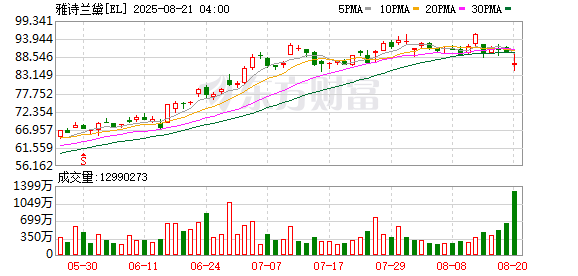
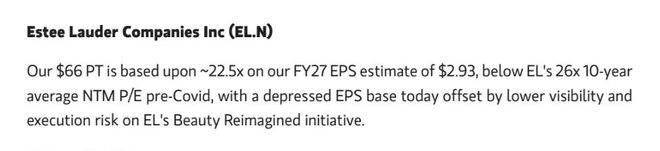
Core Viewpoint - Estée Lauder (EL.US) experienced a decline in performance for the fiscal year 2025, with net sales down approximately 8% year-over-year, and Q4 sales at about $3.41 billion, a 12% decrease, although better than market expectations [1][2] Financial Performance - The company's adjusted gross margin for Q4 was 71.9%, slightly up by 10 basis points year-over-year, driven by price increases, product mix optimization, and cost savings [1] - Sales and management expenses were slightly above expectations, accounting for a year-over-year increase of approximately 0.6 percentage points of net sales, leading to an operating profit of $137 million, exceeding market expectations of $116 million [2] - Adjusted earnings per share (EPS) were $0.09, slightly above analyst expectations of $0.07-$0.08, but significantly down from $0.64 in the same period last year [2] Future Guidance - For fiscal year 2026, the company provided cautious guidance, expecting organic net sales growth between 0% to +3% and reported net sales growth of +2% to +5%, aligning with market consensus [3] - The EPS guidance for 2026 is set at $1.90 to $2.10, indicating a potential year-over-year growth of 26% to 39%, but below Wall Street's previous consensus of approximately $2.1 to $2.20 [3] - The company anticipates an effective tax rate of about 36% for fiscal year 2026, significantly higher than the market's prior estimate of around 32%, which may lower the EPS guidance by approximately $0.14 [3] Market Sentiment - Morgan Stanley reiterated a "neutral" rating on Estée Lauder's stock, projecting a target price of $66, suggesting a potential decline of over 20% in the stock price over the next 12 months [1][4] - The cautious outlook from the new CEO and the expectation of low single-digit sales decline for Q1 2026 reflect management's alignment with market expectations [4] - The company expects high single-digit growth in travel retail channels and a return to stable growth in the Chinese market, but anticipates declines in other regions to moderate [4] Valuation Considerations - Morgan Stanley employs a lower valuation multiple due to the current pressure on the company's earnings base and net sales, alongside uncertainties regarding the "Beauty Reimagined" transformation plan and the impact of tariffs [5] - The firm maintains a cautious stance on Estée Lauder's performance outlook, highlighting risks from weak demand in China and North America, potential loss of market share, and intense price competition from European and Chinese rivals [5]
知名“大空头”投降,反手买入超5亿美元看涨期权!
Jin Shi Shu Ju· 2025-08-21 03:22
Group 1 - Michael Burry has shifted from bearish to bullish positions in the stock market, indicating a change in his investment strategy [1][2] - Burry's Scion Asset Management converted six put options into nine call options, with notional values of $186 million and $522 million respectively [1] - The updated portfolio shows Burry's holdings have increased from seven positions to fifteen, including bullish bets on Estee Lauder and Lululemon, and call options on Alibaba and JD.com [1][2] Group 2 - Peter Mallouk noted that Burry's first-quarter portfolio suggested he believed tech stocks were overvalued and expected a significant pullback [2] - The S&P 500 index has risen over 28% since its low in April, reflecting a broader market recovery that Burry seems to be betting on [2] - Gerry Fowler described Burry's portfolio as opportunistic and contrarian, as he shifted from short positions on Alibaba and JD.com to long positions [2][3] Group 3 - Burry's bullish positions indicate he is not heavily relying on debt for financing, as options require less capital than purchasing underlying stocks [3] - Daniel Bustamante highlighted Burry's investments in struggling companies like Estee Lauder and VF Corp as turnaround plays, with new leadership aiming to revitalize sales [3] - Concerns were raised about Burry's bullish stance on Lululemon due to the recent departure of its chief product officer, which could impact the company's performance [3] Group 4 - Using options allows Burry to manage risk while potentially achieving asymmetric returns if any of the distressed companies rebound [4] - Burry's previous successful bet against the housing bubble in the mid-2000s was also characterized by asymmetric risk and reward [5]


新质生产力为日常消费添新彩
Xiao Fei Ri Bao Wang· 2025-08-21 03:19
Core Insights - The development of new productive forces in China is steadily progressing, injecting continuous new momentum into high-quality development [1] - The integration of technology into daily consumer goods is becoming more pronounced, with innovations in smart appliances enhancing consumer convenience [1] - The growth of emerging industries is enriching the variety of daily consumer products available [1][2] Group 1: Technological Advancements - Smart home appliances, such as intelligent refrigerators and robotic vacuum cleaners, are improving household convenience through advanced features [1] - China's R&D expenditure is projected to exceed 3.6 trillion yuan in 2024, with an intensity of 2.68%, surpassing the average level of EU countries [1] - The manufacturing value added in the high-tech industry related to light industrial products increased by 21.7% year-on-year in July [1] Group 2: Digital Economy Impact - The manufacturing value added of digital products increased by 8.4% year-on-year in July, enhancing the efficiency of daily consumer goods [2] - Online shopping platforms are utilizing big data to analyze consumer preferences, making shopping more convenient [2] - Smart home products are leveraging IoT technology for remote control, improving user experience [2] Group 3: Green Development - The production of new energy products, such as electric vehicles and lithium-ion batteries, saw year-on-year increases of 17.1% and 29.4%, respectively [2] - The production of green materials, including carbon fiber and bio-based chemical fibers, increased by 43.8% and 19.8% in July [2] - The trend towards green consumer goods is becoming more prevalent, with environmentally friendly products gaining popularity among consumers [2] Group 4: Future Outlook - The steady development of new productive forces is expected to enhance the quality and experience of daily consumer goods [2] - Continuous technological advancements and industry upgrades will likely lead to more high-quality, intelligent, and green consumer products in the future [2]
8点1氪|泡泡玛特发半年报,王宁:今年营收300亿很轻松;富士康进入招聘高峰期,3月工资可超2万;按规发放的育儿补贴免征个税
3 6 Ke· 2025-08-20 23:58
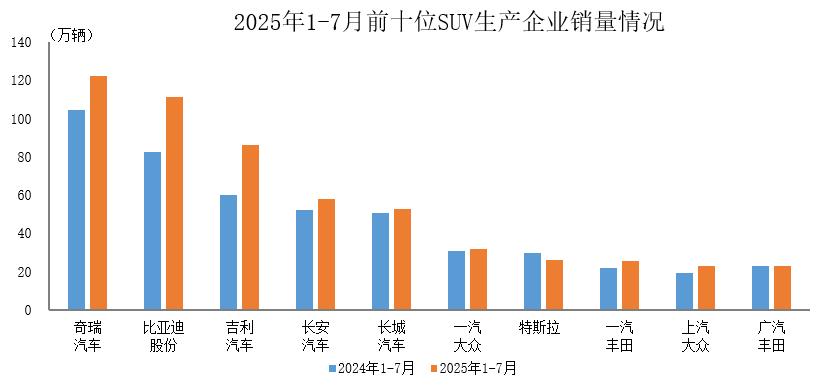
Group 1 - Pop Mart held a mid-year performance conference for 2025, with founder Wang Ning stating that the company expects annual revenue to be no less than 30 billion yuan, emphasizing the importance of healthy growth metrics [1][1] - In the first half of 2025, Pop Mart reported revenue of 13.88 billion yuan, a year-on-year increase of 204.4%, and an adjusted net profit of 4.71 billion yuan, up 362.8% year-on-year [1][1] - Foxconn is entering a peak recruitment period as Apple prepares for its fall product launch, with expected wages for workers reaching between 19,200 yuan and 23,000 yuan over three months [2][2] Group 2 - The China Automobile Manufacturers Association reported that the top ten SUV manufacturers sold 5.599 million units from January to July 2025, accounting for 67.2% of total SUV sales, with Tesla and GAC Toyota experiencing year-on-year declines [3][3] - The average monthly net income of truck drivers in China reached 10,512 yuan, significantly higher than other new employment groups [6][6] - Intel's market value surged by 24 billion USD, reaching levels not seen since the internet bubble, driven by reports of potential government investment [6][6] Group 3 - Xiaomi's electric vehicle business reported revenue of 39.84 billion yuan in the first half of 2025, with a gross margin of 26.4% in Q2, surpassing Tesla's gross margin [9][10] - Baidu's Q2 2025 net profit was 7.4 billion yuan, a 35% year-on-year increase, with total revenue of 32.7 billion yuan [22][23] - Estee Lauder reported a net sales figure of 14.326 billion USD for the 2025 fiscal year, a decrease of 8% year-on-year, with a net loss of 1.133 billion USD [24][24]