储能

Search documents
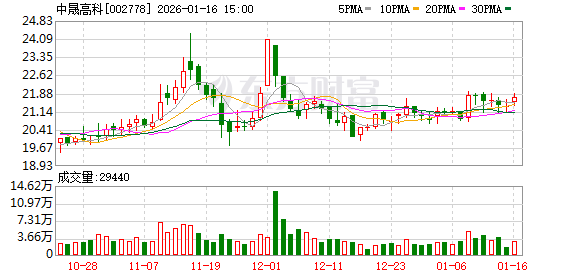
中晟高科:公司储能电站项目目前处于建设阶段,力争早日建成投运
Mei Ri Jing Ji Xin Wen· 2026-01-16 07:24
Group 1 - The core viewpoint of the article is that Zhongsheng High-Tech (002778.SZ) is focusing on its environmental protection sector and energy storage projects to drive revenue growth in 2026 [2] - The company stated that its environmental protection business will continue to provide stable support for operational revenue [2] - The energy storage power station project is currently under construction, and the company is making efforts to expedite its completion and operation to contribute to revenue growth [2]


阳光电源(300274):首次覆盖:逆变器筑基+储能领航双驱动,储能高增长跃升为新增长引擎,锚定全球能源龙头
Haitong Securities International· 2026-01-16 07:05
Investment Rating - The report initiates coverage with an OUTPERFORM rating, setting a target price of RMB 206.00 based on a current price of RMB 165.46 [2]. Core Insights - The company, Sungrow Power Supply, is positioned as a leader in the global photovoltaic inverter market and is experiencing significant growth in its energy storage business, which is expected to become the primary growth engine [3][5]. - The global photovoltaic installation demand is projected to continue its long-term growth trend, with new installations expected to reach approximately 610GW in 2025 and 642GW in 2026 [4][33]. - The energy storage market is anticipated to see a compound annual growth rate (CAGR) exceeding 50% from 2021 to 2027, with large-scale storage installations expected to rise from 28.4GWh to 605GWh [5][42]. Company Overview - Sungrow Power Supply was established in 1997 and went public in 2011, focusing on the research, production, and sales of renewable energy equipment, including photovoltaic, wind, storage, and hydrogen energy technologies [9][11]. - The company has built a comprehensive industrial chain covering core equipment manufacturing, system integration, and energy services, forming a synergistic ecosystem [9][10]. Photovoltaic Inverters - The company maintains a leading market share in photovoltaic inverters, with a global shipment volume of 147GW in 2024, representing a year-on-year growth of 13.08% and a market share of approximately 23%-25% [4][41]. - The product matrix includes a range of inverters suitable for various applications, from residential to large-scale ground-mounted power plants, ensuring a robust global presence [3][10]. Energy Storage - The energy storage business is expected to surpass the photovoltaic inverter segment as the primary growth driver by 2025, with significant orders and a high proportion of overseas orders [5][42]. - The company has developed advanced energy storage solutions, including the PowerTitan liquid-cooled storage system, which has been successfully implemented in major projects [10][42]. Financial Performance - For the first three quarters of 2025, the company reported revenues of RMB 664.02 billion, a year-on-year increase of 32.95%, and a net profit of RMB 118.81 billion, reflecting a substantial growth of 56.34% [22][23]. - The gross profit margin improved to 34.88%, indicating enhanced profitability and cash flow management [22][23]. Global Expansion - Sungrow Power Supply has expanded its operations to over 180 countries, with a strong presence in Europe, North America, the Middle East, and emerging markets [30][42]. - The company is well-positioned to benefit from the increasing demand for renewable energy solutions globally, particularly in large-scale storage projects [42][46].

全球目光聚焦武汉2026储能技术展览会三大不可错过的参会理由
Sou Hu Cai Jing· 2026-01-16 05:25
Core Viewpoint - The upcoming energy storage technology exhibition in Wuhan from September 22-24, 2026, is positioned as a significant event for showcasing technological advancements and predicting industry trends in the context of global energy transformation [1]. Industry Transformation: A Trillion-Level Market - The global energy structure is undergoing unprecedented reconstruction, with the energy storage market expected to exceed $500 billion by 2030 according to the International Energy Agency [3]. - In China, the "dual carbon" goals are driving an increase in new energy installations, with a notable 18.7 GW of new photovoltaic capacity added in Wuhan in 2022, and a 42% year-on-year growth in energy storage project investments [3]. - The supply-demand imbalance in energy storage systems is creating new industrial opportunities, making Wuhan an ideal platform for showcasing energy storage technologies [3]. Technological Outlook: Three Innovative Directions - The exhibition will feature a "Frontier Technology Exhibition Area" highlighting three breakthrough technology directions: 1. Solid-state battery technology, which offers a 30% increase in energy density and enhanced safety compared to traditional lithium batteries [3]. 2. The industrial application of flow batteries, which demonstrate unique advantages in grid-level energy storage [3]. 3. Advances in new thermal storage materials aimed at addressing efficiency degradation in traditional storage systems [3]. Industrial Opportunities: Building a Complete Ecosystem - The rapid development of energy storage technology is reshaping the entire industry chain, with profound changes occurring from upstream raw material supply to downstream application scenarios [4]. - The exhibition will host multiple industry forums featuring experts from academia, research institutions, and enterprises to discuss key topics such as technology standardization and business model innovation [4]. - A "Production-Academic-Research Connection Zone" will facilitate efficient communication between technology developers and enterprise buyers, showcasing the latest technology patents and offering customized services for small and medium-sized enterprises [4]. - Professional training courses covering energy storage system design, operation management, and policy interpretation will be organized, combining theoretical and practical teaching methods [4]. Future Outlook: Building a Sustainable Energy System - Breakthroughs in energy storage technology will directly impact sustainable development, influencing various sectors from household electricity to urban grids and transportation [6]. - The integration of smart grids and IoT technologies is driving energy storage systems towards greater efficiency and intelligence, leading to innovative applications such as distributed energy microgrids and smart energy management systems [6]. Event Significance - The three-day exhibition is not only a showcase of technological achievements but also a crucial milestone for industry development, catering to industry professionals, researchers, and the general public interested in new energy [8].
电梯+储能+5G概念联动2连板!世嘉科技10时19分再度涨停,背后逻辑揭晓
Jin Rong Jie· 2026-01-16 02:29
Group 1 - Sega Technology has experienced a consecutive two-day trading limit increase, achieving a two-day board upgrade [1] - The stock reached a trading limit at 10:19 AM with a transaction volume of 795 million yuan and a turnover rate of 8.31% [1] - The market is optimistic about the future development of the elevator and 5G industries, as well as potential opportunities in the energy storage sector, which has attracted market attention to the company [1]

光大证券晨会速递-20260116
EBSCN· 2026-01-16 02:17
Group 1: Macro Insights - The financial data for December shows stable performance, with a notable acceleration in corporate credit growth, although sustainability is a concern due to the timing of the Spring Festival [2] - The appreciation of the RMB has led to a significant increase in household deposits, while an active stock market is expected to boost M2 growth [2] - Structural interest rate cuts and the expansion of structural tools are likely to enhance risk appetite, maintaining a short-term trend of strong equities and weak bonds [2] Group 2: Industry Research - Leading photovoltaic component companies are rapidly entering the energy storage sector, leveraging channel and scenario advantages to unlock new growth opportunities [4] - Key companies to watch include Canadian Solar, Trina Solar, JinkoSolar, JA Solar, and LONGi Green Energy, which are expected to see significant profit contributions and rapid growth in energy storage shipments [4] Group 3: Company Research - CITIC Bank reported a stable net profit growth of 3% year-on-year, with operating income at 212.5 billion, a slight decline of 0.5% [6] - The bank's expansion speed remains steady, and the approval of a new investment entity is expected to enhance its comprehensive operational capabilities [6] - EPS forecasts for CITIC Bank for 2025-2027 are set at 1.25, 1.29, and 1.33 RMB, with corresponding PB valuations of 0.57, 0.53, and 0.50 times [6] Group 4: Market Performance - The A-share market showed mixed performance, with the Shanghai Composite Index closing at 4112.6, down 0.33%, while the Shenzhen Component Index rose by 0.41% [7] - In the commodity market, nickel prices increased by 4.12%, while copper prices fell by 1.26% [7] - The foreign exchange market saw the USD/CNY exchange rate at 7.0064, a decrease of 0.08% [7]
储能行业正开启增长新周期,AIDC成为该市场的全新增长引擎
Jin Rong Jie· 2026-01-16 01:53
Core Insights - The Southern Power Grid has achieved a significant breakthrough with its first overseas energy storage planning in collaboration with Indonesia's state-owned electricity company [1] - The global energy storage industry is entering a new growth cycle, with expectations of a 62% year-on-year increase in newly installed capacity, reaching 438 GWh by 2026 [1] Group 1: Company Developments - Southern Power Grid International (Hong Kong) and Southern Power Storage Company have completed a joint research project on electrochemical energy storage in Indonesia [1] - This marks the first substantial collaboration between Southern Power Grid and Indonesia's national electricity company [1] Group 2: Industry Trends - The role of energy storage is evolving from merely providing backup power to actively supplying electricity, addressing voltage fluctuations, and supporting the rapid deployment of AI data centers [1] - The growth drivers for the energy storage sector have shifted from solely renewable energy consumption to a combination of AI infrastructure needs, energy transition requirements, and grid congestion [1] - The industry is transitioning from a destocking phase to a replenishment boom, with expectations of simultaneous increases in both volume and price across certain segments of the supply chain [1]

增量资金有望推动慢牛行情持续
Mei Ri Jing Ji Xin Wen· 2026-01-16 01:29
Group 1 - The domestic power grid investment is expected to exceed 1 trillion yuan per year during the "14th Five-Year Plan" period, with a projected average annual investment of 1 trillion yuan during the "15th Five-Year Plan" period [1] - The State Grid Corporation's fixed asset investment is anticipated to reach 4 trillion yuan, representing a 40% increase compared to the "14th Five-Year Plan" investment [1] - The investment from the Southern Power Grid during the "15th Five-Year Plan" period is expected to be around 1 trillion yuan, with investments in 2026 projected to be 700 billion yuan, an increase of 7.6% year-on-year [1] Group 2 - A significant influx of incremental funds is expected in the A-share market in 2026, which may sustain a slow bull market [2] - The first quarter of 2026 is projected to be a peak period for the maturity of fixed deposits, with funds likely flowing from insurance and wealth management channels into the equity market [2] - Approximately one-third of the total fund inflow is expected to come from medium- and long-term funds, which have become a key foundation for micro liquidity in the A-share market [2] Group 3 - The domestic energy storage demand is projected to see significant growth from 2025 to 2027, with expected capacities of 154 GWh, 254 GWh, and 337 GWh, reflecting year-on-year growth rates of 40.2%, 65.2%, and 32.5% respectively [3] - The global energy storage market is also expected to grow, with new installations projected at 279 GWh, 423 GWh, and 563 GWh from 2025 to 2027, showing year-on-year growth rates of 44%, 52%, and 33% respectively [3] - The introduction of capacity pricing mechanisms in multiple provinces is anticipated to enhance the economic viability of energy storage, marking a turning point for the industry [3]

和讯投顾高璐明:突发利好!降息!今天反弹?
Sou Hu Cai Jing· 2026-01-16 01:19
Group 1 - The People's Bank of China announced a targeted interest rate cut, effective January 19, reducing the re-lending and rediscount rates by 0.25 percentage points, with new rates set at 0.95%, 1.15%, and 1.25% for 3-month, 6-month, and 1-year loans respectively, and a rediscount rate of 1.5% [1] - The National Grid's investment plan for the 14th Five-Year Plan period includes a fixed asset investment of 4 trillion yuan, a 40% increase from the previous plan, focusing on new power system construction, which will benefit sectors like smart grids, grid equipment, transformers, and energy storage [1] Group 2 - The Shanghai Composite Index's trading volume decreased significantly to 11,759.15 billion yuan from 16,070.41 billion yuan, indicating reduced selling pressure, which is a typical signal for market rebound [2] - The performance of financial heavyweight sectors such as insurance and brokerage is crucial for market momentum; their ability to rebound strongly will determine the overall market's strength and sustainability [3]
100MW/200MWh!上能电气助力南朗储能电站一期项目投产
中关村储能产业技术联盟· 2026-01-16 01:07
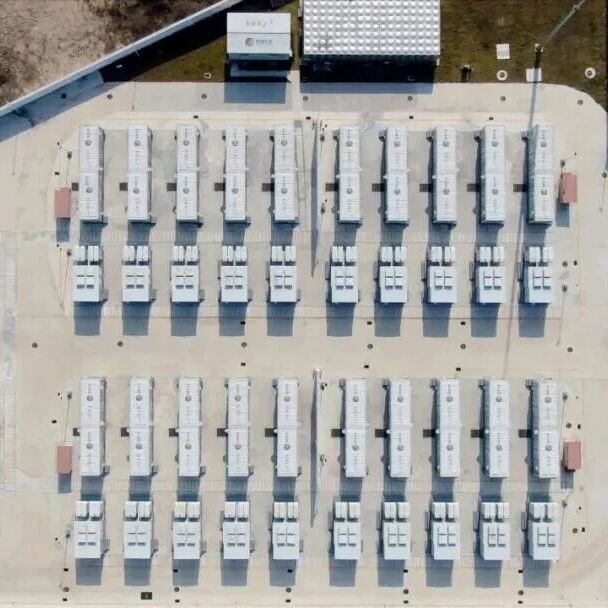
Core Viewpoint - The successful commissioning of the 100MW/200MWh Nalang Energy Storage Power Station marks a significant milestone for the region, enhancing grid flexibility and establishing a reliable profit mechanism through innovative frequency regulation services [2]. Group 1: Project Overview - The Nalang Energy Storage Power Station is the first large-scale independent energy storage project connected to the grid in Zhongshan City, contributing to the regional grid's flexibility [2]. - The project is invested and constructed by Shenan Electric Xiwai Energy (Zhongshan) Co., Ltd., with core equipment provided by the company, featuring a 1250kW centralized energy storage PCS [3]. Group 2: Technical Advantages - The energy storage PCS utilizes the second-generation enhanced hybrid grid technology and incorporates leading global IGBT drive technology and intelligent control algorithms, demonstrating significant advantages in response rate, command delay, and control precision [3]. - The energy storage system has achieved a maximum adjustment rate of 50Pn/s, with a response time of less than 5ms and an adjustment accuracy error of no more than 0.5%, significantly improving the stability and reliability of electricity supply for households [5]. Group 3: Industry Engagement - The company has confirmed its participation in the 14th International Energy Storage Summit and Exhibition (ESIE 2026), inviting industry peers to join this global energy storage event [6]. - The event is scheduled to take place from March 31 to April 3, 2026, at the Capital International Exhibition Center in Beijing [7].
中核汇能新疆伊犁100万千瓦风电源网荷储一体化项目两起瞒报生产安全事故调查报告!
中关村储能产业技术联盟· 2026-01-16 01:07
Core Viewpoint - The article discusses two safety incidents related to the China Nuclear Energy Xinjiang Yili 1 million kilowatt wind power project, highlighting issues of safety management and reporting failures [2][10]. Incident One: "11·28" Safety Incident - The "11·28" incident involved a fatal accident due to a worker's violation of operational protocols, resulting in the death of one construction worker [3][5]. - The accident occurred on November 28, 2024, when a loader operated by Li Zhengrui ran over Zhang Jirong, who was resting under the vehicle [4][8]. - The project manager failed to report the incident to relevant authorities, leading to a cover-up until a whistleblower reported it in April 2025 [4][5]. Incident Two: "10·2" Safety Incident - The "10·2" incident involved two fatalities due to a subcontractor's unauthorized work during a mandated stop, caused by severe wind conditions leading to resonance vibrations [10][12]. - The incident occurred on October 2, 2024, when two workers were killed during the installation of a wind turbine under unsafe conditions [10][14]. - Similar to the first incident, the project manager did not report the accident, which was only revealed after a complaint was made to the emergency management bureau in April 2025 [14][15].