
AIDC储能

Search documents
独家:2026年储能企业潜在风险和韧性调研
行家说储能· 2026-03-13 09:10
Core Viewpoint - The new energy storage industry is entering a critical transition period in 2026, shifting from "scale growth" to "value deepening," leading to a reshaping of survival rules for companies in the sector [2][4]. Group 1: Potential Risks in the New Energy Storage Industry - The industry is facing a complex risk landscape characterized by intertwined internal and external factors, with seven key dimensions of risk identified: policy and mechanism risk, price and revenue risk, supply chain and cost risk, quality/safety and delivery risk, overseas and trade risk, market competition and business rhythm risk, and regulatory and assessment risk [4][7]. - The most significant risks include uncertainties in project profitability due to policy adjustments and market competition, as well as rising costs from supply chain disruptions, such as the increase in lithium carbonate prices [7][10]. - Companies are adjusting their business strategies to enhance resilience, moving from single-scenario operations to comprehensive solutions, and from component suppliers to system integrators [8][9]. Group 2: Resilience Building for Energy Storage Companies - Companies are focusing on building resilience through various capabilities, including technological agility, market diversification, and maintaining stable strategic rhythms amid market fluctuations [12][15]. - Key factors for resilience include product safety, quality reliability, and the ability to translate technical capabilities into long-term value for customers [14][20]. - The survival threshold for companies is shifting towards providing safe and reliable products, while the growth potential is determined by their ability to create value through technology and innovative business models [20][24]. Group 3: Insights from Representative Companies - Companies like 弘正储能 emphasize the need for collaboration and ecosystem building to address complex system challenges and maximize the lifecycle value of energy storage [18]. - 融和元储 advocates for a data-driven, scenario-based approach to create a sustainable operational ecosystem, highlighting the importance of collective efforts in the industry [19]. - 鹏辉能源 stresses the importance of crossing the gap from merely selling products to creating value, focusing on technology integration and understanding customer needs [20][21]. Group 4: Key Transition Points for Companies - The transition from equipment manufacturers to system operators is crucial, requiring companies to develop capabilities that align with complex systems and business models [30]. - Companies must balance investments in new opportunities with the maintenance of core business operations, focusing on strategic agility and resource allocation [22][23]. - The ability to understand customer energy structures and operational logic is vital for long-term success, as companies navigate the evolving landscape of the energy storage market [27][28].


400GWh增量在即,AIDC储能红利谁来收割?
行家说储能· 2026-03-12 10:36
Core Viewpoint - The article discusses the emerging market for AIDC (AI Data Center) energy storage, highlighting the technological advancements and the competitive landscape as companies prepare for a significant shift in energy demands driven by AI and data centers [2][3][4]. Group 1: Market Trends and Developments - By 2026, AIDC energy storage is transitioning from technology validation to project trials, marking the beginning of large-scale development [3]. - The demand for energy storage in AIDC is projected to create a new trillion-dollar market, with estimates suggesting that 100GW of new AI data centers could require 200-400GWh of storage [2]. - Major technology companies are committing to self-sufficient power for AI data centers, indicating a trend towards decoupling AIDC from traditional power grids [2]. Group 2: Key Technological Directions - Four main trends are identified for AIDC energy storage: 1. Full architecture compatibility, requiring adaptation to both existing AC and next-generation high-voltage DC systems [5]. 2. Long-duration energy storage becoming a necessity, with requirements for sustained power supply exceeding 4 hours [5]. 3. Multi-technology collaboration, with sodium and lithium batteries being the current mainstream solution [5]. 4. Intelligent scheduling as a core capability, utilizing AI and big data for dynamic optimization of energy storage systems [5]. Group 3: Competitive Landscape - AIDC energy storage players are categorized into three types: native energy storage companies, technology and power equipment giants, and cross-industry participants [4]. - Companies like CATL and BYD are leading with specialized energy storage solutions tailored for AIDC applications, with BYD's blade battery application exceeding 30% in AIDC [6]. - New entrants and established players are rapidly developing solutions, such as Hicharge's lithium-sodium collaborative energy storage solution and Ronghe Yuan's green electricity direct connection system [6][7]. Group 4: Industry Collaboration and Events - Industry forums are being organized to facilitate collaboration and knowledge sharing among stakeholders, with events scheduled to discuss the synergy between AIDC and third-generation semiconductors [8]. - These forums aim to break down information silos and support companies in transitioning from planning to monetization of AIDC energy storage solutions [8].


AI+能源“新基建”,入场券发给了谁?
高工锂电· 2026-02-22 11:17
Core Viewpoint - The article discusses the emerging high-premium battery market driven by AIDC energy storage and Robotaxi, emphasizing the competitive landscape and the implications for Chinese battery manufacturers in the U.S. market [1][2][3]. Group 1: AIDC Energy Storage Market - The demand for AIDC energy storage is projected to grow significantly, with UBS estimating a nearly 40% year-on-year increase in global energy storage demand by 2026, driven by U.S. AI data centers and high renewable energy integration [6][9]. - Goldman Sachs predicts that electricity consumption by data centers could increase by approximately 175% by 2030, with AI workloads being a major driver [7]. - The global battery demand is expected to grow at around 30% annually by 2026, with energy storage batteries outpacing the growth of power batteries [9][10]. Group 2: Key Players in the U.S. Market - LG Energy Solution (LGES) has raised its global energy storage battery capacity target from 30GWh to 50GWh, with about 80% planned for production and sales in North America [13][14]. - Analysts have adjusted LGES's business structure, projecting a significant increase in North American energy storage system (ESS) shipments from 5GWh in 2024 to nearly 45GWh by 2026 [15]. - Samsung SDI is also expanding its ESS production in the U.S. and negotiating supply agreements with Tesla for energy storage projects [17][18]. Group 3: Robotaxi as a New Demand Source - Panasonic has signed a long-term agreement to supply 2170 cylindrical batteries to Amazon's autonomous ride-hailing service Zoox, starting in 2026 [23][24]. - The Robotaxi market is seen as a potential structural demand source for power batteries, with the initial supply chain dominated by U.S. and Japanese manufacturers [28]. - The financial contribution from the Zoox order is limited, but it positions Panasonic favorably in the narrative of new infrastructure investments [26]. Group 4: Implications for Chinese Battery Manufacturers - Chinese battery manufacturers are losing participation in high-premium scenarios like AIDC energy storage and Robotaxi, which not only affects their shipment volumes but also their pricing power and influence over standards [29][30]. - The localization and safety requirements in the U.S. market favor local and Japanese suppliers, leading to a perception that Chinese firms are marginal players in these critical segments [21][22]. - The article raises concerns about whether Chinese battery companies can establish a high-value scenario outside the U.S. market, particularly in regions like the Middle East and Southeast Asia [44][45].

未知机构:储能标的持续推荐260210阳光电源基本面龙头显著低估-20260211
未知机构· 2026-02-11 02:15
Summary of Key Points from Conference Call Industry Overview - The energy storage sector is experiencing significant growth, particularly in Europe, Asia, Africa, and Latin America, with companies benefiting from a robust channel network [2][4]. Company Insights 阳光电源 (Sungrow Power Supply) - The company is considered a fundamental leader in the energy storage market and is significantly undervalued, with suppressive factors gradually being lifted [1][3]. - It is one of the few companies in the AIDC energy storage sector that can directly connect with CSP customers, making its high-quality products essential in the U.S. market amid AI-related electricity shortages [1][3]. - The company is expected to achieve a net profit of 19-20 billion by 2026, with a current valuation of 16x, indicating a clear undervaluation [3][4]. 鹏辉能源 (Penghui Energy) - The company is optimistic about the price elasticity of energy storage cells, with a strong balance between supply and demand [5]. - It holds a 20-30% market share alongside two other leading companies, with no recent capacity expansions, indicating a rigid supply [5]. - The company has seen a significant increase in production for Q1, driven by unexpected overseas subsidy policies, leading to substantial price increase expectations for energy cells [5]. - Profit projections for 2026 are estimated at 1.63 billion, corresponding to a valuation of 14x, with a safety margin at current prices even without considering potential price hikes [5]. 正泰电源 (Zhejiang Chint Electrics) - The company is expected to see significant growth in the U.S. photovoltaic and European energy storage markets, with a breakthrough anticipated in 2025 [6]. - It plans to deliver a 500MW photovoltaic project in the U.S. and aims for total shipments to reach 2.5-3.5GW by 2026 [6]. - The company has a strong team in the U.S. and is actively engaging with new clients in data centers, with expectations to replicate success in large storage projects [6]. - Energy storage shipments are projected to be nearly 1GWh in 2025, with an expected increase to 2-2.5GWh in 2026, particularly in high-value markets like Europe, Japan, and Australia [6]. Additional Insights - The overseas market development has been supported by the group's strong project development capabilities, leading to numerous breakthroughs in self-developed projects [6]. - The company has made significant initial investments in overseas channels, with a cost rate nearing 20%, indicating high potential for performance elasticity and growth in the high-price market [6].

AIDC的下半场是电网友好?特斯拉、Fluence、阳光电源发力
行家说储能· 2026-02-04 09:05
Core Insights - The future of AI is increasingly dependent on electricity, with power becoming the critical resource for AI development rather than just algorithms or chip advancements [4][3] - The rise of AIDC (AI Data Centers) poses new challenges to grid stability, making energy storage a central player in balancing AI computational demands and grid reliability [2][4] Group 1: AI and Power Dependency - The consensus from the 2026 Davos World Economic Forum is that electricity is the lifeblood of AI, with Elon Musk predicting a future where the measure of wealth shifts from currency to watts [4][7] - The growth rate of global electricity generation is only 4%-5% annually, which is significantly lower than the rapid increase in chip production, leading to a potential scenario of having chips without sufficient power [4][7] Group 2: AIDC's Impact on the Grid - AIDC's large-scale deployment is causing systemic challenges for existing power grids, as evidenced by multiple voltage fluctuation incidents in North America since 2022 [9][12] - The power demands of AIDC, with individual server cabinets requiring 20-100 kW, are pushing data center power consumption into the gigawatt range, straining grid capacity [12][18] Group 3: Energy Storage Solutions - Energy storage systems (ESS) are evolving from backup power sources to essential components for stabilizing grid operations and optimizing energy usage strategies [18][20] - Major players like Tesla and Fluence are leading the charge in AIDC-related energy storage, with Tesla's Megapack significantly reducing power variability for AI workloads [20][21] Group 4: Market Dynamics and Future Outlook - The AIDC energy storage market is transitioning from discussions to actual orders, with companies like Tesla and Fluence already securing significant contracts [20][21] - Sunlight Power is positioned to capitalize on the AIDC market, with expectations of substantial orders in 2026 and 2027, leveraging its advanced technology and partnerships [21][22]
2026,特斯拉守擂储能第一的三张王牌
3 6 Ke· 2026-01-06 12:31
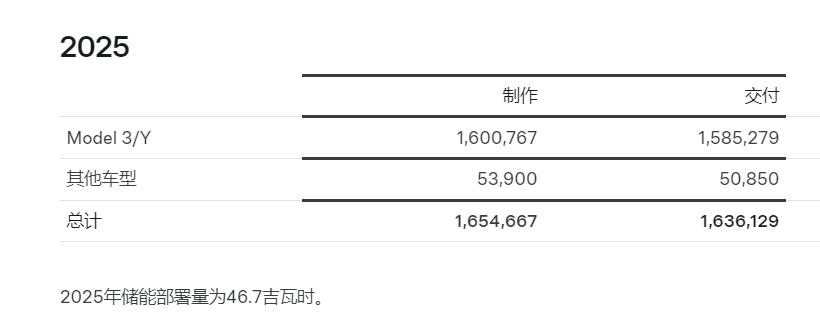
Core Viewpoint - Tesla's financial report for January 2026 reveals a stark contrast between its automotive and energy storage businesses, with the automotive sector facing challenges while the energy storage segment experiences significant growth [1][2]. Automotive Business Performance - In 2025, Tesla delivered 1.636 million vehicles, a decrease of 8.6% year-on-year, marking the first time since 2018 that BYD surpassed Tesla in deliveries [1] - The net profit from the automotive business also declined by 12% compared to the previous year [1]. Energy Storage Business Growth - Tesla's energy storage deployment reached 46.7 GWh in 2025, representing a year-on-year increase of 48.7% [2]. - Cumulative revenue from the energy storage business for the first three quarters of 2025 was approximately $8.645 billion, with a gross margin stable at over 30%, significantly higher than the automotive business's average of 16% [4]. - Energy storage revenue accounted for 12% of total revenue, an increase of 3 percentage points from the same period last year [4]. Strategic Initiatives in Energy Storage - To maintain its leading position in the energy storage market, Tesla is focusing on three key strategies: entering the AIDC energy storage business, penetrating emerging markets, and enhancing supply chain management [8]. - The AIDC energy storage initiative is supported by Tesla's expertise in AI, which is crucial for understanding energy demands [8][9]. AIDC Energy Storage Development - Tesla's Cortex supercomputing cluster, located in Texas, is designed to support energy storage technology development, with an initial capacity of 130 MW, expected to increase to 500 MW by 2026 [13]. - The Colossus data center, powered by a significant number of GPUs, has deployed approximately 156 Megapacks for backup power, contributing to a total storage capacity nearing 1.2 GWh [18]. Emerging Market Expansion - In Australia, Tesla secured the largest grid-scale energy storage order in history, collaborating with Neoen on the Western Downs Battery project, which will total approximately 2.3 GWh upon completion [27][30]. - In Japan, Tesla has gradually expanded its presence, winning a significant contract for a 134 MW/548 MWh Megapack system, set to become one of the largest storage facilities in the country [34]. Supply Chain Management - Tesla's Shanghai Gigafactory has become a critical asset, achieving a production capacity of 26 GWh in 2025, accounting for 55.7% of Tesla's total energy storage deployment [45]. - To mitigate risks associated with supply chain dependencies, Tesla has secured substantial battery supply contracts with LG Energy Solution and Samsung SDI, ensuring a diversified supply chain [48][50]. Conclusion - Tesla's energy storage business is poised for continued growth, driven by technological advancements, strategic market entries, and a robust supply chain, making it difficult for competitors to challenge its position in the near term [51].

宁德/亿纬/海辰集体押注钠电,能源体系正在重塑
Xin Lang Cai Jing· 2026-01-04 06:36
Core Viewpoint - Chinese companies are poised to redefine the global energy system as pioneers and definers of sodium batteries, with major players like Hicharge Energy, EVE Energy, and CATL outlining their commercialization plans for sodium batteries [1][9][10] Group 1: Industry Developments - Major lithium battery giants are focusing on sodium battery applications in AIDC (Artificial Intelligence Data Center) and power markets, with Hicharge Energy and EVE Energy announcing their plans for AIDC, while CATL is targeting the power sector [10][1] - The sodium battery market is being elevated to a broader narrative within the new energy sector, driven by the demand for diverse materials and battery forms in a large-scale electrification context [10][1] - The price volatility of lithium battery materials, particularly lithium carbonate, is creating a favorable environment for sodium battery development, as evidenced by the price fluctuations observed in December [10][6] Group 2: Market Opportunities - Sodium batteries are gaining traction in AIDC applications due to their stable raw material supply and high discharge rates, addressing the energy supply needs of this sector [2][10] - The performance advantages of sodium batteries, such as their ability to operate in wide temperature ranges, position them as a potential solution for the northern electric vehicle market [2][11] - The global energy discourse is shifting, with Chinese battery companies exploring the sodium battery sector to establish a new technological balance against competitors in the lithium iron phosphate (LFP) space [11][2] Group 3: Commercialization and Product Development - The first major application of sodium batteries is expected to be in the power market, with companies like CATL planning large-scale applications in various sectors by 2026 [4][13] - CATL's sodium battery has achieved significant milestones, including passing safety certifications and being included in new vehicle announcements, indicating readiness for market entry [14][15] - The AIDC sector is projected to see a substantial increase in battery demand, with estimates suggesting over 13 TWh of battery needs, driven by a compound annual growth rate of approximately 70% over the next decade [16][17]

20cm速递|AIDC储能迎爆发式增长!2030年出货量增长20倍,储能量价齐升可期,创业板新能源ETF华夏(159368)低开调整
Mei Ri Jing Ji Xin Wen· 2026-01-03 02:10
Group 1 - The core viewpoint of the news is that the global AIDC (Artificial Intelligence Data Center) energy storage market is expected to experience explosive growth, with lithium battery shipments projected to exceed 300 GWh by 2030, which is 20 times the 15 GWh expected in 2025 [1] - The report from GGII indicates a significant shift in the growth drivers of the global energy storage industry, moving from a focus on single renewable energy consumption to a tripartite driving force of "AI computing infrastructure + energy transition demand + grid congestion" [1] - The supply-demand relationship in the industry is improving, transitioning from a destocking phase to a replenishment boom period, with certain segments of the industrial chain expected to see simultaneous increases in both volume and price [1] Group 2 - The Chuangye Board New Energy ETF Huaxia (159368) is the largest ETF fund tracking the Chuangye Board New Energy Index, which covers multiple sub-sectors including batteries and photovoltaics [2] - As of November 30, 2025, the fund's scale reached 732 million yuan, and it has the highest trading volume, with an average daily transaction of 72.75 million yuan over the past month [2] - The fund has a high elasticity with a potential increase of up to 20%, and it has the lowest fee rate, with a combined management and custody fee of only 0.2% [2]

2025储能十大热点出炉,它们将如何定义2026?
行家说储能· 2025-12-31 11:14
Core Insights - The article emphasizes that the energy storage industry is transitioning from a policy-driven model to a market-driven one, focusing on safety, cost, and economic viability as key factors for new participants [3][4][30] - It outlines ten core hotspots impacting the energy storage industry in 2025, aiming to provide a roadmap for 2026 and beyond [2] Policy Changes - The "136 Document" released on February 9, 2025, abolishes mandatory energy storage requirements for new energy projects, marking a shift towards market-driven growth [3] - The new policy is expected to lead to a surge in installations and reshape the industry's long-term growth logic [3] Industry Goals and Investments - The "New Energy Storage Scale Construction Action Plan (2025-2027)" sets a target of over 180 million kilowatts of new energy storage capacity by 2027, with an estimated direct investment of approximately 250 billion yuan [4][6] - The average annual growth rate for installed capacity is projected at 37% from 2025 to 2027 [6] Market Dynamics - The introduction of time-of-use pricing adjustments is expected to shift revenue models for energy storage, moving away from fixed peak-valley arbitrage to diversified market revenue streams [7] - The U.S. "OBBBA" Act has created uncertainties in the U.S.-China energy storage market, potentially increasing costs for U.S. projects by 30%-50% due to supply chain restrictions [8] European Market Developments - A significant power outage in Spain has highlighted the need for energy storage solutions, prompting European countries to propose policies to enhance grid stability and storage capacity [11] - The EU has set a clear target of achieving 500-780 GWh of storage capacity by 2030, indicating a long-term market opportunity for companies with technological and cost advantages [11] Emerging Opportunities - The rise of Artificial Intelligence Data Centers (AIDC) is expected to create a new market for energy storage, with projected lithium battery shipments reaching over 250 GWh by 2030, a nearly 20-fold increase from 2025 [12][14] - The focus will shift from basic power reliability to providing high availability and efficiency solutions, with technology standards and ecosystem collaboration becoming critical [14] Technological Advancements - The competition in large battery cells is intensifying, with a shift towards two mainstream specifications (587Ah and 684Ah) [17][18] - The industry is experiencing a shortage of battery cells and power conversion systems (PCS), with production capacities being stretched due to high demand [22][23] Safety Standards - Safety has become a focal point in the energy storage industry, with many leading companies conducting large-scale "burn chamber tests" to establish safety as a competitive advantage [26][27] - The upcoming 2026 NFPA 855 standard will make such testing a mandatory requirement, potentially changing industry practices [27] Conclusion - The energy storage industry is poised for a significant transformation in 2026, moving from a focus on scale to one centered on value, as highlighted by the upcoming summit in Shenzhen [30]
储能“独角兽”,大动作
Zhong Guo Ji Jin Bao· 2025-12-15 10:08
Core Insights - The core viewpoint of the articles emphasizes the importance of cost reduction in the energy storage industry, with a focus on achieving a "1毛钱时代" (1 cent era) for the levelized cost of storage (LCOS) to accelerate the transition to renewable energy [1][2]. Group 1: Company Innovations - The company announced three major innovations during its recent ecological day, highlighting its commitment to technological advancements aimed at cost reduction [1]. - The company plans to focus on four key areas: ultra-large battery cells with high safety and long life, high-integrated and efficient energy storage systems, extreme intelligent manufacturing, and integrated solutions [2]. - The company introduced the world's first native 8-hour long-duration energy storage solution, ∞Power8 6.9MW/55.2MWh, designed to stabilize renewable energy generation fluctuations and provide reliable power supply [2][3]. Group 2: Industry Trends - The energy storage industry is expected to maintain rapid growth, with competition shifting towards value dimensions rather than just price [1]. - Long-duration energy storage is becoming a new direction for industry development, focusing on reducing the levelized cost of energy throughout the entire lifecycle [3]. - The AIDC (Artificial Intelligence Data Center) energy storage market is projected to explode by 2025, driven by increasing computational power demands and the need for more green energy supply [4]. Group 3: Strategic Responses - The company aims to address the challenges posed by the rapid growth of AIDC energy demands by developing a new energy system that is responsive and low-carbon [4][5]. - The newly launched lithium-sodium collaborative AIDC all-duration energy storage solution, ∞Power Solutions For AI Data Center, is designed to provide agile deployment and reliable support for various scenarios, including grid backup and microgrid black start [5].