保险

Search documents
内险股集体走低 中国人寿跌超4% 四季度资本市场波动阶段性影响投资表现
Zhi Tong Cai Jing· 2026-02-13 06:56
Core Viewpoint - The insurance stocks in China have collectively declined, with significant drops observed in major companies, indicating potential pressure on profits due to market fluctuations and changes in capital allocation strategies [1] Group 1: Stock Performance - China Life (601628) fell by 4.14% to HKD 32.92 [1] - China Pacific Insurance (601601) decreased by 2.41% to HKD 37.26 [1] - New China Life (601336) dropped by 2.1% to HKD 58.15 [1] - China Ping An (601319) saw a decline of 3.52% to HKD 6.56 [1] Group 2: Profit Forecasts - Shenwan Hongyuan's report predicts a 22.7% year-on-year growth in net profit for A-share listed insurance companies in 2025, reaching CNY 426.4 billion [1] - The growth rate is expected to decrease by 10.9 percentage points compared to the third quarter of 2025 [1] Group 3: Market Dynamics - The narrative of "deposit migration" continues to evolve, with rumors about the scale of maturing deposits rising from CNY 10 trillion to CNY 70 trillion [1] - Bank of America reports that 70%-80% of maturing deposits are likely to remain within the banking system, with approximately CNY 1 trillion expected to flow into "non-deposit assets" [1] - If CNY 500 billion of this amount flows into insurance, it could lead to noticeable elasticity in life insurance sales [1]



港股内险股集体走低 中国人寿跌超4%
Mei Ri Jing Ji Xin Wen· 2026-02-13 06:53
Group 1 - The Hong Kong insurance stocks collectively declined on February 13, with China Life Insurance (02628.HK) falling by 4.14% to HKD 32.92 [1] - China Pacific Insurance (02601.HK) decreased by 2.41% to HKD 37.26 [1] - New China Life Insurance (01336.HK) dropped by 2.1% to HKD 58.15 [1] Group 2 - China Property & Casualty Insurance (01339.HK) saw a decline of 3.52%, trading at HKD 6.56 [1]
国联民生证券:保险业存款配比边际明显提升 权益类资产配比边际下降
智通财经网· 2026-02-13 06:46
Core Viewpoint - The report from Guolian Minsheng Securities indicates that by 2026, the resonance between assets and liabilities is expected to support the continued recovery of insurance valuations [1] Group 1: Insurance Fund Scale and Growth - The balance of insurance funds is projected to reach 38.5 trillion yuan by the end of Q4 2025, representing a 15.7% increase from Q4 2024 and a 2.7% increase from Q3 2025 [1] - By the end of Q4 2025, the fund utilization balance for life insurance companies and property insurance companies is expected to be 34.7 trillion yuan and 2.4 trillion yuan, respectively, with increases of 15.7% and 8.8% from Q4 2024, and 2.8% and 1.2% from Q3 2025 [1] - Life insurance companies account for 90.1% of the total insurance fund utilization balance, reflecting a strong demand for life insurance products driven by residents' "savings transfer" needs and adjustments in product interest rates [1] Group 2: Asset Allocation of Life Insurance Companies - As of Q4 2025, life insurance companies have allocated 20.37 trillion yuan to fixed income assets and 7.98 trillion yuan to equity assets, marking increases of 3.4% and 1.2% from Q3 2025 [2] - The proportion of fixed income assets and equity assets in the total fund utilization balance of life insurance companies is 58.8% and 23.0%, respectively, with a slight increase of 0.4 percentage points and a decrease of 0.3 percentage points from Q3 2025 [2] - The increase in the allocation to fixed income assets is attributed to heightened volatility in the equity market, prompting life insurance companies to stabilize investment returns [2] Group 3: Asset Allocation of Property Insurance Companies - By the end of Q4 2025, property insurance companies have allocated 1.37 trillion yuan to fixed income assets and 0.55 trillion yuan to equity assets, with increases of 1.9% and 0.3% from Q3 2025 [3] - The allocation proportions for fixed income and equity assets in the total fund utilization balance of property insurance companies are 56.7% and 22.9%, reflecting an increase of 0.4 percentage points and a decrease of 0.2 percentage points from Q3 2025 [3] - The increase in the allocation to cash and stocks is driven by the high demand for liquid assets during the year-end claims peak and regulatory adjustments to attract insurance capital into the market [3]

上市公司节前密集分红 分红规模创新高 释放多重信号
Yang Shi Wang· 2026-02-13 06:41
Core Viewpoint - The number of cash dividends and the scale of dividends among A-share listed companies have reached a new high ahead of the Spring Festival, driven by policy encouragement for multiple dividends and pre-dividends [1][2]. Group 1: Dividend Scale and Companies - A total of 348.8 billion yuan in dividends will be distributed by 235 listed companies on the Shanghai, Shenzhen, and Beijing stock exchanges before the Spring Festival, surpassing the total from the previous year [2]. - Financial and consumer sectors are the main contributors to dividends, with the banking sector distributing 243.4 billion yuan, accounting for nearly 70% of the total [4]. - Private enterprises have shown a significant increase in dividend willingness, with pre-Spring Festival dividends amounting to 61.6 billion yuan, a 130% year-on-year increase, rising from 8% to 18% of the total dividends [5]. Group 2: Market Signals and Investor Insights - The large-scale dividends signal that companies have more stable profitability and cash flow, which boosts market confidence and expectations [5]. - Investors are advised to focus on companies with a history of stable dividends, with over 1,800 companies in A-shares having maintained dividends for more than five years, and nearly 800 for ten years [6]. - The sincerity of a company's dividend can be assessed by its dividend yield, emphasizing that a higher yield may indicate a more genuine commitment to returning value to shareholders [7]. Group 3: Cautionary Notes on Dividends - Investors should be cautious of companies with dividend payouts that significantly exceed net profits, as this may indicate potential stock price manipulation [6][7]. - Companies with negative cash flow or insufficient capital adequacy ratios may pose risks, as they might distribute dividends without actual cash backing [7].

港股异动 | 内险股集体走低 中国人寿(02628)跌超4% 四季度资本市场波动阶段性影响投资表现
智通财经网· 2026-02-13 06:39
Group 1 - The core viewpoint of the article indicates that Chinese insurance stocks have collectively declined, with specific companies like China Life, China Pacific Insurance, and New China Life experiencing notable drops in their stock prices [1] - According to a report by Shenwan Hongyuan, the fourth quarter of 2025 is expected to see phase fluctuations in the capital market, which, combined with some insurance companies significantly increasing their equity allocation in the secondary market, may lead to a temporary pressure on profits for listed insurance companies [1] - The report projects that the net profit attributable to shareholders of A-share listed insurance companies will grow by 22.7% year-on-year to 426.4 billion yuan in 2025, although this represents a 10.9 percentage point decrease in growth rate compared to the third quarter of 2025 [1] Group 2 - The narrative of "deposit migration" continues to gain traction, with rumors about the scale of maturing deposits soaring from 10 trillion to 70 trillion yuan, reflecting expectations for "faster capital reallocation" that could significantly alter the supply, demand, and pricing of different assets [1] - A recent report from Bank of America suggests that 70%-80% of maturing household deposits will remain within the banking system, with approximately 1 trillion yuan expected to flow into "non-deposit assets" [1] - If 500 billion yuan of this amount flows into insurance, it could lead to a "visible" elasticity in life insurance sales [1]
中国太保:穿越周期、稳健前行,低估值保险龙头价值修复可期-20260213
Soochow Securities· 2026-02-13 06:24
Investment Rating - The report maintains a "Buy" rating for China Pacific Insurance (601601) [1] Core Views - The company is viewed as a leading insurance player with a low valuation, and its recovery is expected to be promising [1] - The report highlights the company's stable growth in operating profit and return on equity (ROE), which is significantly more stable compared to its peers [8][21] - The company is focusing on its core insurance business while achieving diversified and steady development [23] Summary by Sections 1. Company Overview - China Pacific Insurance is a leading comprehensive insurance group in China, focusing on life insurance as its main business and achieving balanced development across multiple business segments [14] - The company has a diversified ownership structure, with state-owned assets playing a significant role, enhancing operational efficiency [16] 2. Group Performance - The company has maintained steady growth in operating profit, with a compound annual growth rate (CAGR) of 15.1% in net profit from 2014 to 2024 [8] - The internal value of the company is expected to grow steadily, with projections for 2025-2027 showing increases of 8.1%, 8.3%, and 9.2% respectively [1] 3. Life Insurance Business - The life insurance segment has shown a strong recovery, with new business value (NBV) expected to grow significantly, leading the industry [8] - The company has focused on the bancassurance channel, which has rapidly increased its contribution to new business value [8] 4. Property Insurance Business - The property insurance segment has maintained underwriting profitability, despite some structural adjustments in guarantee insurance business [8] - The company has consistently achieved a combined ratio (COR) that remains competitive within the industry [8] 5. Asset Management - The company has a robust investment strategy, with a high proportion of bond holdings, leading to stable investment returns [8] - The net investment yield has averaged 4.3% from 2020 to 2024, placing the company in a strong position relative to its peers [8] 6. Investment Recommendations - The report indicates that the company's stock is trading at a low valuation compared to its historical levels, suggesting significant upside potential [1] - The expected internal value per share for 2025 is projected to be 63.14 yuan, with further increases anticipated in subsequent years [1]
中国太保(601601):穿越周期、稳健前行,低估值保险龙头价值修复可期
Soochow Securities· 2026-02-13 05:41
Investment Rating - The report maintains a "Buy" rating for China Pacific Insurance (601601) [1] Core Views - The company is viewed as a leading insurance player with a low valuation, indicating potential for value recovery [1] - The report highlights the company's stable growth trajectory and its ability to provide consistent returns to shareholders through dividends [8] - The implementation of the "North Star Plan" is expected to enhance the company's competitive position and growth prospects in the insurance market [8] Summary by Sections 1. Company Overview - China Pacific Insurance is a leading comprehensive insurance group in China, focusing on life insurance as its main business while developing a balanced portfolio across various segments [14] - The company has a diversified ownership structure, with state-owned enterprises playing a significant role, which enhances operational efficiency [16] 2. Group Performance - The company has achieved stable growth in operating profits, with a return on equity (ROE) consistently above 10%, outperforming peers [8][21] - The internal value of the company is expected to grow steadily, with projections for 2025-2027 indicating increases of 8.1%, 8.3%, and 9.2% respectively [8] 3. Life Insurance Business - The life insurance segment has shown strong growth, with new business value (NBV) increasing significantly, leading the industry in growth rates [8][23] - The focus on bancassurance channels has resulted in a rapid increase in the proportion of new business from this segment, which is now a core growth driver [8][23] 4. Property Insurance Business - The property insurance segment has maintained profitability despite structural adjustments, with a stable growth rate in premiums [8][27] - The company has consistently achieved underwriting profitability, with a combined ratio (COR) that remains competitive within the industry [8][27] 5. Asset Management - The company has a robust investment strategy, with a high proportion of bond holdings and a stable investment return rate, placing it among the upper tier of listed insurance companies [8][31] - The net investment yield has averaged 4.3% from 2020 to 2024, indicating strong performance relative to peers [8][31] 6. Financial Projections - Revenue forecasts for 2023 to 2027 show a recovery trend, with expected revenues of 323.9 billion yuan in 2023 and projected growth to 439.7 billion yuan by 2027 [1] - The projected net profit for 2024 is 44.96 billion yuan, reflecting a significant year-on-year increase of 64.95% [1]
平安养老险新春送温暖:走进乡村社区,用行动传递温度
Xin Lang Cai Jing· 2026-02-13 04:51
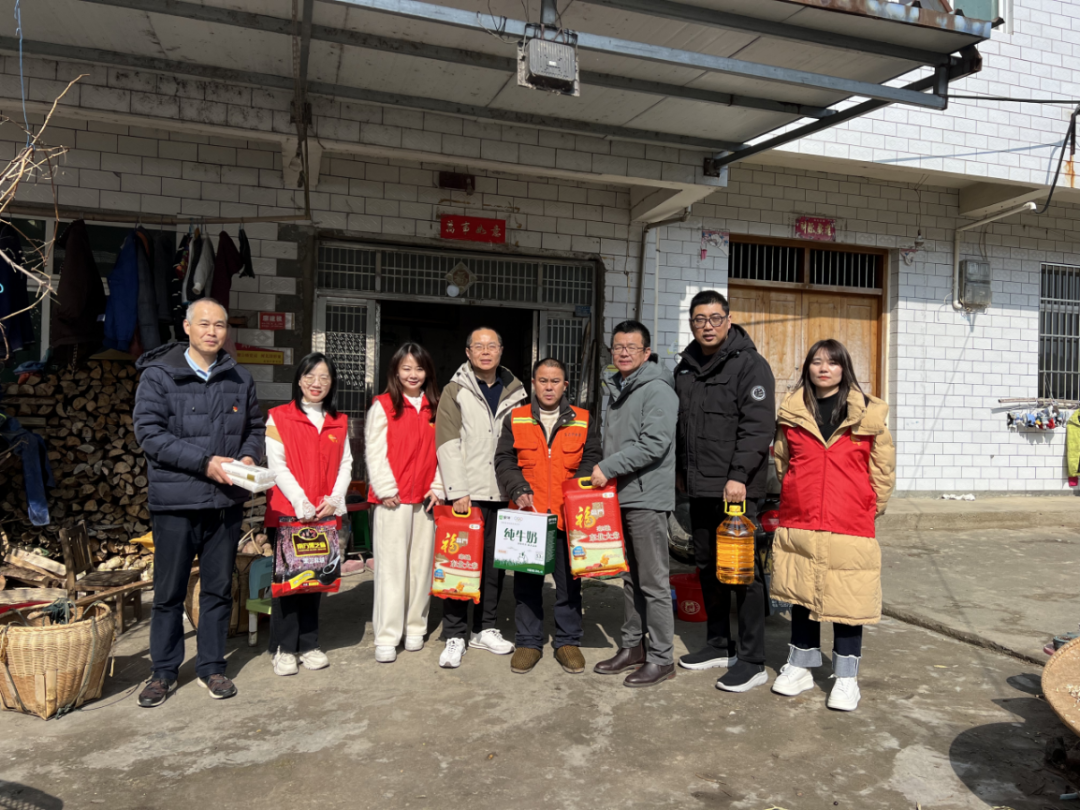
Core Viewpoint - The company, Ping An Pension Insurance, is actively engaged in a nationwide public welfare initiative called "New Year Warmth Delivery," aimed at providing support and care to vulnerable groups, including impoverished families, elderly individuals living alone, children in need, and families with special requirements during the New Year period [1][8]. Group 1: Targeted Assistance - In Taibai Village, Shaanxi Province, volunteers from Ping An Pension Insurance's Shaanxi branch visited impoverished families, engaging in conversations to understand their health, income, and challenges, while also providing essential supplies like rice and cooking oil [1]. - In Laohhe Village, Anhui Province, the company donated 100 computers to enhance the information technology capabilities of local government offices and schools, and conducted financial literacy classes for students to raise awareness about financial safety [1]. Group 2: Care for Special Groups - In Wuhan, Hubei Province, volunteers collaborated with a center for families with autistic children, providing essential supplies and engaging in interactive activities to foster communication and support for these families [4]. - In Yinchuan, Ningxia Province, the company provided school supplies and educational materials to underprivileged children, aiming to encourage their optimism and healthy growth [4]. - In Jinan, Shandong Province, volunteers delivered essential goods to sanitation workers, acknowledging their hard work during the winter season [4]. Group 3: Community Engagement - In Changsha, Hunan Province, volunteers visited elderly individuals and families in need, offering support and information about available policy assistance while delivering care packages [6]. - In Urumqi, Xinjiang Province, the company set up a "Warmth Point" at a busy train station, providing travelers with practical items and festive goods to enhance their travel experience during the New Year [6]. Group 4: Commitment to Long-term Support - The company emphasizes that true warmth comes from sustained companionship and consistent efforts rather than one-time donations, reflecting its commitment to ongoing community support and care [8].

港股午评:市场低开低走 智谱、MINIMAX-WP创历史新高
2 1 Shi Ji Jing Ji Bao Dao· 2026-02-13 04:45
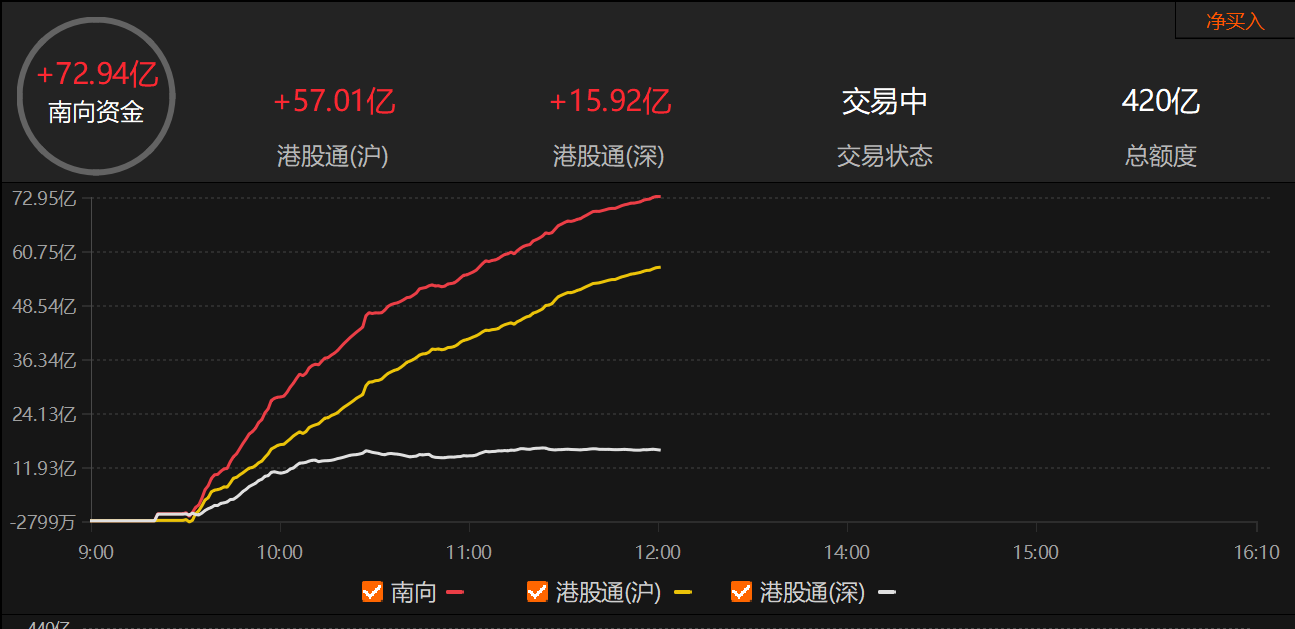
Market Performance - The Hong Kong stock market opened lower and continued to decline, with the Hang Seng Index dropping by 1.79%, the National Enterprises Index falling by 1.74%, and the Hang Seng Technology Index decreasing by 1.65% [1] AI Sector - The "AI dual giants" in Hong Kong, Zhizhu and MINIMAX-WP, both reached historical highs, with their market capitalizations surpassing HKD 200 billion [1] Semiconductor Sector - The semiconductor sector experienced a rebound, with Aixin Yuan Zhi rising over 15% and Tian Shuzi Xin increasing by more than 10% [1] Insurance Sector - Insurance stocks continued to weaken, with Prudential falling over 6%, and other companies like China Life, AIA, China Pacific Insurance, and China Taiping also experiencing declines [1] Gold and Precious Metals - The gold and precious metals sector showed low-level fluctuations, with companies such as Zijin Mining, Wan Guo Gold Group, and Shandong Gold experiencing declines [1] Capital Flow - Southbound funds recorded a net purchase of HKD 7.294 billion during the half-day session [1]
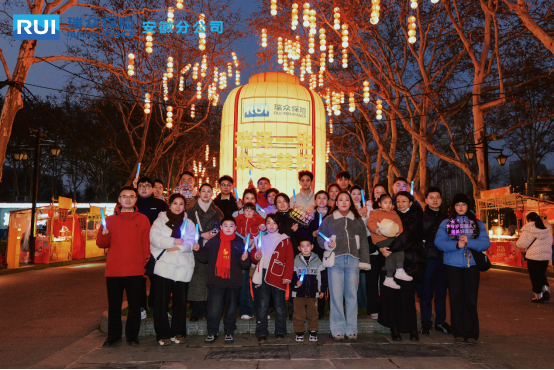
瑞众点亮庐州小年灯会 家企同心共赴新春
Huan Qiu Wang· 2026-02-13 04:28
Core Viewpoint - The event sponsored by Ruizhong Insurance in Hefei aims to enhance cultural engagement and community connection through the 2026 Luzhou Spring Lantern Festival, showcasing the company's commitment to social responsibility and employee well-being [1][7]. Group 1: Event Overview - The 2026 Luzhou Spring Lantern Festival runs from January 1 to March 4, featuring three main thematic exhibition areas and over 50 light displays, establishing itself as a cultural landmark in Hefei [3]. - A notable highlight of the festival is the 14-meter long and 13-meter high giant main lantern "Zhiyuan Xiaoqi," along with a specially designed "Ruizhong Lantern" that serves as a unique photo spot [3]. - The festival includes over 9,000 special performances, combining traditional customs with modern digital experiences, allowing attendees to enjoy a rich cultural atmosphere [5]. Group 2: Technological Integration - Ruizhong Insurance developed an exclusive "Million Blessings" mini-program to enhance visitor interaction, integrating augmented reality (AR) experiences and online navigation to facilitate access to the festival [3]. - The mini-program allows citizens to unlock entry tickets and experience the festival's offerings from home, merging cultural heritage with technology [3]. Group 3: Corporate Social Responsibility - The event exemplifies Ruizhong Insurance's commitment to employee welfare and corporate social responsibility, focusing on enhancing employee happiness and sense of belonging as part of its high-quality development strategy [7]. - The company emphasizes its mission of "finance for the nation, finance for good, and finance for the people," showcasing its dedication to cultural engagement and community support through initiatives like sponsoring the lantern festival [7]. Group 4: Future Directions - In the new year, Ruizhong Insurance plans to continue fostering a caring corporate culture, enhancing employee engagement, and actively participating in urban cultural development and public service [12]. - The company aims to contribute to the high-quality development of Anhui's economy and society while promoting the inheritance of traditional Chinese culture [12].