芯片

Search documents
美股芯片股,盘前集体下跌
第一财经· 2026-01-23 10:30
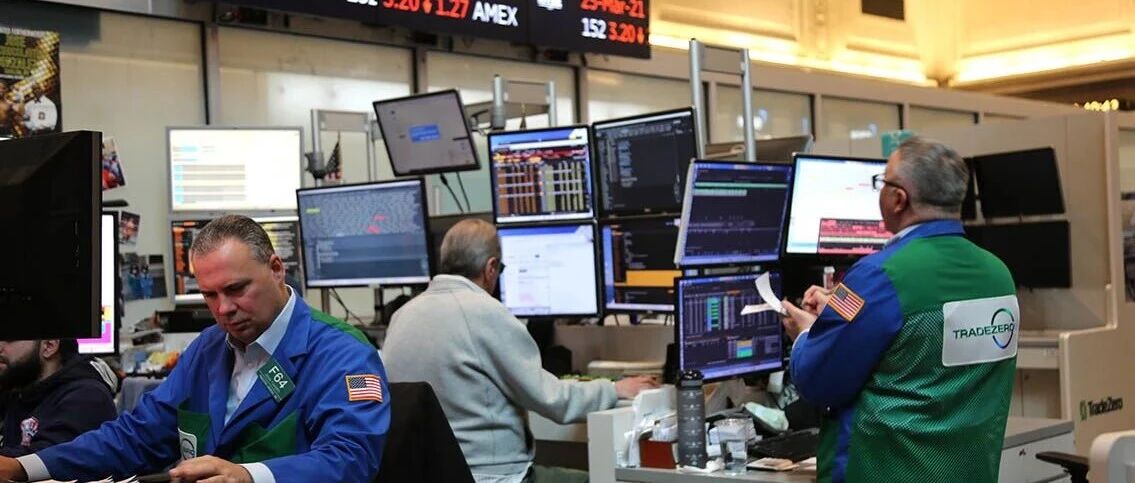
1月23日,美股芯片股盘前集体下跌,英特尔大跌近14%,报46.74美元/股。 消息面上, 1月23日,英特尔公布截至2025年12月27日的第四季度营收为137亿美元,同比下降约4%,按通用会计准则(GAAP)计算,公司第四季 度净亏损约6亿美元,合每股亏损0.12美元。 | | | | 此外,阿斯麦跌近3%,美光科技、西部数据跌超1%,英伟达、高通、超威半导体均下跌。 | | --- | 西部数据(WESTERN DIGITAL) ( 白 WDC.O 243.290 量 892.7万 股本 3.42亿 市盈™ 32.3 万得 盘口 1.390 > + 美东 04:50 ∨ 盘前 239.000 -4.290 -1.76% 美光科技(MICRON TECHNOLOG ( 白 MU.O 397.580 量 3%0.8万 股本 11.26亿 市盈™ 37.6 万得 盘口 8.470 2.18% - 换 3.52% 市值 4475亿 市净" 7.61 > 盘前 391.490 -6.090 -1.53% | -- 美东 04:49 √ 英伟达(NVIDIA) ( 日 NVDA.O 184.840 量 1.4亿 股 ...

马斯克称特斯拉FSD最快下个月将在中国获批?特斯拉中国回应;银行账户被关,特朗普起诉摩根大通索赔50亿美元;三大期指齐跌【美股盘前】
Mei Ri Jing Ji Xin Wen· 2026-01-23 10:30
Market Overview - Major U.S. stock index futures are showing slight declines, with Dow futures down 0.07%, S&P 500 futures down 0.05%, and Nasdaq futures down 0.16% [1] Semiconductor Sector - Storage chip stocks are experiencing a pre-market decline, with Western Digital down 1.54%, Micron Technology down 1.02%, and Seagate Technology down 1.02% [2] Biotechnology Sector - Moderna's CEO announced plans to cut investment in late-stage vaccine trials due to increasing opposition to vaccination in the U.S., resulting in a 4.09% drop in the company's stock [2] Automotive Sector - Tesla's CEO Elon Musk indicated that the Full Self-Driving (FSD) system may receive approval in China as early as next month, although Tesla China stated there is no new information to share, leading to a slight increase of 0.19% in Tesla's stock [2] Media and Entertainment Sector - Netflix's co-CEO expressed optimism that the proposal to acquire Warner Bros. studios will gain shareholder support, while criticizing Paramount's bid as unfeasible, resulting in a 0.18% increase in Netflix's stock [3] E-commerce Sector - Amazon is reportedly planning a second round of layoffs, similar in scale to the previous cut of approximately 14,000 white-collar jobs last October, which has led to a 0.38% increase in Amazon's stock [3] Technology Sector - Intel reported Q4 2025 revenue of $13.67 billion, a 4.1% year-over-year decline, and provided a weak Q1 2026 revenue guidance of $12.2 billion, below analyst expectations, causing a significant drop of 13.38% in Intel's stock [4] Cloud Computing Sector - Amazon Web Services (AWS) has raised prices for its machine learning capacity blocks by approximately 15%, breaking a long-standing trend of price reductions [5] Legal Issues - Former President Trump has filed a lawsuit against JPMorgan Chase seeking $5 billion in damages, alleging that the bank closed accounts for him and his businesses due to political motivations [5]

算力告急!“缺口”风暴下,国产AI芯片如何突围
Xin Lang Cai Jing· 2026-01-23 10:27
Core Insights - The announcement from Beijing Zhiyuan Huazhang Technology Co., Ltd. highlights a significant increase in user demand for AI models, leading to a temporary strain on computing resources, reflecting a broader trend in the AI industry [1] - The AI chip market in China is projected to exceed 1 trillion yuan by 2028, accounting for approximately 30% of the global market, emphasizing the need for high-quality, domestically controlled AI computing power to seize opportunities in the AI sector [1] Group 1: Current State of Computing Power - There is a pronounced supply-demand imbalance in computing power, particularly in China, which is more evident than in the global context [3] - Foreign companies dominate the global AI computing power market, holding nearly 70% of the market share in China by 2024, creating a substantial self-sufficiency gap for domestic production [4] - The self-sufficiency rate of AI GPUs in China has increased from less than 10% in 2020 to approximately 34% in 2024, with expectations to reach around 82% by 2027 [4] Group 2: Causes of Supply-Demand Imbalance - The supply of computing resources in China faces multiple constraints, including limitations on high-end chip imports and performance gaps between domestic and international GPU products [5] - The fragmentation of computing resources among service providers leads to low utilization rates, exacerbating the supply-demand mismatch [5] - The rapid deployment of AI applications across various industries has resulted in over 13,000 projects and more than 30,000 smart factories, significantly increasing the demand for computing power [5] Group 3: Solutions to Computing Power Challenges - To address the computing power challenges, it is essential to maximize the potential of domestic computing resources and promote their application [6] - The Chinese government has been actively implementing policies to enhance computing power development, including optimizing infrastructure and improving service levels [6] - Collaboration among stakeholders in the computing power ecosystem is crucial for achieving deep integration of models, applications, and computing resources, which will enable China to gain a competitive edge in the global AI landscape [7]
Radex Markets瑞德克斯:2026年值得关注的顶级市场
Xin Lang Cai Jing· 2026-01-23 10:26
Group 1: Technology and Infrastructure - The global financial market is transitioning from technological breakthroughs to deepening infrastructure, with a focus on core pillars supporting the digital age [1][4] - In 2025, AI leaders like Palantir and Alphabet saw significant stock increases of 135% and 65% respectively, marking the beginning of a technological revolution [1][4] - The memory and data storage sector, often overlooked, is becoming critical due to the surge in computing power and data processing demands, with companies like Samsung, SK Hynix, and Micron dominating global capacity [1][4] - Micron Technology achieved a remarkable 240% increase in stock price last year, yet its valuation remains attractive compared to the overall high P/E ratios in the tech sector [1][4] - Market sentiment in 2026 is expected to follow a rotation logic similar to that of precious metals, with new investment opportunities emerging in cloud computing, cybersecurity, and high-speed bandwidth [1][4] Group 2: Energy Transition - The energy structure transition is essential for AI development, as the demand for power to train top AI models exceeds the capacity of traditional renewable energy sources [2][5] - The rise of small modular reactors (SMRs) is becoming a key solution, with major tech companies like Meta and Amazon investing in clean nuclear energy [2][5] - The commercialization of SMRs is set to transform the nuclear industry, moving away from large-scale projects to efficient, modular production [2][5] - The entire nuclear supply chain, from uranium mining to reactor component manufacturing, is experiencing a multi-dimensional recovery, presenting opportunities for investors [2][5] Group 3: Digital Assets - Despite a lackluster performance in 2025, the cryptocurrency market is maturing, with institutional investment reducing volatility and enhancing compliance [3][6] - The introduction of regulatory frameworks like the Clarity Act is expected to bring decentralized financial facilities out of the legal gray area, marking a significant shift [3][6] - The speculative trading phase driven by retail investors is nearing its end, paving the way for new financial instruments backed by legal protections and institutional support [3][6] - As global regulatory uncertainties dissipate, cryptocurrencies are anticipated to transition from speculative assets to integral components of the global financial system [3][6]


智驾芯片变天,蔚小理“集体”放弃英伟达
Xin Lang Cai Jing· 2026-01-23 10:25
Core Viewpoint - Chinese automotive companies are reevaluating their reliance on Nvidia's smart driving chips, with companies like XPeng and Li Auto shifting towards self-developed chips, indicating a significant change in the industry landscape [1][4]. Group 1: Shift to Self-Developed Chips - XPeng Motors launched four new models equipped with its self-developed Turing AI chip, marking a departure from previous models that used Nvidia chips [1]. - Li Auto plans to use its self-developed M100 chip in the major redesign of its L9 model, which is expected to enter mass production in Q1 2025, offering performance that surpasses Nvidia's Thor-U chip [1]. - NIO has calculated that its reliance on Nvidia's Orin chips will cost over $300 million in 2024, prompting a shift to its self-developed Shenji chips to reduce costs by approximately 10,000 yuan per vehicle [2]. Group 2: Market Dynamics and Competition - The trend of "de-Nvidia" among new automotive forces is gaining momentum, with NIO, XPeng, and Li Auto accelerating their transition away from Nvidia [4]. - By 2025, the combined sales of NIO, XPeng, and Li Auto are projected to exceed 1.16 million units, driven by partnerships with Huawei and the expansion of smart driving technologies into entry-level models [4][9]. - Nvidia's market share in China is expected to decline from 39% in 2024 to 25% in 2025, as its Orin architecture is considered outdated and its Thor chip faces performance issues [5]. Group 3: Future Trends in the Automotive Industry - The Chinese automotive market is anticipated to see a significant increase in L2-level assisted driving vehicles, with a projected 21.2% year-on-year growth in new car sales featuring these capabilities by 2025 [5]. - The competition in the high-end market is intensifying, with local brands increasingly adopting self-developed chips, reducing their dependency on Nvidia [9]. - The automotive industry's shift from "regulatory control" to "end-to-end" smart driving technology is expected to reshape the landscape by 2025 [4].


华东大厂大规模「叫停」B200租赁订单;H200陷入价格迷雾;上市AI芯片公司曾「险」被收购;国资智算平台组建高管天团或求技术自主
雷峰网· 2026-01-23 10:01
Group 1 - Major manufacturers in East China have halted B200 leasing orders and shifted focus to B300 models, leading to a significant equipment iteration trend in the computing power leasing market [1] - The halt of B200 orders has not significantly impacted the flow of B200 units in the market, as existing inventory remains tight, with only a few units available in certain regions [1] Group 2 - The announcement allowing NVIDIA to export H200 chips to approved Chinese customers has led to a market stalemate, with many companies choosing to pause orders due to uncertainty in policy direction and government regulations [2] - The price of H200 modules has reportedly dropped from over 1.5 million yuan to 1.25 million yuan, although skepticism remains regarding the sustainability of this price drop due to rising memory costs and export fees [3][4] Group 3 - Domestic AI chip companies have turned to public listings after failed acquisition attempts by major industry players, with many now listed on the Sci-Tech Innovation Board or the Hong Kong Stock Exchange [6] - A state-owned computing power platform is assembling a high-profile executive team to reclaim technological sovereignty, leveraging its resources to access data from high-barrier sectors like finance and healthcare [7][8] Group 4 - A major internet company in North China has placed an order for over 30,000 NVIDIA L20 and L40 chips, indicating that older models still hold value in specific business scenarios despite claims of obsolescence [9] - The price of NVIDIA RTX 5090 graphics cards has surged significantly, with reports of price increases driven by rising demand and component costs, potentially as a strategy to shift demand towards the newly approved H200 chips [10] Group 5 - Zhonghao Xinying is reportedly implementing "minimum usage rate commitment" clauses in sales contracts to stabilize order expectations, raising concerns about the true market performance of its products [11] - The gross margin of Runze Technology reached 48.11% in the first three quarters of 2025, significantly higher than the industry average of 19%-25%, driven by early investments in computing power equipment [13] Group 6 - The domestic computing power project landscape is heating up, with major server manufacturers actively engaging in multiple projects, although challenges remain in service provision for smaller-scale clusters [14] - The separation of roles between funding and operational parties in new computing projects has led to a trend of "100% buyout" contracts becoming standard, with a common expectation of recouping investments within five years [15]

加速构建AI芯片生态闭环?阿里旗下芯片公司平头哥被传将独立上市
Jin Rong Jie· 2026-01-23 10:01
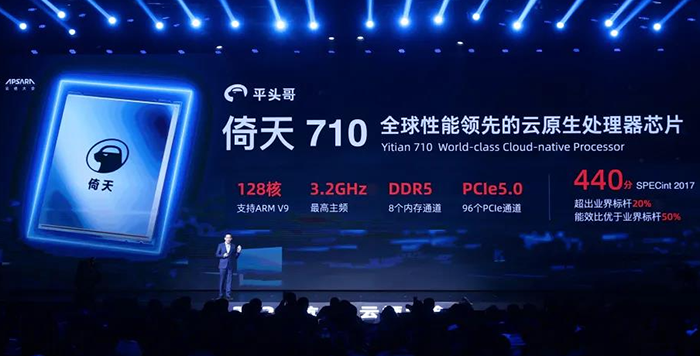
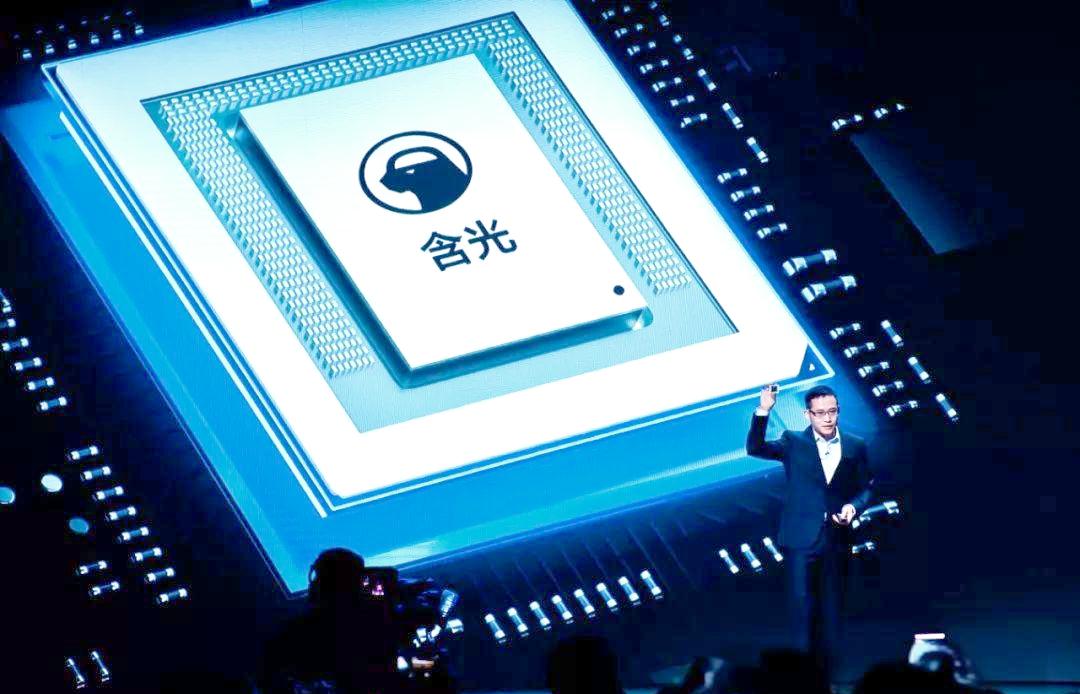
Group 1 - Alibaba is planning to restructure its semiconductor company T-Head and support its future independent listing, which led to a more than 5% increase in Alibaba's stock price in pre-market trading [1] - T-Head Semiconductor was established in September 2018, integrating the previously acquired Zhongtian Micro Systems and Alibaba's internal chip team, offering a full-stack product system covering both cloud and terminal applications [1] - T-Head has launched several chips, including the Yitian 710 server chip and the Hanguang 800 AI inference chip, achieving a comprehensive layout from design to application [1] Group 2 - The split plan for T-Head is seen as a significant step in Alibaba's acceleration of its AI self-research system, with Alibaba's CEO announcing an investment of over 380 billion yuan in cloud and AI hardware infrastructure over the next three years [3] - T-Head, as Alibaba's AI chip developer, is expected to become a key support for Alibaba's long-term competitiveness in the AI era, with the spin-off providing greater flexibility in incentive mechanisms, financing capabilities, and external collaborations [3]

瞄准英伟达 H20,阿里平头哥要上市
3 6 Ke· 2026-01-23 09:46
Core Viewpoint - Alibaba has decided to support its chip subsidiary, T-Head, for an independent IPO, marking a significant development in the AI chip sector after eight years of preparation [1][3]. Group 1: Market Reaction - Following the IPO news, Alibaba's stock surged over 5% in pre-market trading in the US, increasing its market value by more than 200 billion RMB in a single day [2]. - In Hong Kong, Alibaba's shares jumped approximately 4% at the market opening on January 23, becoming a market highlight [2]. Group 2: T-Head's Background - T-Head was established in 2018 through the integration of the acquired Zhongtian Micro and Alibaba's self-developed chip team, positioning it as a significant player in the AI chip market [5][6]. - The company has primarily served Alibaba's internal needs, focusing on enhancing the efficiency and cost-effectiveness of Alibaba Cloud's data centers through self-developed chips [6][8]. Group 3: Product Development - T-Head's first-generation general-purpose GPU, PPU, has been reported to match NVIDIA's H20 in performance, with specifications indicating it could outperform older models like the A100 [10][12]. - Other notable products include the Yitian 710 server CPU, which has been deployed at scale in Alibaba Cloud, and the Xuantie series, which has achieved significant market penetration through licensing [12][13]. Group 4: Competitive Landscape - T-Head occupies a unique position among domestic fabless chip companies, excelling in design capabilities but facing challenges in direct comparisons with competitors like Huawei and Baidu [13][16]. - The PPU emphasizes energy efficiency and cost-effectiveness for high-concurrency inference scenarios, contrasting with competitors that focus on large-scale training capabilities [15][16]. Group 5: IPO Challenges - T-Head's IPO journey may face hurdles due to its fabless model, which relies on external manufacturing partners, exposing it to risks associated with supply chain uncertainties [19][21]. - The AI chip market has seen inflated valuations, raising expectations for T-Head, which may lead to increased scrutiny and pressure to meet high market demands [24][25][29].
金融科技领域的 “脱欧时刻”
Xin Lang Cai Jing· 2026-01-23 09:39
Group 1 - The core point of the article is the acquisition of Brex by First Capital Investment International Group for $5.15 billion, marking an unremarkable end to Brex's journey as an independent company [2][11] - Brex, founded nine years ago, aimed to disrupt traditional financial institutions like American Express but faced challenges in recent years, including a significant drop in valuation from a peak of $12.3 billion in early 2022 to a current valuation of $3.9 billion [3][12] - The acquisition price of $5.15 billion, split equally between cash and stock, is less than half of Brex's peak valuation, indicating substantial losses for some investors [3][12] Group 2 - Brex's co-founder and CEO, Pedro Franceschi, expressed optimism about the merger, stating it would maximize the advantages of the entrepreneurial model [4][13] - First Capital views the acquisition as relatively small, representing only 3.5% of its current market value of approximately $149 billion, and emphasizes Brex's technological value [4][13] - The decision to sell rather than pursue an IPO reflects the board's assessment that going public may not be the best way to maximize shareholder value, especially after observing the poor performance of many IPOs last year [3][12]

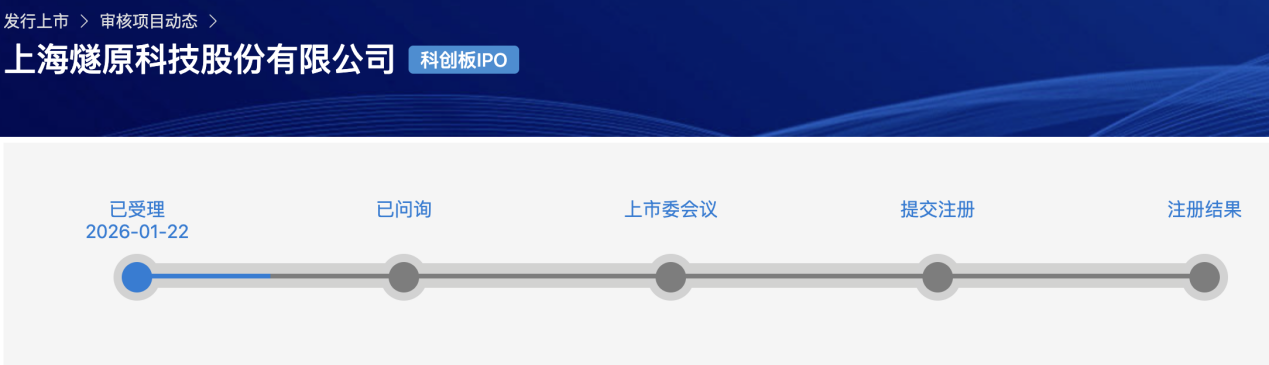
燧原科技科创板IPO获受理,国产GPU四小龙冲刺资本市场收官之战
Quan Jing Wang· 2026-01-23 09:36
1月22日,上海燧原科技股份有限公司(以下简称"燧原科技")向上海证券交易所提交的科创板上市申请正式获得受理。作为被业内誉为"国产GPU四小 龙"之一的标杆企业,燧原科技此番冲刺IPO,被视为国产AI芯片产业一次关键的"收官之战",不仅承载着企业自身从技术产品闭环迈向商业价值闭环的跨越 期望,也折射出中国在高性能人工智能算力领域自主创新的决心与进展。 在股东结构及产业协同层面,燧原科技与互联网巨头腾讯的深度绑定尤为引人关注。腾讯科技(深圳)有限公司持有公司约19.95%的股份,是公司第二大 股东。这种资本纽带深化为紧密的业务合作:腾讯不仅是燧原科技的重要战略投资者,更是其报告期内的第一大客户。尤其是在2025年上半年,公司对腾讯 的销售收入占营业收入比例超过了50%。双方交易涉及AI加速卡及模组的销售、IP授权、技术服务等多个层面,同时燧原科技也向腾讯采购服务器、云服务 等,形成双向协同。腾讯集团副总裁刘剑亦在公司董事会担任董事,参与重大决策,进一步强化了双方在战略与业务层面的联动。这些关联交易均声称遵循 市场化原则定价,并履行了规定的决策与披露程序。 | 项目 | 2025 年度 1-9 月 | | 202 ...