
低空经济

Search documents
低空经济专题:2025年低空经济发展趋势报告:“动荡调整”的低空1.0阶
Sou Hu Cai Jing· 2026-02-06 12:48
Core Insights - The report highlights the low-altitude economy as a three-dimensional economic form covering four major scenarios: production operations, public services, transportation, and consumption activities, with an expected market size of 851.9 billion yuan in China by 2025, growing to over 1 trillion yuan in 2026 [1][2][21] - The core sectors include drones, which are currently the main focus, with a projected market size of 145.2 billion yuan in China by 2025, and eVTOL (electric Vertical Take-Off and Landing) aircraft, which are expected to become a key area of development [2][24] - The industry is currently in the "turbulent adjustment" phase of its 1.0 stage, facing challenges such as regulatory lag and insufficient infrastructure, and is expected to transition to the 2.0 application phase by 2027, reaching a mature ecosystem with a market size of 3.5 trillion yuan by 2035 [1][3][21] Low-Altitude Economy Concept and Applications - The low-altitude economy is defined as an advanced economic form relying on new infrastructure and airspace management, integrating multiple industries [5][7] - It encompasses a full-chain system of flying and service industries based on manned and unmanned aerial vehicles, showcasing characteristics such as systemic integration and cross-disciplinary collaboration [7][11] Development History and Top-Level Planning - The low-altitude economy has gained attention since 2010, evolving from early explorations in general aviation to the current focus on drones and eVTOL applications [14][16] - China's low-altitude economic development has been relatively late compared to international counterparts, with significant policy shifts occurring since 2021, including its inclusion in national planning documents [16][18] Market Size and Growth Trends - The low-altitude economy in China is experiencing explosive growth, with a projected market size of 851.9 billion yuan in 2025, reflecting a year-on-year increase of 28.2% [2][21] - The market is expected to reach 1,064.5 billion yuan in 2026, driven by the expansion of low-altitude applications and improvements in infrastructure [21][22] Core Sectors: Drones and eVTOL - Drones are the dominant model in China's low-altitude economy, with a projected market size of 145.2 billion yuan by 2025 and a compound annual growth rate of 19.5% over the next five years [24][25] - eVTOL is still in the early stages of development, with a projected market size of 5.75 billion yuan by 2025, influenced by policy drivers and significant orders [24][25]


重庆发布20亿元产业基金 涉空天信息、低空经济等
Zhong Guo Xin Wen Wang· 2026-02-06 11:15
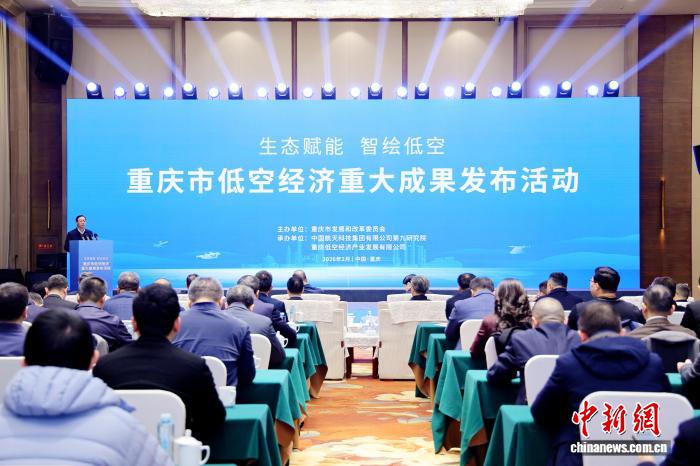
重庆发布20亿元产业基金 涉空天信息、低空经济等 中新网重庆2月6日电 (张旭)2月6日,重庆市举办"生态赋能 智绘低空"低空经济重大成果发布活动。活 动现场,总规模20亿元的航天工融(重庆)空天信息低空经济产业基金正式发布。 图为重庆市低空经济重大成果发布活动现场。重庆市发展和改革委员会 供图 据悉,该基金由工银金融资产投资有限公司、航天投资控股有限公司、重庆市产业母基金及两江基金共 同出资。基金采用"政府引导+市场化运作"的模式,重点投向空天信息和低空经济领域,为产业链高质 量发展注入强劲资本动能。 活动现场,重庆低空经济产业发展有限公司举行了揭牌仪式。该公司由航天时代低空科技公司联合重庆 发展投资公司、重庆机场集团、永川城市发展集团、两江战新服务业基金等共同组建,将作为飞行综合 服务和产业生态集成主体,助推重庆低空经济集约化、规模化发展。 此外,由重庆市经济和信息化委员会、重庆市发展和改革委员会联合征集的《重庆市低空产业链产品名 录(2025年)》在活动现场发布。 据悉,该名录共收录低空飞行整机、飞行动力装备、低空飞行部件、飞行管控平台、保障支撑装备等5 大类93款产品,首次全景展现"山地城市"的低空特 ...

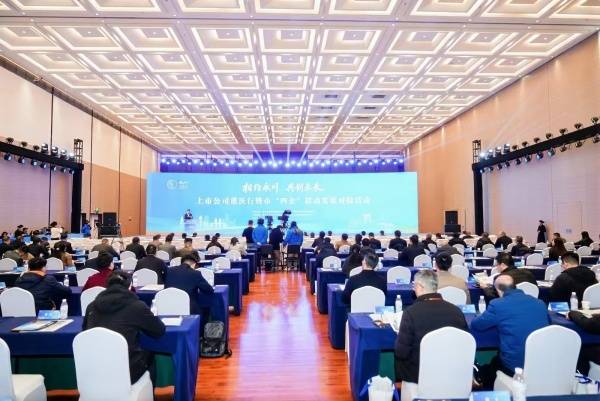
上市公司重庆行暨重庆市“四企”联动发展对接活动在永川举行
Sou Hu Cai Jing· 2026-02-06 10:43
Core Insights - The event held in Yongchuan District from February 5 to 6 aimed to foster collaboration among listed companies, strong enterprises, investment institutions, and representatives from the "Four Enterprises" cooperative development alliance in Chongqing [1][3] - A total of 26 key investment projects were signed, with a planned investment of 9.6 billion yuan, covering sectors such as new energy vehicles, high-end equipment manufacturing, advanced materials, and low-altitude economy, which will significantly boost the high-quality development of Yongchuan District [3][5] Group 1 - Approximately 300 participants from various regions, including listed companies and investment institutions, attended the event to discuss development strategies and explore cooperation opportunities [3] - The Chongqing State-owned Assets Supervision and Administration Commission emphasized the importance of deepening the "Four Enterprises" cooperative mechanism to leverage the strengths of different types of enterprises, including state-owned and private companies [5] - The event featured speeches from representatives of various companies, sharing insights on industrial development, innovation practices, and the integration of central and local enterprises [5][6] Group 2 - The participating companies spanned multiple sectors, including smart connected new energy vehicles, electronic information, high-end equipment, new materials, biomedicine, big data and artificial intelligence, consumer goods, and modern services, aligning well with Yongchuan's industrial foundation and future development direction [6] - Yongchuan District has been enhancing its industrial, urban, and public service capabilities, attracting major companies such as Great Wall Motors and Yadea, and is actively promoting the construction of Chongqing's urban sub-center [6] - The event is seen as a catalyst for ongoing communication and collaboration with various enterprises and investment institutions, aiming to facilitate the establishment of more quality projects in Yongchuan [6]
投资内蒙古“码”上办
Sou Hu Wang· 2026-02-06 08:48
近日,内蒙古招商引资信息发布平台持续发布投资意向征集表,通过"投资内蒙古"网站、微信号等政务 发布矩阵广泛触达潜在投资者。这是该信息发布平台首次推出的投资意向征集功能。 "随着2026年招商线索挖掘工程启动,内蒙古将进一步聚焦京津冀、长三角、粤港澳大湾区、成渝、东 北三省等重点地区开展产业链招商,重点引进培育低空经济、绿氢、核能、算力、人工智能等新兴产业 和未来产业领域优好项目。"内蒙古自治区商务厅相关负责人表示,招商平台是区域合作的关键载体, 2026年内蒙古还将举办第四届向北开放经贸商洽会、绿色先进高载能产业专题招商等系列"投资内蒙 古"活动,持续提升招商平台功能,继续扩大区域合作"朋友圈"。(侯倩) 近年来,内蒙古持续加大招商引资力度,培育壮大新兴产业和未来产业,推动产业结构优化升级。 从2026年内蒙古自治区商务工作会议上获悉,今年内蒙古商务厅将聚焦招商线索挖掘工程,推动招商引 资提质增效。通过积极挖掘产业链线索,上下联动、形成合力收集项目线索,实现招商线索"从无到 有、从有到优、从优到落地"的高效转化。 ...
四川省政协委员胡裕华:建议提升服务消费 深化成都国际消费中心城市建设
Zhong Guo Jing Ying Bao· 2026-02-06 07:55
Core Viewpoint - The Sichuan provincial government is focusing on boosting consumption as a key topic during the "Two Sessions," with specific actions outlined in the 2026 government work report to enhance traditional and new consumption, as well as service consumption [1] Group 1: Consumption Boosting Initiatives - The Sichuan government plans to implement special actions to stimulate consumption and increase urban and rural residents' income [1] - Chengdu aims to deepen its construction as an international consumption center city, with discussions on enhancing consumption scenarios including landmark shopping districts and unique cultural experiences [1] - Chengdu's retail sales of consumer goods exceeded 1 trillion yuan in 2023, making it the sixth city in China to reach this milestone, with a target of 1.1 trillion yuan by 2025 [2] Group 2: Service Consumption Development - The government report emphasizes the need to expand service consumption by tapping into potential areas such as transportation, housekeeping, and online audio-visual services [2] - Chengdu is accelerating the development of service consumption, focusing on integrating cultural, commercial, and tourism experiences, and promoting nighttime economy [2][3] Group 3: Enhancing the Value Chain - Recommendations include enhancing the service consumption value chain by focusing on high-value, experiential services, particularly in healthcare and professional services [3] - The development of "low-altitude economy" is suggested, with plans for low-altitude tourism and drone performances to create new consumption scenarios [3] Group 4: Optimizing Existing Commercial Spaces - There is a need to shift from "incremental construction" to "stock optimization" in Chengdu's commercial landscape, addressing the vitality of existing commercial entities [4] - Suggestions include transforming traditional commercial spaces into multi-functional areas that incorporate cultural and social experiences [4] Group 5: Global Consumption Hub - Chengdu is encouraged to transition from "buying globally" to "selling globally," aiming to establish itself as a global hub for consumer goods distribution and innovation [5] - The city should strengthen its role in promoting local products internationally and attract regional headquarters and R&D centers for brands [5][6] Group 6: New Retail Experiences - The promotion of a "front store, back warehouse" retail model is suggested to enhance consumer convenience and create a new benchmark for offline shopping [6] - Recommendations include establishing night markets featuring local cuisine to enrich the nighttime economy and enhance tourism appeal [6]
十部门发力,五大核心领域!“低空经济”将迎来哪些变化
Bei Jing Ri Bao Ke Hu Duan· 2026-02-06 07:09
Core Insights - The release of the "Guidelines for the Construction of Low-altitude Economic Standard System (2025 Edition)" signifies a national effort to establish a unified standardization framework for the low-altitude economy, addressing key issues in the industry and promoting its orderly development [1][2] Group 1: Implications of the Guidelines - The publication of the Guidelines indicates a shift from pilot exploration to large-scale, standardized development in the low-altitude economy, with urgent needs for institutional improvements across the industry chain [1] - The establishment of a clear technical framework will significantly reduce R&D, construction, and operational costs for enterprises, creating opportunities in the low-altitude sector [2] Group 2: Pain Points Addressed by the Guidelines - The Guidelines aim to resolve three major pain points in the industry: 1. Fragmented infrastructure construction, by standardizing technical routes and promoting scale development [5] 2. Safety regulation and operational assurance, by implementing strict identification and registration requirements for drones [5] 3. Disconnection between technology and demand, by providing comprehensive support for the entire chain from R&D to industrialization [5] Group 3: Beneficial Areas in the Low-altitude Industry - The low-altitude infrastructure sector is expected to experience standardized development, with clear technical routes and standards for low-altitude network communication, perception, and high-precision navigation [7] - The low-altitude equipment sector will see compliance upgrades, driven by the Guidelines' requirements for connectivity and safety, enhancing drone safety management [7] - The application areas within the low-altitude industry will witness large-scale implementation, particularly in scenarios like power line inspections and emergency communications, facilitated by standardized technologies [8]
中国光谷发布400项创新应用场景
Zhong Guo Xin Wen Wang· 2026-02-06 02:11
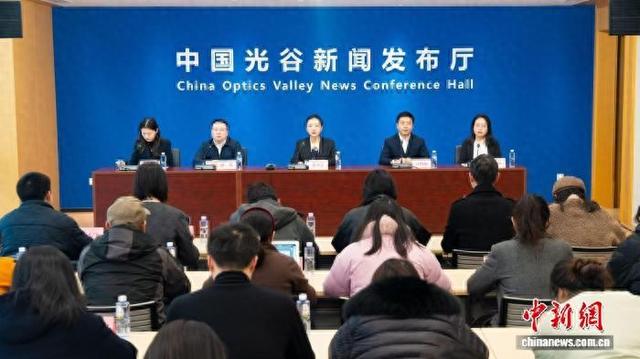
其中,典型应用场景清单以10项标杆案例,为场景创新实践提供"光谷样板"。该清单聚焦系统性创新和 新兴业态培育,推出湖北人形机器人创新开发应用平台、光谷空轨沉浸式智慧文旅项目、低空共享无人 机应用示范平台、"文明一万年"元宇宙应用等10项标杆案例,致力于为各方伙伴搭建一个开放共享、合 作共赢的创新发展生态。 需求场景清单以120项多层次需求,为创新提供"应用土壤"。该清单涵盖系统部署、产业链开放、国企 场景释放及多元主体共建等类型,包含低空经济运营、人形机器人、智慧交通、城市"一网统管"等120 项场景需求,为新技术新产品新模式在光谷开展测试验证、首试首用,提供精准落地的"实践舞台"。 图为新闻 发布会现场。 东湖高新区供图 据介绍,光谷2026年首批场景清单紧扣"新领域新赛道、产业转型升级、行业领域深度应用、创新社会 治理、丰富民生领域"五大重点方向,包含10项典型应用场景、120项需求场景、270项供给场景。 中新网武汉2月6日电 (曾宪雯 王梦媛)武汉东湖高新区(又称"中国光谷")5日发布2026年首批400项场景清 单,旨在打通创新成果转化的"最后一公里",以场景应用为牵引,赋能产业高质量发展。 供给场 ...
为低空经济发展定规矩、指航向
Ke Ji Ri Bao· 2026-02-06 01:38
Group 1 - The release of the "Guidelines" signifies a national-level initiative to establish a standardized framework for the low-altitude economy, addressing issues such as unclear policies and fragmented technical routes, which have hindered the industry's development [1][2] - The "Guidelines" aim to provide clear technical guidance, significantly reducing R&D, construction, and operational costs for enterprises, thus creating opportunities in the low-altitude sector [2] Group 2 - The "Guidelines" are expected to resolve three major pain points in the low-altitude economy: fragmented infrastructure, safety regulation challenges, and the disconnect between technology and demand [3] - The establishment of a unified technical route will facilitate large-scale development and avoid redundant construction in low-altitude communication and navigation [3] - Enhanced safety measures, such as unique identification for drones, will improve traceability and regulatory compliance, ensuring a safer operational environment [3] Group 3 - The low-altitude infrastructure sector is anticipated to experience standardized development, with clear technical routes and requirements aiding in large-scale deployment [4] - The low-altitude equipment sector will see compliance upgrades, driven by the "Guidelines" which promote safety and connectivity standards for drones [4] - The application fields within the low-altitude industry are expected to achieve large-scale implementation, enhancing reliability in inspections and emergency response scenarios through standardized technologies [5]

如何抢占新兴产业未来产业赛道
Xin Lang Cai Jing· 2026-02-05 22:20
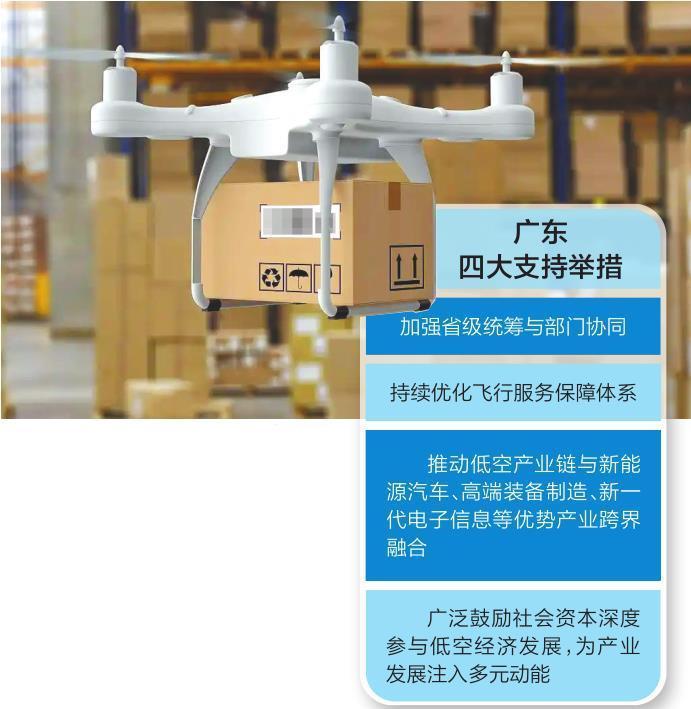
Core Insights - In 2026, China's emerging industries are expected to collectively enter a phase of mass production and ecological construction, with a focus on strategic emerging industries and localized development paths [6] Group 1: Low Altitude Economy - Guangdong is establishing itself as a benchmark for the low altitude economy, leveraging its complete industrial chain and policy framework, aiming for an industry scale exceeding 300 billion yuan by 2026 [7][8] - The province has over 15,000 low altitude industry chain enterprises, accounting for more than 30% of the national total, with over 2,000 drone manufacturing companies [7] - Guangdong is enhancing its infrastructure and policy environment to support low altitude logistics, medical rescue, and agricultural monitoring applications [8] Group 2: Embodied Intelligence - Shanghai is positioning itself as a global innovation hub for embodied intelligence, with plans to achieve significant breakthroughs in core algorithms and technologies by 2027 [9][11] - The city aims to support key projects financially and establish several high-quality incubators for the embodied intelligence sector [11] Group 3: New Energy Storage - Inner Mongolia is leading the development of new energy storage, focusing on attracting leading enterprises and building a comprehensive industrial chain [12][13] - The region has established a capacity to support 28.5 million kilowatt-hours of installed demand, with significant projects underway, including a large-scale energy storage project [13] Group 4: New Materials - Jiangsu is enhancing its new materials industry through a comprehensive innovation system, with 32 provincial key laboratories and 15 national enterprise technology centers established [14][15] - The province's advanced materials industry has surpassed 1 trillion yuan in output value, with significant clusters in Suzhou focusing on nanomaterials and advanced carbon materials [15] Group 5: Deep Sea and Aerospace Integration - Shandong is promoting the integration of deep sea and aerospace industries through a "chain leader" system, enhancing efficiency and fostering a collaborative industrial ecosystem [16][17] - The province is developing key technologies in both fields and establishing a unique layout for manufacturing and launching [17] Group 6: Quantum Technology - Anhui is building a global hub for quantum technology, with over 100 companies in the sector and a focus on practical applications through the "thousand scenarios" initiative [18][20] - The province has established a quantum future industry park and is providing comprehensive support for technology development and industry collaboration [20]
让更多“天津智造”加速飞向蓝天
Xin Lang Cai Jing· 2026-02-05 22:20
(来源:天津日报) 转自:天津日报 岁末春初,走进天开东丽园,创新创业热潮澎湃。开园仅一年多,园区集聚科技型企业超200家,主营 业务覆盖低空制造业、低空运营业、低空基建与信息服务业、低空配套业全部4个低空经济产业大类和 一半以上核心产业中类,累计转化科技成果132项,转化金额超2792.859万元,从昔日空置载体跃升为 京津冀空天产业创新高地。 链式聚合:构建全链条产业生态 "以前我们做风洞实验要远赴深圳,现在同一栋楼里就能完成,研发周期缩短近一半。"高品(天津)电 子科技有限公司技术总监李盖的感慨,道出了园区产业集群的独特优势。作为小米生态链核心企业,高 品科技的入驻,标志着园区低空经济产业链再添关键一环。 从低空新材料、零部件制造,到飞行服务、检验检测,天开东丽园以"链式招商"思路精准布局,聚集了 东腾科技、博源复材、世亚低空等上下游优质企业,构建起"实验室—生产线—市场化"的全链条闭环。 世亚低空研发的国内首款宽温域垂起固定翼无人机,采用碳纤维材料实现减重20%,在零下40摄氏度环 境中可续航6小时,已广泛应用于应急、测绘等领域;航大天开的"灵云甲"热敏型灭火贴片,既适配传 统电器火灾场景,又能满足无 ...