天然气

Search documents
LNG运输船改道驶往高价格亚洲,渐入争夺战
日经中文网· 2026-03-14 00:33
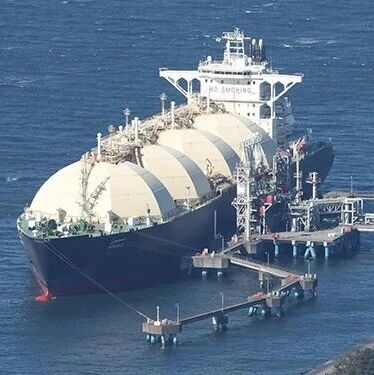
LNG是火力发电的主要燃料。随着市场价格的高涨,今后也可能对日本的电价产生影响。 欧洲调查公司Kpler的船舶追踪信息显示,3月6日,从位于美国得克萨斯州的LNG设施"弗里波特 (Freeport)"出发、原本驶往荷兰LNG进口接受站的LNG运输船"Elisa Ardea"在大西洋上开始向南航 行,并将航线改成了驶往日本富津港(千叶县富津市)。 随着中东局势陷入混乱,自3月3日前后起,原定驶往欧洲的LNG运输船接连开始改道驶往亚洲。船舶 追踪信息显示,多艘原本同样从美国横跨大西洋、驶往欧洲的船舶突然转向南下。这些船只被认为将绕 过好望角前往亚洲。 Kpler首席分析师片山刚表示:"自中东局势紧张以来,至少有7~8艘船改变了航线"。他同时表示,虽 然LNG运输船更改航线并不罕见,但"此次在短时间内有多艘船舶改道,属于很罕见的情况"。 在日本千叶县富津市的火力发电厂靠岸的LNG运输船 随着中东局势陷入混乱,自3月3日前后起,原定驶往欧洲的LNG运输船接连开始改道驶往亚洲。原因 是在对中东LNG依赖程度较高的亚洲,价格上涨至局势恶化前的两倍以上。被亚洲抢走货源的欧洲最 终也必须确保供应,争夺战的迹象正在显现…… 运 ...

如何计算大宗商品隐含地缘风险溢价
Orient Securities· 2026-03-13 14:40
Group 1 - The ongoing Middle East turmoil exceeds market expectations, leading to increased global risk aversion and a rise in risk assessment. The implied geopolitical risk premium for commodities has not yet reached historical extremes, indicating potential for further price increases in commodities if Middle Eastern disturbances persist beyond expectations, which would boost price expectations in related cyclical sectors such as petrochemicals, coal, natural gas, electricity, and agriculture [5][8][19] - As geopolitical tensions rise, the geopolitical risk index is also increasing. This escalation in geopolitical risk will have two main impacts: an upward shift in inflation expectations and a downward shift in risk appetite, leading to negative impacts on global equity markets [5][12] - The direct impact of geopolitical disturbances is seen in commodities. Statistical results show that since the changes in the Middle East situation in March, commodities with a higher correlation to geopolitical risks have experienced significantly greater price increases [5][19] Group 2 - The implied geopolitical risk premium index for commodities is currently above historical averages but remains significantly below the peak observed during the 2022 Russia-Ukraine conflict. This suggests that the market has not overly priced in potential future conflicts, and if the Middle East turmoil continues to exceed expectations, commodity prices still have room for growth [5][21][24] - In the medium term, there is no need for excessive concern as the negative impact of rising geopolitical risks on stock markets in various countries is increasing, while the impact on the Chinese stock market is actually decreasing. Statistical analysis shows that the correlation between rising geopolitical risks and volatility in US stock indices is strengthening, while the impact on domestic stock index volatility is diminishing [5][12][19] Group 3 - The methodology for calculating the implied geopolitical risk premium for commodities involves four steps: 1. Rolling correlation statistics of commodity price changes against the geopolitical risk index over 12 months to identify high and low correlation commodities [20] 2. Averaging the prices of high and low correlation commodities to create two price indices, with the ratio of these indices serving as the first factor of the implied geopolitical risk premium [20] 3. Calculating the price increase diffusion index, which measures the proportion of commodities that have increased in price each month, serving as the second factor [20] 4. A weighted average of the two factors to derive the implied geopolitical risk premium index, which historically correlates with geopolitical risks [21]
彭博看大宗 | 亚洲或出现LNG补库热潮,中日韩谁库存最稳?
彭博Bloomberg· 2026-03-13 06:06
Core Viewpoint - The article discusses the potential for a replenishment surge in Asia due to low LNG inventories in Japan and South Korea, with LNG prices expected to exceed $20 per million British thermal units (MMBtu) as a result of geopolitical tensions in the Middle East [3][4]. Group 1: Japan's LNG Inventory Situation - Japan's LNG inventory is critically low, covering only 11 days of consumption, with a total inventory of 237,000 tons as of December 2025 [4]. - If LNG transportation from the Middle East to Asia is disrupted, Japan will need to compete for LNG supplies from neighboring regions, further driving up demand and prices in Asia [4]. Group 2: South Korea's LNG Inventory Situation - South Korea's LNG inventory is also low, with a total of 370,000 tons as of December 2025, providing coverage for only 28 days [7]. - The ongoing conflict in the Middle East could lead South Korea to seek additional LNG supplies from Asia to ensure its energy security [7]. Group 3: China's LNG Inventory Position - China has a robust LNG inventory of 682,000 tons as of February 19, 2025, with coverage for 42 days, indicating no immediate need for replenishment [9]. - China's diversified supply chain and strategic reserves position it favorably to withstand potential supply disruptions from the Middle East [9].
高盛闭门会-伊朗遭遇袭击-局势转折点已至
Goldman Sachs· 2026-03-13 04:46
Investment Rating - The report indicates a cautious investment outlook for the Middle East region, particularly focusing on the implications of the ongoing conflict involving Iran, Israel, and the U.S. [1] Core Insights - The Middle East situation is at a stalemate, with significant divergence in objectives between Israel and the U.S. Israel aims to severely weaken Iran, while the U.S. is more concerned about secondary economic consequences and domestic support, favoring short-term restrictive actions [1] - The risk in the Strait of Hormuz remains a core variable, with the potential for oil prices to exceed $120 per barrel if the strait remains closed, leading to a daily supply gap of 13 million barrels [1] - The dollar's safe-haven status has strengthened, leading to a broad sell-off of non-dollar assets, with recommendations to go long on currencies like the Chinese yuan and Malaysian ringgit while shorting currencies like the Indian rupee and Thai baht [1] - Global financial conditions have tightened significantly, with a lower probability of Fed rate hikes, indicating a clear path towards potential rate cuts depending on labor market conditions and the duration of the conflict [1] - The natural gas market faces a global shock three times larger than that experienced during the Ukraine crisis, with potential severe shortages in Europe if the Strait remains closed for over two months [1] Summary by Sections Section 1: Middle East Conflict Dynamics - The military actions have industrialized bombing operations, using lower-cost munitions, making cost accounting easier for the U.S. [3] - The U.S. is unlikely to deploy ground troops due to weak domestic support, with any potential action being highly contingent on low-risk opportunities [6][7] Section 2: Market Reactions and Currency Trends - The market is experiencing a significant de-risking phase, with structural opportunities emerging in software and semiconductor sectors, particularly if the situation stabilizes [2] - The dollar's traditional risk-beta attributes have been reaffirmed, with a notable sell-off in emerging market currencies and a preference for currencies with favorable trade conditions [10] Section 3: Oil and Gas Market Implications - Oil prices have fluctuated significantly, with initial spikes reaching $120 per barrel before stabilizing between $80-90, indicating that the market can absorb current price levels [16] - The natural gas market is facing unprecedented challenges, with Qatar's supply disruptions leading to severe implications for European energy security [19][20] - Potential solutions to the gas supply shortage include demand reduction and fuel switching, but significant price increases are necessary to achieve substantial demand cuts [21]
中东战火下,氦气价格飙升
财联社· 2026-03-13 03:11
Core Viewpoint - The ongoing conflict in the Middle East has led to a significant disruption in helium supply, causing helium prices to double and exposing the vulnerabilities of this critical market that supports various industries from semiconductors to medical imaging [1][4]. Group 1: Market Impact - Qatar's state-owned energy giant, QatarEnergy, has announced a suspension of its liquefied natural gas (LNG) production, which is crucial as helium is a byproduct of natural gas processing [1][4]. - The U.S. Geological Survey indicates that Qatar produced approximately 63 million cubic meters of helium in 2025, accounting for nearly one-third of global production, which is about 190 million cubic meters [4]. - Market research firm IndexBox estimates that if the supply disruption continues, the market could lose approximately 5.2 million cubic meters of helium each month [4]. Group 2: Price Dynamics - The helium market operates differently from most commodities, with most supply sold through long-term contracts rather than a transparent spot market, leading to slow price signals even when supply tightens [5][6]. - Initial signs indicate that spot prices have risen by about 50%, with potential for prices to exceed $2,000 per thousand cubic feet if disruptions persist [7][8]. - A 30-day disruption could increase helium prices by 10% to 20%, while a 60 to 90-day disruption could push prices up by 25% to 50%, especially for buyers without long-term contracts [7]. Group 3: Supply Prioritization - In the event of supply shortages, suppliers typically prioritize critical industries, with medical MRI systems and rocket manufacturing likely to receive 100% of their demand, while semiconductor manufacturers may receive 95% [9][12]. - Lower priority uses, such as welding, diving equipment, and party balloons, may face more significant reductions in supply [9][11]. Group 4: Industry Responses - Major semiconductor companies in South Korea, such as Samsung Electronics and SK Hynix, are conducting comprehensive checks on their helium inventory to mitigate risks from the supply disruption [12]. - Japanese helium supplier Iwatani Corporation has maintained stable supply to customers, including semiconductor manufacturers, partly due to sourcing helium from the U.S. and holding inventories in both Japan and the U.S. [12]. - Companies like Air Liquide, Linde, and Air Products and Chemicals, which source helium from Qatar, are expected to be significantly impacted by the supply disruption [12][13].

U.S. Natural Gas Prices Stay Calm Despite Global LNG Crisis
Yahoo Finance· 2026-03-12 15:00
Core Insights - Europe and Asia are experiencing the highest natural gas prices in three years due to the closure of 20% of global LNG flows amid the Middle East conflict, while the U.S. remains relatively insulated from these price shocks [1][2] Group 1: Market Dynamics - U.S. natural gas futures have remained stable in the range of $3.10-$3.40 per million British thermal units (MMBtu) since the onset of the conflict, despite significant disruptions in global LNG supply [2] - Qatar, the world's second-largest LNG exporter, has shut down production at Ras Laffan, leading to a force majeure declaration as the Strait of Hormuz became inaccessible, effectively halting about 20% of global LNG flows [2][3] - Benchmark gas prices in Europe and spot Asian LNG prices have surged to three-year highs, with Asia attracting most flexible-destination LNG cargoes away from Europe [3] Group 2: U.S. Market Resilience - The U.S., as the world's top LNG exporter, has not experienced major spikes in domestic natural gas prices due to full-capacity export facilities and rising domestic dry gas production [4] - The most significant spike in U.S. natural gas prices this year occurred at the end of January during a severe winter storm, where prices exceeded $6 per MMBtu, marking the strongest rally since the 1990s [5] - Current benchmark U.S. natural gas prices are down by 50% from the January high and approximately 25% lower compared to the same time last year [7]
荷兰考虑建立天然气应急供应体系
中国能源报· 2026-03-12 08:43
Core Viewpoint - The Dutch government is considering establishing an emergency natural gas supply system to mitigate the risks of supply disruptions due to geopolitical tensions and reliance on imports [1][2]. Group 1: Current Situation and Challenges - The Netherlands relies on imports for over 60% of its natural gas, primarily from Norway and the United States [1]. - Recent geopolitical conflicts, particularly military actions involving the U.S. and Israel against Iran, have led to significant fluctuations in international natural gas prices, impacting the Netherlands [1]. - The vulnerability of the Dutch natural gas supply system has become increasingly apparent due to changes in supply structure and pressures from energy transition [1]. Group 2: Strategic Recommendations - There is a consensus among various sectors in the Netherlands that strategic reserves should be strengthened to ensure gas supply and energy security [1]. - The Netherlands has maintained strategic oil reserves for about three months since the 1970s oil crisis, but has yet to establish a similar strategic reserve system for natural gas [1]. - A recent analysis report from the Dutch Gas Union indicates that while the current gas system can handle common risks like cold winter weather and short-term infrastructure failures, it is inadequately prepared for prolonged large-scale supply disruptions [1]. - The report recommends that the government utilize existing gas storage facilities to create a strategic reserve [1]. Group 3: Infrastructure and Capacity - The Netherlands has four main underground natural gas storage facilities, which theoretically could serve as strategic reserves to stabilize the market and prices during long-term supply disruptions [2]. - Hans Knen, a board member of the Dutch Gas Union, suggests that enhancing the storage capacity of these underground facilities could improve the resilience of the natural gas supply system [2].

俄罗斯重要天然气设施遭袭
中国能源报· 2026-03-12 06:17
Group 1 - The Russian Ministry of Defense reported that Ukraine used drones to attack a gas compression station in Russia on March 11, which supplies gas to the "TurkStream" and "Blue Stream" pipelines [1] - The Russian Defense Ministry stated that the facility was not damaged during the attack, despite the ongoing threats to critical energy infrastructure [1] - Since February 24, the Russian Southern Gas Company has reported 12 attacks on its key energy infrastructure in southern Russia, all of which have been repelled [1] Group 2 - Russian President Putin emphasized the need to enhance counter-terrorism measures to protect energy and transportation infrastructure, as well as large gatherings, in response to threats against the Black Sea underwater gas pipelines [1]

能源早新闻丨单机容量最大,交付成功!总重相当于15000辆小汽车
中国能源报· 2026-03-11 22:33
Group 1: Environmental Regulations and Initiatives - The draft of the Ecological Environment Code has been modified to strengthen green design for products such as motor vehicles and electrical appliances, aiming to reduce harmful substances from the source [2] - Shenzhen is preparing for the management of carbon emission trading for 2025, requiring all major emission units to report their green electricity usage [4] - Guangzhou has launched its first "mobile heating" project, providing a green and low-carbon heating solution by utilizing waste heat from high-energy-consuming industries [5] Group 2: Industrial Developments - The Ministry of Industry and Information Technology has initiated the "Industrial Data Foundation Action," focusing on key industries like steel and automotive, to develop high-quality industry data sets [3] - China has successfully developed the world's strongest T1200-grade ultra-high-strength carbon fiber, marking a significant advancement in the production field [3] - The delivery of the largest single-unit capacity offshore wind power jacket in Europe has been completed, showcasing China's core construction capabilities in offshore wind products [8] Group 3: International Energy Market - Former President Trump announced plans to build the first new oil refinery in the U.S. in 50 years in Texas, with a total investment of approximately $300 billion [6] - The United Nations has warned that the closure of the Strait of Hormuz would significantly impact global energy and food markets, with a noticeable decline in shipping traffic [7] - The International Energy Agency reported that the global oil and gas markets are significantly affected by conflicts in the Middle East [7]

能源成本上升冲击美国各行业,EIA:布油未来两个月在95美元上方
第一财经· 2026-03-11 13:53
Core Viewpoint - The article discusses the significant impact of rising energy prices, particularly gasoline and diesel, on various sectors in the U.S. economy due to ongoing Middle East conflicts, with predictions that prices may not return to pre-conflict levels until 2027 [2][8]. Energy Price Trends - The U.S. Energy Information Administration (EIA) reported a 19% increase in gasoline prices, reaching $3.50 per gallon, and a 28% increase in diesel prices, reaching $4.86 per gallon due to supply tensions from the Middle East [2][3]. - EIA forecasts that gasoline prices will not drop below $2.94 per gallon until the end of 2027, while diesel prices are expected to remain above $3.81 per gallon until mid-2024 [2][4]. Oil Production and Supply - EIA predicts that U.S. crude oil production will rise to an average of 13.6 million barrels per day by 2026 and 13.8 million barrels per day by 2027, with a 500,000 barrels per day increase in the latest forecast [4]. - The ongoing conflict has led to a significant decrease in oil transport through the Strait of Hormuz, affecting global oil supply and prices [5][6]. Impact on Various Industries - The trucking industry is particularly affected by rising diesel prices, with companies likely to pass on increased costs to consumers. Diesel costs are a major expense for trucking firms, and many rely on fuel surcharges to mitigate these costs [8][9]. - Farmers are facing increased costs for fuel and fertilizers, which are critical for crop production, leading to potential price increases for agricultural products [9][10]. - Utility companies are also impacted, with rising fuel costs significantly affecting operational expenses. For instance, a 10-cent increase in fuel costs can lead to an additional $1 million in losses annually for large utility firms [9][10]. Broader Economic Implications - Rising energy prices are expected to contribute to inflationary pressures across the economy, affecting consumer spending and potentially leading to a decrease in disposable income, particularly among lower-income households [10][11]. - Historical data indicates that previous oil crises have led to significant spikes in inflation, suggesting that sustained high energy prices could have widespread economic repercussions [11].