服装制造

Search documents
开足马力赶订单(记录中国)
Ren Min Ri Bao· 2025-12-11 21:56
Group 1 - The core viewpoint of the article emphasizes that various business entities are ramping up production to meet year-end targets, focusing on agricultural machinery assembly, shipbuilding, and garment exports [1] Group 2 - Agricultural machinery is being assembled intensively to ensure readiness for the upcoming spring farming season [1] - Multiple ships are being constructed simultaneously to fulfill maritime demands [1] - The garment industry is actively working to expedite product shipments to overseas markets [1]
开润股份(300577) - 2025年12月11日投资者关系活动记录表
2025-12-11 10:08
Group 1: Company Overview - Anhui Kairun Co., Ltd. specializes in OEM manufacturing and brand operation, offering products such as soft bags, luggage, clothing, and fabrics [1][2]. Group 2: Acquisition and Integration - Following the acquisition of Shanghai Jiale, the company has enhanced operational efficiency, with Shanghai Jiale achieving a revenue of 6.85 million yuan and a net profit of 34.75 million yuan in the first half of 2025, reflecting a net profit margin of 5.08%, an increase of 1.79 percentage points year-on-year [2]. - The acquisition strategy focuses on expanding customer categories and product lines, enhancing the synergy between luggage and clothing manufacturing, and providing high-quality services to global top brands [2]. Group 3: Future Development Plans - The company aims to become a respected world-class innovative consumer goods company, focusing on high-quality customer strategies and expanding production capacity in the garment and auxiliary materials manufacturing sectors [3]. - Plans include improving digitalization and intelligence levels, deepening global production layout, and establishing advanced international manufacturing plants [3]. - The brand operation strategy emphasizes market trend monitoring, innovative product design, and enhancing product competitiveness, with a focus on exploring brand expansion into international markets [3].

30 亿票房、超70个品牌参与联名 《疯狂动物城2》激活全域消费
Cai Jing Wang· 2025-12-11 07:07
Core Insights - The sequel "Zootopia 2" has successfully leveraged the strong user base of the original film, achieving significant box office success and commercial value, with a total box office of 31.22 billion yuan in just 15 days after release [1] - The IP has generated a cross-industry consumption synergy through brand collaborations, with over 70 brands participating in co-branding efforts during the film's release, covering 18 categories [2] - Disney's systematic pre-release strategy has significantly boosted market interest, with the first trailer achieving nearly 200 million views within 24 hours and related topics generating over 2.6 billion views on Weibo [2] Box Office Performance - "Zootopia 2" became the first imported animated film to surpass 200 million yuan in pre-sales, indicating strong market demand [1] - The film's box office performance reflects the ongoing appeal of the IP to consumers, with a total box office of 31.22 billion yuan in China by December 10, 2025 [1] Brand Collaborations - The IP has facilitated significant brand collaborations, with over 70 brands engaging in co-branding, leading to a matrix-style commercial layout [2] - Notable collaborations include jewelry brands like Chow Tai Fook and Lao Feng Xiang, which have successfully reached younger consumers through co-branded products [3] - In the apparel sector, brands like Bosideng and Uniqlo have launched themed clothing lines that resonate with the film's audience, achieving substantial sales [4] Jewelry and Apparel Impact - The collaboration between the Z generation's emotional connection to the IP and the intrinsic value of gold jewelry has led to a notable increase in sales and customer demographics for brands like Lao Feng Xiang and Chow Tai Fook [3] - The apparel sector has seen effective conversion of traffic to sales through targeted IP collaborations, with brands launching products that appeal to family audiences [4] Footwear and Lifestyle Products - Footwear brands like Crocs and Li Ning have launched co-branded products that align with the film's themes, enhancing consumer engagement and sales [5][6] - Lifestyle brands such as Miniso and Luckin Coffee have also introduced co-branded products, contributing to large-scale sales [8] IP Operational Strategy - Disney's successful implementation of a "content-consumption-experience" operational model has driven the explosive growth of IP co-branding consumption [9] - The focus on emotional resonance and immersive experiences has strengthened the connection between IP characters and contemporary audiences, enhancing brand value [9] Long-term Commercial Value - The evolution of the Zootopia IP from 2016 to 2025 illustrates the transformation of emotional value into commercial value, with the IP becoming a core element of the industry chain [10] - The role of IP derivative companies is to expand the consumption scenarios and lifecycle of film IPs, integrating characters into daily life through various product categories [10]

几秒钟全身扫描生成“身材数据包” 探访智慧服装工厂
Huan Qiu Wang Zi Xun· 2025-12-10 06:29
Core Insights - The rapid development of AI technology is enabling traditional industries to undergo transformative upgrades, particularly in the garment manufacturing sector in Jiangyin, Wuxi, Jiangsu [1] Group 1: AI Implementation in Garment Manufacturing - The garment factory utilizes AI technology to create a clean and efficient production line, where workers interact with smart machines and tablets daily [2] - Orders are customized, with garments labeled with customer names and departments instead of traditional sizing, allowing for tailored production [4] - The AI system can decompose tasks and allocate resources, reducing production time for a suit to one hour and enabling small orders to be delivered within seven days, achieving efficiency improvements of up to four times [6][7] Group 2: Precision and Efficiency in Production - The automated layout process maximizes fabric usage, with the system generating precise dimensions for each garment component based on customer measurements [8] - Cutting is performed using projected patterns, achieving precision within 0.1 millimeters and cutting speeds of approximately 2 meters per second [10] - After cutting, components are sorted and transferred for further assembly, ensuring a streamlined production process [10] Group 3: Customization and Consumer Experience - The factory accommodates personalized requests through advanced body scanning technology, capturing detailed measurements and body shape characteristics to create a digital model [13] - The integration of AI throughout the production process enhances consumer choice and supports the digital transformation of the enterprise, contributing to the advancement of Chinese manufacturing and branding [15]

农行苏州分行金融赋能纺织产业高质量发展
Jiang Nan Shi Bao· 2025-12-09 13:58
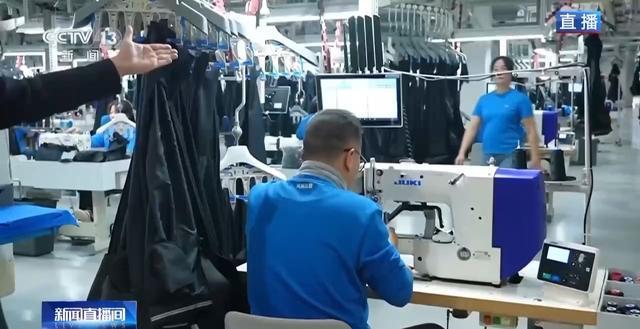
Core Viewpoint - The traditional manufacturing industry, particularly the textile and apparel sector in Suzhou, is undergoing a transformation towards modernization, supported by financial services from Agricultural Bank of Suzhou, enhancing the entire supply chain's efficiency and competitiveness [1][2]. Group 1: Industry Transformation - The textile and apparel industry in Suzhou has evolved from its historical roots in silk weaving to become a significant player in modern industrialization, impacting everyday life [1]. - The integration of smart technologies in production processes, such as automated sewing systems and intelligent supply chain solutions, is crucial for the industry's digital transformation [1][2]. - During the "Double Eleven" shopping festival, Bosideng achieved over 100 million yuan in sales, showcasing the effectiveness of data and AI in driving digital transformation [1]. Group 2: Financial Support and Innovation - Agricultural Bank of Suzhou has provided nearly 8 billion yuan in group credit to support the transformation of companies like Bosideng, addressing funding challenges faced by suppliers [2]. - The bank's "Yin Piao e-Rong" product offers online financing solutions for upstream suppliers, ensuring quick access to funds and improving raw material supply efficiency [2]. - A tailored "Bosideng Industry Chain e-Loan" has reached a balance of 563 million yuan, demonstrating the bank's commitment to supporting downstream distributors with innovative financial services [2]. Group 3: Local Industry Development - The wool sweater market in Wujiang District has seen a resurgence, with local businesses adapting to consumer demands for high-quality, stylish winter apparel [3]. - Local textile enterprises have shifted from homogeneous competition to focusing on product quality and design, enhancing their market competitiveness [3][4]. - Agricultural Bank of Suzhou has implemented various financial products to support small and micro enterprises, facilitating their growth and contributing to the local economy [4]. Group 4: Future Prospects - The textile and apparel industry in Suzhou is expected to continue thriving under the guidance of Agricultural Bank of Suzhou, enhancing domestic demand and solidifying the foundation of the real economy [5].

从 PaDY 到 智能缝纫:IEEE RAS 主席 Kosuge的「六年之约」丨GAIR 2025
雷峰网· 2025-12-09 07:07
Core Insights - The article discusses the evolution of collaborative robots, particularly focusing on the development of an AI-based intelligent sewing system by Professor Kazuhiro Kosuge, which aims to address labor shortages and automation challenges in the global garment manufacturing industry [2][3][24]. Group 1: Technological Advancements - The intelligent sewing system utilizes several breakthrough technologies, including a fixture-free 3D sewing technique that automates the sewing of three-dimensional garment components while maintaining fabric smoothness [3][4]. - The system features real-time fabric edge detection through innovative roller mechanisms and laser optical sensors, allowing precise control of sewing direction [3][4]. - It is highly programmable and adaptable to different styles, sizes, and fabrics, making it suitable for small-batch, multi-variety flexible production without extensive mold or fixture changes [3][4]. Group 2: Market Context and Challenges - The global sewing automation market is projected to remain at single-digit automation rates by 2025, primarily due to traditional automation systems relying heavily on rigid fixtures, which limit flexibility [8][9]. - The automotive seat cover market is identified as a key entry point for the sewing robot technology, with an expected market size nearing $3 billion by 2028, presenting a significant opportunity for Kosuge's innovations [9][10]. Group 3: Business Model and Future Outlook - Kosuge emphasizes a shift towards a business model that allows for "pay-per-use" services rather than outright equipment sales, reducing the financial burden on manufacturers [19][20]. - The system is designed to empower workers rather than replace them, enabling them to manage multiple sewing processes with minimal training [20][37]. - Despite the promising technology, challenges remain in terms of market acceptance and the need for further funding and talent acquisition to bring the first products to market within 1-2 years [22][24].

受光伏业务拖累 棒杰股份被债权人申请预重整 子公司已先启动重整程序
Mei Ri Jing Ji Xin Wen· 2025-12-05 15:16
Core Viewpoint - The company Bangjie Co., Ltd. is facing severe financial difficulties, leading to a pre-restructuring application due to its inability to repay debts and a negative net asset situation [2][3]. Financial Situation - As of the announcement date, the company's total assets have decreased to 2.16 billion, while total liabilities have risen to 3 billion, resulting in a negative net asset of -607 million [3][5]. - For the first three quarters of the year, the company reported a revenue of 414 million, with a net loss of 1.06 billion, indicating a significant decline in its financial performance [3][5]. Restructuring Application - The creditor, Suzhou Huanshi Lake Zhuguang Enterprise Management Partnership, has submitted a pre-restructuring application to the Jinhua Intermediate People's Court, citing the company's inability to repay debts but recognizing its restructuring value [2][3]. - The company has not yet received any documents from the court regarding the acceptance of the pre-restructuring application, leading to uncertainty about its future restructuring process [2][3]. Legal and Operational Challenges - The company and its subsidiaries are involved in multiple lawsuits and arbitrations, with a total overdue or early-matured loan amounting to approximately 986 million, which has triggered several legal disputes [7][8]. - As of November 25, the company has had 66 frozen bank accounts, with a total of 14.57 million in frozen funds, and several subsidiaries have faced asset seizures, including machinery worth over 1 billion [7][8]. Implications of Restructuring - If the court accepts the restructuring application, it may help optimize the company's asset-liability structure and improve its operational sustainability [6]. - Conversely, if the restructuring fails, the company risks bankruptcy and potential delisting from the stock exchange [6].

申洲国际再跌超4% 机构下调公司下半年销量增长预测 产量释放有望于明年继续体现
Zhi Tong Cai Jing· 2025-12-05 03:15
Core Viewpoint - Shenzhou International (02313) has seen a decline of over 4%, currently trading at HKD 64.05, with a transaction volume of HKD 499 million. Citigroup has downgraded its earnings forecast for Shenzhou International for 2025-2027 by 2%, lowering the target price from HKD 95 to HKD 94, while maintaining a "Buy" rating, suggesting that the stock price drop may reflect management's conservative sales outlook, presenting a buying opportunity due to an expected dividend yield of 4.8% in FY2026 and a projected annual compound growth rate of 12% in earnings per share over the next three years [1] Group 1 - Citigroup has revised its sales growth forecast for the second half of 2023 from high single digits to mid-single digits, primarily due to nearly flat sales growth in Q3, with discussions ongoing regarding tariff sharing with two major brands [1] - Observations indicate that delivery volumes in October and November have accelerated to catch up with the lagging performance in Q3 [1] Group 2 - Guosheng Securities (002670) notes that the industry demand and customer orders have experienced fluctuations, but Shenzhou International remains committed to long-term asset construction and steady capacity expansion [1] - It is anticipated that in 2026, with the recovery of core customer orders, the company will enter a phase of capacity-driven growth, with factory utilization reaching saturation and an optimized order structure leading to improved profit quality [1] - By the end of 2024, the company's workforce is expected to reach 103,000, a 12% year-on-year increase, and by mid-2025, it is projected to reach 110,000, a 9% year-on-year increase, reflecting the capacity enhancement and output release from recent years of hiring in garment factories [1]
港股异动 | 申洲国际(02313)再跌超4% 机构下调公司下半年销量增长预测 产量释放有望于明年继续体现
智通财经网· 2025-12-05 03:15
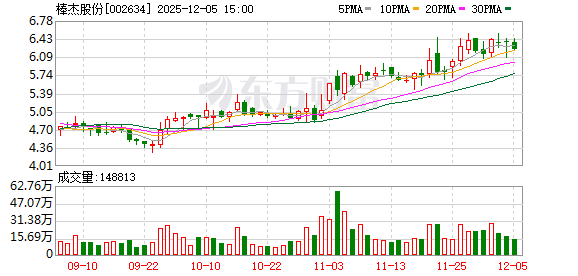
Core Viewpoint - Shenzhou International (02313) has seen a decline of over 4%, currently trading at HKD 64.05, with a transaction volume of HKD 499 million. Citigroup has downgraded its earnings forecast for Shenzhou International for 2025-2027 by 2%, lowering the target price from HKD 95 to HKD 94 while maintaining a "Buy" rating, suggesting that the stock price drop may reflect management's conservative sales outlook, presenting a buying opportunity due to an expected dividend yield of 4.8% in FY2026 and a projected annual compound growth rate of 12% in earnings per share over the next three years [1][1][1] Group 1 - Citigroup has revised its sales growth forecast for the second half of 2023 from high single digits to mid-single digits, primarily due to nearly flat sales growth in Q3, with two major brands needing to discuss tariff sharing with the group [1][1] - Observations indicate that delivery volumes in October and November have accelerated to catch up with the lagging progress of Q3 [1][1] Group 2 - Guosheng Securities notes that the industry demand and customer orders have been volatile, but Shenzhou International remains committed to long-term asset construction and steady capacity expansion [1][1] - The firm anticipates that by 2026, with the recovery of core customer orders, the company will enter a phase of capacity-driven growth, with factory utilization reaching saturation and an optimized order structure leading to improved profit quality [1][1] - By the end of 2024, the company's workforce is expected to reach 103,000, a 12% year-on-year increase, and by mid-2025, it is projected to reach 110,000, a 9% year-on-year increase, reflecting the capacity enhancement and output release from recent years of garment factory recruitment [1][1]
ESI:2025数据资产驱动苏州制造业数字化转型的机制研究报告
Sou Hu Cai Jing· 2025-12-05 02:04
Core Insights - Data assets are identified as the core driving force behind the digital transformation of the manufacturing industry, particularly in Suzhou, where the release of data asset value is crucial for achieving high-quality industrial development [1][2]. Group 1: Data Asset Definition and Importance - The report outlines the basic connotation, classification system, and key characteristics of data assets, emphasizing that high-quality, governable, and structured data assets are essential for optimizing production and enhancing management efficiency [1]. - The evolution of data assets is described in three stages: "business dataization," "data resourceization," and "data assetization," highlighting the strategic resource role of data assets in intelligent decision-making and business model innovation [1][2]. Group 2: Technological Empowerment - The report analyzes how cutting-edge technologies such as blockchain, artificial intelligence (AI), and virtual reality (VR) empower data asset management, with blockchain ensuring data rights and trustworthy circulation, AI enhancing data analysis and application efficiency, and VR aiding in the construction of high-value digital knowledge assets [1][2]. - Practical applications in manufacturing, such as predictive maintenance and flexible customization, demonstrate how data assets can be effectively transformed into productivity, exemplified by a clothing company that achieved a 50% reduction in order response time and a 50% increase in capacity through an industrial internet platform [1]. Group 3: Challenges in Data Asset Management - Suzhou's manufacturing sector faces significant challenges in data asset management, including data silos due to non-unified equipment protocols, lack of standards leading to "one item, multiple codes," a shortage of professional talent, security concerns hindering data sharing, and unclear paths for realizing data asset value [2]. - The report proposes strategies to address these challenges, such as building an industrial internet ecosystem, solidifying data quality foundations, creating vertical domain corpora, and transitioning from "experience-driven" to "data-driven" approaches [2].