
机电

Search documents
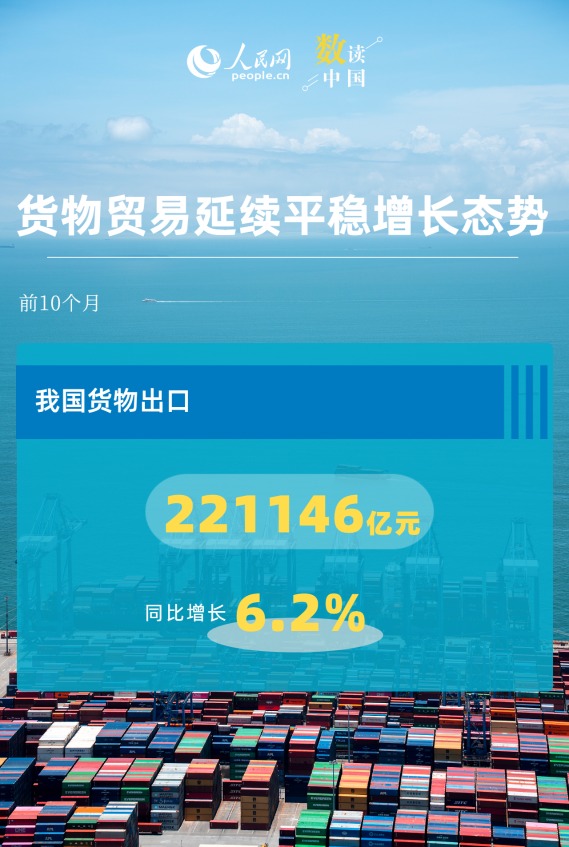
数读中国 6.2%!我国出口动能向优向新
Ren Min Wang· 2025-11-23 01:42
Group 1 - The core viewpoint of the articles indicates that China's goods trade has maintained steady growth this year, with an emphasis on the increasing competitiveness and technological advancement of export products [1] - The export of electromechanical products has expanded significantly, with a total export value of 60.7% in the first ten months, reflecting a year-on-year growth of 27% [3] - Integrated circuit exports grew by 24.7%, while automobile exports increased by 14.3%, highlighting the strong performance of key sectors [3] Group 2 - High-tech product exports have shown positive growth, with a total export value increase of 7.396 billion, outpacing the overall export growth rate [5][6] - The "Made in China" initiative is leading upgrades in manufacturing, with double-digit growth in exports of green products such as railway electric locomotives and wind power generators [9] - The trade structure is continuously optimizing, with cross-border e-commerce exports reaching approximately 7.063 trillion, marking a growth of 66% [11][13]

湖北促进外贸稳主体拓增量
Jing Ji Ri Bao· 2025-11-22 06:25
Group 1 - Hubei's foreign trade import and export reached 617.69 billion yuan in the first three quarters, a year-on-year increase of 25.3% [1] - The government has implemented the "Hub Capacity Enhancement Strategy" to improve the open radiation capacity of the region [1] - The province's tax bureau processed export tax refunds totaling 29.043 billion yuan, a year-on-year increase of 32.42% [1] Group 2 - Hubei's exports of electromechanical products reached 219.17 billion yuan, growing by 19.8% [2] - Significant growth was observed in specific sectors: computers and components increased by 20.7%, integrated circuits by 35.2%, and lithium-ion batteries by 117.7% [2] - The province aims to further enhance platform capabilities and innovate systems to strengthen its open economy [2]
服务更精细 物流提效率 湖北促进外贸稳主体拓增量
Jing Ji Ri Bao· 2025-11-21 22:38
Group 1 - Hubei has made significant breakthroughs in enhancing business cultivation, supporting enterprises to go global, streamlining international logistics, and optimizing customs clearance, resulting in a 25.3% year-on-year increase in foreign trade imports and exports, totaling 617.69 billion yuan in the first three quarters [1] - The provincial government has launched an action plan to enhance the hub's capabilities and open up radiation power, focusing on service support and innovation to explore new paths for foreign trade development [1] - Hubei's tax bureau has optimized export tax rebate services, leading to a 32.42% year-on-year increase in export tax rebates, amounting to 29.043 billion yuan in the first three quarters [1] Group 2 - The export of mechanical and electrical products reached 219.17 billion yuan, growing by 19.8%, with significant increases in computers and components (20.7%), integrated circuits (35.2%), and lithium-ion batteries (117.7%) [2] - Hubei aims to further implement actions to elevate platform capabilities and create a high ground for institutional innovation while continuing to reconstruct open channels and reshape logistics systems [2]
突破500亿元!沈阳出口额创新高
Sou Hu Cai Jing· 2025-11-21 16:18
Core Insights - The total value of goods trade imports and exports in Shenyang reached 114.78 billion RMB in the first ten months of this year, with exports hitting a record high of 53.77 billion RMB, marking a year-on-year growth of 11.6% [1][3] Group 1: Trade Performance - Shenyang's foreign trade has shown steady progress despite pressures, with a significant narrowing of the import decline by 2 percentage points compared to the previous nine months [3] - General trade, characterized by greater autonomy, dominates the trade structure, accounting for over 80% of the total import and export value [3] - Private enterprises exhibited remarkable growth with a year-on-year increase of 36.2% in imports and exports, contributing significantly to overall growth alongside state-owned enterprises, which grew by 14.7% [3] Group 2: Trade Partners and Markets - Shenyang's trade partners have become more diverse, with stable growth in trade with ASEAN countries, Belt and Road Initiative countries, and RCEP partners [5] - Trade with Belt and Road Initiative countries reached 56 billion RMB, growing by 4.6%, while trade with RCEP partners amounted to 20.12 billion RMB, increasing by 8% [5] Group 3: Export Products - Electromechanical products remain the mainstay of exports, with electrical equipment exports surging by 39.7% and automotive parts also showing growth [6] - Labor-intensive products have emerged as a surprising contributor to export growth, with an increase of 86.4% [6] - In imports, while overall imports of electromechanical products declined, there was a double-digit growth in imports of agricultural products and pharmaceuticals, reflecting the rising domestic market demand [6]
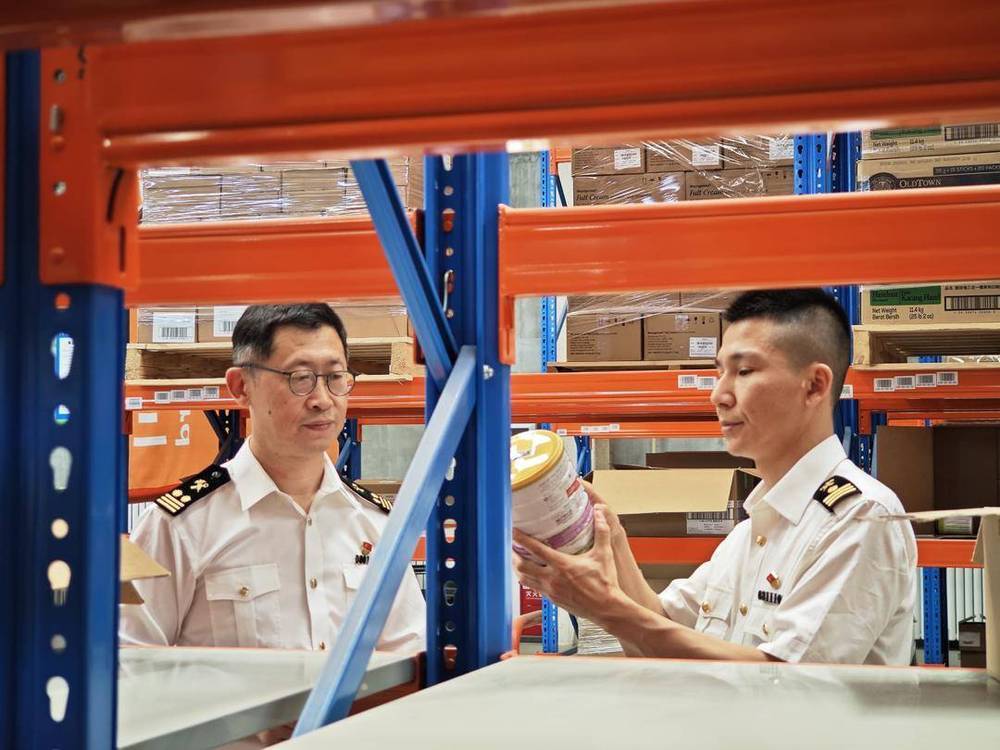
深圳“国际性枢纽”连接世界 释放大市场磁吸力
Sou Hu Cai Jing· 2025-11-21 15:22
Core Viewpoint - Shenzhen is emerging as an international hub connecting China to the world, showcasing vibrant trade activities and a strong market appeal [1] Group 1: Trade and Economic Data - Shenzhen's import and export scale has maintained the top position among mainland cities in the first ten months, with imports of electromechanical products reaching 1.2 trillion yuan, an increase of 8.5%, and agricultural product imports at 82.26 billion yuan, growing by 10% [7] - China has been the world's second-largest importer for 16 consecutive years, with an annual import volume exceeding 20 trillion yuan, driven by a population of over 1.4 billion and more than 400 million middle-income individuals [9] - The recently concluded 8th China International Import Expo achieved a record intended transaction amount of 83.49 billion USD, with 290 Fortune 500 companies participating [9] Group 2: Port and Logistics Developments - Yantian Port has added 14 international routes since 2025, covering North America, Europe, and Asia, with over 100 weekly routes connecting globally [3] - Digital operations at Yantian Port enhance efficiency, allowing diverse international goods to flow quickly to production lines and consumers, injecting vitality into the domestic market [5] Group 3: Tourism and Visitor Trends - The implementation of a 240-hour visa-free transit policy at five ports, including West Kowloon and Hong Kong-Zhuhai-Macao Bridge, has made the region a significant hub connecting the Guangdong-Hong Kong-Macao Greater Bay Area with the world [12] - Over 1.2 million foreign travelers were inspected at the West Kowloon border checkpoint this year, with more than 260,000 benefiting from the visa-free policy, marking a 100% year-on-year increase [14] - The number of foreign tourists entering China has reached 20.89 million in the first three quarters, a growth of over 50%, with a significant increase in duty-free sales [26]
天银机电:控股股东拟减持不超3%公司股份
Zheng Quan Shi Bao Wang· 2025-11-21 13:07
人民财讯11月21日电,天银机电(300342)11月21日公告,控股股东佛山市澜海瑞兴股权投资合伙企业 (有限合伙)(简称"澜海瑞兴")计划以集中竞价方式减持公司股份不超过425.04万股(占本公司总股本比例 1%),以大宗交易方式减持公司股份不超过850.07万股(占本公司总股本比例2%)。 ...

出口结构变化大,外贸人迎风而行
Di Yi Cai Jing· 2025-11-20 13:27
国内产业转型升级正在为出口提供新的增长动能。 "北美和欧洲航线的舱位目前普遍是缺货状态,运费也在下降。"深圳一家货代的企业负责人王志从对第一财经表 示,从航运市场上来看,除了东南亚航线因为台风导致的港口堵塞,出现了短期运费上涨及海运爆仓之外,普遍 航线处于供大于求的"淡季"。 东方金诚宏观研究发展部执行总监冯琳认为,10月出口同比增速转负,一方面受到了去年同期高基数影响,另一 方面也与今年10月工作日较少有关。最重要的,还是美国高关税对全球贸易和中国出口的冲击持续显现,导致外 需整体放缓。其中,10月中国对美出口延续大幅下滑过程,同比降幅达到25.2%,与上月差别不大,直接下拉整 体出口增速3.8个百分点。 根据海关数据,10月中国对欧盟、日本、东盟及"一带一路"共建经济体出口增速分别为0.9%、-5.7%、11.0%、 2.8%,分别较上月下行13.2、7.5、4.7、14.3个百分点,剔除上年基数抬高和工作日效应,10月我国对这些区域的 出口动能均有所减弱。 美国采购商需求提前 中泰证券研究所首席分析师杨畅提出,10月对美出口同比降幅收窄,非美出口面临波动。10月以来上海出口集装 箱运价指数(SCFI)、 ...

前10月全省经济运行总体平稳
Liao Ning Ri Bao· 2025-11-20 01:08
Economic Overview - The province's economy showed overall stability in the first ten months of the year, with industrial growth, declining fixed asset investment, expanding market sales, and rapid export growth [1] Industrial Performance - The added value of industrial enterprises above a designated size increased by 1.5% year-on-year, with high-tech manufacturing growing by 3.9% [1] - By sector, mining increased by 7.8%, manufacturing by 0.7%, and electricity, heat, gas, and water production and supply by 0.1% [2] - State-owned enterprises saw a 2.2% increase in added value, while foreign and Hong Kong, Macao, and Taiwan-invested enterprises experienced a decline of 5.9% [2] - Among 40 industrial categories, 23 reported year-on-year growth, resulting in a growth rate of 57.5% [2] - Notable growth sectors included chemical fiber manufacturing (growth of 7.7 times), transportation equipment manufacturing (growth of 47.1%), and gas production and supply (growth of 21.6%) [2] Investment Trends - Fixed asset investment decreased overall, but manufacturing investment rose by 6.2%, with high-tech manufacturing investment increasing by 10.8% [2] - Investment in the primary industry grew by 5.1% year-on-year [2] Market Sales - The total retail sales of consumer goods reached 877.98 billion yuan, reflecting a year-on-year growth of 3.5% [3] - Sales of essential goods remained stable, with food and oil retail sales increasing by 13.4% and daily necessities by 11.8% [3] - Upgraded consumer goods saw significant sales growth, including wearable smart devices (growth of 15.5 times) and energy-efficient home appliances (growth of 1.3 times) [3] Trade Performance - The province's total import and export value reached 338.37 billion yuan, marking a 9.6% increase [3] - Agricultural product exports totaled 27.67 billion yuan, with a year-on-year growth of 9.9% [3] - Machinery and electrical products exports were 170.59 billion yuan, growing by 8.5%, with notable increases in ship and automotive parts exports [3] Price Trends - Consumer prices remained stable overall, while industrial producer prices experienced a decline [4]
外贸“含新量”不断提升 机电产品成出口增长重要力量
Zheng Quan Ri Bao· 2025-11-17 16:11
Core Insights - China's total import and export volume increased by 3.6% year-on-year in the first ten months of this year, with exports growing by 6.2% [1] - The export structure is shifting towards higher value-added and technologically advanced products, particularly represented by "new three samples" (electric vehicles, lithium batteries, and solar cells) [1][2] - The export of electromechanical products rose by 8.7%, accounting for 60.7% of total exports, with integrated circuits and automotive exports increasing by 24.7% and 14.3% respectively [1] Group 1: Export Growth and Structure - The export growth of electromechanical and high-tech products is significantly outpacing overall export growth, indicating a shift towards mid-to-high-end products [2] - The continuous optimization of export structure is crucial for maintaining growth momentum while stabilizing export volume [2] Group 2: Digitalization and Industry Upgrades - The increase in exports of electromechanical and high-tech products is linked to enhanced digital capabilities within enterprises, leading to improved responsiveness to overseas demand [3] - Digital order systems and smart logistics have improved delivery certainty, which is vital in the competitive global supply chain [3] Group 3: Changes in Order Structure - There is a noticeable increase in orders from emerging markets and countries involved in the Belt and Road Initiative, with heightened demands for product quality, delivery timelines, and green low-carbon standards [4] Group 4: Automotive Industry Trends - The automotive sector is experiencing significant changes, with a rise in orders for components related to electric vehicles, reflecting higher standards for materials, precision, and safety [5] - The automotive industry is undergoing a transformation towards intelligence, innovation, and increased market competition, necessitating adaptation from component manufacturers [5] Group 5: Long-term Stability and Policy Recommendations - Despite progress in high-tech product exports, there are still shortcomings in upstream sectors like chip manufacturing, which could limit further value addition [7] - A balanced approach between stabilizing scale and optimizing structure requires focused financial support, improved standards, and leveraging new trade models like cross-border e-commerce [7]
秦安股份董事会审议通过亦高光电业绩承诺补充协议及2025年第二次临时股东会召开议案
Xin Lang Cai Jing· 2025-11-17 16:03
Core Viewpoint - On November 18, 2025, Chongqing Qin'an Electromechanical Co., Ltd. announced the resolutions from its 20th meeting of the 5th Board of Directors, which included signing a performance commitment and compensation supplementary agreement with Anhui Yigao Optoelectronics Technology Co., Ltd. and proposing to hold the second extraordinary general meeting of shareholders in 2025 [1][3][4]. Group 1: Board Meeting Details - The board meeting was held on November 17, 2025, via telecommunication, with all 9 directors present, and was chaired by Mr. Yuanming Tang [2]. - The meeting complied with the relevant regulations of the Company Law of the People's Republic of China and the company's articles of association, making the resolutions legally valid [2]. Group 2: Performance Commitment Agreement - The first resolution approved was the signing of a supplementary agreement regarding performance commitments and compensation related to the cash acquisition of 99% equity in Yigao Optoelectronics [3]. - The acquisition involves a cash purchase of 99% equity in Yigao Optoelectronics by the company's wholly-owned subsidiary, with the supplementary agreement clarifying performance commitments and compensation matters [3]. - Mr. Yuanming Tang abstained from voting due to the related party transaction, and the resolution passed with 8 votes in favor, 0 against, and 1 abstention [3]. Group 3: Shareholder Meeting Proposal - The second resolution was to propose the convening of the second extraordinary general meeting of shareholders in 2025, which was approved unanimously with 9 votes in favor [4]. - The company has disclosed the notice for the extraordinary general meeting on the Shanghai Stock Exchange and other designated media, with details to be confirmed in the notice [4]. Group 4: Follow-up Arrangements - The company stated that the related party transaction resolutions will be submitted for shareholder approval, and it will fulfill its information disclosure obligations in a timely manner [5].
