
综合

Search documents
今日沪指跌0.13% 有色金属行业跌幅最大
Zheng Quan Shi Bao Wang· 2025-12-09 04:29
Market Overview - The Shanghai Composite Index fell by 0.13% today, with a trading volume of 791.80 million shares and a total transaction value of 1,263.947 billion yuan, a decrease of 2.64% compared to the previous trading day [1][2] Industry Performance - The top-performing industries included: - Comprehensive sector with a gain of 3.93%, leading stock Dongyangguang increased by 9.99% [1] - Communication sector rose by 2.35%, with Hengxin Dongfang as the top performer, up by 20.04% [1] - Electronics sector increased by 1.64%, led by Purang Shares, which rose by 14.07% [1] - The worst-performing industries included: - Non-ferrous metals sector decreased by 2.30%, with Minfa Aluminum down by 5.68% [2] - Steel sector fell by 1.87%, with Taigang Stainless Steel down by 3.95% [2] - Real estate sector declined by 1.56%, led by Haitai Development, which fell by 5.13% [2] Trading Data Summary - The trading data for various industries showed significant fluctuations, with the comprehensive sector seeing a transaction value of 50.29 billion yuan, an increase of 20.94% from the previous day [1] - The communication sector had a transaction value of 1,163.02 billion yuan, slightly down by 0.72% [1] - The electronics sector recorded a transaction value of 2,629.17 billion yuan, up by 9.12% [1]
【盘中播报】8只A股跌停 有色金属行业跌幅最大
Zheng Quan Shi Bao Wang· 2025-12-09 04:29
| 申万行业 | 行业涨跌(%) | 成交额(亿元) | 比上日(%) | 领涨(跌)股 | 涨跌幅(%) | | --- | --- | --- | --- | --- | --- | | 综合 | 3.27 | 35.19 | 12.37 | 东阳光 | 9.02 | | 通信 | 1.61 | 891.07 | -2.21 | 恒信东方 | 20.04 | | 电子 | 0.98 | 1930.50 | 7.07 | 普冉股份 | 13.43 | | 银行 | 0.64 | 90.14 | -20.67 | 农业银行 | 1.91 | | 轻工制造 | 0.24 | 160.37 | 20.70 | 德艺文创 | 20.00 | | 美容护理 | 0.19 | 14.32 | 7.26 | 洁雅股份 | 5.17 | | 商贸零售 | 0.15 | 139.51 | 31.18 | 茂业商业 | 10.02 | | 公用事业 | 0.10 | 99.30 | -30.66 | *ST聆达 | 3.27 | | 纺织服饰 | 0.02 | 76.16 | 7.21 | 欣贺股份 | 10.03 | | 医 ...
GDP降幅超预期,分析称“日本经济或将行至危机边缘”
Zhong Guo Xin Wen Wang· 2025-12-08 13:46
Group 1 - Japan's GDP for Q3 2025 has been revised to a quarter-on-quarter contraction of 0.6%, with an annualized decline of 2.3%, exceeding previous market expectations of a 2.0% drop [3] - Corporate investment was significantly downgraded from an initial forecast of a 1.0% increase to a 0.2% decrease, primarily contributing to the GDP decline [3] - Public investment also saw a downward revision from a 0.1% increase to a 1.1% decrease, indicating a broader economic contraction [3] Group 2 - Japan is facing multiple economic challenges, including limited fiscal and monetary policy space, insufficient internal growth momentum, and external trade environment risks [3] - The new Prime Minister, Sanae Takaichi, has raised concerns with her defense policies and statements regarding Taiwan, which have strained Japan-China relations and heightened market anxiety [4] - Economists warn that these developments could lead to further economic downturns, potentially pushing Japan's economy to the brink of crisis [4]

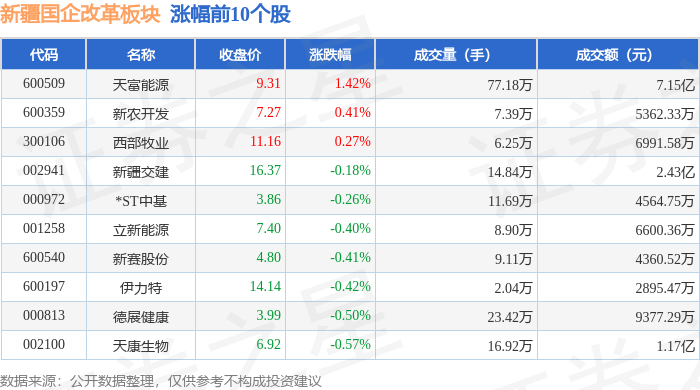
新疆国企改革板块12月8日跌0.77%,北新路桥领跌,主力资金净流出1.05亿元
Sou Hu Cai Jing· 2025-12-08 09:25
Core Insights - The Xinjiang state-owned enterprise reform sector experienced a decline of 0.77% on December 8, with Beixin Road and Bridge leading the drop [1] - The Shanghai Composite Index closed at 3924.08, up 0.54%, while the Shenzhen Component Index closed at 13329.99, up 1.39% [1] Stock Performance Summary - Tianfu Energy (600509) closed at 9.31, with an increase of 1.42%, and a trading volume of 771,800 shares, totaling 715 million yuan [1] - Xinjiang Jiaojian (002941) saw a slight decrease of 0.18%, closing at 16.37, with a trading volume of 148,400 shares, amounting to 243 million yuan [1] - Beixin Road and Bridge (002307) led the decline with a drop of 2.73%, closing at 5.71, and a trading volume of 1,065,800 shares, totaling 608 million yuan [2] Capital Flow Analysis - The Xinjiang state-owned enterprise reform sector had a net outflow of 105 million yuan from institutional investors, while retail investors saw a net inflow of 55.99 million yuan [2] - Major stocks like Tianfu Energy and Tiankang Biological (002100) experienced varying levels of net inflow and outflow from different investor categories [3] - Tianfu Energy had a net inflow of 42.33 million yuan from institutional investors, while retail investors had a net outflow of 24.97 million yuan [3]

【盘中播报】沪指涨0.73% 通信行业涨幅最大
Zheng Quan Shi Bao Wang· 2025-12-08 06:31
Market Overview - The Shanghai Composite Index increased by 0.73% today, with a trading volume of 1,019.90 million shares and a transaction value of 16,448.90 billion yuan, representing a 23.17% increase compared to the previous trading day [1]. Industry Performance - The top-performing sectors included: - **Communication**: Increased by 4.51%, with a transaction value of 1,361.95 billion yuan, up 27.30% from the previous day, led by Tianfu Communication, which rose by 20.00% [1]. - **Comprehensive**: Increased by 3.51%, with a transaction value of 52.36 billion yuan, up 79.04%, led by Yuegui Co., which rose by 6.62% [1]. - **Electronics**: Increased by 2.69%, with a transaction value of 3,141.21 billion yuan, up 31.05%, led by Dongtian Micro, which rose by 20.00% [1]. - The sectors with the largest declines included: - **Coal**: Decreased by 1.33%, with a transaction value of 97.91 billion yuan, up 32.84%, led by Huayang Co., which fell by 3.12% [2]. - **Food and Beverage**: Decreased by 0.47%, with a transaction value of 215.76 billion yuan, up 13.49%, led by Baoli Food, which fell by 2.67% [2]. - **Public Utilities**: Decreased by 0.38%, with a transaction value of 228.63 billion yuan, up 7.24%, led by Jingneng Thermal, which fell by 5.52% [2].


12月5日基础化工、电子、医药生物等行业融资净卖出额居前
Zheng Quan Shi Bao Wang· 2025-12-08 02:44
Summary of Key Points Core Viewpoint - As of December 5, the latest financing balance in the market is 24,641.11 billion yuan, showing a decrease of 23.78 billion yuan compared to the previous trading day. Industry Analysis - **Increase in Financing Balance**: - Eleven industries saw an increase in financing balance, with the computer industry leading with an increase of 9.99 billion yuan. Other notable increases were in the defense industry (5.19 billion yuan), machinery equipment (4.38 billion yuan), and banking (3.25 billion yuan) [1]. - **Decrease in Financing Balance**: - Twenty industries experienced a decrease, with significant reductions in basic chemicals (9.11 billion yuan), electronics (6.81 billion yuan), and pharmaceutical biology (5.11 billion yuan) [1][2]. - **Highest Growth Rate**: - The construction materials industry had the highest growth rate in financing balance at 1.80%, followed by agriculture, forestry, animal husbandry, and fishery (0.95%), and defense industry (0.63%) [1]. - **Largest Declines**: - The coal industry saw a decline of 1.21%, followed by household appliances (1.14%) and basic chemicals (0.91%) [1][2]. Detailed Financing Balance Changes - **Top Industries by Financing Balance**: - Computer: 1,785.70 billion yuan, +9.99 billion yuan, +0.56% - Defense Industry: 828.78 billion yuan, +5.19 billion yuan, +0.63% - Machinery Equipment: 1,302.23 billion yuan, +4.38 billion yuan, +0.34% - Banking: 758.49 billion yuan, +3.25 billion yuan, +0.43% [1]. - **Industries with Notable Decreases**: - Basic Chemicals: 988.44 billion yuan, -9.11 billion yuan, -0.91% - Electronics: 3,600.48 billion yuan, -6.81 billion yuan, -0.19% - Pharmaceutical Biology: 1,640.85 billion yuan, -5.11 billion yuan, -0.31% [2].
沈阳市总工会五大专项行动助推小微企业发展
Liao Ning Ri Bao· 2025-12-08 01:37
Core Viewpoint - The Shenyang Federation of Trade Unions has launched the "Strengthening Small, Serving Micro, Assisting the Struggling" initiative to address the challenges faced by small and micro enterprises, aiming to enhance union services from traditional rights protection to business support [1] Group 1: Five Special Actions - The initiative includes five special actions designed to provide targeted support for small and micro enterprises [1] - The first action involves moving the union membership registration window to local government service halls and establishing "Union Business Service Stations" for one-stop services [1] - The second action focuses on policy promotion and guidance, delivering policies directly to small and micro enterprises [1] - The third action includes visits and support to understand the real conditions of each enterprise, establishing a "one enterprise, one file" system, and providing legal health checks to prevent labor disputes [1] - The fourth action aims to enhance brand activities and service coverage by offering skills competitions and practical training, as well as creating market opportunities for small enterprises [1] - The fifth action emphasizes financial support and standardized usage, simplifying processes and introducing innovations like "virtual public service cards" for more efficient fund usage [1]
万联晨会-20251205
Wanlian Securities· 2025-12-05 01:01
Core Viewpoints - The A-share market showed mixed performance with the Shanghai Composite Index down by 0.06% at 3,875.79 points, while the Shenzhen Component Index rose by 0.40% to 13,006.72 points, and the ChiNext Index increased by 1.01% to 3,067.48 points [2][8] - The total trading volume in the A-share market reached 1.55 trillion RMB, with net purchases from southbound funds amounting to 1.48 billion HKD [2][8] - Over 3,600 stocks in the A-share market declined, with the machinery, electronics, and defense industries leading the gains, while the comprehensive and beauty care sectors lagged [2][8] - The Hang Seng Index rose by 0.68%, and the Hang Seng Technology Index increased by 1.45%, while U.S. indices showed mixed results with the Dow Jones down by 0.07% at 47,850.94 points, the S&P 500 up by 0.11% at 6,857.12 points, and the Nasdaq up by 0.22% at 23,505.14 points [2][8] Domestic Market Performance - The closing figures for major domestic indices include: - Shanghai Composite Index: 3,875.79 (-0.06%) - Shenzhen Component Index: 13,006.72 (+0.40%) - CSI 300: 4,546.57 (+0.34%) - STAR 50: 1,326.16 (+1.36%) - ChiNext Index: 3,067.48 (+1.01%) - SSE 50: 2,974.34 (+0.38%) - SSE 180: 9,862.77 (+0.30%) - SSE Fund: 7,111.30 (+0.05%) - Government Bond Index: 224.64 (-0.19%) [4] International Market Performance - The closing figures for major international indices include: - Dow Jones: 47,850.94 (-0.07%) - S&P 500: 6,857.12 (+0.11%) - Nasdaq: 23,505.14 (+0.22%) - Nikkei 225: 51,028.42 (+2.33%) - Hang Seng Index: 25,935.90 (+0.68%) - U.S. Dollar Index: 99.06 (+0.20%) [4]
3.20亿元资金今日流出综合股
Zheng Quan Shi Bao Wang· 2025-12-04 11:15
沪指12月4日下跌0.06%,申万所属行业中,今日上涨的有9个,涨幅居前的行业为机械设备、电子,涨 幅分别为0.90%、0.78%。跌幅居前的行业为综合、美容护理,跌幅分别为2.11%、1.89%。综合行业位 居今日跌幅榜首位。 主力资金净流出的行业有26个,电力设备行业主力资金净流出规模居首,全天净流出资金41.14亿元, 其次是电子行业,净流出资金为38.66亿元,净流出资金较多的还有有色金属、食品饮料、基础化工等 行业。 (文章来源:证券时报网) 综合行业资金流向排名 资金面上看,两市主力资金全天净流出243.04亿元,今日有5个行业主力资金净流入,机械设备行业主 力资金净流入规模居首,该行业今日上涨0.90%,全天净流入资金29.11亿元,其次是家用电器行业,日 涨幅为0.21%,净流入资金为24.44亿元。 | 代码 | 简称 | 今日涨跌幅(%) | 今日换手率(%) | 主力资金流量(万元) | | --- | --- | --- | --- | --- | | 000833 | 粤桂股份 | -4.58 | 10.21 | -15666.40 | | 600673 | 东阳光 | -1.69 ...
经合组织:美关税对自身影响尤为明显
Xin Hua Wang· 2025-12-02 10:09
Core Viewpoint - The OECD's latest economic outlook report indicates that the impact of U.S. tariffs on the global economy is becoming more pronounced, particularly affecting spending choices, corporate costs, and consumer prices in the U.S. [1] Group 1: Tariff Impact - The total value of U.S. imports subject to tariffs has significantly decreased compared to non-tariffed imports, indicating that tariffs are suppressing overall demand in the U.S. [1] - Trade volumes are expected to remain under pressure due to these tariffs [1]. Group 2: Consumer and Inflation Outlook - With a cooling job market and tariffs raising consumer prices, household consumption growth in the U.S. is anticipated to continue slowing [1]. - Inflation may become more persistent, which could limit the scope for interest rate cuts [1]. Group 3: Fiscal Policy and Market Risks - The current fiscal policy path in the U.S. is deemed unsustainable, and reducing the significant deficit is urgent [1]. - The cyclically adjusted price-to-earnings ratio of the S&P 500 index is nearing historical highs, indicating a high risk of significant market corrections [1].