
航天航空

Search documents
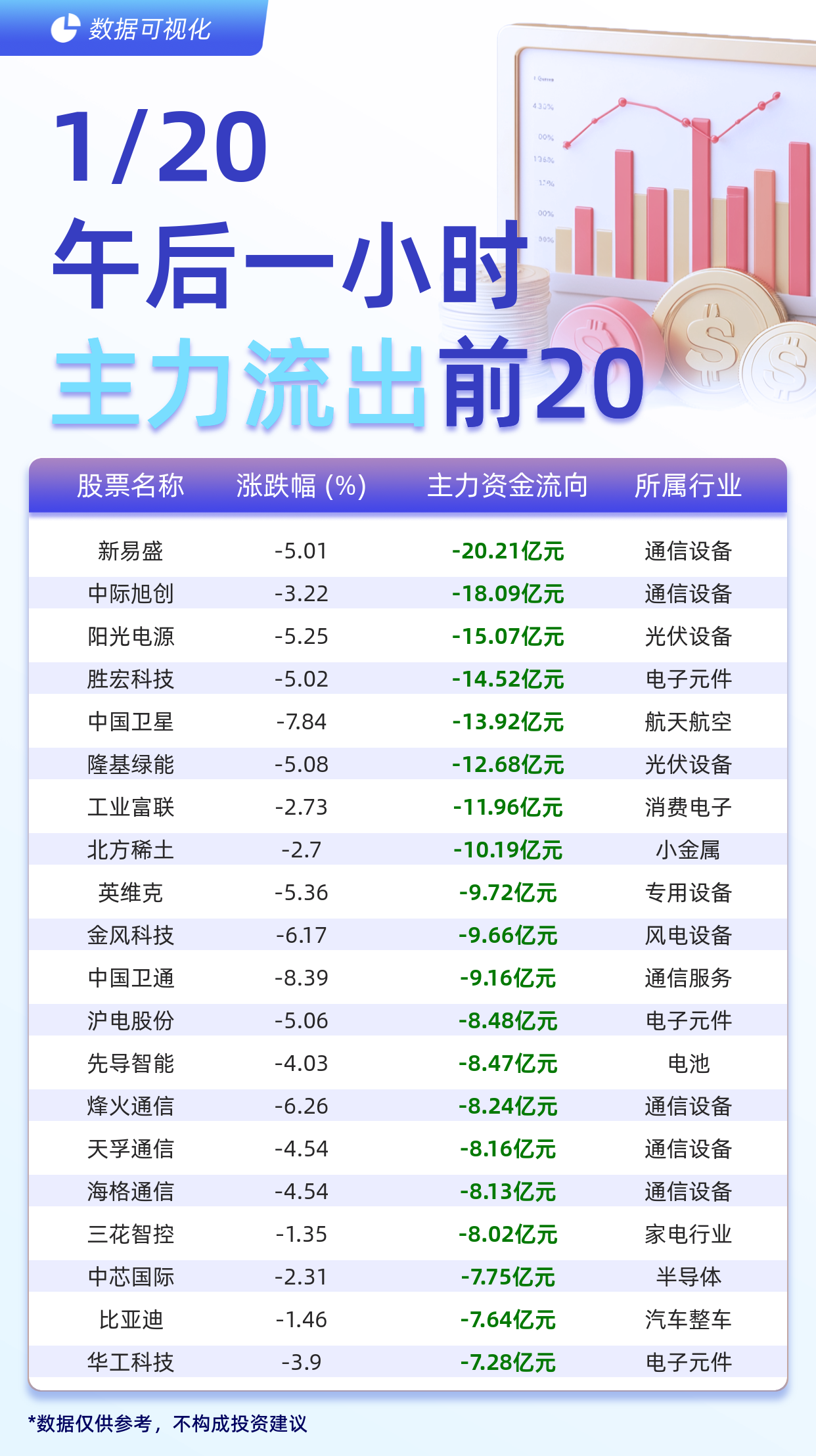
主力个股资金流出前20:新易盛流出20.21亿元、中际旭创流出18.09亿元
Jin Rong Jie· 2026-01-20 06:26
Core Viewpoint - The data indicates significant outflows of main funds from various stocks, particularly in the communication equipment and renewable energy sectors, suggesting a potential shift in investor sentiment and market dynamics [1][2][3] Group 1: Stock Performance and Fund Outflows - The top stock with the largest fund outflow is Xinye Technology, with a decrease of 20.21 billion yuan and a drop of 5.01% [2] - Zhongji Xuchuang follows with an outflow of 18.09 billion yuan and a decline of 3.22% [2] - Yangguang Electric Power experienced an outflow of 15.07 billion yuan, with a decrease of 5.25% [2] - Shenghong Technology saw a fund outflow of 14.52 billion yuan and a drop of 5.02% [2] - China Satellite had an outflow of 13.92 billion yuan, with a significant decline of 7.84% [2] Group 2: Sector Analysis - The communication equipment sector is notably affected, with multiple companies like Xinye Technology, Zhongji Xuchuang, and Fenghuo Communication experiencing substantial fund outflows [2][3] - The photovoltaic equipment sector, represented by Yangguang Electric Power and Longi Green Energy, also shows significant outflows, indicating potential challenges in this industry [2][3] - The electronic components sector, including Shenghong Technology and Huadian Co., is facing similar trends with notable fund withdrawals [2][3]





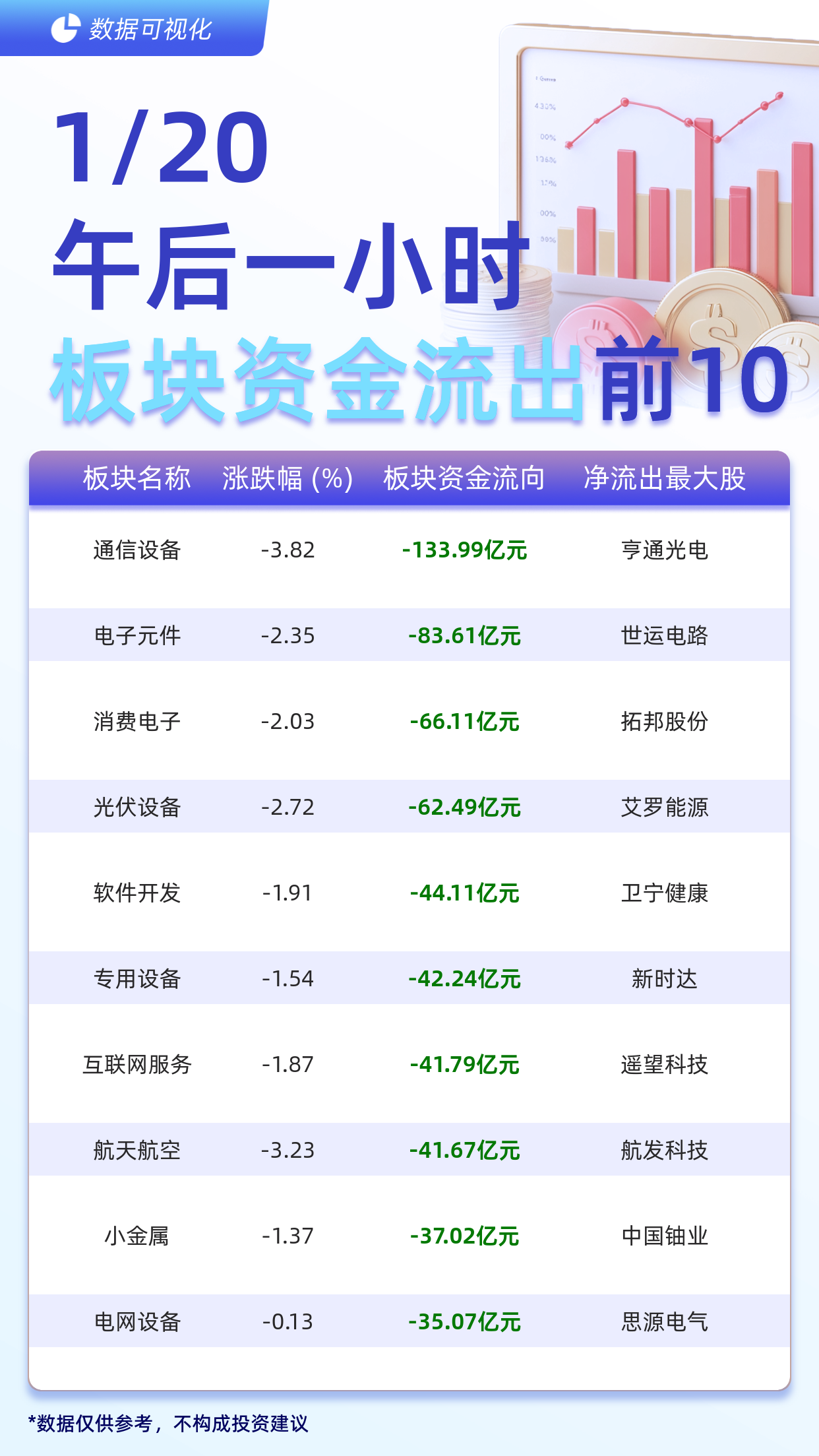
主力板块资金流出前10:通信设备流出133.99亿元、电子元件流出83.61亿元
Jin Rong Jie· 2026-01-20 06:26
Core Viewpoint - The main market experienced a significant outflow of capital, totaling 879.71 billion yuan, with various sectors facing substantial losses in funding [1]. Group 1: Capital Outflow by Sector - The top ten sectors with the largest capital outflows include: - Communication Equipment: -133.99 billion yuan, with a decline of 3.82% [2][3] - Electronic Components: -83.61 billion yuan, with a decline of 2.35% [2][3] - Consumer Electronics: -66.11 billion yuan, with a decline of 2.03% [2] - Photovoltaic Equipment: -62.49 billion yuan, with a decline of 2.72% [2] - Software Development: -44.11 billion yuan, with a decline of 1.91% [2] - Specialized Equipment: -42.24 billion yuan [1] - Internet Services: -41.79 billion yuan, with a decline of 1.87% [3] - Aerospace: -41.67 billion yuan, with a decline of 3.23% [3] - Minor Metals: -37.02 billion yuan, with a decline of 1.37% [3] - Power Grid Equipment: -35.07 billion yuan, with a minimal decline of 0.13% [3]
英大证券晨会纪要-20260120
British Securities· 2026-01-20 06:10
Market Overview - The A-share market is expected to maintain a volatile adjustment phase in the short term, following a rapid rise and subsequent consolidation [1][10] - On Monday, the three major indices of the A-share market showed mixed performance, with the Shanghai Composite Index closing in the green while the ChiNext Index fell after a brief rise [1][10] - The market structure is characterized by more stocks rising than falling, with notable strength in sectors such as precious metals, electric grid equipment, and aerospace, while the AI application sector continues to adjust [1][10] Short-term Market Dynamics - The trading volume has decreased, with the total turnover dropping to 2.7 trillion yuan, increasing the probability of adjustment [1][8] - Escalating trade tensions between the US and Europe have heightened global market risk aversion [1][8] - The upcoming peak of annual report forecasts in January is creating a battleground between performance expectations and fundamental verification, particularly for some popular themes in technology [1][8] Mid-term Market Outlook - The mid-term positive trend remains unchanged, with the global interest rate cut cycle entering its second half, leading to a macro liquidity environment of both internal and external easing [2][9] - There is a clear trend of reallocating household wealth towards the stock market, providing solid support for continued market entry of mid-to-long-term funds [2][9] - The current market is not in a trend decline but rather in a structural optimization phase during consolidation, offering entry points for quality stocks as valuations are repaired [2][9] Sector Analysis - The precious metals sector has shown strong performance, driven by factors such as the onset of the Federal Reserve's interest rate cut cycle, increased geopolitical tensions, and strong demand for gold as an inflation hedge [6][7] - The aerospace and military sectors have also seen significant gains, supported by stable growth in defense budgets and ongoing geopolitical conflicts that may catalyze further investment [7][8] - The report suggests focusing on segments like aerospace, military technology, and defense information systems, which are expected to benefit from policy support and emerging growth points [7][8]
美“登月火箭”就位,离发射还有多远
Xin Lang Cai Jing· 2026-01-20 05:29
Core Viewpoint - The "Artemis 2" mission, featuring the Orion spacecraft and Space Launch System (SLS) rocket, has successfully reached the launch pad after a lengthy transport process, but the actual launch date remains uncertain due to necessary testing and evaluations [1][2]. Group 1: Transport and Arrival - The Orion spacecraft and SLS rocket combination, standing approximately 98 meters tall and weighing around 1500 tons, was transported to the launch pad using the "Crawler-Transporter 2," which weighs 3000 tons and can carry over 8000 tons [1]. - The transport process took nearly 12 hours, with the vehicle moving at a very slow speed of about 1 mile per hour, and the final approach involved climbing a sloped ramp [2]. Group 2: Testing and Preparations - Upon arrival at the launch pad, NASA engineers will conduct integration, testing, and a series of launch rehearsals, including a critical "wet dress rehearsal" where over 700,000 gallons of cryogenic liquid oxygen and hydrogen will be loaded [2]. - NASA may require multiple "wet dress rehearsals," as seen in the Artemis 1 mission, which underwent four such rehearsals before completion [2]. Group 3: Launch Timeline - After completing the necessary tests and evaluations, NASA will determine the launch date, with the launch window opening approximately every four weeks, providing 4 to 5 opportunities per window [3]. - The earliest potential launch date is set for February 6, when three American astronauts and one Canadian astronaut will embark on a 10-day lunar mission to test systems and hardware [3].
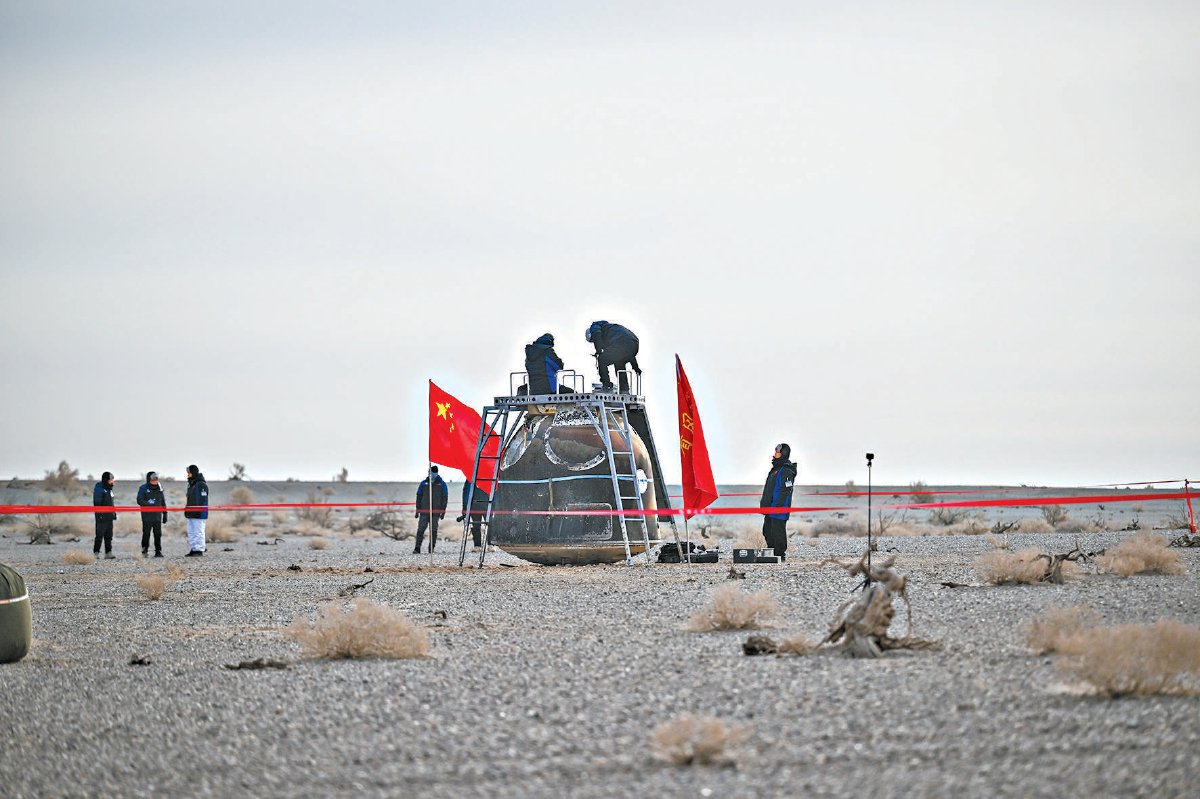
神舟二十号飞船安全顺利回家
Xin Lang Cai Jing· 2026-01-19 22:17
Core Viewpoint - The Shenzhou-20 spacecraft successfully returned to Earth, completing its mission and demonstrating its capability for a 9-month stay in orbit [2] Group 1: Mission Accomplishments - The Shenzhou-20 spacecraft spent a total of 270 days in orbit, successfully completing all primary tasks related to China's space station emergency operations [2] - The spacecraft was originally scheduled to return on November 5, 2025, but adjustments were made due to a discovered crack in the window [2] Group 2: Technical Developments - A triangular crack was identified on the spacecraft's window, prompting the crew to install a window crack treatment device to enhance thermal protection and sealing during re-entry [2] - The Shenzhou-21 crew utilized an EVA opportunity to closely photograph the window crack for further assessment [2] Group 3: Future Missions - The Shenzhou-23 spacecraft has arrived at the Jiuquan Satellite Launch Center, with the Long March 2F Yao-23 rocket set to be launched soon as part of the ongoing backup mission [2]
市场分析:航天电网行业领涨,A股小幅上行
Zhongyuan Securities· 2026-01-19 09:21
Investment Rating - The industry is rated as "stronger than the market," indicating an expected increase of over 10% in the industry index relative to the CSI 300 index over the next six months [17]. Core Views - The A-share market experienced a low opening followed by a slight upward trend, with significant performance in sectors such as electric grid equipment, precious metals, aerospace, and general equipment, while sectors like internet services, cultural media, communication equipment, and software development showed weaker performance [2][3]. - The average price-to-earnings (P/E) ratios for the Shanghai Composite Index and the ChiNext Index are currently at 16.80 times and 53.52 times, respectively, which are above the median levels of the past three years, suggesting a suitable environment for medium to long-term investments [3][16]. - The total trading volume on the two exchanges was 27,325 billion, which is above the median trading volume of the past three years, indicating robust market activity [3][16]. - The central bank's recent actions, including structural tools and interest rate cuts, signal a commitment to support economic transformation and boost market confidence [3][16]. - Regulatory measures are being implemented to encourage long-term capital inflow while maintaining market stability through adjustments in margin trading and transaction regulations [3][16]. - The market is expected to focus on performance and industry trends in the upcoming phase, with a likelihood of the Shanghai Composite Index maintaining a slight upward trend [3][16]. Summary by Sections A-share Market Overview - On January 19, the A-share market opened low but rose slightly, with the Shanghai Composite Index facing resistance around 4,126 points. The index closed at 4,114.00 points, up 0.29%, while the Shenzhen Component Index closed at 14,294.05 points, up 0.09% [7][8]. - Over 70% of stocks in the two markets rose, with notable gains in precious metals, electric grid equipment, aerospace, and tourism sectors, while sectors like communication equipment and internet services saw declines [7][9]. Future Market Outlook and Investment Recommendations - The report suggests that investors should closely monitor macroeconomic data, changes in overseas liquidity, and policy developments. Short-term investment opportunities are recommended in electric grid equipment, aerospace, precious metals, and general equipment sectors [3][16].
俄航天集团和美航空航天局将在一年内讨论国际空间站脱轨时间
Jin Rong Jie· 2026-01-18 15:15
Core Viewpoint - The Russian space agency plans to discuss the deorbiting timeline of the International Space Station (ISS) with NASA within a year [1] Group 1: Timeline and Operations - The ISS was initially planned for a 15-year operation starting from its construction in 1998 [1] - The operational timeline has been extended multiple times, first to 2020, then to 2024, and currently to 2028 [1] - The ISS is scheduled to be decommissioned and deorbited by 2030 [1]
“十五五”蓝图绘就 北京丰台产业规模冲刺万亿级
Xin Lang Cai Jing· 2026-01-18 13:18
Core Insights - The article outlines the strategic development plan for Fengtai District during the "14th Five-Year Plan" and the upcoming "15th Five-Year Plan," focusing on urbanization, modernization, and comprehensive scene creation [1][2]. Group 1: Economic Development - Fengtai District has leveraged historical opportunities for capital function layout, achieving systematic improvements in economic and social development, with key industries like rail transit and aerospace generating over 400 billion yuan [2]. - The financial and technology service sectors contribute approximately 80% to the economic growth of Fengtai [2]. Group 2: Strategic Planning - The district aims to accelerate rural urbanization, urban modernization, and comprehensive scene creation, targeting the establishment of five key areas: capital function expansion, regional collaboration, industry-city integration, garden city characteristics, and age-friendly vibrant areas [1][2]. - A clear strategic path has been planned, encompassing ten major actions, with the "New Quality Leading Action" at its core, aiming to build a modern industrial system exceeding one trillion yuan [2][3]. Group 3: Industrial System - By 2030, Fengtai's "4+5+X" modern industrial system is expected to surpass one trillion yuan, focusing on four leading industries (rail transit, aerospace, emerging finance, and technology services) and five emerging industries (artificial intelligence, smart manufacturing, low-altitude technology, health care, and high-end business) [3]. - The district will also actively engage in future industries such as future information, future health, and future manufacturing [3]. Group 4: Innovation and Technology - Fengtai will implement high-quality technology supply initiatives and deepen the integration of technological and industrial innovation during the "15th Five-Year Plan" [3]. - The district plans to enhance its R&D organizational model, focusing on key core technology breakthroughs and establishing a systematic layout for common technology platforms [3].
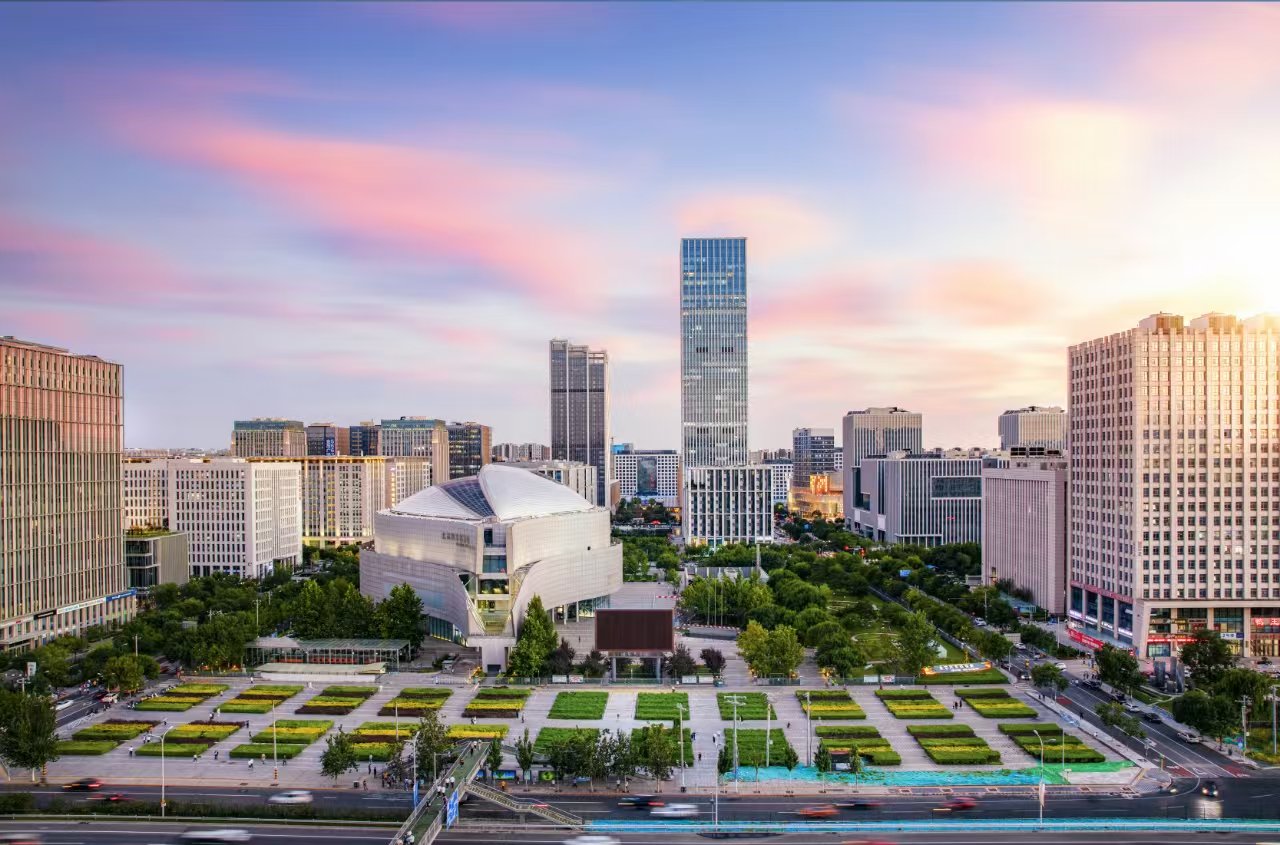
北京丰台“两会”:“十四五”地区生产总值年均增5.2%,“十五五”瞄准万亿产业体系
Zhong Guo Jing Ying Bao· 2026-01-17 12:56
Core Insights - During the "14th Five-Year Plan" period, Fengtai District achieved an average annual GDP growth rate of 5.2%, ranking fifth in the city in terms of economic output [2][4] - Fengtai District aims to establish a modern industrial system characterized by "4+5+X" and plans to exceed a total scale of 1 trillion yuan by 2030 [4] Economic Performance - The industrial clusters centered around rail transit and aerospace have surpassed 400 billion yuan in output [2] - The financial, technology service, and information service sectors contributed approximately 80% to the economic growth [2] - The number of high-tech enterprises in Fengtai has doubled over the past five years to 3,605, while "specialized, refined, distinctive, and innovative" SMEs increased 6.4 times to 856 [2] Key Areas of Development - The Lize Financial Business District has shown strong fiscal contribution, with an average tax growth rate exceeding 20% over the past five years [3] - The Daxing District is undergoing significant urban renewal, transitioning from a clothing wholesale hub to a cultural facility area, with major projects like the new National Natural History Museum underway [3] Future Plans - Fengtai District's industrial blueprint for the "15th Five-Year Plan" focuses on strengthening four key industries: rail transit, aerospace, finance, and technology services, while also nurturing five emerging sectors including digital economy and artificial intelligence [4] - The district plans to leverage policy advantages from the "two zones" to enhance industrial space, innovation ecology, and policy integration [4] Investment and Construction Plans - In 2026, Fengtai District will focus on 13 key municipal projects with a total investment of 43.19 billion yuan and 150 district-level projects totaling 249.23 billion yuan [5] - Specific tasks include the opening of six new roads and the addition of 100 technology and cultural enterprises in the South Central Axis area [6]
NASA将把SLS火箭运至发射台,4月前冲刺载人绕月
Xin Lang Cai Jing· 2026-01-17 12:36
Core Viewpoint - NASA is preparing to launch the Space Launch System (SLS) rocket and Orion spacecraft, marking a significant step in the Artemis II mission aimed at sending astronauts to lunar orbit [1] Group 1: Mission Details - The SLS rocket and Orion spacecraft, manufactured by Boeing and Lockheed Martin respectively, are being transported to the launch pad at Kennedy Space Center in Florida, a journey of 4 miles that will take up to 12 hours [1] - The Artemis II mission plans to send four astronauts to lunar orbit and return them to Earth within ten days, with the launch originally scheduled for late 2024, now planned for no later than April [1] Group 2: Development and Challenges - The SLS rocket has been in development for approximately 15 years, facing budget overruns and delays, having only launched once in 2022 for an unmanned test flight around the Moon [1] - Following the transport and inspection of the launch pad, NASA will conduct a simulated launch exercise at the end of January, which is a critical step for advancing subsequent phases of the mission [1]

