
采矿业

Search documents
GDP140万亿 宏微观“温差”如何破解
Xin Lang Cai Jing· 2026-01-20 22:59
Economic Overview - In 2025, China's GDP reached 140 trillion yuan, marking a 5.0% increase from the previous year [1][2] - The contribution rates to economic growth from final consumption expenditure, gross capital formation, and net exports of goods and services were 52.0%, 15.3%, and 32.7% respectively [1] Income and Employment - The per capita disposable income for residents in 2025 was approximately 43,400 yuan, with a real growth rate of 5.0% [2] - Average urban survey unemployment rate was 5.2%, below the target of around 5.5% [2] - The average unemployment rate for urban workers aged 30-59 was 4.0%, indicating stability in this demographic [3] Consumer Spending - Per capita consumption expenditure for residents was about 29,500 yuan, with a nominal growth of 4.4% [3] - Significant growth was observed in per capita spending on education, culture, entertainment, and healthcare [3] Structural Challenges - The disparity between macroeconomic growth and individual experiences is attributed to structural adjustments during the transition from old to new economic drivers [4][5] - High-tech manufacturing saw a 9.4% increase in value added, while traditional industries lagged behind, contributing to the perceived "temperature difference" in economic sentiment [5] Statistical Insights - The median per capita disposable income was approximately 36,200 yuan, which is 83.5% of the average [6] - The median income for urban residents was 90.5% of the average, while for rural residents it was 84.7% [6] Policy Recommendations - Experts suggest that addressing the "temperature difference" requires targeted government actions to ensure economic benefits reach all demographics [8] - The Central Economic Work Conference proposed measures to stabilize employment for key groups and improve income distribution [8]
沙特:新发现242吨黄金
财联社· 2026-01-20 14:30
Core Viewpoint - Saudi Arabian Mining Company (Maaden) has announced an increase in gold reserves by 7.8 million ounces (approximately 242.6 tons) due to targeted exploration and resource development [1] Group 1: Gold Reserves and Exploration - The Mansourah-Massarah mining area contributed the largest reserve increase, adding 3 million ounces; followed by the Wadi Jau and Umm Al-Salam areas, which added 1.67 million ounces; and the newly discovered Wadi Jau area, which has an initial resource estimate of 3.08 million ounces [1] - Maaden's flagship Mansourah-Massarah gold project is estimated to have 116 million tons of ore resources, containing approximately 10.4 million ounces of gold, with an average gold grade of 2.8 grams per ton of ore [1] - Recent exploration has discovered approximately 4.2 million ounces of gold, resulting in a net increase of about 3 million ounces compared to the previous year [1] - The CEO of Maaden emphasized that the exploration results validate the company's long-term strategy of discovering mineral resources in Saudi Arabia and the correctness of its investment in exploration [1] - Further exploration and development of the Mansourah and Massarah deposits will continue, with drilling work expected to last until 2026, indicating potential for further resource growth [1] Group 2: Future Investment and Production Goals - The company plans to invest $110 billion over the next 10 years to double its phosphate and gold business volumes and to increase aluminum business by one time, aiming to become one of the largest mining companies globally [2] - Currently, the company produces approximately 500,000 ounces of gold and around 3 million tons of phosphate and aluminum [3] - The mining sector is becoming a key part of Saudi Arabia's economic diversification strategy, with plans to significantly increase mineral production capacity, attract foreign investment, and build a complete industrial chain to reduce dependence on oil [3] - At the recently concluded Future Minerals Forum, Saudi Arabia secured agreements and memorandums of understanding worth over 100 billion Saudi Riyals (approximately $26.6 billion) [3]


【宏观经济】一周要闻回顾(2026年1月14日-1月20日)
乘联分会· 2026-01-20 13:41
Core Insights - In 2025, China's total import and export value reached 45.47 trillion yuan, marking a year-on-year growth of 3.8% [5] - The industrial capacity utilization rate for large-scale industries in Q4 2025 was 74.9%, showing a 0.3 percentage point increase from Q3 but a 1.3 percentage point decrease from the same period last year [9] - The added value of large-scale industries in December 2025 grew by 5.2% year-on-year, with a monthly increase of 0.49% [11] - Retail sales of consumer goods in December 2025 increased by 0.9% year-on-year, with total retail sales for the year reaching 5.012 trillion yuan, a 3.7% increase from the previous year [16][18] Trade and Export - In December 2025, the import and export value reached 4.26 trillion yuan, a record high with a year-on-year growth of 4.9% [5] - High-tech product exports grew by 13.2%, while the "new three samples" products saw a 27.1% increase in exports [5] - Exports of self-owned brand products increased by 12.9%, accounting for a 1.4 percentage point rise in the total export value [5] - Trade with countries involved in the Belt and Road Initiative reached 23.6 trillion yuan, a 6.3% increase, making up 51.9% of total trade [5] Industrial Performance - The overall industrial capacity utilization rate for 2025 was 74.4% [9] - By industry, the mining sector had a capacity utilization rate of 71.7%, manufacturing at 75.2%, and utilities at 74.0% in Q4 2025 [9] - In December 2025, 33 out of 41 major industries reported year-on-year growth in added value, with notable increases in sectors like coal mining (6.4%) and automotive manufacturing (8.3%) [14] Consumer Market - In December 2025, the retail sales of consumer goods totaled 45.136 billion yuan, with non-automotive retail sales growing by 1.7% [18] - Online retail sales for the year reached 15.972 trillion yuan, an 8.6% increase, with physical goods online sales accounting for 26.1% of total retail sales [19] - The growth in retail sales was driven by urban areas, which saw a 0.7% increase, while rural areas experienced a 1.7% growth [18]

“量质齐升”,中国工业经济韧性强活力足
Ren Min Wang· 2026-01-20 13:05
Group 1 - The core viewpoint of the articles highlights the resilience and vitality of China's industrial economy, which achieved a 5.9% growth in industrial added value in 2025 despite a complex external environment [1] - Industrial production has seen simultaneous improvements in both quality and quantity, with mining, manufacturing, and utility sectors growing by 5.6%, 6.4%, and 2.3% respectively, indicating stable growth in foundational industries and strong manufacturing momentum [1] - The equipment manufacturing sector is accelerating towards high-end, intelligent, and green development, with significant advancements in high-tech and high-value-added equipment, enhancing production efficiency and product quality [1] Group 2 - High-tech manufacturing is rapidly rising, with an added value growth of 9.4%, outpacing overall industrial growth by 3.5 percentage points, showcasing the multiplier effect of high-tech integration in various industries [2] - The production of 3D printing equipment, industrial robots, and new energy vehicles has seen substantial increases of 52.5%, 28.0%, and 25.1% respectively, indicating a transformation in industrial development patterns and higher growth potential [2] - Diverse market entities are collaborating for industrial growth, with state-owned enterprises, joint-stock companies, foreign-invested enterprises, and private enterprises showing growth rates of 4.6%, 6.3%, 3.9%, and 5.3% respectively, supported by improved market conditions and a unified national market [2] Group 3 - Achievements in industrial development are attributed to proactive macro policies from the government, with coordinated efforts in both incremental and stock policies enhancing the upward momentum of the industrial economy [3] - The year 2026 marks the beginning of the "14th Five-Year Plan," emphasizing the need for continued policy support and resource assurance to stabilize growth in key industries and regions [3] - There is a strong focus on tapping into innovation potential and expanding effective demand to ensure that China's industrial economy accelerates towards high-quality development [3]
12月经济数据快报
Guo Tou Qi Huo· 2026-01-20 11:47
1. Report Industry Investment Rating - No relevant information provided 2. Core Viewpoints - In 2025, China's GDP was 1,401,879 billion yuan, a 5.0% increase from the previous year. The added value of the primary, secondary, and tertiary industries increased by 3.9%, 4.5%, and 5.4% respectively. Quarterly GDP growth rates were 5.4% in Q1, 5.2% in Q2, 4.8% in Q3, and 4.5% in Q4. The Q4 GDP had a 1.2% quarter - on - quarter growth [1] - In December 2025, the year - on - year growth of industrial added value above designated size was 5.2%, 0.4 percentage points higher than the previous value, and the month - on - month growth was 0.49%, 0.05 percentage points higher than the previous value. The growth rates of mining and production and supply of electricity, gas, and water declined, while the manufacturing growth rate accelerated [1] - From January to December 2025, the year - on - year decline of national fixed - asset investment was 3.8 percentage points, with a month - on - month decline of 1.13%. Manufacturing investment increased by 0.6%, narrow - sense infrastructure investment had a growth rate of - 1.48%, and real estate development investment decreased by 17.20% [1] - In December 2025, the year - on - year growth of total retail sales of consumer goods was 0.9%, lower than the previous value of 1.3%, and the month - on - month decline was 0.40% [1] 3. Summary by Relevant Indicators GDP - The GDP quarterly year - on - year growth rates in 2025 were 5.4% in Q1, 5.2% in Q2, 4.8% in Q3, and 4.5% in Q4. The quarterly GDP growth rates were 1.0% in Q2, 1.1% in Q3, and 1.2% in Q4. The cumulative year - on - year growth rates were 5.3% in Q2, 5.2% in Q3, and 5.0% in Q4 [1] Industrial Added Value - In December 2025, the year - on - year growth of industrial added value above designated size was 5.2%, and the month - on - month growth was 0.49%. The cumulative year - on - year growth from January to December was 5.9%. Among the three major sectors, the growth rates of mining and production and supply of electricity, gas, and water declined, while the manufacturing growth rate accelerated [1] Fixed - Asset Investment - From January to December 2025, the year - on - year decline of national fixed - asset investment was 3.8 percentage points, and the month - on - month decline was 1.13%. Manufacturing investment increased by 0.6%, narrow - sense infrastructure investment had a growth rate of - 1.48%, and real estate development investment decreased by 17.20% [1] Real Estate - The cumulative year - on - year decline of real estate development investment from January to December 2025 was 17.20%. The cumulative year - on - year decline of commercial housing sales area was 8.7%. The year - on - year declines of new housing starts, housing construction, housing completion, and real estate development funds in December were 19.3%, 47.14%, 18.36%, and 28.09% respectively [1] Social Retail Sales - In December 2025, the year - on - year growth of total retail sales of consumer goods was 0.9%, lower than the previous value of 1.3%, and the month - on - month decline was 0.40%. The cumulative year - on - year growth from January to December was 3.7% [1]
【数据发布】2025年全国固定资产投资基本情况
中汽协会数据· 2026-01-20 09:36
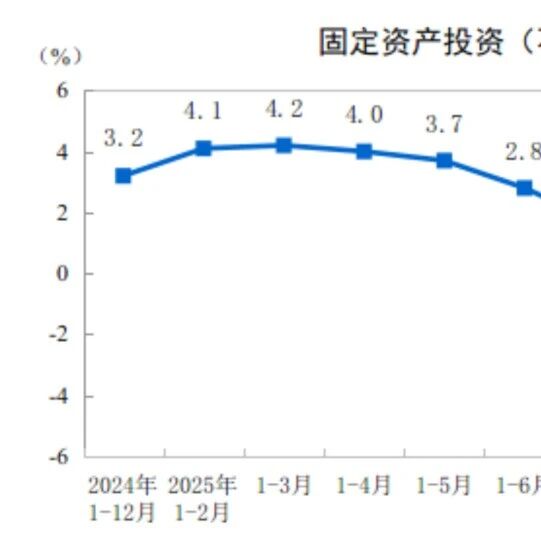
Core Viewpoint - In 2025, China's fixed asset investment (excluding rural households) reached 48,518.6 billion yuan, a decrease of 3.8% compared to the previous year, with private investment declining by 6.4% [1][3]. Investment by Industry - Investment in the primary industry was 957 billion yuan, an increase of 2.3% year-on-year [3]. - Investment in the secondary industry was 177,368 billion yuan, growing by 2.5% [3]. - Investment in the tertiary industry was 298,248 billion yuan, showing a decline of 7.4% [3]. - Within the secondary industry, industrial investment increased by 2.6%, with mining investment up by 2.5%, manufacturing investment up by 0.6%, and investment in electricity, heat, gas, and water production and supply up by 9.1% [3]. - In the tertiary industry, infrastructure investment (excluding electricity, heat, gas, and water production and supply) decreased by 2.2%, with pipeline transportation investment increasing by 36.0% and multimodal transport and agency investment increasing by 22.9% [3]. Investment by Region - Investment in the eastern region decreased by 8.4%, the central region by 2.7%, the western region by 1.3%, and the northeastern region by 15.5% [3]. Investment by Registration Type - Domestic enterprises' fixed asset investment fell by 3.8%, investment from Hong Kong, Macau, and Taiwan enterprises decreased by 2.2%, and foreign enterprises' investment dropped by 13.8% [3][5].
【数据发布】2025年12月份规模以上工业增加值增长5.2%
中汽协会数据· 2026-01-20 09:36
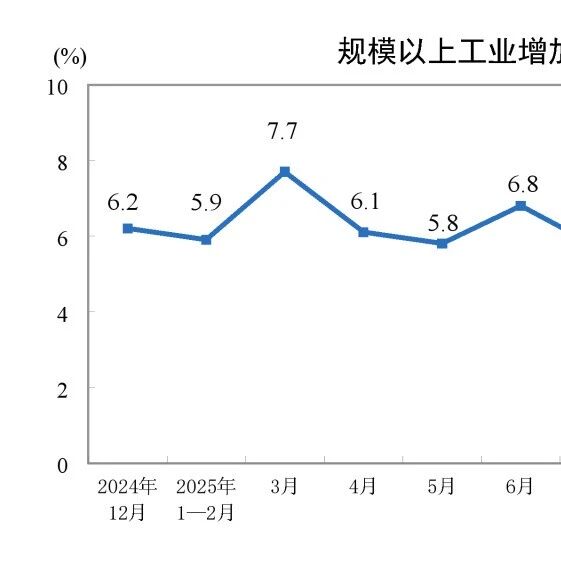
Core Viewpoint - The industrial added value of large-scale industries in December 2025 experienced a year-on-year real growth of 5.2%, with a month-on-month increase of 0.49% compared to the previous month. The total growth for the year 2025 was 5.9% compared to the previous year [1]. Group 1: Industrial Growth by Sector - In December, the mining industry saw a year-on-year growth of 5.4%, manufacturing grew by 5.7%, and the production and supply of electricity, heat, gas, and water increased by 0.8% [3]. - By economic type, state-controlled enterprises had a year-on-year growth of 3.9%, joint-stock enterprises grew by 5.8%, foreign and Hong Kong, Macao, and Taiwan-invested enterprises increased by 2.7%, and private enterprises grew by 4.2% [3][7]. - Among 41 major industries, 33 maintained year-on-year growth in added value. Notable growth was seen in coal mining and washing (6.4%), oil and gas extraction (3.7%), and the manufacturing of chemical raw materials and products (8.0%) [3][7]. Group 2: Product Output and Sales - In December, out of 623 industrial products, 325 saw a year-on-year increase in output. Steel production was 115.31 million tons (down 3.8%), cement was 144.16 million tons (down 6.6%), and ten non-ferrous metals reached 7.21 million tons (up 4.9%) [4]. - The product sales rate for large-scale industrial enterprises was 98.2%, a decrease of 0.7 percentage points year-on-year. The export delivery value reached 1,493.2 billion yuan, reflecting a nominal year-on-year growth of 3.2% [4][5]. Group 3: Key Product Performance - In December, the production of automobiles was 3.412 million units (down 2.8%), with new energy vehicles accounting for 1.791 million units (up 8.7%) [4][5]. - The output of ethylene was 3.56 million tons (up 3.0%), while the crude oil processing volume was 6.246 million tons (up 5.0%) [4][5]. - The production of industrial robots increased by 14.7% year-on-year, indicating a strong growth trend in high-tech manufacturing [7].
GDP突破140万亿,如何理解宏观增长与微观感受有“温差”?
Bei Ke Cai Jing· 2026-01-20 09:19
Economic Overview - In 2025, China's GDP reached 140 trillion yuan, marking a 5.0% increase from the previous year [4][7] - The per capita disposable income for residents was approximately 43,400 yuan, also reflecting a 5.0% growth [4][8] Employment and Income - The average urban survey unemployment rate in 2025 was 5.2%, below the target of around 5.5% [10] - The unemployment rate for urban workers aged 30-59 averaged 4.0%, which is 1.2 percentage points lower than the overall urban rate [11][12] - Per capita wage income grew by 5.3%, while per capita operating net income increased by 5.0% [9] Consumer Spending - Per capita consumer spending was about 29,500 yuan, with a nominal growth of 4.4% from the previous year [13] - Key areas of consumer spending, such as education, culture, entertainment, and healthcare, showed high growth rates [13] Structural Economic Issues - There exists a "temperature difference" between macroeconomic growth and individual experiences, attributed to structural factors and the transition between old and new economic drivers [6][15] - The growth in high-tech manufacturing (9.4%) outpaced traditional industries, contributing to the perceived economic disparity [16] Policy Recommendations - Experts suggest that government actions should focus on policy implementation to address the "temperature difference" and ensure that economic growth benefits all demographics [22][24] - The Central Economic Work Conference proposed measures to stabilize employment for key groups, such as college graduates and migrant workers, and to support the real estate market [23]

粤桂股份:2025年净利同比预增59.03%—80.57%
Zheng Quan Shi Bao Wang· 2026-01-20 09:05
Core Viewpoint - The company, Yuegui Co., Ltd. (000833), expects a significant increase in net profit for 2025, projecting a range of 443 million to 503 million yuan, representing a year-on-year growth of 59.03% to 80.57% [1] Group 1 - The substantial profit growth is primarily attributed to the rise in prices of major ore products [1] - The company is actively promoting cost reduction and efficiency enhancement, focusing on management improvements to boost operational efficiency [1] - The dual drivers of rising product prices and ongoing management reforms have led to synchronized profit growth [1]

粤桂股份(000833.SZ):预计2025年净利润同比增长59.03%~80.57%
Ge Long Hui A P P· 2026-01-20 09:05
Core Viewpoint - The company, Yuegui Co., Ltd. (000833.SZ), expects a significant increase in net profit for 2025, driven by rising prices of its main products and ongoing management efficiency improvements [1] Financial Performance - The projected net profit attributable to shareholders for 2025 is between 443 million yuan and 503 million yuan, representing a year-on-year growth of 59.03% to 80.57% [1] - The net profit after deducting non-recurring gains and losses is expected to be between 444.6 million yuan and 503.7 million yuan, indicating a growth of 57.86% to 78.84% compared to the previous year [1] Operational Efficiency - The company's profit growth is significantly attributed to the increase in prices of ore-related products [1] - The company has actively pursued cost reduction and efficiency enhancement measures, leading to improved operational efficiency [1] - The dual drivers of rising product prices and management reforms have contributed to the simultaneous growth in profits [1]