AI

Search documents
High salaries for AI engineers: The talent war in AI
Lex Fridman· 2025-08-09 18:10
What do you think about Meta buying up talent with huge salaries and and the heating up of this battle for talent. You know, there's a strategy that that Meta is taking right now. I think that from my perspective at least, I think the people that are real believers in the mission of AGI and what it can do and understand the real consequences both good and bad from that and what's what that responsibility entails.I think they're mostly doing it to be like myself to be on the frontier of that research. So, yo ...


The Future of Evals - Ankur Goyal, Braintrust
AI Engineer· 2025-08-09 15:12
Product & Technology - Brain Trust introduces "Loop," an agent integrated into its platform designed to automate and improve prompts, datasets, and scorers for AI model evaluation [4][5][7] - Loop leverages advancements in frontier models, particularly noting Claude 4's significant improvement (6x better) in prompt engineering capabilities compared to previous models [6] - Loop allows users to compare suggested edits to data and prompts side-by-side within the UI, maintaining data visibility [9][10] - Loop supports various models, including OpenAI, Gemini, and custom LLMs [9] User Engagement & Adoption - The average organization using Brain Trust runs approximately 13 evaluations (EVELs) per day [3] - Some advanced customers are running over 3,000 evaluations daily and spending more than two hours per day using the product [3] - Brain Trust encourages users to try Loop and provide feedback [12] Future Vision - Brain Trust anticipates a revolution in AI model evaluation, driven by advancements in frontier models [11] - The company is focused on incorporating these advancements into its platform [11] Hiring - Brain Trust is actively hiring for UI, AI, and infrastructure roles [12]

投资大家谈 | 长城基金科技投资:市场高低切,如何把握科技板块细分机会?
Sou Hu Cai Jing· 2025-08-09 12:28
Core Viewpoint - The investment focus is shifting towards technology sectors, particularly AI and robotics, as they continue to receive strong policy support and show promising investment opportunities [1]. Group 1: Market Trends and Opportunities - The market is expected to transition from an upward trend to a more volatile phase, with an emphasis on identifying opportunities in low-positioned sectors and stocks [2]. - There is a potential for significant investment opportunities in AI sub-sectors, including liquid cooling, power supply, and AI applications, as well as companies with strong overseas performance [3]. - The technology innovation direction is highlighted, with specific attention on sectors like computing, media, and semiconductors, as well as the traditional consumer electronics peak season in Q3 [4]. Group 2: Sector-Specific Insights - The military industry is anticipated to have further upside potential, supported by policy-driven funds, despite short-term volatility [5]. - AI application advancements are a key focus, with potential opportunities in solid-state batteries and satellite internet, especially if trade tensions escalate [6]. - The robotics sector is expected to see significant catalysts in Q4, with ongoing developments at the industry, policy, and corporate levels [7]. Group 3: TMT Industry Observations - The TMT sector is witnessing a shift in focus towards domestic computing and applications, with overseas tech giants' performance alleviating previous market concerns regarding AI sustainability [8]. - The overall market trend remains positive, with expectations of continued strength in certain sectors, particularly those related to cutting-edge technology and emerging growth areas [9].
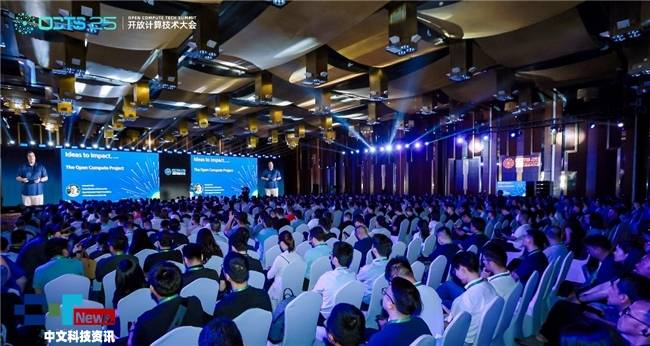
2025开放计算技术大会|开源开放推动系统创新 加速AIDC全球协作
Sou Hu Cai Jing· 2025-08-09 06:37
Core Insights - The 2025 Open Computing Technology Conference held in Beijing focuses on the development trends of MoE large models and AI agents, emphasizing the importance of open computing in enhancing both vertical scaling and horizontal efficiency [1] - Open-source large models are reshaping the global AI industry landscape, significantly lowering the barriers for enterprises and individual developers to access advanced AI capabilities, thus accelerating the shift from closed to open collaboration [3] - The rise of open computing is fostering tighter collaboration within the data center industry chain, which is crucial for the rapidly evolving AI sector [4] Industry Developments - The MoE large models are experiencing rapid growth in parameter counts, necessitating innovations in computing architecture to meet the extreme demands for computing density and interconnect speed [4] - The power requirements for AI data centers are projected to escalate from over 100 kW per cabinet to above 1 MW, indicating a shift towards GW-level power demands [4] - China has a significant advantage in energy infrastructure, particularly in renewable energy, with 90% of new installations in Q1 2025 coming from renewable sources, contributing to 35.9% of the total power generation [5] Collaborative Efforts - The establishment of the "GW-level Open Intelligent Computing Center OCP China Community Group" aims to leverage China's strengths in energy and computing infrastructure to promote the implementation of AI open system strategies [5] - OCP is actively collaborating with OCTC to explore the deployment of advanced AI infrastructure technologies and research outcomes in the Chinese market [5] - Future initiatives will focus on creating a global open-source coalition to enhance collaboration among developers across different countries and regions, promoting innovation and integration within the global supply chain [6]
X @Bloomberg
Bloomberg· 2025-08-08 11:40
The AI industry’s competition with finance for quant talent is noticeably heating up https://t.co/cp5V5dGSfU ...
大模型进入万亿参数时代,超节点是唯一“解”么?丨ToB产业观察
Tai Mei Ti A P P· 2025-08-08 09:57
Core Insights - The trend of model development is polarizing, with small parameter models being favored for enterprise applications while general large models are entering the trillion-parameter era [2] - The MoE (Mixture of Experts) architecture is driving the increase in parameter scale, exemplified by the KIMI K2 model with 1.2 trillion parameters [2] Computational Challenges - The emergence of trillion-parameter models presents significant challenges for computational systems, requiring extremely high computational power [3] - Training a model like GPT-3, which has 175 billion parameters, demands the equivalent of 25,000 A100 GPUs running for 90-100 days, indicating that trillion-parameter models may require several times that capacity [3] - Distributed training methods, while alleviating some computational pressure, face communication overhead issues that can significantly reduce computational efficiency, as seen with GPT-4's utilization rate of only 32%-36% [3] - The stability of training ultra-large MoE models is also a challenge, with increased parameter and data volumes leading to gradient norm spikes that affect convergence efficiency [3] Memory and Storage Requirements - A trillion-parameter model requires approximately 20TB of memory for weights alone, with total memory needs potentially exceeding 50TB when including dynamic data [4] - For instance, GPT-3's 175 billion parameters require 350GB of memory, while a trillion-parameter model could need 2.3TB, far exceeding the capacity of single GPUs [4] - Training long sequences (e.g., 2000K Tokens) increases computational complexity exponentially, further intensifying memory pressure [4] Load Balancing and Performance Optimization - The routing mechanism in MoE architectures can lead to uneven expert load balancing, creating bottlenecks in computation [4] - Alibaba Cloud has proposed a Global-batch Load Balancing Loss (Global-batch LBL) to improve model performance by synchronizing expert activation frequencies across micro-batches [5] Shift in Computational Focus - The focus of AI technology is shifting from pre-training to post-training and inference stages, with increasing computational demands for inference [5] - Trillion-parameter model inference is sensitive to communication delays, necessitating the construction of larger, high-speed interconnect domains [5] Scale Up Systems as a Solution - Traditional Scale Out clusters are insufficient for the training demands of trillion-parameter models, leading to a preference for Scale Up systems that enhance inter-node communication performance [6] - Scale Up systems utilize parallel computing techniques to distribute model weights and KV Cache across multiple AI chips, addressing the computational challenges posed by trillion-parameter models [6] Innovations in Hardware and Software - The introduction of the "Yuan Nao SD200" super-node AI server by Inspur Information aims to support trillion-parameter models with a focus on low-latency memory communication [7] - The Yuan Nao SD200 features a 3D Mesh system architecture that allows for a unified addressable memory space across multiple machines, enhancing performance [9] - Software optimization is crucial for maximizing hardware capabilities, as demonstrated by ByteDance's COMET technology, which significantly reduced communication latency [10] Environmental Considerations - Data centers face the dual challenge of increasing power density and advancing carbon neutrality efforts, necessitating a balance between these factors [11] - The explosive growth of trillion-parameter models is pushing computational systems into a transformative phase, highlighting the need for innovative hardware and software solutions to overcome existing limitations [11]


A股指数集体低开:沪指跌0.13%,稀土永磁、创新药题材跌幅靠前
Feng Huang Wang Cai Jing· 2025-08-08 01:42
凤凰网财经讯 8月8日,三大股指集体低开,沪指跌0.13%,深成指跌0.19%,创业板指跌0.2%。PEEK材 料、军工、液冷服务器、稀土永磁、创新药题材跌幅靠前;脑机接口概念股走强。 | | | | | 沪深京重要指数 | | | | | --- | --- | --- | --- | --- | --- | --- | --- | | 名称 *● | 咸新 | 涨幅% | | 涨跌 涨跌家数 涨速% | | 总手 | 现手 金额 | | 上证指数 | 3634.85 | -0.13 | -4.82 | 683/1189 | -0.09 | 418万 | 58.27 乙 418万 | | 深证成指 | 11136.34 | -0.19 | -21.60 | 712/1687 | -0.20 | 620万 | 620万 86.69亿 | | 北证50 | 1457.80 | -0.11 | -1.66 | 109/127 | -0.24 | 8.82万 | 5.437 2.69.Z | | 创业板指 | 2338.25 | -0.20 | -4.61 | 336/884 | -0.23 - | 1937 | ...

天风证券晨会集萃-20250808
Tianfeng Securities· 2025-08-07 23:41
Group 1 - The report highlights that the A-share market is approaching the 3600-point mark, with a notable increase in inflow from previously sidelined funds, indicating a shift in market sentiment [1][23] - The macroeconomic environment shows resilience, with mixed data in June and July, where only industrial value-added saw a year-on-year increase above expectations, while manufacturing PMI remained in contraction territory [1][23] - The report suggests that the bond market is experiencing upward pressure on yields, with the inversion of deposit rates and government bond yields being broken, indicating a shift in investor sentiment [1][23] Group 2 - The AI sector is identified as having a favorable outlook, with historical trends suggesting that sectors that have undergone adjustments are likely to initiate a second wave of growth, particularly as AI applications become more commercially viable [3][25][27] - The report outlines the structure of AI investments, categorizing them from hardware infrastructure to middleware and application layers, emphasizing the importance of capital expenditure from major tech firms in driving growth [3][27] - The report indicates that the AI application sector is expected to see significant revenue growth, with a positive correlation between revenue growth and valuation multiples, suggesting that companies with strong performance metrics will attract higher valuations [3][27] Group 3 - The report on the chemical industry highlights the "anti-involution" trend, focusing on companies with cost advantages, particularly in the soda ash sector, where natural soda production methods are more efficient than synthetic methods [13][19] - It notes that the soda ash industry has a significant portion of outdated capacity, with about 30% of production being over 20 years old, indicating potential investment opportunities in modernization and efficiency improvements [13][19] - The report suggests that companies like Boryuan Chemical, which is a leader in natural soda production, are well-positioned to benefit from these trends, with significant capacity expansion planned [19][19] Group 4 - The report on the home appliance sector emphasizes the growth potential of the water heater market, driven by a combination of replacement demand and innovation, particularly in the high-end segment [33][34] - It highlights that Wanhe Electric is actively expanding its market share both domestically and internationally, with a focus on enhancing its product offerings and operational efficiency [33][35] - The report projects that Wanhe Electric's net profit will grow significantly over the next few years, supported by strategic initiatives and a favorable market environment [33][36] Group 5 - The report on the defense sector emphasizes the increasing importance of AI and unmanned systems in modern warfare, predicting substantial growth in the military drone market, which is expected to exceed $50 billion by 2032 [9][37] - It highlights the role of AI in enhancing the capabilities of unmanned systems, with significant investments being made in AI technologies by leading defense contractors [9][37] - The report suggests that domestic companies specializing in AI chips are well-positioned to capture market opportunities in military applications, indicating a growing market for edge AI solutions [9][39]
Tesla shuts down Dojo, the AI training supercomputer that Musk said would be key to full self-driving
TechCrunch· 2025-08-07 22:19
Core Insights - Tesla is disbanding its Dojo supercomputer team, marking a significant shift in its strategy for developing in-house chips for driverless technology [1][4] - The departure of around 20 employees to form a new AI startup, DensityAI, has contributed to the dissolution of the Dojo project [2] - CEO Elon Musk has been promoting Tesla as an AI and robotics company, despite challenges in the rollout of its robotaxi service [3] Group 1: Dojo Project Developments - The lead of the Dojo project, Peter Bannon, is leaving Tesla, and remaining team members will be reassigned to other projects [1] - The Dojo project was initially seen as a cornerstone for Tesla's AI ambitions, with Musk emphasizing its potential to process vast amounts of video data [4] - Morgan Stanley had predicted that Dojo could add $500 billion to Tesla's market value by creating new revenue streams [5] Group 2: Shift in Strategy - Tesla plans to increase reliance on external technology partners like Nvidia and AMD for computing needs, moving away from in-house chip development [8] - A recent $16.5 billion deal with Samsung aims to produce AI6 inference chips for various applications, including full self-driving and humanoid robots [9] - Musk hinted at potential redundancies and convergence between the Dojo and AI6 inference chip projects [9] Group 3: Future Directions - The focus has shifted to a new AI training supercluster called Cortex, which is being developed at Tesla's headquarters in Austin [7] - The Dojo project was part of a broader strategy that included the development of Tesla's D1 chip, which was unveiled in 2021 [7] - Tesla's board has offered Musk a $29 billion pay package to ensure his continued leadership in advancing the company's AI initiatives [10]