
蔬菜种植

Search documents
“十四五”期间三河农业农村全面进步惠民生
Xin Lang Cai Jing· 2026-01-13 04:19
Core Insights - The article highlights the growth and development of the agricultural sector in Sanhe City, particularly in the production and supply of "clean vegetables" to meet the demands of the Beijing-Tianjin market [6][7]. Agricultural Development - Sanhe City has established two provincial-level clean vegetable production demonstration bases and three surrounding vegetable production bases, supplying 5,969 tons of vegetables annually to Beijing, accounting for 92% of the total supply [11]. - The city has achieved a stable grain planting area of over 308,600 acres, with an annual production exceeding 270 million pounds [13]. - The total output value of agriculture, forestry, animal husbandry, and fishery reached 3.19 billion yuan [7]. Vegetable Industry - The annual vegetable planting area in Sanhe City has reached 95,700 acres, with a total output of 374,800 tons, contributing significantly to local income and food supply [14]. - The city is focusing on modern agricultural practices, including the use of smart greenhouses and cold storage facilities to enhance production efficiency [6]. Rural Development and Economic Growth - Sanhe City has been recognized with 26 honors at the municipal level and above, including seven national-level awards, showcasing its strong development capabilities [7]. - The per capita disposable income of rural residents is projected to reach 29,577 yuan in 2024, ranking first in Langfang City [7]. - Collective economic income in 395 villages has surpassed 100,000 yuan annually, with 107 villages exceeding 500,000 yuan [15]. Innovative Agricultural Practices - The introduction of smart management systems in farms has improved efficiency, allowing for better control over environmental conditions and crop management [9]. - The city is exploring the integration of technology with tourism to enhance agricultural value and provide recreational opportunities for visitors [9]. Specialty Products and Support Initiatives - Sanhe City has successfully cultivated three nationally recognized specialty agricultural products and two unique agricultural products, while investing 242 million yuan in 36 industry projects to support poverty alleviation [16].

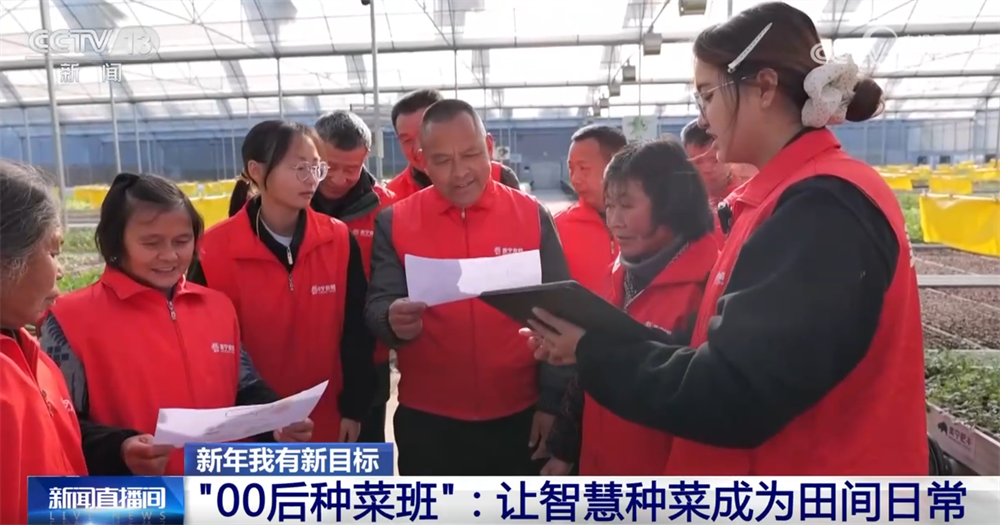
这个“00后”种菜班让智慧农业“照进”田间日常 温室大棚一派好“丰”景
Yang Shi Wang· 2026-01-13 03:42
Core Insights - The article highlights the transformation of agricultural practices in Suining, Sichuan, through the introduction of modern technologies by a group of post-2000s youth, who aim to teach local villagers smart farming techniques [1][12]. Group 1: Technological Advancements - The "post-2000s" farming class utilizes drones for pest control, smart irrigation, and digital management to enhance productivity on previously barren land [1][3]. - The implementation of digital management has increased the output value per acre from 30,000 yuan to 120,000 yuan, a fourfold increase [7]. - An automated fertilization and irrigation system was developed, allowing for efficient nutrient delivery to the soil [16][18]. Group 2: Community Engagement and Training - The youth have initiated training sessions for local villagers, with over 100 villagers now employed in smart greenhouses [22]. - The program aims to expand the smart greenhouse model to surrounding villages, with a target of establishing 10,000 acres of smart greenhouses [22][26]. - The training includes hands-on demonstrations of modern agricultural techniques, making it accessible for the local population [20]. Group 3: Product Development and Certification - The farming class has successfully cultivated over 20 new varieties of fruits and vegetables, with 11 varieties receiving China Green Food certification [18][20]. - The focus on quality and certification is aimed at enhancing marketability and ensuring traceability in production [20].

西红柿价格为何走高
Jing Ji Ri Bao· 2026-01-13 01:03
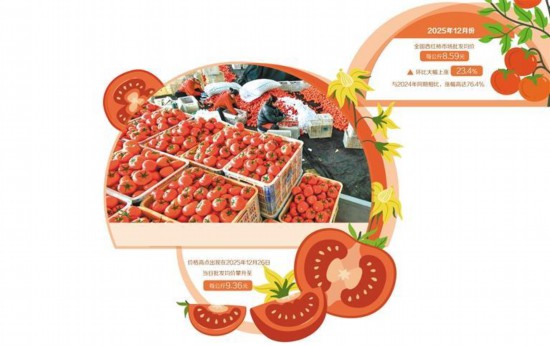
Core Viewpoint - The price of tomatoes has significantly increased, driven by multiple factors including reduced planting area, adverse weather conditions, and seasonal cost increases, leading to a tight supply situation in the market [5][6][9]. Price Trends - As of January 8, 2026, local prices for tomatoes in Shandong's Yanggu County reached 5 to 6.5 yuan per jin, nearly double compared to the previous year [2]. - The average wholesale price of tomatoes in December 2025 was 8.59 yuan per kilogram, marking a 23.4% increase month-on-month and a 76.4% increase year-on-year [4]. - The highest price recorded was 9.36 yuan per kilogram on December 26, 2025, with a slight decrease to 8.4 yuan by January 4, 2026 [4]. Supply Factors - The planting area for tomatoes has decreased due to low prices in previous years, which discouraged farmers from planting [5]. - Adverse weather conditions, including excessive rainfall and temperature drops, have severely impacted tomato yields and delayed market entry [6][7]. - The transition to winter production has increased costs due to reliance on high-cost greenhouse production and long-distance transportation [7]. Future Price Outlook - Experts predict that tomato prices may remain high in the short term, especially with the upcoming Spring Festival driving demand [8][9]. - The recovery of damaged production capacity will take time, and supply is expected to remain tight until new crops are harvested [9]. - A potential easing of supply constraints may occur with the upcoming harvests from regions like Hebei, which could help stabilize prices [9].
广平亲情招商盘活闲置大棚
Xin Lang Cai Jing· 2026-01-13 00:13
Core Insights - The article highlights the successful revitalization of idle greenhouse resources in Yanxiaozhai Village, Guangping County, through innovative local agricultural initiatives [1] - The cultivation of garlic sprouts has generated an estimated revenue of over 140,000 yuan, showcasing the economic potential of local agriculture [1] - The initiative has not only improved the village's economy but also created job opportunities for over 30 villagers, allowing them to balance work and family responsibilities [2] Group 1 - The village's collective greenhouses, previously unused, are now thriving with the cultivation of garlic sprouts, which are in high demand in markets [1] - Local leaders implemented a strategy to attract skilled individuals back to the village by leveraging emotional ties and community engagement [1] - The returnees utilized their expertise in garlic sprout cultivation, employing scientific techniques to ensure high-quality production [1] Group 2 - The garlic sprouts produced are characterized by their bright color and crisp texture, with no pesticide use, making them appealing in the market [1] - The initiative has led to significant economic benefits for the village, enhancing collective income and providing employment for local residents [2] - The project has particularly benefited women and the elderly, allowing them to earn income while managing household responsibilities [2]
“田间冰箱”让农产品鲜达全国
Xin Lang Cai Jing· 2026-01-12 22:06
Core Insights - The article highlights the successful harvest of 200 acres of pea shoots in Yuguan Village, Anshun City, which are being shipped to the Guangdong-Hong Kong-Macao Greater Bay Area market [1] Group 1: Agricultural Development - The vegetable base in Yuguan Village serves as a supply base for the Greater Bay Area, utilizing vacuum pre-cooling technology to rapidly lower vegetable temperatures to 1-2°C within 30 minutes after harvesting [1] - The base has a stable order flow, primarily supplying cities like Guangzhou, Shenzhen, and Hong Kong, which has positively impacted local income [1] Group 2: Employment and Income Generation - The vegetable base employs local villagers, with peak labor reaching around 80 workers daily, and skilled workers earning over 200 yuan per day, providing a stable income source for many [1] Group 3: Industry Growth and Future Plans - The county is accelerating the development of vegetable industry clusters, aiming for a vegetable planting area of 305,000 acres and a total output of 575,000 tons by 2025 [1] - The total capacity of cold storage facilities in Puding County has reached 32,950 cubic meters, facilitating the transportation of local agricultural products to national markets [1]

乐都长辣椒传奇
Xin Lang Cai Jing· 2026-01-12 19:03
Core Insights - The article highlights the success of Ledou Long Chili as a national agricultural product brand, contributing to rural revitalization and economic growth in the region [1][2][3] Group 1: Product Characteristics - Ledou Long Chili is recognized for its thin skin, thick flesh, and moderate spiciness, making it popular in the market [1] - The chili has a high vitamin content, with individual fruits weighing up to 150 grams, and some reaching 350 grams [1][2] Group 2: Agricultural Practices and Technology - The planting area for Ledou Long Chili is projected to reach 4,419.4 acres by 2025, supported by advanced agricultural techniques [1] - The introduction of three-film covering technology has increased greenhouse temperatures by 3-5°C and light exposure by 20%, resulting in a yield increase from 3,000 kg to over 3,700 kg per acre [2] - The implementation of a "three-party burden-sharing" seedling subsidy policy has allowed farmers to acquire quality seedlings at a reduced cost of 0.15 yuan per seedling, lowering production costs by 300 to 500 yuan per acre [2] Group 3: Economic Impact and Industry Growth - Ledou Long Chili has evolved into a comprehensive industry cluster encompassing planting, processing, and sales, with an annual production of 16,300 tons [3] - The brand's geographical indication status is leveraged to extend the industrial chain and enhance value-added services, making it a significant driver for farmers' income and rural revitalization [2][3]
乐都冷凉蔬菜形成稳定国际供应链
Xin Lang Cai Jing· 2026-01-12 19:03
Core Insights - The article highlights the development of the cold-cool vegetable industry in Ledou District as a key driver for rural revitalization, aiming for a vegetable planting area of over 8,000 hectares and a production volume of 360,000 tons by 2025, accounting for nearly 40% of the province's total [1][2] Group 1: Agricultural Development - Ledou District has established a three-dimensional layout and a dual-driven model of "facilities + open field," resulting in the construction of 10,836 greenhouses and 4,980 hectares of high-standard farmland, leading to steady annual growth in the value of cold-cool vegetables over the past three years [1] - By 2025, the seedling production is expected to exceed 25 million plants with a survival rate of over 95%, meeting local demand and supplying nearly 7 million high-quality seedlings to 18 surrounding administrative villages, creating 11,000 job opportunities annually [1] Group 2: Technological Innovation - The introduction of the Beidou navigation unmanned driving system in 700 hectares by 2025 will achieve centimeter-level precision in fertilization, saving 80% of labor, with potato yields reaching 3,500 kg per acre [2] - The application of IoT water and fertilizer control technology is projected to save 65% of water and 50% of fertilizer, with a yield increase of over 20%, while maintaining zero growth in chemical fertilizers and pesticides for four consecutive years [2] Group 3: Market Expansion and Branding - The market development strategy includes direct supply to the Guangdong-Hong Kong-Macao Greater Bay Area, generating 110 million yuan from 30,000 tons of vegetables, and opening international markets in Russia and Vietnam, reducing logistics costs by 30% through overseas warehouse construction [2] - The establishment of the "Qinghai-Tibet Gateway Ledou Fruits and Vegetables" regional public brand in 2025, along with the certification of 33 green organic and geographical indication products and the registration of 26 "Le" trademarks, marks a shift from product output to brand output [2] - The promotion of the "enterprise + cooperative + farmer" model has led to the cultivation of 23 leading enterprises and 1,096 professional cooperatives, increasing the average income of 39,000 farmers by 2,500 yuan [2]
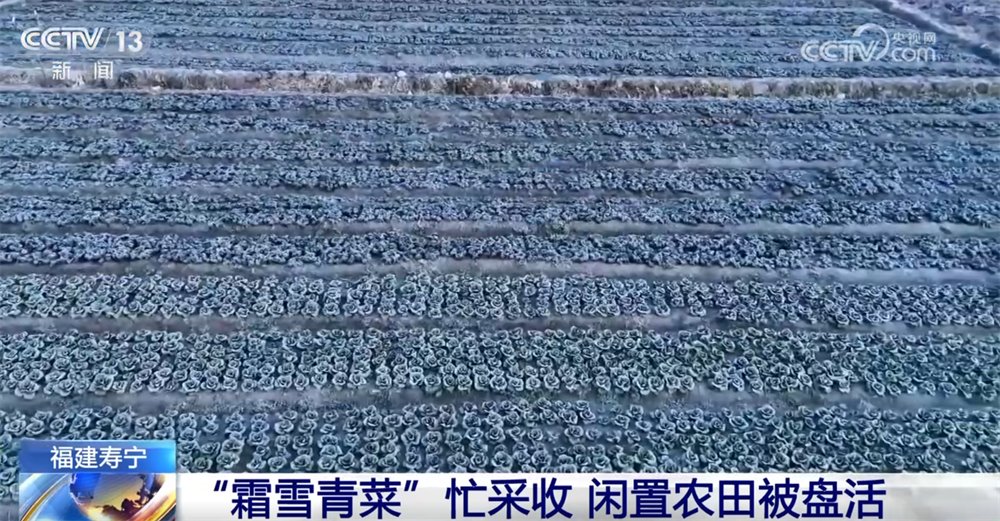
福建寿宁高山“霜打菜”产量预计达1.3万吨,节前供应足订单旺
Sou Hu Cai Jing· 2026-01-12 10:45
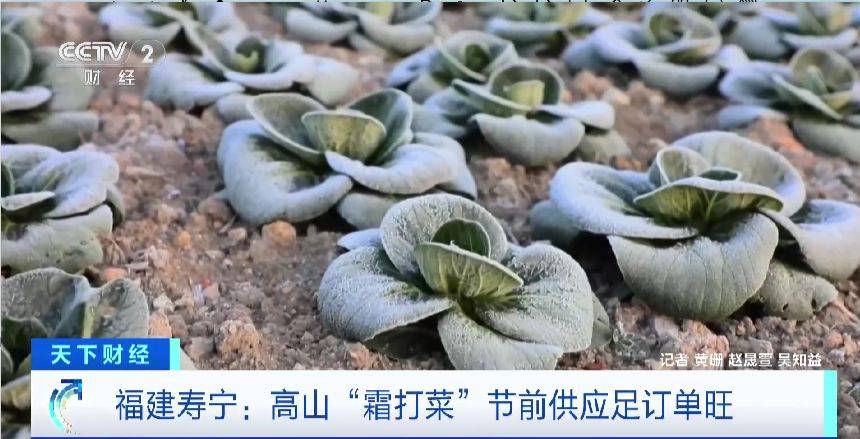
Group 1 - The core viewpoint of the article highlights the successful cultivation and harvesting of "frost-hit vegetables" in Shouning County, Fujian, due to unique climatic conditions [1][3] - The local farmers have adopted a specialized planting approach for "frost-hit vegetables," which include varieties such as Shandong black vegetables, Suzhou green vegetables, cabbage, and radishes [3] - The average altitude of Dafu Village is around 1000 meters, where winter temperatures typically drop below 0°C, leading to the previous underutilization of farmland during winter [3] Group 2 - The cultivation of "frost-hit vegetables" has been scaled up in recent years, allowing the vegetables to convert starch into sugars when temperatures reach freezing, enhancing their sweetness and crispness [3] - Currently, over half of the "frost-hit vegetables" from Dafu Village have been sold, with the remaining stock largely pre-ordered, indicating strong market demand [5] - In total, Shouning County has planted 9,500 acres of "frost-hit vegetables," with an expected yield of 13,000 tons and a projected output value exceeding 25 million yuan [5]
“霜雪青菜”迎来采收和销售高峰 特色产业“蔬”写乡村振兴新途景
Yang Shi Wang· 2026-01-12 09:25
蔬菜采购商 吴恒旺:我这五年都来这里采购,就是看中他们的青菜经霜冻后,品质很特别,市场上消费者爱吃,我们也好卖,所以我们 的合作一直很稳定。 央视网消息:福建宁德寿宁县地处大山深处,海拔高,山地气候显著。这两天,随着冷空气来袭,寿宁多地都出现了结霜现象,当地 的"霜雪青菜"也迎来采收和销售高峰期。 在福建宁德市寿宁县大熟村的菜地里,一排排蔬菜长势整齐,叶片上附着了一层霜花。 大熟村平均海拔近1000米,冬季最低温度通常会在0℃以下,昼夜温差超10℃,这样独特的气候、地形条件曾经是制约农业生产的"冷屏 障",一到冬天,田地往往只能闲置。这几年,当地规模化推广"霜雪青菜"种植。这些品种的蔬菜会在气温降低至冰点时,启动自身的"抗 寒"机制,将蔬菜中的淀粉转化为糖分。这一自然过程不仅让蔬菜的味道更清甜,口感也会更加爽脆。 今年,大熟村的"霜雪青菜"已经销售过半,田里尚未采收、仍处于生长期的蔬菜还有30亩,也已被采购商提前预定。据统计,寿宁县多个 山区村镇今年共种植9500亩"霜雪青菜",产量预计可达1.3万吨。 ...
江苏味美菜园·射阳新绿福
Xin Lang Cai Jing· 2026-01-11 21:22
Group 1 - The company, Xinyu Green Fortune Ecological Vegetable Co., Ltd., is located in the core area of the Eastern Wetland in Jiangsu Province and is recognized as a national agricultural innovation park [1] - The company has 350 acres of geographical indication agricultural products and has been certified for organic vegetables since 2012, ensuring traceability for all its agricultural products [1] - The transportation accessibility of the company is highlighted, being within 10 minutes of major highways and rail stations, which enhances its logistical advantages [1] Group 2 - The company has received multiple awards, including being named one of China's top 100 vegetable brands in 2015 and one of the top ten best-selling vegetable brands in 2017 [2] - In 2020, the company's organic vegetable production method was featured on CCTV's "News Broadcast," and it was designated as a pilot unit for the national agricultural product quality control technology system [2] - The company has continued to receive accolades, including the "Most Beautiful Green Food (Vegetable) Enterprise" in Jiangsu in 2022 and the gold award at the 23rd International Organic Food and Green Food Expo in May 2023 [2]