货币金融服务

Search documents
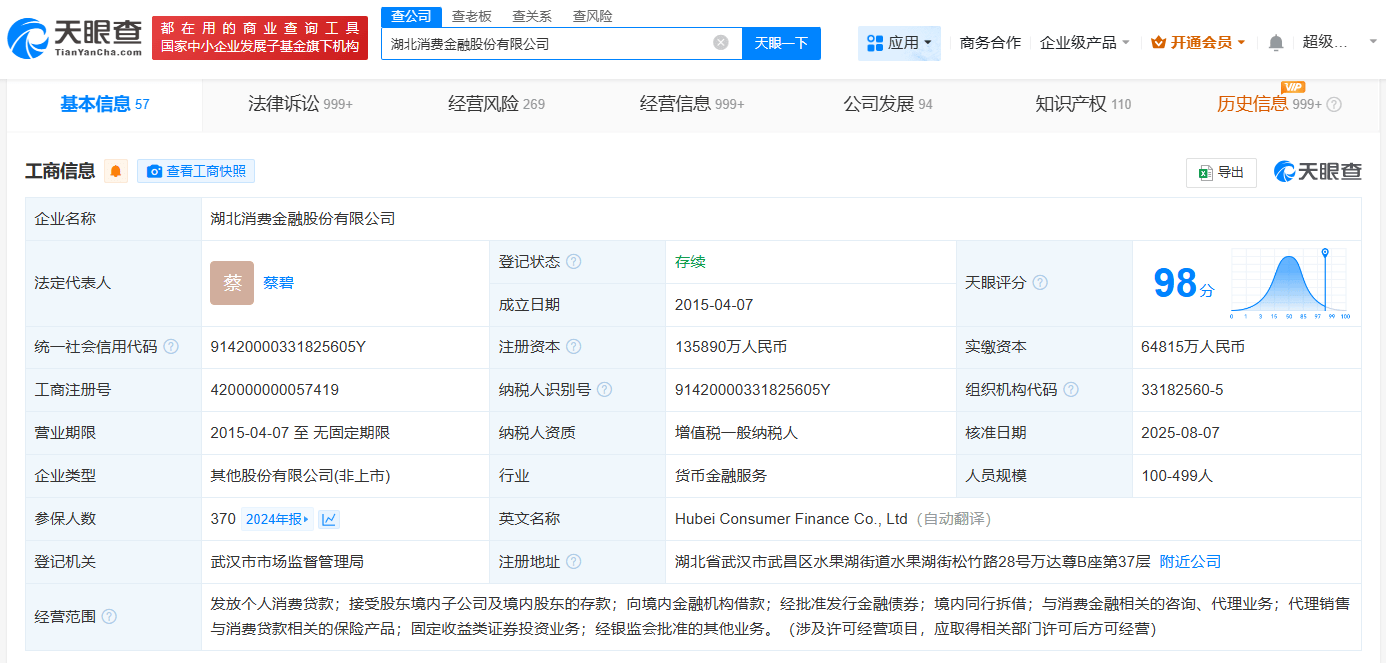
湖北消费金融公司增资至约13.59亿元
Sou Hu Cai Jing· 2025-08-11 07:21
Core Viewpoint - Hubei Consumer Finance Co., Ltd. has increased its registered capital from approximately 1.006 billion RMB to about 1.359 billion RMB, marking a growth of approximately 35% [1]. Company Information - Hubei Consumer Finance Co., Ltd. was established in April 2015 and is legally represented by Cai Bi [1][2]. - The company's business scope includes issuing personal consumer loans and accepting deposits from domestic subsidiaries and shareholders [1][2]. - The company is jointly held by TCL Technology Group Corporation, Wind Information Technology Co., Ltd., and Hubei Bank Co., Ltd. [1]. Financial Changes - The registered capital increase from about 1.006 billion RMB to approximately 1.359 billion RMB represents a significant capital infusion, enhancing the company's financial capacity [1].

金价跌跌不休,美联储打压黄金,数据公布还要雪上加霜
Sou Hu Cai Jing· 2025-08-01 10:02
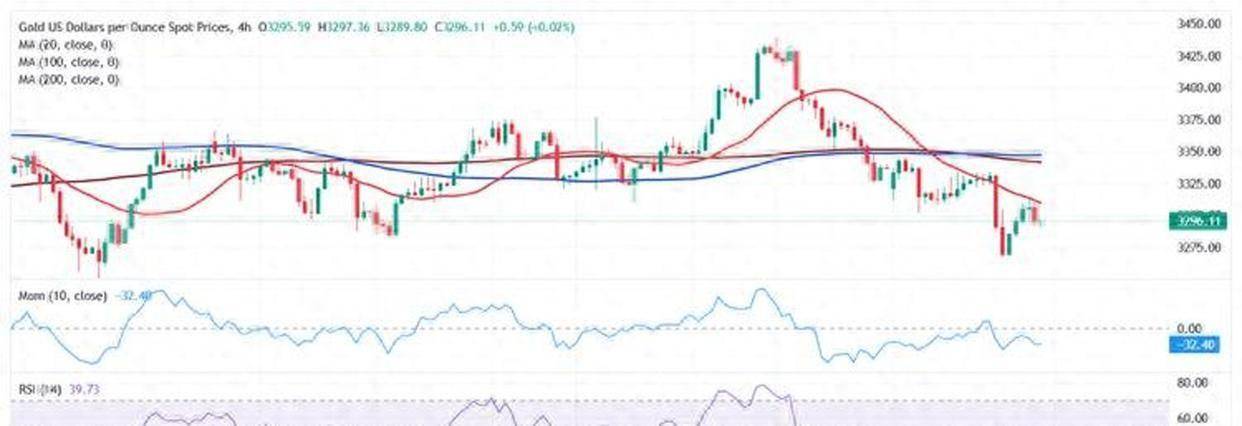
Core Viewpoint - The recent decline in gold prices is attributed to a stronger US dollar and tightening monetary policy, which has shifted investor sentiment away from gold as a safe-haven asset [1][3][10]. Group 1: Market Dynamics - The US dollar index has risen from around 102 points at the end of last year to nearly 105 by July, driven by the Federal Reserve's continuous interest rate hikes and asset reduction [3]. - The expectation of a slowdown in the US economy, indicated by anticipated lower job growth in July, has paradoxically led to a stronger dollar, further pressuring gold prices [3][5]. - Average hourly wages in July are expected to rise, suggesting persistent wage inflation, which supports the dollar's strength and negatively impacts gold [5]. Group 2: Technical Analysis - Gold prices are hovering around $3,280, with key moving averages showing signs of losing bullish momentum, indicating a bearish outlook [6]. - Support levels for gold are identified at $3,281, $3,268, and $3,246, while resistance levels are at $3,311, $3,328, and $3,345, suggesting a challenging environment for gold to recover [7]. Group 3: Global Economic Context - The US economy shows signs of slowing down, with a second-quarter GDP growth rate of only 2.1%, below the expected 2.4%, indicating potential easing of inflation pressures [8]. - Economic conditions in Europe and China are also affecting market dynamics, with the European Central Bank adjusting interest rates and China undergoing a manufacturing transformation [8]. - The ongoing monetary policy adjustments globally are leading to a stronger dollar, which is impacting gold's appeal as an investment [8][10].
2000-2024年上市公司企业异质性分组变量数据
Sou Hu Cai Jing· 2025-07-31 16:32
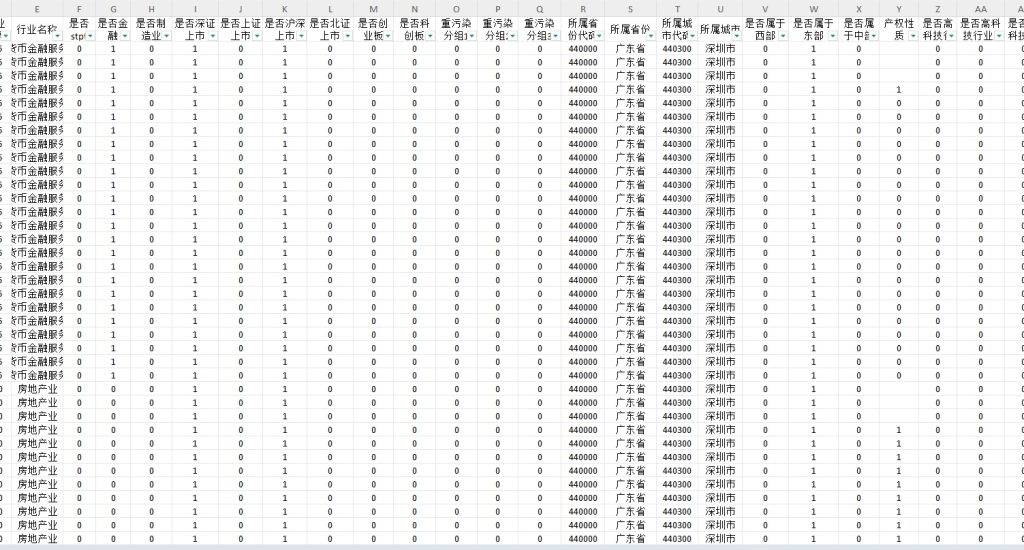
Core Insights - The article discusses the heterogeneity grouping variables of listed companies, including data from various stock exchanges and industry types such as heavily polluting industries, high-tech industries, technology-intensive, asset-intensive, and labor-intensive sectors [1][2]. Data Overview - The dataset covers listed companies from 2000 to 2024, including various indicators such as stock code, year, industry code, and whether the company is listed on specific exchanges like Shenzhen, Shanghai, and others [2]. - The data includes classifications for pollution levels, ownership types, and whether the company belongs to high-tech or specific industry categories [2]. Methodology - The grouping and regression analysis utilize official standards from the China Securities Regulatory Commission and other recognized literature to ensure the validity of the heterogeneity tests [1]. - The analysis requires that sample attributes are grouped appropriately, and inter-group coefficient differences must pass significance tests [1].
从卢布走过的一个半世纪 透视俄罗斯政治变迁
Sou Hu Cai Jing· 2025-07-31 16:15
Core Viewpoint - The book "The Ruble: A Political History (1769-1924)" fills a gap in the understanding of the ruble's historical significance and its political implications in Russia's development over a century and a half [1] Group 1: Historical Context of the Ruble - The first paper currency in Russia was issued in 1769, coinciding with military actions against the Ottoman Empire, and was designed to promote patriotism [2] - The issuance of the ruble sparked debates among Russian officials about the nature of currency and the responsibilities of the monarchy, reflecting the political and financial challenges of the time [3] - The book discusses the evolution of the ruble in relation to Russia's interactions with other nations, including Poland and the Ottoman Empire, and highlights the impact of various reforms on the currency's status [4][5] Group 2: Economic Reforms and Political Implications - The introduction of the gold standard under financial reformer Sergei Witte aimed to stabilize the ruble and attract foreign investment, but it also tied the currency's value closely to Russia's political stability [6] - The book illustrates how the ruble was used as a tool for both domestic reforms and imperial expansion, with significant implications for Russia's financial and political landscape [4][6] - The relationship between currency and political power is emphasized, particularly during periods of reform and conflict, showcasing the ruble's role in Russia's national identity and economic strategy [7][8] Group 3: Contemporary Relevance - The current geopolitical climate, including the Russia-Ukraine conflict, has renewed interest in the ruble's historical and present-day significance, particularly in the context of international sanctions and economic strategies [8] - The ruble's resilience and attempts at internationalization, such as settlements with Global South countries and the introduction of digital rubles, reflect ongoing efforts to adapt to modern financial challenges [8]
新力金融(600318)7月29日主力资金净流出2184.22万元
Sou Hu Cai Jing· 2025-07-29 16:01
Core Viewpoint - New Power Financial (600318) shows a positive performance with a stock price increase and solid financial results, indicating potential growth opportunities in the financial services sector [1][3]. Financial Performance - As of the first quarter of 2025, the company reported total revenue of 89.88 million yuan, a year-on-year increase of 7.13% - Net profit attributable to shareholders reached 17.43 million yuan, reflecting a year-on-year growth of 29.83% - The company's net profit after deducting non-recurring items was 17.36 million yuan, up 33.10% year-on-year - Current ratio and quick ratio both stand at 1.600, while the debt-to-asset ratio is 51.80% [1]. Stock Market Activity - On July 29, 2025, the stock closed at 10.36 yuan, up 0.97%, with a turnover rate of 9.3% - The trading volume was 476,800 hands, with a transaction amount of 484 million yuan - There was a net outflow of main funds amounting to 21.84 million yuan, accounting for 4.51% of the transaction amount [1]. Investment and Business Activities - The company has made investments in 12 enterprises and participated in 61 bidding projects - It holds 4 administrative licenses, indicating a diversified business engagement [2].

公募基金2025年中报数据榜单:规模首次突破34万亿元!
天天基金网· 2025-07-29 11:13
Core Viewpoint - The public fund market in China has shown significant growth, with an increase in the number of funds and total net assets, indicating a positive trend in investment activities [2][4]. Asset Allocation - As of the end of Q2 2025, the total number of public funds reached 12,833, with net assets amounting to 34.24 trillion yuan, reflecting a quarter-on-quarter increase of 6.77% [2]. - The largest asset type held by funds is bonds, with a market value of 21.17 trillion yuan, accounting for 57.73% of total fund assets. Stocks follow with a market value of 7.2 trillion yuan, representing 19.64% [4][5]. - Cash holdings saw the highest growth rate of 32.3%, increasing from 3.57 trillion yuan to 4.72 trillion yuan, while the market value of repurchase financial assets decreased by 6.4% [4][5]. Industry Distribution - The top three industries in terms of stock holdings are manufacturing (52.62%), finance (11.62%), and information transmission, software, and information technology services (6.58%) [5]. Top Holdings - The top three stocks held by public funds are Ningde Times (1,426.54 billion yuan), Guizhou Moutai (1,264.54 billion yuan), and Tencent Holdings (1,020.34 billion yuan) [7][8]. - In the Hong Kong stock market, Alibaba, Xiaomi, Meituan, and Kuaishou are also significant holdings, with respective values of 573.75 billion yuan, 513.28 billion yuan, 320.04 billion yuan, and 171.39 billion yuan [7]. Increased Fund Holdings - The stock with the highest increase in the number of funds holding it is Zhongji Xuchuang, which saw an increase of 394 funds, bringing the total to 595 funds with a market value of 286.4 billion yuan [9][10]. - Other notable stocks with significant increases in fund holdings include Xinyi Semiconductor and Huadian Heavy Industries, each gaining over 200 funds [9]. Decreased Fund Holdings - The stock with the largest decrease in holdings is Xugong Machinery, which saw a reduction of 3.88 billion shares, dropping from 8.15 billion shares to 4.27 billion shares [13][14]. - Other stocks with significant reductions include Bank of China and Aier Eye Hospital, with decreases of 3.7 billion shares and over 2 billion shares, respectively [13]. Increased Shareholding Proportion - Yifang Bio topped the list for the highest increase in shareholding proportion, rising from 8.19% to 22.93%, with a total market value of 30.2 billion yuan [15][17]. - Other companies with significant increases in shareholding proportions include Yuanjie Technology and Weichai Heavy Machinery, both exceeding 10% [16]. Decreased Shareholding Proportion - Chongqing Department Store experienced the highest decrease in shareholding proportion, dropping from 15.2% to 0.85%, a reduction of 14.35% [18]. - Other companies with significant decreases include Kangwei Century and Zhongke Blue News, both exceeding 10% [18].






社科院报告聚焦稳定币及中国应对,建议以监管沙盒等方式探索应用
Di Yi Cai Jing· 2025-07-28 11:59
Core Viewpoint - The report emphasizes the need for China to promote a diversified, equitable, and stable international monetary system in response to rising uncertainties in the current international monetary framework, highlighting the dual trends of fragmentation and diversification [1] Group 1: International Monetary System - The current international monetary system is experiencing increased uncertainty, with the U.S. dollar's dominance unlikely to collapse in the short term, but future developments may lead to a more fragmented and diversified system [1] - China should push for the diversification of reserve currencies to enhance the safety of foreign exchange reserves and cautiously advance the internationalization of the Renminbi [1] Group 2: U.S. Treasury Bonds - In March 2025, China reduced its holdings of U.S. Treasury bonds by $18.9 billion, bringing its total holdings down to $765.4 billion, thus falling from the second-largest to the third-largest holder [2] - The report suggests optimizing the strategy for holding U.S. Treasury bonds by flexibly adjusting the duration and constructing a diversified reserve system to enhance economic and financial resilience [2] Group 3: Renminbi Internationalization - The report identifies the internationalization of the Renminbi as a crucial direction, focusing on countries along the Belt and Road Initiative and RCEP regions [2] - It recommends increasing the use of the Renminbi in trade settlements and investment activities in neighboring countries to enhance its acceptance and influence [2] Group 4: Stablecoins - The global stablecoin market is experiencing significant growth, particularly with U.S. dollar-pegged stablecoins extending their influence into traditional finance [3] - The report advocates for China to recognize and respond to this trend by exploring stablecoin applications through regulatory sandboxes and enhancing research in this area [3] Group 5: Regional Financial Cooperation - The report calls for the establishment of a regional financial safety net and strengthening financial cooperation with neighboring partners such as ASEAN and the Shanghai Cooperation Organization [3] - It emphasizes the need for a robust internal financial risk prevention system, including macro-prudential management frameworks and monitoring of cross-border capital flows [3]
上海医药: 上海医药集团股份有限公司关于收购上海上实集团财务有限公司10%股权暨关联/连交易的公告
Zheng Quan Zhi Xing· 2025-07-25 16:25
Core Viewpoint - Shanghai Pharmaceuticals plans to acquire a 10% stake in Shanghai Shihua Group Financial Co., Ltd. for approximately RMB 143 million, increasing its ownership from 30% to 40% without changing the consolidation scope of the financial statements [1][2]. Group 1: Transaction Overview - The acquisition will be funded by the company's own capital and is classified as a related party transaction, but it does not constitute a major asset restructuring [2][6]. - The financial company has shown steady growth since its establishment in 2014, with cumulative cash dividends of approximately RMB 230 million since 2016 [2][16]. - The transaction is expected to enhance the company's control over significant decisions of the financial company and provide stable investment returns [2][16]. Group 2: Financial Information of the Target - The financial company has total assets of approximately RMB 1.17 billion and total liabilities of about RMB 1.03 billion, resulting in net assets of approximately RMB 143 million [8][9]. - The financial company reported operating income of approximately RMB 13 million and net profit of about RMB 6 million [8][9]. Group 3: Valuation and Pricing - The transaction price will be based on an evaluation report from a qualified asset appraisal agency, with the assessed value of the 10% stake being approximately RMB 143 million [9][11]. - The valuation methods used include the asset-based approach and market approach, with the asset-based approach being deemed more reflective of the company's market value [9][10]. Group 4: Approval and Compliance - The transaction requires internal approvals and regulatory filings, including approvals from state-owned asset supervision and financial regulatory authorities [12][15]. - The board of directors has approved the transaction, with related party director Yang Qiuhua abstaining from the vote [16].

晚间公告丨7月24日这些公告有看头
Di Yi Cai Jing· 2025-07-24 10:36
Group 1 - Su Bote's latest rolling P/E ratio is 55.52 and P/B ratio is 1.28, significantly higher than the industry averages of 19.61 and 0.81 respectively [3] - Agricultural Bank completed the issuance of 600 billion yuan in secondary capital bonds, with two types: 400 billion yuan fixed-rate bonds at 1.92% for 10 years and 200 billion yuan fixed-rate bonds at 2.12% for 15 years [4] - Nanjing Xinbai's major assets are frozen due to liquidity debt crisis faced by its controlling shareholder, but the company's operations remain normal [5] - Time Space Technology's stock is suspended as the controlling shareholder is planning a change in control [6] - Pioneer New Materials and its former controlling shareholder are under investigation by the CSRC for information disclosure violations, but it will not adversely affect the company's operations [7] - *ST Wan Fang's major shareholder's stock auction was canceled, indicating ongoing risks of control change [8] Group 2 - Zhimingda reported a net profit of 38.298 million yuan for the first half of 2025, a year-on-year increase of 2147.93% [10] - Leshan Electric's net profit for the first half of 2025 was 7.9031 million yuan, a decrease of 14.55% year-on-year, attributed to new pricing policies and increased costs [12] - Sainuo Medical expects a net profit of 13.84 million yuan for the first half of 2025, a year-on-year increase of 296.54%, driven by increased sales of coronary stents and balloons [13] Group 3 - Zhongqi New Materials' subsidiary signed a mining rights transfer contract, increasing the mining production capacity from 20 million tons/year to 40 million tons/year [15] - Zhonghuan Environmental Protection's major shareholder did not execute its planned share reduction of up to 15.0583 million shares by the deadline [17] - Zhangyue Technology plans to reduce its holdings by up to 438,900 shares, not exceeding 1% of the total share capital [18]




巴西签了,埃及也签了,美国要慌了,原本还在观望这下全坐不住了
Sou Hu Cai Jing· 2025-07-21 12:26
Core Insights - The article discusses the growing trend of countries, including China and 32 others, signing currency swap and settlement agreements, totaling 4.5 trillion RMB, which challenges the dominance of the US dollar in international trade [2][4][6] - The shift towards local currency transactions is seen as a response to the volatility and costs associated with using the US dollar, particularly in light of recent US monetary policies [4][6][9] Currency Swap Agreements - Countries such as Brazil and Egypt have entered into agreements to conduct trade in their own currencies, reducing reliance on the US dollar [2][10] - The agreement between China and Brazil involves 190 billion RMB exchanged for 157 billion Brazilian Reais, allowing direct currency settlements for trade [2] Global Payment Trends - The share of the RMB in global payments is projected to rise to 4.5% in 2024, making it the fourth-largest payment currency, up from 1.9% in 2019 [7] - The CIPS (Cross-Border Interbank Payment System) has expanded its reach to 180 countries, with a 45% increase in transaction volume, indicating a shift away from the SWIFT system [7][15] Impact on the US Dollar - The article highlights a decline in foreign holdings of US debt, dropping from 30% in 2015 to 22% in 2024, suggesting a loss of confidence in the dollar [13] - The US's attempts to maintain its dollar dominance through tariffs and pressure on allies have led to unintended consequences, including rising domestic inflation and increased costs for US businesses [13][18] International Reactions - Countries like Argentina have resisted US pressure to abandon currency swap agreements with China, indicating a shift in geopolitical dynamics [4][6] - The trend of de-dollarization is becoming more mainstream, with ordinary citizens becoming aware of alternatives to dollar-based transactions [16][18]