
AI制药

Search documents
港股异动 | 晶泰控股(02228)高开15% 与DoveTree签订管线合作协议 总订单规模约470亿港元
智通财经网· 2025-08-06 01:31
目前,晶泰科技已收到最终协议项下约定的5100万美元的首付款。在最终协议条款规限下,晶泰科技有 权获得4900万美元的进一步付款(180天内支付),并有资格获得金额达58.9亿美元的潜在监管里程碑及商 业里程碑付款,以及基于产品年度净销售额的潜在个位数百分点的特许权使用费。 智通财经APP获悉,晶泰控股(02228)高开15%,截至发稿,涨15%,报7.59港元,成交额1.66亿港元。 消息面上,8月5日,晶泰科技宣布与DoveTree完成总订单规模约470亿港元(59.9亿美元)的管线合作签 约,成为2025年中国AI制药领域金额最大的BD交易之一。DoveTree获得合作产品的全球独家开发与商 业化权利,而晶泰则负责利用其 "AI+机器人"端到端平台,针对肿瘤、自身免疫病、神经系统疾病及代 谢失调领域的靶点,开发小分子与抗体药物。 ...
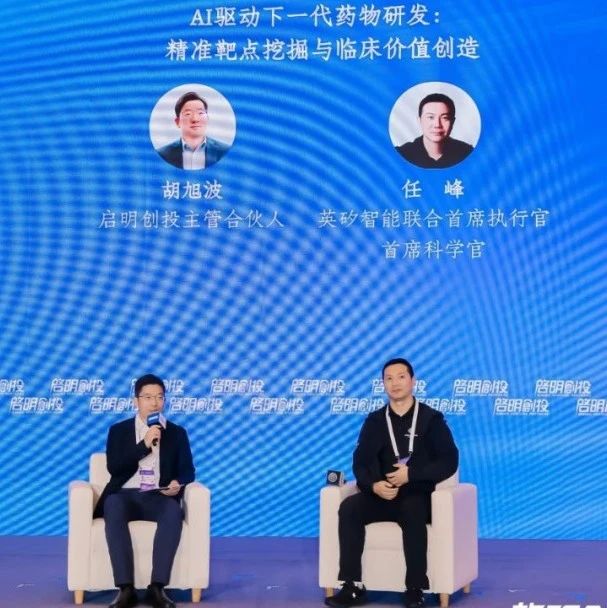
启明创投胡旭波对话英矽智能任峰:AI如何驱动下一代药物研发
IPO早知道· 2025-08-04 08:45
Core Viewpoint - AI-driven drug development is transitioning from stage 2.0 to stage 3.0, with significant advancements in target discovery and molecular design through the use of AI algorithms and large datasets [2][15]. Summary by Sections AI in Drug Development - Traditional drug development relies heavily on human knowledge and experience, which has limitations. AI can analyze vast amounts of data to identify novel targets and generate molecules, thus overcoming these limitations [3][5][6]. - The main areas where AI empowers drug development are in discovering new, reliable targets related to diseases and in molecular design, whether for small molecules or antibodies [6][7]. Milestone Projects - A notable project by the company involved developing a compound for idiopathic pulmonary fibrosis (IPF), which took approximately 18 months and cost over $2 million, achieving significant milestones in target discovery and molecular design [9][10]. - The project utilized AI tools to analyze multi-omics data from patients, leading to the identification of a new target, TNIK, and the design of a small molecule to inhibit its activity [10][11]. Current AI Capabilities - Currently, AI can assist in generating results but cannot make decisions. The final decision-making still relies on human scientists [12][14]. - The emergence of large models has improved efficiency in coding and data analysis, but the need for human oversight remains critical [13][14]. Future of AI in Drug Development - The industry is currently at stage 2.0, with the potential to reach stage 3.0 as AI becomes more integrated into the entire drug development process. However, a dedicated AI-driven super-intelligent agent is necessary to advance to stage 4.0 [17][18]. - Data quality and the need for a feedback mechanism from scientists are significant challenges in developing a robust AI drug discovery agent [19]. Competitive Landscape - The future of AI-driven drug development will be dominated by companies that can effectively integrate AI technology into practical applications and find viable commercialization paths [20][22]. - Collaboration between independent AIDD companies and large pharmaceutical firms will be essential, with each playing distinct roles in the drug development ecosystem [22][23].

拯救医疗独角兽
投资界· 2025-08-04 07:28
Core Insights - The Chinese healthcare investment market has experienced significant fluctuations over the past decade, peaking at over 380 billion yuan in 2021 before entering a period of stagnation [6][7] - Many healthcare unicorns emerged during the investment boom, but high valuations and slow conversion rates have led to persistent losses and challenges in achieving IPOs [6][10] - The industry is undergoing a transformation from a focus on high valuations and rapid growth to a more sustainable approach centered on survival and cash flow [12][17] Investment Trends - Since 2021, several companies, including Yuanxin Technology and Yingsi Intelligent, have struggled to enter the secondary market despite multiple IPO attempts [7] - The withdrawal of dollar funds and the cautious approach of domestic RMB funds have changed the funding landscape, leading to difficulties in financing and exits for many startups [7][10] - In the first half of this year, nearly 40 healthcare companies submitted IPO applications in Hong Kong, indicating a potential recovery in the market [7][9] Mergers and Acquisitions - Major acquisitions have gained attention, with companies like CR Sanjiu and Ant Group making significant purchases, suggesting a shift from IPO aspirations to M&A strategies for some unicorns [9][11] - The Hong Kong healthcare sector is showing signs of recovery, with several unicorns reapplying for IPOs after a period of dormancy [9][10] - Many companies are opting for mergers as a means to exit, although this often results in losses for investors due to previously inflated valuations [20][21] Market Dynamics - The healthcare industry is experiencing a profound reshaping, with a collective recalibration of expectations among entrepreneurs and investors [10][12] - The focus has shifted from visionary narratives to practical cash flow and profitability, with investors now prioritizing immediate financial returns over long-term potential [16][17] - Companies are adopting survival strategies, including layoffs and product line reductions, to maintain cash flow and navigate the current market challenges [11][12] Future Outlook - While IPOs remain a preferred exit strategy, not all companies are equipped to pursue this path, leading to a reliance on mergers as an alternative [19][20] - The market is expected to reward companies that can demonstrate sustainable business models and adaptability to policy changes, rather than those that merely tell compelling stories [21] - The healthcare sector is characterized by a slow evolution, requiring patience and resilience from companies as they adapt to the new market realities [21]

“AI制药四小龙”剂泰科技完成4亿D轮融资,总募资额超20亿
Tai Mei Ti A P P· 2025-08-04 02:55
Core Viewpoint - JiTai Technology, a leading AI-driven nanomedicine company, has completed a Series D financing round of 400 million RMB, aimed at accelerating its strategic initiatives in platform automation, product pipeline development, international collaboration, and talent acquisition [2][6]. Financing and Investment - The recent financing round was led by the Beijing Pharmaceutical and Health Industry Investment Fund and the Daxing District Industrial Investment Fund, contributing to a total funding exceeding 2 billion RMB (approximately 300 million USD) since the company's inception [2][6]. - JiTai Technology previously completed two financing rounds in February 2022, raising a total of 150 million USD, and a Series C round in June 2024, raising 100 million USD [5][6]. Company Overview - Founded in 2020, JiTai Technology focuses on AI-driven innovations in nanomaterials, specifically targeting drug delivery and discovery technologies to combat diseases and aging [3]. - The company was co-founded by prominent scientists, including Dr. Chen Hongmin and Dr. Lai Caida, and has developed three core AI platforms: AiLNP, AiRNA, and AiTEM [3]. Industry Position and Collaboration - JiTai Technology is recognized as one of the "Four Little Dragons" in AI pharmaceuticals, alongside Deep Intelligence, Crystal Technology, and InSilico Medicine, emphasizing a collaborative rather than competitive approach within the industry [4]. - The company has achieved breakthroughs in targeted delivery capabilities for key organs and cells, providing opportunities for treating various diseases, including tumors and neurodegenerative disorders [4]. Strategic Initiatives - The company has launched the Open CGT technology platform, which aims to address industry challenges in precise drug delivery and facilitate the development of breakthrough cell and gene therapies [6][7]. - The first project under this platform focuses on enabling Rui Zheng Gene to develop mRNA-LNP-based liver-targeted CRISPR gene editing therapies [7]. Future Outlook - JiTai Technology's CEO highlighted that cell and gene therapy (CGT) will be a pillar of China's biopharmaceutical industry, representing the next generation of drug development [8]. - The company aims to contribute significantly to the entire drug delivery process, facilitating the transition from early-stage pipelines to market-ready products [8].

2025年8月海外金股推荐:关注地缘和AI催化
GOLDEN SUN SECURITIES· 2025-07-31 11:34
Key Insights - The report highlights the importance of geopolitical factors and AI as catalysts for investment opportunities in overseas markets [1][2] - The upcoming release of OpenAI's GPT-5 is expected to enhance AI capabilities across various applications, potentially impacting multiple sectors [3][10] - The report recommends a diversified portfolio of stocks, focusing on companies with strong growth potential in AI, consumer goods, and real estate [4][20] Recent Key Events - The third round of US-China trade talks took place in Sweden, with significant global attention on the outcomes [1][8] - The World Artificial Intelligence Conference (WAIC 2025) in Shanghai gathered over 1,572 leaders and scholars to discuss the future of AI [2][9] - The H20 chip export ban was lifted, allowing for renewed trade with China, which could influence tech companies [2][9] Market Situation - The Hong Kong and US stock markets saw significant gains in July, with the Hang Seng Index rising from 24,072 points to 25,524 points, a 6.0% increase [11] - Net inflows from southbound trading reached 110.8 billion HKD in July, indicating strong investor interest in Hong Kong stocks [12][13] Current Portfolio Recommendations - **Pop Mart (9992.HK)**: Strong growth in overseas business with a 475%-480% increase in international revenue in Q1 2025 [21][22] - **Jintai Holdings (2228.HK)**: Positioned as a leader in AI for Science, with significant growth potential in the pharmaceutical sector [26][27] - **China Qinfa (0866.HK)**: Improved balance sheet with a net profit increase of 150.5% in 2024, driven by loan restructuring [30][33] - **Greentown China (3900.HK)**: Despite a decline in profits, the company is expected to stabilize and lead the industry due to strong land acquisition strategies [36][39] - **Alibaba (9988.HK)**: Revenue growth of 7% in Q4 2025, with a strong focus on AI and cloud services [40][41] - **Kuaishou-W (1024.HK)**: Significant growth in e-commerce and advertising revenue, driven by innovative marketing strategies [44][46] - **Xiaomi Group-W (1810.HK)**: Record revenue of 111.3 billion CNY in Q1 2025, with a strong performance in both mobile and AIOT sectors [47]
正在解套的医疗独角兽:长路,大梦,灯火又上楼台
Hu Xiu· 2025-07-31 01:50
Core Insights - The Chinese healthcare investment market has experienced significant fluctuations over the past decade, with a peak in financing reaching over 380 billion yuan in 2021, followed by a period of stagnation [1] - Many healthcare unicorns emerged during the investment boom, but high valuations and slow commercialization have led to persistent losses and survival challenges for many companies [1][2] - The current market environment is shifting, with nearly 40 healthcare companies filing for IPOs in the first half of the year, indicating potential recovery [2][3] Group 1: Market Dynamics - Since 2021, several companies, including Yuanxin Technology and Yingsi Intelligent, have struggled to enter the secondary market despite multiple IPO attempts [2] - The withdrawal of dollar funds and the cautious approach of domestic RMB funds have changed the funding landscape, leading to difficulties in financing and exits for many unicorns [2][4] - The healthcare sector is undergoing a profound reshaping, with a collective recalibration of expectations among industry participants [4][5] Group 2: Business Strategies - Many unicorns are shifting focus from IPO aspirations to mergers and acquisitions as a means of exit, with notable transactions occurring in the sector [2][10] - Companies are adopting survival strategies such as layoffs, product line cuts, and focusing on more profitable business areas to navigate the current challenges [12][11] - The emphasis has shifted from high valuations to sustainable business models and cash flow, with investors now prioritizing immediate returns over long-term visions [18][23] Group 3: Investment Landscape - The investment criteria have evolved, with a greater focus on clear profitability paths and customer retention, while technological innovation has become a secondary consideration [18][14] - The previous era of high valuations driven by ambitious narratives has given way to a more cautious investment approach, emphasizing realistic financial performance [21][22] - The market is no longer celebrating valuations but is instead focused on cash returns, reflecting a significant shift in investor sentiment [23][29] Group 4: Future Outlook - IPOs remain a preferred exit strategy for many companies, but not all are equipped to pursue this path, leading to a reliance on mergers as an alternative [24][26] - The potential for recovery in the secondary market may provide new opportunities for companies to secure funding and navigate the current landscape [28] - Companies that can adapt to the changing environment and demonstrate sustainable business practices are more likely to succeed in the long term [29]




21专访丨安永吴晓颖:AI医疗需从“炒概念”走向“真落地”
2 1 Shi Ji Jing Ji Bao Dao· 2025-07-29 23:11
Core Insights - The healthcare sector is a testing ground for new technologies, with generative AI significantly enhancing medical services and accelerating drug development [1][3] - The 2025 World Artificial Intelligence Conference in Shanghai showcased over 800 companies and 3000 cutting-edge exhibits, highlighting the rapid advancements in AI technology [1][2] Industry Trends - AI is transforming the entire healthcare process, including health management, diagnosis, imaging analysis, drug development, and surgical robotics, leading to improved efficiency and patient experience [3] - The AI healthcare market is projected to grow from 97.3 billion yuan in 2023 to 159.8 billion yuan by 2028, indicating a positive future trend [3] Challenges in AI Healthcare - The industry faces significant challenges in moving from "technological feasibility" to "scalable application," including issues related to standardization, ecosystem fragmentation, and clinical translation [2][4] - Key barriers to commercialization include data privacy and compliance, clinical validation and payment models, operational capabilities, and interoperability within healthcare systems [4] Investment Landscape - Major tech companies like Tencent, Ant Group, and Huawei are increasingly focusing on the AI healthcare sector, indicating a shift from conceptualization to practical commercialization [3][4] - AI-native pharmaceutical companies are valued based on their model capabilities, computational efficiency, and data barriers, differing from traditional pharmaceutical valuation methods [5] Regulatory Environment - The FDA's recent initiatives, including the introduction of generative AI tools and the appointment of a Chief AI Officer, aim to modernize regulatory processes and enhance the integration of AI in drug approval [6][7] - Chinese pharmaceutical companies looking to enter international markets must adapt to regulatory requirements and ensure compliance with FDA standards [7] Data Utilization Strategies - AI-driven synthetic control arms and real-world data simulations are being recognized by the FDA as valid methods for accelerating international multi-center trial designs [8] - To address data standardization issues in emerging markets, companies should adopt international data models and utilize federated learning techniques to ensure data quality while maintaining patient privacy [8]
私募大咖,最新发声!
中国基金报· 2025-07-28 06:40
Core Viewpoint - The article emphasizes that the future of investment lies in technology sectors, particularly in humanoid robots, AI healthcare, new consumption, stablecoins, and cyclical sectors, indicating a significant revaluation moment for Chinese assets [2][4]. Group 1: Humanoid Robots - The humanoid robot industry presents enormous market opportunities, with a potential demand in China reaching 3 billion units, translating to a market size of several trillion yuan, far exceeding the real estate sector [4][5]. - The year 2024 is anticipated to be a pivotal year for humanoid robots, with advancements driven by companies like Tesla, leading the industry from concept to mass production [5]. - The supply chain for humanoid robots is expected to accelerate, with various applications emerging in logistics, warehousing, and service sectors, making it an opportune time for investment [5]. Group 2: AI in Scientific Research - AI for Science (AI4S) is identified as a transformative approach in scientific research, utilizing deep learning and machine learning to handle large-scale data and build accurate scientific models [7]. - The application of AI in drug development and materials chemistry is highlighted, with AI significantly reducing time and costs while increasing efficiency and success rates in new drug discovery [8]. Group 3: New Consumption and Stablecoins - The consumption sector in China, as the world's second-largest consumer market, is poised for significant investment opportunities, especially as marginal changes can lead to substantial returns [8]. - The stablecoin market, currently valued at $250 billion, is projected to grow significantly, with estimates suggesting it could reach approximately $2 trillion by 2028 and between $5 trillion to $7.5 trillion by 2030 [8]. Group 4: Cyclical Sectors - The article discusses the cyclical nature of the economy, indicating that the current phase is the third inventory cycle's upward stage, with potential investment opportunities in sectors like polysilicon and coal due to recent price surges [9]. - The balance between long-term investments in emerging technologies and short-term investments in cyclical sectors is emphasized as a strategic approach [9].

80后麻省理工学霸,在深圳干出200亿
盐财经· 2025-07-26 09:33
Core Viewpoint - The article emphasizes that AI is not just a trend but a transformative technology that can revolutionize various industries, particularly in the pharmaceutical sector, where it can significantly enhance drug development processes [2][3]. Market Demand - A sustainable AI business model requires a real market demand with tangible application scenarios, addressing customer pain points and ensuring strong payment capabilities from customers [4]. - The pharmaceutical industry is identified as an ideal sector due to its urgent need for AI in drug development, which is costly and time-consuming, with global top ten pharmaceutical companies expected to invest over $120 billion in R&D in 2024 [5]. Technological Maturity - AI must possess the capability to solve customer pain points, and the industry should have a data-rich environment to facilitate AI training and improvement [4][5]. - The drug development process generates vast amounts of data, making it a data-intensive and capital-heavy industry, particularly in the stages of drug molecule screening and design [5]. Human Element - The third critical factor for establishing a sustainable AI company is the human element, exemplified by the founding team of CrystalTech, which was established by three MIT postdoctoral researchers in quantum physics [7]. - CrystalTech has expanded its AI-driven capabilities beyond pharmaceuticals into materials science, petrochemicals, renewable energy, and agriculture, and is recognized as the first AI pharmaceutical company listed on the Hong Kong Stock Exchange with a market value exceeding HKD 20 billion [8]. AI in Drug Development - AI's role in drug development includes predicting protein structures, which is crucial for identifying drug targets and designing effective drug molecules [12][13]. - The integration of AI allows for a significant reduction in the time and cost associated with drug development by enabling virtual experiments and high-throughput synthesis of candidate molecules [16][21]. Collaboration of AI and Experiments - AI serves as an enabler rather than a complete replacement in drug development, necessitating a combination of computational simulations and real-world experiments to optimize the drug discovery process [22]. - The collaboration between AI-driven simulations and laboratory experiments provides timely feedback for model training and algorithm optimization, highlighting the interdependence of both approaches [22]. Investment and Growth - CrystalTech's early investments were influenced by the growing interest in biomedicine and the application of AI technologies, with significant backing from notable investors like Tencent [28][31]. - The company has focused on its core mission rather than chasing trends, which has positioned it well for success as the AI wave continues to evolve [32]. Future of AI in Industries - The article suggests that industries with easier and cheaper data acquisition will experience faster and deeper changes due to AI, with the pharmaceutical sector being a prime example [34]. - The early stages of drug discovery are highlighted as particularly advantageous for AI applications due to lower experimental costs and the ability to generate large datasets [34][35].

晶泰控股20250428
2025-07-16 06:13
Company and Industry Summary Company Overview - The company operates in the biotechnology sector, focusing on drug discovery and development, particularly in antibody and small molecule optimization. It emphasizes a light asset model and has a healthy balance sheet capable of sustaining operations for over 10 years [1][6]. Key Points and Arguments - **Revenue Milestones**: The company has achieved the revenue threshold set by the Hong Kong Stock Exchange for commercialization, indicating strong growth potential and strategic planning for future revenue increases [1]. - **Growth Catalysts**: The company identifies multiple growth drivers, particularly in the life sciences sector, with increasing demand in Europe and the US. It aims to leverage these trends for future growth [1]. - **Collaborations**: Successful partnerships with major pharmaceutical companies like Johnson & Johnson and UCB have been established, enhancing the company's credibility and market position. The company has also engaged in competitive evaluations with DeepMind's AlphaFold [2][3]. - **Antibody Development**: The company has surpassed its goals in antibody fermentation capabilities and anticipates securing larger contracts in the second half of the year, building on its previous successes [3]. - **Contractual Agreements**: The company has ongoing collaborations that could yield significant milestone payments, with expectations of reaching key performance indicators (KPIs) that would trigger additional revenue [3][4]. - **Technological Innovations**: The company is integrating AI, quantum physics, and robotics to enhance its drug discovery processes, positioning itself as a leader in the field. This multi-faceted approach is seen as essential for maximizing efficiency and innovation [8][10]. - **Market Trends**: The company acknowledges a shift towards AI and robotics in the industry, with regulatory bodies encouraging the use of AI in drug testing, indicating a broader trend towards automation and data-driven methodologies [10][11]. Additional Important Content - **Unique Business Model**: The company differentiates itself from competitors by combining dry lab and wet lab capabilities, which allows for a more comprehensive approach to drug development compared to peers who may focus solely on one aspect [6][7]. - **Future Outlook**: The company is optimistic about future opportunities across various sectors, including agriculture and electronics, and plans to continue expanding its partnerships with major tech firms [5][11]. - **Investor Engagement**: The management expresses a commitment to maintaining open communication with investors and encourages visits to their facilities to foster transparency and collaboration [12]. This summary encapsulates the key insights from the conference call, highlighting the company's strategic direction, market positioning, and innovative approaches within the biotechnology industry.