饮料

Search documents
东鹏饮料20250924
2025-09-26 02:29
Summary of Dongpeng Beverage Conference Call Industry and Company Overview - Dongpeng Beverage has become the second-largest player in the energy drink industry, surpassing Red Bull with nearly 30% market share [2][3] - The company has expanded from the Guangdong and surrounding regions to a nationwide presence, diversifying its product line to include energy drinks, sports drinks, ready-to-drink tea, and coffee [2][3] Key Points and Arguments - **Sales Network Expansion**: By the end of 2024, Dongpeng Beverage will have 4 million sales outlets, with an expected increase to 4.5 million by the end of 2025, significantly outpacing competitors like Xiangpiaopiao and Yangyuan [2][6] - **Regional Growth**: The company has achieved over 50% growth in regions such as Southwest, Central China, and North China [2][7] - **Product Structure Growth**: Hydration products are projected to reach 1.5 billion yuan in 2024, doubling to 3.2-3.5 billion yuan in 2025. The new juice tea product's annual target has been raised to 700-800 million yuan [2][7] - **Business Model**: Dongpeng's business model is similar to Nongfu Spring, focusing on long lifecycle products to nurture new offerings. The energy drink category has high stickiness and lifecycle characteristics, with favorable ROE, net profit, and gross margin [2][8] - **Market Position**: Since its IPO in May 2021, Dongpeng has maintained a compound annual growth rate (CAGR) of approximately 30% in revenue and earnings per share (EPS), with a consistent price-to-earnings (P/E) ratio around 30 [3][4] Additional Important Insights - **Future Growth Projections**: The company anticipates a 15-20% CAGR for specific items until around 2027, despite potential growth slowdowns due to regulatory restrictions on certain products in schools [10] - **Diversification Strategy**: Dongpeng is actively exploring overseas markets in Southeast Asia and the Middle East, with significant growth potential despite current small volumes [10][15] - **Performance of Hydration Products**: Hydration products have shown remarkable growth, with sales increasing from 400 million yuan in 2023 to 1.5 billion yuan in 2024, and expected to reach 3.4-3.5 billion yuan in 2025 [12] - **Juice Tea Market Challenges**: The juice tea market is competitive, with major brands like Master Kong and Uni-President holding significant market shares. Dongpeng is cautious about profitability in this segment, setting a sales target of 700-800 million yuan for the year [13] - **Overall Performance Expectations**: For the current year, Dongpeng expects a revenue growth of approximately 33%, reaching 21 billion yuan, and a profit increase of about 37%, exceeding 4.6 billion yuan [14] Conclusion Dongpeng Beverage is positioned for significant growth in the energy drink and hydration markets, with a robust expansion strategy and a focus on product diversification. The company’s strong sales network and innovative business model provide a competitive edge in a rapidly evolving market.

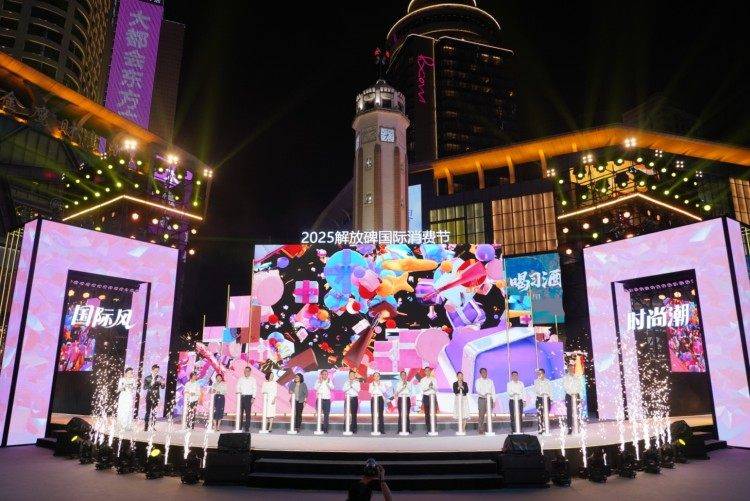
聚焦首发经济与场景创新,2025解放碑国际消费节在重庆渝中举行
Sou Hu Cai Jing· 2025-09-25 14:50
Core Insights - The 2025 Liberation Monument International Consumption Festival has officially launched in Yuzhong, focusing on "International Style and Fashion Trends" with an emphasis on "First Release Economy" and "Scene Innovation" [1][2] Group 1: Event Overview - The festival features a series of unique activities including first exhibitions, product launches, and themed pop-up events [1] - It aims to attract over 100 well-known domestic and international brands through collaboration with multiple consulates, international business associations, and key commercial entities in the area [2] - The event will run for two months, incorporating five major promotional plans, including the "First Exhibition and Launch Plan" and "Night Unending All-domain Trendy Play Plan" [2] Group 2: Economic Impact - Yuzhong is highlighted as a vital economic hub with 158 Fortune 500 companies and 1,378 large-scale enterprises, contributing to a service industry output value in the hundreds of billions [6][7] - The district has a per capita GDP exceeding 72 million yuan per square kilometer, ranking first in economic density in Western China [7] - The city’s retail sales reached over 830 billion yuan in the first half of the year, marking a 4.5% growth [7] Group 3: Consumer Experience - The festival will introduce immersive consumption experiences, including the first Chongqing International Trendy Beverage Festival, enhancing the shopping environment [2][6] - The event will showcase ten major consumer hotspots in Chongqing and Chengdu, promoting unique local consumption spaces [6]

中秋礼盒主打“实惠显贵”,亲民平价拉动市场回暖
第一财经· 2025-09-25 09:39
据悉,今年厂商和经销商心态较为理性,一些知名品牌的礼盒本身定价就不高,经销商也只赚个几块 钱就出手,走薄利多销的模式,也带动了礼盒的销售。但也有受访饮料经销商称今年中秋礼盒已经下 发到各零售终端,但市场动销情况并不理想,仍有2到3成的下滑。 本文字数:1103,阅读时长大约2分钟 作者 | 第一财经 栾立 今年中秋与国庆双节合并,形成年内最长假期。记者走访发现,在经历了年初"最冷春节档"之后,节 日礼盒市场模式正出现转变。 今年中秋,多种99元四盒、百元五盒的牛奶、饮料及食品礼盒组合成为市场热销产品。据受访经销 商反映,随着价格趋于平民化,中秋礼盒市场呈现止跌企稳的迹象。 记者在北京部分超市和批发市场看到,临近中秋,各类礼盒堆头已被摆放在显眼位置。与往年动辄数 百元的定价不同,今年礼盒普遍定价在100元左右。北京中关村物美超市工作人员介绍,今年主流礼 盒价格多在百元以下,整体定价较去年有所下调,近期销量虽不算快,但市场热度高于去年同期。 山东临沂食品销售商任天华告诉第一财经记者,虽然今年中秋节来得比较晚,但礼盒销售有企稳的迹 象,大窑、安慕希、特仑苏等传统饮料、牛奶礼盒销售都有起色。这一变化或与今年的礼盒市场 ...

巴克莱:Keurig Dr Pepper(KDP.US)分拆业务正确但执行复杂 下调评级至“持股观望”
智通财经网· 2025-09-25 07:11
Core Viewpoint - Barclays has downgraded Keurig Dr Pepper's stock rating from "Overweight" to "Hold" and reduced the target price by 33% to $26, citing increased uncertainty and disruption from the planned separation of its beverage and coffee businesses [1][2] Group 1: Business Separation - Keurig Dr Pepper plans to split its beverage and coffee businesses into two independent entities after acquiring JDE Peet's, with the coffee segment projected to generate approximately $16 billion in annual net sales [1] - The beverage segment, which includes brands like Dr Pepper and Canada Dry, is expected to exceed $11 billion in annual net sales [1] - The separation is seen as a rational move, but the complexities involved in the transition may lead to higher uncertainty in the next 12 months [1] Group 2: Analyst Insights - Analyst Lauren Lieberman noted that the fundamental situation of Keurig Dr Pepper no longer shows a clear relative advantage as it did previously [2] - The beverage business is likely to face structural adjustments post-separation due to shared market channels and production models [2] - The coffee business is expected to gain scale and product diversity through integration, but significant challenges remain, especially considering JDE Peet's inconsistent performance since its IPO in 2020 [2] Group 3: Stock Performance - Following the announcement of the JDE Peet's acquisition, Keurig Dr Pepper's stock has declined by 17% and is currently trading at a five-and-a-half-year low [2] - The new target price reflects a 2% downside potential from the current stock price, indicating that uncertainties related to the announced transaction are largely priced in [2]

9.25犀牛财经早报:多家公募旗下投顾产品开启新一轮调仓 部分私募“不想跟科技股玩了”
Xi Niu Cai Jing· 2025-09-25 01:32
Group 1 - The second batch of 14 Sci-Tech Innovation Bond ETFs was collectively listed on September 24, attracting significant subscriptions from institutions such as banks and insurance companies, with subscription amounts reaching 30 billion units for some banks and 20 billion units for an insurance company [1] - Public fund institutions have begun a new round of portfolio adjustments in response to market volatility, with some reducing mixed fund positions and increasing allocations to fixed-income funds [1][2] - The A-share private equity market is shifting focus from technology stocks to cyclical, consumer, and high-end manufacturing sectors due to concerns over short-term risks in tech stocks [2] Group 2 - The A-share private placement market has seen significant activity this year, with 115 companies completing private placements, raising approximately 959.5 billion yuan, a 711% increase compared to the same period last year [2] - Apple addressed concerns regarding the durability of the iPhone 17 Pro and Pro Max, stating that marks on the aluminum body are not permanent and can be cleaned easily [3] - AI startup Modular raised $250 million in a funding round, achieving a valuation of $1.6 billion, with participation from notable investors [3] Group 3 - Wahaha Group plans to rebrand to "Wah Xiaozong" starting from the 2026 sales year, with a sales target of 30 billion yuan set by its new leader, which is nearly 80% of the current brand's annual sales [5] - Citic Securities' Jinan branch was warned for allowing unqualified personnel to conduct fund sales, highlighting compliance issues within the company [6] - Hengli Industrial was fined 3.5 million yuan for failing to disclose its 2024 annual report on time, with penalties imposed on several executives [7]
山东泗水:生态活水滋养幸福之源
Jing Ji Ri Bao· 2025-09-24 22:55
Core Viewpoint - The article emphasizes the importance of ecological protection and sustainable development in Sishui County, highlighting how ecological advantages are being transformed into economic benefits through various initiatives and industries [1][3][4]. Group 1: Water Resource Management - Sishui County has 91 reservoirs with a total water resource volume of 286 million cubic meters, and it has achieved a 100% compliance rate for drinking water quality standards in 2024 [1]. - The Yincheng Reservoir has significantly improved irrigation capabilities and water quality, enhancing agricultural stability and productivity [2]. Group 2: Agricultural Development - The local agricultural sector, particularly sweet potato farming, benefits from reliable water sources, leading to high yields and quality, with over 800 acres planted this year [2]. - The sweet potatoes produced are marketed in regions such as Hebei, Jiangsu, and Shanghai, contributing to local economic growth and employment [2]. Group 3: Industrial Growth - Sishui County is focusing on the food industry as a key pillar for economic development, leveraging its ecological resources to enhance business opportunities [3]. - The county has 28 large-scale food enterprises projected to generate revenues of 2.947 billion yuan and profits of 96.012 million yuan by mid-2025 [3]. Group 4: Future Development Plans - Future initiatives will include increased investment in ecological protection, mining restoration, and river management, alongside the development of eco-tourism and cultural experiences [4].
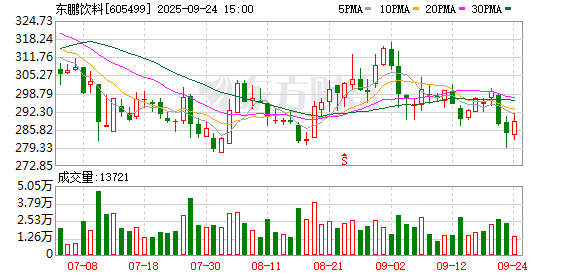
东鹏饮料发生大宗交易 成交折价率11.35%
Zheng Quan Shi Bao Wang· 2025-09-24 13:53
Group 1 - The core point of the article highlights a significant block trade of Dongpeng Beverage on September 24, with a transaction volume of 601,200 shares and a transaction amount of 154 million yuan, executed at a price of 255.95 yuan, which represents an 11.35% discount compared to the closing price of the day [2][3] - Over the past three months, Dongpeng Beverage has recorded a total of 10 block trades, amounting to a cumulative transaction value of 1.052 billion yuan [2] - On the same day, Dongpeng Beverage's closing price was 288.72 yuan, reflecting a 1.52% increase, with a turnover rate of 0.26% and a total transaction amount of 396 million yuan, alongside a net inflow of 10.09 million yuan in main funds [2] Group 2 - The latest margin financing balance for Dongpeng Beverage stands at 364 million yuan, with an increase of 1.79 million yuan over the past five days, representing a growth rate of 0.50% [3] - Dongpeng Beverage (Group) Co., Ltd. was established on June 30, 1994, with a registered capital of 520.013 million yuan [3]
星巴克们的中国往事:从黄金十年到败退时刻
3 6 Ke· 2025-09-24 11:15
Group 1 - The core viewpoint of the article highlights the accelerated divestment of foreign brands in China, marking a significant shift in the market dynamics that have evolved over the past 40 years [4][71]. - The initial entry of foreign brands into China during the reform and opening-up period was characterized by a cooperative approach, as they sought to establish a foothold in a market with limited consumer spending power [5][9]. - By the mid-1990s, as urban consumer groups began to grow, foreign brands started to adopt aggressive strategies, leading to the decline of many domestic brands [10][12]. Group 2 - The article discusses the "two-lever" strategy employed by foreign brands, which involved both establishing retail channels and leveraging brand power to dominate the market [29][40]. - The entry of foreign supermarkets in the 1990s transformed the retail landscape in China, introducing advanced business models and changing consumer shopping habits [30][32]. - The rise of e-commerce and mobile internet has further disrupted traditional retail, allowing smaller domestic brands to thrive by leveraging online platforms [47][51]. Group 3 - The case of Luckin Coffee's rise against Starbucks illustrates how domestic brands have begun to leverage capital and technology to compete effectively with established foreign brands [60][67]. - The article emphasizes that the decline of foreign brands in China is a result of their inability to adapt to the rapidly changing market dynamics and consumer preferences [72]. - The current trend of foreign brands considering divestment to local teams is seen as a potential positive step for their operations in China, allowing for better alignment with local market conditions [71].

深圳姜滋饮料有限公司成立 注册资本2000万人民币
Sou Hu Cai Jing· 2025-09-24 08:34
天眼查App显示,近日,深圳姜滋饮料有限公司成立,法定代表人为杨定邦,注册资本2000万人民币, 经营范围为一般经营项目是:食品销售(仅销售预包装食品);食品、酒、饮料及茶生产专用设备制 造;自动售货机销售;商业、饮食、服务专用设备制造;食品互联网销售(仅销售预包装食品);保健 食品(预包装)销售;食用农产品初加工;食用农产品批发;食用农产品零售;货物进出口;技术服 务、技术开发、技术咨询、技术交流、技术转让、技术推广;食品进出口。(除依法须经批准的项目 外,凭营业执照依法自主开展经营活动),许可经营项目是:食品用塑料包装容器工具制品生产。(依 法须经批准的项目,经相关部门批准后方可开展经营活动,具体经营项目以相关部门批准文件或许可证 件为准)。 ...
陕西省安康市市场监督管理局关于115批次食品合格情况的通告(2025年第十期)
Zhong Guo Zhi Liang Xin Wen Wang· 2025-09-24 08:04
关于115批次食品合格情况的通告(2025年第十期) 2025年9月23日 | | 食品安全监督抽检合格产品信息 | | | | | | | | | | | --- | --- | --- | --- | --- | --- | --- | --- | --- | --- | --- | | 序 | | | | 被抽样 | | 规格型 | 生产日 | | | 备 | | 号 | 标称生产企业名称 | 标称生产企业地址 | 被抽样单位名称 | 单位所 | 食品名称 | 号 | 期/批号 | 分类 | 检验机构 | 注 | | | | | | 在省份 | | | | | | | | 1 | 陕西荣飞食品有限 | 陕西省咸阳市杨凌示范区滨河东路4号 | 安康市汉滨区汉禾 | 陕西 | 酸柠檬金骏 | 60g/袋 | 2025- 08-23 | 糕点 | 安康市食品 药品检验检 | | | | 公司 | | 麦蛋糕店 | | 眉茶月饼 | | | | | | | | | | | | | | 00:00:00 | | 测中心 | | | 2 | 安康市面包森林食 | 陕西省安康市高新技术产业开发区现代富硒 | 安康市面 ...