脑机接口

Search documents
脑机接口,迎重磅利好
Zheng Quan Shi Bao· 2025-09-17 00:00
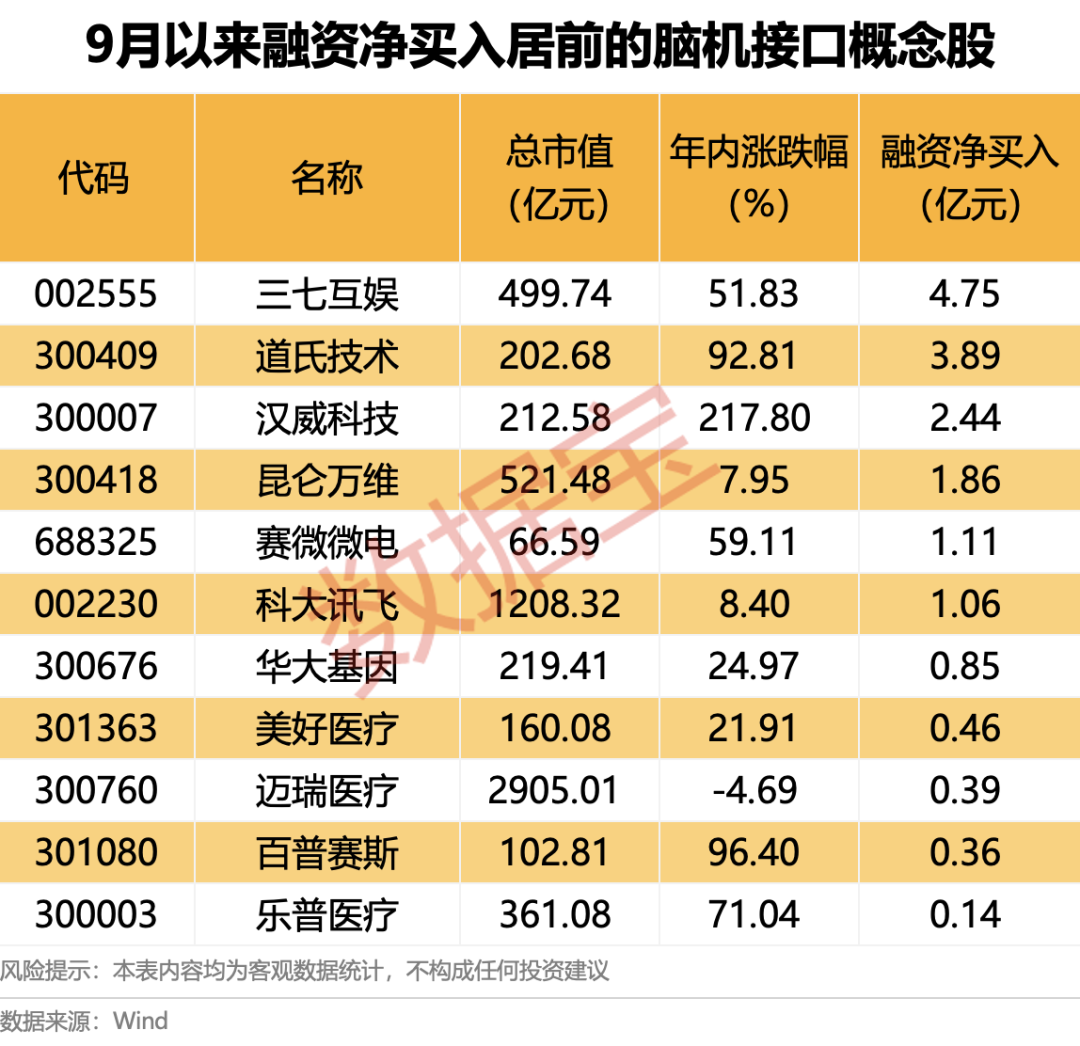
Core Insights - The first national standard for brain-computer interface (BCI) medical devices in China has been approved, laying a foundation for the high-quality development of the BCI industry, effective from January 1, 2026 [1] - The Chinese government aims to achieve breakthroughs in key BCI technologies by 2027, establishing an advanced technology, industry, and standard system, with the industry expected to grow significantly by 2030 [1] Industry Developments - The average increase in A-share BCI concept stocks this year is 62.55%, with companies like Hanwei Technology, Innovation Medical, and Sainuo Medical seeing stock prices double, exceeding 170% growth [2] - Seven companies have received institutional research since September, with Xiangyu Medical receiving the most attention from 49 institutions, focusing on self-developed core components and rapid certification of BCI products [2][3] - Dao's Technology is enhancing its capabilities in BCI by investing in leading companies and exploring collaborations in various sectors [2] Market Activity - Since September, half of the BCI concept stocks have seen net purchases from financing clients, with six stocks having net buy amounts exceeding 100 million yuan, led by companies like Sanqi Interactive Entertainment and Dao's Technology [3][4] - A table of BCI concept stocks shows significant net buy amounts and year-to-date performance, with Sanqi Interactive Entertainment at 499.74 billion yuan market cap and a 51.83% increase, while Dao's Technology has a market cap of 202.68 billion yuan and a 92.81% increase [4]

对话浙江省科技厅前厅长周国辉:杭州何来“六小龙”
经济观察报· 2025-09-16 12:11
Core Viewpoint - The article emphasizes that the success of innovation ecosystems, such as the "Hangzhou Six Little Dragons," is not due to a single advantage but rather a systemic ecological result involving government support, market cultivation, talent aggregation, and cultural climate [4][10][18]. Group 1: Innovation Ecosystem - The "Hangzhou Six Little Dragons" phenomenon highlights the city's emergence as a hub for technology entrepreneurship, driven by a conducive innovation ecosystem [2][4]. - An "innovation formula" is proposed: Success = Government (Sunshine) × Market (Soil) × Talent (Seeds) × Culture (Climate), indicating the interdependence of these elements in fostering innovation [4][10]. - Hangzhou's ranking in the Global Innovation Index rose to 13th in 2025, reflecting its progress in innovation compared to previous years [11]. Group 2: Role of Government - Government plays a crucial role in supporting innovation by understanding industry needs and providing tailored support rather than just financial incentives [10][14]. - The government should adapt its support strategies to align with the evolving economic landscape, focusing on technology trends and market needs [14][22]. - A market-oriented approach is encouraged, leveraging the insights of venture capital to identify promising projects and companies [13][15]. Group 3: New Entrepreneurs and Business Models - The new generation of Zhejiang entrepreneurs, termed "New Zhejiang Merchants," is characterized by a shift towards innovation-driven growth, focusing on technology and sustainable development [9][10]. - These entrepreneurs are moving into advanced fields such as digital economy, life sciences, and new materials, positioning themselves as leaders rather than mere participants in the supply chain [9][10]. - The "特色小镇" (Characteristic Town) model is highlighted as a successful framework for fostering innovation, integrating production, living, and ecological development [16][17]. Group 4: Investment Strategies - Zhejiang's venture capital landscape emphasizes early-stage investments in technology, with a focus on understanding the founders and their vision rather than just business plans [15][16]. - Key investment areas include artificial intelligence, smart manufacturing, new materials, and life sciences, reflecting a strategic alignment with national development goals [16][22]. - The investment approach is characterized by rigorous analysis and a deep understanding of industry trends, ensuring alignment with government policies and market demands [15][16]. Group 5: Future Directions - The focus for future development in Zhejiang is on "Artificial Intelligence+" to enhance the economy and improve public services [22][23]. - The "八八战略" (Eight-Eight Strategy) will continue to evolve, emphasizing high-quality development, innovation, and sustainable practices [23][24]. - Collaboration between Zhejiang and Anhui is encouraged, leveraging their complementary strengths to foster regional innovation [20][21].

看涨
第一财经· 2025-09-16 11:09
Market Overview - The market has shown a "bullish engulfing" pattern on the daily chart, recovering above the 5-day moving average, with a MACD golden cross on the 60-minute chart indicating a potential upward trend [3]. - A total of 3,627 stocks have risen, indicating a broad-based market rally [3]. Sector Performance - The stock market exhibits a dual characteristic of widespread gains among individual stocks and sector differentiation, with the internet e-commerce sector leading the gains. Other active sectors include electric machinery, humanoid robots, automotive parts, and brain-computer interface, while the aquaculture, small metals, and China shipbuilding sectors lagged [4]. Trading Volume - Today's trading volume in both markets showed a "moderate rebound," with increased market activity. The technology growth sector has become the focal point for capital, and the market is expected to maintain a consolidation phase in the short term. It is crucial to monitor whether trading volume can sustain above 2.5 trillion yuan to break through key resistance levels [5]. Capital Flow - There is a net outflow of institutional funds, while retail investors are experiencing a net inflow of funds [6]. Institutional Behavior - The balance between defensive and offensive strategies among institutions is intensifying, with cyclical sectors being heavily reduced. Conversely, technology stocks on the Sci-Tech Innovation Board are gaining traction, as some institutions begin to allocate towards defensive assets while still capitalizing on policy benefits. Retail investors are exhibiting a mixed sentiment of high volatility and cautious observation, favoring short-term gains through leverage and small-cap stocks, while also showing increased wariness towards external risks [7]. Investor Sentiment - Retail investor sentiment is characterized by a blend of aggressive trading and heightened risk awareness, particularly in small-cap stocks, as they pursue hot topics like robotics and AI computing power [7].

周国辉:杭州何来“六小龙”,“懂”比“给”更重要
Jing Ji Guan Cha Wang· 2025-09-16 09:20
Group 1 - The emergence of the "Hangzhou Six Little Dragons" signifies a new wave of technological entrepreneurship in Hangzhou, building on the city's historical significance in e-commerce initiated by Alibaba [1][2] - Zhou Guohui's book "Effective and Capable: Decoding the Innovation Ecosystem Behind the 'Hangzhou Six Little Dragons'" provides insights into how Hangzhou has become a fertile ground for innovative enterprises [1][2] Group 2 - Zhou Guohui proposes an "innovation formula" that combines government support, market cultivation, talent aggregation, and cultural environment to create a nurturing ecosystem for innovation [2][4] - The "new Zhejiang merchants" are characterized by innovation-driven growth, entering advanced fields such as digital economy and high-end equipment, and aligning their missions with national strategies for common prosperity [4][5] Group 3 - Government's role in attracting companies like Qiangnao Technology involves understanding industry needs and providing tailored support rather than just financial incentives [6][7] - The innovation ecosystem in Hangzhou is more about understanding and respecting industry needs than merely offering better policies compared to other regions [7] Group 4 - Zhou Guohui highlights the importance of learning from Silicon Valley while emphasizing that Hangzhou should focus on its unique characteristics and not merely replicate existing models [8] - In the 2025 Global Innovation Index, Hangzhou ranks 13th, reflecting its progress in becoming a significant innovation cluster [8] Group 5 - The investment strategies of Zhejiang's venture capital focus on rigorous evaluation, understanding industry trends, and aligning with government-supported sectors [9][11] - Prominent sectors for investment include artificial intelligence, smart manufacturing, new materials, and life sciences, with a focus on assessing each company's specific potential [11] Group 6 - The "characteristic town" model in Zhejiang promotes the integration of production, living, and ecology, creating a conducive environment for innovation and entrepreneurship [12] - This model addresses common issues faced by traditional industrial parks, such as separation of production and living spaces, and aims to foster a vibrant community for talent [12] Group 7 - Zhou Guohui suggests that the "Hangzhou model" should be viewed as a flexible paradigm rather than a rigid template, encouraging learning and adaptation rather than direct replication [13] - The government should focus on planning and differentiation to avoid homogenized competition and ensure effective resource allocation [16] Group 8 - The "Eight-Eight Strategy" continues to evolve, emphasizing high-quality development, integration of artificial intelligence, and sustainable practices in response to environmental constraints [17]
计算机行业“一周解码”:昇腾获大订单,大模型进入强效低耗时代
Bank of China Securities· 2025-09-16 07:48
Investment Rating - The industry investment rating is "Outperform the Market" [38] Core Insights - The report highlights significant advancements in AI infrastructure, particularly with the launch of the Qwen3-Next model by Alibaba, which marks a new era of efficient and low-energy consumption in large models [13][15] - The establishment of the 300P AI computing center in Ordos signals a strong commitment to enhancing AI capabilities and infrastructure [11][12] - Oracle's cloud computing infrastructure business has shown remarkable growth, with a notable contract signed with OpenAI worth $300 billion, indicating a robust demand for AI computing power [17][18] - Neuralink is accelerating its global trials for brain-machine interfaces, showcasing the potential for commercial applications in medical technology [19][21] Summary by Sections AI Infrastructure Development - The Ordos AI computing center project has a total investment of 210 million yuan, with 120 Huawei Ascend 910C servers to support AI model training and inference [11][12] - The Qwen3-Next model features significant innovations, including a 90% reduction in training costs compared to its predecessor and a tenfold increase in inference efficiency [13][15] Cloud Computing Sector - Oracle's cloud infrastructure revenue reached $3.3 billion, a 55% year-over-year increase, driven by strong demand for AI capabilities [16][18] - The $300 billion contract with OpenAI is set to begin in 2027, highlighting the increasing need for AI computing resources [17][18] Brain-Machine Interface Technology - Neuralink has successfully implanted its N1 chip in 12 patients, demonstrating the technology's potential to restore functions for individuals with severe disabilities [19][21] - The company aims to expand its applications to include vision restoration by 2026, indicating a broader scope for brain-machine interface technology [20][21]
窄幅震荡,耐心等待靴子落地
Sou Hu Cai Jing· 2025-09-16 05:27
Market Overview - A-share market showed a fluctuating and differentiated trend, with major indices mostly declining while the Sci-Tech 50 Index rose against the trend, indicating resilience in the technology growth sector [1][2] - The Hong Kong stock market continued its upward trend, with the Hang Seng Technology Index slightly rising, driven by active performances in sectors like brain-computer interfaces and biotechnology [1][2] Index Performance - A-share indices experienced notable fluctuations, with the Shanghai Composite Index closing at 3856.45 points, down 0.1%, and the Shenzhen Component Index down 0.26% at 12971.8 points; the ChiNext Index fell 0.32% to 3056.3 points, influenced by the new energy industry chain [2] - The Sci-Tech 50 Index surged 1.52% to 1360.78 points, driven by hard technology sectors such as AI chips and computing infrastructure [2] - In the Hong Kong market, the Hang Seng Index rose 0.07% to 26465.87 points, while the Hang Seng Technology Index increased by 0.39% to 6067.05 points, marking three consecutive days of gains [2] Sector Highlights and Driving Logic - The A-share market exhibited a structural characteristic of "technology leading and consumption recovering," with policy-sensitive sectors and industrial transformation aligning [3] - The retail sector led gains, with the Wande Retail Index rising 1.36%, boosted by positive developments in U.S.-China trade talks regarding TikTok [3] - The electronics and computer sectors saw significant gains, with the GPU concept maintaining strength and the logic of domestic substitution for AI chips being reinforced [3] - In the Hong Kong market, technology growth and medical innovation drove performance, with brain-computer interface concepts experiencing a surge following product certifications [3] Underperforming Sectors and Driving Logic - A-share resource cyclical stocks and previously popular sectors collectively retreated, negatively impacting market sentiment; the non-ferrous metals sector fell 2.28% [4] - The lithium battery industry chain weakened for two consecutive days due to intensified competition and rising raw material costs [4] - In the Hong Kong market, cyclical and consumer sectors showed mixed performance, with the materials index dropping 2.96% due to industrial metal price corrections [4] Investment Strategy Recommendations - The current market is at a convergence of an "event vacuum period" and a "policy observation period," with cautious sentiment prevailing ahead of the Federal Reserve's meeting [5] - For A-shares, a focus on "technology independence and consumption recovery" is recommended, particularly in AI computing infrastructure and semiconductor equipment [6] - In the Hong Kong market, structural opportunities in "technology growth and medical innovation" should be seized, with attention on AI applications and core technology barriers [6]
四大证券报精华摘要:9月16日
Xin Hua Cai Jing· 2025-09-16 00:06
Group 1: Medical and Health Sector - China Electronics' subsidiary, Zhongdian Yun Brain, launched the country's first domestic non-invasive brain-machine interface smart headset, with nearly 200,000 units in procurement intentions and over 100,000 units under formal contracts within a month of release [1] - Central enterprises are driving innovation in the medical health industry, focusing on breakthroughs in brain-machine interfaces, micro-light night vision technology, and the establishment of a computing power platform to support cutting-edge research [1] Group 2: AI and Semiconductor Industry - The demand for AI computing power is rapidly increasing, leading to quick iterations in core components and packaging technologies, with a significant focus on the integration of AI and optical communication at recent exhibitions [2] - Domestic AI chip manufacturers are seizing the market opportunity during the supply instability of Nvidia chips, with companies like Cambricon and Moore Threads showing promising product capabilities in AI inference chips [3] Group 3: Automotive Industry - The China Automobile Industry Association proposed a payment initiative for automotive manufacturers to pay small suppliers in cash or bank acceptance bills, with major companies like SAIC and BYD responding positively to build a healthier financial order in the supply chain [4] Group 4: Energy Storage Industry - The newly released action plan for large-scale construction of new energy storage aims to double the domestic storage installation capacity by 2027, providing strong support for the industry amid increasing overseas demand [5] Group 5: Robotics and Automation - Huike's subsidiary, Huizhi Wulian, signed a strategic cooperation agreement to deploy over 1,000 embodied intelligent robots in its global production bases, with a cooperation order amounting to nearly 500 million yuan [6] Group 6: Foreign Exchange and Investment - The State Administration of Foreign Exchange announced reforms to cross-border investment and financing management, including measures to facilitate foreign direct investment and increase cross-border financing limits [8] Group 7: Storage Market - The storage market is experiencing a new round of price increases, with major companies like SanDisk and Micron raising prices, leading to a significant rise in the stock prices of related companies [9] Group 8: Film and Entertainment Industry - The film and cinema stocks are active ahead of the upcoming National Day holiday, with several films set to release, leading to optimistic expectations for box office performance [10] Group 9: Consumer Market - The upcoming long holiday period is expected to boost consumer spending, supported by various government policies aimed at enhancing consumer capacity and willingness [11] Group 10: Offshore Wind Power - New policies are accelerating the development of offshore wind power projects, with significant market potential expected in the coming years [12] Group 11: AI Ecosystem in Mobile Industry - Mobile manufacturers are intensifying competition in the AI ecosystem, with companies like Meizu and others making significant advancements in integrating AI with their products [13][14]
【解放日报】脑机接口长期稳定植入
Jie Fang Ri Bao· 2025-09-15 03:37
Core Insights - A significant breakthrough in brain-computer interface (BCI) technology has been achieved with the development of a universal implantable flexible BCI system by BrainTiger Technology, enabling long-term stable implantation and precise control of over 20 digital/physical devices [1][2] - The research, conducted by the Shanghai Institute of Microsystem and Information Technology, BrainTiger Technology, and Huashan Hospital affiliated with Fudan University, represents the first long-term clinical trial article based on high-throughput, high-resolution flexible BCIs [1] Technical Innovations - The research team utilized semiconductor micro-nano processing technology to create an ultra-flexible 256-channel electrode array with a density of 64 channels per square centimeter, enhancing traditional electrode performance by 64 times [1] - The ultra-thin mesh recording area closely adheres to the brain cortex, ensuring high-fidelity signal acquisition, while the thickened lead area guarantees mechanical stability for long-term implantation [1] - The system features a customized titanium alloy waterproof shell and low-power processing unit, achieving breakthroughs in high throughput, high resolution, and low invasiveness [1] Performance Metrics - In clinical trials, subjects completed a total of 25,412 training tasks, achieving a maximum bit rate of 4.15 bits per second, comparable to the performance levels of subjects from Elon Musk's Neuralink [2] - The electrode array is placed subdurally, adhering to the surface of the brain cortex without penetrating brain tissue, significantly reducing implantation risks while maintaining performance on par with Neuralink [2]
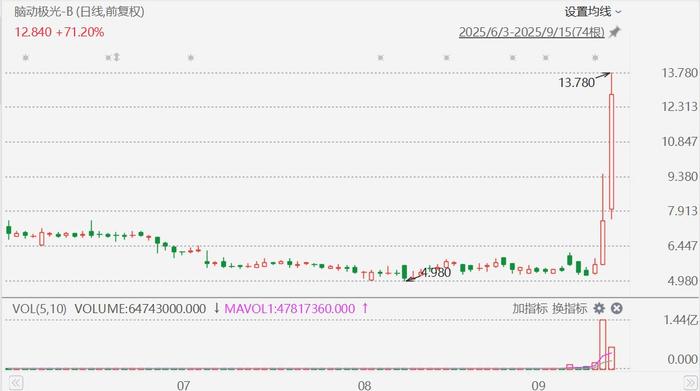
港股市场脑机接口概念股脑动极光-B拉升大涨超80%,为连续第三日上涨,股价创上市新高!成交额放大至7亿港元
Ge Long Hui· 2025-09-15 02:47
格隆汇9月15日|港股市场脑机接口概念股脑动极光-B(6681.HK)拉升大涨超80%,报13.78港元,为连续 第三日上涨,股价创上市新高,截至目前成交额放大至7亿港元。 (责任编辑:宋政 HN002) 【免责声明】本文仅代表作者本人观点,与和讯网无关。和讯网站对文中陈述、观点判断保持中立,不对所包含内容 的准确性、可靠性或完整性提供任何明示或暗示的保证。请读者仅作参考,并请自行承担全部责任。邮箱: news_center@staff.hexun.com ...
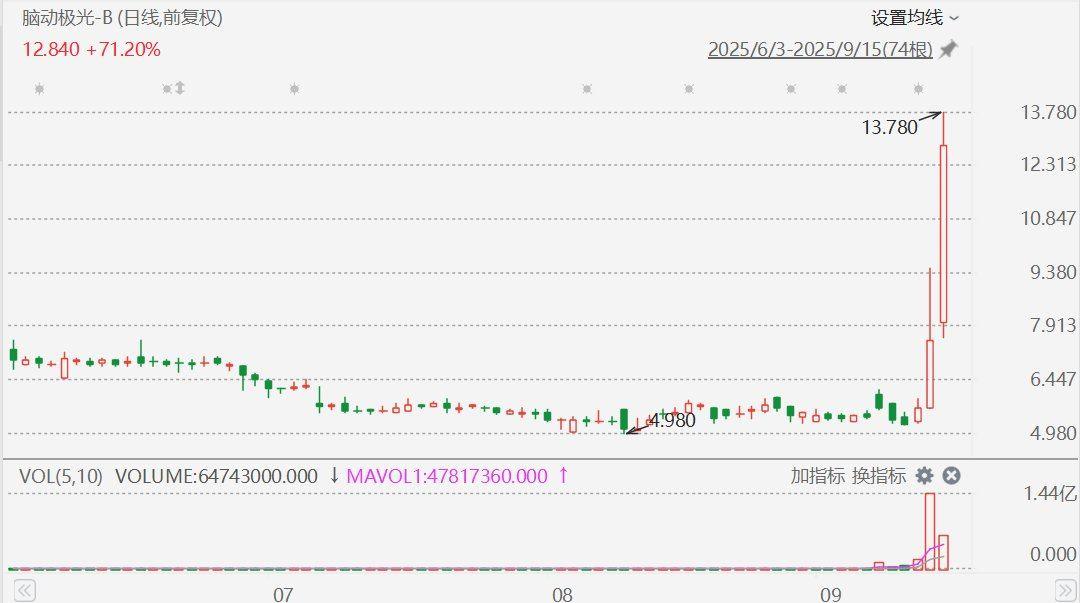
脑动极光-B(6681.HK)放量拉升大涨超80%,创历史新高
Ge Long Hui A P P· 2025-09-15 02:33
格隆汇9月15日|港股市场脑机接口概念股脑动极光-B(6681.HK)拉升大涨超80%,报13.78港元,为连续 第三日上涨,股价创上市新高,截至目前成交额放大至7亿港元。 ...