
电力

Search documents
AI的故事,正在从「软件吞噬世界」,演变为「硬件被世界卡住」
硬AI· 2026-02-08 06:18
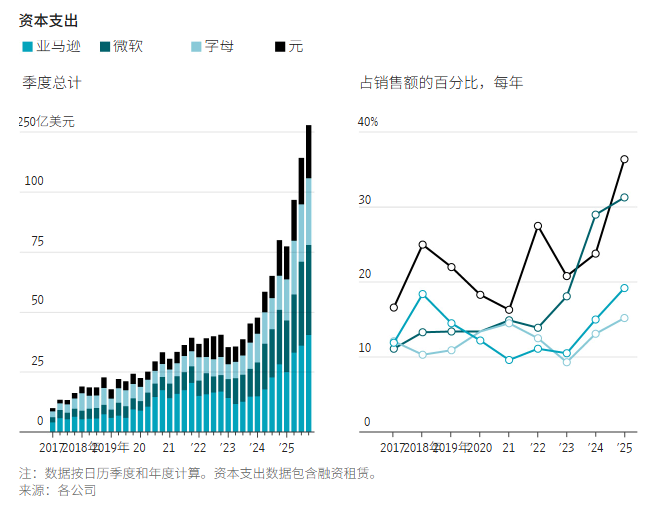
Core Viewpoint - The article discusses the overlooked risk in AI investments, particularly the potential inability to utilize massive capital expenditures due to political and physical constraints on data center construction and operation [4][8][12]. Group 1: Political Environment - A rare bipartisan consensus has emerged between Senator Bernie Sanders and Governor Ron DeSantis regarding the need to halt the rapid increase of data centers, driven by public concerns over the negative impacts of AI [9][11]. - Public protests against data centers have intensified, citing issues such as noise pollution, water resource depletion, and rising electricity costs for local communities [11][12]. - Legislative actions are being proposed in various states, including Arizona, Georgia, and Virginia, to either eliminate tax incentives or impose moratoriums on new data center projects [11][12]. Group 2: Capital Expenditure and Market Dynamics - Major tech companies, including Microsoft, Meta, Amazon, and Google, plan to spend approximately $670 billion on AI infrastructure, raising questions about whether this capital can be effectively deployed [15][17]. - The scale of this capital expenditure is comparable to historical projects like the Apollo program and the interstate highway system, indicating its significance in the U.S. economy [17][20]. - Amazon alone plans to increase its capital expenditure by nearly 60% to $200 billion this year, primarily for data center construction [17]. Group 3: Physical Constraints - The current U.S. electrical grid is unable to meet the anticipated energy demands of new data centers, which are projected to double their energy consumption by 2035 [20][21]. - In Texas, the ERCOT has proposed a review of approximately 8.2 gigawatts of power consumption projects, causing delays in previously approved data center projects [21]. - The uncertainty surrounding the electrical grid's capacity is jeopardizing the expansion plans of tech giants, leading to a potential failure to utilize the allocated $670 billion budget for AI development [21][22]. Group 4: Market Reactions - The financial markets have reacted sharply to the realization that the risk of "money not being spent" is becoming a reality, leading to significant sell-offs in tech stocks [22][26]. - Companies in the independent power producer sector, previously seen as beneficiaries of AI growth, have also suffered declines due to fears that new energy demands cannot be met [24][26]. - The market is facing a dilemma: either believe in the miraculous expansion of the electrical grid to accommodate the $600 billion in capital expenditures or acknowledge the physical limitations that could lead to a collapse of the AI investment bubble [22][26].


宏观经济观察系列(十三):新春政策十大动向
Western Securities· 2026-02-08 05:59
Economic Goals - GDP growth targets for most provinces are set around 5%, with Sichuan and Hubei at approximately 5.5%, and Tibet exceeding 7%[8] - Guangdong's growth target is set between 4.5% and 5%[8] Diplomatic Engagements - Frequent diplomatic activities include meetings between Chinese and foreign leaders, with expectations for upcoming meetings between China and the US, Germany, and others[9] Macro Policy Direction - The macro policy emphasizes "stability while seeking progress" and aims to promote a reasonable recovery in prices, focusing on domestic circulation and the real economy[10] Investment Strategy - Investment will focus on both physical and human capital, with an emphasis on increasing the proportion of investments in people's livelihoods[13] Consumer Growth - Expanding domestic demand is prioritized, with initiatives to support consumption upgrades and new growth points in service consumption[15] Unified Market Development - Key sectors such as electricity, transportation, technology, and data are targeted for breakthroughs in the construction of a unified national market[20] Agricultural Modernization - The focus shifts to agricultural modernization, emphasizing food security and improving agricultural quality and efficiency[21] Energy Transition - The dual control of energy consumption is transitioning to carbon emissions control, with a planned investment of 4 trillion yuan in the new power system during the 14th Five-Year Plan[22] Technological Innovation - Local governments are encouraged to develop new productive forces, with a focus on building international technology innovation centers in key regions[23] Urban Development - A multi-level modern urban system is being constructed, with efforts to enhance the capital metropolitan area and promote regional coordinated development[24]
AI交易“被忽视的风险”:万一,天量资本开支“花不出去”
Hua Er Jie Jian Wen· 2026-02-08 02:17
Group 1 - The core narrative is that the story of AI is shifting from "software eating the world" to "hardware being constrained by the world," highlighting a growing risk in the investment landscape due to political and physical limitations on data center expansion [1][15] - A rare bipartisan consensus has emerged between Senator Bernie Sanders and Governor Ron DeSantis regarding the need to halt the rapid increase of data centers, driven by public concerns over the negative impacts of AI [2][3] - The political landscape is changing, with states like New York, Arizona, Georgia, and Texas considering legislation to pause new data center projects or eliminate tax incentives, reflecting a growing backlash against the expansion of AI infrastructure [2][3] Group 2 - The anticipated capital expenditure of approximately $600 billion in 2026 faces skepticism regarding its feasibility, as major tech companies plan to spend $670 billion on AI infrastructure this year alone [4][6] - The energy demand from data centers is projected to double by 2035, raising concerns about whether the current U.S. power grid can meet this demand, which is already causing regulatory issues in Texas [8][9] - The financial markets are reacting to the risk of unspent capital, leading to significant sell-offs in tech stocks and a shift towards defensive sectors, indicating a potential reevaluation of the AI investment landscape [10][12][13]




科技改造赋能筑牢电力保供屏障 多举措护航百姓生产生活
Yang Shi Wang· 2026-02-08 01:53
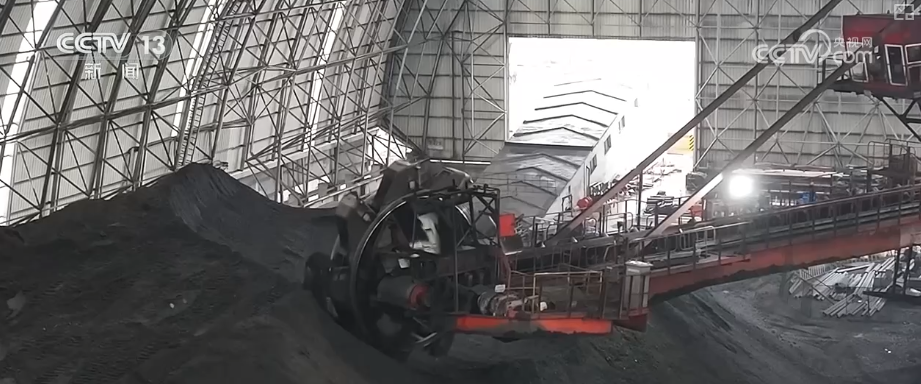
Group 1 - The core point of the article highlights the efforts of Anhui Zhongmei Xuancheng Power Plant to enhance coal supply stability during the winter energy peak by completing a coal storage transformation project [1][3] - The plant implemented a coal storage transformation for two units using shrimp curve external storage technology, addressing industry challenges such as precise coal blending and peak storage [3] - The technology allows for strong equipment compatibility, enabling precise co-firing of multiple coal types and significantly improving the peak response and wide-load operation capabilities of the units [3] Group 2 - In response to the severe cold weather affecting Jiangsu Changzhou, local measures have been taken to ensure orderly fruit and vegetable production [5] - The Tianmu Lake Strawberry Garden in Changzhou, a key supplier of winter strawberries, produces 450,000 pounds of high-quality strawberries annually and has reinforced greenhouses to mitigate the impact of low temperatures [7] - The State Grid Changzhou Power Supply Company conducted safety inspections on temperature control equipment and other electrical facilities to eliminate potential hazards caused by low-temperature and snowy weather [8]
福建:持续强化5G、5G-A、千兆光网的深度覆盖,统筹算力基础设施和物联感知设施建设
Mei Ri Jing Ji Xin Wen· 2026-02-08 00:59
Core Viewpoint - The implementation opinions issued by the Fujian Provincial Committee and the Fujian Provincial People's Government focus on promoting high-quality urban development through infrastructure improvements and modernization initiatives [1] Group 1: Infrastructure Development - The plan emphasizes the need to enhance urban infrastructure, including accelerating the construction of metro projects in Fuzhou and Xiamen [1] - It aims to optimize the urban road network structure, addressing bottlenecks and improving urban freight networks [1] - There is a focus on strengthening the construction of parking and charging facilities [1] Group 2: Digital and Smart Infrastructure - The initiative includes a commitment to deepen the coverage of 5G, 5G-A, and gigabit optical networks, while promoting the development of data infrastructure in suitable cities [1] - It encourages the modernization and digital transformation of traditional infrastructure, including the construction of underground comprehensive utility tunnels [1] Group 3: Water Management and Disaster Resilience - The plan outlines the acceleration of modern water network construction to enhance flood disaster prevention, water resource management, and urban-rural water supply security [1] - It also promotes the high-quality development of urban distribution networks [1]
新华财经早报:2月8日
Xin Hua Cai Jing· 2026-02-08 00:28
Group 1 - China's gold reserves increased by 40,000 ounces in January, marking the 15th consecutive month of accumulation, bringing the total to 74.19 million ounces (approximately 2,307.57 tons) [1] - The ratio of total social logistics costs to GDP in China is projected to drop to 13.9% by 2025, the first time below 14%, a decrease of 0.8 percentage points compared to the end of the 13th Five-Year Plan [1] - The International Energy Agency predicts that by 2030, renewable energy and nuclear power will account for 50% of global electricity generation [2] Group 2 - The global ETF market reached a total asset size of $19.7 trillion by the end of 2025, with an annual compound growth rate exceeding 20% over nearly 20 years [1] - The number of ETF products listed on domestic exchanges in China reached 1,381 by the end of 2025, a 35.7% increase from the end of 2024, with total assets growing by 61.4% to 6.02 trillion yuan [1] Group 3 - Germany's economy has faced cumulative losses close to 1 trillion euros since 2020 due to geopolitical conflicts, energy price fluctuations, and trade tensions, with 2025 alone accounting for about a quarter of this total [3] - In 2025, Germany's economy achieved a modest real growth of 0.2%, narrowly avoiding a third consecutive year of stagnation, although the overall recovery remains weak [3]

可再生能源与核电2030年将提供全球一半电力
Xin Lang Cai Jing· 2026-02-07 20:47
Core Insights - The International Energy Agency (IEA) predicts that global electricity demand will grow at an average annual rate of over 3.5% from now until 2030, with renewable energy and nuclear power together accounting for 50% of the global electricity mix by 2030 [1] Group 1: Electricity Demand Growth - Electricity demand growth is expected to be at least 2.5 times that of overall energy demand, driven by increased industrial electricity use, the ongoing adoption of electric vehicles, rising air conditioning usage, and increased electricity consumption from data centers and artificial intelligence [1] - Emerging and developing economies remain the primary engines of electricity demand growth, while developed economies are beginning to see an increase in electricity consumption after 15 years of stagnation [1] Group 2: Renewable Energy and Nuclear Power - Global renewable energy generation is on track to surpass coal-fired generation, with record deployment of solar power facilities; the latest data indicates that both sources will be nearly equal by 2025 [1] - Nuclear power generation is also reaching new records, and by 2030, renewable energy and nuclear power combined are expected to provide 50% of global electricity, up from the current 42% [1] Group 3: Coal Power Decline - As renewable energy develops, the share of coal-fired generation in the global electricity mix is expected to decline, projected to return to 2021 levels by 2030 [1] - Consequently, carbon emissions in the global power sector are expected to remain relatively stable from now until 2030 [1]
湖南:新春奋进,实干兴湘
Xin Lang Cai Jing· 2026-02-07 20:46
Group 1: Project Construction and Economic Development - The construction of key projects in Hunan is actively progressing, with over 1,000 personnel and more than 50 pile machines on-site for the Changsha Olympic Sports Center project [4] - Hunan plans to implement 389 provincial key projects with a total investment of 2 trillion yuan, focusing on ten infrastructure and ten industrial projects to support high-quality economic development [5] Group 2: Consumer Market and "Trade-in" Policy - The "trade-in" policy for consumer goods is effectively stimulating demand, with significant subsidies for replacing old appliances and vehicles, including up to 20,000 yuan for scrapping old cars and purchasing new energy vehicles [7] - The consumer market in Hunan is experiencing a "renewal wave," with increased activity in various sectors, including home appliances, automobiles, and digital products, driven by the trade-in incentives [7][8] Group 3: Energy Supply and Food Safety - As the Spring Festival approaches, Hunan is enhancing its energy supply measures, ensuring stable electricity and gas delivery to meet rising demand during the holiday season [9] - Food safety regulations are being strengthened, with comprehensive inspections in key areas to ensure the safety and availability of food supplies during the festive period [9]

每周股票复盘:明星电力(600101)每股派现0.04元(含税)
Sou Hu Cai Jing· 2026-02-07 19:00
Core Viewpoint - The stock price of Ming Star Power (600101) increased by 0.6% to 10.09 yuan as of February 6, 2026, with a market capitalization of 5.528 billion yuan, ranking 80th in the power sector and 3246th in the A-share market [1] Company Announcements - Ming Star Power announced a cash dividend of 0.04 yuan per share (tax included), with the record date set for February 11, 2026 [1] - The total cash dividend distribution amounts to approximately 21.91 million yuan (tax included), based on a total share capital of 547,862,471 shares [1] - The ex-dividend date is February 12, 2026, and the cash dividend payment date is also February 12, 2026 [1]

宁夏累计外送电量突破9000亿千瓦时大关
Jin Rong Jie· 2026-02-07 13:51
Core Insights - Ningxia's cumulative electricity export has surpassed 900 billion kilowatt-hours, reaching 900.2 billion kilowatt-hours, equivalent to the conversion of 260 million tons of standard coal and a reduction of 680 million tons of carbon dioxide, significantly contributing to national energy security and green low-carbon transition [1] Group 1 - The "West-East Power Transmission" initiative was officially launched in Ningxia with the operation of the Silver-East DC in 2010, followed by the Ling-Shao DC in 2016, which accelerated electricity exports [1] - From 2016 to 2021, Ningxia's electricity export volume achieved a continuous annual increase of over 10 billion kilowatt-hours for six consecutive years [1] - The total export capacity of Ningxia reached 20 million kilowatts, covering 19 provinces and municipalities across the country, with the proportion of renewable energy in electricity exports increasing from less than 10% a decade ago to nearly 30% currently [1]