高等教育

Search documents
多所“双一流”高校 扩大在豫招生规模
Zheng Zhou Ri Bao· 2025-06-30 00:56
Group 1 - Several top-tier universities in China are expanding their enrollment in Henan province to cultivate high-quality talent for national technological innovation and economic development [1][2][3][4][5][6] - Peking University plans to enroll 143 students in Henan, an increase of 13 from last year, focusing on national strategic needs and emerging fields [1] - Tsinghua University aims to enroll 101 students, with an emphasis on cultivating interdisciplinary talents in artificial intelligence [1][2] Group 2 - Harbin Institute of Technology plans to enroll 131 students at its main campus and 211 at its Weihai campus, focusing on innovative talent in automation and artificial intelligence [2] - Fudan University is set to enroll 151 students in Henan, including 26 spots for new engineering programs in integrated circuits and artificial intelligence [2] - Shanghai Jiao Tong University plans to enroll 141 students, emphasizing the development of artificial intelligence and electronic information disciplines [3] Group 3 - Nanjing University maintains a stable enrollment of 98 students in Henan, introducing new dual-degree programs and focusing on critical talent in key fields [3] - Zhejiang University is increasing its enrollment to 188 students, with new programs in artificial intelligence and smart manufacturing [4] - The University of Science and Technology of China plans to enroll 135 students, focusing on foundational disciplines and new engineering fields [4] Group 4 - Xi'an Jiaotong University plans to enroll 349 students, with a focus on emerging technologies such as artificial intelligence and energy storage [5] - Wuhan University aims to enroll 655 students, with a focus on AI and new professional programs to meet national strategic needs [5] - Nankai University plans to enroll 203 students, emphasizing personalized education and new engineering programs [5] Group 5 - Beijing Jiaotong University plans to enroll 254 students, introducing specialized programs in transportation and system science [6]
民办高校生存困境
投资界· 2025-06-29 07:26
Core Viewpoint - The article discusses the evolving landscape of higher education in China, particularly focusing on the emergence of private research-oriented universities like Ningbo Oriental Institute of Technology, and the implications of rising tuition fees and declining birth rates on enrollment and the value of degrees [3][5][18]. Group 1: Overview of Ningbo Oriental Institute of Technology - Ningbo Oriental Institute of Technology is a new research-oriented university established in June 2020, supported by local and national funding, and has attracted notable faculty and research funding [3][5]. - The university's tuition fee is set at 96,000 yuan per student per year, which is considered high compared to other prestigious institutions, but it offers a scholarship that effectively allows the first cohort of undergraduate students to attend for free [5][7]. - The pricing strategy reflects a blend of educational quality and commercial acumen, aiming to attract students while leaving room for future tuition increases [6][7]. Group 2: Trends in Private Higher Education - The article notes that several private universities have ceased enrollment over the past decade due to various challenges, including financial difficulties and regulatory issues, while public universities have faced fewer closures [10][12]. - The funding model for public universities relies heavily on government allocations, while private institutions depend on tuition fees, making them more susceptible to market fluctuations, particularly employment rates and birth rates [12][18]. Group 3: Demographic Changes and Their Impact - China's higher education enrollment has increased from 7.3 million in 2015 to an expected 10.68 million in 2024, driven by a population that saw annual births between 20 million and 15 million during that period [14]. - However, a significant decline in birth rates began in 2019, with the number of newborns dropping below 15 million, leading to projections that by 2040, the number of students entering higher education could fall to between 5 million and 6 million [14][15]. - This demographic shift is expected to create a surplus of higher education capacity, potentially leading to a reduction in the number of institutions or enrollment numbers across various programs [16][18]. Group 4: The Changing Value of Degrees - The article argues that the value of higher education degrees has shifted from being a scarce resource to a commodity, resulting in a "seller's market" for degrees, which could exacerbate issues of oversupply in the job market [18][19]. - As the number of degrees increases, the distinction between degrees from top-tier universities and those from lesser-known institutions may diminish, impacting the perceived value of all degrees [19]. - To navigate this changing landscape, institutions like Ningbo Oriental Institute of Technology are adopting strategies to establish their brand and attract quality students, recognizing the need for differentiation in a crowded market [19][20].

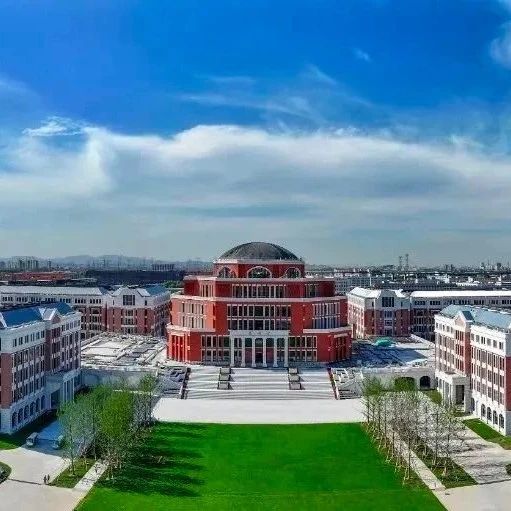
中国人民大学携手西湖大学成立未来人类联合研究院
Xin Jing Bao· 2025-06-29 06:50
Core Insights - The establishment of the "China Renmin University-Westlake University Future Humanity Research Institute" aims to address major challenges and breakthroughs in human civilization evolution, led by Chinese youth to benefit humanity [1][2] - The institute is the first interdisciplinary research platform in China focusing on future human development, integrating resources from both universities to explore cutting-edge topics in humanities, technology, and social development [1][2] Key Topics - The "Top Ten Future Humanity Issues" include: human origin evolution, life health and future forms, digital mind and self-twinning, science and art, existential risks and future security, social change and digital governance, value systems and philosophical transformation, global cooperation and intelligent co-governance, multi-agent decision-making and complex conflicts, space exploration and interstellar civilization, civilization conflict and coexistence mechanisms [2] - Many of these topics are related to artificial intelligence, highlighting the relevance of AI in future human studies [2] Research Platform - The "Future Humanity Research Platform" was officially launched, utilizing blockchain technology to provide an immutable protection mechanism for intellectual property, supporting global youth scholars and students to initiate innovative projects in fields such as artificial intelligence, quantum computing, and life sciences [3]
广西统筹20.8亿元保障高校毕业生就业
Guang Xi Ri Bao· 2025-06-29 03:02
Group 1 - The core viewpoint is that Guangxi is allocating a total of 2.08 billion yuan to support stable employment for college graduates by coordinating central and regional funds [1] - The government is enhancing employment capacity by collaborating with the market, including a 100 million yuan allocation to support small and micro enterprises in hiring, resulting in 10,500 job placements for college graduates from January to May [1] - A total of 1.149 billion yuan is designated for grassroots service projects, including programs for "special post teachers" and "Western plan" initiatives, as well as tuition reimbursement policies for graduates working in grassroots positions [1] Group 2 - Financial support for college graduates includes 124 million yuan for guaranteed loan interest subsidies, with nearly 40 million yuan in loans issued from January to May [2] - A one-time job-seeking and entrepreneurship subsidy of 200 million yuan is planned, expected to support over 120,000 college graduates [2] - The government is investing 1.68 billion yuan in vocational education to address labor shortages in certain industries and has conducted subsidized vocational training for 3,400 graduates from January to May [2]
中国高校第一省,又变了
虎嗅APP· 2025-06-29 02:34
Group 1 - The article discusses the significant changes in the landscape of higher education in China, highlighting the establishment of new universities and the expansion of existing ones [4][5][6] - Since 2025, 57 new undergraduate universities and over 40 vocational colleges have been established, with a notable focus on "upgrading" vocational colleges to undergraduate status [5][14][33] - As of now, China has over 2,800 higher education institutions, with more than 1,200 being undergraduate universities and nearly 1,600 vocational colleges [6] Group 2 - The distribution of universities across provinces shows that 12 provinces have more than 100 universities, with Henan leading with 178 institutions, surpassing traditional educational powerhouses like Jiangsu and Shandong [10][11] - The article emphasizes that while Henan has increased its number of universities, many are vocational colleges, which raises questions about the quality of education [12][13][22] - The article also points out that the expansion of vocational colleges in Henan is a strategic response to the region's industrial needs and the current educational landscape [30][31][32] Group 3 - The article highlights the disparity in the quality of universities across provinces, noting that while there are many institutions, there is a lack of high-quality universities [36][40] - It mentions that the distribution of top-tier universities, such as "Double First Class" and "985" universities, is heavily concentrated in a few provinces, particularly Beijing, Jiangsu, and Shanghai [42][46] - The need for quality improvement in higher education is emphasized, suggesting that the focus should shift from merely increasing the number of universities to enhancing their quality [41][50] Group 4 - The article discusses the challenges faced by the higher education sector due to declining birth rates and a shrinking student population, which may lead to a future surplus of universities [36][38][39] - It suggests that while there is a push to build more universities, the actual need may diminish as the student population decreases [39][44] - The article concludes that not every region needs to build more universities, but there is a universal need to improve the quality of existing institutions [50][51]

@所有考生,今年高校招录有这些新变化
Zhong Guo Xin Wen Wang· 2025-06-28 13:23
Group 1: Admission Policies - Several universities have implemented "zero adjustment" policies, ensuring that students will be admitted to one of their chosen majors without being transferred to other programs if they meet the requirements [1] - Xiamen University and Sun Yat-sen University have specific policies that guarantee admission to the selected major if students fill out their choices without repetition and pass health checks [1] - Beijing University of Posts and Telecommunications has introduced a "6保1" policy, allowing students to choose six majors without repetition, ensuring admission to one of their selected majors [1] Group 2: Major Transfer Policies - Many universities have relaxed their major transfer policies, allowing students greater flexibility in changing their fields of study [2] - Xiamen University will fully open its undergraduate major transfer policy, removing restrictions on the number of transfers and the year of study [2] - West China University of Transportation allows students to transfer to various specialized programs without any prerequisites, with applications accepted at the end of each academic year [2] Group 3: Subject Requirements for Traditional Chinese Medicine Programs - Several traditional Chinese medicine universities have adjusted their subject requirements for certain programs, with some no longer specifying subject prerequisites [3][4] - For example, Anhui University of Chinese Medicine has removed subject requirements for programs like Traditional Chinese Medicine and Acupuncture [3] - Beijing University of Chinese Medicine has also made adjustments, allowing for more flexibility in subject selection for certain programs [4] Group 4: Enrollment Expansion in "Double First-Class" Universities - The Ministry of Education has announced an expansion in undergraduate enrollment for "Double First-Class" universities, with several institutions increasing their admission quotas [6] - Tsinghua University and Peking University are each adding 150 undergraduate spots, while other universities like Shanghai Jiao Tong University and Shandong University are also expanding their enrollment [6] - New enrollment plans focus on emerging fields such as artificial intelligence, integrated circuits, and biomedical sciences, with some universities introducing unique programs like a "pet" undergraduate major [6]

密集迎来“新”大学,为城市竞争格局打开想象空间
Yang Shi Wang· 2025-06-28 07:50
Group 1 - The core point of the articles highlights the emergence of new universities in China, particularly three new research-oriented universities: Fujian Fuyao University of Science and Technology, Greater Bay Area University, and Ningbo Oriental Institute of Technology, which are designed to enhance local higher education capabilities and align with regional economic needs [1][2][5]. - As of June 20, 2025, there are a total of 3,167 higher education institutions in China, with 57 universities undergoing name changes or restructuring and 55 new institutions established compared to 2024 [1]. - The new universities are characterized by a "small but excellent" approach, with initial enrollment numbers below 100, contrasting with larger institutions [1][7]. Group 2 - The relationship between universities and cities is crucial, as universities serve as key assets for urban development, attracting talent and fostering innovation [2][3]. - Cities like Fuzhou, Dongguan, and Ningbo, which have recently established new universities, lack top-tier institutions, highlighting a gap between economic strength and educational resources [2][3]. - The establishment of new universities is seen as a significant opportunity for cities with strong economies but limited higher education options, providing a means to enhance their educational landscape [2][9]. Group 3 - The new research-oriented universities differ from traditional institutions in their educational models, focusing on interdisciplinary studies and aligning closely with technological advancements and local industry needs [5][6]. - For instance, Ningbo Oriental Institute of Technology emphasizes cutting-edge fields such as artificial intelligence and integrated circuits, while Greater Bay Area University promotes dynamic interdisciplinary centers [5][6]. - These institutions adopt a "small and precise" educational model, ensuring personalized mentorship for students, which is a departure from conventional large-scale university systems [7][11]. Group 4 - The trend of establishing new universities reflects a broader strategy among economically strong cities to address educational shortcomings and adapt to the demands of technological and industrial changes [9][10]. - Cities like Shenzhen and Qingdao have successfully increased their number of higher education institutions through partnerships and collaborations, enhancing their educational quality and capacity [9][10]. - The rise of new universities represents a shift towards more innovative and flexible educational frameworks, allowing cities to better meet their specific developmental needs [10][11].
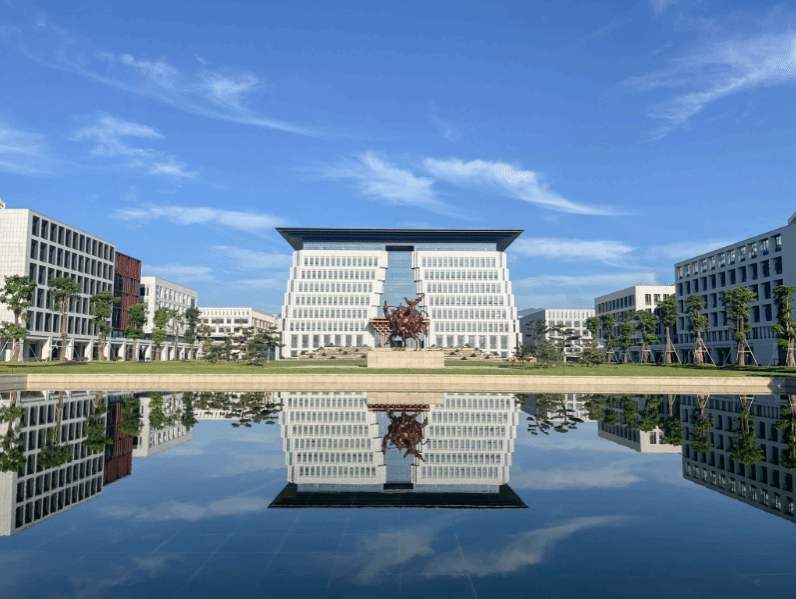
在普洱,把咖啡豆种进学分:新职业图谱下的高校专业调适
2 1 Shi Ji Jing Ji Bao Dao· 2025-06-27 09:23
Group 1 - The establishment of the Coffee Science and Engineering undergraduate program at Yunnan Agricultural University marks the first of its kind in China, attracting students from 11 provinces and reflecting a growing interest in specialized fields related to lifestyle and leisure [1][2][4] - The program's enrollment plan for 2025 has increased from 100 to 240 students, indicating a strong demand for education in this area [2][4] - The curriculum includes courses such as coffee flavor chemistry, coffee processing, and coffee quality and safety testing, aimed at cultivating versatile talents for the coffee industry [5][6] Group 2 - The coffee industry in China has seen significant growth, with a market size reaching 265.4 billion yuan in 2023 and an average annual growth rate of 17.14% over the past three years [6] - There is a notable shortage of high-skilled talent in the coffee industry, particularly in roasting and processing, despite a sufficient supply of agricultural management professionals [6] - The rise of "lifestyle majors" like the Coffee Science program is driven by personal interests and industry demands, with similar trends observed in other fields such as pet care [7][9] Group 3 - The pet care industry in China has also expanded, with a market size exceeding 300 billion yuan in 2024 and a compound annual growth rate of 11.9% over the past decade [7] - New professions related to lifestyle improvements, such as coffee processing and pet training, are emerging, reflecting the evolving job market and the need for specialized skills [10][11] - The development of these new fields is contingent upon the job market's response to graduates, with evidence suggesting that new profession graduates enjoy higher employment quality metrics [10][12]
中东留学:用孤独换机遇,中国学生的“勇敢者游戏”
3 6 Ke· 2025-06-27 08:24
Group 1 - KAUST has rapidly gained recognition and influence in academia, with 940 graduate students, 69% of whom are international, and approximately 700 Chinese students, making them the largest foreign group [2][3] - The Middle East, particularly Saudi Arabia and the UAE, is increasingly attracting Chinese students due to the favorable academic environment and scholarship opportunities, contrasting with the barriers faced by students wishing to study in the US [3][4][15] - KAUST offers a unique research environment with abundant funding and resources, allowing students to focus solely on their research without financial concerns, which is a significant draw for many [6][8][27] Group 2 - The Middle East is perceived as a melting pot of cultures, providing a diverse and international atmosphere for students, which contrasts with the more homogeneous environments often found in Western countries [11][12] - Despite the appeal of studying in the Middle East, there are challenges regarding local employment opportunities for foreign graduates, as local companies often prefer hiring nationals or those with Western educational backgrounds [18][19] - The region is experiencing significant economic growth, with GCC countries showing GDP growth rates above the global average, making it an attractive destination for international students seeking opportunities [26][27]

课堂无缝对接产业线 华东理工大学在“实战”中推进卓越工程师培养
Zhong Guo Xin Wen Wang· 2025-06-27 07:09
Group 1 - The core viewpoint of the article emphasizes the importance of practical engineering training in developing high-level innovative engineering talents, as illustrated by the experience of Zhang Yubo, a graduate from East China University of Science and Technology [1][3]. - The "Excellence Engineer Training Reform" program initiated in 2022 aims to align talent development with national strategies and urgent engineering projects, attracting students like Zhang Yubo to participate [1][4]. - Zhang Yubo's successful job placement at AVIC Commercial Aircraft Engine Co., Ltd. is attributed to the university's innovative training model, which integrates academic and industry expertise [3][4]. Group 2 - The university employs a "Five Ones" model to enhance the training of excellence engineers, focusing on project-driven topics, top-tier academic support, customized training plans, and integrated learning experiences [3][4]. - The curriculum includes over 120 core courses and specific programs like "Artificial Intelligence+" and industry joint courses, ensuring that classroom learning is synchronized with industry advancements [4][5]. - A notable example of this approach is the "Biocatalysis and Molecular Engineering" course, which combines theoretical knowledge with practical training, allowing students to tackle real industry challenges alongside corporate mentors [4][5].