
非银金融

Search documents
A股一天成交2.3万亿元!有人狂欢有人慌:3700点得而复失,牛市还在吗?
Hua Xia Shi Bao· 2025-08-14 12:42
3700点得而复失 8月14日,A股三大指数基本平开,盘初集体小幅震荡上扬,上证指数一度突破3700点关口,为2021年 12月以来首次;创业板指一度冲破2500点,为2024年10月以来首次。然而,临近午间收盘,三大指数集 体震荡走弱,相继转为下跌。午后,上证指数虽一度顽强翻红,但尾盘再度下跌。 截至收盘,上证指数跌0.46%,报3666.44点;深证成指跌0.87%,报11451.43点;创业板指跌1.08%,报 2469.66点。此外,沪深300指数微跌0.08%,北证50指数跌1.99%,科创50指数逆势上涨0.75%。 Wind数据显示,A股全天成交额达2.3万亿元,较前一日放量逾700亿元,创下年内单日成交额新高,同 时也是去年"924"行情以来第十高。 从盘面上看,31个申万一级行业板块多数下跌,仅非银金融板块小幅上涨0.59%;综合、国防军工、通 信板块跌幅居前,跌幅均超2%;银行、食品饮料、家用电器板块跌幅居末,跌幅分别为0.02%、 0.16%、0.32%。 热门概念板块中,电子身份证、芬太尼、脑机接口、数字货币、跨境支付等少数几个板块逆势上涨,兵 装重组、中船系、房屋检测、共封装光学、特 ...


【14日资金路线图】两市主力资金净流出超540亿元 非银金融行业实现净流入
证券时报· 2025-08-14 11:14
Market Overview - The A-share market experienced an overall decline on August 14, with the Shanghai Composite Index down by 0.46%, the Shenzhen Component down by 0.87%, and the ChiNext Index down by 1.08%. The total trading volume across both markets reached 22,792.09 billion yuan, an increase of 1,282.72 billion yuan compared to the previous trading day [1]. Capital Flow - The net outflow of main funds from the Shanghai and Shenzhen markets exceeded 54 billion yuan, with an opening net outflow of 18.24 billion yuan and a closing net outflow of 6.397 billion yuan, totaling a net outflow of 54.342 billion yuan for the day [2][3]. - In the last five trading days, the main funds showed a consistent trend of outflow, with the largest outflow recorded on August 12 at 231.99 billion yuan [3]. Sector Performance - The ChiNext market saw a significant net outflow of over 26 billion yuan, while the CSI 300 index experienced a net outflow of 5.884 billion yuan [4]. - The non-bank financial sector was the only sector to achieve a net inflow of 1.874 billion yuan, while other sectors such as electronics and machinery equipment faced substantial outflows, with electronics seeing a net outflow of 23.152 billion yuan [6]. Institutional Activity - The top stocks with net inflows from institutions included Youfang Technology, with a rise of 20.01% and a net institutional purchase of 76.3192 million yuan, and Innovation Medical, which rose by 10.02% with a net purchase of 72.3547 million yuan [9]. - Conversely, stocks like Beixin Road and Bridge and Zhongwei Technology faced significant net selling from institutions, with net outflows of 49.40 million yuan and 80.03 million yuan, respectively [9]. Institutional Focus - Recent institutional ratings highlighted several stocks with potential upside, including Baoneng New Energy, rated as a "Buy" with a target price of 5.95 yuan, representing a potential increase of 27.41% from its latest closing price [11].

34股特大单净流入资金超2亿元
Zheng Quan Shi Bao Wang· 2025-08-14 10:22
Market Overview - The two markets experienced a significant net outflow of 37.726 billion yuan, with 1,510 stocks seeing net inflows and 3,419 stocks experiencing net outflows [1] - The Shanghai Composite Index closed down by 0.46% [1] Industry Analysis - Among the Shenwan first-level industries, four sectors saw net inflows from large orders, with the computer sector leading at a net inflow of 999.7 million yuan, despite a 0.57% decline in its index [1] - The non-bank financial sector also saw a net inflow of 625 million yuan and an increase of 0.59% [1] - The defense and military industry had the highest net outflow, totaling 5.890 billion yuan, followed by machinery equipment with a net outflow of 4.422 billion yuan [1] Individual Stock Performance - A total of 34 stocks had net inflows exceeding 200 million yuan, with Huasheng Tiancheng leading at 1.585 billion yuan [2] - Other notable stocks with significant net inflows include Ningde Times at 1.441 billion yuan and Sifang Jingchuang at 1.224 billion yuan [2] - Stocks with the highest net outflows included Changcheng Military Industry at 1.299 billion yuan and China Great Wall at 1.045 billion yuan [2][4] Stock Price Movements - Stocks with net inflows over 200 million yuan saw an average increase of 7.32%, outperforming the Shanghai Composite Index [2] - Specific stocks that closed at their daily limit include Changcheng Securities and COFCO Sugar [2] Sector Concentration - The stocks with the highest net inflows were concentrated in the computer, non-bank financial, and electronics sectors, with 8, 4, and 4 stocks respectively [2]




风险因子及风险控制系列之二:共同风险、特质风险的计算及应用
Xinda Securities· 2025-08-14 10:04
Quantitative Models and Construction Methods Factor Covariance Matrix and Specific Volatility - **Model Name**: Factor Covariance Matrix - **Construction Idea**: The factor covariance matrix is used to capture the dynamic co-variation relationships between factors, providing a systematic framework for understanding market risk transmission mechanisms[3][18] - **Construction Process**: 1. **EM Algorithm**: Used to fill missing values in factor returns. The E-step estimates the conditional expectation of missing values, while the M-step re-estimates parameters iteratively until convergence Formula: $E[f_{mis}|f_{obs}]=\mu_{mis}+\Sigma_{mis,obs}\Sigma_{obs,obs}^{-1}(f_{obs}-\mu_{obs})$[21] Log-likelihood function: $L(\mu,\Sigma)=-\frac{T}{2}\big(D ln(2\pi)+\ln\big(\operatorname*{det}(\Sigma)\big)\big)-\frac{1}{2}\sum_{t=1}^{T}(f_{t}-\mu)^{\prime}\Sigma^{-1}(f_{t}-\mu)$[22] 2. **Half-life Weighted Adjustment**: Assigns exponentially decaying weights to historical data, emphasizing recent data[26] 3. **Newey-West Adjustment**: Corrects for heteroskedasticity and autocorrelation in time series data Formula: $\Sigma_{NW}=\Sigma_{0}+\sum_{i=1}^{L}w_{i}(\Sigma_{i}+\Sigma_{i}^{\prime})$[28] 4. **Eigenfactor Adjustment**: Addresses systematic underestimation of low-risk factor combinations using Monte Carlo simulations[35][38] 5. **Volatility Regime Adjustment (VRA)**: Adjusts factor volatilities to account for cross-sectional biases Formula: $\lambda_{F}=\sqrt{\sum_{t}(B_{t}^{F})^{2}w_{t}}$ $\tilde{\sigma}_{k}=\lambda_{F}\sigma_{k}$[53][54] - **Evaluation**: The factor covariance matrix effectively captures market co-variation relationships and provides reliable inputs for portfolio optimization[18][85] - **Model Name**: Specific Volatility - **Construction Idea**: Specific volatility focuses on predicting idiosyncratic risks at the stock level, addressing missing values and data anomalies[60] - **Construction Process**: 1. **Half-life Weighted Adjustment and Newey-West Adjustment**: Similar to the factor covariance matrix, but with different half-life settings for covariance and autocovariance matrices[61] 2. **Structured Model**: Adjusts for missing and anomalous data based on the relationship between specific volatility and factor exposures Formula: $\ln(\sigma_{n}^{TS})=\sum_{k}x_{nk}b_{k}+\epsilon_{n}$[67] 3. **Bayesian Shrinkage**: Reduces mean-reversion bias by shrinking estimates toward group averages Formula: $\sigma_{n}^{SH}=v_{n}\bar{\sigma}(g_{n})+(1-v_{n})\hat{\sigma}_{n}$[72] 4. **Volatility Regime Adjustment (VRA)**: Similar to factor volatility adjustment, but incorporates market-cap-weighted cross-sectional biases Formula: $\lambda_{S}=\sqrt{\sum_{t}(B_{t}^{S})^{2}w_{t}}$ $\tilde{\sigma}_{n}=\lambda_{S}\sigma_{n}^{SH}$[79][80] - **Evaluation**: Specific volatility adjustments improve the accuracy of idiosyncratic risk predictions, particularly for stocks with high data quality[60][73] --- Model Backtesting Results Factor Covariance Matrix - **Bias Statistic**: - Random portfolios: 1.05-1.06 - CSI 300: 1.15-1.19 - CSI 1000: 1.10-1.16[91] - **Q Statistic**: - Random portfolios: 2.73 - CSI 300: 2.95-2.97 - CSI 1000: 2.72-2.83[91] Specific Volatility - **Bias Statistic**: - Random portfolios: 1.06-1.07 - CSI 300: 1.19 - CSI 1000: 1.10[93] - **Q Statistic**: - Random portfolios: 2.73 - CSI 300: 2.97 - CSI 1000: 2.72[93] --- Quantitative Factors and Construction Methods Composite Fundamental-Price Factor - **Factor Name**: Composite Fundamental-Price Factor - **Construction Idea**: Combines low-frequency and high-frequency price-volume factors with fundamental factors to predict stock returns[128] - **Construction Process**: 1. **Lasso Model**: Uses a penalty coefficient of 0.001 to select features and predict market-neutralized stock returns[128] 2. **Factor Evaluation**: - RankIC: 7.43% - ICIR: 0.72 - Annualized long-short excess return: 61.15%[131] - **Evaluation**: The factor demonstrates strong predictive power but exhibits periodic underperformance during unfavorable market conditions[130] --- Factor Backtesting Results Composite Fundamental-Price Factor - **RankIC**: 7.43% - **ICIR**: 0.72 - **Annualized Long-Short Excess Return**: 61.15% - **Annualized Long-Only Excess Return**: 18.74%[131] 800 Index Enhancement Strategy - **Annualized Returns**: - Portfolio 1 (only stock deviation control): 18.28% - Portfolio 2 (stock/industry/style deviation control): 16.26% - Portfolio 3 (stock deviation + tracking error control): 17.81%[135][144] - **Tracking Error**: - Portfolio 1: 9.14% - Portfolio 2: 4.73% - Portfolio 3: 4.99%[135] --- Evaluation and Insights - The factor covariance matrix and specific volatility models provide robust risk predictions, enabling effective portfolio optimization and risk decomposition[85][152] - The composite fundamental-price factor demonstrates strong predictive ability but requires careful management of style and industry constraints to maintain alpha generation[130][136]
非银金融行业资金流出榜:东吴证券、国盛金控等净流出资金居前
Zheng Quan Shi Bao Wang· 2025-08-14 09:16
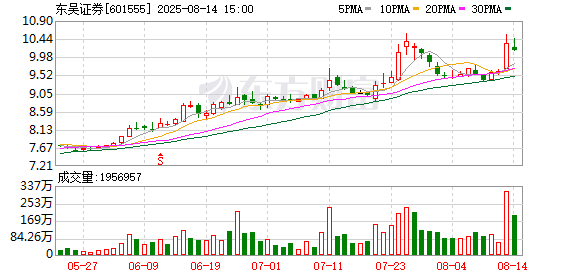
非银金融行业今日上涨0.59%,全天主力资金净流出3.83亿元,该行业所属的个股共83只,今日上涨的 有29只,涨停的有1只;下跌的有52只,跌停的有1只。以资金流向数据进行统计,该行业资金净流入的 个股有29只,其中,净流入资金超亿元的有7只,净流入资金居首的是中国平安,今日净流入资金4.70 亿元,紧随其后的是长城证券、中油资本,净流入资金分别为3.67亿元、3.50亿元。非银金融行业资金 净流出个股中,资金净流出超亿元的有9只,净流出资金居前的有东吴证券、国盛金控、海南华铁,净 流出资金分别为2.61亿元、2.53亿元、1.78亿元。(数据宝) 非银金融行业资金流向排名 沪指8月14日下跌0.46%,申万所属行业中,今日上涨的有1个,涨幅居前的行业为非银金融,涨幅分别 为0.59%。非银金融行业位居今日涨幅榜首位。跌幅居前的行业为综合、国防军工,跌幅分别为 2.66%、2.15%。 资金面上看,两市主力资金全天净流出750.81亿元,主力资金净流入的行业仅有2个,银行行业净流入 资金1.88亿元;建筑材料行业净流入资金5937.93万元。 主力资金净流出的行业有29个,国防军工行业主力资金净流出规模居首 ...





3.19亿元主力资金今日撤离综合板块
Zheng Quan Shi Bao Wang· 2025-08-14 09:08
Core Points - The Shanghai Composite Index fell by 0.46% on August 14, with only one industry, non-bank financials, showing an increase of 0.59% [1] - The comprehensive industry experienced the largest decline, down by 2.66%, followed by the defense and military industry, which fell by 2.15% [1] - A total of 750.81 billion yuan in net outflow of main funds was observed across the two markets, with only two industries seeing net inflows: banking (1.88 million yuan) and building materials (5.94 million yuan) [1] Industry Summary - The comprehensive industry had a net outflow of 3.19 million yuan, with all 16 stocks in this sector declining [1] - The stocks with the largest net outflows in the comprehensive industry included Dongyangguang (-13.84 million yuan), Yuegui Shares (-4.49 million yuan), and Zongyi Shares (-1.96 million yuan) [1][2] - The defense and military industry had the highest net outflow of main funds at 9.32 billion yuan, followed by the machinery equipment industry with an outflow of 8.22 billion yuan [1]


粤开市场日报-20250814
Yuekai Securities· 2025-08-14 08:43
Market Overview - The A-share market saw a majority of indices decline today, with the Shanghai Composite Index falling by 0.46% to close at 3666.44 points, and the Shenzhen Component Index dropping by 0.87% to 11451.43 points. The ChiNext Index decreased by 1.08% to 2469.66 points, while the Sci-Tech 50 Index rose by 0.75% to 1085.74 points [1] - Overall, there were 4644 stocks that declined, while only 734 stocks increased, and 41 stocks remained flat. The total trading volume in the Shanghai and Shenzhen markets reached 22792 billion yuan, an increase of 1282.72 billion yuan compared to the previous trading day [1] Industry Performance - Among the Shenwan first-level industries, only the financial sector saw an increase, while all other sectors experienced declines. The sectors that led the decline included comprehensive, defense and military, communication, steel, textile and apparel, and beauty and personal care [1] - The top-performing concept sectors today included insurance selection, digital currency, GPU, cross-border payment, servers, financial technology, and others [1]
超4600只个股下跌
第一财经· 2025-08-14 07:34
Core Viewpoint - The A-share market experienced a pullback after reaching new highs, with the Shanghai Composite Index briefly surpassing 3700 points before closing lower, indicating potential volatility in the near term [3][10]. Market Performance - The Shanghai Composite Index closed at 3666.44, down 0.46%, ending an eight-day rally. The Shenzhen Component Index fell by 0.87%, and the ChiNext Index decreased by 1.08% [3][4]. - Over 4600 stocks in the market declined, with significant drops in sectors such as military, CPO, medical devices, and steel [6]. Sector Analysis - The market showed a broad decline across various sectors, with notable losses in military, CPO, medical devices, and steel. However, the brain-computer interface sector saw some gains, with stocks like Botao Bio hitting the daily limit up [6]. - The digital currency sector experienced volatility, with several stocks reaching their daily limit up before closing lower [6]. Capital Flow - Main capital inflows were observed in sectors such as computing, non-bank financials, and food and beverage, while significant outflows were noted in defense, automotive, and medical biology sectors [8]. - Specific stocks like Ningde Times and Huasheng Tiancai saw net inflows of 14.17 billion and 11.16 billion respectively, while stocks like Changcheng Military Industry faced net outflows of 15.51 billion [8]. Institutional Insights - Guodu Securities noted that the recent market rally was driven by abundant liquidity and improved global risk appetite, but warned of potential short-term pullbacks after the eight-day rise. They suggested focusing on structural opportunities in technology and finance sectors [10]. - CICC highlighted that while index volatility may increase, the current market trend since last year's "9.24" remains intact. They recommended focusing on sectors with high growth potential such as AI, innovative pharmaceuticals, and military [10].

8月13日非银金融、通信、医药生物等行业融资净买入额居前
Zheng Quan Shi Bao Wang· 2025-08-14 04:45
Summary of Key Points Core Viewpoint - As of August 13, the latest market financing balance reached 2,032.06 billion yuan, showing an increase of 11.696 billion yuan compared to the previous trading day, indicating a positive trend in market financing activity [1]. Industry Financing Changes - The non-bank financial sector saw the largest increase in financing balance, rising by 2.313 billion yuan to a total of 165.602 billion yuan [1]. - The communication, pharmaceutical, and machinery equipment sectors also experienced significant increases in financing balances, with increases of 1.903 billion yuan, 1.706 billion yuan, and 1.483 billion yuan, respectively [1]. - Conversely, five industries reported a decrease in financing balances, with the non-ferrous metals, media, and coal industries experiencing the largest declines of 0.195 billion yuan, 0.154 billion yuan, and 0.127 billion yuan, respectively [1][2]. Percentage Changes in Financing Balances - The communication industry recorded the highest percentage increase in financing balance at 2.67%, followed by the banking, construction materials, and non-bank financial sectors with increases of 2.10%, 1.70%, and 1.42%, respectively [1]. - The beauty care, coal, and media industries had the largest percentage decreases in financing balances, with declines of 1.29%, 0.82%, and 0.35%, respectively [2]. Detailed Financing Balance Data - The latest financing balances for various industries are as follows: - Non-bank financial: 1656.02 billion yuan, +2.13 billion yuan, +1.42% - Communication: 731.26 billion yuan, +1.903 billion yuan, +2.67% - Pharmaceutical: 1533.63 billion yuan, +1.706 billion yuan, +1.12% - Machinery equipment: 1108.08 billion yuan, +1.483 billion yuan, +1.36% - Media: 437.89 billion yuan, -1.54 billion yuan, -0.35% [1][2].
【盘中播报】沪指涨0.47% 非银金融行业涨幅最大
Zheng Quan Shi Bao Wang· 2025-08-14 04:44
Market Overview - As of 10:28 AM, the Shanghai Composite Index increased by 0.47% with a trading volume of 647.68 million shares and a transaction value of 102.70 billion yuan, representing an 8.17% increase compared to the previous trading day [1]. Industry Performance - The top-performing sectors included: - Non-bank Financials: Up by 1.76% with a transaction value of 515.38 billion yuan, led by Changcheng Securities, which rose by 8.43% [1]. - Computer: Increased by 1.10% with a transaction value of 1,214.22 billion yuan, with Guotou Intelligent leading at 19.98% [1]. - Electronics: Gained 0.77% with a transaction value of 1,718.97 billion yuan, led by Longtu Guangzhao, which surged by 20.00% [1]. - The sectors with the largest declines included: - Comprehensive: Decreased by 1.51% with a transaction value of 14.53 billion yuan, led by Dongyangguang, which fell by 2.88% [2]. - National Defense and Military Industry: Down by 1.24% with a transaction value of 506.51 billion yuan, led by Beifang Changlong, which dropped by 8.29% [2]. - Machinery Equipment: Fell by 0.61% with a transaction value of 846.03 billion yuan, led by Dingyang Technology, which decreased by 11.08% [2]. Summary of Key Stocks - Leading stocks in the rising sectors included: - Changcheng Securities in Non-bank Financials [1]. - Guotou Intelligent in Computer [1]. - Longtu Guangzhao in Electronics [1]. - Notable declines were seen in: - Dongyangguang in Comprehensive [2]. - Beifang Changlong in National Defense and Military Industry [2]. - Dingyang Technology in Machinery Equipment [2].