
食品

Search documents
深圳市润佳兴食品有限公司成立 注册资本50万人民币
Sou Hu Cai Jing· 2025-08-26 08:47
天眼查App显示,近日,深圳市润佳兴食品有限公司成立,法定代表人为朱姬,注册资本50万人民币, 经营范围为一般经营项目是:食品销售(仅销售预包装食品);玩具销售;塑料制品销售;包装材料及 制品销售;机械设备销售;机械零件、零部件销售;日用百货销售;国内贸易代理;信息咨询服务(不 含许可类信息咨询服务);货物进出口;技术进出口。(除依法须经批准的项目外,凭营业执照依法自 主开展经营活动),许可经营项目是:食品销售。(依法须经批准的项目,经相关部门批准后方可开展 经营活动,具体经营项目以相关部门批准文件或许可证件为准)。 ...
综述丨美关税政策拖累日本多行业
Xin Hua Wang· 2025-08-26 06:11
Group 1 - The U.S. tariff policy has significantly negatively impacted multiple Japanese industries, including automotive, steel, and chemicals, leading to profit shrinkage and concerns over production cuts among SMEs [1][2] - Japan's exports to the U.S. have declined, with July exports dropping 10.1% year-on-year to 1.73 trillion yen, marking four consecutive months of decline [1] - The automotive sector experienced a 28.4% year-on-year decrease in exports to the U.S. in July, with export volume down 3.2% to 123,500 vehicles [1] Group 2 - The net profit of 1,069 companies listed on the Tokyo Stock Exchange fell by 12% year-on-year in Q2, marking the first decline in three years, with the automotive sector suffering the most, seeing a profit drop of approximately 980 billion yen, or 45% [1][2] - The steel industry reported losses in Q2, prompting Tokyo Steel to revise its earnings forecast for the fiscal year 2025 [2] - The chemical sector's profits decreased by 25% in Q2, with Mitsubishi Chemical Group's performance notably affected by the tariff policy [2] Group 3 - SMEs are under greater pressure due to the tariff impacts, with 50% of surveyed SMEs expressing concerns about order reductions, an increase of 12 percentage points since April [3] - The food industry, primarily composed of SMEs, has also been affected, with companies like Tamano Hikari Sake Brewery reporting a 30% year-on-year drop in sales to the U.S. due to order cuts from American importers [2]
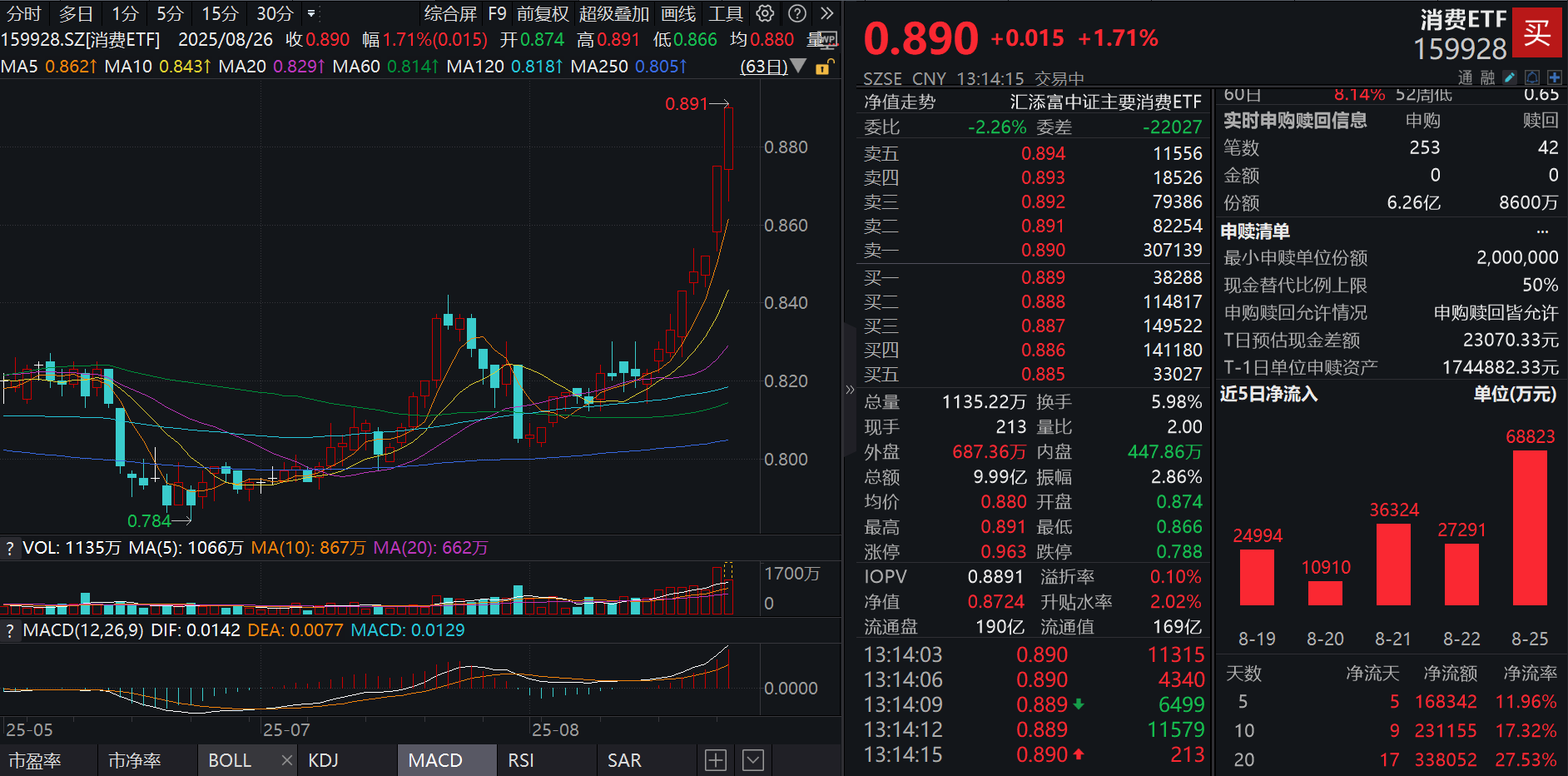
上海出台楼市新政“组合拳”,大消费攻势再起!消费ETF(159928)涨近2%,盘中大举揽金5.6亿份!
Xin Lang Cai Jing· 2025-08-26 05:30
Group 1: Market Performance - The consumption ETF (159928) rose over 1%, with a trading volume exceeding 1 billion yuan, and net subscriptions of 562 million units during the day, accumulating over 2.3 billion yuan in the last 10 days, leading its peers with a total scale exceeding 16.5 billion yuan [1] - The Hong Kong Stock Connect consumption 50 ETF (159268) increased nearly 1%, with a trading volume over 42 million yuan, and has seen net inflows for 6 out of the last 7 days, totaling over 150 million yuan [3] Group 2: Policy Developments - Shanghai introduced new housing policies allowing eligible families to purchase unlimited properties outside the outer ring, and single adults will follow the same housing purchase restrictions as resident families [5] - The government is implementing policies to boost consumption, including the restoration of VAT on interest income from newly issued government bonds and the introduction of interest subsidy policies for personal consumption loans and service industry loans [6] Group 3: Industry Insights - The liquor sector is showing signs of stabilization, with brands focusing on innovation and channel management to capture emerging markets, as evidenced by Moutai's stable mid-year report showing a revenue of 91.094 billion yuan, up 9.16% year-on-year [6] - The beer and beverage sector remains robust, with Chongqing Beer maintaining steady sales despite a slight decline in price per ton, while Kang Shifu's revenue is under pressure but profits are increasing [7]


益阳市赫山区佑安食品有限公司成立 注册资本10万人民币
Sou Hu Cai Jing· 2025-08-26 05:05
Group 1 - A new company, You'an Food Co., Ltd., has been established in Yiyang City, Heshan District, with a registered capital of 100,000 RMB [1] - The legal representative of the company is Luo Wenzhi [1] - The company's business scope includes food sales, internet food sales, health food sales, and various other retail and wholesale activities related to daily necessities and medical supplies [1] Group 2 - The company is authorized to engage in food sales and internet sales of pre-packaged food, subject to relevant approvals [1] - Additional business activities include the sale of maternal and infant products, personal hygiene products, and disposable medical supplies [1] - The company also plans to sell cosmetics, clothing, and metal packaging containers, among other items [1]
郴州脆香食品有限公司成立 注册资本1万人民币
Sou Hu Cai Jing· 2025-08-26 05:05
Core Insights - A new company, Chenzhou Crisp Food Co., Ltd., has been established with a registered capital of 10,000 RMB and is represented by Wang Jinliang [1] Company Overview - The company is engaged in various food-related activities, including food sales, internet sales of pre-packaged food, and health food sales [1] - The company is also involved in the wholesale and retail of fresh fruits and edible agricultural products, with operations subject to legal regulations [1]
中国食品(00506):宋亮获委任为非执行董事
智通财经网· 2025-08-26 04:41
智通财经APP讯,中国食品(00506)发布公告,沈新文先生辞任本公司执行董事,环境、社会及管治委员 会成员及主席;以及执行委员会成员,自2025年8月26日起生效;及宋亮先生获委任为本公司非执行董 事,自2025年8月26日起生效。 ...
来了,3800点,大调查
3 6 Ke· 2025-08-26 03:49
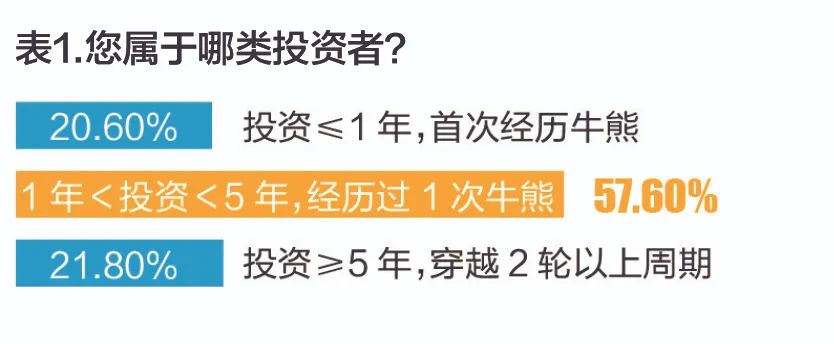
Core Insights - The Shanghai Composite Index has surpassed 3800 points, reaching its highest level in over a decade, leading to a shift in investor sentiment and strategies [1][15][20] - A survey of over 50,000 fund investors indicates that mutual funds remain the primary investment choice, with a significant portion of investors adopting a defensive stance amid market volatility [1][18] Investor Sentiment and Behavior - Approximately 70% of investors are optimistic about the market's potential to break through resistance levels, despite nearly 60% of them currently holding positions that are underwater [20][14] - The majority of investors (49.7%) are opting for risk reduction strategies, while a smaller percentage (24.6%) are looking to increase their positions [18][20] Investment Strategies - A notable preference for "swing trading" (45.8%) and "long-term holding" (39.9%) strategies indicates a flexible approach among investors, focusing on market timing and value investing [28] - The rise of index funds and ETFs is evident, with 51% of investors favoring these passive investment vehicles over actively managed funds [33][34] Portfolio Composition - Fund investments account for 62.5% of investor allocations, with stocks and bonds following closely behind [8][12] - A significant portion of investors (36.1%) are classified as "heavy" investors, holding 60% to 90% in equity assets, while only 12.9% are fully invested [12][14] Sector Preferences - Over half of the investors (50.1%) are optimistic about the technology sector, with consumer and financial sectors also receiving considerable attention [25][26] - A majority (90.3%) of investors are considering adjustments to their portfolio structures, with a strong inclination towards value stocks [25][26] Risk Awareness - Investors are primarily concerned about macroeconomic risks, with 46.9% citing economic downturns as their top worry [24] - The sentiment reflects a cautious optimism, with 48.2% of respondents expressing a careful outlook on market conditions [21] Information Sources and Decision-Making - Investors predominantly rely on financial media (62.0%) and social platforms (53.8%) for investment information, indicating a shift towards more accessible and interactive content [29] - Company financial reports (53.6%) and macroeconomic data (40.7%) are the key factors influencing investment decisions, highlighting a data-driven approach [30][36]
【财经分析】美关税政策拖累日本多行业
Xin Hua She· 2025-08-26 03:16
Group 1: Impact on Exports and Trade - Japan's exports to the U.S. have significantly declined, with July exports dropping 10.1% year-on-year to 1.73 trillion yen, marking four consecutive months of decline [1] - Exports of automobiles to the U.S. fell by 28.4% year-on-year in July, amounting to 422 billion yen, with export volume decreasing by 3.2% to 123,500 vehicles [1] - The high tariff of 27.5% on Japanese automobiles remains in effect, as the trade agreement to reduce it to 15% has not yet been implemented [1] Group 2: Financial Performance of Companies - The net profit of 1,069 companies listed on the Tokyo Stock Exchange declined by 12% year-on-year in Q2, totaling 12.3 trillion yen, marking the first drop in three years [2] - The automotive and parts sector was the hardest hit, with profits down approximately 980 billion yen, a decline of 45% [2] - Honda's net profit decreased by 50% due to increased tariff costs [2] Group 3: Sector-Specific Challenges - The steel industry reported losses in Q2, prompting Tokyo Steel to revise its earnings forecast for the fiscal year 2025 [2] - The chemical industry saw a profit decline of 25%, with Mitsubishi Chemical Group's performance notably affected [2] - Small and medium-sized enterprises (SMEs) are under greater pressure, with concerns about reduced orders and job cuts due to rising costs from tariffs [2][3] Group 4: SME Sentiment and Future Outlook - A survey indicated that 11% of SMEs have already felt the impact of U.S. tariffs, while 50% are worried about order reductions, an increase of 12 percentage points since April [3] - Analysts suggest that U.S. tariff policies are undermining the free trade system, urging Japanese SMEs to enhance risk management and strategic planning [3]

北京市场监管局获八省市自治区经营者集中反垄断审查正式委托
Xin Jing Bao· 2025-08-26 02:53
Core Viewpoint - The Beijing Municipal Market Supervision Administration will officially take over the simplified antitrust review of certain operator concentrations in eight provinces and municipalities starting from August 1, 2025, enhancing the efficiency of merger and acquisition processes in the region [1][2]. Group 1: Antitrust Review Process - Since 2022, the Beijing Municipal Market Supervision Administration has received 274 entrusted cases from the National Market Supervision Administration, covering various industries with a total transaction value exceeding 780 billion yuan [2]. - The establishment of a "Beijing Channel" for mergers and acquisitions aims to streamline the antitrust review process, allowing for more efficient reviews once companies meet the legal declaration threshold [2][4]. - A manual for the review process has been developed to ensure alignment with national standards, along with four supporting rules covering the entire review process [3]. Group 2: Efficiency Improvements - The average acceptance time for cases has been reduced to 14.89 days, and the average conclusion time to 16.23 days, positioning Beijing among the leading pilot provinces and cities [3]. - An online pre-signature and offline signature model has been introduced to optimize internal approval processes [3]. Group 3: Regional Collaboration and Capacity Building - The initiative promotes regional collaboration by enhancing the regulatory capabilities of neighboring provinces and municipalities through training and resource sharing [4]. - A mechanism for information sharing has been established to keep track of the progress of simplified case reviews and to unify review standards across regions [4]. Group 4: Customized Services and Compliance Support - The service model includes one-on-one professional guidance for submissions, aimed at improving communication efficiency and compliance capabilities across various scales and industries [5]. - The initiative also focuses on providing tailored support for state-owned enterprises, multinational corporations, and innovative enterprises [5].
综述|美关税政策拖累日本多行业
Xin Hua She· 2025-08-26 02:49
Group 1 - The US tariff policy has significantly negatively impacted multiple Japanese industries, including automotive, steel, and chemicals, leading to profit shrinkage and concerns among SMEs about potential production cuts [1][2] - Japan's exports to the US, particularly in the automotive sector, have declined, with July exports dropping 10.1% year-on-year to 1.73 trillion yen, marking four consecutive months of decline [1] - The automotive sector experienced a 28.4% year-on-year decrease in exports to the US in July, with export volume down 3.2% to 123,500 vehicles [1] Group 2 - The net profit of 1,069 companies listed on the Tokyo Stock Exchange fell by 12% year-on-year in Q2, totaling 12.3 trillion yen, marking the first decline in three years [1] - The automotive and parts industry was the hardest hit, with profits down approximately 980 billion yen, a decline of 45% [2] - The steel industry reported losses in Q2, prompting Tokyo Steel to lower its earnings forecast for the fiscal year [2] Group 3 - The chemical industry saw a 25% decline in profits in Q2, with Mitsubishi Chemical Group facing significant pressure due to decreased customer confidence attributed to US tariff policies [2] - SMEs are under greater pressure, with concerns that large companies may shift to overseas suppliers, leading to reduced orders and job cuts for smaller firms [2] - A survey indicated that 11% of SMEs have already felt the impact of US tariffs, with 50% fearing order reductions, an increase of 12 percentage points since April [3]